
A high lobe piercing sits in the upper earlobe above the natural fold, and it may need more cautious healing care than a standard lobe because it lies close to cartilage. A normal earlobe piercing typically heals in 6 to 8 weeks, but the higher placement means you shouldn't treat it as automatically carefree.
Have you ever looked at an ear stack and wondered whether the uppermost “lobe” stud is still a lobe piercing, or whether it has crossed into cartilage? That uncertainty matters. The tissue under the needle affects discomfort, swelling, jewellery selection, sleeping pressure and how patiently you need to approach healing.
A high lobe piercing is attractive because it fills the space between a classic lobe and the upper ear without necessarily committing you to a clearly defined helix placement. The safest approach is to let an experienced piercer assess your individual anatomy rather than relying on a fixed visual rule. Your ear may have a generous lobe, a shallow lobe or a natural fold that arrives sooner than expected.
What Is a High Lobe Piercing
A client may point to the area just above an existing stud and say, “I want another lobe piercing.” The piercer then checks the thickness and shape of the tissue, because the visible position alone doesn't reveal whether the needle will pass through soft lobe tissue or approach the cartilage boundary.
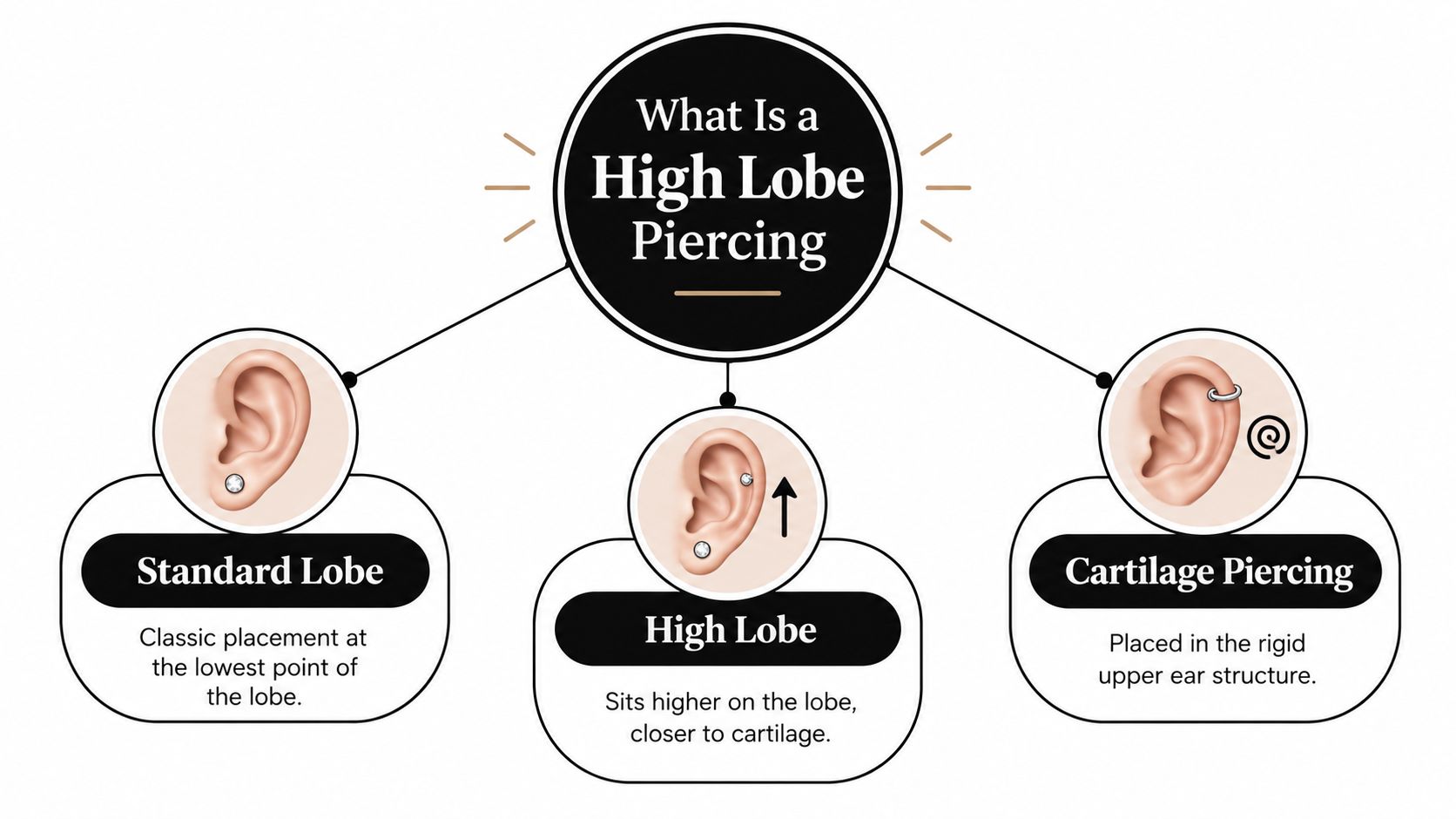
A high lobe piercing is placed in the upper part of the earlobe, above a conventional lobe piercing and near the transition towards the rigid upper ear. It usually works as a stacked stud, often paired with a lower lobe or another small piece of jewellery. The result can look delicate, balanced and more curated than a single traditional lobe.
Why placement is individual
The lower lobe is soft and flexible. Higher up, the tissue can become firmer and thinner, and the natural fold may sit differently from one ear to the other. That is why two people can request the same-looking piercing but receive slightly different placement recommendations.
A good consultation checks:
- The tissue available: The piercer feels for a safe area with enough room for jewellery.
- The nearby fold: A placement too close to cartilage may behave differently during healing.
- Your existing jewellery: The new stud needs space from older piercings so the posts and backs don't press together.
- Your preferred stack: A small flat-back labret may suit a close arrangement better than a bulky butterfly-backed stud.
Practical rule: If the placement feels firm, sits very high or becomes uncomfortable when you lie on it, care for it as a cartilage-adjacent piercing even if your studio calls it a high lobe.
The terminology helps, but it doesn't replace an anatomical assessment. Modern high-lobe styles also sit within a longer British ear-piercing tradition. Historical UK coverage records growing demand for multiple lobe and upper-ear piercings during the late 1970s and 1980s, and places the London Piercing Clinic within the early professional piercing era in Britain through its account of the UK's second-ever piercing studio (UK lobe-piercing history). Today, the same idea has evolved into carefully planned ear curation.
High Lobe vs Standard Lobe and Cartilage
Where does a high lobe stop being a lobe and start behaving more like cartilage? The ear changes gradually, rather than dividing into three neat zones. A standard lobe occupies the lowest, softest tissue. A high lobe travels upward toward the firmer cartilage transition, while a helix piercing passes directly through the rigid upper ear.
That middle position creates the confusion. One provider may name the piercing from its location, while another considers how close the channel lies to cartilage. Your tissue determines the healing response, not the booking label alone. A high lobe can therefore require cartilage-adjacent care even when it remains within the area commonly called the lobe.
Piercing comparison chart
| Type | Placement | Healing approach | Pain level |
|---|---|---|---|
| Standard lobe | Lowest fleshy part of the ear | Typically 6 to 8 weeks (Torbay Council aftercare guidance) | Usually a brief pinch |
| High lobe | Upper lobe, close to the cartilage transition | If the channel sits near the fold, use cartilage-adjacent aftercare for 8 to 12 weeks and wait for piercer assessment before downsizing | A sharper pinch or pressure than a low lobe is possible |
| Standard cartilage | Rigid upper ear, such as the outer helix | Commonly longer than lobe healing and may take many months | Often feels firmer and more tender |
Pain varies from person to person. A high lobe may feel manageable because part or all of the channel passes through soft tissue, yet its higher position can make swelling and pressure more noticeable. Cartilage feels different because the needle enters denser tissue with less blood supply, so irritation can settle more slowly (UK guidance on ear-piercing infections and materials).
Why healing advice can conflict
A UK high-street piercing service advises leaving lobe studs in for 6 weeks and cleaning the area at least 3 times a day (H Samuel ear-piercing service). Medical guidance for a suspected infection recommends cleaning twice a day, using warm salty water to soften crusting, and avoiding picking or twisting jewellery while the area is dry (NHS infected piercings guidance).
Those instructions apply to different situations. Routine studio aftercare should not be confused with advice for possible infection. If your high lobe sits beside a fold or feels firm, do not treat the shortest lobe timeline as permission to change jewellery. Keep the original jewellery in place until a piercer has assessed the channel and the surrounding tissue looks settled.
Choosing Implant-Grade Jewellery
Could the jewellery itself make healing harder? Yes. A high lobe sits in a grey zone between soft lobe tissue and cartilage, so the channel may experience pressure and irritation more like a cartilage piercing than a standard lobe. The jewellery is not merely decoration. It remains inside the healing channel, where its material, surface, shape and fit affect comfort.
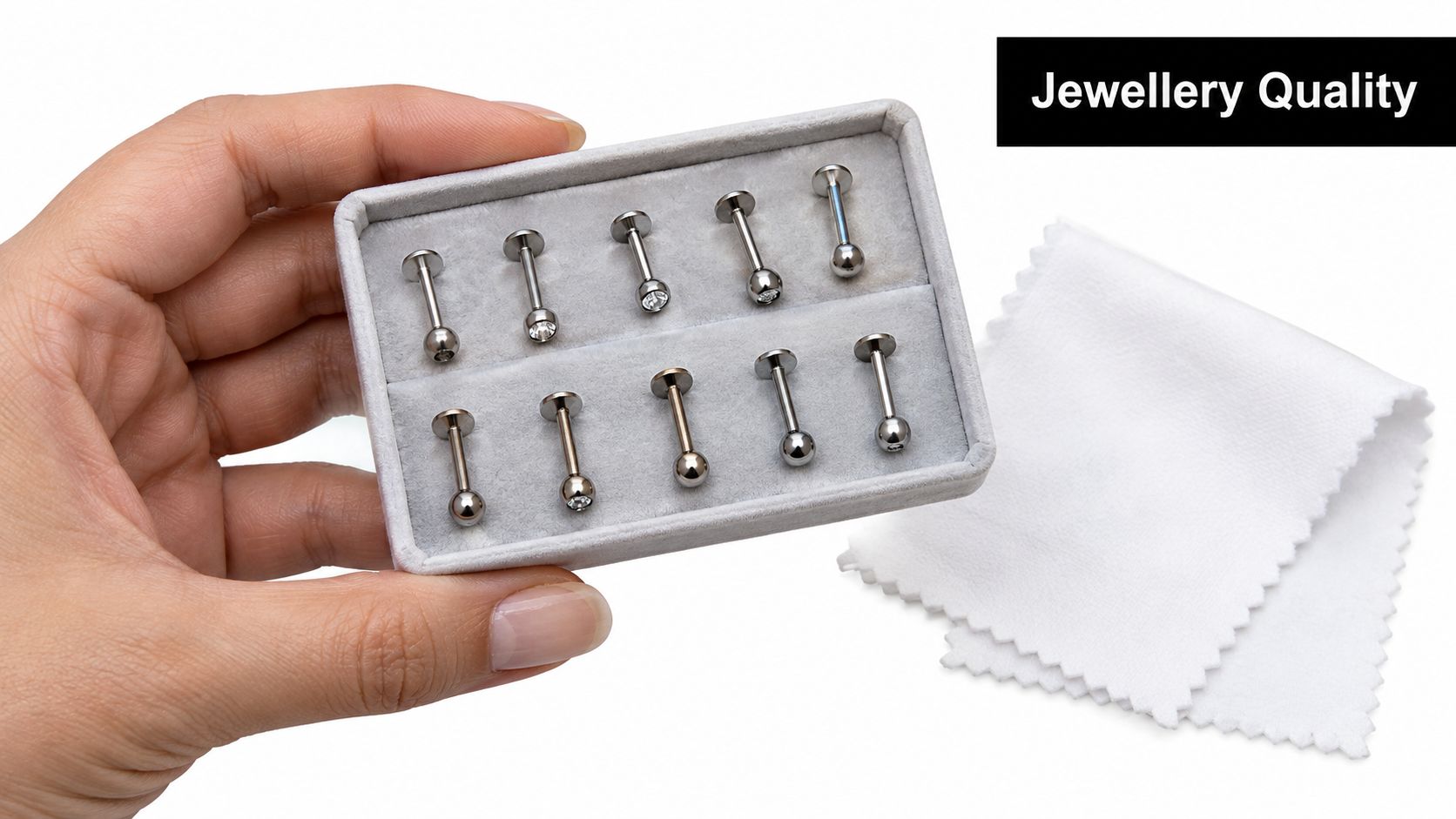
A well-fitted flat-back labret is usually a sensible starting style because it moves less than a hoop. Ask to see the mill certificate or laser marking for ASTM F-136 / 6AL4V ELI titanium. UK industry guidance identifies these titanium alloys as suitable for piercing, and you can compare implant-grade titanium earrings before discussing options with your piercer.
Comparing practical options
For initial jewellery, ask about an internally threaded or threadless flat-back labret in 16g/1.2mm, with a 6-7mm post to allow for early swelling. The correct length depends on your ear, placement and expected swelling, so the piercer should check the fit rather than relying on a standard size.
Titanium is light and available in polished or coloured finishes. “Surgical metal” is too vague to confirm quality. Ask for the exact material and standard.
Solid gold may suit a healed or healing piercing when it meets professional piercing requirements. Plated jewellery can wear through, while rough finishing may scrape the channel. A reputable piercer should explain the metal and let you inspect the surface before piercing.
Hoops move more freely and can catch on hair, bedding or clothing. A stud gives a high-lobe channel a quieter environment while it settles. After healing, your piercer can assess whether a hoop fits without pressure.
Check for:
- A smooth finish: Edges should not scrape the channel.
- A suitable post length: It should allow swelling without excessive movement.
- A secure backing: The closure should not pinch or trap debris.
- An appropriate diameter: Oversized jewellery snags; undersized jewellery can press into swollen tissue.
Material matters most during healing. Choose the metal and fit first, then select the colour or gemstone details.
Preparing for Your Piercing Appointment
A calm appointment starts before you enter the studio. Choose a professional piercer who uses a single-use sterile needle, opens sterile equipment in front of you and takes time to inspect your anatomy. A clean room matters, but so does the quality of the consultation.
What to ask during the consultation
Show the piercer the look you want, then let them explain what your ear can safely accommodate. Ask whether the marked point remains in lobe tissue, whether it sits close to cartilage and which jewellery style gives the channel enough room.
Useful questions include:
- What material is the initial jewellery? Request the precise material and standard, not only a colour name.
- What happens if the placement is too close to cartilage? The piercer should explain the likely aftercare and healing expectations.
- Can the new piece work with my current stack? Bring photographs of your preferred arrangement if you can't describe it easily.
- When will you review the fit? Swelling can change the amount of post that remains visible.
A reputable practitioner won't rush you into a placement that your anatomy can't support. They may adjust the angle, move the point slightly lower or recommend a cartilage placement instead. That isn't a failed consultation. It's a safer alternative to forcing a fashionable position into unsuitable tissue.
Prepare your body and your plan
Eat a normal meal beforehand, drink water and avoid arriving in a hurry. Tie back long hair, clean your phone and choose clothing that won't rub the ear when you remove it. If you sleep on one side, plan how you'll protect the fresh piercing without pressing a pillow directly against it.
Read a practical ear-piercing preparation guide before booking so you know what the studio may ask about. Tell the piercer about allergies, previous reactions to jewellery, skin conditions and any medication or health issue that could affect healing.
If you're arranging an appointment for someone under 16, check the studio and council rules in advance. Leeds Council states that the UK has no statutory minimum age for cosmetic body piercing or ear piercing, while also explaining that under-16s can't lawfully consent to a piercing that would amount to indecent assault (Leeds skin-piercing licensing guidance). Local rules can add their own consent requirements. Bromley Council, for example, says clients should receive verbal and written aftercare advice, and requires a parent or guardian to be present with signed consent forms for certain piercings involving under-16s (Bromley piercing conditions).
Aftercare and Healing Timeline
How should you care for a high lobe when its position sits between soft lobe tissue and cartilage? Treat it like a healing wound, because the surface may look settled while the deeper channel is still delicate. Tenderness, mild swelling and pale crusting can occur at first. Hair, headphones, hands, phones and sleeping pressure can keep restarting irritation.
Build a gentle routine
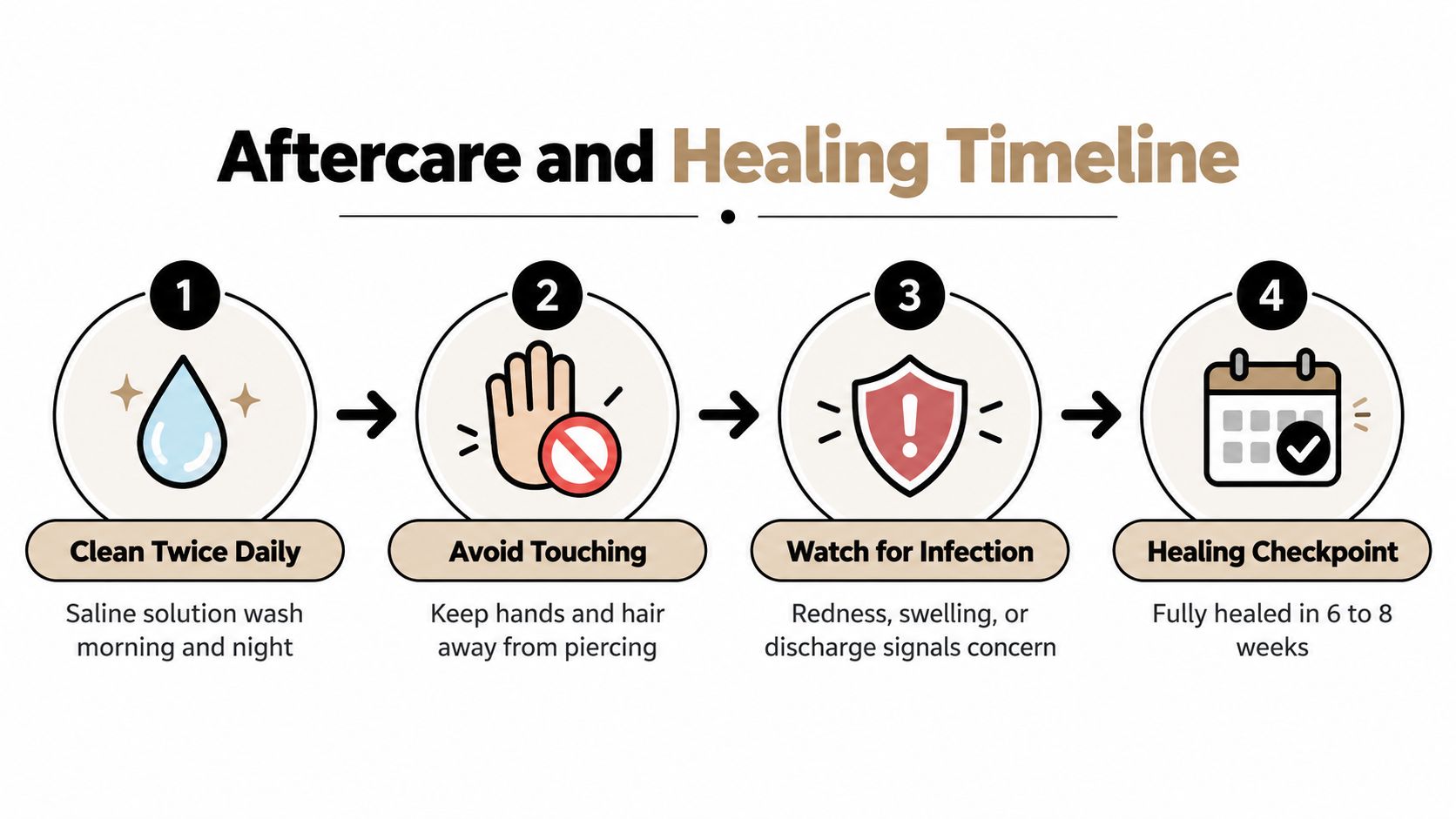
Wash your hands before touching the area. Follow the saline routine your piercer recommends, let softened crusting rinse away and pat the surrounding skin dry with a clean disposable material. Do not rotate the jewellery or remove it to “air” the channel. A piercing heals through a stable channel, not by being repeatedly disturbed.
Keep care practical:
- Clean consistently: Follow the studio's instructions and avoid adding harsh products.
- Reduce contact: Keep fingers, hair and phone screens away from the jewellery.
- Avoid pressure: Do not sleep directly on it or trap it under tight headphones.
- Leave jewellery in place: Removing it early can let the channel close or trap inflammation.
Torbay Council's ear and face piercing aftercare guidance gives the standard earlobe healing period as 6 to 8 weeks. For a high lobe near the cartilage transition, plan for 8 to 12 weeks before any jewellery change and confirm that the channel is stable with your piercer. The skin may look calm at six weeks while the tissue around the post remains reactive, particularly after repeated knocks or pressure. A guide to ear-piercing healing times can help with planning, but your anatomy and healing response decide the timing.
Separate normal irritation from infection
Some tenderness is expected after piercing. Worsening redness, heat, swelling, throbbing pain, thick discharge or feeling unwell needs attention. NHS guidance advises cleaning an infected piercing twice daily with warm salty water, softening crusting and avoiding dry picking or twisting.
Do not remove jewellery from a suspected infection without medical or professional advice. Contact a healthcare professional if symptoms worsen, become severe or occur with feeling unwell. Because the upper ear has less blood supply around cartilage, infections in this area can become more serious, and clinical guidance notes that some cases may need antibiotic treatment.
The same cautious approach suits the high lobe's grey area. If the placement is close to cartilage, its care demands cartilage-level patience even when the jewellery sits in the “lobe” zone.
Do not change a high lobe because the calendar says you can. Change it when the tissue, jewellery fit and professional assessment all support the decision.
Finding a Safe Studio in Croydon and Bournemouth
Whether you're booking in Croydon or Bournemouth, judge the studio by its process rather than its photographs alone. A professional should explain placement, inspect your ear, use a sterile single-use needle and provide clear aftercare in writing and verbally.
Use this short checklist before confirming:
- Hygiene: Ask how sterile equipment is opened and disposed of.
- Anatomy: Confirm whether the proposed point is soft lobe tissue or close to cartilage.
- Jewellery: Check for implant-grade titanium or another clearly identified professional material.
- Aftercare: Make sure you receive written and verbal guidance.
- Support: Choose a studio that can answer questions if swelling or irritation develops.
Piercing Near Me helps clients compare professional piercing services connected with Timebomb Tattoo & Piercing's Croydon and Bournemouth studios, including consultations, jewellery selection and booking information. It also provides practical guidance for people who want to understand the placement before committing.
For a high lobe piercing that suits your anatomy and heals with fewer surprises, visit Piercing Near Me to explore the Croydon and Bournemouth studio options, review preparation guidance and arrange a consultation with a professional piercer. Bring your preferred ear-stack idea, ask where the tissue changes from lobe to cartilage and choose the jewellery and aftercare plan together.