by Marzena | Oct 14, 2026 | Piercing
Six weeks is the absolute minimum before changing jewellery in a normally healing earlobe piercing, while cartilage piercings require at least 12 weeks. The genuine green light is a symptom-free piercing with no swelling, crusting or tenderness, rather than just a...
by Marzena | Oct 13, 2026 | Piercing
You're standing in front of the bathroom mirror, turning your head from side to side. Your new helix, tragus, or conch piercing looks hotter and more swollen than it did yesterday. It's tender when your hair catches it, uncomfortable against your pillow, and...
by Marzena | Oct 10, 2026 | Piercing
You're sitting in the studio chair, the jewellery has been chosen, and suddenly the question feels much bigger than it did at home: will ear piercing hurt? You may be expecting a dramatic, lasting pain, but most people experience a brief pinch or pressure...

by Marzena | Oct 9, 2026 | Piercing
You're looking at your protruding belly button in the mirror, one hand on your phone and several conflicting forum answers open on the screen. One person says an outie can never be pierced. Another posts a photo that seems to prove the opposite. The uncertainty...

by Marzena | Oct 8, 2026 | Piercing
You've chosen a placement, saved a few photos, and started comparing tiny discs, gems, and gold-tone tops. The part that deserves the most attention, though, is easy to overlook: the dermal piercing jewellery sitting in your skin. A beautiful top can't...
by Marzena | Oct 7, 2026 | Piercing
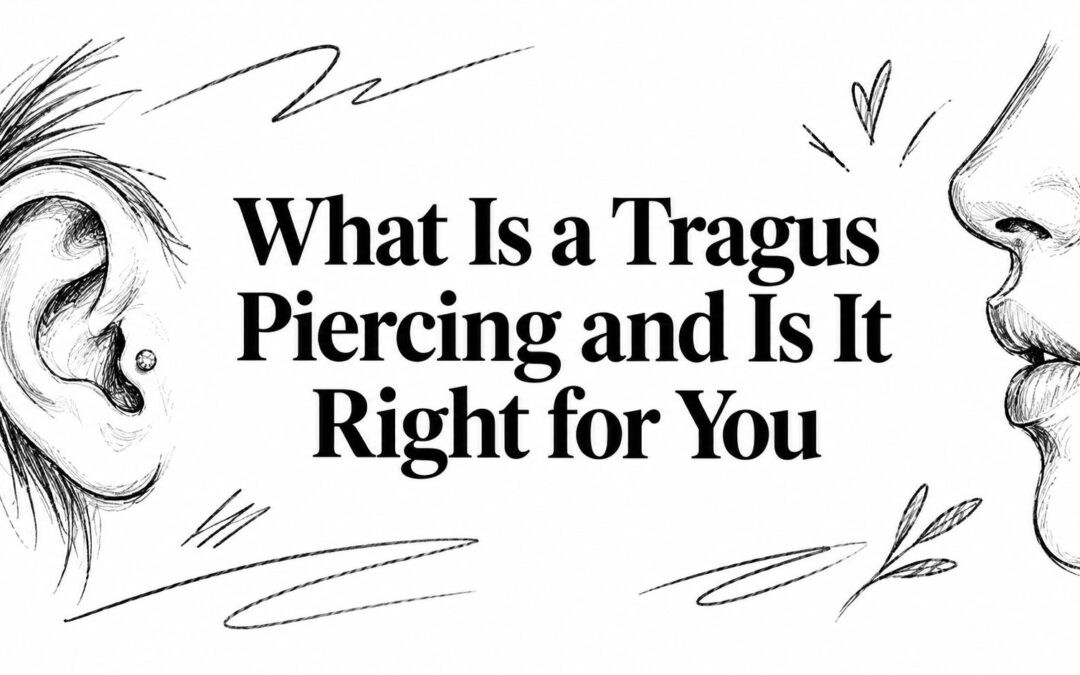
A tragus piercing is a piercing through the small cartilage flap that sits just in front of the ear canal, and it can take up to 12 months to heal fully. It isn't just another lobe piercing with a different piece of jewellery. You may be looking at your phone...