You’re probably doing what most first-time clients do. You’ve opened six tabs, looked at tiny studs, hoops, “screws”, “L-bends”, “threadless tops”, and now everything has started to blur together. One piece looks pretty but might not be safe. Another says “surgical steel” but you’re not sure if that means good quality. Then sizing shows up and suddenly you’re wondering what 20G even means.
That confusion is normal.
At Timebomb Tattoo & Piercing, we talk clients through this every day in Croydon and Bournemouth. Good nostril piercing jewellery should do three jobs at once. It should fit your anatomy, heal safely, and suit your style. If one of those is missing, the jewellery can become annoying fast, even if it looked perfect in a photo.
Your Guide to Choosing the Perfect Nostril Jewellery
A lot of people come in with the same story. They’ve seen a delicate gold hoop online, or a tiny crystal nose stud on social media, and they know they want a nostril piercing. What they don’t know is whether that jewellery is suitable for a fresh piercing, whether it will sit correctly, or whether the material will irritate their skin.
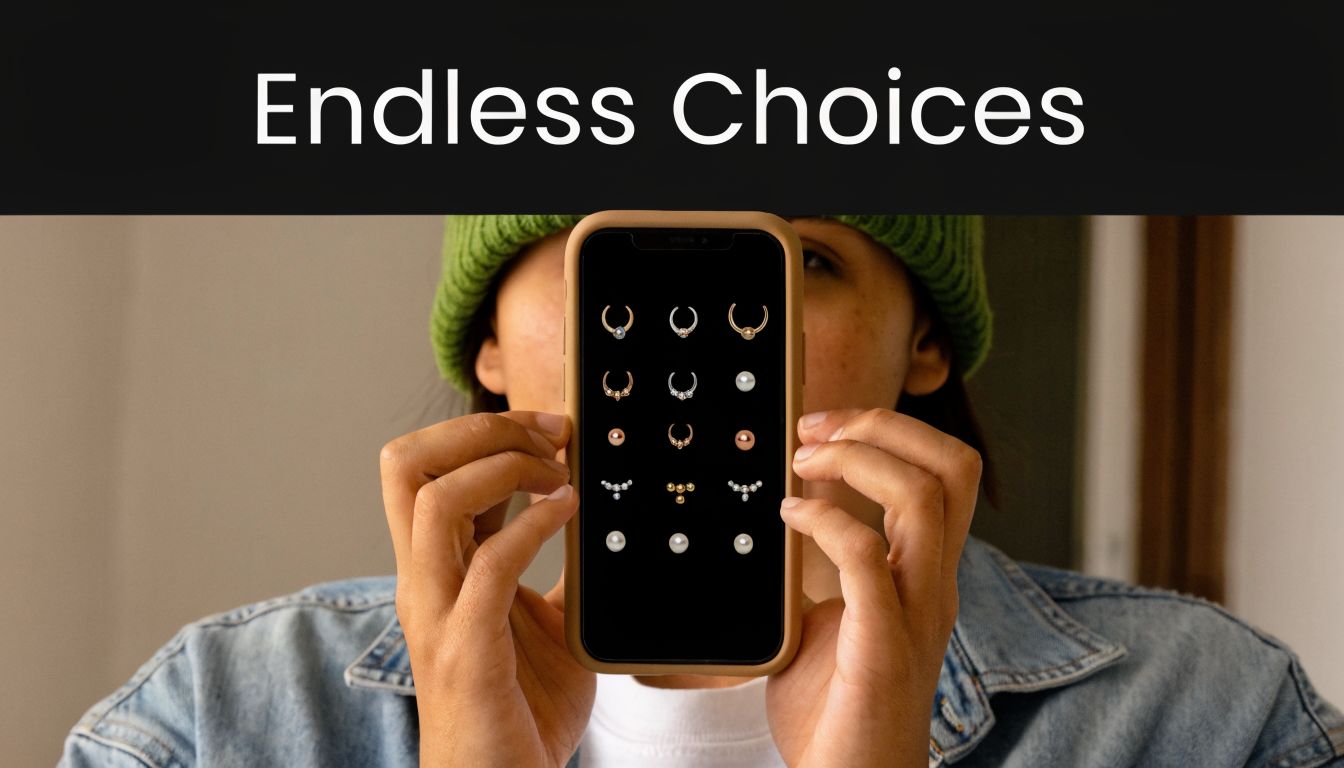
That uncertainty makes sense because nostril piercing jewellery sits in a small, mobile part of the body. Your nose moves when you wash your face, sleep on your side, pull tops over your head, or even rub your nose without thinking. Jewellery that works beautifully in a healed piercing can be a poor choice for a fresh one.
There’s also a bigger reason so many people are drawn to this piercing. The body jewellery sector is projected to reach USD 15.76 billion by 2035, and over 62% of Gen Z consumers purchase piercing jewellery for self-expression, according to body jewellery market research from Business Research Insights. Nostril piercings also have deep historical roots, evolving from cultural symbols dating back to the 13th century into a mainstream form of personal style.
Why first-time clients get stuck
Most confusion comes from three questions:
- What style is safest first? A pretty ring and a good starter piece aren’t always the same thing.
- What material should I trust? Marketing words can sound reassuring without telling you much.
- What size do I need? Online guides often act like every nose is built the same. It isn’t.
A good jewellery choice shouldn’t leave you guessing. You should know why it was chosen, how it fits, and what it’s meant to do during healing.
That’s how we approach consultations. We don’t just point at a tray and ask what looks nice. We explain how each option works, what’s best for healing, and what can wait until later.
A Visual Guide to Nostril Jewellery Styles
The names of nostril piercing jewellery can sound more complicated than they really are. Once you understand how each style sits inside the nose, the options become much easier to sort through.
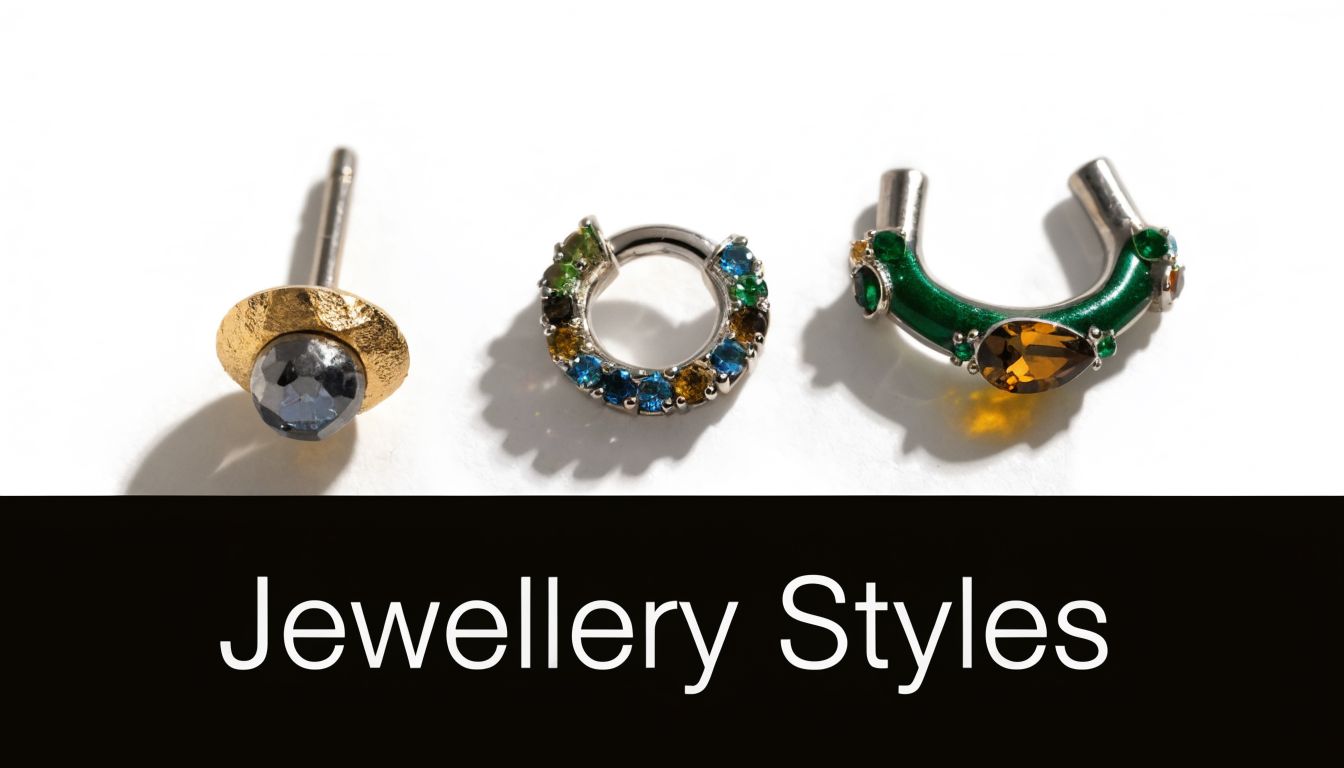
Think of jewellery styles like different keys for different locks. They all go in the same general place, but they don’t all behave the same way once they’re there. Some are better for stability. Some are easier to change. Some are mainly for healed piercings.
Nostril screws and L-shapes
A nostril screw has a curved tail that sits inside the nose. A L-shape has a bend that helps hold it in place. Both work a bit like a small anchor. The visible top sits outside the nostril, while the bent part stops it from sliding straight back out.
For healed piercings, many people like these because they’re simple and familiar. For fresh piercings, they can be less ideal because the bend inside the nose may move around more than a fitted labret post.
Here’s the practical difference:
- Nostril screw: More secure than a straight pin, but can feel fiddly when inserting or removing.
- L-shape: Easy to wear, but can catch or shift more easily if knocked.
- Best use: Often better for established piercings rather than a brand-new one.
Labret studs
If you ask a professional piercer what they’d rather start with, the answer is often a labret stud, especially a threadless or internally threaded one.
This style uses a straight post with a backing that sits inside the nose. Because the wearable part is straight and measured to your anatomy, it tends to feel neater and more controlled during healing. That matters in a piercing that can swell, get bumped, or catch on towels.
Why labrets are usually the strongest starter option
A labret stud gives us better control over fit. It also reduces the amount of odd bends and extra movement inside the nostril. That’s why many piercers prefer it for initial jewellery.
Practical rule: For a fresh nostril piercing, choose the piece that helps healing first. Save your dream aesthetic for the point when the piercing is stable enough to wear it comfortably.
Common tops for labret studs include plain discs, polished beads, and gem ends. The post style stays consistent, but the top can reflect your style. That’s useful because you don’t have to choose between “safe” and “nice-looking”.
Hoops and rings
Hoops are often what people imagine first. They’re classic, visible, and they frame the nostril beautifully. The catch is timing.
A hoop moves more than a stud. It rotates, it can get tugged more easily, and it puts a curved piece through tissue that’s trying to settle. That’s why hoops are often better once the piercing has healed well.
Common hoop styles include:
| Style | How it works | Best stage |
|---|---|---|
| Seam ring | A smooth ring with a nearly invisible join | Usually healed piercing wear |
| Captive bead ring | A ring held closed by a small bead | Usually healed piercing wear |
| Clicker-style ring | Hinged closure for easy opening and closing | Usually healed piercing wear, depending on design |
Which style suits which person
There isn’t one universal winner. There is only the best match for your situation.
If you’re brand new and want the calmest healing route, a fitted labret stud usually makes the most sense. If your piercing is already established and you want a softer, more decorative feel, screws or L-shapes may suit you. If you’re healed and ready for a ring, hoops can look fantastic.
The key is understanding the job of the jewellery, not just the label on the packet.
The Ultimate Guide to Safe Jewellery Materials
Style matters, but material matters more. A beautiful piece of nostril piercing jewellery isn’t a good choice if your skin reacts badly to it.
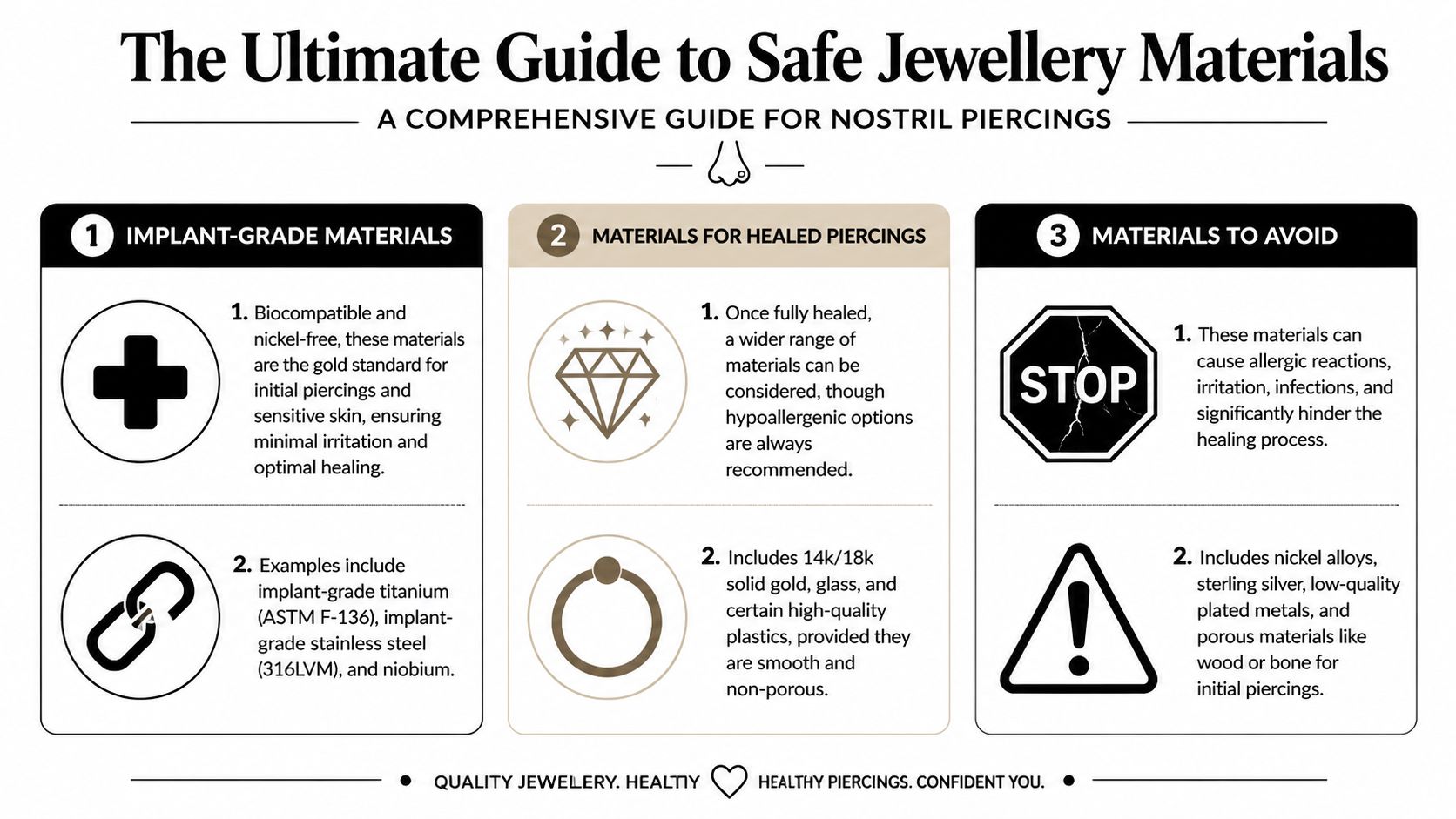
The nostril is thin tissue, and it’s exposed to moisture, movement, and everyday irritation. That means material choice is less like choosing a fashion accessory and more like choosing skincare for sensitive skin. If the material is wrong, your body notices quickly.
Why implant-grade titanium leads the list
For initial piercings, implant-grade titanium ASTM F136 is the benchmark. It contains zero nickel, and according to implant-grade jewellery guidance from iPrickU, it prevents adverse reactions in over 95% of cases. The same source notes that 316L surgical steel can cause nickel-induced dermatitis in up to 20% of people.
That’s the biggest reason professionals lean towards titanium for fresh nostril piercings. It removes a common irritant from the equation.
The same guidance also notes that titanium’s inert, mirror-polished surface can limit bacterial adhesion by 70%, which supports faster, calmer healing. In plain language, a smoother and more biocompatible surface gives the piercing fewer reasons to stay angry.
What “mirror polish” actually means
“Mirror polish” sounds like marketing, but it describes something useful. The jewellery surface is finished to be very smooth. Less roughness means less friction against the piercing channel and fewer places for debris to cling to.
Think of the difference between sliding your hand across polished glass and dragging it across sandpaper. Your piercing feels the difference too.
Materials people often ask about
Some clients come in asking for gold. Others ask whether surgical steel is “fine”. Some have never heard of niobium. Here’s the simple breakdown.
- Implant-grade titanium: Best-known starting choice for fresh piercings. Lightweight, nickel-free, and widely trusted.
- Niobium: Also a good quality option for sensitive wear, often chosen once discussing exact piece availability with your piercer.
- Solid 14k or 18k gold: Suitable when the alloy is appropriate and nickel-free. Best chosen carefully and professionally, not from mystery online listings.
- Surgical steel: Not automatically unsafe in every context, but not the same as implant-grade titanium. For sensitive clients and fresh piercings, it can be a problem.
- Plated jewellery: Risky because the outer layer can wear down, exposing a less suitable base metal.
- Sterling silver for initial wear: A poor choice for a fresh nostril piercing.
Jewellery material is a health choice first and a style choice second.
What to ask your piercer
If you’re not sure whether a piece is suitable, ask direct questions:
- Is this implant-grade titanium ASTM F136?
- Is this suitable for an initial nostril piercing?
- Is the finish smooth enough for healing?
- Does this piece contain nickel?
- Is this the exact jewellery you’d put in your own fresh piercing?
That last question cuts through sales talk fast.
Cheap jewellery often costs more later
Low-quality jewellery can seem like a shortcut. Then the piercing stays irritated, swells, forms bumps, or needs changing out. That means more stress, more aftercare, and sometimes a piercing that never settles properly.
Good nostril piercing jewellery should feel boringly reliable at first. That’s a compliment. During healing, “quiet” is exactly what you want.
Finding Your Perfect Fit Gauge Length and Anatomy
You sit down for your appointment, spot a tray of nostril jewellery, and suddenly the labels start sounding like code. 18G. 20G. 6mm. 8mm. That can feel confusing at first, especially if this is your first facial piercing. The good news is that sizing is much simpler once you know what each part controls.
Gauge refers to the thickness of the jewellery post. Length refers to the wearable part that passes through the piercing and leaves enough room for your tissue to sit comfortably.
Gauge in plain English
Gauge is the thickness of the post. A thicker post usually feels more stable. A thinner post can look more delicate.
For nostril jewellery, the choice is not about picking a number that sounds right. It is about matching the jewellery to your anatomy, the placement of the piercing, and how the piece needs to sit day to day. In many UK studios, including those serving clients in Croydon and Bournemouth, 18G and 20G are both common options for nostril work, but the better choice depends on the individual nose in front of the piercer.
If you are unsure why that matters, a simple comparison helps. A tent peg needs to be the right thickness for the ground it is going into. Too fine, and it may not feel very secure. Too bulky, and it may be more than the area needs. Nostril jewellery works in a similar way.
Why starter jewellery is longer
Fresh piercings often need a little extra room. Noses swell in different ways, and that swelling is not always dramatic enough for you to predict by looking in the mirror on the day.
If the post starts off too short, the jewellery can press on the tissue. That can make cleaning awkward and irritation more likely. A slightly longer starter post gives the area breathing space while it settles.
Later, once the swelling has gone down and the piercing is calmer, your piercer can fit a shorter post. That closer fit usually feels tidier and catches less.
Anatomy changes the fit
Online size charts can only go so far. Your nostril might have thicker tissue, a sharper angle, or a flatter curve where the jewellery sits. Someone else may have a completely different shape, even if you both want the same style of stud.
Placement matters too. A piercing set slightly higher or lower on the nostril can change the length that works best. The same goes for how close the jewellery sits to the cartilage and how much movement your nose naturally has when you smile or speak.
This is one reason professional fitting matters so much in the UK. A good piercer is not just looking at what suits your face. They are checking whether the jewellery will sit safely, clean easily, and heal without constant pressure.
According to guidance on nose ring jewellery types from Pierced Addiction, poor fit is a known cause of irritation and avoidable complications, while personalised fitting helps reduce those risks.
What a proper fit helps avoid
A well-fitted piece can prevent several common problems:
- Pressure marks: A post that is too short can press into the nostril.
- Snagging: A post that is too long has more chance of catching on towels, clothing, or glasses.
- Awkward sitting angles: Some jewellery styles do not rest neatly on every nose shape.
- Shifting during healing: Poor sizing can make a fresh piercing less stable.
One client may heal beautifully with a shorter starter fit. Another may need more room because their tissue is thicker or swells more. Neither nose is wrong. They just need different sizing.
That is why we measure and assess in person at Timebomb Tattoo instead of relying on a generic chart. For clients visiting us in Croydon or Bournemouth, that consultation gives you something online shopping cannot. Jewellery chosen for your actual anatomy, fitted to UK studio safety standards, by someone who can see how it sits on your face in real time.
Initial Jewellery Versus Healed Jewellery The Healing Journey
A lot of disappointment comes from expecting your first piece of nostril piercing jewellery to do every job forever. It won’t. Initial jewellery and healed jewellery serve different purposes.
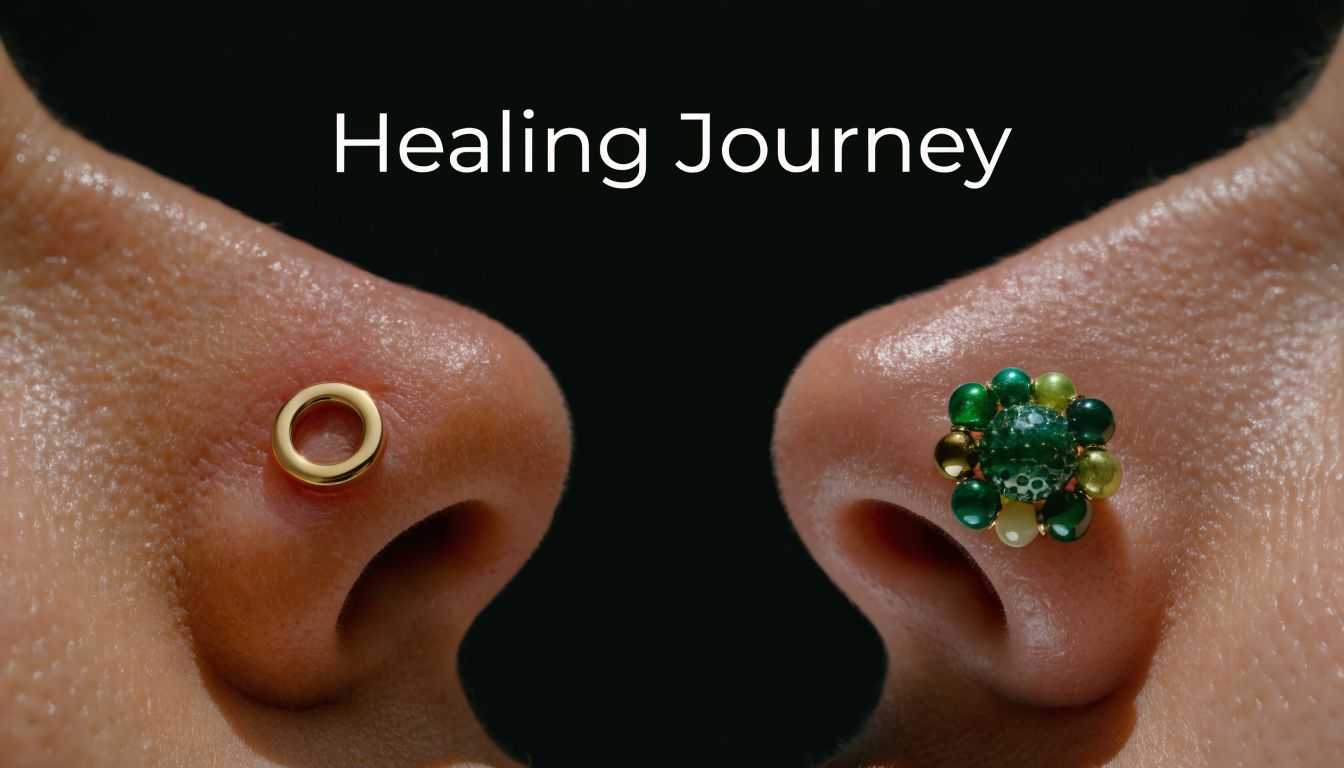
Initial jewellery is about stability, room for swelling, and smooth healing. Healed jewellery is where closer fit and wider style choices start to open up. If you treat those as two stages instead of one decision, the whole process feels much more manageable.
What initial jewellery is trying to do
Your starter piece is a tool. It isn’t there to show off everything the piercing could become later. It’s there to support healing.
That usually means a well-fitted stud in a safe material, with enough post length to account for swelling and daily movement. It may be simpler than the jewellery you eventually want, but that simplicity is helpful.
A good starter piece should:
- Stay secure without constant shifting
- Allow room for early swelling
- Be easy to clean
- Reduce irritation rather than adding to it
What changes once the piercing settles
Once healing is established, the focus changes. The piercing usually no longer needs that extra room, so the jewellery can be downsized for a tidier fit. This is often when clients say the piercing finally feels “part of them” rather than “something they’re managing”.
Healed jewellery opens the door to more decorative tops, more fitted studs, and eventually hoops if your piercing is ready for them.
| Stage | Main goal | Typical feel |
|---|---|---|
| Initial jewellery | Protect healing and allow swelling | Practical, secure, slightly roomier |
| Healed jewellery | Refine fit and style | More tailored, more decorative, often lighter-feeling |
The jewellery you heal with and the jewellery you live in long term are often different. That isn’t a compromise. It’s the plan.
Downsizing matters
A lot of clients hear “come back for a downsize” and assume it’s optional. It isn’t just a style upgrade. If the jewellery stays too long once swelling has settled, it can move around more than it needs to.
That extra movement can make a healing piercing harder work than it should be. Downsizing helps the jewellery sit closer, calmer, and cleaner.
UK Piercing Regulations and Safe Practices
A client in Croydon and a client in Bournemouth can both book a nostril piercing on the same day, but the safest studio experience still depends on local council rules, age checks, and the standards the studio follows behind the scenes. That is where UK advice matters more than a generic online guide written for another country.
If you are reading from the UK, especially as a parent or a younger client, start with one simple idea. A good studio should treat consent, identification, hygiene, and jewellery choice as part of the piercing itself, not as extra admin. It works like a seatbelt in a car. You hope nothing goes wrong, but the protection needs to be in place before the journey starts.
What younger clients and parents should check
Age policies in the UK can vary by studio and local authority, so never assume one shop’s rules match another’s. In Croydon or Bournemouth, a reputable studio should explain the process clearly before the appointment, including what ID is accepted, whether a parent or guardian must attend, and how consent is recorded.
If you are a parent, or booking for someone under 18, ask these questions in advance:
- What proof of age do you accept?
- Does a parent or guardian need to be present in person?
- How do you record consent?
- What jewellery do you use for a fresh nostril piercing?
- Do you use sterile single-use needles?
Clear answers are a good sign. Vagueness is not.
For any questions about age requirements or our safety procedures, please call us on 01202 9000 50.
What safe practice looks like in a UK studio
You can often tell a lot within the first few minutes. The studio should feel clean, organised, and calm. Staff should be willing to explain why one jewellery option is safer than another, especially for a first nostril piercing.
Look for these signs:
- Single-use sterile needles for the piercing procedure
- Sterile jewellery fitted for fresh piercings, with material choices suitable for healing
- Clear handwashing and cleaning procedures in the piercing area
- Consent and ID checks carried out without cutting corners
- Aftercare explained in plain language, so you know what to do once you leave
- A piercer who will refuse an unsafe choice if your anatomy, age, or healing stage makes it unsuitable
One point causes confusion for many first-time clients. Clean does not just mean the room looks tidy. In piercing, clean presentation and proper sterilisation are different things. A smart reception area is nice. Sterile tools, fresh gloves, and correct handling are what protect your piercing.
Why these standards matter
Nostril piercings usually look small, so people sometimes underestimate how much precision is involved. The jewellery has to sit at the right angle, the equipment must be handled correctly, and the client needs to understand aftercare from day one.
That is why good regulation and good studio habits matter so much.
They reduce avoidable problems at the start. They also give you a clearer way to judge whether a studio is acting professionally, whether you are booking in Croydon, Bournemouth, or anywhere else in the UK. A safe piercing experience should feel well explained, well documented, and carefully carried out.
Booking Your Jewellery Consultation in Croydon or Bournemouth
By the time most clients reach the booking stage, they already know roughly what look they like. What they still need is help narrowing that down into jewellery that works for their nose, their lifestyle, and their healing stage.
That’s exactly what a proper consultation is for.
Nostril piercings are one of the most popular facial piercings, and one study cited by Infinite Body’s nostril piercing statistics summary showed nostril piercings outperforming helix piercings in that dataset. The same source notes a 2 to 4 month healing period, which is one reason professional guidance matters so much at the start.
What happens in a consultation
A good jewellery consultation isn’t just “pick one from the tray”. It usually involves:
- Checking your anatomy so the placement and jewellery make sense together.
- Talking through style preferences so your starter jewellery still feels like you.
- Choosing safe materials for your skin and healing phase.
- Selecting the right fit rather than guessing from generic online sizing.
That process saves a lot of second-guessing later.
Why local guidance matters
Clients in Croydon and Bournemouth often want advice that reflects UK studio practice, not a random online checklist. They want to know whether a hoop is realistic yet, whether their chosen stud will sit flat, and what to expect if they’re booking for a teen with parental consent.
That kind of clarity is easier face to face, with the jewellery in front of you and a piercer checking your actual anatomy.
Ready to find your perfect nostril piercing jewellery? Our expert piercers in Croydon and Bournemouth are here to help. Call us on 01202 9000 50 or send a message to our WhatsApp on 07752913846 to book your personalised consultation today.
Frequently Asked Questions About Nostril Jewellery
Can I start with a hoop?
Sometimes people want to, but a stud is often the calmer option for healing. Hoops move more, rotate through the piercing, and can get knocked more easily in day-to-day life. If you love the look of a ring, tell your piercer. They can explain whether it’s worth waiting until the piercing is healed.
How soon can I change my nostril piercing jewellery?
Don’t change it just because it looks fine from the outside. A nostril piercing can appear settled before the inner channel is ready. Changing jewellery too early can irritate the tissue and set healing back. If you think the fit needs adjusting, go back to your piercer rather than swapping it at home.
Is surgical steel okay?
Not always for a fresh piercing, especially if you’re sensitive. Implant-grade titanium is usually the safer benchmark for initial wear because it avoids the nickel issues covered earlier in this guide. If a piece is labelled vaguely, ask exactly what material it is.
Why does my jewellery seem longer than I expected?
Starter jewellery is often intentionally a bit roomier to allow for swelling. That doesn’t mean it will stay that way forever. Once the piercing has settled enough, your piercer may recommend a downsize for a neater and more comfortable fit.
What if I have a small nose or unusual anatomy?
That’s one of the biggest reasons not to rely on generic sizing charts. Nostrils vary a lot. A professional fitting helps your jewellery sit properly and reduces the chance of pressure, snagging, or poor balance.
Can I wear gold in my nostril piercing?
Yes, but it depends on the quality and the stage of healing. Not every gold piece is suitable for a fresh piercing. Your piercer should be able to tell you whether a specific gold item is appropriate or whether it’s better saved for healed wear.
What should I bring if I’m under 18?
Bring whatever identification and parental consent your studio asks for. If you’re unsure what’s needed, ask before travelling. You can call 01202 9000 50 or message 07752913846 on WhatsApp to check requirements in advance.
If you’re looking for clear, UK-focused guidance and a safe place to start, Piercing Near Me helps you find trusted professional piercing support through Timebomb Tattoo & Piercing in Croydon and Bournemouth. Whether you’re choosing your first nostril stud, checking age requirements, or booking a consultation for a better fit, it’s a straightforward way to move from “I’m not sure” to “I know exactly what I’m getting.”