

You’ve just had your cartilage pierced. You’ve checked it in every mirror, sent the photo to your mates, and now the second thought arrives. Is this redness normal? Can I sleep on it? When does it stop feeling so aware of itself?
That mix of excitement and low-level panic is completely normal. A fresh helix, conch, tragus or rook looks small, but the healing journey is much bigger than the jewellery itself. Cartilage piercings healing properly takes patience, steady aftercare, and a clear idea of what your body is doing from week to week.
Introduction Your New Piercing and the Healing Journey Ahead
You leave the studio pleased with your new helix or conch, then later that evening it feels hot, a bit swollen, and far more noticeable than something so small seems like it should. That reaction catches a lot of people out.
A fresh cartilage piercing starts as a controlled injury with jewellery held in place while your body repairs the area around it. The repair job is slower than many clients expect, partly because cartilage does not have the same easy blood flow as softer tissue. The result is a healing pattern that can seem unpredictable at first. It may calm down, then react again after being knocked, slept on, or caught in hair.
That stop-start pattern is one of the biggest reasons people worry unnecessarily. A piercing can look settled on the surface while the tissue deeper inside is still fragile, rather like paint that feels dry before it has properly cured underneath. So a quiet week does not always mean the job is finished.
Cartilage healing also asks for a different mindset than a lobe. Progress is usually gradual, and patience matters more than trying to "speed it up" with too many products or too much attention. Gentle, consistent care works better.
At Timebomb in Croydon and Bournemouth, we regularly reassure clients that healing is rarely a straight, tidy line. Knowing what your body is trying to do, and knowing when to leave the piercing alone, makes the whole process feel far less stressful and far more manageable.
The Three Stages of Cartilage Healing
Understanding cartilage healing means looking beyond the surface. What you can see on the outside is only part of the job. Under the jewellery, your body is cleaning the area, building a new channel, and then slowly strengthening that channel so it can cope with everyday movement.
That process is slower in cartilage than in softer tissue, which is why a piercing can seem settled one week and grumpy the next.
Stage one initial reaction
Straight after the piercing, your body switches into protection mode. Piercers and medical professionals usually call this inflammation, but in plain terms it is the clean-up phase. Fluid moves into the area, the tissue becomes more sensitive, and the body starts managing the fresh wound around the jewellery.
This is usually the stage clients notice most. The ear may look redder than usual, feel warm, and swell enough that the jewellery seems more obvious than it did in the studio mirror. That can feel alarming if you were expecting a neat little hole and nothing more.
Common signs in this early phase include:
- Mild redness: The area often looks pink or red compared with the rest of the ear.
- Tenderness: It may feel sore if touched, bumped, or slept on.
- Crusting: Dried lymph can gather around the entry or exit point and dry into pale yellow or off-white flakes.
- Throbbing after pressure: A knock, phone call, tight hat, or hoodie can set it off quickly.
At Timebomb in Croydon and Bournemouth, this is often the point where clients message us to ask, “Is this normal?” Very often, it is.
Stage two scaffold formation
Once the first wave of swelling starts to settle, the body begins building the piercing channel. This is the stage many people misunderstand because the ear often looks calmer before it is fully strong.
Wet cement around a fence post is a useful comparison here. The jewellery is the post. The healing tissue around it is still soft and unsettled. If the post keeps shifting, the cement cannot firm up neatly. The same thing happens when a cartilage piercing is twisted, slept on, caught in hair, pressed by headphones, or knocked during a haircut.
During this middle stage, you might notice a pattern that feels confusing at first:
- The swelling drops, so the piercing looks much better.
- The tenderness lingers, especially after pressure or snagging.
- Minor irritation bumps can appear, often after the angle has been disturbed or the area has been over-cleaned.
This is the quiet stage that catches people out. The piercing may stop demanding attention every day, so it is easy to assume the hard part is over. In reality, the tissue is still organising itself around the jewellery.
Stage three stabilisation and remodelling
The final stage is all about strength and stability. The channel your body has built starts becoming more durable, less reactive, and better able to tolerate normal day-to-day movement.
This part takes time. Cartilage does not rush. A piercing in this stage can feel mostly fine, then suddenly complain after one bad night's sleep or a heavy knock. That does not automatically mean something has gone wrong. It often means the tissue is still maturing.
A simple way to read this stage is that the piercing is becoming less fragile, not invincible. Calm periods are encouraging, but they do not mean the area is ready for pressure, jewellery changes, or casual fiddling.
The overall pattern stays fairly consistent. First, the body protects the area. Then it builds the channel. After that, it strengthens and refines what it has built over the following months. If you are ever unsure where your piercing sits in that process, our team at Timebomb can usually tell from the placement, jewellery, and the kind of irritation you are seeing.
Typical Healing Timelines for Popular Cartilage Piercings
You get a new cartilage piercing, the first swelling settles, and by week three it can seem deceptively calm. Then you ask the question every piercer hears. How long until this is fully healed?
The honest answer is less like a countdown and more like watching paint cure all the way through. The surface can look settled before the deeper tissue has finished strengthening around the jewellery. Cartilage piercings often heal over months rather than weeks, and the exact placement changes how much pressure, movement, and everyday disruption that area has to deal with.
Estimated healing times for cartilage piercings
| Piercing location | Average minimum healing time |
|---|---|
| Helix | 3 to 6 months |
| Conch | 3 to 6 months |
| Tragus | 3 to 6 months |
| Daith | 3 to 6 months |
| Rook | 3 to 6 months |
| Industrial | 3 to 6 months |
Treat those timings as the earliest sensible window, not a finish line. A piercing may look tidy before it is ready for sleeping on, changing jewellery, or taking repeated knocks.
Why one cartilage piercing can feel harder than another
Two piercings can share the same broad healing range and still behave very differently day to day.
A helix sits on the outer rim of the ear, so it lives in the firing line. Hair catches it. Glasses rub it. Hoodies, hats, towels, and phone pressure all get a turn. That constant background irritation can make a helix seem slow, even when it is healing normally.
A conch is more sheltered because it sits further inside the ear. That protected position often helps, but it is not magic. Earbuds, over-ear headphones, and jewellery that fits poorly can still keep it grumpy.
The tragus is small, but busy. It is close to earbuds, fingers, phone screens, and jaw movement. It is a bit like having a healing scrape on a doorway you brush past all day. The problem is not the area itself. The problem is how often life bumps into it.
Placements that need extra patience
Some cartilage piercings ask for calmer healing conditions.
- Rook: Often tucked away from snags, but very dependent on suitable anatomy and a good angle.
- Daith: Quite protected from direct knocks, yet moisture, twisting, and fiddling can slow things down.
- Industrial: Usually the least forgiving, because one bar connects two separate holes. If one end is irritated, the other end often joins in.
At Timebomb in Croydon and Bournemouth, this is one of the biggest differences we explain in the studio. The placement tells part of the story. The jewellery fit, your anatomy, and your daily habits finish it.
A cartilage piercing heals best when the ear gets a quiet, boring few months.
Why healing times vary so much
Two clients can have the same piercing done on the same day and get very different results. One keeps pressure off it, leaves the jewellery alone, and avoids catching it on clothing or headphones. The other sleeps on it, cleans it too aggressively, or swaps jewellery early because it "looks fine."
The second piercing is not necessarily more sensitive. It is healing in a noisier environment.
That is the part people often find reassuring once we explain it in person at Timebomb. Slow healing does not automatically mean you have done something terribly wrong. Cartilage is less forgiving than a lobe, and small habits matter more than people expect. If your timeline feels longer than you hoped, the better question is not "Why is my ear failing?" It is "What keeps disturbing this piercing, and how do I reduce that?"
Your Essential Aftercare Routine for Healthy Healing
You get home, clean your new cartilage piercing carefully, and then spend the rest of the evening wondering if you should do more. Another spray. A cotton bud. A twist to stop it “sticking.” That urge is completely normal. It is also where many healing piercings get knocked off course.
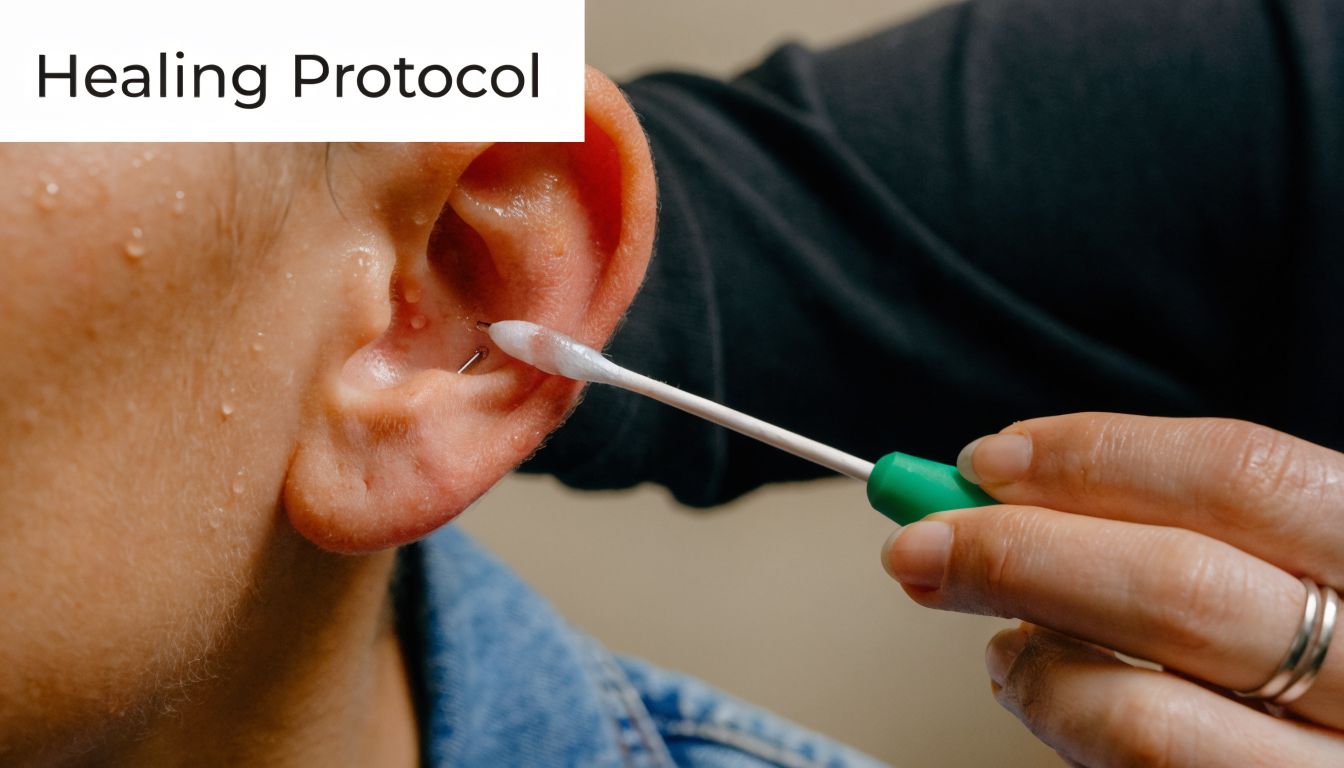
Cartilage usually settles best with simple, repeatable care. The goal is to keep the area clean, keep moisture from sitting around the piercing for too long, and avoid adding extra friction.
The routine that works
Fresh cartilage behaves a bit like a scab on a moving joint. It can cope with gentle care, but it does not like being disturbed over and over. That is why studio aftercare stays so simple.
At Timebomb in Croydon and Bournemouth, we usually guide clients towards the same calm routine:
- Wash your hands first. If your hands are not clean, leave the piercing alone.
- Use sterile saline. A ready-made sterile saline spray is the usual choice for a healing piercing.
- Let it loosen crusting. Spray the front and back, then give it a moment to soften any dried discharge.
- Dry the area gently. Use clean paper towel or non-woven gauze, and pat rather than rub.
- Leave the jewellery still. Once it is clean and dry, the job is done.
That is often sufficient, once or twice a day depending on what your piercer has advised and how much build-up you are getting. If the piercing looks calm, resist the urge to keep fussing with it.
Dried discharge often worries clients, especially in the first part of healing. In most cases, that build-up is just the piercing doing normal wound care. Saline softens it. Time lifts it away. Fingernails, picking, and scraping usually create the irritation people were trying to prevent.
What to avoid completely
Trouble often starts with products that sound helpful but make a healing piercing angrier. Cartilage does not need a full skincare routine. It needs less interference.
Avoid these common mistakes:
- Twisting or rotating the jewellery. This drags the healing channel and can restart irritation.
- Alcohol, peroxide, or harsh antiseptics. These can dry out the tissue and slow recovery.
- Oils, balms, and creams. They hold onto debris and keep the area too damp.
- Cotton wool or loose cotton buds. Stray fibres can catch around jewellery.
- Cleaning too often. Constant cleaning can leave the skin sore and tight.
- Touching it to check on it. Pressure and bacteria are a poor combination.
One simple test: If what you’re doing makes the piercing redder, hotter, tighter or more swollen straight afterwards, stop and simplify.
That little check saves a lot of people from overdoing it. Good aftercare should calm the piercing down, not start a fresh argument with it.
Showering, haircare and daily life
The sink is only a small part of aftercare. The rest happens while you wash your hair, get dressed, answer the phone, and forget your ear is there until it catches on something.
A few practical changes make a real difference:
- Hair products: Keep shampoo, conditioner, hairspray, and dry shampoo off the piercing as much as you can. Rinse the ear well afterwards.
- Towels: Pat around the area gently. Rubbing can snag the jewellery.
- Clothing: Take jumpers, hoodies, and high collars off slowly and with one hand guarding the ear.
- Phones: Use speaker mode or hold the phone away from the healing side.
- Headwear: Be careful with helmets, over-ear headphones, beanies, and anything tight across the ear.
If you wear your hair down, check whether strands are wrapping around the back of the jewellery. That catches more often than people expect, especially with fresh flat-backs.
Keep it steady, not perfect
Missing one clean does not ruin a piercing. Scrubbing at it five times because you feel guilty about missing one often does more harm.
What helps most is consistency. Clean it gently. Dry it well. Keep pressure and snags to a minimum. Then let your body do the slow part.
If anything feels unclear, that is where a real studio helps more than generic advice online. Clients at Timebomb in Croydon and Bournemouth can always ask us to sense-check their routine, especially if they are stuck between “leave it alone” and “am I ignoring a problem?” That kind of reassurance is often what turns an anxious healing period into a much smoother one.
Key Factors That Speed Up or Slow Down Recovery
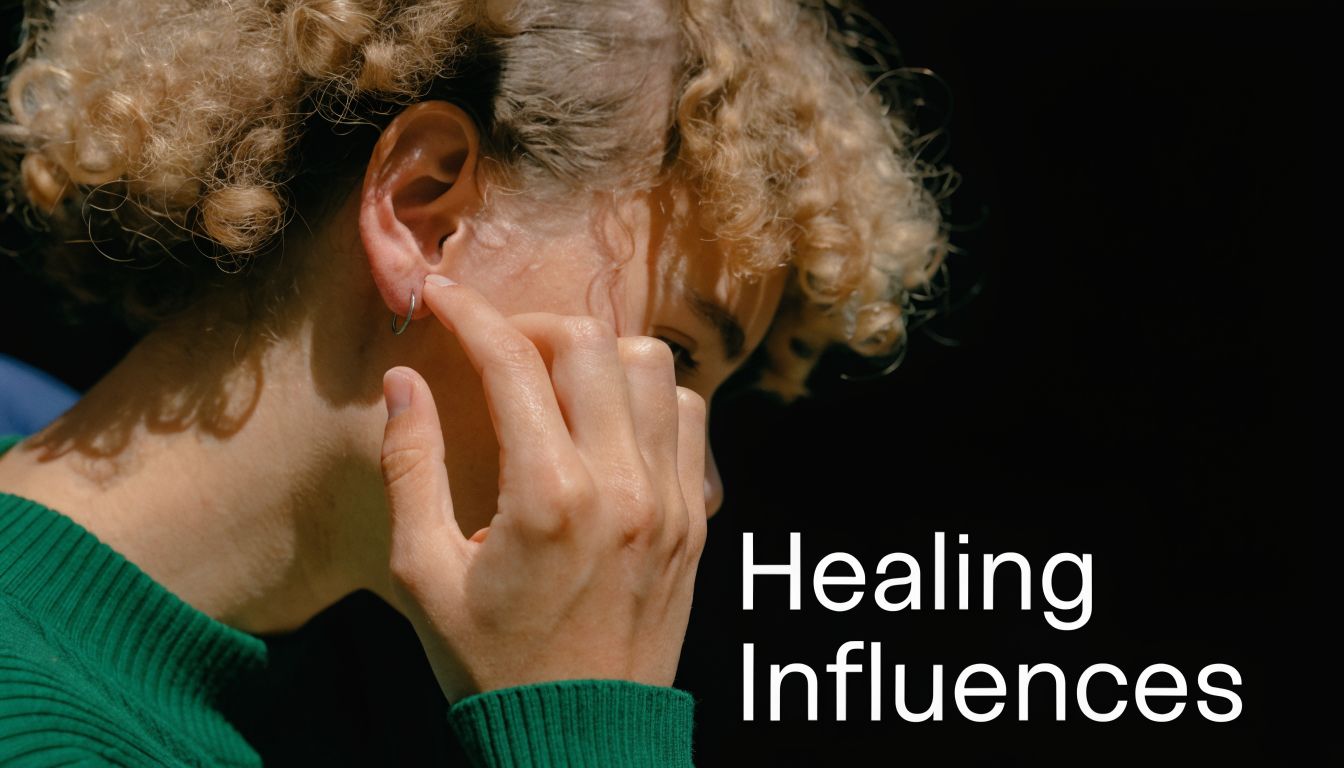
Two people can follow the same cleaning routine and still have different results. That’s because healing isn’t controlled by aftercare alone. Jewellery quality, placement, anatomy, sleep, stress, and daily habits all shape the outcome.
If your cartilage piercing is healing slowly, it doesn’t always mean you’re doing something wrong. But it does mean it’s worth checking the full picture.
Jewellery matters more than most people realise
A cartilage piercing can only settle around the jewellery it’s given. If that jewellery is poor quality, badly sized, or the wrong style for the stage of healing, the tissue stays annoyed.
For fresh piercings, implant-grade titanium is widely preferred in professional studios because it’s lightweight and tends to be well tolerated. A correctly fitted flat-back labret or suitable bar gives the ear room to swell without excessive movement.
Problems often start with jewellery that is:
- Too tight: It squeezes swollen tissue.
- Too long for too long: It moves around and catches.
- Changed too early: The channel isn’t ready and reacts badly.
- Shaped poorly for the placement: The angle and pressure stay wrong.
A ring can look amazing in a healed piercing and be a nuisance in a fresh one. That isn’t a style issue. It’s a timing issue.
Your anatomy sets the rules
Not every ear suits every piercing the same way. A rook that sits beautifully on one person may be awkward on another. An industrial can be smooth to heal on one anatomy and extremely difficult on another if the ridge shape doesn’t support the bar cleanly.
Experienced assessment matters. Good placement works with the ear rather than forcing a design onto it.
The best piercing isn’t the one that looks good on a chart. It’s the one your anatomy can heal well.
Pressure is the silent troublemaker
Most cartilage irritation isn’t dramatic. It’s repetitive. A little pressure every night. A little catch from hair. A little shove from headphones. It adds up.
Sleeping is a big one. If you sleep on the piercing side, your ear can stay mildly inflamed for weeks without an obvious single incident causing it.
Helpful changes include:
- Use a travel pillow: Rest your ear in the hole so there’s no direct pressure.
- Tie long hair back loosely: Strands wrapped around jewellery can tug all night.
- Watch glasses arms and masks: Anything that sits against the piercing can irritate it.
Your general health shows up in your ear
Healing is body-wide work. If you’re run down, stressed, unwell, or not eating and sleeping well, your piercing may show it.
No one needs a perfect lifestyle to heal a helix. But your body does heal better when it has enough rest, hydration, and decent nutrition. Smoking can also make healing harder because the tissue gets less support.
This doesn’t mean a slow piercing is your fault. It means your body and your piercing are part of the same system. Looking after yourself isn’t separate from aftercare. It is aftercare.
Normal Irritation vs a Real Complication
You clean your helix, catch it in the mirror, and suddenly wonder if you should be worried. It looks a bit red. There is a crust on the jewellery. It felt calmer yesterday, but today it is sore again after a rough night’s sleep. That pattern can be unsettling, especially with cartilage, because healing is rarely perfectly linear.
Cartilage often behaves like a bruise with a long memory. A small knock, a sleep on the wrong side, or jewellery that is still settling can stir it up again without meaning anything dangerous has happened. The useful skill is knowing what belongs in the “annoying but expected” category, and what needs prompt attention.
What usually counts as normal
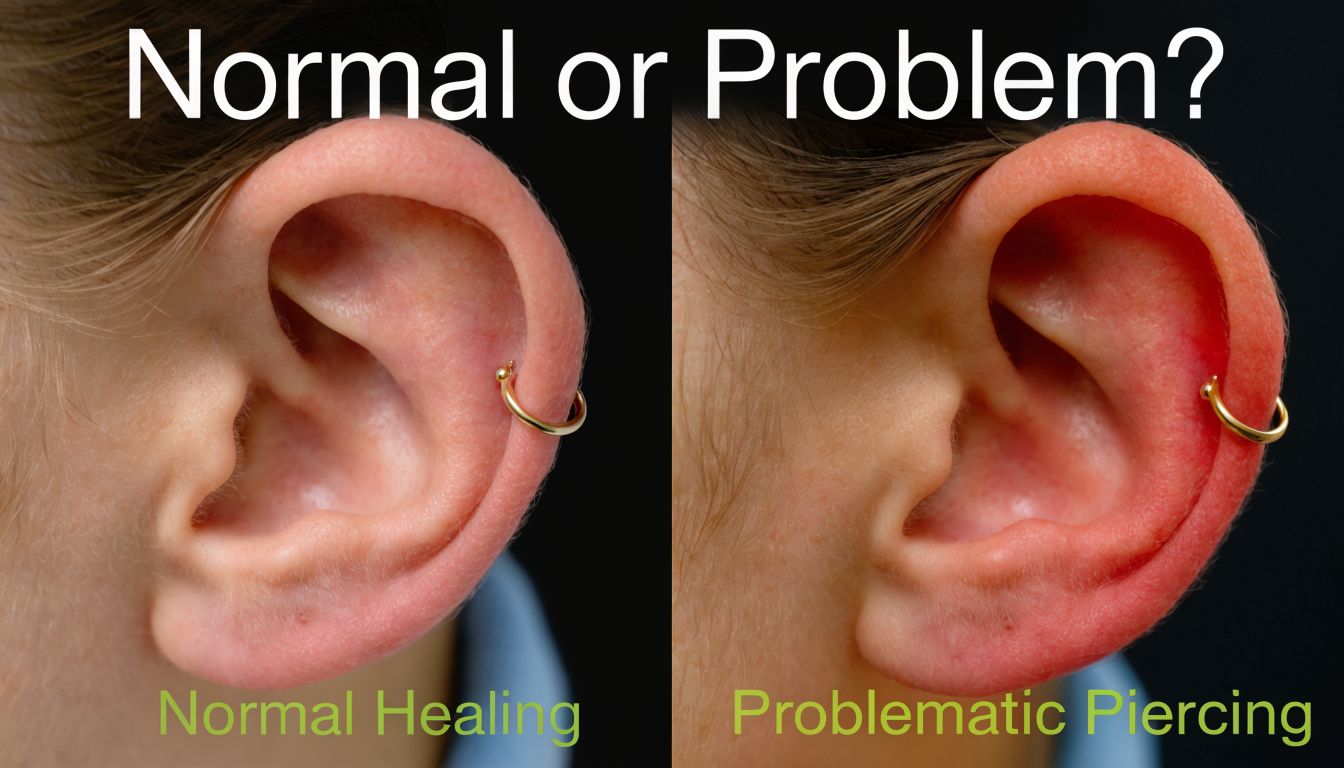
A healing cartilage piercing can be a bit temperamental. It may feel fine for several days, then become tender after a snag or a night of pressure. That up-and-down pattern is common.
These signs usually fit normal healing:
| More likely normal | Worth monitoring closely |
|---|---|
| Mild redness near the piercing | Redness spreading further across the ear |
| Local tenderness when touched | Pain getting stronger rather than calmer |
| Clear or pale yellow crusties | Thick green or dark yellow pus |
| Brief swelling after a knock | Persistent heat and throbbing |
| Small irritation from pressure | Rapid swelling or jewellery sinking |
Crusties worry clients more than almost anything else. In plain terms, they are often dried lymph and wound fluid. Your body uses that fluid the way a builder uses protective sheeting on a fresh job. It is part of the repair process, and a small amount is expected.
Small bumps can also cause confusion. An irritation bump is often the piercing’s version of a protest sign. The tissue is reacting to pressure, movement, or ongoing aggravation. Hypertrophic scarring can happen with cartilage too, particularly when the area stays irritated for a long stretch. That does not automatically mean infection, and it does not mean you have done permanent damage.
What points to a real issue
A genuine complication usually follows a clear trend. The ear is not just having an off day. It is getting steadily angrier.
Contact your piercer promptly if you notice:
- Increasing pain: The area feels more painful day by day, rather than slowly settling.
- Thick discoloured discharge: Green or darker yellow pus is different from pale dried lymph.
- Heat spreading through the ear: Local warmth can happen, but pronounced heat that seems to radiate is more concerning.
- Jewellery starting to embed: Swelling makes the front or back look as if it is being swallowed by the tissue.
- A bump that keeps enlarging: Especially after jewellery fit, cleaning, and obvious sources of irritation have been addressed.
One point that catches people out is timing. Infection and irritation can both make a piercing red and sore. The difference is often the direction of travel. Irritation tends to flare, then ease once the trigger is removed. Infection tends to keep building.
When to speak to your piercer and when to call your GP
A piercer and a GP do different jobs, and knowing who to ask can save time.
If the problem looks local to the piercing, start with your piercer. They can assess jewellery length, angle, pressure points, and whether the tissue reaction looks mechanical. At Timebomb in Croydon and Bournemouth, this kind of check is part of proper aftercare support, not an inconvenience.
If you have spreading redness, severe swelling, fever, chills, or feel generally unwell, contact your GP as well. Those signs need medical input.
Do not take jewellery out on impulse unless a qualified professional advises it. Removing it too soon can make assessment harder and can sometimes trap the problem rather than settling it.
Your Piercing Partner at Timebomb in Croydon and Bournemouth
Good healing support doesn’t stop when you leave the studio. That’s especially true with cartilage, because most questions appear later. Usually not on day one, but when the piercing has a flare-up after a haircut, starts crusting more than expected, or gets caught and feels sore again.
That’s where having an experienced studio matters. Timebomb in Croydon and Bournemouth gives clients something generic online advice can’t. Real eyes on the piercing, practical troubleshooting, and calm guidance based on what your ear is doing.
If you’re unsure whether your piercing is healing normally, if the jewellery feels too tight, or if you think you may need a downsize once swelling has settled, ask. It’s much easier to sort a small irritation early than to let it drag on for weeks.
Clients can contact Timebomb directly for support:
- Phone: 01202 9000 50
- WhatsApp: 07752913846
Sometimes the best next step is sending a clear photo on WhatsApp and getting proper advice before trying random internet fixes. That kind of support can save you a lot of stress.
If you’re in Croydon or Bournemouth and want reassurance, aftercare guidance, or a professional check-up, get in touch with the studio. Cartilage healing is a partnership. You do the day-to-day care. Your piercer helps you keep it on track.
Frequently Asked Questions About Cartilage Healing
When can I change my jewellery
Don’t rush this. A cartilage piercing may look settled before the inside is ready. Jewellery changes are best done only when the piercing is stable, and if you’re unsure, let your piercer handle the first change.
Is it safe to wear headphones or earbuds
Sometimes, but it depends on the placement. Over-ear headphones can press on a helix. Earbuds can irritate a tragus or conch. If your audio gear touches the jewellery or pushes the ear out of shape, avoid it until the piercing is much calmer.
How long until I can swim
It’s best to be cautious with pools, hot tubs, and open water while the piercing is fresh and unsettled. If you’re thinking about swimming regularly, ask your piercer based on how your specific placement is healing.
What should I do if I accidentally knock my piercing
Don’t panic. Clean your hands, check whether the jewellery still sits correctly, then use sterile saline and leave it alone. Expect a temporary flare-up. A knock can make a piercing sore and swollen again even if it had been doing well.
Should I remove the jewellery if it’s irritated
Usually, don’t remove it without professional advice. Irritation doesn’t automatically mean infection, and removing jewellery at the wrong moment can create a new set of problems. Get it assessed first.
Why does it seem healed and then get sore again
That’s very common with cartilage. The outer tissue may look calm while deeper healing is still underway. Pressure, sleep, snagging and early jewellery changes can all wake it up again.
If you’re looking for trusted studios, clear aftercare advice, and help booking with experienced piercers in your area, Piercing Near Me makes it easier to find safe, professional support, including Timebomb’s Croydon and Bournemouth locations.