
You're probably in one of two places right now. You've either picked out the exact ear piercing you want and just need a studio you can trust, or you're still hovering between excitement and caution, reading reviews, comparing jewellery photos, and wondering who takes safety seriously.
That hesitation is sensible. An ear piercing looks simple from the outside, but the quality of the procedure, the jewellery, and the aftercare make a huge difference to how comfortably it heals and how good it looks long term. In the UK, body piercing beyond the earlobe has had a 10% prevalence among adults, and non-lobe ear piercings were reported by 1.8% of adults in a survey published on PubMed Central. The same survey found that 46.2% of women aged 16 to 24 had some form of body piercing, which tells you how normal ear cartilage work has become.
Popularity, though, doesn't remove the need for standards. The more common helix, conch, tragus, and curated ear projects become, the more important it is to separate a proper piercing studio from a place that treats ear piercing like a quick retail add-on.
Your Guide to Getting Pierced in Newcastle
A lot of clients looking for ear piercing newcastle want the same balance. They want something stylish and well placed, but they also want someone to explain what's happening, use sterile equipment, and give honest advice if a certain placement doesn't suit their anatomy.
That matters most for first-timers. A second lobe or helix often starts as a spontaneous idea. Then the practical questions arrive. Will it hurt much? How long will it heal for? Is a gun acceptable for ears? What jewellery should go in first? Can a teenager have it done without a parent? Those questions should be welcomed, not brushed aside.
What people usually get wrong
The biggest mistake isn't being nervous. It's assuming every place that offers ear piercing works to the same standard.
Some studios build their whole process around sterile technique, anatomy checks, single-use tools, and sensible jewellery choices. Others focus on speed. That difference shows up later in swelling, irritation, crooked placement, and avoidable healing problems.
Good piercing isn't just making a hole in the ear. It's choosing the right placement, the right angle, and the right jewellery for how that tissue will heal.
What a strong studio should offer
If you're choosing carefully, look for a team that does more than perform the piercing itself:
- Anatomy-led placement that suits your ear shape, not just a trend photo
- Needle-based piercing instead of gun-based shortcuts
- Implant-grade jewellery for fresh piercings
- Straight answers about healing time, downsizing, and what won't work
- Aftercare support you can easily access if you've got questions a week later
That's the standard serious clients should expect. If a Newcastle studio can't explain its process clearly, that's useful information in itself.
How to Choose a Reputable Newcastle Piercing Studio
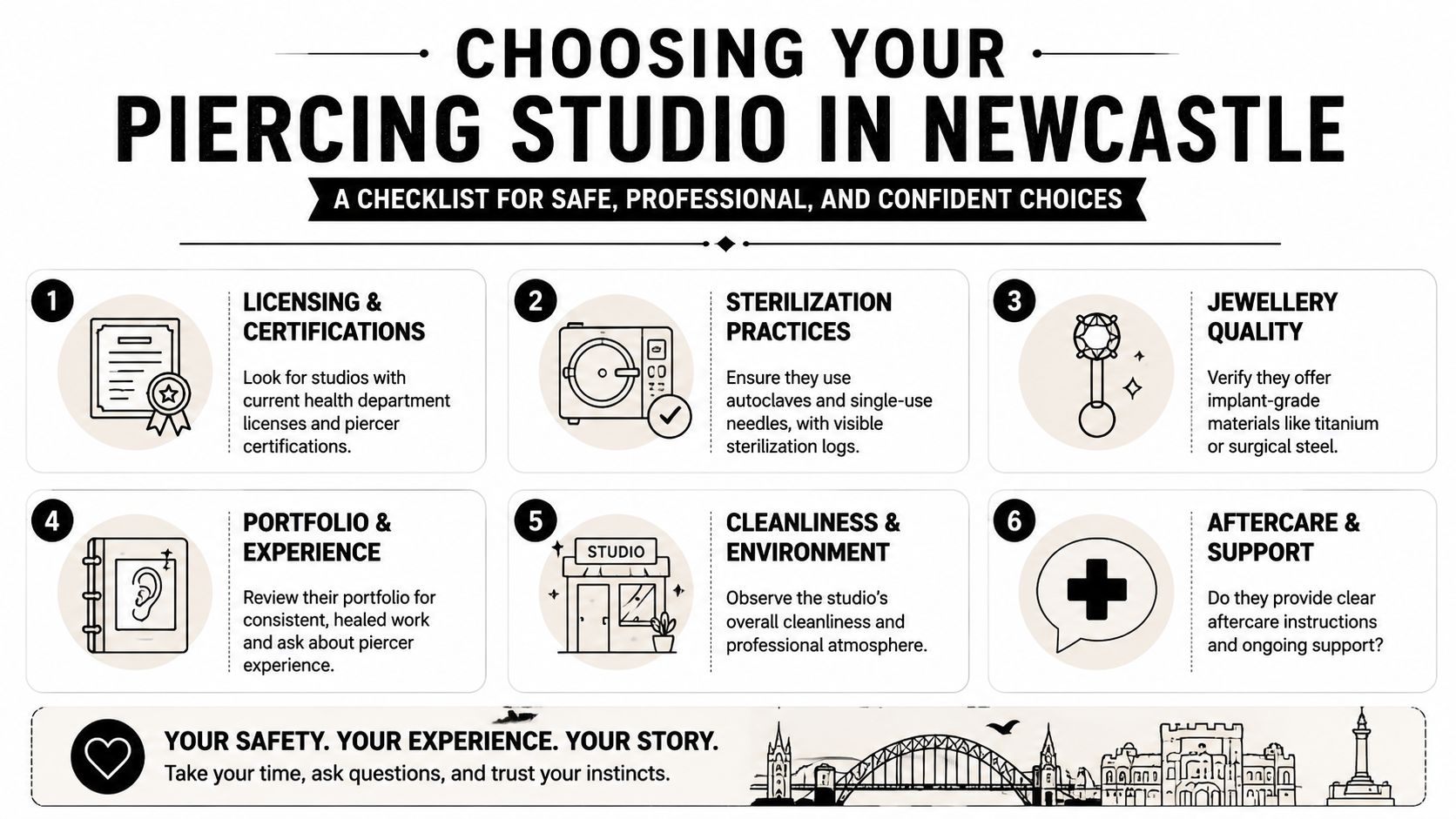
You walk into a studio for a simple lobe or helix piercing, and the first few minutes tell you a lot. The room should feel controlled, the tools should be sealed until your appointment starts, and the piercer should ask to see the ear before discussing placement. If the process feels rushed, sales-led, or vague on hygiene, leave.
One question filters out a lot of weak options quickly. Ask what method they use for ear piercing.
For cartilage, a reputable studio should be using a sterile single-use needle. Some studios and educators in the industry argue that guns create more blunt-force trauma than needles, particularly in cartilage, but if a studio is making that claim with numbers attached, they should be able to show you the original source. In practice, the key point is simpler. Needles allow cleaner placement, better control of angle, and a more considered jewellery fit for swelling.
Green flags that matter
Good studios make their standards easy to inspect. You should not have to drag basic information out of them.
- Sterile single-use needles opened in front of you for the procedure
- A dedicated clean procedure area rather than a busy retail counter
- Clear answers on jewellery materials and suitable options for a fresh piercing
- A portfolio that shows consistent angles and balanced placement, not just close-up glamour shots
- A proper consultation where the piercer checks anatomy, discusses healing, and explains why a placement will or will not work
One of the strongest signs is restraint. An experienced piercer will turn down a placement that is likely to sit crooked, heal badly, or put too much pressure on the tissue.
Red flags that should stop you
Some warning signs are immediate and practical.
| What you see | What it usually means |
|---|---|
| Piercing gun offered for cartilage | Speed is being prioritised over precision and tissue handling |
| Vague metal descriptions | Jewellery quality may be inconsistent or unsuitable for a fresh piercing |
| No discussion of initial swelling | The jewellery choice may be wrong for healing |
| Marking done in seconds, with little review | Placement accuracy is not getting proper attention |
| No clear aftercare or follow-up process | Support ends once payment is taken |
A good studio should welcome basic safety questions. If the response is defensive, dismissive, or overly vague, treat that as useful information.
Credentials and real-world judgement
Certificates on the wall are fine, but they are not enough on their own. What matters more is whether the piercer can explain sterilisation steps, jewellery options, placement limits, and healing trade-offs in plain English.
In our studios, that standard is expected. We check anatomy first, use sterile single-use equipment, and talk clients through what will heal well on their ear rather than forcing a trend onto unsuitable tissue. That approach is less flashy than quick turnover, but it produces better placements and fewer avoidable problems.
If you are comparing Newcastle studios, judge them on process, not branding. Clean technique, traceable jewellery quality, and a piercer willing to say no are better signs of a safe appointment than a polished Instagram feed.
Understanding Implant-Grade Jewellery and Needle Standards
A fresh piercing needs stable, well-finished jewellery. That's where many healing issues begin. People often blame “sensitive skin” when the actual problem is poor-quality metal, rough polish, or jewellery shaped badly for the tissue.
What to ask about jewellery
For a new ear piercing, ask exactly what material is going into your body. Clear answers matter.
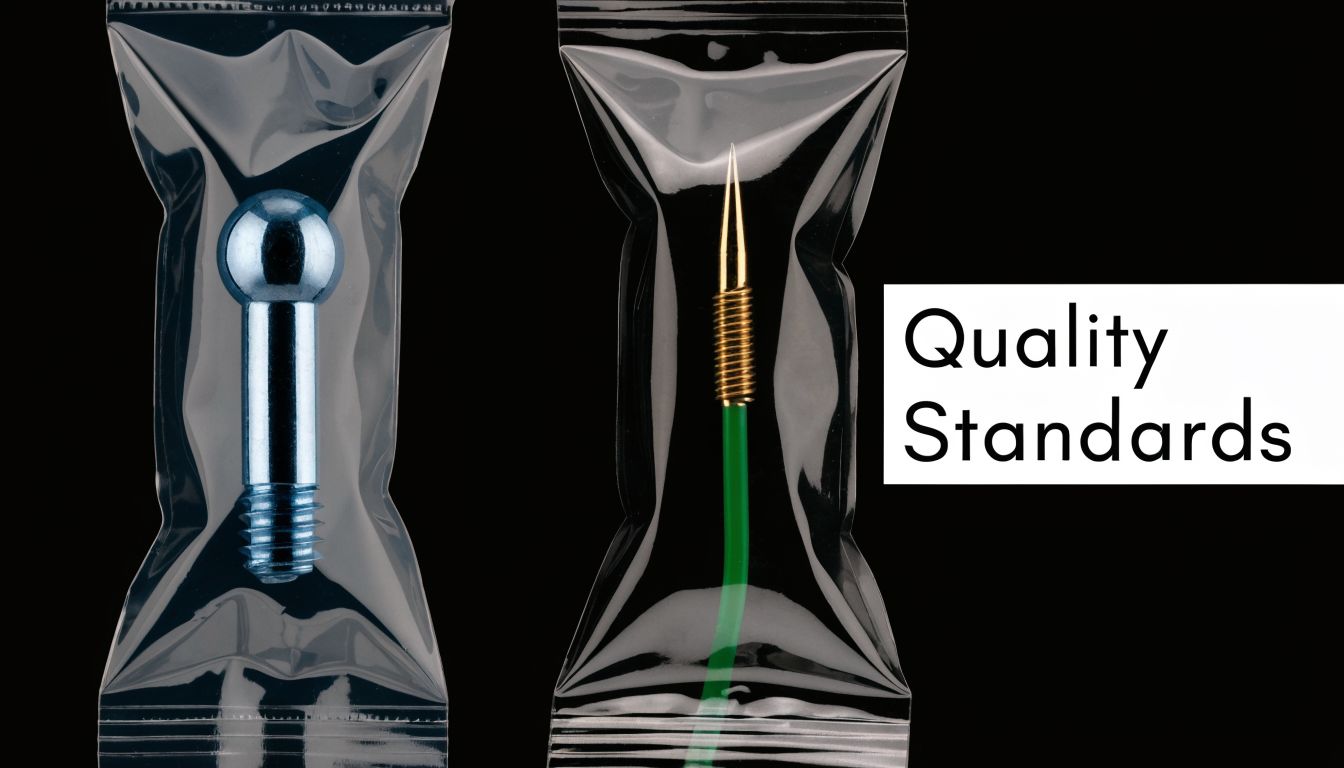
Implant-grade titanium is widely trusted because it's appropriate for fresh piercings and tends to suit clients who react badly to mixed or mystery metals. Solid gold can also be suitable when it's the right quality and construction for a fresh piercing. What you want to avoid is jewellery sold with broad labels and no detail.
“Surgical steel” is one of those labels that can mean very different things depending on the supplier. Some clients wear it without issue. Others don't. In a fresh piercing, uncertainty is a poor bargain.
Finish and fit count as much as material
Even good metal can irritate if the finish is poor. A properly polished piece should feel smooth, with no rough threading, sharp edges, or uneven surfaces rubbing inside the channel.
The fit matters too. Initial jewellery needs enough room for swelling, but not so much length that it catches constantly in hair, clothing, or bedding. That balance is part of the piercer's job.
Jewellery should support healing quietly. If it snags, twists excessively, or presses into tissue, something in the setup needs reviewing.
What proper sterile setup looks like
A professional setup is easy to recognise once you know what to look for:
- Needles in sealed sterile packaging opened in front of you
- Fresh gloves and hand hygiene before any contact with the piercing area
- Marked placement checked with you before the procedure
- Single-use consumables wherever possible
- A clear jewellery prep process that doesn't involve random trays of loose pieces
One source used by UK piercing businesses states that the Caflon ear piercing system is designed to meet British Health Authority requirements and uses single-use sterile cartridges through Newcastle Jewellery. Even where studios use different methods, the principle is the same. Sterility, traceable processes, and predictable materials are paramount.
What to Expect During Your Piercing Appointment
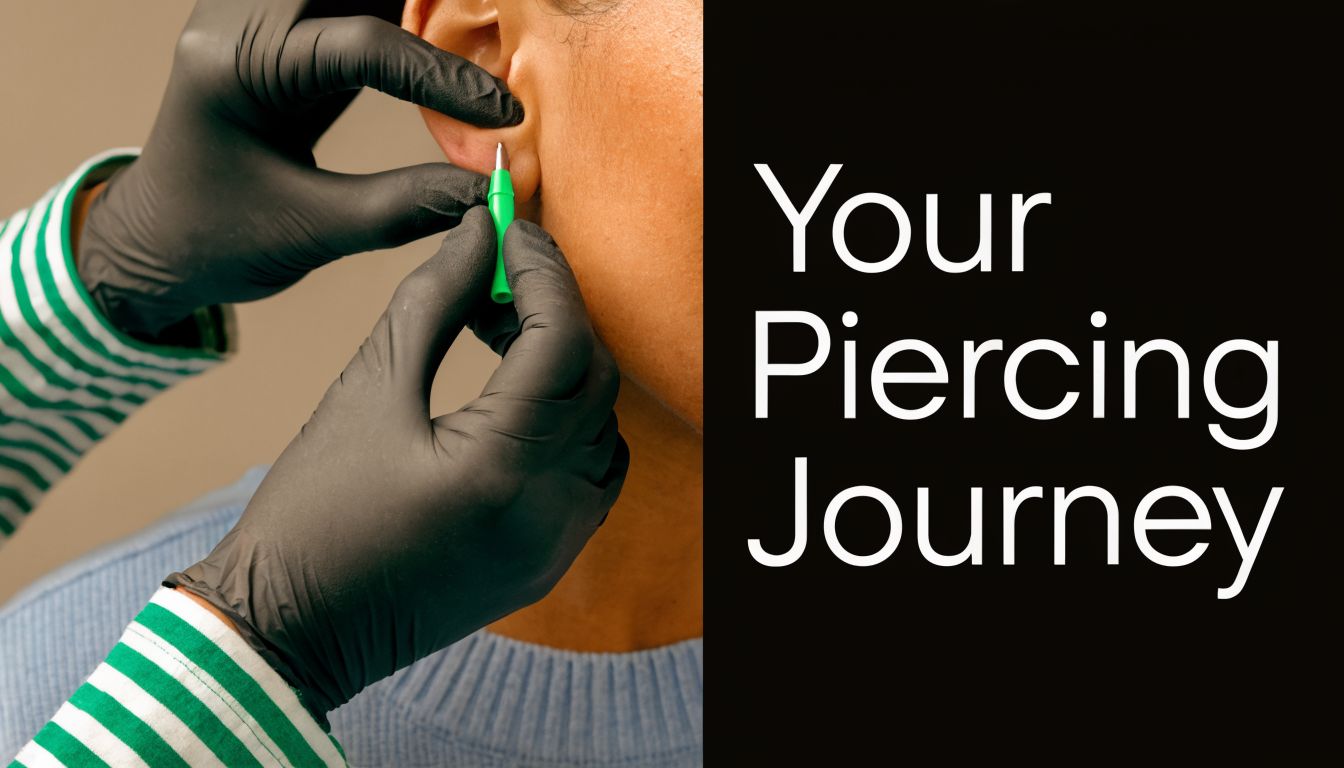
Most anxiety drops once clients know the sequence. A good appointment feels organised, not theatrical. Nobody should be rushing you, and nothing should feel improvised.
The appointment usually starts with questions
First comes the consultation. You'll discuss the placement you want, whether your anatomy suits it, and what jewellery shape and size will work best for a fresh piercing. If it's a cartilage placement, the piercer should also talk openly about sleeping habits, headphones, glasses, and anything else likely to affect healing.
Then comes ID and consent. A professional studio won't skip paperwork just because the piercing looks simple.
Marking is part of the service
Placement marks matter. They let you see the position before anything is pierced, and they give the piercer a final chance to check symmetry, spacing, and angle.
This stage shouldn't be rushed. If you want the mark slightly higher, lower, closer, or more balanced with existing jewellery, say so then. It's much easier to adjust ink than tissue.
The piercing itself is quick
Once the area is prepared, the jewellery and sterile tools are ready, and you've approved placement, the actual piercing is brief. Most clients react more to anticipation than to the moment itself.
A skilled piercer will keep instructions simple. Hold still. Breathe normally. Expect pressure, then a sharp pinch, then warmth. After that, the jewellery is fitted and checked.
Most first-timers are surprised by how fast the actual piercing is. The consultation and setup take longer than the procedure, and that's a good sign.
Before you leave
You should leave with practical aftercare advice, not a vague “clean it and don't touch it”.
A proper close-out includes:
- Cleaning guidance that tells you what to use and what to avoid
- Healing expectations for your specific placement
- Advice about sleeping, hair, hats, and headphones if relevant
- A plan for downsizing or review if your jewellery length will need changing
- A contact route in case swelling, irritation, or snags become an issue
That final point matters more than people think. Good studios still care about the piercing once you've walked out.
Essential Aftercare for a Smooth Healing Process
The piercing is done in minutes. Healing is the part that decides whether your ear settles cleanly or stays irritated for months.
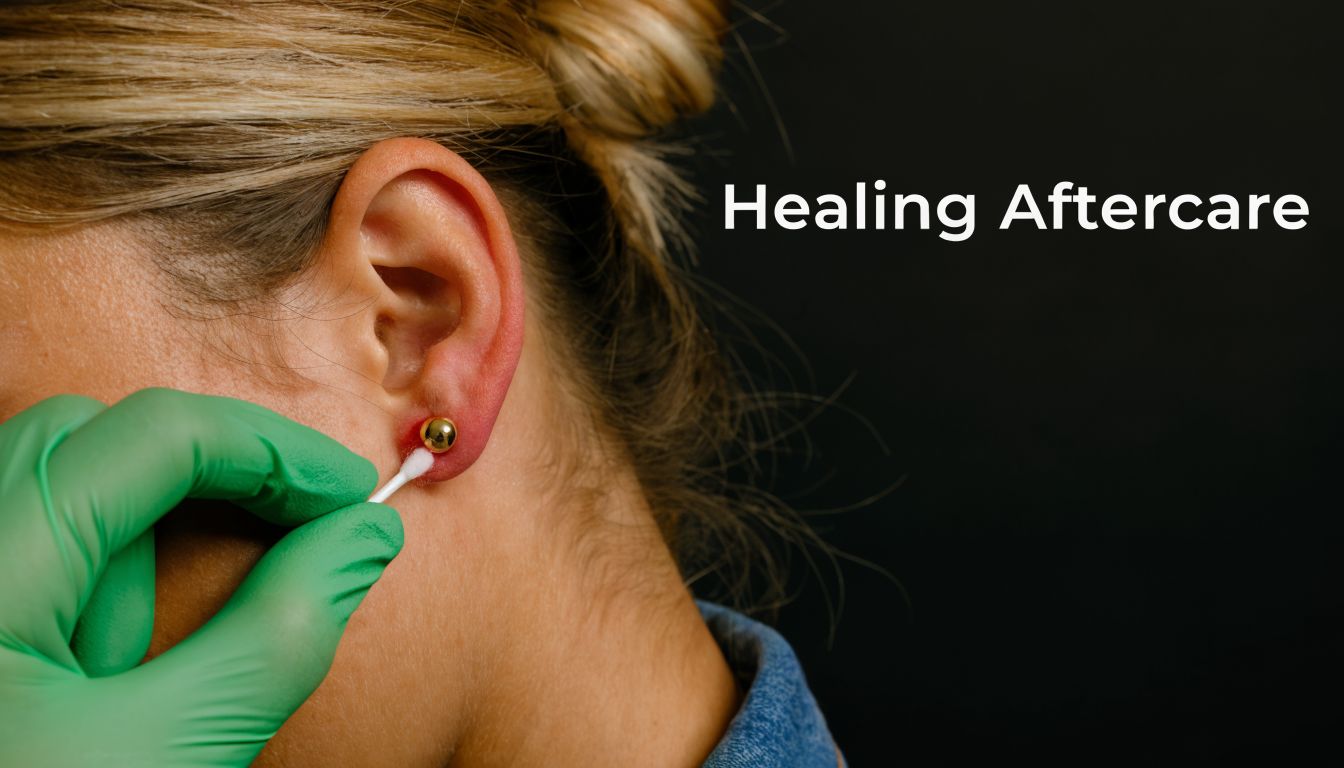
In practice, the problems I see after ear piercing in Newcastle are usually caused by pressure, friction, or bad advice. People sleep on a fresh helix, twist the jewellery, scrub it with harsh antiseptic, or swap the starter piece too soon. The piercing itself may have been done well, with a needle, sterile setup, and implant-grade jewellery, but poor aftercare can still undo that good start.
Lobes usually settle faster than cartilage. Cartilage often stays tender for much longer and can be temperamental even after the first healing stage looks fine. That difference matters, because aftercare that feels manageable on a lobe can be far too rough for a helix, conch, or tragus.
What to do each day
Keep the routine plain and repeatable.
- Clean with sterile saline and avoid homemade salt mixes.
- Leave the jewellery in place unless your piercer has told you a downsize or change is due.
- Keep pressure off the ear, especially while sleeping. A travel pillow or donut pillow helps side sleepers.
- Protect it from snags from hair, hoodies, towels, helmets, and over-ear headphones.
- Wash your hands before touching the area if you need to check or clean it.
More cleaning does not mean better healing. Over-cleaning often dries the channel, increases irritation, and keeps the piercing in a cycle of redness and crusting.
What is usually normal, and what needs review
Fresh piercings do react. Mild warmth, light swelling, and a little pale crust are common early on.
| Usually normal | Worth getting checked |
|---|---|
| Mild redness close to the entry point | Redness spreading outward |
| Light swelling | Tight, increasing swelling that makes the jewellery feel buried |
| Clear or pale crusting | Thick yellow or green discharge |
| Tenderness when bumped | Persistent throbbing or strong pain without contact |
| Warmth soon after the procedure | Ongoing heat and an angry, inflamed look |
One practical point. Cartilage irritation can look dramatic without being infected. That does not mean you ignore it. It means you get it assessed by an experienced piercer, because the fix may be reducing pressure, improving cleaning, or changing the post length rather than reaching for random creams.
What slows healing down
Fresh ear piercings dislike movement and pressure. The common mistakes are predictable.
- Twisting the jewellery to “stop it sticking”
- Using alcohol, tea tree oil, ointments, or strong antiseptics
- Changing jewellery before the channel is stable
- Sleeping on a new cartilage piercing
- Skipping a recommended downsize once initial swelling has dropped
Good aftercare is simple, but it is not casual. The studios in Newcastle that heal piercings well usually give clear written guidance, explain the trade-offs around sleeping, workwear, sport, and headphones, and ask clients to come back for a check if swelling or movement becomes a problem. That standard matters just as much as the piercing itself.
UK Piercing Rules Age Consent and Typical Costs
A parent brings in a twelve-year-old for first lobes. A university student wants a helix between lectures. The first question is rarely jewellery style. It is usually age, consent, and what the studio fee includes.
UK rules are not identical in every studio because individual businesses set their own policy for minors, but the safer studios in Newcastle are usually the clearest. They will ask for photo ID, set minimum ages by placement, and explain where a parent or guardian must be present. Earlobes are often the only option considered for younger children. Cartilage, facial, and intimate piercings are treated far more cautiously.
Age and consent in practice
Good studios do not make age decisions at the counter based on who asks nicely. They work from a written policy and apply it consistently.
In practice, that usually means:
- Adults and older teens should expect to show valid photo ID.
- Children having lobe piercings may be accepted only with a parent or guardian present, depending on studio policy.
- Mid-teen clients are often limited to specific ear placements.
- Higher-risk or more intimate placements are commonly restricted to adults only.
If a studio seems relaxed about proof of age, walk away. Poor record-keeping and casual consent checks tend to sit alongside other weak standards.
One older data point is still useful for context. Back in 2019, analysts at Infinite Body reported that ear piercings made up over 57% of procedures in a typical studio, according to their 2019 piercing statistics. The figure is dated, but it matches what experienced piercers still see day to day. Ear work remains the bulk of bookings, which is exactly why age checks for ear piercings need to be handled properly rather than treated as routine.
What the fee usually covers
Newcastle prices vary because studios are not all selling the same standard of procedure. A low ticket price can mean basic jewellery, limited appointment time, or no follow-up support.
A proper piercing fee will usually include:
- The piercing procedure
- Starter jewellery
- A sterile single-use setup
- Placement discussion and marking
- Written aftercare guidance
It may not include premium gold ends, decorative upgrades, or a later downsize appointment. That is normal if the pricing is explained clearly before anything starts.
Cheap work often costs more later
First-timers often get caught out here. Two studios can charge different prices for what looks like the same ear piercing, but one may be using implant-grade jewellery and needle-based technique while the other cuts corners on materials, training, or time.
I would rather see a client pay a fair price once than pay twice for a poor placement, irritation from low-quality metal, or jewellery that needs replacing early. For parents booking a child's first lobe piercing, and for adults building a curated ear, the useful question is simple. What standards are included in the price?
If you are comparing studios beyond a basic directory listing, Piercing Near Me can help you assess which Newcastle studios focus on sterile needles, implant-grade jewellery, and clear aftercare, as noted earlier.