
A lot of advice about a labret nose piercing starts with the wrong idea. It talks as if “labret nose” is a special placement, a trend, or some new variation of nostril piercing. It isn’t.
In professional piercing language, labret usually describes the jewellery style, not the spot being pierced. So when people say “labret nose piercing”, they usually mean a nostril piercing fitted with a flat-back labret stud. That distinction matters because the right jewellery can make healing calmer, cleaner, and much more comfortable.
I’m going to explain this the same way I would in the studio to a first-timer who’s a bit nervous and trying to sort good information from outdated advice. If you’ve seen people recommend butterfly-back nose studs, cheap mystery metal, or piercing guns, leave that behind. Modern professional nose piercing is built around proper placement, sterile technique, and jewellery that works with your anatomy rather than against it.
The Truth About the Labret Nose Piercing
The most important thing to clear up is simple. A labret nose piercing is not a separate nose piercing placement.
A labret stud is a piece of jewellery with a straight post, a flat disc on the back, and a decorative top on the front. In a nostril piercing, that flat back sits inside the nose. The visible end sits on the outside. So if someone asks for a “labret nose piercing”, what they usually want is a standard nostril piercing done with a flat-back stud.
That sounds like a small language detail, but it changes everything about how you shop for jewellery, how you compare studios, and how you set expectations for healing. If you think “labret” means a placement, you might miss the fundamental question, which is this: what jewellery should a fresh nostril piercing start with?
Why the wording matters
Nose jewellery names get mixed up all the time. People use “stud”, “screw”, “pin”, “labret”, and “nose ring” as if they all mean the same thing. They don’t.
Here’s the simple version:
- Nostril piercing means the placement
- Labret stud means the jewellery style
- Hoop or ring means a circular style, usually better saved for later
- Screw or L-bend means older-style nostril jewellery that can work, but often causes more fuss during healing
Plain English version: You’re not getting your “labret” pierced. You’re getting your nostril pierced, and a labret stud is often the best jewellery to put in it.
Why professionals favour the flat-back option
A fresh nostril piercing needs stability. It also needs jewellery that won’t spin, snag on towels, poke the inside of your nose, or shift every time you wash your face. A flat-back labret addresses those daily annoyances better than many older jewellery styles.
That’s why this guide focuses on safety, comfort, and the practical reality of living with a healing piercing. Beautiful results usually come from boringly good decisions at the start. Good metal. Good fit. Good placement. Good aftercare.
Defining the Modern Standard for Nose Piercings
The modern standard for a fresh nostril piercing is the flat-back labret stud. In UK studios like ours in Croydon and Bournemouth, this style is preferred because the flat disc back reduces tissue irritation and snag risks compared with butterfly backs, and initial nostril jewellery is typically 20ga (0.8mm) with 6mm, 8mm, or 10mm post lengths in ASTM F-136 implant-grade titanium. Piercer reports also note 30-50% fewer embedding incidents versus beaded barbells, and threadless push-pin mechanisms can reduce infection risk during healing from 5% to under 1% according to this breakdown of the many uses of labret studs.
What a labret stud actually looks like
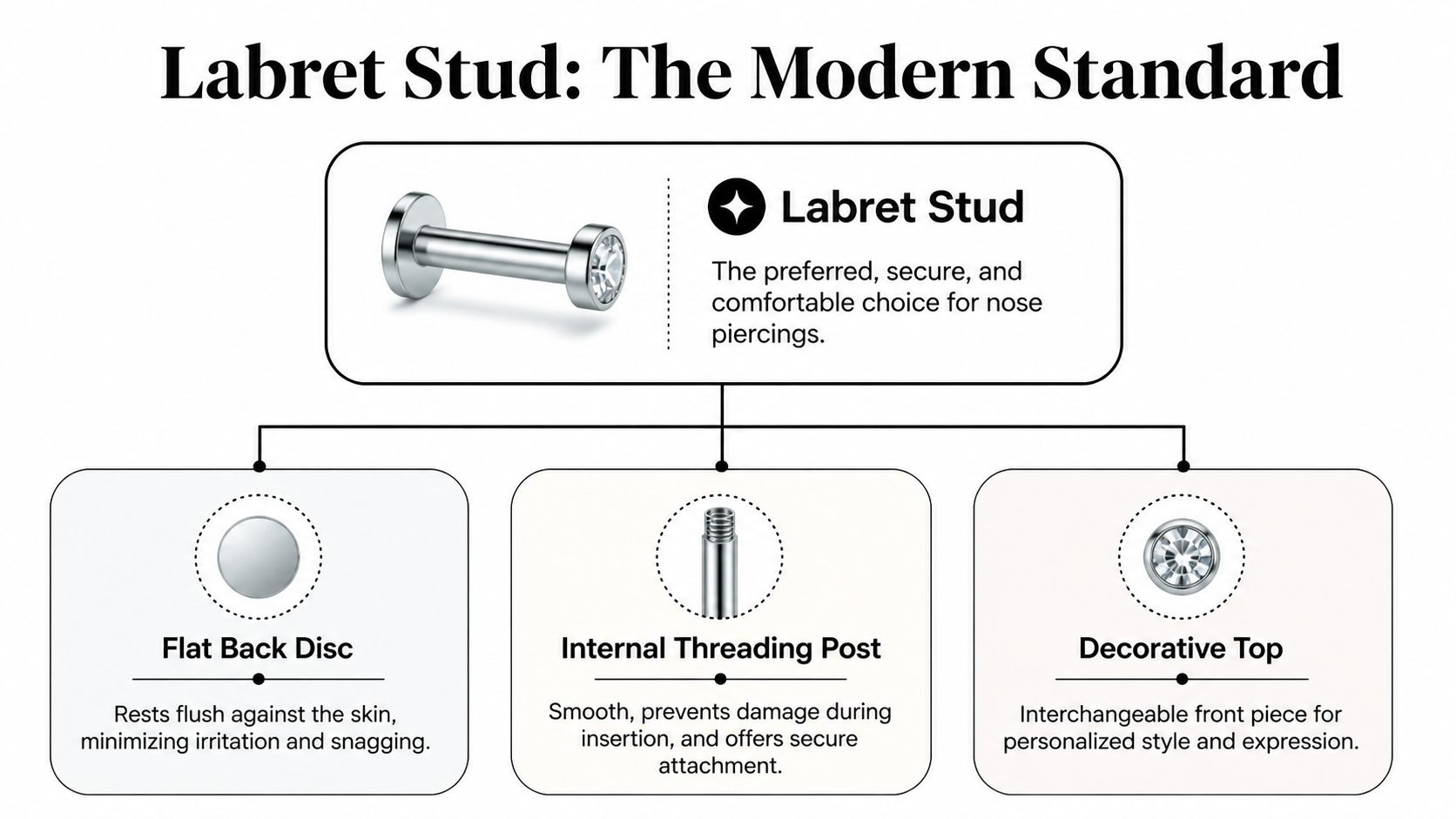
If you’ve never handled one before, think of it as three parts:
The flat back disc
This sits inside the nostril. It’s smooth and low-profile, so it doesn’t jab you the way some jewellery styles can.The straight post
This passes through the piercing channel. For a fresh nostril, the thickness and length need to suit your anatomy.The decorative top
This is the visible bit on the outside. It might be a plain ball, a bezel-set gem, a tiny disc, or something similarly low profile.
Why the flat back feels better day to day
The inside of the nose is delicate. It’s also busy. You blow your nose, wash your face, sleep on one side, pull jumpers over your head, and absent-mindedly rub your face. Jewellery that sticks out, twists, or presses unevenly tends to get noticed fast.
A flat-back labret sits more neatly against the inside of the nostril. That matters in real life.
A few common examples:
- Sleeping feels easier because there’s less internal poking.
- Blowing your nose is less awkward because the backing sits flatter.
- Changing clothes is less dramatic because there’s less exposed shape to catch.
- Daily swelling is easier to manage when the post length is chosen properly.
Practical rule: The best jewellery for a fresh nostril piercing usually isn’t the most dramatic piece. It’s the one that stays put, stays clean, and stays comfortable while your body does the healing.
Material matters more than most people realise
Clients often focus on the visible top. Piercers focus on the whole piece, especially the metal quality.
For fresh piercings, implant-grade titanium is a strong choice because it’s biocompatible and suitable for healing tissue. The verified guidance for this topic points specifically to ASTM F-136 implant-grade titanium (Ti-6Al-4V-ELI) for nostril labret studs. That isn’t just fancy wording. It’s the difference between jewellery made for the body and jewellery made to look nice in a display tray.
Cheap plated metals can create avoidable trouble. Irritation, sensitivity, and inconsistent finish all make healing harder. If a studio can’t clearly tell you what the jewellery is made from, that’s a warning sign.
Fit matters as much as the metal
Even perfect titanium won’t help much if the jewellery is the wrong size.
For fresh nostril piercings, the common starting thickness is 20ga (0.8mm). Post length is chosen based on your anatomy, swelling room, and exact placement. A shallow nostril may suit a shorter post. Thicker tissue or a placement that needs extra room may need more length at first.
What people often get confused about is this: longer isn’t better. You need enough room for healing, but too much extra length can cause movement. More movement usually means more irritation.
A professional piercer checks that by looking at your nostril shape, tissue depth, and how the jewellery sits both inside and outside the nose.
Threadless and internally fitted styles
Many modern labret studs use a threadless push-pin style. That means the top slots into the post securely, without rough outer threads dragging through the piercing channel.
For first-timers, this is one of those details that sounds technical until you wear it. Then it makes sense. Smoother insertion, secure fit, and easy future styling all help.
If you love the idea of changing the visible top later, this is one of the reasons people end up loving labret studs. Once the piercing is fully settled and your piercer says it’s safe, you can often update the front without changing the whole jewellery style.
Jewellery Showdown Labret Studs vs Screws and Rings
When clients ask which jewellery is “best” for a new nostril piercing, they’re usually comparing the look. Piercers compare the healing behaviour.
That’s where the flat-back labret usually pulls ahead. It’s not because screws and rings are impossible. It’s because a fresh nostril piercing tends to heal better with jewellery that stays stable, sits neatly, and doesn’t invite constant fiddling.
The real-life difference
A jewellery comparison only becomes useful when you picture actual daily life.
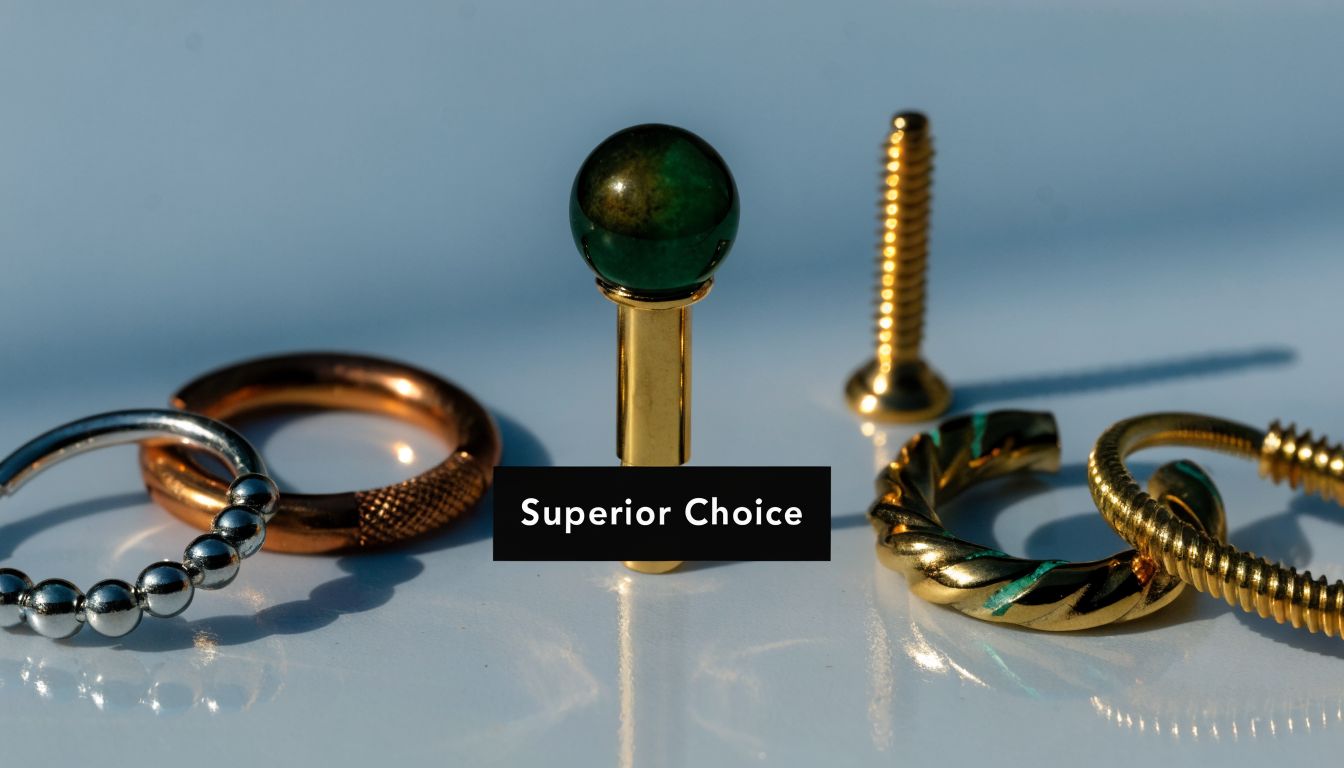
A nostril screw may look secure on paper, but some clients find it rotates, sticks out oddly, or shifts when drying the face. An L-bend can be simple, but it may slide more easily than people expect. A hoop looks great, but it moves constantly. In a healing piercing, that movement can be irritating.
A flat-back labret is the option that usually asks the least of you. It doesn’t mean zero care. It means fewer unnecessary battles.
Nostril Piercing Jewellery Comparison for Initial Healing
| Feature | Flat-Back Labret Stud | Nostril Screw / L-Bend | Hoop / Ring |
|---|---|---|---|
| Stability | Usually very stable when correctly fitted | Can rotate or loosen more easily | Moves frequently |
| Comfort inside the nose | Flat backing tends to feel smooth | Curved tail can feel awkward for some people | Circular shape can press or shift |
| Snag risk | Lower profile, generally less snaggy | Moderate, especially during face washing or clothing changes | Higher because the ring is exposed and mobile |
| Best for fresh piercing | Common professional first choice | Sometimes used, but less forgiving | Usually better once healed |
| Ease while sleeping | Often easier due to flat internal disc | Can poke or twist | Can catch on bedding or pillows |
| Styling during healing | Simple, neat, understated | Fine if stable, but less predictable | Stylish, but often more temperamental |
| Changing later | Decorative top options can be versatile | Whole piece often needs changing | Good later-stage styling option |
Where people get caught out
The word “ring” makes a fresh piercing sound easy. For some people, it also sounds more finished, more visible, more like the look they want straight away. I understand that. But rings move through the channel every time you smile, wipe your face, or bump your nose.
That constant movement is why many fresh ring piercings become fussy. They can feel fine one day and annoyed the next. Clients often describe that as “random”, but it usually isn’t random at all. The jewellery is doing more moving than healing tissue likes.
Why screws fell out of favour for many studios
Nostril screws and L-bends had a long run because they were familiar and widely available. You’ll still see them around, and some healed piercings wear them happily. The issue is consistency.
A screw that’s slightly off for your anatomy can stick up, spin, or feel bulky inside the nose. An L-bend can come out when you least want it to. Neither problem means the jewellery is evil. It means it’s less forgiving.
A fresh nostril piercing benefits from jewellery that behaves predictably. The less it shifts, the less your body has to react to.
A good way to choose
If you’re choosing jewellery for a brand-new nostril piercing, ask yourself:
Do I want the easiest possible healing period?
If yes, flat-back labret jewellery usually makes the strongest case.Am I choosing based on the first week or the finished look months later?
Those are different decisions.Do I want jewellery I’ll notice inside my nose all day?
It's generally not desired.Am I likely to catch it with clothes, towels, or makeup?
Be honest. That answer matters.
This is why a lot of first-time clients start with a labret stud and switch styles later if they want a hoop. You don’t have to marry your starter jewellery. You just need to heal well first.
Your Professional Piercing Journey at Timebomb
A good piercing appointment should feel clear, calm, and well-paced. The piercing itself is only one small part of it. The bigger part is making sure the placement suits your nose, the jewellery suits the fresh piercing, and you leave knowing exactly what to expect.
At Timebomb, we start by clearing up the language. If you ask for a "labret nose piercing," we’ll explain what that usually means in studio terms. It is not a separate nose piercing placement. It usually means a standard nostril piercing fitted with a flat-back labret stud, which is the jewellery style many professional studios now choose for safer, steadier healing.
The consultation and placement check
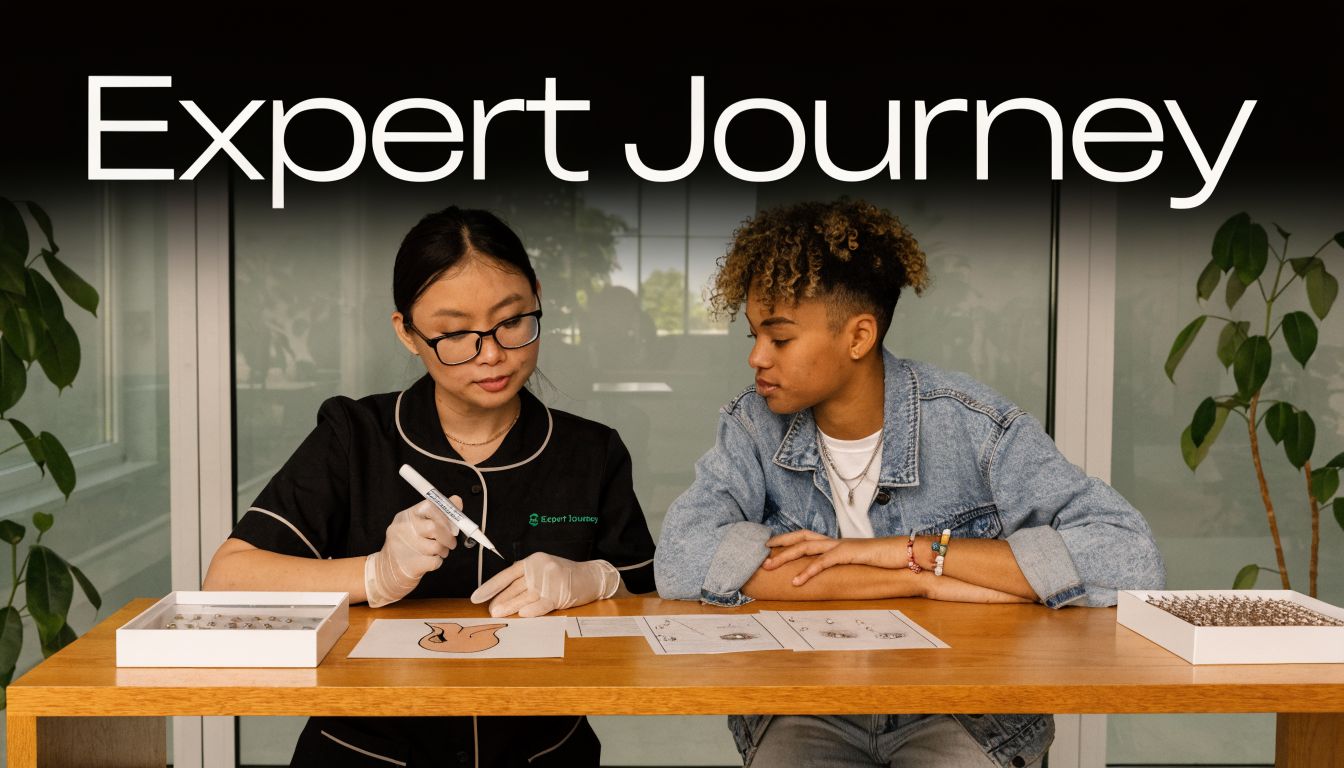
Nostril piercings look simple from the outside, but small placement changes can affect both appearance and comfort. A millimetre can make the difference between a stud that sits neatly and one that feels awkward from the front or bulky inside the nose.
During the consultation, we assess:
- the shape and curve of your nostril
- the thickness of the tissue
- where the jewellery will sit from the front and side
- whether you want a delicate or more noticeable look
- what size top fits the space without overwhelming it
- whether a flat-back labret stud is the best starter option for your anatomy
That last point matters more than many first-timers expect. Jewellery is not just decoration at this stage. It works like the frame that holds everything in place while the tissue settles.
Why the method matters
A professional nostril piercing should be done with a single-use sterile needle, not a gun. Needles create a precise opening for the jewellery. Guns use force, and that is a poor match for nostril tissue.
We also choose implant-grade jewellery prepared for fresh piercings. For many clients, that means titanium and a flat-back labret post sized to allow for early swelling without leaving excessive length. The goal is simple. Stable placement, less movement, and fewer opportunities for irritation.
Studio standard: Sterile needle, implant-grade jewellery, measured placement, and clear aftercare.
What the piercing feels like
Most clients want the honest version.
A nostril piercing is quick. You will usually feel a sharp pinch, then your eyes may water for a moment. That eye-watering catches people off guard, but it is a normal reflex because of the nerves around the nose.
Jewellery insertion can feel slightly stranger than the piercing itself. It is not usually more painful. It is just unfamiliar. A steady explanation at each step helps a lot, especially if this is your first facial piercing.
What happens during the appointment
Appointments usually follow a clear sequence:
Paperwork and ID check
We confirm details, consent, and any practical information we need before we begin.Placement discussion
We mark the nostril and let you check the position carefully in the mirror.Sterile set-up
The area, tools, and jewellery are prepared using proper studio hygiene procedures.The piercing
One controlled pass with a sterile needle, followed by fitting the jewellery.Fit and placement check
We check that the flat-back labret sits correctly and looks balanced.Aftercare guidance
You leave knowing what is normal, what to avoid, and when to come back if you need a downsize or check-up.
Healing expectations
Nostril piercings often feel better before they are fully healed. That confuses a lot of people. The surface may settle quite quickly while the channel inside is still delicate.
Healing time varies by person, jewellery fit, lifestyle, and how often the piercing gets knocked or touched. A fresh nostril piercing can seem settled for days, then feel irritated after catching on a towel, being bumped during makeup, or sleeping with pressure on it. That does not automatically mean anything has gone wrong. It usually means healing tissue has been annoyed and needs a bit of calm again.
Patience helps. So does starting with jewellery designed for fresh piercings, which is exactly why the flat-back labret has become the modern professional standard for so many nostril appointments.
Mastering Piercing Aftercare for Perfect Healing
A well-pierced nostril usually heals best with less fuss, not more.
That catches first-timers off guard. People often assume better aftercare means doing more. In practice, a fresh piercing behaves more like a scrape than a piece of jewellery that needs constant attention. Clean away what should not be there, avoid adding irritation, and let your body do the repair work.
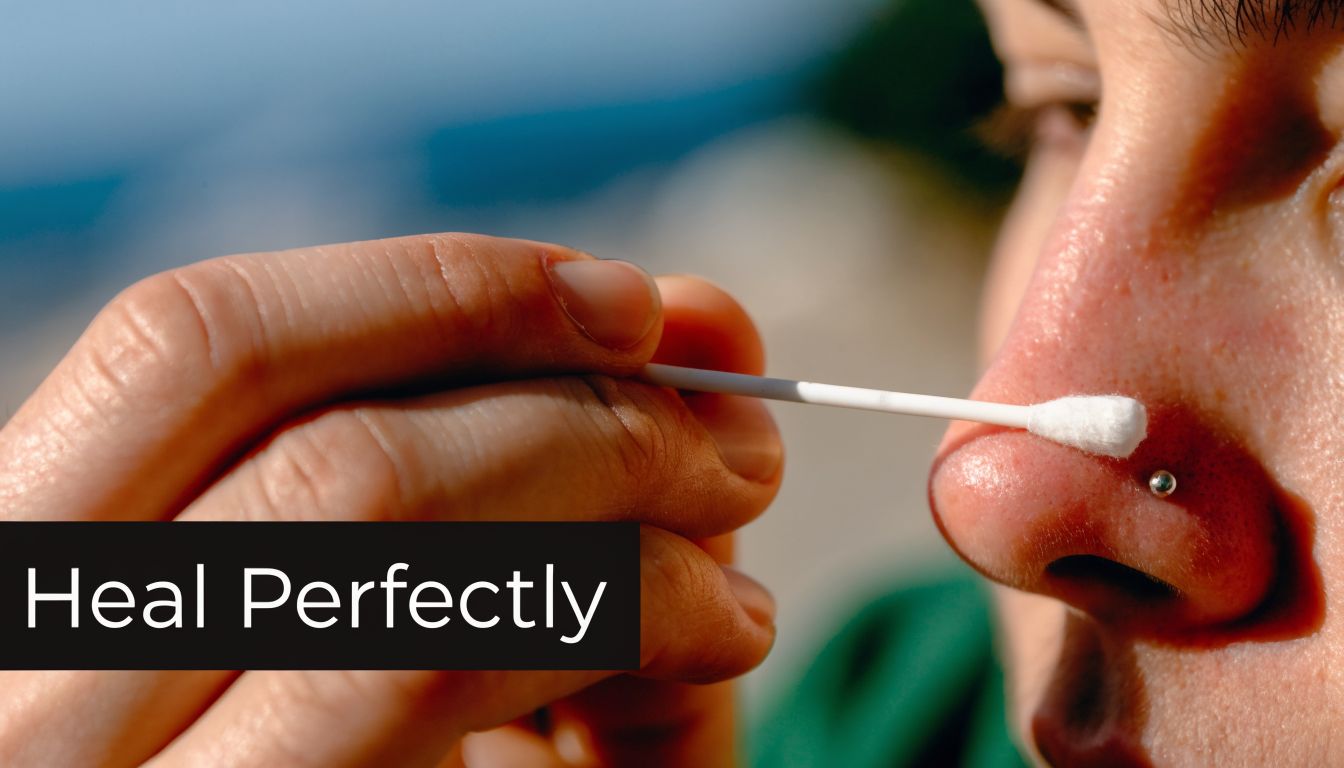
A flat-back labret helps here too. Because the back sits flat against the inside of the nostril, it tends to catch less and move less than older jewellery styles. Less movement usually means a calmer healing period.
What actually helps
Keep your routine plain and repeatable:
- Clean with sterile saline exactly as your piercer advises
- Wash your hands first if you need to go near the piercing
- Let warm water run over it in the shower to soften dried discharge
- Pat dry gently with clean disposable paper, if needed
- Leave the jewellery alone unless your piercer tells you to do something specific
That last point is the one people struggle with.
Jewellery does not need to be twisted, turned, or checked every day. The piercing channel is trying to settle around the post. Repeated movement rubs that delicate tissue and can restart irritation, a bit like picking at a scab that was starting to close nicely.
What makes healing harder
Many problems come from good intentions and bad advice.
Common irritants include:
- Twisting the stud to stop it “sticking”
- Using tea tree oil, alcohol, peroxide, or homemade salt mixes
- Sleeping with pressure on the piercing
- Taking the jewellery out too early
- Changing to a hoop before the tissue is ready
- Touching it during the day
- Getting makeup, skincare, or hair products on the area
Gentle cleaning and then leaving it alone is usually the winning routine.
Normal healing versus signs you should check
A healing nostril piercing can be a little inconsistent. It may look settled for several days, then seem irritated after a snag on a towel or a night of sleeping on that side. That does not automatically mean anything is wrong.
Normal healing often includes mild tenderness, light swelling, some crusting, and brief redness after the area gets bumped. What deserves a closer look is a pattern that keeps worsening instead of calming down. Heat, spreading redness, increasing pain, thick discharge, or feeling unwell are good reasons to contact your piercer and, if needed, seek medical advice.
Irritation bumps worry a lot of people as well. In many cases, the bump is not random. It is the piercing responding to friction, pressure, moisture, unsuitable jewellery fit, or contamination from fingers and products. Remove the cause, keep the routine simple, and many of these bumps settle far better than people expect.
Why professional standards still matter after you leave the studio
Good healing starts with good jewellery, and that brings the “labret nose piercing” terminology back into focus. It is not a different nose piercing. It usually means a standard nostril piercing fitted with a flat-back labret stud, which is the jewellery style many professional piercers choose because it is better suited to fresh tissue.
Aftercare works the same way. Small choices matter. Sleeping on the piercing, over-cleaning it, swapping jewellery too soon, or forcing a hoop before the channel is ready can turn an otherwise well-placed piercing into a frustrating one. A calm routine gives the piercing the best chance to heal neatly and stay comfortable.
When to get in touch with your piercer
You do not need to wait until you are worried.
Contact your piercer if:
- The jewellery feels too tight
- The post seems much too long once swelling has gone down
- You snagged it badly and the angle looks different
- A bump appears and does not improve
- The jewellery loosens or falls out
- You are not sure whether what you are seeing is normal
That follow-up is part of proper piercing care. Asking early is smart, and it often prevents a small irritation from turning into a bigger problem.
Book Your Piercing in Croydon and Bournemouth
If you’ve read this far, you already know the key point. A labret nose piercing usually means a nostril piercing fitted with a flat-back labret stud, and that’s the option many professionals recommend because it gives healing the best chance to go smoothly.
The next step is simple. Book a consultation or piercing appointment at Timebomb Tattoo & Piercing and let a professional assess your anatomy, placement, and jewellery size properly. That matters far more than ordering something online and hoping it works.
How to contact Timebomb
For bookings and questions, use either of these:
Phone
01202 9000 50WhatsApp
07752913846
If you’re unsure whether you’re ready to book, message first. That’s completely fine. A lot of first-timers want to ask about placement, age requirements, jewellery styles, healing, or what to expect on the day.
What to ask before you book
A consultation is especially useful if you’re deciding between a subtle gem, a plain titanium top, or a placement that works with future jewellery plans.
Good questions include:
- Can I start with a flat-back titanium labret stud?
- What post length do you recommend for my anatomy?
- When would you expect me to come back for a jewellery check or downsize?
- If I want a hoop later, when is it sensible to change?
- What aftercare routine do you want me to follow?
Why booking professionally saves trouble later
The biggest problems with nostril piercings usually start before the jewellery ever goes in. Poor placement, low-grade metal, bad fit, and unsuitable jewellery create avoidable setbacks.
A proper studio appointment gives you:
- Placement chosen for your face and nostril shape
- Sterile technique with a single-use needle
- Implant-grade jewellery
- Clear aftercare instructions
- Support if healing becomes tricky
If you’re in or near Croydon or Bournemouth, call 01202 9000 50 or send a WhatsApp message to 07752913846 to arrange your appointment.
Your Next Step to a Stylish Piercing
The phrase labret nose piercing sounds more mysterious than it is. In most cases, it means a nostril piercing wearing a flat-back labret stud.
That small piece of clarity helps you make better choices from the start. You’re not chasing a trend name. You’re choosing jewellery that’s secure, comfortable, and well suited to healing. That’s why flat-back titanium labret studs have become such a trusted professional option for fresh nostril piercings.
If you’ve been hesitating because the terminology felt confusing, you’re not alone. Once the wording is cleared up, the decision often becomes much easier. A well-placed nostril piercing with properly fitted jewellery can look elegant, heal cleanly, and feel much less intimidating than people expect.
If you want the best result, treat the consultation as part of the piercing, not an optional extra. Good outcomes start with clear advice, quality jewellery, and a piercer who’s happy to answer every nervous first-timer question.
First-Timer Piercing Questions Answered
A few questions almost always come up after the main conversation. Here are the ones first-timers usually ask when they’re close to booking.
Frequently Asked Questions for First-Timers
| Question | Answer |
|---|---|
| When can I change to a hoop? | Wait until the piercing is fully healed and your piercer says the tissue is ready. Changing too early is one of the easiest ways to create irritation. |
| Can I wear makeup with a new nose piercing? | Try to keep makeup, skincare, and heavy products away from the piercing site while it’s fresh. If product gets on it, rinse gently rather than scrubbing. |
| What if my jewellery falls out? | Contact your piercer as quickly as you can. Nostril piercings can shrink fast, and forcing jewellery back in at home can irritate or damage the channel. |
| Should I twist the jewellery when cleaning? | No. Twisting usually adds irritation. Clean gently and leave it alone. |
| Is a bump always an infection? | No. Many bumps are irritation related. Pressure, snags, unsuitable jewellery, or over-cleaning are common causes. If you’re unsure, get it checked. |
| Can I get pierced with a ring straight away? | You can ask, but many professional piercers recommend starting with a flat-back stud for a calmer healing period. |
| Will the inside disc feel strange? | At first, yes, because it’s new. Most clients adjust quickly, especially when the fit is correct. |
| Can I blow my nose normally? | Yes, but be gentle. Dab rather than rubbing aggressively, and take care not to snag the jewellery. |
If you’re a first-timer, the best thing you can do is ask questions before and after the appointment. There’s no prize for pretending you know everything. The people who heal best are usually the people who follow instructions, stay patient, and check in when something feels off.
If you’re ready to find a safe, professional studio for your nostril piercing, Piercing Near Me makes it easy to explore trusted options and book with confidence.