So, you’re thinking about getting your nose pierced and wondering what it’s going to set you back. Let’s get right into it. In the UK, you can expect to pay anywhere from £25 to £45 for a standard nose piercing at a professional, reputable studio.
This price isn’t just for the piercing itself. It typically covers the full service with an experienced piercer and includes your initial piece of jewellery, which should always be basic, implant-grade titanium. It’s the gold standard for a reason—it’s safe, high-quality, and gives your new piercing the best possible start.
Your Quick Guide to UK Nose Piercing Costs
Think of that £25-£45 range as your benchmark for quality. If you see an offer that’s drastically cheaper, it should set off a few alarm bells. When you walk into a professional studio, you’re not just paying for a hole in your nose; you’re investing in your health. You’re paying for their expertise, a completely sterile environment, and the peace of mind that comes with it.
This visual guide gives you a quick snapshot of what to expect for a standard nostril piercing across the UK.
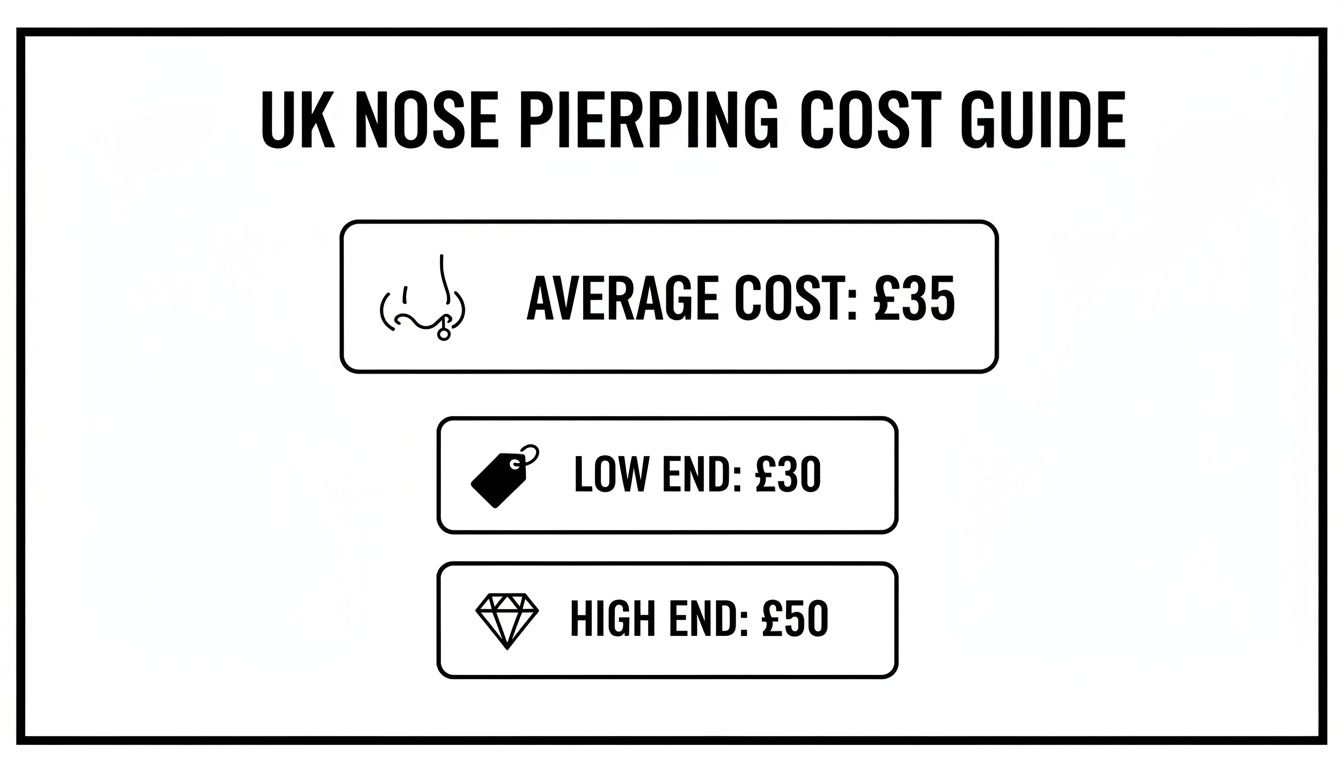
As you can see, the sweet spot for an average piercing fee lands right around the £35 mark. The price might shift a little depending on where the studio is located or if you decide to upgrade your jewellery, but this consistency is a great sign. It shows a healthy market where studios are competing on quality and safety, not just trying to be the cheapest.
Understanding the Standard Price
Where does that £25 figure come from? Well, it’s a number that reflects a solid professional standard right across the country. Reputable studios have settled on this price point because it allows them to cover their costs without compromising on safety.
For instance, well-regarded studios like Brighton Ear and Nose Piercing and even Blue Banana—one of Europe’s largest piercing chains—both charge within that £30-£35 window. This tells you that whether you’re in a small independent studio or a larger chain, you should expect to pay a similar price for a safe, professional job.
To help you see exactly what you’re paying for, here’s a simple breakdown of the costs.
Estimated UK Nose Piercing Cost Breakdown (2026)
This table summarises the typical costs you can expect when you book in for a professional nose piercing.
| Service/Product | Typical Price Range (£) |
|---|---|
| Piercing Fee (Labour & Sterilisation) | £20 – £35 |
| Basic Implant-Grade Titanium Jewellery | £10 – £20 |
| Aftercare Solution (Optional Purchase) | £5 – £10 |
| Total Estimated Cost | £30 – £50 |
The total cost bundles the piercer’s time and skill with the high-quality, sterile equipment and jewellery needed to do the job right.
A professional piercing is an investment in your health. A suspiciously cheap offer often means cutting corners on safety, sterilisation, or jewellery quality, which can lead to complications far more costly than the initial piercing.
Opting for a certified studio, whether in a big city or a smaller town like Croydon or Bournemouth, is your best bet. These studios follow strict hygiene protocols and only use materials fit for the job, and that’s what you’re paying for. If you want to know more about the standards in a specific area, you can learn more about body piercing in Bournemouth. Ultimately, that upfront cost covers the piercer’s skill, a sterile single-use needle, and quality jewellery—all of which are essential for a safe and smooth healing process.
What’s Actually Included in the Piercing Price?
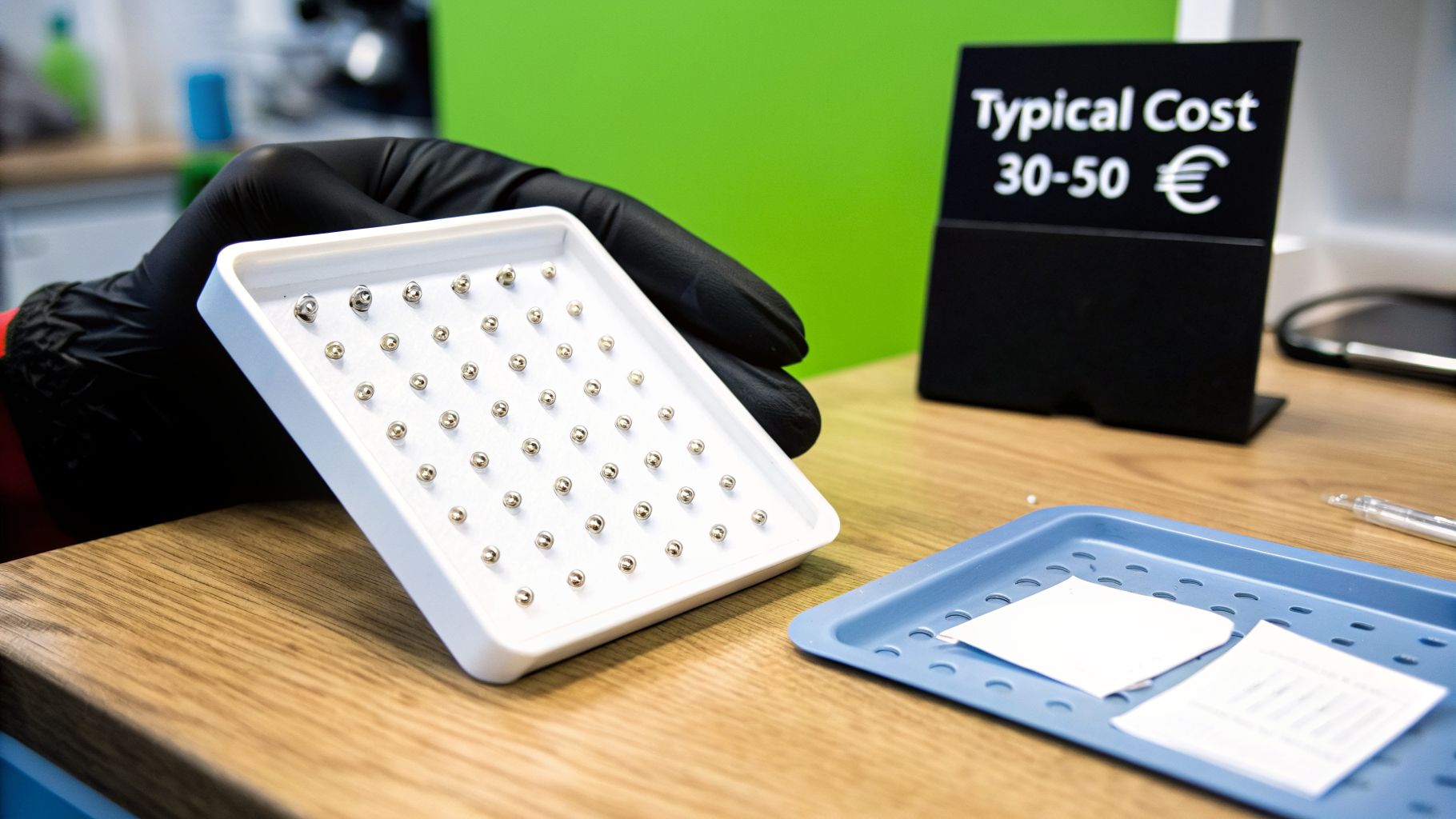
When you see a price for a nose piercing, it’s easy to think you’re just paying for a piece of jewellery and five minutes of someone’s time. But that price tag tells a much bigger story about safety, skill, and the whole professional experience. Figuring out what goes into that cost helps you appreciate why a cheap deal isn’t always a good one.
Think of it less like buying a product and more like commissioning a piece of work from a specialist. You’re not just getting a stud in your nose; you’re paying for years of training, a steady hand, and an expert’s knowledge of anatomy and hygiene. A huge chunk of that fee is for their time and expertise, which is what ensures your piercing is placed perfectly and heals properly.
Breaking Down the Cost
The price you’re quoted is a package deal, and it’s built on a few essential pillars. Any reputable studio that puts your health first will include these as standard.
-
The Service Fee: This is the biggest part of the cost. It covers the piercer’s time and skill from start to finish—the consultation where you discuss placement, the precise marking, the piercing itself, and the aftercare advice they give you before you leave. You’re paying for their professional judgement, and that’s priceless for getting a result you’ll love.
-
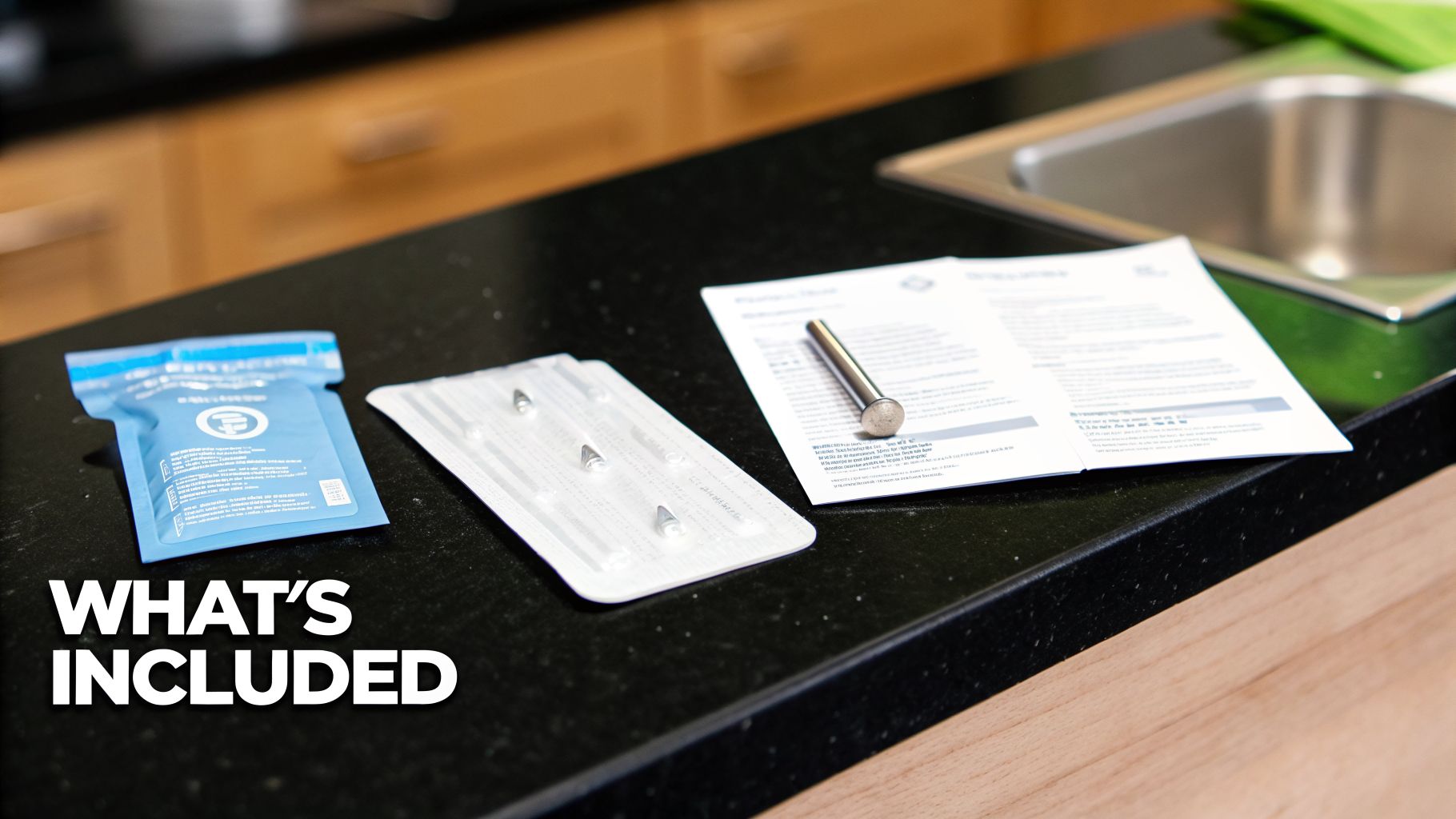
Sterile, Single-Use Kit: This is non-negotiable. Every professional piercing uses a brand-new, sterile needle that’s opened right in front of you and safely disposed of afterwards. This part of the fee also covers all the other single-use supplies, like gloves, sterile wipes, and marking pens, which are vital for preventing infection.
-
Your First Piece of Jewellery: A good studio will start you off with high-quality, body-safe jewellery. The base price almost always includes a simple stud or ring made from implant-grade titanium. This material is hypoallergenic and the best choice for a new piercing because it helps ensure a smooth healing process.
Essentially, the total cost bundles together the piercer’s expertise, all the sterile single-use equipment, and high-quality initial jewellery. These three things are the foundation of a safe, healthy piercing.
What Usually Costs Extra
While the initial price covers all the essentials, a couple of things are often sold separately. It’s a good idea to factor these into your budget so there are no surprises on the day.
For starters, your aftercare solution is typically an add-on. Your piercer will walk you through exactly how to clean your new piercing, but you’ll need to buy a sterile saline spray to do it. This will usually set you back an extra £5 to £10. Our guide has some great tips for your piercing aftercare routine.
Another thing to consider is jewellery upgrades. If you want to swap the basic titanium stud for something a bit more decorative—like a piece with a gemstone or something made of solid gold—that will add to the final price. These are completely optional, and you can chat with your piercer about the options and costs during your consultation. Knowing this upfront helps you plan your budget and understand exactly what you’re paying for.
Factors That Influence Your Final Piercing Cost
So, we’ve pinned down a general price range, but you’ve probably noticed that no two studios charge the exact same amount. The final figure on your bill can swing quite a bit depending on a few key things. Getting to grips with what drives these differences helps you make a choice that fits your budget and your personal style.
Think of it like buying a car. The basic model gets you from A to B perfectly fine. But if you want custom paint, a premium sound system, or a beefier engine, the price tag starts to climb. It’s the same with piercings; several factors can turn a standard service into a more unique, and therefore more expensive, experience.
Studio Reputation and Location
One of the biggest variables is the studio’s reputation and where it’s located. It makes sense that a high-end studio in a prime spot in central London will have much higher overheads—like rent and business rates—than a smaller, independent shop in a sleepy town. Those costs naturally get factored into their prices.
A well-known studio that pierces celebrities and employs master piercers might charge a premium for its name and the top-tier service you’re guaranteed to receive. This isn’t to say smaller studios are any less safe, but a studio’s postcode and reputation definitely play a role in how they price their services.
Piercer Experience and Skill
Just like any craft, you pay for expertise. A senior piercer with a decade of experience and a portfolio full of beautifully healed, complex work will almost always charge more than a junior piercer still building their reputation.
What you’re really paying for is their steady hand, their deep understanding of anatomy, and their ability to troubleshoot any issues that might pop up. That experience is your best investment in a safe procedure and a fantastic-looking result.
A piercer’s expertise is your best insurance policy against complications. Their higher fee reflects years of training, precision, and an understanding of how to achieve the best outcome for your specific anatomy.
Jewellery Choice and Material
The jewellery you’re pierced with is another major part of the cost. A basic, implant-grade titanium stud is usually included in the base price, but almost every studio will offer you a sparkling array of upgrades. If you fall for something a bit more decorative, the cost will go up.
Here’s a rough idea of how your jewellery choice can affect the price:
- Solid Gold: Swapping out titanium for a 14k or 18k solid gold piece is a significant price jump.
- Gemstones: Adding genuine diamonds, sapphires, or other precious stones will increase the final cost considerably.
- Intricate Designs: Fancy, custom-designed pieces or jewellery from world-renowned brands like BVLA or Anatometal carry a premium price tag.
High-quality body jewellery is more popular than ever. The European body piercing jewellery market was valued at around £1,604.65 million in 2025, with nose piercings making up a huge slice of that pie. You can dive deeper into these figures in this European Body Piercing Jewellery Market Report.
Piercing Complexity
Finally, the exact type of nose piercing you choose makes a difference. A standard nostril piercing is the most common and straightforward, so it usually sits at the lower end of the price scale. More complex placements, however, demand more skill and time from your piercer, which is reflected in the cost.
A septum piercing, for example, involves carefully navigating the “sweet spot” and is often priced a little higher than a simple nostril stud. In the same way, more unusual placements or getting matching piercings on both sides will also bump up the final bill. The more intricate the job, the more you should expect to pay for the piercer’s advanced skills.
While every piercing has its own healing process, you might find it useful to compare it with our guide on ear piercing healing times.
Spotting a Bargain That’s Too Good to Be True
We’ve all felt the pull of a great deal. When you see adverts for nose piercings that seem unbelievably cheap, it’s natural to be tempted. But with anything involving your body, it’s wise to change your thinking from “how much is this?” to “what could this really cost me?”.
An unusually low price, say around £10-£15, should set off alarm bells. Honestly, a price that low just can’t cover the essentials for a safe and clean procedure. We’re talking about a sterile, single-use needle, high-quality implant-grade jewellery, and the piercer’s time and skill. Something has to give, and it’s almost always your safety.
The Real Dangers Hiding Behind a Low Price
Going to an unlicensed or inexperienced person to save a few quid can backfire spectacularly. That initial saving of £20 quickly vanishes when you’re faced with fixing a piercing gone wrong.
These are the all-too-common outcomes we see from a “bargain” piercing:
- Nasty Infections: This is the biggest risk by far. If the tools aren’t single-use or haven’t been properly sterilised in an autoclave, you’re rolling the dice with dangerous bacteria. A bad infection can mean a trip to the doctor for antibiotics, abscesses, and even permanent scarring.
- Allergic Reactions: Cheap jewellery is a minefield. It’s often made from mystery metals that contain nickel and other irritants. Your body can react badly, causing swelling, redness, and a persistent rash that makes healing impossible.
- Bad Placement and Nerve Damage: A professional piercer is an expert in facial anatomy. They know precisely where to place the piercing to avoid nerves, prevent excessive bleeding, and ensure it sits correctly. An untrained hand can easily get this wrong, leading to constant irritation, migration (where the piercing moves), or even nerve damage.
A safe piercing is an investment in your health. An unsafe one can cost you far more in medical bills, corrective procedures, and unnecessary stress. The short-term saving is never worth the long-term risk.
Why You’re Paying for Peace of Mind
When you pay the standard £30-£50 at a reputable studio, you’re not just getting a hole poked in your nose. You’re paying for an expert’s years of training and dedication to their craft.
You’re paying for the assurance that every tool is sterile, the jewellery is body-safe, and that you’re in the hands of someone who can give you the best possible chance of a smooth, easy heal.
Ultimately, the true cost of a cheap piercing isn’t measured in pounds, but in potential pain, infection, and permanent damage. A professional service means your experience is safe from start to finish, and the result is a piercing you’ll love for years to come, without any of the drama.
What to Expect at a Professional Piercing Studio
Let’s be honest, walking into a piercing studio for the first time can feel a bit daunting. But knowing what really goes on behind the curtain helps take all the mystery out of it. A professional studio is built on three pillars: safety, precision, and making you feel completely at ease. From the moment you walk in, the entire experience is designed to be a clear, reassuring journey, not some rushed transaction.
It’s all a carefully choreographed process. This isn’t just about the needle; it’s a full service that ensures your piercing is safe, perfectly placed, and ready for a smooth healing journey. Forget any chaotic scenes you might have imagined—think of it more like a calm, clinical, and creative consultation.
The Consultation and Consent
Your appointment will always kick off with a friendly chat. First things first, the piercer will need to see some valid photo ID. This isn’t just them being difficult; it’s a legal and ethical requirement. Reputable UK piercing studios are very strict with their age policies. For a nostril piercing, for example, you must be at least 16 years old and have your own ID, as parental consent isn’t accepted for under-16s for this piercing. You can read more about the industry’s regulatory standards on piercing age limits to get the full picture.
After checking your ID, you’ll fill out a consent form. This is your chance to flag any allergies or medical conditions that could affect the piercing or healing. Then, your piercer will chat with you about placement, using their knowledge of anatomy to find the sweet spot that not only looks great but also has the best chance of healing well.
Jewellery Selection and Sterile Setup
Next up is the fun bit: picking out your jewellery! Your initial piercing fee typically covers a basic, implant-grade titanium stud, but you’ll almost always have the option to upgrade to something with a bit more sparkle. A good piercer will walk you through the options, explaining how different metals and designs affect your final look and the overall cost of your nose piercing.
Once you’ve picked your piece, you’ll get to see the piercer prepare their workstation. Pay close attention here, as this is where a studio’s professionalism truly shines.
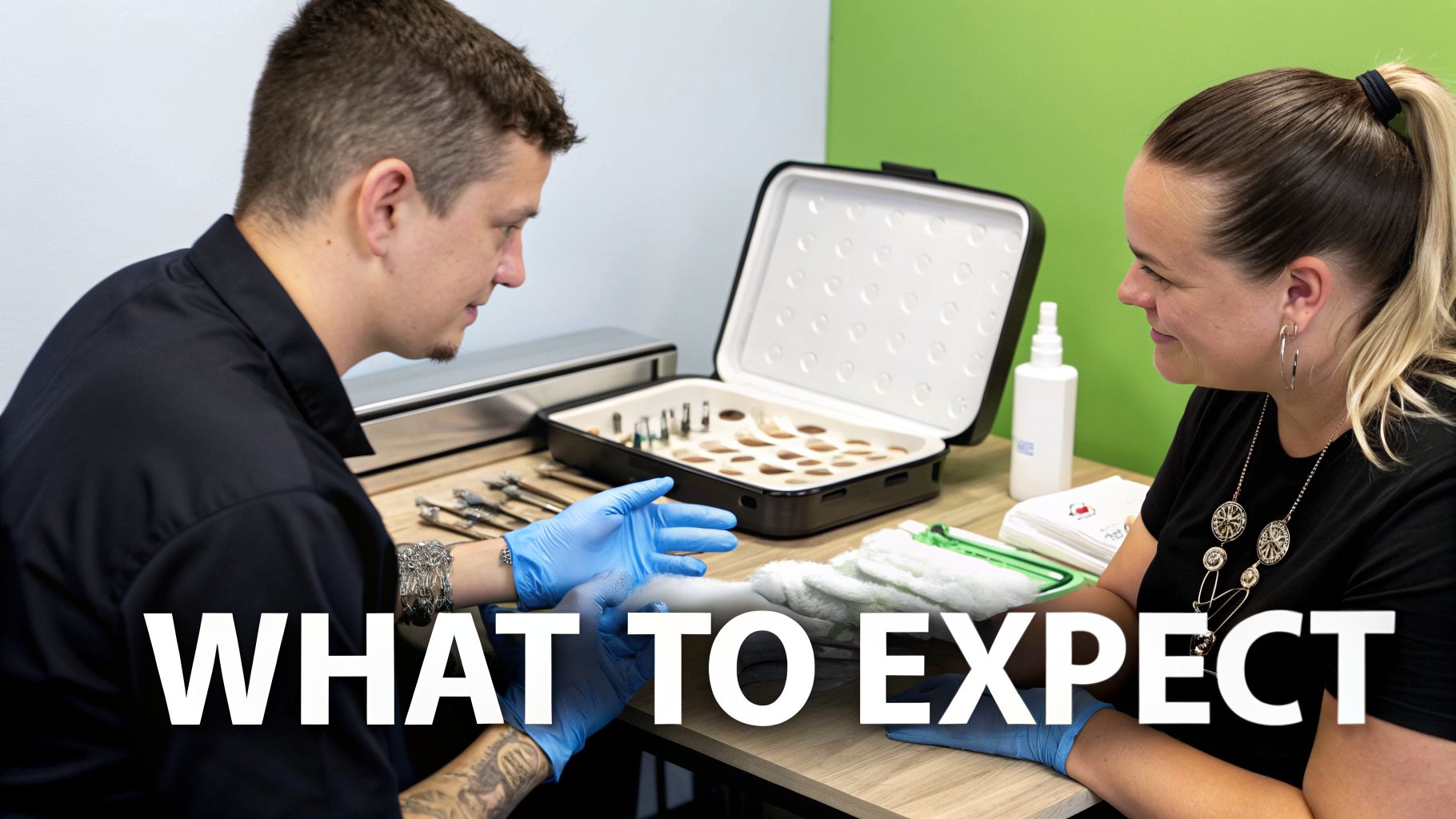
- Sterilisation: All the tools and your chosen jewellery will be taken from sealed, sterile pouches. Most studios use an autoclave—a medical-grade machine that uses high-pressure steam to kill every last microorganism.
- Single-Use Needle: The needle will always be brand new and designed for one use only. You should see the piercer open its sterile packaging right in front of you.
The real measure of a professional studio is its obsession with hygiene. A transparent, sterile setup isn’t just for show; it’s your best defence against infection and complications down the line.
The Piercing and Aftercare
With the area cleaned and marked, the piercing itself is over in a flash. Your piercer will have a calm, efficient manner, talking you through it and often asking you to take a deep breath in and out. It’s a sharp pinch, a quick movement, and then it’s done.
Finally, they’ll sit you down and give you detailed aftercare instructions. This will cover exactly how to clean your new piercing with a sterile saline solution and, just as importantly, what not to do while it’s healing. This last step is every bit as critical as the piercing itself, arming you with the knowledge to look after your new addition and help it heal beautifully.
Common Questions About Nose Piercing Costs
So, you’ve got a rough idea of the price, but those little “what if” questions are probably still floating around in your head. Getting these last few details sorted is the final step before you can confidently book that appointment.
Let’s clear up those common queries. We’ll cover everything from tipping etiquette to why paying a bit more for the right metal is so important. Think of it as your final financial checklist, so you can walk into the studio feeling completely prepared and excited.
Should I Tip My Piercer in the UK?
This is a question we hear all the time, and the answer is refreshingly simple: in the UK, tipping isn’t expected, but it’s always hugely appreciated. Our culture is different from the US, where tipping is standard practice. Here, it’s just a lovely way to say a personal thank you.
If you felt your piercer did an amazing job—maybe they were incredibly patient, gave you brilliant advice, or just made you feel totally calm and confident—a tip is a great way to show it. There are no rules on how much. A small cash tip passed directly to them after your appointment is the usual way to do it.
Is It Cheaper to Get Both Nostrils Pierced at Once?
Fancy getting symmetrical nostril piercings? A lot of people wonder if doing them in the same sitting will save them some money. And while it’s not a “buy one, get one free” situation, most studios will give you a bit of a discount on the second piercing.
Think of it this way: the piercer has already got the room set up, the tools are sterilised, and they’ve gone through the consultation with you. Adding a second piercing is much more efficient than starting from scratch on a different day. You’ll usually pay full price for the first piercing, and then a reduced fee for the second one, often somewhere around 50-75% of the initial piercing cost.
How Much Should I Budget for Aftercare?
Remember, the cost doesn’t end the moment you leave the chair. Proper aftercare is absolutely essential for a happy, healthy piercing, and that means buying the right product. The only thing you should be cleaning your new piercing with is a sterile saline spray, which is nearly always sold separately.
A can of sterile saline solution generally costs between £5 and £10. One can should be more than enough to get you through the crucial initial healing phase. It’s well worth adding that tenner to your budget from the start.
Investing in proper aftercare isn’t negotiable. A £10 bottle of sterile saline solution is a tiny price to pay to protect your £35+ investment and ensure everything heals smoothly and without infection.
Why Does Implant-Grade Titanium Cost More Than Surgical Steel?
When you’re looking at jewellery, you’ll probably notice that “surgical steel” is cheaper. It sounds official and safe, right? Unfortunately, it’s not that simple. “Surgical steel” is a catch-all name for a huge range of metal alloys, and many of them contain nickel—one of the most common causes of skin irritation, allergic reactions, and healing problems.
Implant-grade titanium, on the other hand, is a specific, regulated material that’s completely nickel-free and biocompatible. This means your body won’t see it as a foreign threat, which is exactly what you need for a fresh piercing to heal well.
- Surgical Steel: A bit of a gamble. It can contain nickel, which is a major risk for irritation and allergic reactions in a new piercing.
- Implant-Grade Titanium (ASTM F-136): The gold standard. It’s completely biocompatible, free from nickel, and what every professional piercer recommends for initial jewellery.
That extra cost for titanium is for its purity, safety, and the peace of mind that comes with it. Honestly, when you’re thinking about how much a nose piercing costs, spending a little more on high-quality titanium is the single best investment you can make for a problem-free healing experience.
Feeling ready to make it happen? At Piercing Near Me, we partner with the pros at Timebomb Tattoo & Piercing in Croydon and Bournemouth to ensure your experience is safe, professional, and positive. Book your consultation and let our expert team guide you through every step.
Find your perfect piercing at Piercing Near Me.