
You're standing at a laptop, scrolling through glossy ear stacks, and the conch keeps pulling your attention back. It looks bold without being flashy, and it sits right in the middle of the ear where a small piece of jewellery can change the whole shape of your look. The catch is that a conch piercing near me search usually gives you studios and photos, but not the details that make the difference between a smooth healing process and months of avoidable irritation.
A conch piercing is a cartilage piercing through the ear's inner shell, which means it behaves very differently from a lobe piercing. Cartilage has less blood flow than soft tissue, so healing takes longer and placement matters more. That's why the right studio, the right jewellery, and the right aftercare all matter at once.
What Makes a Conch Piercing Different
A lot of people start with the same thought. They see a neat ear curations grid, spot the conch, and assume it's just a larger version of a lobe piercing. It isn't. The conch sits in the ear's inner shell, and because it passes through cartilage rather than soft tissue, it needs more planning, more patience, and a piercer who can place the needle cleanly.
Inner conch and outer conch
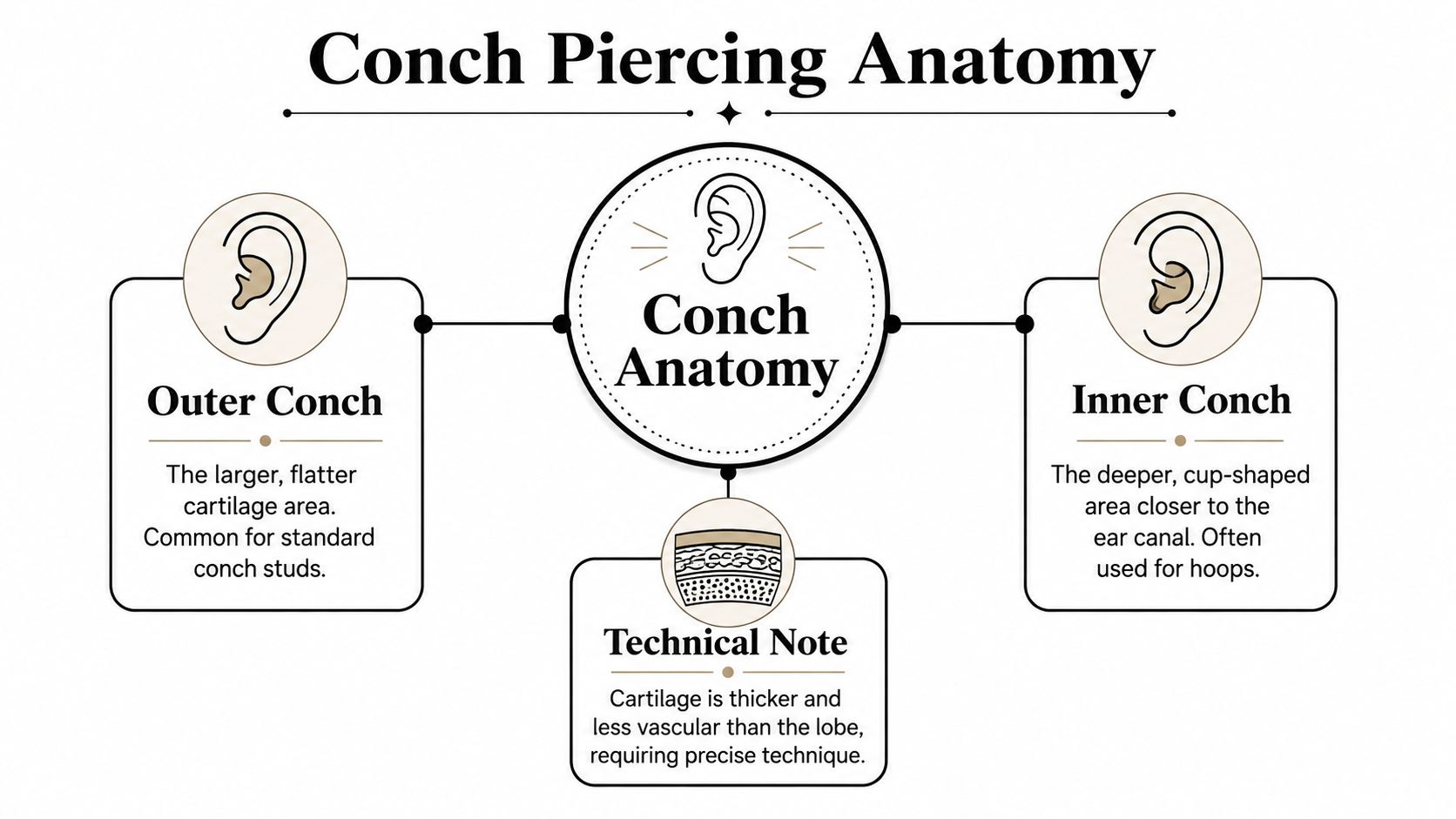
The inner conch sits deeper in the ear, closer to the canal, and it's often paired with a hoop once it's healed. The outer conch sits on the flatter, broader part of the cartilage and is commonly styled with a stud. That difference sounds small, but it changes how the jewellery sits, how easy it is to clean, and how much room the area has while swelling settles.
A first-timer usually notices the styling difference before the technical one. A hoop can look bold and fluid, while a stud sits more neatly and is usually easier to manage at the beginning. What matters most isn't which looks trendier on day one, it's which shape supports the piercing while the tissue is still settling.
Practical rule: if you're deciding between a stud and a hoop, start by asking what the piercing needs to heal comfortably, not what will look best next week.
The hidden complexity is that the conch isn't a one-size-fits-all placement. Some ears have a broad, open bowl that gives a piercer more flexibility. Others are tighter and need a more careful angle so the jewellery won't press against nearby cartilage or sit awkwardly as it heals.
Understanding Conch Anatomy and Placement
Cartilage is denser than the lobe, and that's the whole story in practical terms. Think of the lobe as a soft sponge and the conch as dense foam. Both can hold a piercing, but the foam needs a cleaner channel and more precise handling because it's thicker and less vascular than soft tissue.
Why the angle matters
Needle placement accuracy matters more here than with a standard lobe piercing because a crooked channel can keep rubbing for months. A straight, well-centred channel gives the jewellery room to sit without catching every time you brush your hair, sleep on that side, or put on headphones. If the angle is off, the piercing can stay irritated even when you're doing everything else right.
A good piercer will look at the ear shape before they commit to placement. They're checking where the cartilage is thickest, where the jewellery will rest, and whether the final piece will sit flush rather than tilt. That assessment is part anatomy, part experience, and part judgement.
What to ask at consultation
Ask simple, direct questions. Which conch placement suits your ear shape. Which jewellery will be used first. Whether there will be enough room for swelling without compression. Those answers should sound specific, not generic.
A piercer who explains placement in relation to your ear shape usually understands the job. A piercer who only talks about jewellery style is skipping the part that affects healing.
It also helps to listen for how they describe the channel itself. The best answers mention centreing, angle, and space for swelling. That's the language of someone thinking about long-term comfort, not just the first photo.
Healing Timelines and Aftercare Essentials
A conch piercing can look tidy on the surface while the cartilage underneath is still working slowly. That is why the healing window is longer than many first-timers expect. UK-facing guidance from Cosmopolitan UK and WebMD places conch healing in a range that can stretch from several months to a year, and both point to cartilage's lower blood flow as the reason it takes longer than soft tissue. A lobe piercing is often finished much sooner, which is why a conch can still feel sensitive after the initial excitement has worn off.
| Factor | Conch Piercing | Lobe Piercing |
|---|---|---|
| Tissue type | Cartilage, thicker and less vascular | Soft tissue, more blood flow |
| Typical healing window | Commonly advised at 6 to 9 months, with some guidance saying 4 months to 1 year | Often cited at around 6 weeks |
| Irritation risk | Higher from pressure, friction, and poor fit | Lower, generally easier to settle |
| Aftercare length | Long-term, with careful swelling management | Shorter and usually simpler |
What daily care looks like
The routine itself is straightforward. Clean with sterile saline, keep pressure off the ear while you sleep, and avoid touching the jewellery unless you are cleaning it. WebMD also notes that everyday habits, including nicotine, alcohol, caffeine, makeup, and other exposures, can affect healing, so the piercing responds to more than just the rinse you use at the sink.
A calm-looking piercing can still be healing inside. Cartilage often settles on the outside before it is fully ready underneath.
Daily friction matters too. Headphones, tight helmets, and sleeping on that side can all slow recovery because they press on the area again and again. If you want a broader look at how cartilage piercing care changes over time, this cartilage healing guide breaks down the same basic recovery pattern in more detail.
Budgeting for the appointment
Price planning matters because the appointment cost and the jewellery cost are usually separate parts of the bill. UK-facing piercing guidance puts entry-level studio appointments at £20 for 20 minutes, with piercing jewellery starting at £35 at Astrid & Miyu, which gives a practical baseline for a conch piercing budget in the UK market Cosmopolitan UK. That does not mean every studio charges the same amount, but it does show why it helps to plan for both the piercing and the jewellery from the start.
Choosing the Right Jewellery for Your Conch
Jewellery choice can make a fresh conch feel easy, or make it miserable. The main decision is usually between a flat-back labret and a hoop, and that choice affects comfort from the first day. Independent piercing guidance notes that jewellery choices affect healing and that initial pieces are typically selected to reduce irritation and allow for swelling, while WebMD also flags everyday factors that can interfere with recovery Urban Body Jewelry WebMD.
Flat-back labret first, hoop later
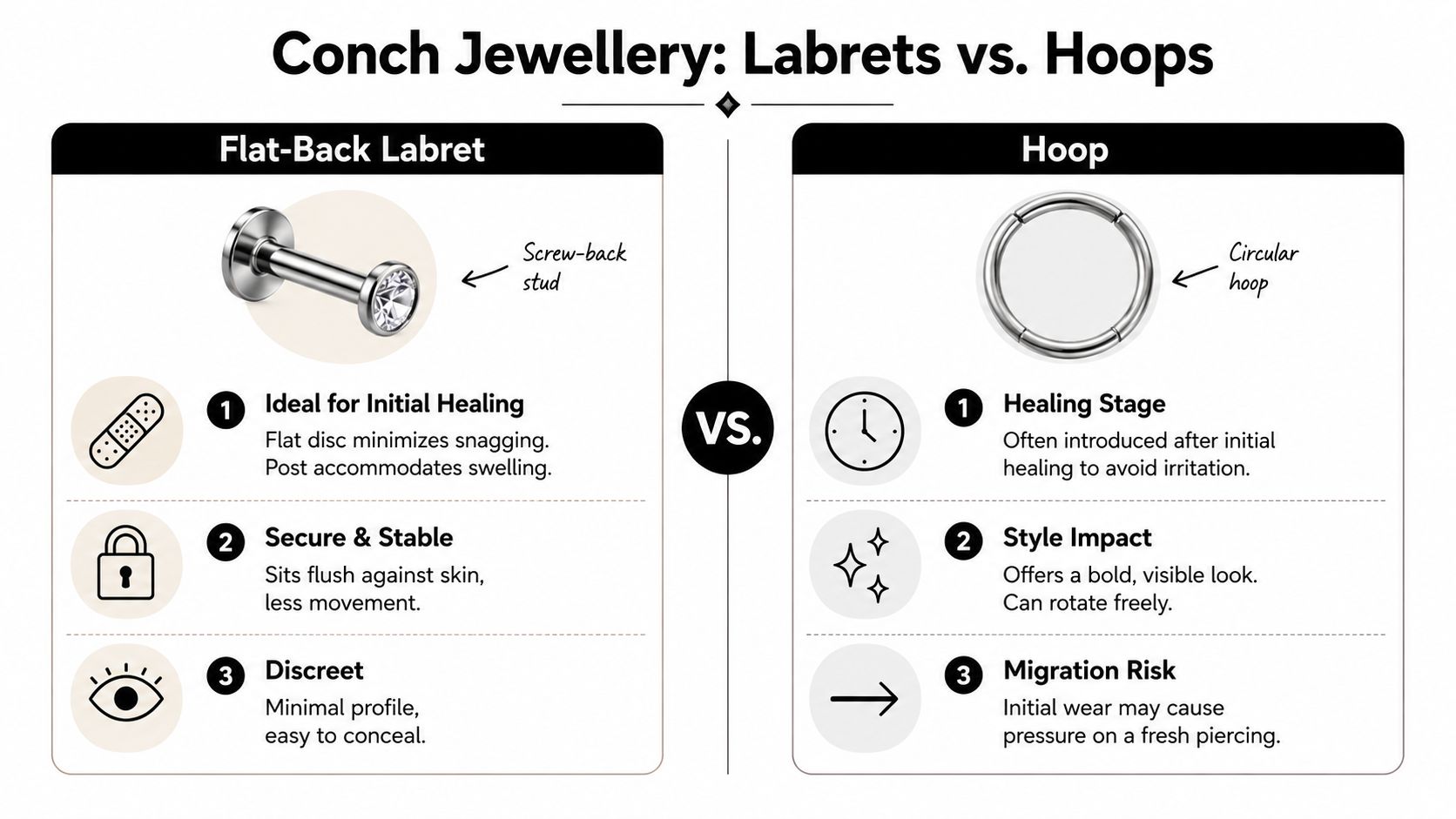
A flat-back labret is usually the calmer choice at the start because the flat disc sits neatly against the skin and the post leaves room for swelling. It's more stable, moves less, and tends to snag less on hair, scarves, and pillowcases. That matters because early healing is often less about pain and more about preventing tiny, repeated irritations.
A hoop can be a beautiful finished look, but it's usually better once the piercing has settled. Hoops rotate more freely, which can be stylish, yet that movement can also create friction in a fresh piercing. If a studio suggests a hoop immediately, ask why they think your ear shape and healing stage can tolerate it.
What implant-grade really means
Implant-grade jewellery usually means materials such as titanium or gold that meet medical standards for body use. The reason this matters is simple. Cheap metals can irritate, and irritation in cartilage tends to linger instead of disappearing quickly. If your skin is sensitive, that difference can make healing feel either manageable or never-ending.
Downsizing without rushing
Initial jewellery is often chosen with extra room for swelling, then later downsized once the tissue has calmed. That second stage matters because jewellery that is too long can catch and move around unnecessarily, while jewellery that is too short can compress the cartilage. The right time to downsize depends on the state of the piercing, not on a calendar shortcut.
For a closer look at stud options, see this conch piercing stud guide.
The best jewellery choice is the one that lets the piercing heal quietly. Style comes back later, comfort has to come first.
Safety Standards and UK Regulations
A safe studio in the UK should be able to explain its hygiene system without hesitation. Piercing studios and body-piercing practitioners are typically regulated through local authority hygiene rules under the Local Government (Miscellaneous Provisions) Act 1982, which allows councils to require registration and inspect premises for hygiene compliance Carmel Tattoo. That gives clients a practical way to check whether a studio is operating under local-authority oversight instead of relying only on polished branding.
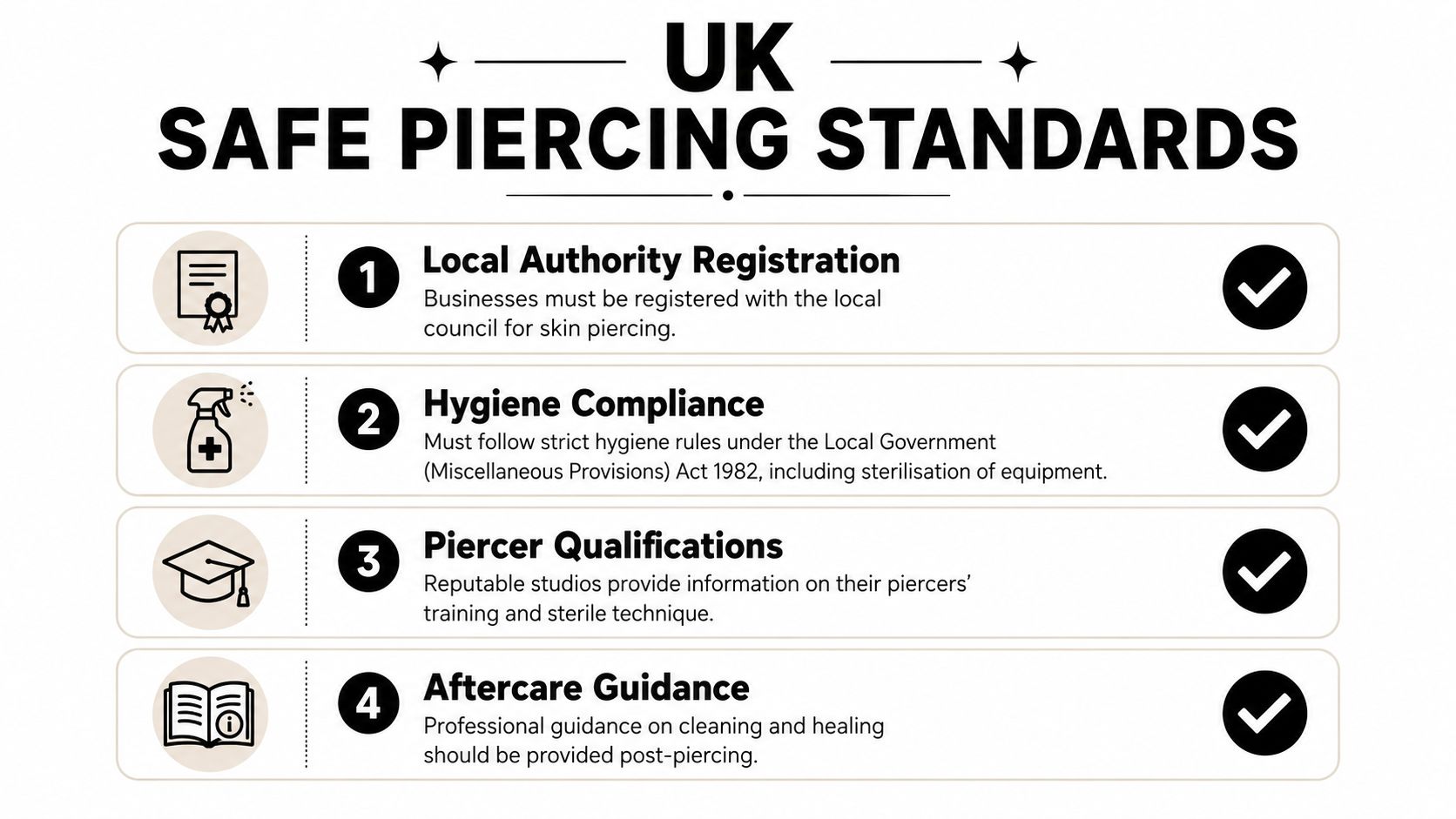
What safe practice looks like
A reputable studio should use single-use sterile needles and sterilise equipment properly. It should also be able to talk clearly about registration, hygiene, training, and aftercare, because those are the basics that protect you before and after the piercing. If someone avoids those questions or waves them away, that's a warning sign, not a minor detail.
You should also ask to see the registration certificate if you want reassurance. A proper studio won't treat that request as strange. It's the kind of question a careful client asks, and a careful piercer expects it.
Red flags that matter
A piercing gun is the most obvious one to avoid for cartilage. Reused needles are another hard stop. So is vague talk about “safe jewellery” without saying what the material is or how the studio cleans its tools.
If a studio can't explain its hygiene process in plain language, keep looking.
The calmer test is this. Does the piercer explain what happens before the needle comes out, what gets used once, and how the workspace is cleaned between clients. If they can answer those points clearly, you're probably talking to someone who takes infection control seriously. If they can't, move on.
Booking Your Conch Piercing in Croydon or Bournemouth
Booking starts with a simple decision. Do you want a walk-in, or do you want an appointment with time for placement discussion and jewellery choice. A nervous first-timer usually does better with a booking that leaves room for questions, because conch piercings need a little more planning than a quick lobe session.
The most useful preparation is boring, and that's a good sign. Eat beforehand, avoid alcohol, and come ready to talk through where the piercing should sit and what jewellery you want for the first stage. If you're comparing studios, look for clear consultation habits, calm communication, and a first-timer-friendly atmosphere rather than just the cheapest quick slot.
For local options in the area, see piercing shops in Croydon.
Contact details and practical booking info
Phone: 01202 9000 50
WhatsApp: 07752913846
Both Croydon and Bournemouth locations are known for a supportive approach, which helps if you're anxious about placement or healing. If you're booking from a phone, WhatsApp can be the easier route for quick questions, while a call is often better when you want to talk through the appointment in real time.
The addresses and verified Google reviews are best checked directly on the studio's own listing and booking pages, since those can change. What matters most is that you arrive with a clear idea of your ear goals, your comfort level, and the jewellery style you're prepared to start with.
Frequently Asked Questions About Conch Piercings
Does a conch piercing hurt more than a lobe piercing? Usually, yes, because cartilage is thicker and less vascular than the lobe. Pain is still brief, and many first-timers say the main challenge is the healing period, not the needle.
Can I sleep on my conch piercing? Not if you can avoid it. Pressure is one of the common reasons cartilage stays irritated.
What if it looks fine but still feels tender? That's normal for a long-healing cartilage piercing. The surface can calm down before the inside is fully ready.
How do I know it's healed? You're looking for comfort, stability, and no reaction to normal daily movement. If you're unsure, ask your piercer before changing jewellery.
If you're comparing studios and trying to separate good advice from marketing noise, Piercing Near Me makes that search easier. It helps you find safe, professional piercing services with a focus on clear aftercare, implant-grade jewellery, and supportive first-time guidance. For a conch piercing, that kind of confidence is worth having before you book.