
You're probably holding a pair of silver hoops right now, turning them in your hand and wondering why one looks perfect and the other already feels wrong. That's the trap with hoops. They look simple, but the wrong metal, gauge, or closure can turn an easy everyday piece into something that irritates, pinches, snags, or sits badly from the first wear.
Silver hoop earrings deserve to be treated like a wearable first and a fashion item second. In clinic, I care less about how they look on the shelf and more about what they'll do on a real ear, under real movement, with real skin. If you want a pair you can wear confidently, you need to choose with the same attention you'd give any other piece that stays in contact with a piercing all day.
Why Silver Hoops Deserve a Closer Look Before You Buy
A hoop can look identical across two trays and still behave very differently once it's in an ear. One may be a solid 925 sterling silver piece with a sensible wire thickness, another may be flimsy, over-polished, or too tight for the piercing it's meant to sit in. That's why I don't treat silver hoops earrings as a single category. I treat them as a fit problem first.
What matters more than the shine
The first decision is always metal quality. The next is wire thickness. After that comes closure type, then the size of the piercing itself. Ignore that order and you end up buying by appearance, which is exactly how people end up with hoops that wobble, dig in, or refuse to close properly.
Hoops are also not new or trendy in the disposable sense. Historical sources place hoop earrings back in the Bronze Age, with early examples around 2500 BCE in Nubia and later use across the Aegean world and Western Asia by 1000 BCE Encyclopedia.com on earring history. That matters because the style has survived precisely because it works, not because it's fashionable for a season.
Practical rule: judge a hoop by fit, finish, and fastening first. If those three are wrong, the design doesn't matter.
The right silver hoop should feel like something you can wear all day without thinking about it. If you're still thinking about it after ten minutes, it's the wrong pair.
Understanding Sterling Silver and Safer Metal Alternatives
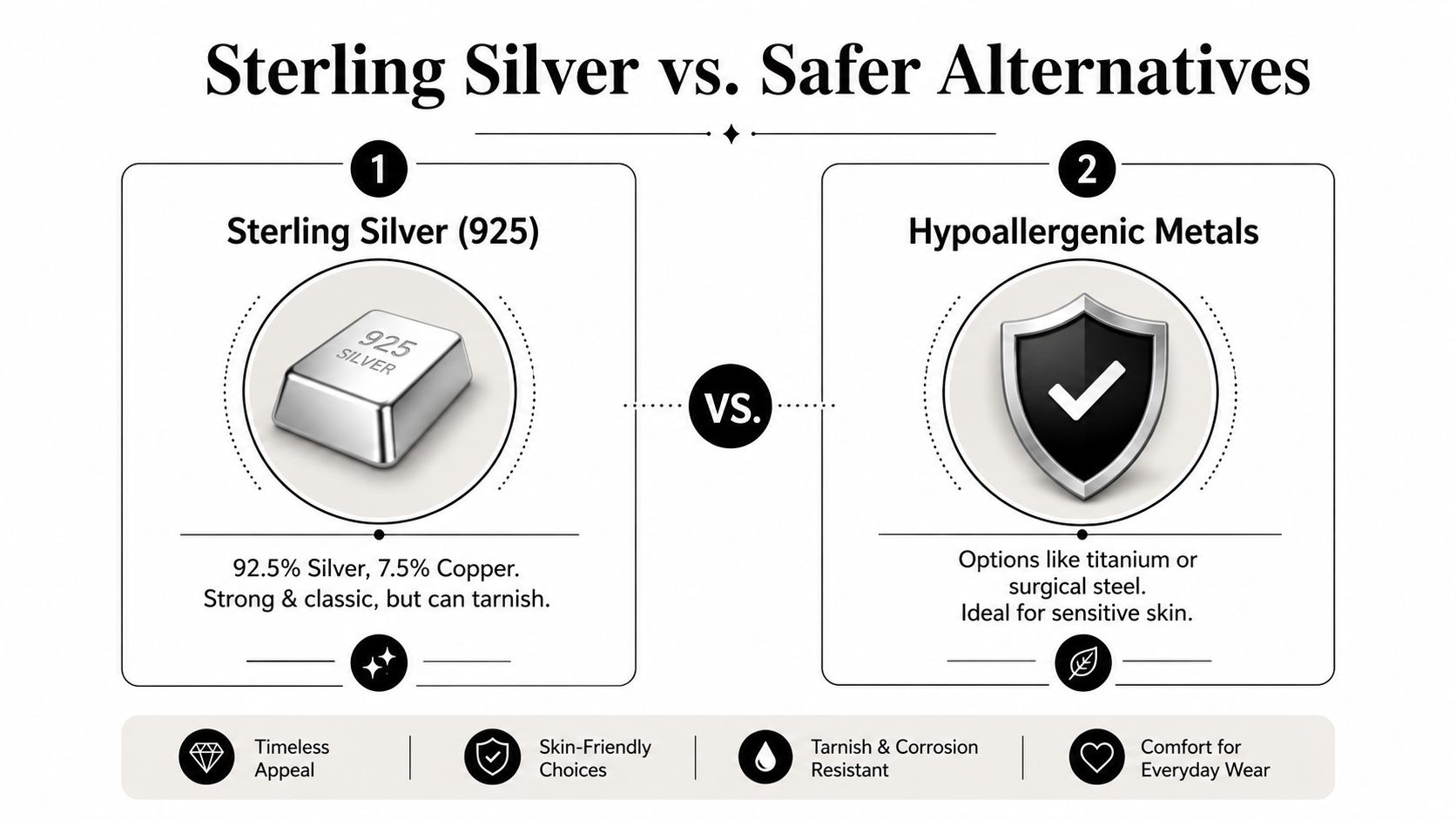
Sterling silver in the UK is normally 92.5% silver, with the remaining 7.5% made up of alloy metals such as copper Jewel Trend Pro. That blend is what gives the metal enough strength to make wearable jewellery, but it also means some sensitive ears will react to the alloy content, especially if the ear is already irritated or the piercing is still settling.
What the hallmark should tell you
If a piece is properly assayed, you may see marks such as the London Lion Passant or the Birmingham Anchor, which indicate that the jewellery has gone through official hallmarking in the UK Jewel Trend Pro. For everyday buying, that tiny stamp matters more than glossy product photos. It tells you the seller is offering an identified precious-metal piece, not just a silver-coloured accessory.
Fresh piercings are a different story. I wouldn't start a new ear with silver. For new work, implant-grade titanium or niobium is the smarter choice because healed tissue tolerates them better than a decorative metal that can tarnish or irritate during the first stages of recovery. If you're comparing options for a new piercing, this guide on titanium piercing jewellery is the cleaner starting point.
What to choose by piercing age
For a healed lobe, sterling silver is a solid option if the wearer tolerates it well. For fresh cartilage or any piercing that's still healing, skip silver and stay with a more inert metal. That's not fashion advice, it's common-sense tissue management.
If you want the simple version, use this rule. Silver for healed ears, titanium for new ones. Anything else is a compromise, and compromises are where ear trouble begins.
Picking the Right Hoop Size, Diameter and Gauge
A lot of hoop problems come from people buying the size they like visually instead of the size their ear can comfortably wear. A small hoop can look neat online and still pinch the lobule. A large hoop can look balanced on a model and still pull if the wire is too thin. The fix is to match diameter, wire thickness, and gauge to the piercing, not to the photo.
Match the hoop to the placement
For cartilage or tragus placements, 6–7 mm hoops are the huggie zone. For standard lobe piercings, 8–9 mm is the usual fit. If there's a small gap under the first piercing, 10 mm gives more breathing room Hoops by Hand. That's the difference between a hoop that sits cleanly and one that clamps down on the tissue.
For larger hoops, a 925 sterling silver build with 1.4–2.0 mm wire thickness is the practical sweet spot for 30 mm and up, because it stays stiff enough not to bend during removal while still remaining comfortable for long wear Alibaba buying guide. Ultra-thin hoops below about 1.2 mm are the ones most likely to deform or snag Alibaba buying guide.
Use gauge as a fit check, not a guess
Commercial silver hoops can use 0.6–0.7 mm bar thickness or 16-gauge, which is about 1.3 mm, while smaller everyday styles may use 24–22 gauge for easier insertion Hoops by Hand. If the post is thicker than your piercing opening can accept, the earring will feel wrong from the first attempt.
| Diameter | Wire/Gauge | Best For |
|---|---|---|
| 6–7 mm | Smaller huggie fit | Cartilage, tragus |
| 8–9 mm | Standard hoop fit | Lobes |
| 10 mm | Slight under-piercing gap | Low-tension lobe wear |
| 30 mm+ | 1.4–2.0 mm wire | Rigid everyday hoops |
| Small fashion hoops | 24–22 gauge or similar | Easy insertion, lighter wear |
If you want to compare size systems properly, use a mm to gauge conversion guide before you buy.
Don't buy a hoop because it “looks about right”. Measure the piercing, check the wire, then decide. That sequence saves money and irritation.
Closure Types and How They Change Daily Wear
Two silver hoops can be the same diameter and still behave in completely different ways because of the closure. That's where people get caught out. A hoop that seems secure in the box can be annoying in bed, awkward to insert, or too easy to lose on the move. Closure choice should be based on how you live, not just how the earring looks when it's closed.
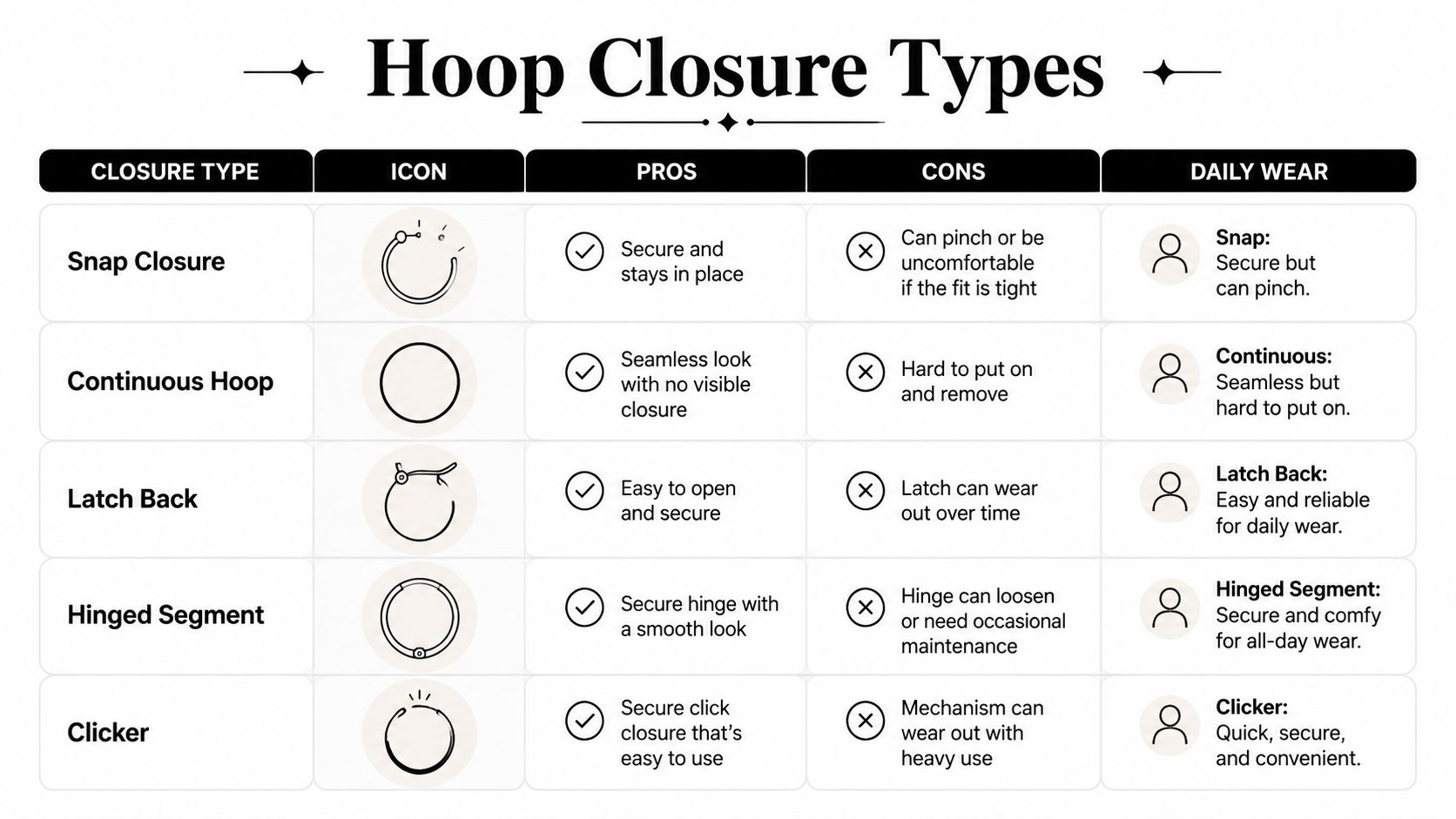
The main closure types and what they're good at
Snap closures are simple and fast. They're also the ones I see pinch most often when the fit is off. Fine for quick wear, less ideal if you're clumsy with jewellery or tend to fidget.
Continuous hoops give you an uninterrupted look, but they can be a pain to thread through and align. They suit people who love an uninterrupted circle and don't mind a fiddly start.
Latch backs are the safer bet for larger fashion hoops because they lock more positively. If you've ever lost an earring in public, you'll understand why I rate them.
Hinged segments are cleaner to put in and remove, especially for people who don't want to wrestle with the front of the hoop every morning.
Clickers are my studio favourite for fresh or recently healed piercings because they give a confident closure and a more predictable fit. They're the closest thing to “put it on, check it, forget it”.
Which closure suits which routine
For sleep, the smaller and flatter the closure, the better. For sports, secure closures win every time. For lobes, most closure types are workable if the fit is right. For cartilage, I want something that closes cleanly and doesn't create a sharp edge against the ear.
A bad closure feels fine in the shop and annoying at 2 a.m. That's why I'd rather see a slightly less glamorous hinge than a loose, cheap snap.
If you're buying one pair for repeat wear, choose a closure you can operate confidently without looking in a mirror. If you need two hands and a prayer, it's not the right daily hoop.
Booking, Preparation and Your First Switch at Timebomb Studios
The appointment starts before you walk through the door. Eat beforehand, skip heavy alcohol the night before, and arrive with clean ears that have no oils, sprays, or product residue on them. That gives the piercer a better surface to assess and reduces avoidable irritation during the fitting.
How I'd book the appointment
For Croydon or Bournemouth, call 01202 9000 50. If you'd rather message first, use 07752913846 on WhatsApp. Keep your question simple. Ask about the piercing, the hoop size you're considering, and whether you're booking the initial fit or a later switch.
What happens at the fitting
The piercer checks whether the piercing is mature enough for silver, then confirms the internal space, the wire thickness, and the closure. That's the point where a lot of people realise they've been shopping by outer diameter alone. A hoop can be the right visual size and still be wrong for the tissue behind it.
For a first switch, I'd only move from an implant-grade starter to silver once the piercing is healed enough to tolerate the jewellery without flaring. Don't rush that. A hoop is not a reward for surviving week one. It's a piece of jewellery that needs a stable piercing to sit properly.
What to bring and what to leave at home
Bring your ID if the studio asks for it, your existing aftercare knowledge, and any notes about past metal reactions. Leave the heavy perfume, fresh makeup around the ears, and the idea that all hoops behave the same at the door. They don't.
The best first silver hoop fitting is boring in the best possible way. Smooth insertion, clean closure, no drama, then normal aftercare.
If you're in Croydon or Bournemouth and you want the hoop chosen for the ear, not the other way round, book the fitting rather than guessing online. That's the safer move every time.
Cleaning Silver Hoops and Looking After Long-Term Wear
A silver hoop stays presentable when you treat it like wearable metal, not decorative clutter. Wipe off sweat, skin oils, and bathroom humidity before they settle into the finish. That is the difference between light upkeep and a hoop that looks tired too soon.
Daily and monthly care that works
After wear, clean the hoops with a damp cloth and mild soapy warm water, then wipe them dry Demi + Co.. For a deeper clean, use warm water, mild dish soap, and a soft-bristled toothbrush, then dry them thoroughly. If you want a practical cleaning routine for piercing jewellery, follow the step-by-step advice in how to clean piercing jewellery. Wipe them after each wear as well, because oils and salts build up fast on contact jewellery.
Skip bleach, vinegar, and baking soda. Those household fixes are a bad match for silver and can leave the metal looking worse over time.
Storage and wear habits that preserve the finish
Store hoops in a dry, airtight pouch or closed box. Remove them before swimming, and do not spray perfume or hair products onto them. If you wear several pairs, rotate them so each set gets time out of the ear and away from humidity.
Dry storage beats aggressive polishing. If you prevent heavy tarnish from forming, you will not need to rescue the finish later.
Keep the routine boring. Keep it dry, keep it consistent, and silver stays wearable for longer.
Troubleshooting Common Silver Hoop Problems
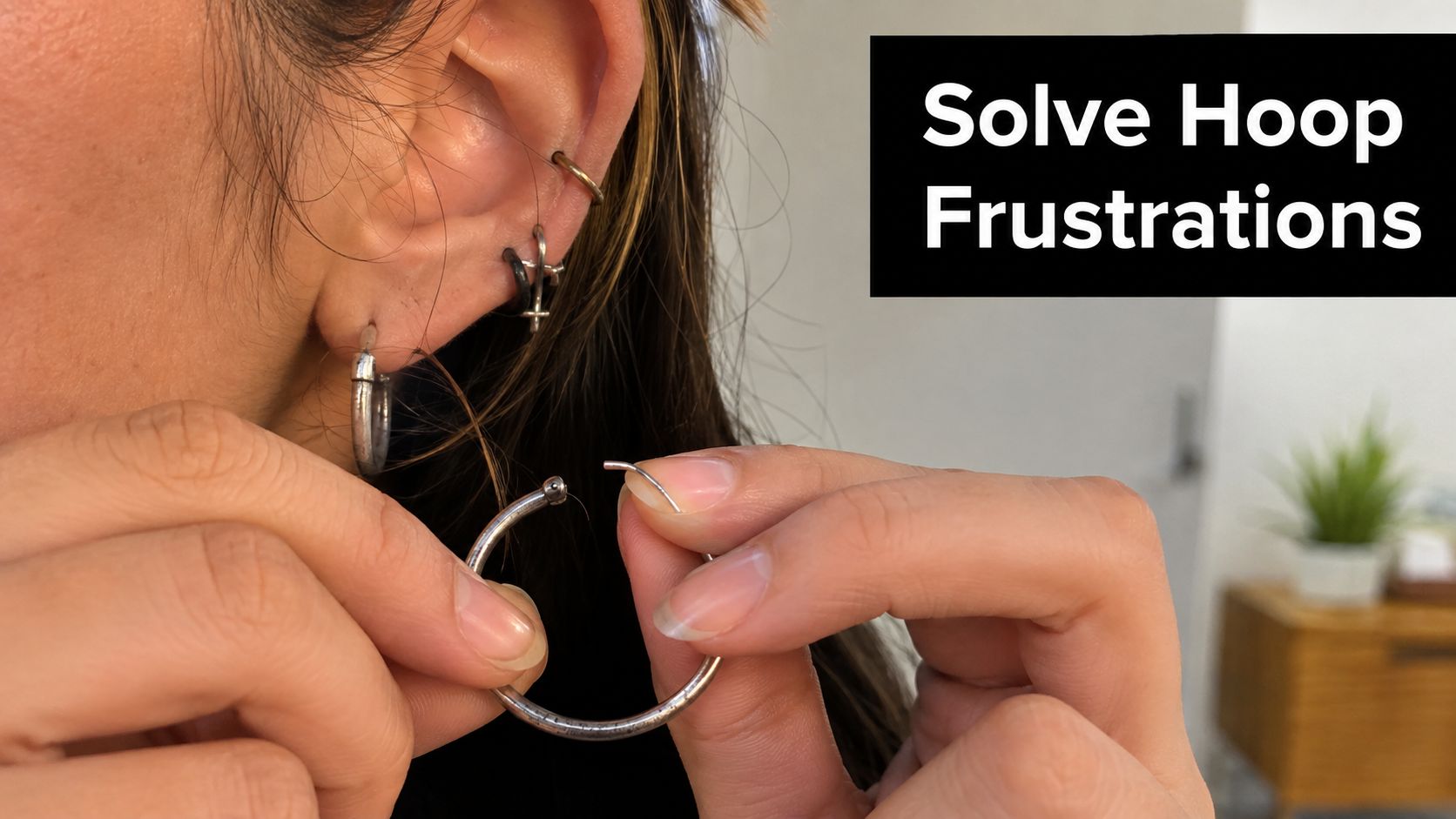
Tarnish doesn't mean fake silver. It means real silver has reacted with sulphur in the air, which is exactly what sterling silver does over time. If your hoop has gone darker, that's a maintenance issue, not a reason to panic or assume you were sold a fraud.
Problem, likely cause, sensible fix
Tarnish: Usually environmental exposure. Clean it with the soft cloth routine first, then move to the monthly wash. Don't reach for harsh household products.
Sore ears: Most often a fit issue, closure pressure, or a metal mismatch. If the ear is newly irritated, remove the hoop and go back to a calmer metal. If the soreness keeps returning on healed tissue, the hoop may be too tight or too thin for the ear.
Hoop won't close: The hinge or snap may be stiff, or the gauge may be too thick for the piercing opening. Don't force it. Forcing closure bends the post and irritates the hole.
Hair snagging: Usually happens with thin wire, sharp edges, or a poorly finished seam. Larger, smoother hoops with a cleaner closure behave better in daily life.
Normal tenderness versus reaction: Mild awareness after a first wear can be ordinary. Redness, persistent heat, swelling, or itching that doesn't settle is a warning sign. Take the jewellery out and reassess the metal and fit before you put the same pair back in.
Myths worth dropping
People still say sleep is fine in any hoop and that tarnish means cheap metal. Both ideas are sloppy. Sleep depends on closure and profile, and tarnish is part of silver's chemistry. What matters is how you respond to it.
If the ear flares, don't keep “testing” the same pair. Stop, clean the jewellery properly, and switch back to a better-fitting, better-tolerated option. That's how you protect the piercing and keep the hoop in circulation.
Before you buy or switch, run this checklist in your head:
- Metal grade: Ask for 925 sterling silver or choose a more inert metal for new piercings.
- Hallmark: Look for assay marks if you're buying in the UK.
- Diameter: Match the size to the piercing placement, not the model photo.
- Gauge and thickness: Make sure the post or wire fits the opening cleanly.
- Closure: Choose the fastening you can operate securely.
- Cleaning kit: Keep a soft cloth, mild soap, and a dry pouch ready.
- Aftercare plan: Know whether the piercing is healed enough for silver in the first place.
If you want the safest path, book a proper consultation or hoop fitting before you gamble on the wrong pair. For advice, appointments, and studio support in Croydon or Bournemouth, contact Piercing Near Me on 01202 9000 50 or WhatsApp 07752913846, then visit Piercing Near Me to get started.