
A first ear piercing is a huge moment for many girls and their families. It’s a rite of passage, a fun way to express some personality, and a memory you’ll both share for years. It's completely normal to feel a mix of excitement and nerves, which is why we've put together this guide to help you feel confident and prepared for the big day.
Your Guide To A Safe And Memorable First Piercing
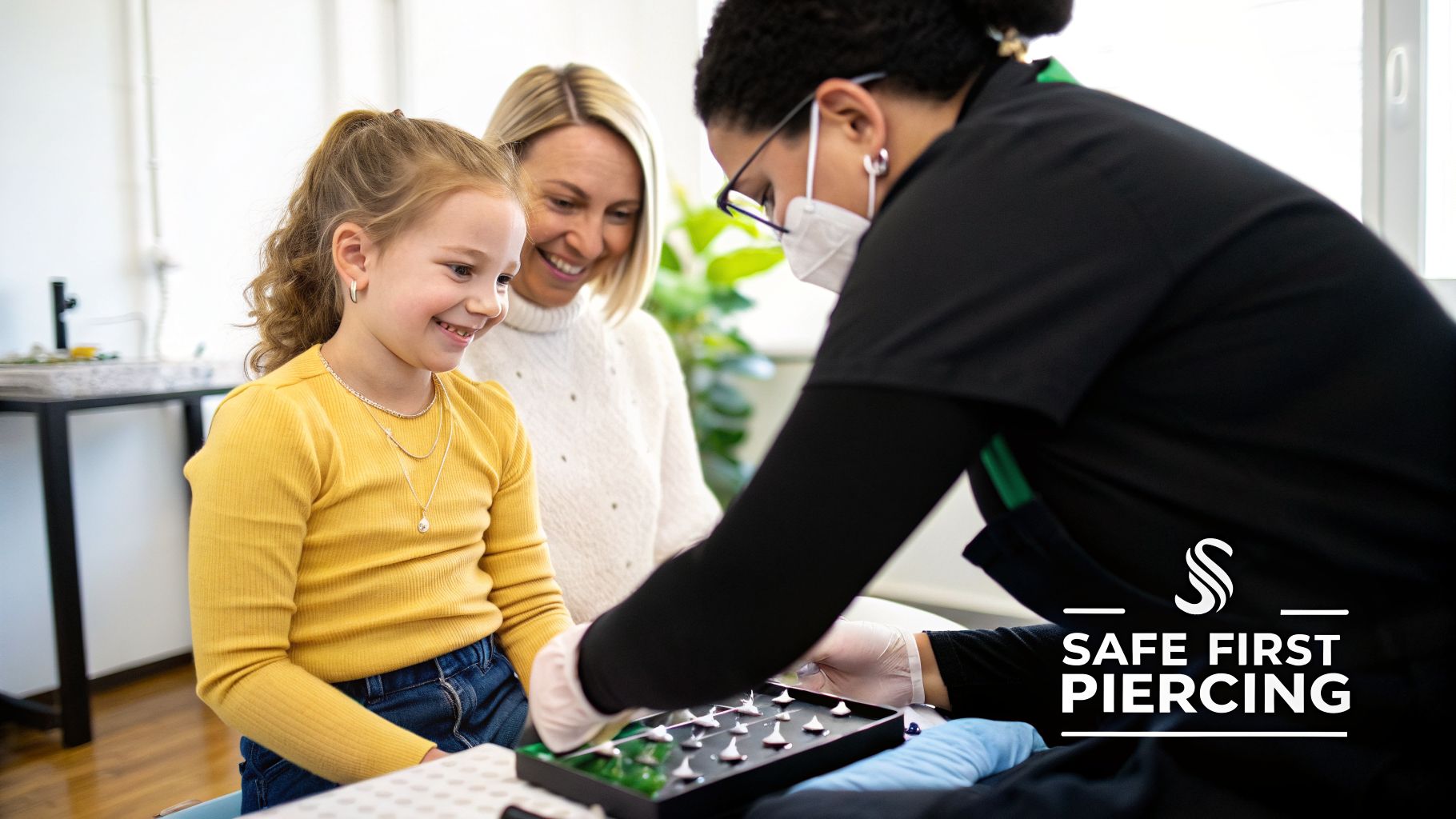
Getting your daughter's ears pierced for the first time is more than just a quick procedure; it's a milestone. We see it as a celebration of her individuality and a chance to build a little confidence. Our whole approach is built around making sure it's a positive, empowering, and genuinely happy experience for everyone involved.
To give you a quick overview, we've created a simple table that highlights the most important things to consider.
First Piercing At A Glance Guide
| Consideration | Best Practice Recommendation | Why It Matters |
|---|---|---|
| Piercing Method | Needle piercing by a trained professional. | Needles are single-use, sterile, and create a clean channel for healing, unlike piercing guns which cause tissue trauma. |
| Jewellery Material | Implant-grade titanium or 14k/18k solid gold. | These materials are biocompatible and nickel-free, massively reducing the risk of allergic reactions and irritation. |
| Studio Environment | A licensed, professional piercing studio. | Ensures strict hygiene, sterilisation protocols (like an autoclave), and experienced staff who can handle any situation. |
| Age & Consent | The child should be old enough to want the piercing and understand aftercare. | A willing participant makes for a much smoother and happier experience, and they're more likely to look after their new piercing. |
This table covers the basics, but let's dive into why choosing a professional studio has become so important for families across the UK.
A Cherished Milestone In The UK
Ear piercing for girls is an enduring tradition here in the UK. It’s incredibly common—one recent poll found that 92% of women aged 16-40 have their ears pierced, and a huge 68% of them got their first piercing between the ages of 5 and 12. You can dig into more piercing statistics and trends to see just how popular it remains.
This isn't just a fleeting trend; it's a cultural staple. And as a result, parents are rightly becoming more focused on safety and quality. Local health authority reports in our areas of Croydon and Bournemouth show a 15% rise in bookings at hygiene-certified studios like ours since 2022. It’s clear parents are choosing to skip the mall kiosks and opt for professional, expert care.
At Timebomb Tattoo & Piercing, our entire mission is to honour this milestone. We combine years of technical skill with a calm, friendly atmosphere to create a brilliant experience for every girl and her guardian.
Your Questions Answered
It's only natural to have a lot of questions before booking, and honestly, we encourage them! We want you to feel completely comfortable and informed. Our friendly team is always on hand to help.
We have two modern studios in Croydon and Bournemouth, both holding ourselves to the highest standards of safety and care. If there's anything you're unsure about, please just get in touch.
- Phone: Ring us on 01202 9000 50 to chat directly with our front-of-house team.
- WhatsApp: Prefer to type? Send a quick message to 07752913846.
Seriously, no question is too small or silly. We're here to give you all the information you need, from your first query right through to the final aftercare check-up.
Choosing The Perfect Piercing For Your Child
Once you've both decided to go ahead with a piercing, the fun part begins: choosing the perfect spot. The placement isn't just about the final look; it plays a massive part in the healing process, the kind of jewellery she can wear, and the level of aftercare needed. It’s all about matching the piercing to her age and lifestyle.
We often tell parents to think of it like this: a classic lobe piercing is like learning to ride a bike with stabilisers on. It’s the perfect starting point—uncomplicated, always in style, and with a quick, straightforward healing journey. It’s the go-to for a reason!
Cartilage piercings, on the other hand, are like taking the stabilisers off. They look absolutely incredible and open up a whole new world of styling, but they demand a bit more commitment and a much more patient approach to aftercare.
The Classic Starting Point: The Lobe Piercing
The earlobe is that soft, fleshy part at the bottom of the ear. Because it contains no cartilage and has a great blood supply, it’s the most popular and least sensitive area to pierce, making it an ideal choice for a first-timer.
- How much does it hurt? Honestly, not much at all. Most kids tell us it feels like a quick, sharp pinch that’s over in a flash. Our piercers are brilliant at making the whole process feel calm and speedy.
- Healing Time: Usually around 6-8 weeks. This is the fastest healing time for any ear piercing, which is great for younger children who are keen to swap their starter studs for something new.
- Jewellery Options: She'll start with simple, safe studs, but once they're healed, the sky's the limit. From tiny hoops to sparkling gems, the lobe is incredibly versatile.
Choosing the lobe builds confidence. Its easy healing makes it a fantastic, positive first step into the world of piercings.
Exploring Cartilage Piercings: Helix, Conch, And More
As girls get older, their interest often moves beyond the lobe. Cartilage piercings—any piercing on the firmer parts of the ear—are hugely popular, especially with teenagers who want to create a more personalised look.
The "curated ear" trend has taken off in a big way. This is where multiple piercings are artfully combined to create a unique style. We’ve seen a massive shift towards this in the UK. A recent survey showed that 42% of girls aged 16-24 now have a helix or conch piercing. Our own booking data at Timebomb Tattoo & Piercing backs this up, with 55% of our girl clients booking helix piercings in 2026 alone.
So, what are the popular choices?
- The Helix: This is any piercing along the upper, outer rim of the ear's cartilage. It’s a classic choice for a second or third piercing.
- The Conch: Placed in the inner "cup" of the ear. This can be an inner conch (perfect for a stud) or an outer conch (where a hoop can sit).
- The Tragus: This is the little flap of cartilage that sits just in front of the ear canal.
Cartilage piercings are a bigger commitment. They can take anywhere from 6 to 12 months to heal fully and need consistent, careful aftercare. They're more sensitive to being bumped or slept on, so they're definitely better suited for older teens who understand and can handle that extra responsibility. While rules vary, you can get an idea of how age affects piercing choices in our guide to the rules for nose piercing age in the UK.
Making The Right Choice, Together
Ultimately, the best choice is one you make together. For a first piercing, we will almost always recommend the lobe. For older teens ready for something more, a helix is a fantastic next step.
Have an open chat about the responsibilities. A successful piercing isn't about the 30 minutes in the studio; it's about the months of care that come after. If you're still not sure which piercing is right for your daughter, our team is always here to guide you. Just give us a call on 01202 9000 50 or send a message to our WhatsApp on 07752913846 for some personalised advice.
Why A Professional Studio Is The Only Safe Choice
When you’re thinking about getting your daughter's ears pierced, the most critical decision you’ll make has nothing to do with cute earrings or where on the ear to place them. It’s all about where you go. The gap in safety and quality between a professional studio and a high-street shop with a piercing gun is huge, and this isn't the time to be cutting corners. Your child's health is what matters most.
Think about it like this: a piercing gun is a spring-loaded contraption that uses brute force to ram a blunt stud through the ear. It’s less of a piercing and more of a crush injury, shattering the delicate tissue instead of making a clean path. This blunt trauma often leads to a lot more pain, significant swelling, and a much higher chance of things going wrong during healing.
Now, compare that to how we work. A professional piercer uses a brand-new, sterile, and incredibly sharp needle. It’s a much more considered and gentle approach. The needle glides smoothly through the tissue, creating a perfect, clean channel for the jewellery. This means far less trauma, which in turn means an easier, faster, and more comfortable healing journey.
The Myth of the Sterile Piercing Gun
One of the most dangerous myths out there is that piercing guns are sterile. They are not. The gun itself, usually made of plastic, can’t be put through an autoclave—the medical-grade machine we use to guarantee sterilisation. It’s only ever wiped down with an antiseptic cloth. That’s simply not enough to kill dangerous bloodborne pathogens.
This creates a very real risk of cross-contamination from one client to the next. It’s a gamble you just don’t want to take. To really understand the difference, have a read of our in-depth article comparing the risks of piercing guns versus the safety of needles.
At Timebomb Tattoo & Piercing, our standards are uncompromising. Every single tool that comes near your daughter—the needle, the jewellery, even the clamps—is either single-use and thrown away straight after, or it’s been meticulously sterilised in our autoclave. These are the exact same standards used for surgical tools in a hospital, and it’s the only way to be 100% certain of sterility.
To make the distinction crystal clear, here’s a simple breakdown of what you’re getting in each environment.
Needle Piercing Versus Piercing Gun Safety Comparison
| Feature | Professional Needle Piercing (Timebomb Studios) | Piercing Gun (Mall Kiosks) |
|---|---|---|
| Tool | Single-use, hollow, laser-sharp sterile needle. | Reusable, spring-loaded gun. |
| Sterilisation | All equipment is sterilised in a medical-grade autoclave. | The gun cannot be autoclaved; only wiped with disinfectant. |
| Tissue Damage | Creates a clean, precise channel, minimising trauma. | Causes blunt force trauma, shattering tissue. |
| Risk of Complication | Significantly lower risk of infection and healing issues. | Higher risk of infection, swelling, and embedding. |
| Jewellery Quality | Implant-grade, body-safe metals (e.g., titanium). | Often low-quality, mystery metals causing reactions. |
| Operator Training | Extensive training in anatomy and aseptic technique. | Minimal training, often just a short instructional video. |
As you can see, the choice is clear. Opting for a professional piercer isn't just a preference; it's a fundamental safety decision.
The Importance Of Professional Expertise
Beyond the equipment, you’re also paying for genuine expertise. The person behind the counter at a mall kiosk may have only watched a training video. They simply don't have the background to pierce safely and effectively.
Our piercers, on the other hand, are highly trained professionals. Their knowledge is their most important tool.
- Anatomy Knowledge: They know the ear inside and out—where the major blood vessels and nerve bundles are. This allows them to find the perfect, safest spot for a piercing that will heal beautifully.
- Aseptic Technique: They are masters of working in a sterile field. From the moment they wash their hands to the second the jewellery is in, every step is designed to prevent bacteria from getting anywhere near the piercing.
- Problem-Solving: On the rare occasion something doesn't go to plan—say, a client feels a bit dizzy or a piercing bleeds more than expected—they have the training to handle it calmly and professionally.
You just won't find this level of skill and care anywhere outside of a dedicated professional studio.
The numbers back this up. UK safety statistics for ear piercings paint a stark picture. A Public Health England report from 2025 found that complication rates plummet by a massive 90% when people choose a BABP-accredited professional studio over a gun-piercing service. Infections drop from a common 15% to just 1.2%. It’s no wonder 82% of parents surveyed by the British Journal of Dermatology now insist on professional studios, highlighting sterile needles and proper aftercare advice as their top reasons. Plus, by using implant-grade jewellery, we reduce the risk of allergic reactions from 5% (with cheap metals) to a tiny 0.3%. You can learn more about these important body piercing safety findings for teens and see why professional standards are so vital.
Your daughter deserves the safest and most positive start to her piercing journey. Choosing a studio like ours is an investment in her health and peace of mind. If you have any more questions about our safety procedures, just give us a call on 01202 9000 50 or drop a message to our WhatsApp at 07752913846.
What to Expect When You Visit Our Studio
Getting your first piercing is a massive deal, and we get it! It's totally normal to have a mix of excitement and a few butterflies in your stomach – that goes for both parents and daughters. We’ve found that the best way to turn those nerves into pure excitement is by knowing exactly what’s going to happen.
Our whole team is here to make your visit to our Croydon or Bournemouth studio a genuinely positive and memorable one. From the moment you walk in, we want you to feel comfortable, heard, and completely at ease. Here’s a little walkthrough of how your appointment will go.
Step 1: The Welcome and a Friendly Chat
As soon as you step through the door, you'll be greeted by one of our friendly front-of-house team. They’ll get you checked in and give you a moment to take it all in – there’s never any rush here.
The first proper step is a sit-down with your piercer. This isn't a formal meeting; it's a relaxed chat to go over everything.
- Your Questions First: We’ll start by asking what’s on your mind. Seriously, no question is too small or silly. We've heard them all, and we want you to feel 100% clear on everything.
- Finding the Perfect Spot: Your piercer will take a look at your daughter's unique ear shape and chat about the best placement. The goal is to make sure the piercing looks fantastic right now and will continue to as she grows.
- Choosing the Jewellery: This is the fun part! We’ll show you our collection of beautiful starter jewellery, all made from implant-grade titanium. It's the best stuff out there – completely hypoallergenic and perfect for a happy, healthy healing process.
We really see this part as a team effort. It’s a chance for your daughter to be part of the decision-making, which is a brilliant confidence-booster. Our piercers are fantastic at connecting with kids and teens, making sure they feel respected and in control.
Step 2: Careful Preparation and Marking
Once you’ve picked out the perfect piece of jewellery, we’ll get everything ready. This is where you'll see just how serious we are about cleanliness. Your piercer will thoroughly clean and disinfect the area, getting it prepped.
Next up is the marking. Using a sterile, single-use skin marker, your piercer will place a tiny dot right where the needle will go. This isn't a guess; it's a very precise mark based on their experience with anatomy and what will look best aesthetically.
Most importantly, we won't move forward until you and your daughter have both had a good look in the mirror and given us an enthusiastic thumbs-up. We’ll happily adjust the dot as many times as it takes until everyone agrees it’s in the perfect spot. No surprises, just a result you’ll both love.
Step 3: The Quick, Gentle Piercing
With the spot approved, it’s time for the main event. We’ll get your daughter settled and comfortable, and the piercer will talk her through what’s about to happen. They are masters of creating a calm vibe, often using little breathing tricks or a bit of distraction to make sure she feels ready.
The piercing itself is done with a brand new, sterile, single-use needle. It’s an incredibly quick and smooth movement – honestly, it’s over in a second. Most girls tell us it feels like a very quick, sharp pinch. The skill and speed of our piercers are what make all the difference in keeping discomfort to an absolute minimum.
Step 4: Your Complete Aftercare Plan
The beautiful new earring is in! Now for the final, and arguably most important, part of your visit: the aftercare talk. A great piercing experience doesn’t end when you leave the studio; it’s all about the healing journey that follows. We make sure you have everything you need to make it a breeze.
Here’s what your piercer will give you:
- Clear, simple instructions on how to clean the piercing with a sterile saline solution.
- A printed aftercare sheet to take away, so you don’t have to worry about remembering every detail.
- A straightforward list of "dos and don'ts" – things like not twisting the jewellery and being careful with hair and headphones.
We’ll make sure you walk out of our studio feeling totally confident about looking after the new piercing. And our support doesn’t stop there. If you ever have a question later on, you can always call us on 01202 9000 50 or drop a message to our WhatsApp at 07752913846. We're here to help.
A Simple Guide To Healing And Aftercare
Getting the piercing done in our studio is the easy part – it’s quick, professional, and over in a flash. The real magic happens in the weeks and months that follow. Think of it like this: we’ve set the stage, but great aftercare is what guarantees a standing ovation. We want you and your daughter to feel confident and in control with a simple routine that’s anything but a chore.
A new piercing is a bit like a tiny wound that needs the right conditions to heal beautifully. It doesn't need constant fussing; in fact, over-cleaning can be just as unhelpful as not cleaning at all. The goal is simple: keep it clean, keep it dry, and leave it alone.
This visual shows you just how straightforward the process is here at the studio, right before the healing journey begins.
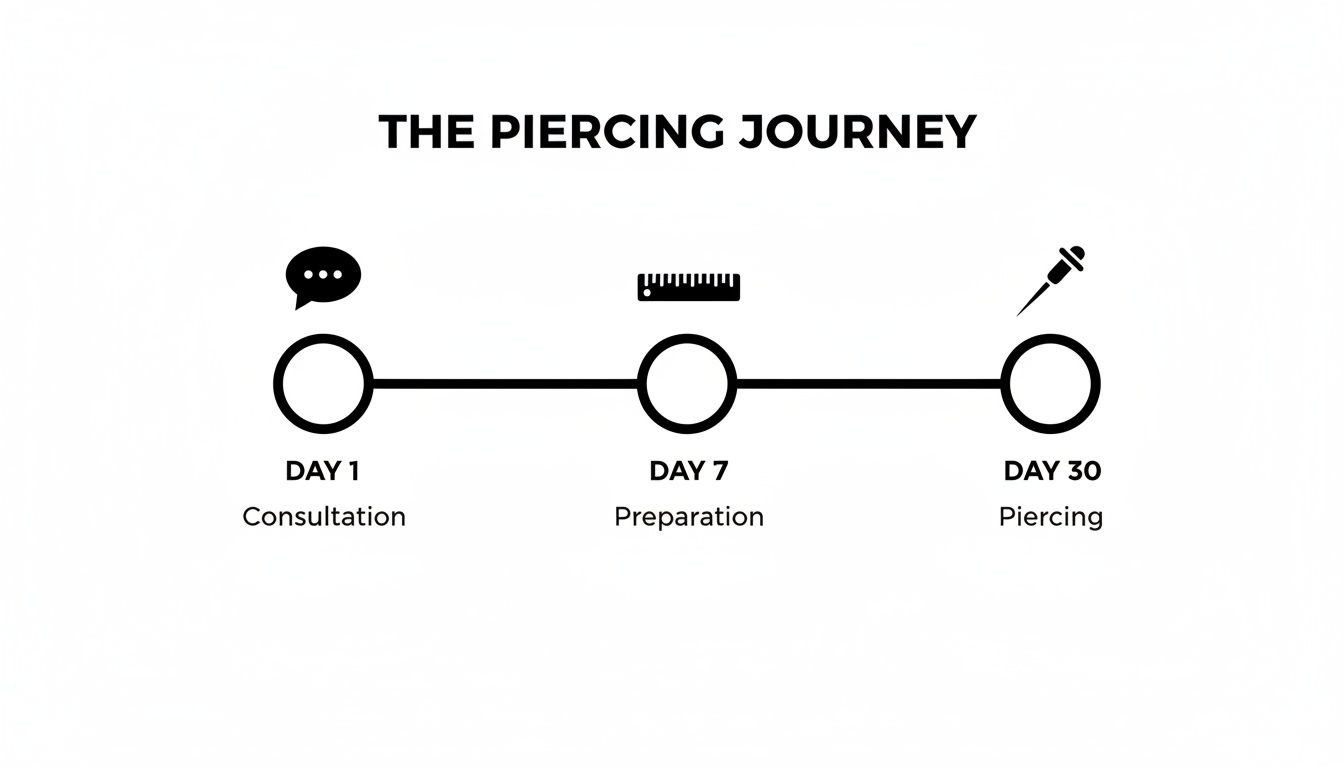
We make sure everything is perfect from the start, so you can focus on the simple task of healing.
Your Simple Daily Aftercare Routine
Keeping your new piercing clean couldn’t be easier. We swear by a sterile saline wound wash, which you can grab from our studio or find at any chemist. It’s pure, gentle, and doesn't contain any of the nasty stuff that can irritate fresh piercings.
- Hands Off! Well, wash them first. Always give your hands a good scrub with soap and water before you go anywhere near the piercing.
- Clean Twice Daily: A quick spritz of the saline spray on the front and back is all it takes. Once in the morning, once at night.
- Pat, Don’t Rub: Use a fresh piece of non-woven gauze or kitchen roll to gently pat the area dry. Steer clear of cotton wool or buds – their tiny fibres love to get tangled in jewellery and cause trouble.
And that’s your lot. No twisting, no turning, no fiddling. Your body knows exactly what to do and will form a healthy healing channel around the earring all on its own.
The Dos and Don'ts of Happy Healing
Most of this is just common sense, but a little reminder never hurts. Here’s a quick-fire list to keep you on the right track.
The Absolute 'Dos'
- Do keep hair tied up, especially while sleeping, to stop it from getting tangled.
- Do be careful when on the phone, putting on glasses, or using headphones.
- Do pop a clean pillowcase on your pillow regularly. A clean surface makes a happy piercing.
The Strict 'Don'ts'
- Don't twist the jewellery. It’s an old wives' tale that does more harm than good by introducing bacteria and damaging the delicate healing tissue.
- Don't clean with harsh stuff like alcohol, hydrogen peroxide, or antibacterial soaps. Saline is all you need.
- Don't go swimming. Avoid submerging your new piercing in pools, hot tubs, lakes, or the sea until it's fully healed.
Healing Timelines: Lobe vs Cartilage
Not all ear piercings are created equal, and they certainly don't heal at the same speed. It all comes down to the type of tissue and how much blood flows to the area. Knowing what to expect is key to being patient.
Earlobes are superstars when it comes to healing. Because they’re soft and have great blood flow, they are often fully healed in just 6-8 weeks. Cartilage piercings (like a helix or conch), on the other hand, take life in the slow lane. With less blood flow, they need much more time, typically 6-12 months, to heal completely.
Patience truly is a virtue here, especially with cartilage. Swapping the jewellery out too early can undo weeks of good healing. For a deeper dive into the specifics, check out our complete guide to ear piercing healing times.
Normal Healing vs Signs of Trouble
For the first few weeks, a bit of redness, mild swelling, and tenderness is totally normal. You might also spot some clear or whitish fluid (this is just lymph) that dries into a tiny "crusty". Don't pick it! This is all just your body’s way of saying, "I'm working on it."
It's important, though, to know what isn't normal so you can get in touch if needed.
When to Contact Us:
- If you spot any thick, yellow, or green discharge (a sign of infection).
- If the redness or swelling gets worse after the first couple of days.
- If the area feels very hot to the touch or you have a persistent throbbing pain.
If you notice any of these signs, please don't panic or try to self-diagnose. Just give us a call on 01202 9000 50 or ping a photo over to our WhatsApp on 07752913846. Our piercers will take a look and tell you exactly what to do. We're here to help get things back on track.
Common Questions About Ear Piercing For Girls
It's completely normal to have a long list of questions when you're thinking about a first ear piercing. We get it! Both parents and daughters want to feel confident and excited, and the best way to get there is with clear, honest answers. We've put together some of the most common queries we hear in our studios to help put your mind at ease.
What Is The Best Age For A Girl To Get Her Ears Pierced?
This is the big one, isn't it? We get asked this more than anything else, and honestly, there’s no single “right” age. The perfect time for an ear piercing for girls is a personal decision that’s different for every family.
While it’s common in the UK for girls to get their first lobe piercings between 5 and 10 years old, we focus on readiness, not just a number on a birthday cake. The best time is when a child genuinely wants the piercing for herself and is old enough to understand that she’ll need to help look after it.
A piercing is a small commitment, and when a child is an enthusiastic part of the process, the whole experience is so much better for everyone. Our piercers will always have a gentle chat to make sure she feels happy and comfortable before we even think about starting. It’s all about making sure it's an empowering milestone, not something she feels pushed into.
How Much Does An Ear Piercing Actually Hurt?
Let’s be straight with you: yes, there’s a brief sting. But it is extremely quick. The vast majority of people—kids and adults alike—describe it as a very fast, sharp pinch that’s over in a second. Most say it hurts less than a vaccination jab.
The skill of the piercer makes a huge difference here. Our team at Timebomb Tattoo & Piercing are masters at being swift, calm, and reassuring. Their technique is honed to be as gentle as humanly possible, which really minimises the sensation.
We work hard to create a relaxed, supportive atmosphere, which helps melt away any pre-piercing jitters. By keeping the process quick and professional, we find that the brief pinch is forgotten almost instantly, replaced by the excitement of seeing the new jewellery.
What If My Daughter Is Nervous On The Day?
A few last-minute butterflies are completely normal before trying something new, so please don't worry if she’s a bit wobbly on the day. Our studios in Croydon and Bournemouth are designed to be friendly and welcoming, never clinical or intimidating.
Our piercers are incredibly patient and have worked with thousands of first-timers. We never, ever rush. Here’s how we help make it a positive experience:
- We talk everything through: We’ll explain every single step before we do it, showing her the sterile equipment so there are no surprises.
- She’s in control: Your daughter gives the final nod on the dot placement and tells us when she’s ready to go.
- A little distraction works wonders: A simple breathing exercise, a quick countdown, or just some fun chatter makes the moment fly by.
Our goal is for her to leave feeling proud and happy with her decision. We’re here to support her every step of the way and make sure her first ear piercing for girls is a fantastic memory.
How Do I Book An Appointment?
Booking an appointment is the best way to guarantee a dedicated time slot for you, so there’s no hanging around. We always recommend booking in advance, especially for weekends, as our spots fill up quickly.
Getting in touch and securing your spot at our Croydon or Bournemouth studio is easy:
- By Phone: Give our friendly team a call on 01202 9000 50 to find a time that works for you.
- By WhatsApp: Prefer to text? Send a message to 07752913846 to ask questions or book your slot.
While we always try our best to fit in walk-ins if we have a gap, booking ahead is the only way to guarantee a piercer will be ready and waiting just for you. We can't wait to welcome you!
Ready to take the next step? At Piercing Near Me, we make it simple to find safe, professional piercing services you can trust. Book your appointment at Timebomb Tattoo & Piercing in Croydon or Bournemouth for an expert experience.