
You look down after a shower, or when getting changed, and there it is. A small bump sitting beside your navel piercing that definitely wasn't there before. It's common to immediately ask the same questions. Is it infected? Have I done something wrong? Do I need to take the jewellery out?
That reaction is normal. A bump on a belly button piercing can look alarming, especially when the piercing still feels new to you or has been behaving well for weeks and then suddenly flares up.
The reassuring part is that this is common. Among people aged 16 to 24, about one-third of all reported piercing complications are associated with navel piercings, largely because they heal slowly and deal with constant friction from clothing and movement, according to the BMJ report on body piercing complications in England. That doesn't mean every bump is serious. It means navel piercings ask for patience, and they often react before they settle.
That Worrying Bump on Your Navel Piercing
A navel piercing sits in one of the most awkward healing spots on the body. Waistbands rub it. Towels catch it. You bend, sit, sleep on it, and sometimes trap moisture there without even realising it. So when a bump appears, it usually isn't a sign that your body has rejected the piercing or that healing has failed completely.
In practice, the most common scenario is simple. The piercing was calming down, then something irritated it. A pair of high-waisted jeans. Gym leggings. Sleeping curled over. A rushed dry-off after a shower. Then the area responds with a raised red or pink lump.
Practical rule: A bump is a symptom, not a diagnosis. You need to identify what kind of bump it is before you decide what to do.
That matters because people often panic and reach for the worst advice first. They squeeze it, twist the bar, switch the jewellery, scrub it with harsh products, or remove it altogether. Those reactions usually make a straightforward irritation problem harder to settle.
If you're dealing with a bump on a belly button piercing right now, the safest approach is calm assessment. Look at the shape, colour, and behaviour of the bump. Notice whether the area is hot, increasingly painful, or producing unpleasant discharge. Then match the care to the problem instead of throwing random remedies at it.
Identifying the Type of Piercing Bump
Most bumps get lumped together under one label, but they aren't all the same. What you're seeing could be irritation, a scar-type response, or something that needs medical input. Start with appearance and feel.
What irritation usually looks like
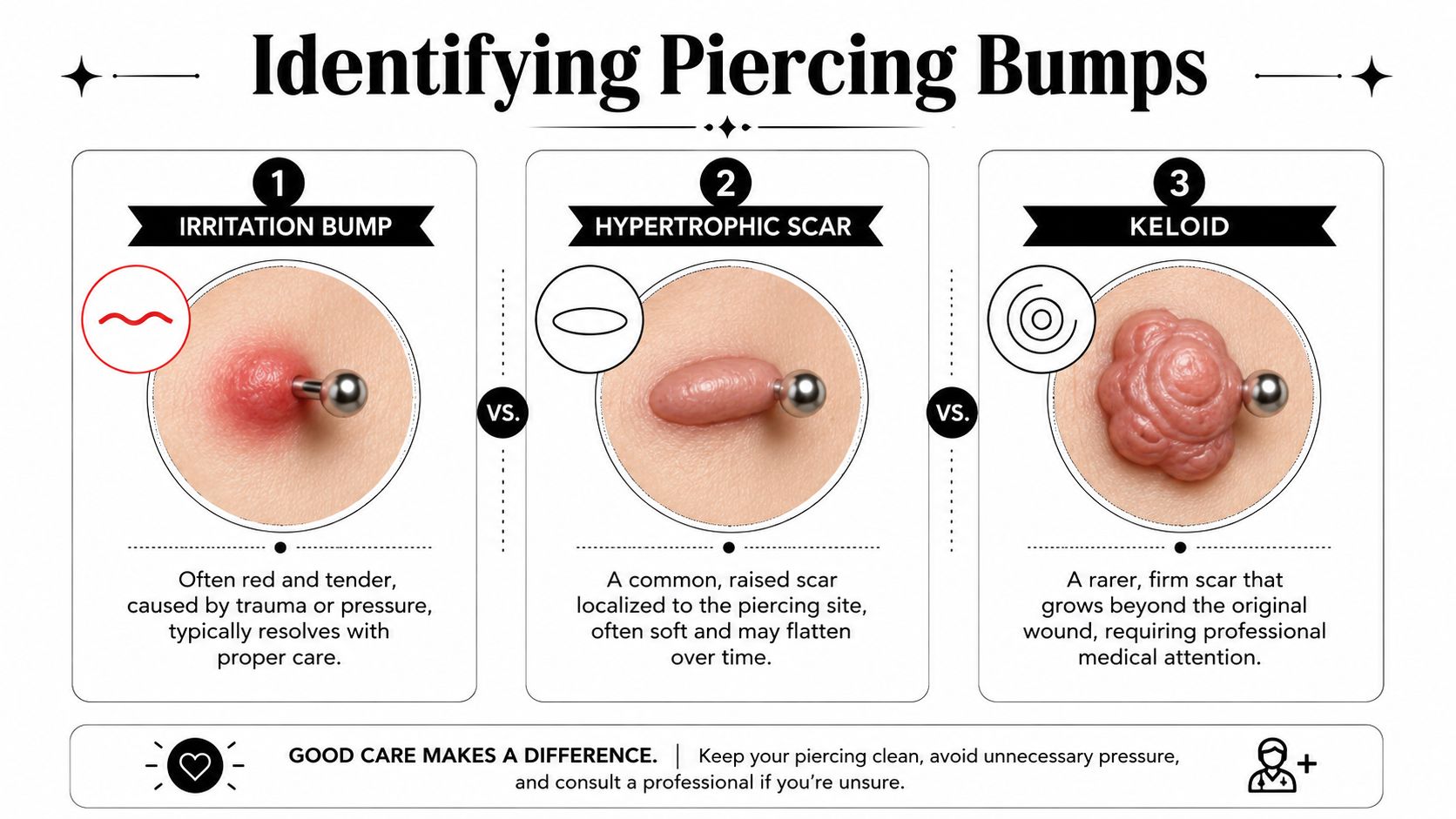
An irritation bump often looks like a small, fleshy pimple or a red raised bead sitting right at one entry or exit point. It may look angry one day and calmer the next. It's often tender if clothing has been rubbing the area, but not dramatically painful.
A pustule is a little different. It can look like a spot with fluid in it. People often assume that means infection straight away, but mild fluid-filled spots can also happen after friction or pressure. The key question is whether the whole area is becoming more inflamed, hot, swollen, and painful, not just whether there's a small head on the bump.
How scar tissue differs
A hypertrophic scar is usually more solid and more localised. It stays close to the piercing channel rather than spreading beyond it. It can be raised but often looks smoother and more stable than an irritation bump, which tends to flare and shrink depending on what has been aggravating it.
A keloid is different again. It's a firmer overgrowth that extends beyond the original wound edges and needs medical assessment rather than home experimentation. People call almost every piercing bump a keloid, but most of the time they're describing irritation or local scar tissue instead.
Here's a quick comparison:
| Type | Common look | Common feel | Best first step |
|---|---|---|---|
| Irritation bump | Red or pink, small, fleshy, changeable | Tender, reactive | Reduce friction and moisture |
| Pustule | Spot-like, may hold fluid | Mildly sore or sensitive | Gentle care, no squeezing |
| Hypertrophic scar | Raised and local to the piercing site | Firmer, less changeable | Professional review if persistent |
| Suspected infection | Angry swelling, worsening redness, unpleasant discharge | Hot, painful, throbbing | Medical assessment if red flags are present |
If a bump changes with pressure, clothing, snagging, or wetness, irritation is usually higher on the list than infection.
A lot of confusion comes from expecting navel piercings to heal like earlobes. They don't. If you want a better sense of that timeline, this guide on navel piercing healing time is useful context because the healing window is long and the piercing can stay reactive for months.
Common Causes of Belly Button Piercing Bumps
In UK piercing practice, the biggest mistake is assuming every bump is infected. Most aren't. Around 70 to 80% of piercing bumps are classed as irritation bumps rather than infections, with mechanical friction and “wetness irritation” being the leading causes, according to Pierce Med's guide to piercing bumps.
Friction is the usual culprit
Navel piercings sit exactly where everyday pressure happens. Common triggers include:
- Waistbands and tight clothing that press the jewellery at an angle
- Accidental knocks from changing clothes, towels, bags, or seatbelts
- Sleeping pressure if you lie on your front or curl tightly at the waist
- Jewellery fit issues such as a bar that's too short, too long, or poorly suited to your anatomy
This is why a bump often appears even when someone feels they've been “cleaning it perfectly”. The aftercare might be fine, but the piercing is being physically irritated all day.
Moisture is underestimated in the UK
The UK adds its own problem. Damp weather, layers, sweat under clothing, and warm indoor heating can leave the navel area slightly wet for longer than people realise. That moisture softens the area and makes the channel less stable, so friction starts doing more damage.
The result is often a red, fleshy bump that keeps returning because the root cause hasn't changed. You clean it, it improves a little, then it gets trapped under clothing while damp and flares again.
A navel piercing doesn't just need cleaning. It needs a dry, low-friction environment.
Less obvious causes
Sometimes the bump isn't mainly from routine rubbing. Other causes can include:
- Jewellery material sensitivity, especially if the metal isn't high quality
- Poor placement or angle, which can create ongoing pressure through the tissue
- Touching and twisting, which repeatedly re-traumatises the channel
- Pools and hot tubs too early in healing, which expose the area to bacteria and irritation
A bump on a belly button piercing often settles once the actual trigger is removed. If the cause stays in place, the bump usually stays too.
Safe At-Home Care for a Piercing Bump
Once you've ruled out urgent red flags, home care should be simple, gentle, and boring. That's usually what works. Trouble often arises from doing too much.
What to do
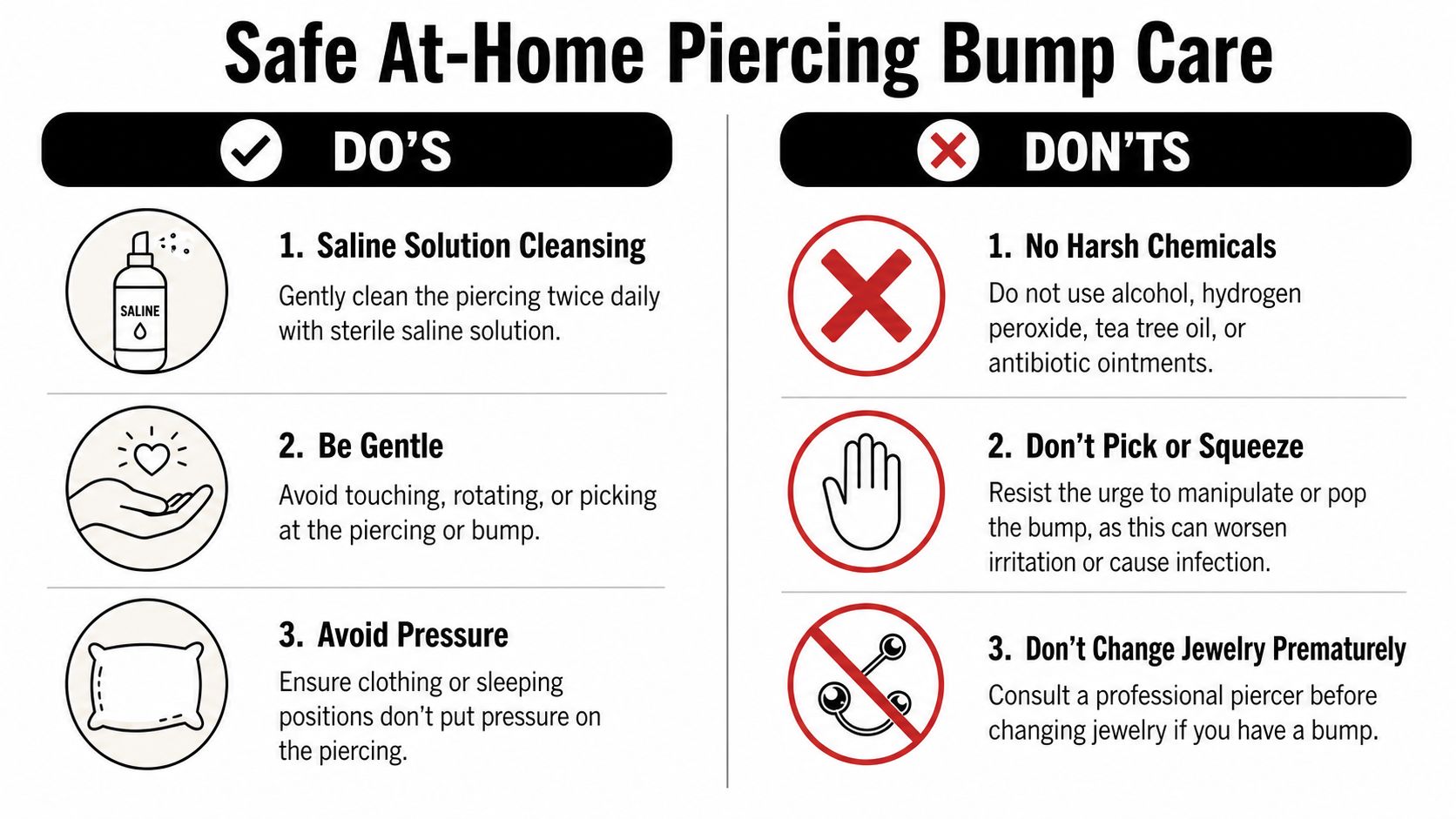
The safest routine is based on sterile saline, not homemade mixtures. The Association of Professional Piercers no longer recommends making your own saline because it's often too salty and can overdry the tissue. The standard approach is sterile saline on clean gauze, then drying with disposable paper products.
Use that as your baseline:
Clean gently with sterile saline
Soak clean gauze or a paper towel with sterile saline and hold it against the area gently.Pat dry with disposable paper
Don't leave the area damp. Drying matters, especially with navel piercings.Reduce pressure
Switch out tight waistbands, avoid leaning pressure onto the piercing, and be careful with sleep position.Leave the jewellery alone
Don't rotate it. Don't push it through. Don't remove it because you're frustrated with the bump.
For broader healing support, this guide to belly button piercing aftercare covers the day-to-day habits that make a real difference.
What not to do
A lot of online advice is harsh, outdated, or risky. Skip all of this:
Tea tree oil
It's too aggressive for an already irritated piercing.Aspirin paste
This is a common DIY remedy and a bad one. It can chemically irritate tissue that's already inflamed.Alcohol or hydrogen peroxide
These tend to dry and aggravate healing tissue rather than helping it settle.Antibiotic creams unless prescribed
Thick ointments can trap moisture and grime around the piercing.Picking, squeezing, or popping the bump
That adds trauma and increases the chance of more swelling.
Clean, dry, and hands off. That's still the most reliable home care for an irritated navel piercing.
Small habit changes that help
If your bump keeps coming back, look at your routine rather than your cleaning product. Ask yourself:
- After showers are you drying the area fully?
- At work or school is your waistband pressing into the jewellery?
- At the gym are sweaty clothes sitting against the piercing for too long?
- When relaxing at home are you absent-mindedly touching it?
Those small habits often matter more than adding another product.
Red Flags When to See a Piercer or Doctor
A lot of bumps can be managed with gentle care and a professional piercing check. Some can't. The important thing is knowing where to go.
When to see a piercer
A professional piercer is the right person if the issue looks mechanical rather than medical. That includes:
- Jewellery fit problems such as a bar that appears too tight or too loose
- Persistent irritation that flares with clothing or movement
- Placement concerns if the piercing seems under pressure or sits oddly in your navel
- Recurring bumps that improve briefly, then return
A piercer can assess the angle, jewellery style, visible pressure, and whether something in your routine is setting the bump off. This overview of infected piercing symptoms can help you separate a likely irritation issue from something more serious.
When to see a doctor
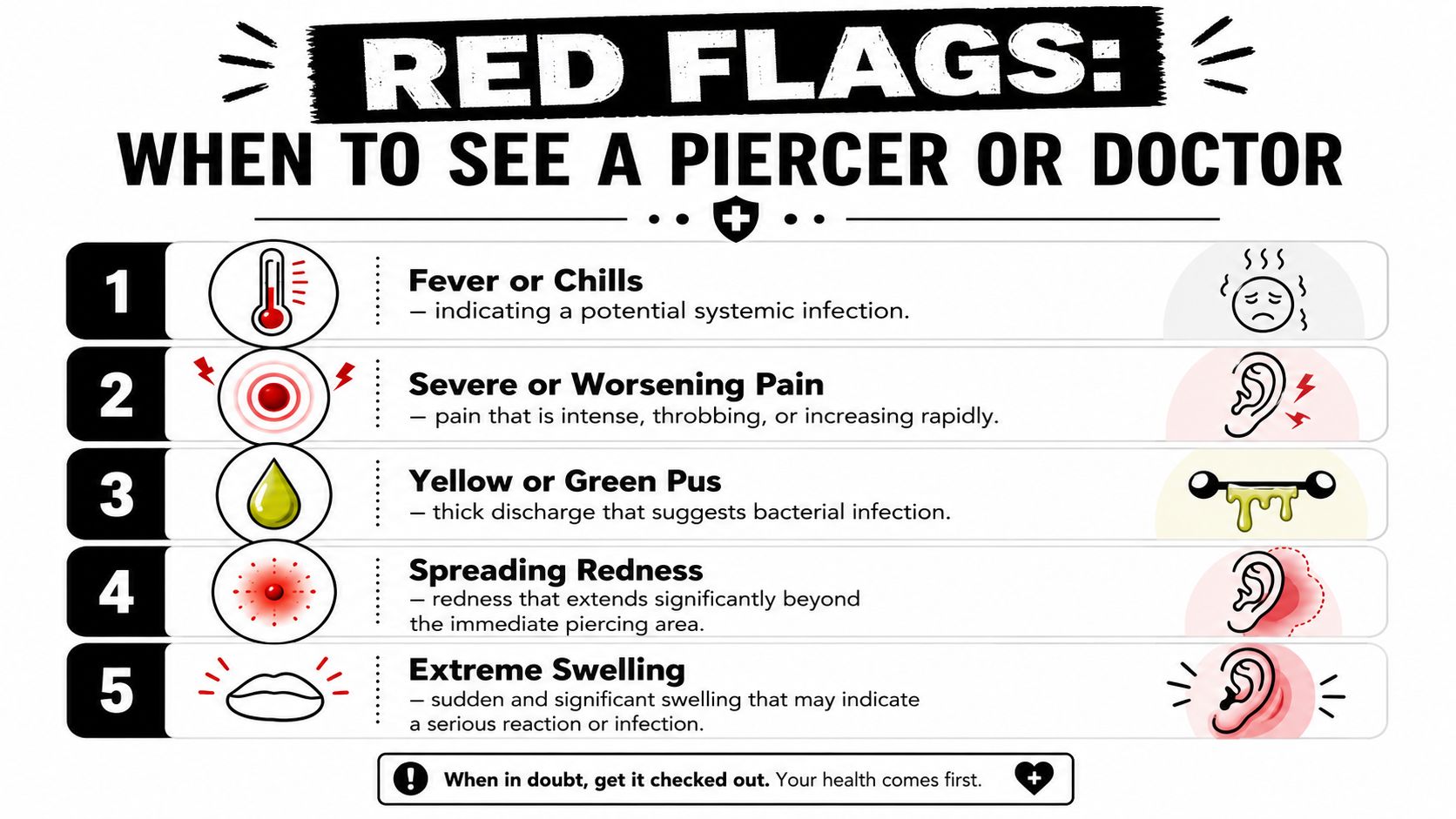
Some symptoms move this out of the “watch and wait” category. You should see a doctor within 24 hours if you have fever, intense pain, red streaks on the skin, or a bad smell from the piercing, based on Medical News Today's medical review of infected belly button piercings.
Also get immediate medical care if you have a condition that weakens your immune system. In that situation, the risk from infection is more serious and shouldn't be managed as routine piercing irritation.
Here's a simple decision guide:
| Situation | Who to contact |
|---|---|
| Pressure from jewellery or clothing | Professional piercer |
| Unsure whether the bump is irritation or scar tissue | Professional piercer |
| Fever, intense pain, red streaks, bad smell | Doctor within 24 hours |
| Weakened immune system and signs of infection | Immediate medical care |
Don't ask a piercer to diagnose a systemic infection, and don't ask a GP to troubleshoot jewellery fit. The right professional saves time and reduces risk.
If the area is hot, worsening quickly, or you feel unwell, treat that as medical. If the piercing looks unhappy and reactive, start with a reputable piercer.
How to Prevent Bumps on Future Piercings
Prevention is mostly about accepting how long this piercing takes to settle. A belly button piercing can take six to twelve months to fully heal, and sometimes up to 18 months, according to Cleveland Clinic's guidance on infected belly button piercings. That long healing period is why short bursts of good aftercare aren't enough.
Think beyond the first few weeks
People are usually careful at the start. Problems often begin later, when the piercing feels “basically healed” and normal routines return. Tight jeans come back. Sportswear stays on after the gym. The jewellery gets bumped and ignored.
A better mindset is to treat the piercing as healing for the long haul. That doesn't mean living in fear of it. It means protecting it consistently.
Habits that reduce trouble
- Choose a reputable piercer who uses sterile technique and suitable jewellery for your anatomy.
- Wear lower-pressure clothing while the piercing settles. Waistbands matter.
- Keep the area dry after showers and exercise so moisture doesn't sit around the channel.
- Avoid unnecessary jewellery changes before the piercing is stable.
- Pay attention to small flare-ups early instead of waiting until the bump gets larger and angrier.
Good prevention is less about fancy products and more about respecting the placement. Navel piercings live in a high-friction area. If you treat them like they're low-maintenance too soon, they usually remind you otherwise.
Get Professional Advice at Our UK Studios
When you've got a bump on a belly button piercing, guessing is what causes most of the trouble. The safest next step is a proper assessment from someone who can look at the jewellery, placement, pressure, and healing pattern in person.
A professional check can answer the questions that online advice can't. Is the bar too short? Is the angle being compressed by your anatomy? Is this ordinary irritation, or does it need medical review? Those details matter, and they're hard to judge from a mirror photo.
If you want experienced support in the UK, Piercing Near Me can help connect you with Timebomb Tattoo & Piercing studios in Bournemouth and Croydon for advice, checks, walk-ins, and appointments. If you're worried about a healing navel piercing, call 01202 9000 50 or message WhatsApp 07752913846.
A calm, in-person opinion often saves weeks of trial and error. It also helps you avoid the classic mistakes. Harsh products, jewellery changes at the wrong time, and removing the bar out of panic.
If you want trusted help with a navel piercing bump, aftercare questions, or a professional jewellery and placement check, contact Piercing Near Me. You can call 01202 9000 50 or send a WhatsApp message to 07752913846 to get clear, safe guidance from experienced UK piercing professionals.