
You’ve just left the studio, you’ve checked your new piercing in every reflective surface on the way home, and now the question starts creeping in. What do I do next so this heals properly?
That part matters more than is often realised. A beautifully placed ear piercing can still become sore, irritated, or delayed in healing if the aftercare is sloppy, inconsistent, or based on old advice from friends, social media, or chemist aisle guesswork.
Good after ear piercing care isn’t complicated. It is simple, steady, and a bit boring. That’s usually the point. The piercings that heal best are often the ones cared for with the least fuss and the most consistency.
At Timebomb, we want clients in Bournemouth and Croydon to feel supported after they leave, not left to figure it out alone. If anything feels off, if you’re unsure whether something is normal, or if you just want us to check the jewellery, call 01202 900050 (Bournemouth) / 020 8686 7730 (Croydon) or message our WhatsApp on 07752 913846 (Bournemouth) / 07902 490584 (Croydon). A quick check early can save a lot of grief later.
Your New Piercing Journey Begins Now
A fresh ear piercing usually feels fine at first. Then the ear warms up a little, it becomes tender when you brush your hair, and you start noticing every hoodie, towel, and phone call. That’s normal. Your body has begun healing a small wound around a piece of jewellery, and that takes time.
The main job over the next weeks and months is straightforward. Keep it clean, keep pressure off it, and don’t interfere with it. Most problems I see don’t come from a lack of effort. They come from too much fiddling, too many products, or changing the jewellery too soon.
The first rule
Your piercing doesn’t need constant attention. It needs calm conditions.
Practical rule: If you’re wondering whether to touch it, twist it, soak it in something random, or take it out “just for a second”, the answer is usually no.
A good healing environment means clean hands, clean bedding, sensible jewellery, and a routine you can stick to. It also means understanding that ear piercings can look settled before they’re fully healed, especially cartilage.
What support should feel like
You shouldn’t have to guess your way through healing. If your piercing catches, swells, develops a bump, or starts looking different from one day to the next, ask. That’s what your piercer is there for.
Keep our details saved in your phone from day one:
- Call us on 01202 900050 (Bournemouth) / 020 8686 7730 (Croydon)
- WhatsApp us on 07752 913846 (Bournemouth) / 07902 490584 (Croydon)
Some issues need a simple jewellery adjustment. Some just need reassurance. Some need a GP. The key is not waiting until a small problem becomes a bigger one.
What success looks like
A well-healing piercing is rarely dramatic. It might feel a bit sore, look slightly pink for a while, and produce the odd bit of dried fluid. Then, gradually, it settles.
That’s the rhythm you want. Not fast fixes. Not miracle sprays. Just proper after ear piercing care done consistently.
The Core Aftercare Cleaning Routine
Good aftercare is simple, but it does need to be done properly. The clients whose piercings settle best usually follow a steady routine, use one suitable product, and stop themselves from fussing with it in between.
What to use
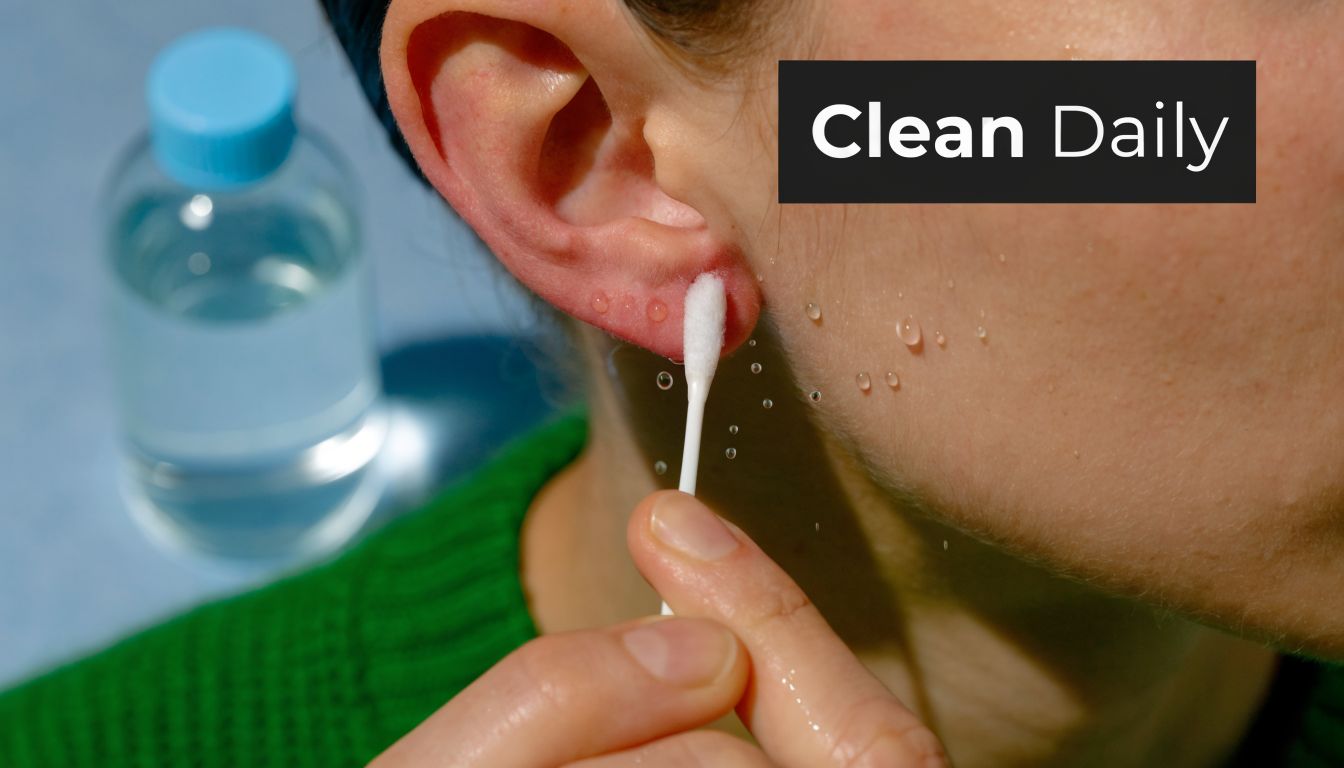
Use sterile saline solution.
That means a ready-made sterile saline spray, not salt water mixed at home. Home mixes often end up too salty, too weak, or less clean than people assume. I have seen plenty of irritated ears that were being "looked after" with DIY salt water, antiseptic creams, and a bit too much enthusiasm.
Avoid these products:
- Alcohol-based products, because they dry and irritate healing tissue
- Hydrogen peroxide, because it is too harsh for a fresh piercing
- Tea tree oil, because it commonly causes irritation
- Antiseptic creams, because they trap moisture and debris around the piercing
- Harsh soaps or fragranced cleansers, because they can upset already sensitive skin
The routine that actually works
Clean it morning and evening.
Wash your hands first
Use soap and water, then dry your hands well. If your hands are not clean, leave the piercing alone.Apply sterile saline to the front and back
Spray the area well, or soak a clean piece of non-woven gauze and hold it gently against the piercing for a short moment.Let softened build-up come away gently
Dried lymph, the pale crust that forms during healing, is normal. Do not scrape or pick it off while it is dry. Once it softens, any loose residue can be wiped away carefully with gauze.Pat the area dry
Use non-woven gauze or plain paper towel. Cloth towels can hold bacteria and the fibres catch on jewellery more often than people expect.Stop once it is clean and dry
That last step matters. A lot of irritation comes from repeated checking after the cleaning is already done.
A piercing usually settles better with calm, consistent care than with frequent intervention.
What not to do
Ear piercing advice gets passed around for years, and some of the old habits are still causing trouble.
Don’t twist or rotate the jewellery
Jewellery does not need to be turned to prevent sticking. Twisting drags dried fluid and surface bacteria through the channel and irritates tissue that is trying to heal. Leave it sitting still.
Don’t over-clean
Twice a day is enough for most ear piercings. More than that often leaves the area dry, sore, and reactive. If you live near the coast in Bournemouth, salt, wind, and sunscreen residue can already leave skin a bit stressed in warmer months. In Croydon, sweat, pollution, and central heating tend to dry the area out in a different way. In both places, the answer is usually not more products. It is a gentler routine and proper drying.
Don’t remove the jewellery early
Fresh piercings can shrink or close quickly. Taking jewellery out can also make swelling and irritation harder to assess. If the area looks angry, swollen, or starts embedding, contact us before trying to sort it yourself.
Showering and rinsing
A clean shower helps loosen stubborn build-up. Let warm water run over the area for a short time, then dry it properly afterwards.
Do not leave wet hair sitting on the piercing. That is a common irritation trigger, especially with helix, flat, and conch piercings. It sounds minor, but I see it a lot.
Here’s the practical version:
| Habit | Helps healing | Slows healing |
|---|---|---|
| Cleaning product | Sterile saline | Alcohol, peroxide, tea tree oil |
| Touching | Only with clean hands when needed | Fiddling, twisting, checking constantly |
| Drying | Pat dry with paper towel or gauze | Leaving hair or towels rubbing the area |
| Jewellery movement | Leave it still | Rotating or pushing it back and forth |
If the area feels dry or tight
That can happen.
Usually the fix is not cream, balm, or another product bought in a hurry. It is usually less wiping, less touching, and making sure the piercing is not being blasted with hot water, hair products, or too much saline. If you are not sure whether it is simple dryness or the start of irritation, send us a clear photo on WhatsApp or call the studio. That is especially helpful if you are healing through a hot spell in Bournemouth or a week of stuffy indoor heating in Croydon, because both can change how the skin behaves around a new piercing.
Navigating Daily Life with a Healing Piercing
Most ear piercings don’t get irritated during cleaning. They get irritated while you’re living your normal life.
A helix can be healing nicely, then get knocked by a hoodie. A lobe can settle well, then catch in a hairbrush. A conch can be calm for days, then flare up after headphones press on it for an afternoon. That’s why daily habits matter as much as your cleaning routine.
Sleeping without crushing it
Side sleepers usually discover this one on the first night. If the new piercing is under your head, your ear gets compressed for hours. That pressure can lead to swelling, soreness, and bumps that seem to appear out of nowhere.
The easiest fix is a travel pillow or donut pillow, with your ear sitting in the centre rather than taking your body weight.
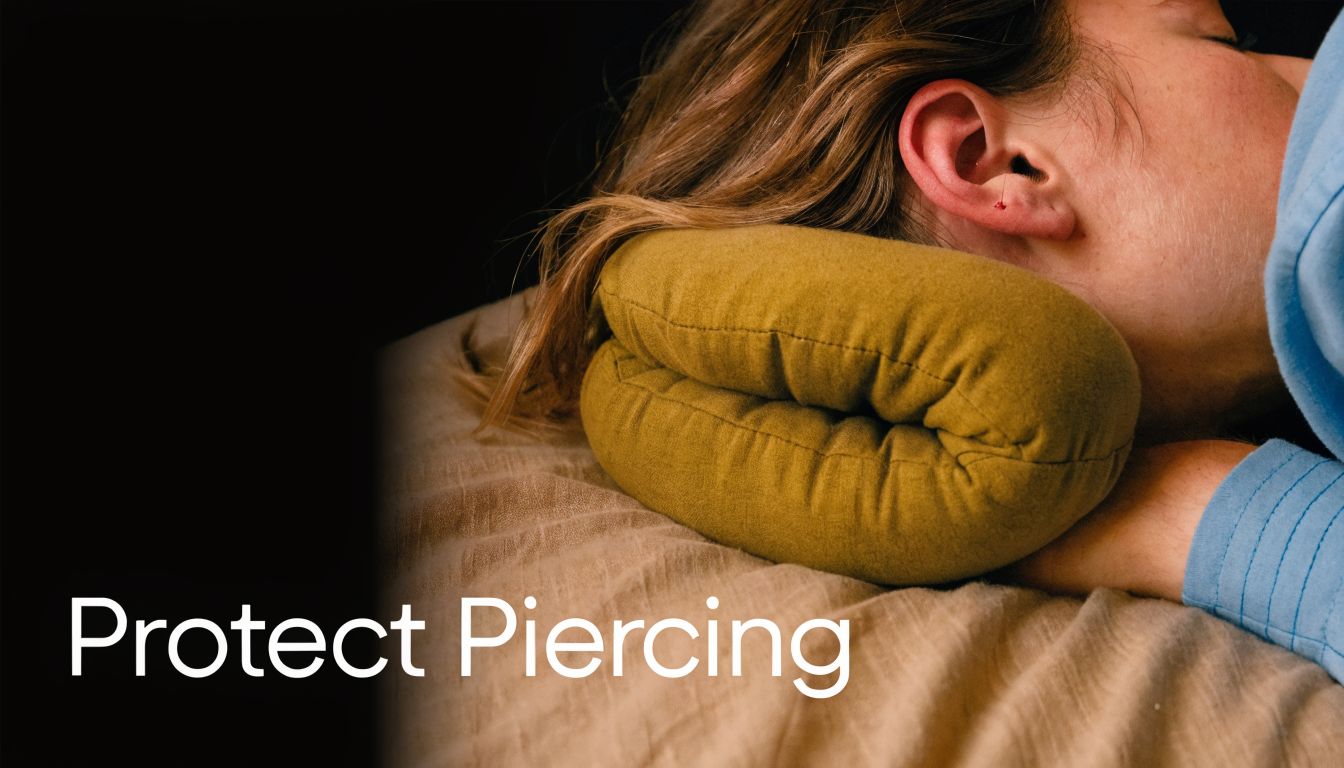
If both ears are pierced, back sleeping is kinder while they settle. Not everyone manages that, so use the pillow trick and change your pillowcase often.
Hair, clothes, and those tiny daily accidents
Long hair wraps itself around flatbacks and butterfly backs with amazing determination. Freshly washed hair is fine. Tugging a brush through knots around a piercing isn’t.
These habits help:
- Tie hair back for styling if it keeps snagging on the jewellery
- Pull jumpers on slowly so collars don’t scrape the ear
- Use care with towels and pat around the ear instead of rubbing
- Keep scarves and hats loose if they press on cartilage
A lot of irritation bumps have a simple backstory. Repeated minor trauma. Not poor healing ability, just repeated knocks.
Phones, headphones, and earbuds
If you’ve had a lobe piercing, using a phone usually isn’t a big issue if the surface is clean and there’s no pressure. Cartilage is different. A phone clamped against a fresh helix or forward helix can irritate it quickly.
Earbuds and over-ear headphones can also be awkward, depending on placement. With a conch, tragus, or helix, pressure from audio gear can keep the area inflamed even if everything else is right.
If a device leaves the piercing feeling hot, sore, or indented afterwards, stop using it for now.
Speaker mode, one-sided use, or avoiding that side for a while is usually worth it.
Showering, exercise, and getting on with your week
Normal life doesn’t stop because of a piercing. You can shower, wash your hair, and exercise. The point is to reduce friction and contamination.
In the shower
Let clean water run over the area. Don’t scrub the piercing with shampoo or body wash. Rinse well if products run over it.
At the gym
Sweat itself isn’t the enemy. The bigger issues are touching the piercing with gym hands, pressing equipment against the ear, and wiping your face and ears with the same used towel.
Around the house
Fresh bedding helps. So do clean hats, clean headphone pads, and clean phone screens. Small hygiene details matter because ear piercings sit exactly where daily contact happens.
Water exposure needs common sense
Submerging a healing piercing in baths, pools, hot tubs, or open water is one of those risks people brush off until it goes wrong. Healing tissue doesn’t need long soaks. It needs a clean environment.
If your ear gets accidentally wet, dry it properly. If you’re planning holidays, swimming, or beach days, ask your piercer what’s realistic for your stage of healing rather than assuming it’ll be fine.
Understanding Your Ear Piercing Healing Timeline
You leave the studio, the ear looks tidy, and by week two or three it already feels much easier. That is the point where clients in Croydon and Bournemouth often get caught out. The outside settles first. The inside is still doing the slow work.
A healing piercing goes through two practical stages. First, it becomes calm enough to live with. Swelling drops, tenderness eases, and the jewellery may be ready for a professional downsize if the bar has become too long. Later, the channel toughens up enough to cope with a jewellery change without getting irritated all over again. That second stage takes longer than people expect, especially in cartilage.
Initial healing versus full healing
Initial healing means the piercing is less reactive day to day. It may look good, feel better, and stop drawing your attention every hour. It still is not ready for casual jewellery swaps, pressure, or rough handling.
Full healing is different. By that stage, the fistula has matured and the piercing is much more stable. Lobe piercings usually get there sooner. Cartilage usually asks for patience because it has a poorer blood supply and tends to complain for longer after even minor knocks.
At Timebomb, we tell clients to treat healing times as ranges, not promises. A lobe can be straightforward, then get delayed by a snagged jumper or child pulling at it. A helix can look settled for a month, then flare after one bad night of sleeping on it.
Estimated Ear Piercing Healing Times
| Piercing Location | Initial Healing (Ready for Downsize) | Full Healing (Ready for Jewellery Change) |
|---|---|---|
| Lobe | Often after early swelling has clearly settled and your piercer confirms the post is now too long | Usually one of the quicker ear piercings to mature, but still needs proper time and a calm piercing before changing jewellery |
| Upper lobe | Often similar to a standard lobe, though placement near firmer tissue can slow things slightly | Often a bit less predictable than a standard lobe if it sits in transitional tissue |
| Helix | Commonly reviewed once the first swelling phase has passed and the bar starts sitting with excess length | Usually several months. Sometimes longer if it gets knocked, slept on, or irritated by hair and clothing |
| Forward helix | Often needs a careful fit check because hair, glasses, and face coverings can keep it aggravated | Usually in the slower cartilage range and best left alone until it has been calm for a sustained period |
| Tragus | Often once swelling is down and the jewellery is no longer being crowded by the tissue | Usually slow to fully mature and rarely appreciates early jewellery changes |
| Conch | Often ready for a shorter bar once the initial puffiness has dropped and the disc no longer sticks out excessively | Usually in the cartilage range, and often delayed by pressure from headphones or side sleeping |
| Flat | Often settles enough for a shorter post after the first reactive phase | Usually takes months rather than weeks and does best with very little disturbance |
| Daith | Often variable, depending on anatomy and how much the area swells at first | Commonly slow and best left with suitable starter jewellery for a long stretch |
| Rook | Often anatomy-dependent and better judged in person than by a calendar | Usually one of the slower healers and easy to irritate if it gets touched or pressed |
A calendar helps, but behaviour matters more. A piercing that is still crusting heavily, swelling after small knocks, or feeling sore during cleaning is not ready for a jewellery change just because a certain month has passed.
What normal healing can look like
Healthy healing is not perfectly linear. Some weeks are quiet. Some are not.
These signs are common during a normal healing period:
- Mild redness around the entry or exit point
- Local tenderness if the jewellery gets caught
- Dried lymph, often called crusties
- Stiffness first thing in the morning from dried discharge around the post
- Short flare-ups after pressure, a snag, a haircut, or a clothing pull
That up-and-down pattern is something we see all the time with cartilage piercings in both studios. Coastal humidity in Bournemouth can leave ears damp for longer after showers or sea air exposure, while colder windy days in Croydon often go hand in hand with hats, scarves, and more friction around the ear. Neither one ruins a piercing. Both can slow a temperamental one if you stop paying attention because it looked fine last week.
A piercing that only behaves when nothing touches it still needs more healing time.
Why timing matters
The biggest setback we see is an early jewellery change. Clients get bored of the starter piece, buy a ring online, or try to swap to something shorter because the piercing looks healed. Then the channel gets scraped, swelling starts again, and a straightforward heal turns into months of irritation.
A good first change is based on fit, placement, and how the tissue is behaving now. It is not based on how long the jewellery has been in, by itself.
If you are unsure, send us a clear photo on WhatsApp or call the studio before changing anything. That is especially useful if you are stuck between appointments in Croydon or trying to judge whether a Bournemouth beach weekend has left the area irritated or noticeably unhappy. A quick check from your piercer is safer than trial and error at home.
Identifying and Managing Piercing Problems
You wake up, check the mirror, and the piercing looks angrier than it did yesterday. That does not always mean infection. In the studio, we see far more irritation than true medical problems, especially with cartilage that has been knocked, slept on, or kept damp for too long.
What matters is spotting the difference early and acting on the actual cause.
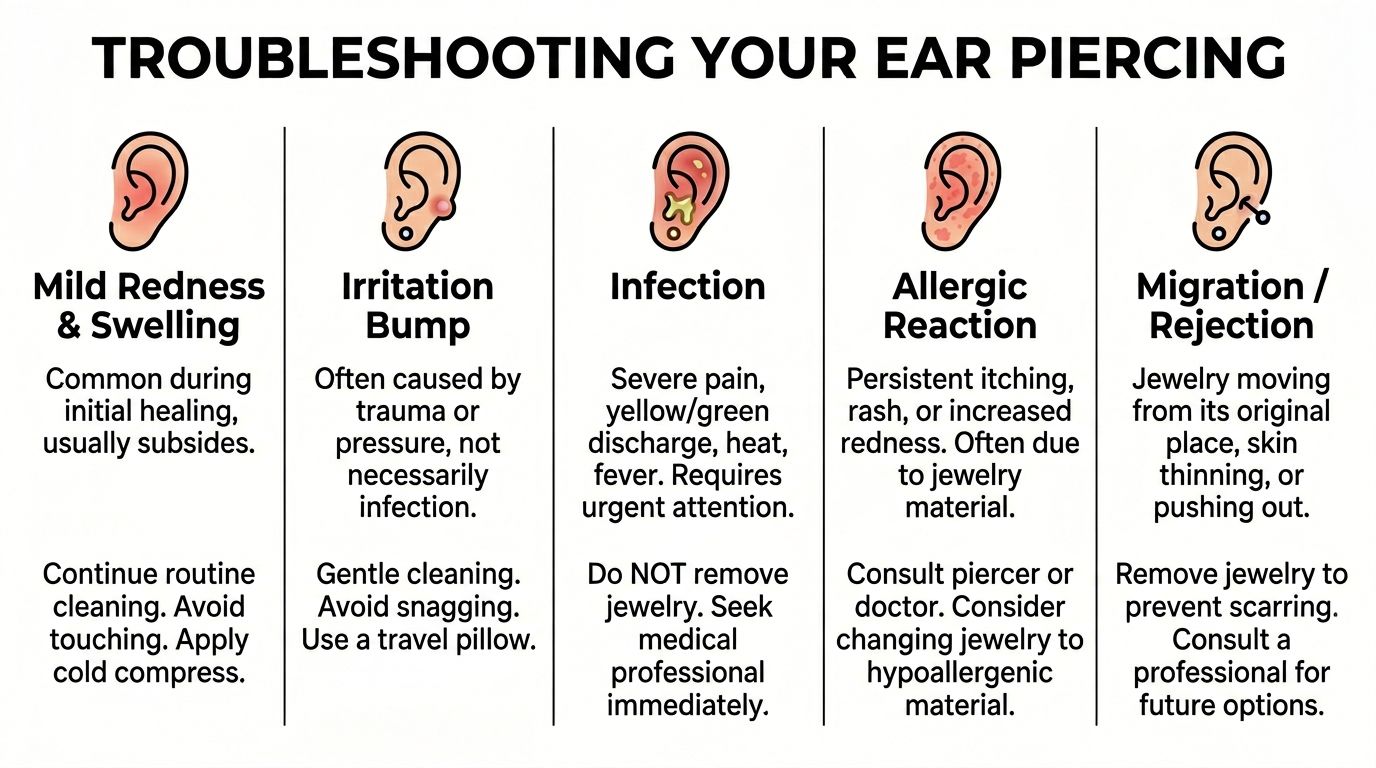
Irritation versus infection
A red piercing can still be a normal healing piercing. A hot, increasingly painful piercing with spreading redness is a different situation.
Use this as a practical guide:
| Issue | What it often looks like | What to do first |
|---|---|---|
| Mild irritation | Pinkness, local tenderness, slight swelling, more awareness of the jewellery | Remove the source of pressure, clean as normal, keep hands off |
| Irritation bump | Small raised bump beside the channel, often after friction, moisture, or angle problems | Review sleeping position, hair contact, headphones, and jewellery fit |
| Allergic or material reaction | Itchiness, ongoing redness, rash-like skin changes | Ask a piercer to check the jewellery material and whether the fit is correct |
| Embedded jewellery | Skin starting to swell over the front or back | Contact your piercer urgently. Get medical help if swelling is progressing or the jewellery is trapped |
| Suspected infection | Worsening pain, heat, spreading redness, feeling unwell, concerning discharge | Leave the jewellery in place and get medical advice promptly |
A lot of home mistakes start here. People assume every bump needs tea tree oil, aspirin paste, or constant cleaning. Those usually make the ear worse. If the problem is pressure or poor drying, adding more products does not solve it.
Problems that need a piercer
Some issues need eyes on the piercing, not guesswork in your bathroom mirror.
The jewellery looks too tight
If the front or back is sinking into the tissue, act quickly. Swelling can turn a manageable problem into embedded jewellery fast. We would rather check a false alarm than see you after the jewellery has started disappearing into the ear.
A bump has appeared
Bumps are common, especially on cartilage, but they are not all the same. Some come from angle, some from pressure, some from moisture, and some from jewellery that is no longer the right fit. The fix depends on the cause. Randomly changing products at home often drags it out.
The piercing has shifted or looks crooked
Pressure can change the angle while it heals. In other cases, the body is starting to push the piercing into a less stable position. Early assessment gives you better options, whether that means adjusting jewellery, changing habits, or in some cases accepting that the placement is not going to settle well.
You want to change the jewellery because it "looks healed"
This catches people out all the time. The outside can look calm while the channel inside is still delicate. An early change, especially to a ring or a shorter piece bought online, can scrape the inside and restart swelling. If you are unsure, send us a clear photo on WhatsApp or call before changing anything.
Problems that need a GP or urgent medical advice
Piercers handle jewellery fit, irritation, pressure issues, and healing setbacks. Medical treatment belongs with a GP, urgent care, or A&E if symptoms are severe.
Get medical advice if you have:
- Redness spreading beyond the piercing
- Increasing heat, throbbing, or significant swelling
- Thick yellow or green discharge
- Fever or feeling generally unwell
- A cartilage piercing that becomes suddenly more painful
- Jewellery that is embedded and cannot be safely accessed
Cartilage deserves extra caution. Infections there can become serious more quickly than soft lobe problems, so do not wait around hoping it will settle if the pain and heat are building.
Do not remove jewellery yourself if infection is suspected unless a medical professional tells you to. Keeping the channel open can matter during assessment and treatment.
What to do the moment something goes wrong
Keep it simple.
- Wash your hands
- Check whether the jewellery still has some visible space
- Clean with sterile saline
- Remove the obvious source of pressure or friction
- Monitor it closely over the next day
- Message your piercer if it looks worse, feels tighter, or you are unsure
For Timebomb clients, message us a clear photo on WhatsApp at 07752 913846 (Bournemouth) / 07902 490584 (Croydon) or call 01202 900050 (Bournemouth) / 020 8686 7730 (Croydon). That is especially useful if you are in Croydon and dealing with winter layers rubbing the ear on your commute, or in Bournemouth after a damp weekend where the piercing has stayed moist longer than usual. A quick photo check often tells us whether you need a jewellery adjustment, a habit change, or medical help.
Quick, calm decisions usually sort out the small problems. Delay is what turns a simple irritation into a long healing headache.
Special Considerations and Local Studio Support
You leave the studio, feel fine, then the piercing starts acting differently once real life gets hold of it. A Bournemouth client spends the afternoon in sea air, gets caught in drizzle, and goes home with damp hair sitting against a fresh helix. A Croydon client does the evening commute in a scarf and over-ear headphones, then wonders why one side feels sore by bedtime. Same piercing. Different healing conditions.
That is why local aftercare matters. Generic advice can cover the basics, but it will not account for the habits, weather, and daily friction we see all the time at Timebomb. The Association of Professional Piercers aftercare guidance supports the same principle. Keep aftercare simple, clean, and appropriate to the piercing, then adjust for what your day looks like.
Why local conditions change the advice
Bournemouth clients often deal with damp air, wind, wet hoods, and hair that stays moist longer after showers or rain. Cartilage piercings can get irritated if they stay warm and damp for hours. Dry the area gently after washing, hair drying, exercise, or bad weather. Do not rub it. Pat around it with clean gauze or plain paper towel, then leave it alone.
Croydon brings a different set of problems. Long commutes, collars, scarves, bike helmets, hoodies, and over-ear headphones create repeated pressure without people noticing at first. Urban dust and general day-to-day grime are less of an issue than constant rubbing. Friction is what usually keeps these piercings annoyed.
The right aftercare plan should match your placement, jewellery fit, hairstyle, and routine. A lobe on someone who works from home heals differently from a rook on someone commuting daily in winter layers.
Advice for parents and first-time clients
Parents bringing in a teenager usually ask sensible questions, and the same few issues come up every time. Will they keep hands off it. Will they remember saline. Will they say anything before a small problem turns into a bigger one.
The best setup is simple and visible:
- Keep the saline where it will be seen, not buried in a bathroom cupboard
- Use a clean pillowcase and change it often during the early healing period
- Check for swelling and tightness, not by twisting jewellery, but by looking carefully
- Make it easy to mention soreness early without waiting to see if it “just settles”
Young clients usually heal well when the routine is boring and consistent. Trouble starts when friends suggest turning the jewellery, swapping earrings too early, or trying whatever remedy they saw online.
What to use and what to skip
Keep the product list short because more products usually means more irritation.
Use:
- Sterile saline
- Clean non-woven gauze or plain paper towel
- Good quality jewellery fitted correctly by a professional
Skip:
- Alcohol
- Peroxide
- Tea tree oil
- Antiseptic creams
- Homemade salt water
- Random internet remedies
I have seen more piercings delayed by overcare than by undercare. Creams clog the area. Strong solutions dry it out. Homemade mixes are inconsistent. Fresh piercings heal best when they are kept clean, kept dry enough, and left alone.
Ongoing support matters
A quick message early can save weeks of frustration. We can often spot pressure from jewellery length, irritation from sleeping, or a bad angle from a clear photo long before a client knows what they are looking at.
If you had your piercing done at Timebomb in Bournemouth or Croydon and you are unsure about anything, contact us:
- Phone on 01202 900050 (Bournemouth) / 020 8686 7730 (Croydon)
- WhatsApp on 07752 913846 (Bournemouth) / 07902 490584 (Croydon)
Use that support. If the ear looks different, feels tighter, keeps catching, or you are not sure whether something is normal, ask. Local follow-up is part of proper after ear piercing care, and it is one of the reasons clients do better when they have a studio they can reach.
Frequently Asked Aftercare Questions
Can I wear headphones with a new ear piercing
Sometimes, but it depends on placement. Lobes are usually easier than cartilage. If headphones or earbuds press on the jewellery, leave the area sore, or trap heat, stop using them until the piercing is calmer.
What should I do if I catch or knock the piercing
Clean hands first. Then check whether the jewellery still has space and hasn’t become tight. Clean it with sterile saline, avoid touching it afterwards, and monitor it over the next day. If swelling increases or the angle looks different, contact your piercer.
When should the first jewellery change happen
Not when you’re bored of the starter jewellery. It should happen when the piercing is fully ready, and the first change is best done by a professional piercer. That’s especially important for cartilage.
Can I take the earring out just for a special event
No. Fresh piercings can shrink or close quickly, and reinserting jewellery can damage the channel.
Is crusting normal
Yes, in many cases. Dried lymph is common in healing piercings. Don’t pick it off dry. Let saline or clean shower water soften it first.
If you’re looking for safe, professional help with a new piercing or a piercing problem, Piercing Near Me makes it easier to find trusted support, including Timebomb Tattoo & Piercing’s Croydon and Bournemouth studios, where clients can book with confidence and get clear aftercare from experienced piercers.
Trackbacks/Pingbacks