A professional nostril piercing in the UK usually costs £25 to £60, and a septum piercing usually costs £35 to £70. That fee isn’t just for the jewellery. It pays for sterile technique, safe materials, proper tools, and the experience of a trained piercer.
If you're searching how much does nose ring cost, you're probably doing what most first-time clients do. Comparing a few studios, wondering why one place looks cheap, and trying to work out whether the higher price is worth it.
It is. But only if you understand what you're buying.
A nose piercing is small, yet it sits in a part of the face that moves all day when you talk, smile, wash, sleep, and get dressed. That’s why the cheapest option on a price list isn’t always the cheapest option in real life. Safe piercing means proper jewellery, a clean studio, a single-use needle, and somebody who knows how to place the jewellery so it heals cleanly and looks right.
I’ll walk you through the full picture the way I would in a studio. Plain English, no mystery, and no pressure.
Your Guide to Nose Piercing Costs in the UK
You spot one studio advertising a nose piercing for a very low price, then another in Croydon or Bournemouth charging quite a bit more for what sounds like the same thing. On paper, both are selling a nose piercing. In practice, you may be comparing a basic transaction with a properly set-up clinical service.
There are really two parts to the cost. The first is the appointment itself. The second is everything attached to healing well, such as aftercare, check-ins, and future jewellery changes. First-time clients often focus on the number on the booking page, but the more useful question is what that price includes and whether it gives you a good chance of an easy heal.
In the UK, professional nose piercing prices usually sit within a broad studio range for nostrils and septums. The exact figure depends on the studio, the jewellery included, and the standard of care around the procedure. That matters even more if you are comparing local options in places like Croydon and Bournemouth, where one shop’s “from” price may leave out things another studio includes as standard.
A safe piercing works like paying for a good tyre fitting rather than buying the cheapest tyre alone. The small item is only part of the bill. You are also paying for correct sizing, proper tools, a clean setup, and someone trained to fit it properly the first time.
Why prices vary
Two studios can offer the same piercing name and deliver a very different service.
A higher price may include implant-grade starter jewellery, a sterile single-use needle, careful placement marking, a full consultation, and aftercare advice suited to your nose shape and jewellery choice. A lower advertised price may cover only the procedure itself, then add charges later or rely on jewellery that is more likely to irritate the piercing.
That is why cheap and good value are not the same thing.
What your money should pay for
A professional fee should cover more than the few seconds of the piercing. It should pay for time, judgement, hygiene, and suitable jewellery from the start.
A good piercer checks your anatomy before agreeing on placement. They explain whether your chosen stud or ring is sensible for healing. They leave room for swelling without making the jewellery so long that it catches on towels, clothing, or glasses. If a placement is likely to heal badly or sit crooked, they say so.
That honesty protects both your face and your budget.
For first-time clients, I suggest keeping three ideas in mind:
- Start with safety and material quality. A cheap stud can turn an ordinary heal into weeks of irritation.
- Compare what is included, not just the headline price. Ask about jewellery material, needle use, consultation time, and aftercare support.
- Judge the total cost over the healing period. A well-done piercing often costs less overall because it is less likely to need troubleshooting, replacement jewellery, or corrective work.
If you look at the price this way, you are no longer asking only, "How much does a nose ring cost?" You are asking what your money buys in a professional UK studio, and whether that service is worth trusting with your face.
The True Cost of a Professional Nose Piercing
People often look at a nose piercing and think, “It only takes a moment, so why does it cost that much?” The reason is simple. You’re paying for far more than the moment the needle passes through.
In the UK piercing market, nostril piercings typically cost between £25 and £60 at professional studios, while septum piercings range from £35 to £70.
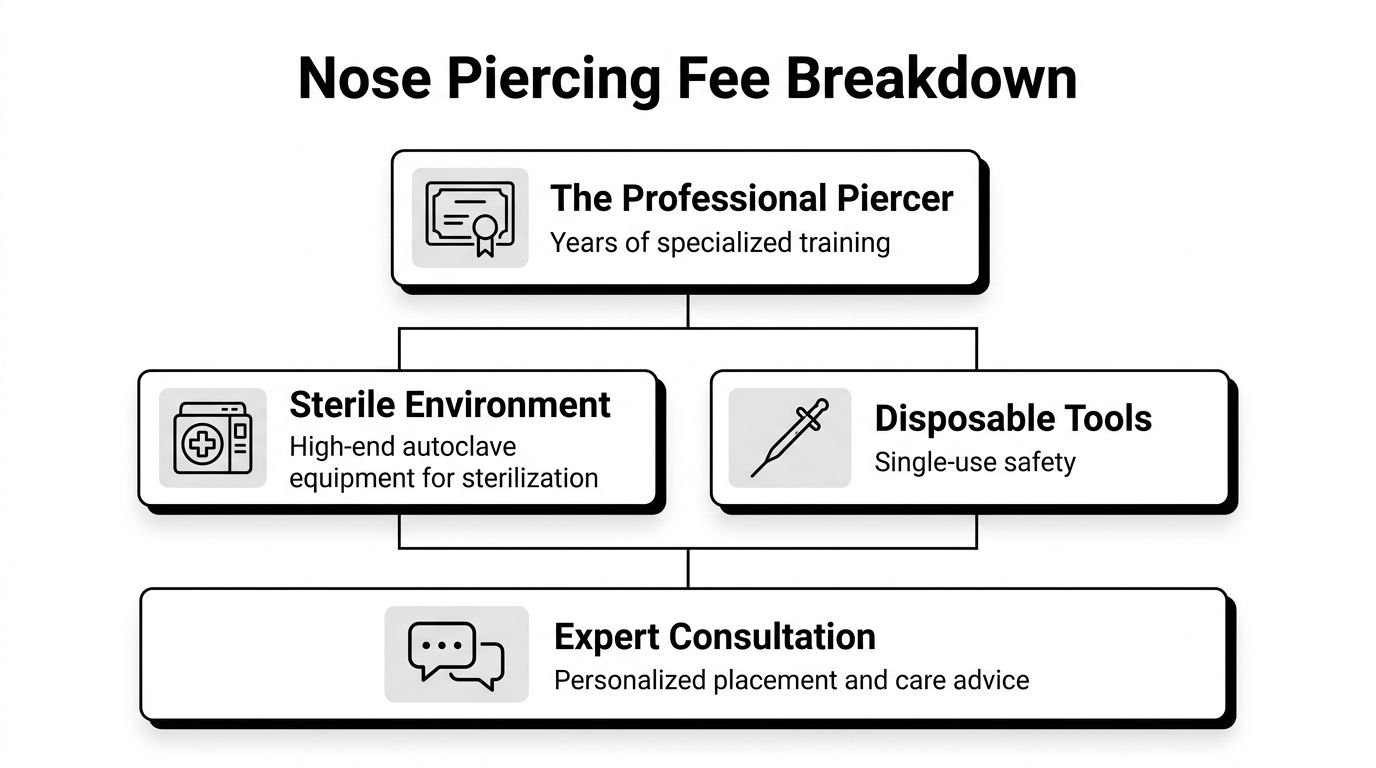
You’re paying for skilled hands
A proper nose piercing is quick. Learning to do it well isn’t.
A trained piercer has spent years building consistency. They know how to align a nostril piercing so it sits naturally with your nose shape. They know when a septum can be placed cleanly and when anatomy makes that harder. They also know how to choose jewellery that leaves room for swelling without turning into a snagging problem.
That judgement is part of the fee.
Consider a mechanic fitting a part properly. You’re not paying only for the part. You’re paying for the person who knows exactly how to install it without causing a bigger problem.
You’re paying for a sterile setup
This is the part many clients never see in full.
Behind every safe piercing appointment, there’s a chain of hygiene steps that cost time and money:
- Single-use needles are opened fresh for your appointment.
- Disposable barriers and procedure supplies are used once, then discarded.
- Sterilisation equipment has to be maintained and operated properly.
- Clean procedure areas have to be prepared between clients.
A reputable studio builds those costs into the appointment because they aren’t optional. They’re basic safety.
Clean technique doesn’t feel exciting when you book. It matters a great deal when your piercing is healing two weeks later.
Basic jewellery is usually included
Most professional studios include starter jewellery in the piercing fee, or they quote a price that clearly reflects the jewellery being fitted at the time of piercing.
That matters because your first piece shouldn’t be chosen only on looks. It has a job to do. It needs to be smooth, correctly sized, stable during swelling, and made from a safe material for fresh tissue.
This is one reason studio pricing can feel higher than a casual comparison suggests. The appointment isn’t a “hole only” service. It’s a complete setup designed for healing.
Consultation time is part of the value
The best appointments don’t begin with a needle. They begin with questions.
A good piercer talks through placement, jewellery style, your work or sport routine, how often you wear make-up or glasses, and whether you’re likely to catch a hoop while dressing. That advice can save you from choosing something awkward just because it looked good in a photo.
What a proper fee usually covers
| What you’re paying for | Why it matters |
|---|---|
| Professional piercer time | Correct placement, technique, and problem prevention |
| Sterile procedure setup | Reduces contamination risk |
| Single-use tools and disposables | Keeps the procedure safe and hygienic |
| Starter jewellery | Gives the piercing a suitable first fit |
| Consultation and aftercare advice | Helps you heal well and avoid mistakes |
A low price often means one of those parts has been stripped back. That's the core issue. Not the number itself, but what has been removed to get there.
How Jewellery Choice Impacts Your Final Price
Two clients can book the same nostril piercing in a UK studio, look at two very small studs, and still be quoted different totals. That usually comes down to the jewellery.
Material is the first reason. Construction is the second. Fit is the third. A nose stud may be tiny, but it has to sit in a part of the body that moves all day with talking, smiling, washing your face, wearing glasses, and sleeping on one side.
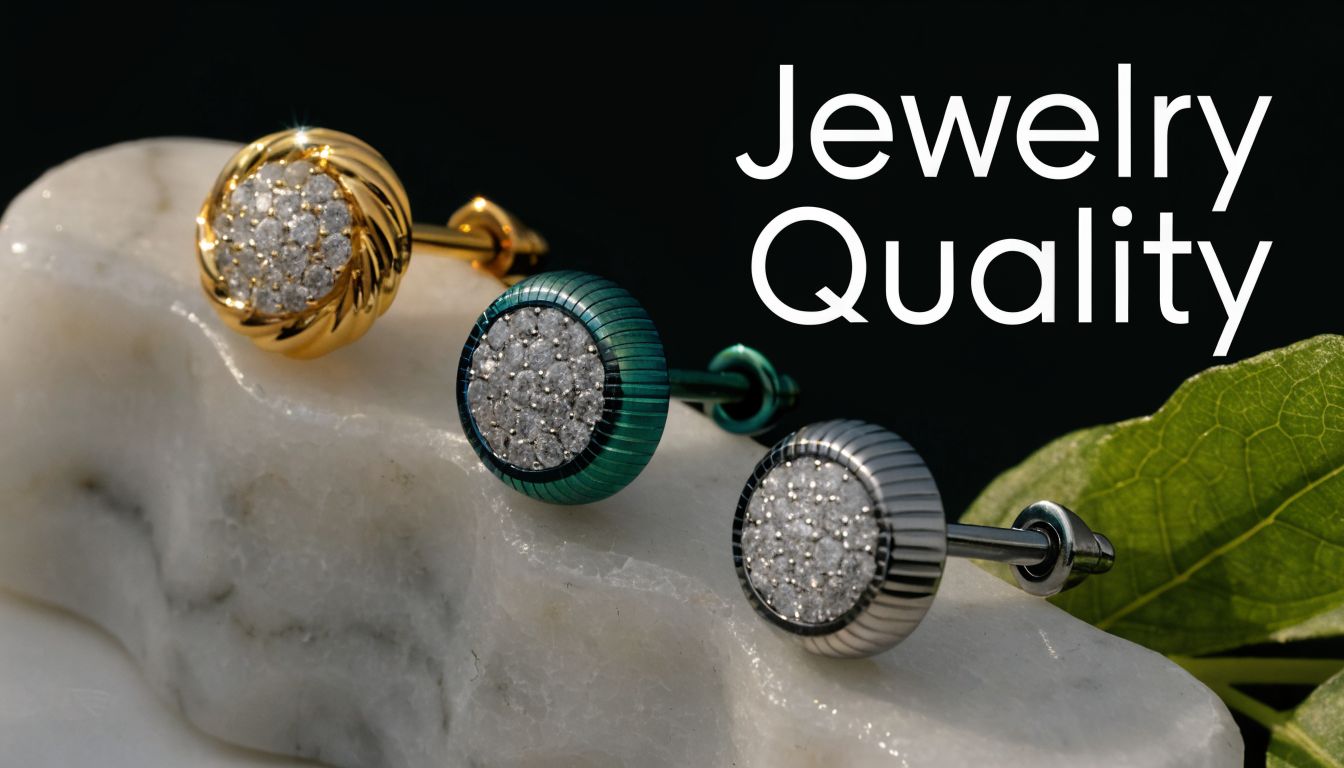
Implant-grade titanium is the benchmark
For a fresh piercing, implant-grade titanium is usually the safest starting point and often the best value.
The Association of Professional Piercers jewellery standards explain why studios use materials that are suitable for long-term wear inside the body, including implant-grade titanium. In plain terms, you are paying for a metal with known quality standards, a smooth finish, and reliable manufacturing. That gives fresh tissue a calmer environment to heal in.
Cheap jewellery can look similar in a tray or on a website photo. Under magnification, the differences are often obvious. Better pieces tend to have a cleaner polish, neater joins, and more accurate sizing.
Cheap metal usually is not a bargain
A budget piece from an unknown supplier can create problems that cost more later, whether that means replacing jewellery, booking a check-up, or dealing with ongoing irritation.
Common studio problems include:
- Rough surfaces that scrape or annoy healing tissue
- Poor polish that lets build-up cling more easily
- Inconsistent sizing that feels tight one day and unstable the next
- Unknown metal mixes that increase the chance of sensitivity
The NHS guidance on infected piercings makes the wider point clearly. Piercings can become infected if they are not done properly or if aftercare is poor. Jewellery quality and suitability are part of that bigger safety picture.
The best first piece is often the plain one. A simple, well-made titanium stud usually gives a fresh nostril piercing the easiest start.
Material changes the price
Clients often use “nose ring” as a catch-all term, but studios price several different jewellery categories.
Common starter and upgrade materials
| Material type | Typical cost context | Best use |
|---|---|---|
| Implant-grade titanium | Usually the most accessible safer option for a fresh piercing | Ideal for initial jewellery |
| 14k solid gold | Higher-priced upgrade | Suitable for clients who want a premium look from day one |
| PVD-coated titanium | Often costs more than plain titanium | Useful if you want a gold-colour finish with a titanium base |
In Croydon and Bournemouth, many professional studios keep titanium as the standard starting option, then offer gold or decorative upgrades if you want a different look. That pricing structure is not arbitrary. It reflects the cost of the raw material, the finish, and the quality control behind the piece.
Gauge and fitting affect cost too
Gauge means thickness, and it affects both comfort and price.
A nostril piercing works like fitting the right tyre to a car. From a distance, small differences can seem trivial. In daily use, the wrong size is harder to live with. Jewellery that is too fine, too short, or poorly shaped can shift more than it should or put pressure on swelling tissue.
A first-time client usually focuses on the visible top. Your piercer is also looking at the wearable length, backing style, and thickness through the channel.
Why thickness changes both price and performance
- 20G jewellery is commonly used for nostril piercings and has a delicate look
- 18G jewellery can offer a sturdier feel in some placements
- Threadless and internally threaded jewellery usually costs more than poorly made basic pieces because the finish and join quality are better
This precision engineering is why even a tiny stud can have a higher cost.
Style choices add cost fast
A plain disc or bead top is usually the most budget-friendly professional option. Add a claw-set gem, an opal, a decorative cluster, a clicker, or solid gold, and the total rises quickly.
For first-time clients, I usually frame it like this. Healing jewellery is your work shoe. Fashion jewellery is your party shoe. You can own both, but they are not doing the same job.
A practical plan looks like this:
- Start with a simple implant-grade titanium stud.
- Let the piercing settle fully.
- Upgrade later to a hoop, gem-set top, or gold piece if you still want that style.
That approach keeps the first appointment sensible on price without cutting corners on safety.
What to ask before you choose
If the jewellery cabinet feels overwhelming, keep your questions simple:
- What material is this made from?
- Is it suitable for a fresh nostril piercing?
- What gauge and wearable length are you recommending for me?
- Is this piece chosen mainly for healing, appearance, or both?
- Will this shape catch on towels, make-up pads, clothing, or glasses?
Those questions help you compare value properly. In a good studio, your money is not only buying something pretty. It is buying a piece that fits well, heals cleanly, and saves you trouble later.
The Hidden Dangers and Costs of a Cheap Piercing
You spot a nostril piercing advertised for far less than every other studio in town. On the day, it feels quick and simple. A few weeks later, the stud keeps catching, the angle looks slightly off, and you are paying for a jewellery change, extra check-ups, or a full re-pierce.
That is the cost problem with a bargain piercing. The risk is often not dramatic hygiene talk you have already heard. It is the quiet expense of fixing avoidable mistakes.
Cheap pricing often hides what has been left out
A very low headline price can mean the appointment is stripped back. There may be little time for marking and checking placement from different angles. Jewellery options may be limited to whatever is cheapest to stock. Follow-up support may be vague or missing.
For a facial piercing, those details matter because your nose is not a flat, motionless surface. It moves when you smile, wash your face, blow your nose, sleep, or wear glasses. A piercing that is slightly misjudged can become annoying every single day.
A good studio charges for time and judgement, not only for the few minutes it takes to perform the piercing.
Poor placement is one of the most expensive mistakes
This section is really about geometry as much as price.
With nostril piercings, a small change in angle can affect how a stud sits, how a future ring will look, and whether the jewellery pulls awkwardly during healing. If the placement is too high, too low, or too far forward, you may end up wearing jewellery that never quite looks right from the front.
That can lead to two common extra costs:
- paying for a jewellery adjustment to make the piercing more wearable
- removing it, waiting for it to heal, and paying to have it pierced again
- living with a visible mark from a placement you never liked
Those costs are different from the safety points covered earlier. They are about appearance, comfort, and whether the piercing suits your face.
A rushed appointment can leave first-time clients guessing
First-time clients usually do not know what to ask yet, and that is completely normal.
If the piercer cannot explain why they chose that exact spot, that backing style, or that starting size, you are being asked to trust a decision without being shown the reason behind it. In a professional studio, the process should feel more like a fitting than a transaction. You should understand what is being chosen and why.
That clarity saves money later because fewer surprises turn into corrective appointments.
Watch for signs that the low price is only the starting price
Sometimes the cheapest option becomes expensive in pieces. The piercing fee looks low, then you find out aftercare is separate, suitable starter jewellery is extra, downsizing is extra, and any help during healing is treated as another sale.
That pricing model can catch people out, especially in busy areas where clients are comparing studios quickly.
A safer way to judge value is to ask what the quoted price includes.
- Is starter jewellery included, and what material is it?
- Will you mark the placement and let me check it first?
- What support do I get if the jewellery needs changing during healing?
- Are there likely future costs I should budget for now?
Those questions help you compare studios fairly.
Cheap piercings can stay cheap if everything goes perfectly. The trouble is that facial piercings leave very little room for “good enough”. With your nose, millimetres matter, and the correction bill is often higher than paying a fair professional price in the first place.
Nose Piercing Prices in Croydon and Bournemouth
Local pricing helps make all of this more practical. If you’re comparing studios in Croydon or Bournemouth, you want something more useful than a vague national average.
At Timebomb Tattoo & Piercing, a nostril piercing is £25 in Bournemouth and £35 in Croydon, and a septum is £35 in Bournemouth and £40 in Croydon. Both prices include implant-grade titanium jewellery and an aftercare pack. That's what fair professional pricing looks like when a studio is clear about both safety and what's included.
Sample prices you can expect
Here’s a simple way to think about the cost range for Croydon and Bournemouth.
| Piercing Type | Estimated Cost Range | Includes |
|---|---|---|
| Nostril piercing | £25 to £60 | Professional piercing, consultation, and safe starter jewellery options |
| Septum piercing | £35 to £70 | Professional piercing, placement advice, and starter jewellery |
| Upgraded nostril jewellery at appointment | Varies within overall total | Choice of premium material or decorative style |
| Custom or high-end placement and jewellery choices | Up to the upper end of studio pricing | More specialised styling and upgraded jewellery selection |
Those figures sit comfortably within the wider UK professional range already discussed. The key difference is transparency. A client can see the starting point, then decide whether they want a plain titanium stud, a gold-colour finish, or a more decorative top.
What a consultation helps you sort out
In a proper consultation, most first-time clients ask the same few things:
- Should I start with a stud or a hoop?
- What suits my nose shape?
- Will my work or sport routine affect healing?
- How much extra is upgraded jewellery?
Those are exactly the right questions. A consultation turns a generic online price into a real quote based on your anatomy and your preferences.
Croydon and Bournemouth examples
A client in Croydon might want a classic nostril stud with a minimal look and no fuss. Someone in Bournemouth might be planning a septum and already know they want a bolder style later. The starting price can be similar, but the final price changes depending on jewellery choice and piercing type.
That’s why I always recommend speaking to the studio directly before you book if you have a set look in mind.
If you want an exact figure rather than a range, ask for the piercing price and then ask what starter jewellery is included.
For bookings or a consultation, call 01202 900050 (Bournemouth) / 020 8686 7730 (Croydon) or message WhatsApp 07752 913846 (Bournemouth) / 07902 490584 (Croydon). Those two details are the fastest way to get a clear, personalised answer for Croydon or Bournemouth.
Budgeting for Aftercare and Future Jewellery
A lot of first-time clients in Croydon and Bournemouth budget for the appointment, then get caught off guard by the smaller follow-up costs. The easiest way to avoid that is to split the spend into two buckets. One is healing. The other is future style changes.
That order matters because a nose piercing is a bit like buying good shoes. If the fit is right at the start, everything goes more smoothly later.
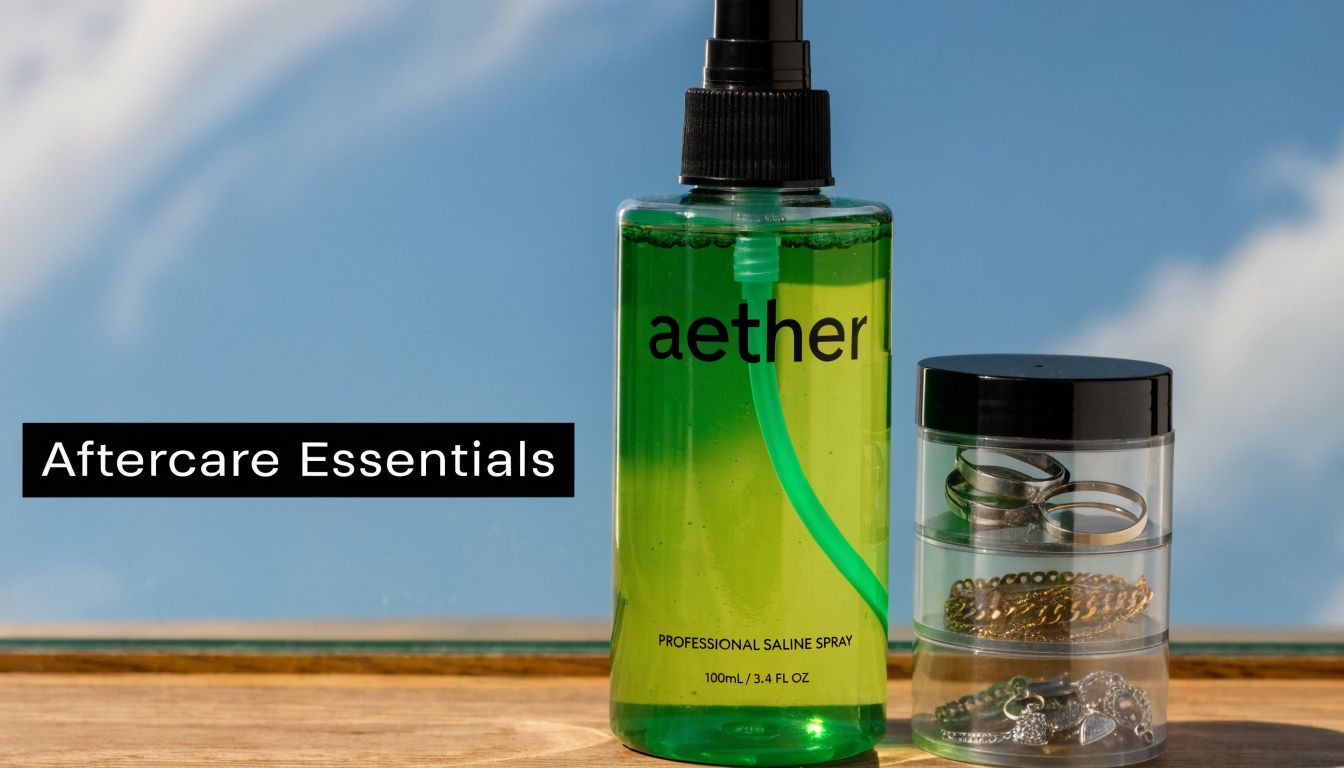
Aftercare is a small extra, but it protects the piercing
Aftercare products are usually one of the smallest parts of the overall budget. In a professional studio, that often means a sterile saline spray and clear instructions on how often to use it.
That may sound simple, but simple is the point.
A healing nose piercing does best with gentle, consistent care. Clients usually run into trouble when they use cotton buds too roughly, twist the jewellery, or try homemade mixtures because they seem cheaper. In practice, those shortcuts often lead to irritation, extra check-ups, or an early jewellery change that could have been avoided.
A good aftercare plan is part product and part guidance. You are paying for both.
Future jewellery is often a separate purchase
Starter jewellery has one main job. It needs to sit well, allow for swelling, and give the piercing the best chance to settle calmly. That is why the piece you begin with is not always the one you will want to wear long term.
This shows that buying a new piece later is a normal part of the client journey.
The price of replacement jewellery usually depends on four things. Material, design, whether the change includes a fitting service, and whether you are choosing a simple healed stud or a more decorative piece. A plain implant-grade titanium option will usually sit at the lower end of the range, while solid gold and gem-set ends cost more.
If you are budgeting in a practical way, it helps to assume that your first jewellery change may be a separate spend rather than a surprise add-on.
A realistic first-time budget
The easiest way to plan is to build your budget in layers.
Basic plan
- Piercing appointment with suitable starter jewellery
- Aftercare product
- One future jewellery change once the piercing is ready
More style-focused plan
- Piercing appointment
- Upgraded starter jewellery if you want a specific look from day one
- Aftercare product
- A second piece later for a hoop or a different finish once healed
That approach gives you breathing room. You do not need to buy every look at the first appointment.
Start with the jewellery your body needs, then buy the jewellery your wardrobe wants.
Leave the first change until the piercing is ready
This is one of the most common points of confusion. A client may book a nostril piercing wanting a hoop, then learn that a stud is often the calmer choice for initial healing. That does not mean the hoop is off the table forever. It usually means the hoop belongs in the next stage of the budget, not the first one.
That distinction is useful because it stops you treating a later jewellery change like an unexpected fee. It is usually just part of the normal timeline.
What future jewellery spending usually depends on
| Factor | Effect on price |
|---|---|
| Material | Titanium usually costs less than solid gold |
| Design | Plain studs often cost less than gem-set or decorative ends |
| Timing | Changing jewellery later spreads the cost over time |
| Service | A studio fitting may be charged separately from the jewellery itself |
Handled this way, the total cost feels much more manageable. You are not paying for everything at once. You are paying for safe healing first, then personal style once the piercing is ready for it.
How to Book Your Piercing and Save Money Safely
The safest way to save money on a nose piercing is simple. Spend carefully at the start so you don’t spend more fixing problems later.
That means choosing the right studio, asking clear questions, and being honest about your budget. A good piercer can work with that. If you say, “I want the safest starter option and I’d rather keep it simple for now,” that’s easy to build around.
Smart ways to keep the price sensible
You don’t need the most decorative piece in the cabinet on day one.
A cost-conscious approach that still protects healing usually looks like this:
- Choose a plain implant-grade titanium stud instead of a more decorative top
- Book a consultation first so you know the full cost before the procedure
- Buy aftercare at the same time instead of improvising later
- Leave style upgrades for after healing rather than forcing everything into one appointment
That’s not cutting corners. That’s planning properly.
Booking is straightforward
If you’re ready to get a personalised quote for Croydon or Bournemouth, the simplest next step is to contact the studio directly. Call 01202 900050 (Bournemouth) / 020 8686 7730 (Croydon) or send a message on WhatsApp 07752 913846 (Bournemouth) / 07902 490584 (Croydon).
You can ask about:
- Nostril or septum pricing
- What jewellery is included
- Upgrade options
- What to expect at your appointment
- Whether a consultation is the best first step
What to say when you contact the studio
If you’re not sure how to word it, keep it plain:
Hi, I’m looking to book a nose piercing in Croydon or Bournemouth. Can you tell me the starting price, what jewellery is included, and what my safest simple option would be?
That message usually gets you the answer you need. Not just a number, but a useful number.
Frequently Asked Questions About Nose Piercing Costs
Is the jewellery included in the piercing price
Often, yes. In many professional studios, the quoted piercing price includes basic starter jewellery, though upgraded pieces can increase the total. If you want a precise figure, ask what material is included and whether the quote is for a simple titanium piece or a premium option.
Why is a septum usually more expensive than a nostril
A septum piercing typically falls into a higher price range than a nostril piercing because it can involve more complex placement and jewellery considerations. In professional UK pricing, nostril and septum ranges are distinct for that reason.
Is implant-grade titanium worth paying extra for
Yes. For a fresh piercing, it’s one of the best places to spend your money. Implant-grade titanium is widely used because it’s designed for biocompatibility and helps reduce irritation risk compared with lower-quality alternatives.
Can I start with a hoop to save changing it later
Sometimes clients can, but it isn’t always the best healing choice. A hoop may move more and catch more easily than a stud, depending on placement and your day-to-day routine. If your budget allows only one purchase, I’d still prioritise the jewellery that gives the piercing the best chance to heal well.
How much should I budget in total
For a first piercing, think about the appointment cost, a small aftercare budget, and the possibility of replacement jewellery later. That gives you a more realistic picture than looking only at the piercing fee.
Is a cheaper online nose stud okay for the initial piercing
I wouldn’t recommend buying your own cheap jewellery for a fresh piercing unless a professional piercer has confirmed it’s appropriate. The material, polish, fit, and threading all matter. Poorly made jewellery can turn a simple piercing into a frustrating heal.
When can I change my nose jewellery
That depends on how the piercing is healing and what type of piercing you had. Some clients are ready for a change sooner than others, but it’s always safest to let a professional assess it before switching jewellery.
What matters more, the studio or the jewellery
For a fresh piercing, you need both. Excellent jewellery won’t fix poor placement, and a good piercer can only do so much if the jewellery is wrong. The safest result comes from proper technique, proper fit, and proper material working together.
If you’re ready to find a safe, professional studio for your next piercing, Piercing Near Me makes it easy to explore trusted options, compare locations, and book with confidence. Whether you’re considering a first nostril piercing or want advice on jewellery and healing, it’s a helpful place to start.