
You're staring at a nose piercing that should have settled down by now, but it's still red, still crusty, still tender, or still growing that same annoying bump. That's one of the most common frustrations I see in studio practice. People often think they've “done something wrong,” but the explanation is usually simpler. The piercing is being irritated, the jewellery is working against it, or the healing timeline has been misunderstood.
A nose piercing not healing doesn't automatically mean infection, and it doesn't automatically mean the piercing has failed. In many cases, it means the wound has been kept in a low-level cycle of irritation. That can come from over-cleaning, touching it too much, swapping jewellery too early, sleeping on it, snagging it, or switching into poor-quality metal before the tissue is ready.
The good news is that most of these problems are fixable when you identify the actual cause instead of throwing more products at it.
Why Your Nose Piercing Still Isn't Healing
If you've been cleaning it constantly, checking it in the mirror, and waiting for the irritation to “just go away”, you're not alone. A lot of stalled healers come from people trying hard, not people neglecting the piercing. That's why nose piercing not healing problems can be so confusing. Effort doesn't always equal the right method.
In practice, the most common culprits are usually easy to spot once you know what to look for. The problem is that many people focus on the bump or redness itself, rather than the trigger keeping it there.
The usual reasons healing stalls
- Too much aftercare: Harsh products, frequent cleaning, homemade soaks, and constant wiping can keep the tissue inflamed.
- The wrong jewellery: Poor metal quality, unsuitable shapes, or jewellery changed too soon often creates a cycle of ongoing irritation.
- Daily trauma: Towels, pillowcases, makeup, headphones, glasses, and hands all put stress on a nostril piercing.
- Bad timing: The outside may look calm long before the inside is fully strong.
Practical rule: If your routine has become more aggressive as the piercing has become more irritated, that routine may be part of the problem.
There's also an emotional side to this. People get impatient because the piercing looks nearly healed for a week, then flares again. That stop-start pattern is classic for irritation. It doesn't mean the piercing is impossible to heal. It means the wound hasn't had a long enough stretch of calm conditions.
What works is a reset. Strip the routine back. Check the jewellery. Remove unnecessary friction. Get an experienced piercer to assess whether you're dealing with simple irritation, poor jewellery, angle issues, or signs that need medical attention.
Understanding Your Piercing's Real Healing Journey
A nostril piercing often looks ahead of where it is. The redness settles, the swelling drops, and people assume the hard part is over. Then they change the jewellery, knock it with a towel, or sleep on it for a few nights, and the piercing flares again.
That pattern is common because nose piercings heal in layers. Surface calm does not mean internal strength. In the studio, I explain this as two separate timelines. What you can see improves first. What keeps the channel stable takes much longer.
A correctly healing nostril piercing usually moves through an inflammatory phase during days 1 to 7, a proliferative phase lasting up to 6 weeks, and a remodelling phase that can extend to 4 to 6 months. So a piercing may look settled well before it can handle pressure, jewellery changes, or repeated irritation.
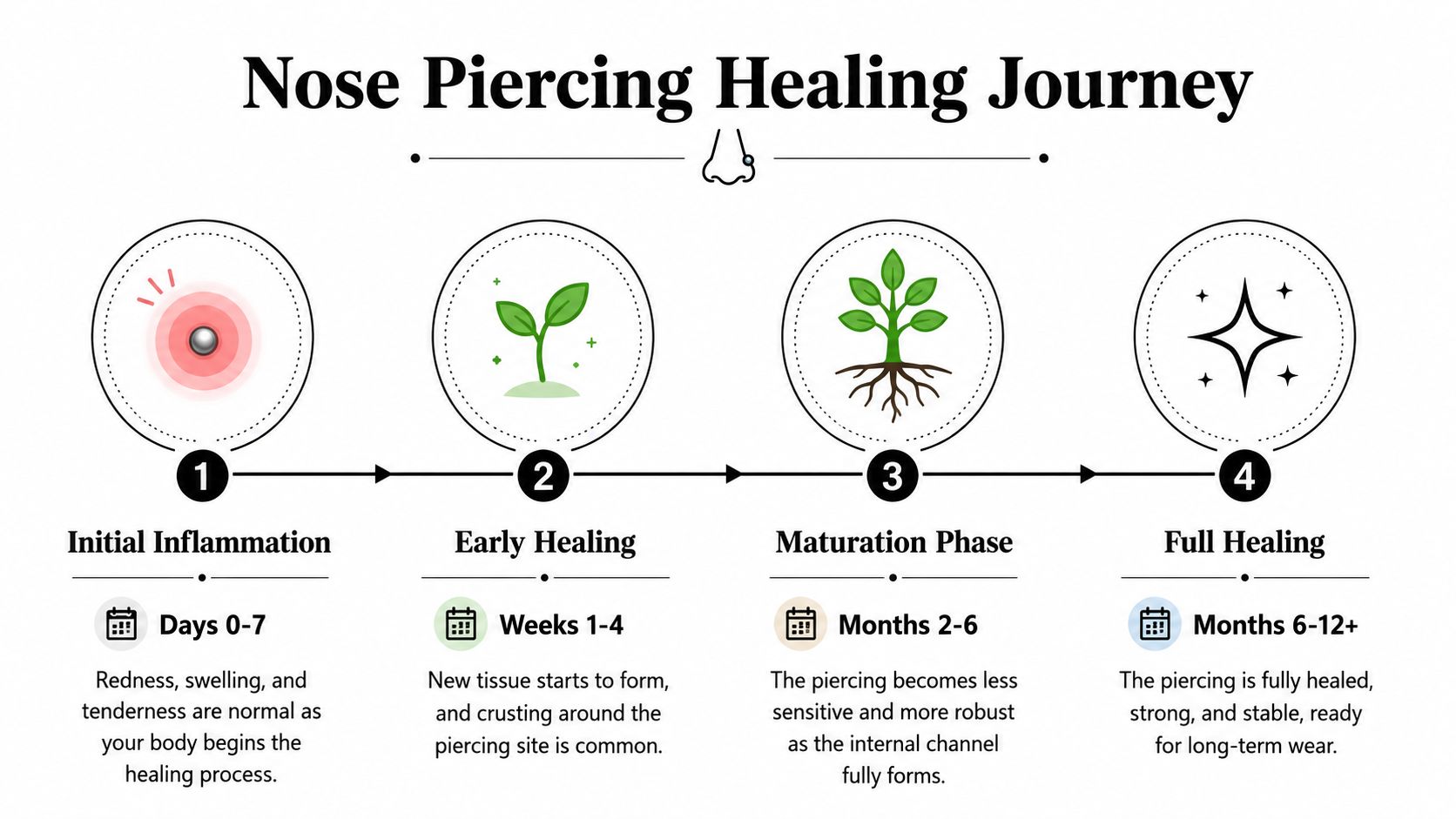
What normal healing looks like
Early healing can still be messy.
- Redness and swelling: Common in the first days after piercing.
- Mild bleeding or tenderness: Usually part of the initial wound response.
- Crusties: Dried lymph can form around the jewellery during healing.
Those signs only become concerning when they stay strong, worsen instead of easing, or keep cycling back without a clear reason. That is the point where good diagnostics matter more than guesswork. A senior piercer is not just checking whether it looks irritated. They are checking fit, angle, pressure patterns, and whether the piercing is entering the quiet phase of healing or being repeatedly set back.
The invisible healing problem
The part clients miss most often is the fistula, the healed channel of scar tissue inside the piercing. It can take up to 12 months to fully mature, even when the outside appears settled, as noted in this safe jewellery change guide for nose piercings.
That explains a lot of “it was fine until” stories. Fine until the stud was swapped. Fine until glasses rubbed it. Fine until it was left empty for an hour. None of that means the piercing has failed. It means the inside was still maturing and could not tolerate the extra stress.
A calm-looking piercing can still be vulnerable.
This is also why jewellery downgrades need timing, not guesswork. Done too early, you trap swelling or add pressure. Done too late, excess length can keep catching and moving. The right call depends on how the tissue is behaving, not just how long it has been since the piercing was done.
Irritation or infection
Use this as a practical distinction:
| Situation | What you may notice | Best next step |
|---|---|---|
| Normal healing | Mild tenderness, light crusting, gradual improvement | Keep care gentle and consistent |
| Irritation | Persistent bump, localised redness, mild swelling, flare-ups after touching or snagging | Remove the trigger and have a piercer assess it |
| Possible infection | Spreading heat, purulent discharge, fever, signs of cellulitis | Seek medical advice from your GP |
Getting that distinction right matters. People often over-treat irritation and under-react to infection. If a nostril piercing has stalled, a good studio can usually tell whether you need patience, a jewellery adjustment, or medical input. That kind of troubleshooting saves time, money, and a lot of unnecessary aggravation.
How to Clean and Care For a Troubled Nose Piercing
You wake up, look in the mirror, and the piercing seems worse than it did yesterday. So you clean it again. Then again later. By the end of the day, the area is red, dry, and more reactive than it was that morning.
I see this pattern all the time in studio. A stalled nose piercing usually improves when the routine gets simpler, not busier. The goal is to reduce irritation, keep the area clean enough, and stop adding small amounts of trauma that keep the channel inflamed.
What to do instead
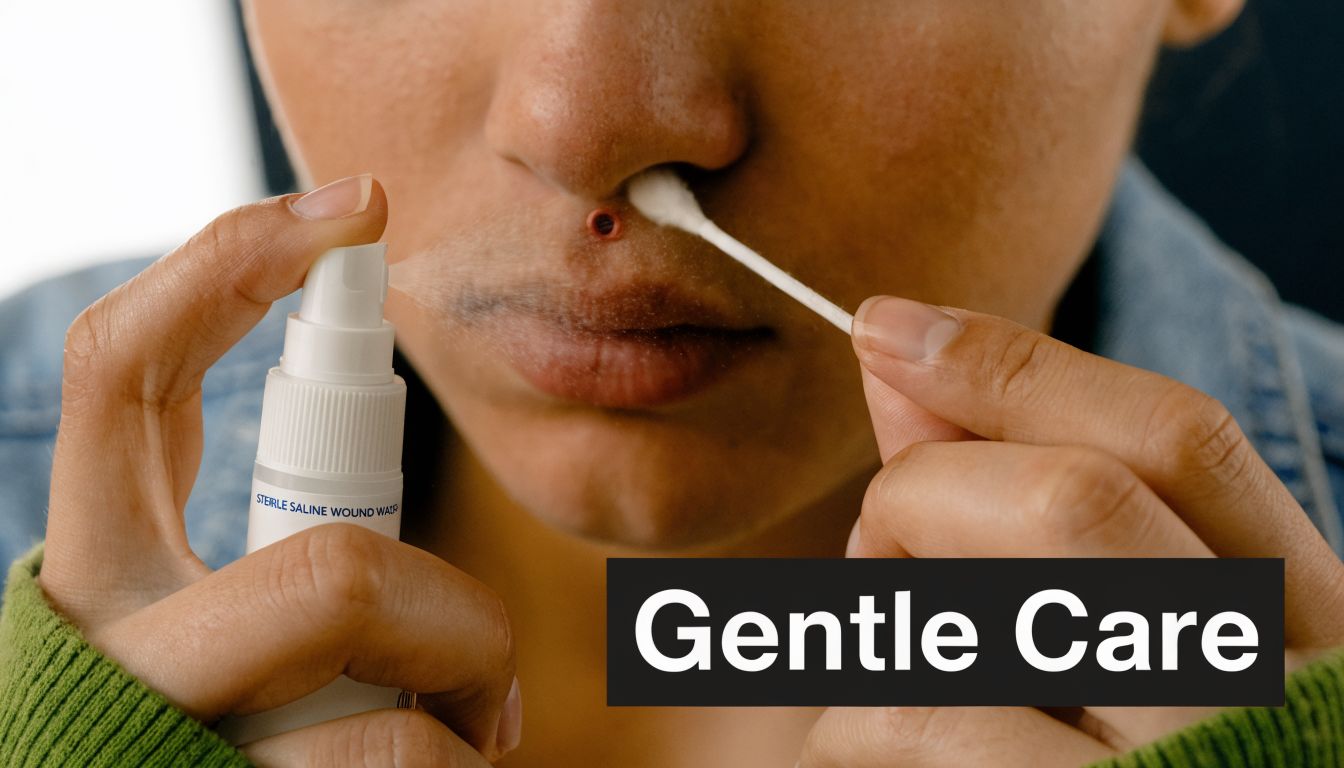
As noted earlier, professional aftercare guidance consistently points to the same approach: sterile saline, limited cleaning, and no handling unless there is a clear reason. That works because most troubled piercings are dealing with irritation, not dirt.
Use this routine:
- Wash your hands first. If you have not washed them properly, leave the piercing alone.
- Apply sterile wound-wash saline once or twice a day. A light spray is enough.
- Let any crust soften before removing it. If it does not come away easily, leave it for the next clean.
- Pat the area dry with clean gauze or a disposable paper product. Moisture trapped around the jewellery can keep tissue irritated.
- Do not twist, rotate, or push the jewellery. Movement inside the channel delays recovery.
That is the full routine. A lot of people expect a longer answer because the piercing looks dramatic. In practice, over-cleaning is one of the common reasons a nose piercing stays angry for weeks.
What usually makes it worse
Troubled piercings often have one or two avoidable problems in the aftercare routine:
- Alcohol or hydrogen peroxide: these dry the tissue and can restart irritation
- Antiseptic soaps: these are often too harsh for a healing piercing
- Homemade salt soaks: poor mixing leads to a solution that is either too strong or not clean enough
- Cotton wool or fluffy pads: loose fibres catch on jewellery and irritate the site
- Repeated mirror checks: every nudge, squeeze, and adjustment adds pressure to a piercing that already needs less movement
If the area feels tighter, drier, or hotter after cleaning, the method is usually too aggressive.
The goal is calm tissue
A nose piercing does not need to look spotless every hour. It needs stable conditions so the inside can recover. That matters even more during the invisible healing phase, when the outside may look manageable but the fistula is still delicate.
Crust is not automatically a sign of infection. It is often dried lymph, which is a normal by-product of healing. Scraping it off several times a day can create the exact cycle people are trying to stop.
If you have been using three or four products, cut back to one. If you have been checking whether the jewellery still hurts, stop testing it. If the piercing has stayed reactive despite good basic care, that is usually the point where an experienced studio becomes useful. A piercer can tell whether you need patience, a jewellery adjustment, or a different cleaning approach based on how the tissue is behaving, not guesswork.
Is Your Jewellery Sabotaging The Healing Process
Sometimes aftercare is adequate and the underlying issue is the piercing itself. Jewellery quality matters far more than many individuals understand. In healing nose piercings, cheap metal is one of the biggest reasons irritation keeps returning.
That's especially true when someone starts with proper jewellery, gets a few calm weeks, then swaps into a prettier or cheaper piece too soon. The timing feels harmless. The tissue often disagrees.
Why implant-grade metal matters
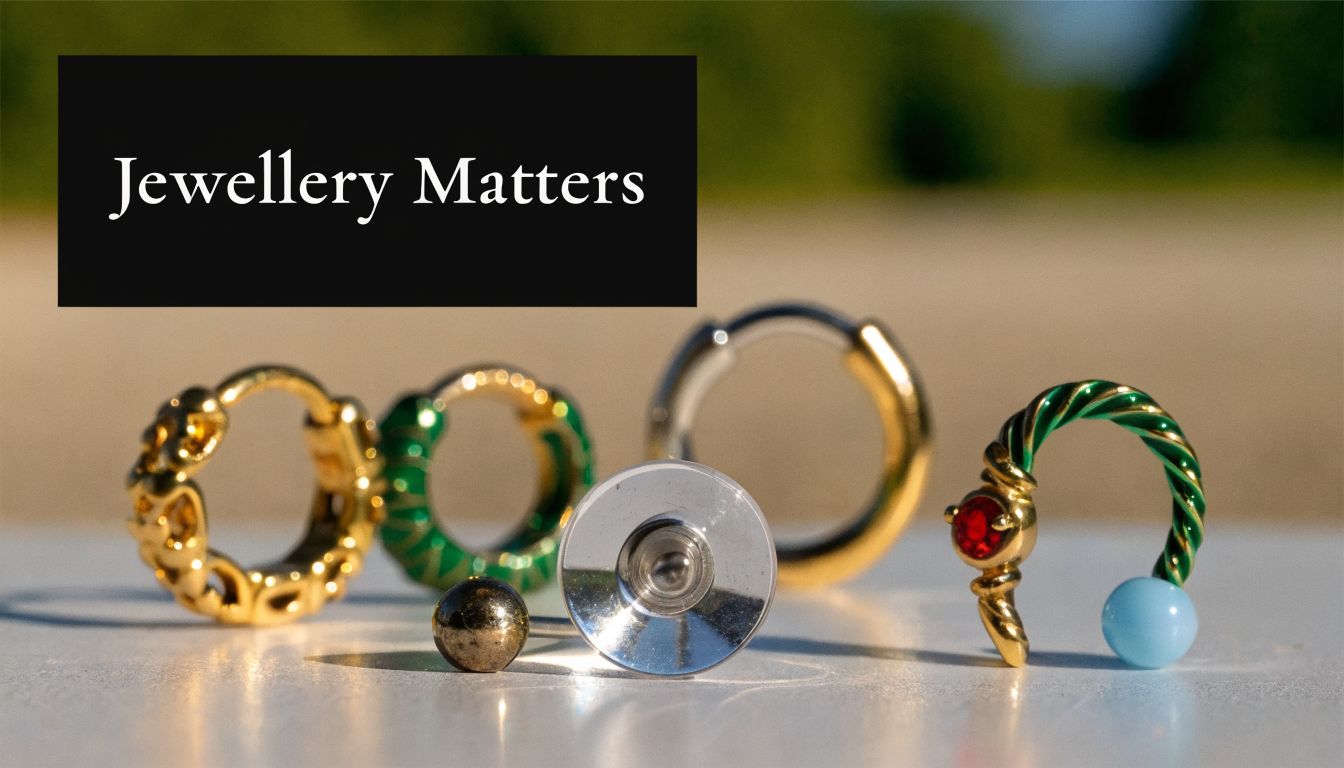
Low-quality, non-implant-grade jewellery in a healing nose piercing makes inflammation and stalled healing more likely, while studio-approved biocompatible metal gives it the best chance of healing well.
That gap is huge in day-to-day piercing practice. People notice it as:
- stubborn bumps that never fully go away
- redness that returns after every jewellery swap
- tenderness that lingers for months
- skin that seems “allergic” to everything except the original piece
The most common jewellery mistake
A leading cause of stalled healing is when UK clients downgrade from implant-grade jewellery to cheaper materials during the essential 6 to 12 week period, as discussed in this overview of nose piercing healing and material choices. The jewellery material myth causes real trouble at this stage. People think, “It healed enough for me to change it, so any decent-looking stud should be fine.” That's often the exact point healing goes backwards.
Cheap jewellery can feel like a money-saver until it turns a normal healing timeline into months of irritation.
Material and fit both matter
Material gets most of the attention, but fit matters too. Even excellent titanium can become a problem if the post is too short, the angle is poor, or the jewellery shape puts pressure on the wound.
Watch for these practical clues:
- Post too short: The skin looks crowded, tight, or swollen around the backing.
- Unstable jewellery: The piece shifts excessively and catches often.
- Pressure from shape: Curves and rings can move more and irritate a healing nostril.
- Decorative tops too early: Heavy or bulky ends can stress a fresh piercing.
For initial healing, the safest route is simple, biocompatible, well-sized jewellery fitted by a professional. A fancy upgrade is only worth it when the tissue can handle it.
Everyday Habits That Hinder Nose Piercing Healing
Most stalled piercings don't fail in one dramatic moment. They get knocked off course by little things repeated every day. A towel catches it. A partner bumps it. Foundation creeps too close. You sleep on that side for a week. None of those seem major on their own, but together they keep the piercing reactive.
I often see people who have a decent saline routine and good jewellery, yet the piercing still won't settle. Once you look at daily habits, the answer usually appears.
Small sources of trauma
These are the common ones:
- Towels and flannels: Rubbing your face can snag jewellery without you noticing.
- Pillow pressure: Sleeping directly on the piercing can keep it swollen and crooked.
- Hands at your face: Many people touch or adjust the jewellery unconsciously.
- Makeup and skincare: Foundation, cleanser, SPF, and spot treatments can irritate the entry point.
- Changing clothes quickly: Jumpers, scarves, and collars catch nostril jewellery all the time.
A better approach is to make the area boring and protected. Pat your face dry instead of rubbing. Sleep on the opposite side if you can. Keep skincare products slightly away from the piercing channel. Slow down when changing tops.
What this looks like in real life
One common pattern goes like this. The piercing starts to improve, then gets snagged while drying your face. It swells a bit. You clean it more because it looks irritated. Then you fiddle with it to check whether it's still sore. By the end of the week, the bump is back and it feels as if the piercing “randomly” flared up.
That flare-up wasn't random. The tissue got bumped, then over-managed.
Healing likes routine. Irritation likes friction, pressure, and fussing.
A better daily setup
Try this for a calmer week:
- Dry with care: Pat around the area gently rather than dragging fabric across it.
- Create a skincare gap: Leave a small buffer around the jewellery when applying products.
- Pause before touching: If you catch yourself checking the piercing, stop and wash your hands before going near it.
- Protect it while dressing: Guide collars and knitwear over the piercing instead of pulling clothing fast over your face.
These changes sound minor, but they often make the difference between a piercing that stays inflamed and one that finally settles.
When to Visit Your Piercer or GP for Help
There's a point where guessing stops being useful. If your nose piercing not healing problem has gone on for weeks with the same symptoms, or if it improves and worsens in a loop, a professional assessment saves time and often saves the piercing.
A piercer should be your first stop for most non-emergency healing issues. That includes bumps, recurring redness, pressure from jewellery, uncertainty about metal quality, and questions about whether the piercing is mature enough for a change. That's especially important if you switched jewellery during healing and things have gone downhill since.
Go back to your piercer when
- You have a persistent bump
- The jewellery feels too tight or sits at a strange angle
- You changed the jewellery and irritation started after that
- The piercing seems fine one week and inflamed the next
- You want to know if it's ready for a swap
A skilled piercer can check whether the issue is irritation, trauma, poor fit, or a jewellery material problem. Sometimes the fix is as simple as returning to implant-grade titanium, adjusting fit, or stopping an overcomplicated aftercare routine.
Contact your GP when
See your GP if you have signs that suggest a significant infection rather than simple irritation:
- spreading redness or heat
- purulent discharge
- systemic fever
- signs of cellulitis
Those are not “wait and see” symptoms.
If you want experienced troubleshooting in person, Timebomb Tattoo & Piercing in Croydon and Bournemouth are the people I'd point clients to for a proper piercing check. Reputable studios educate clients on jewellery consistency throughout healing and help prevent the common mistake of downgrading too early. Call 01202 900050 (Bournemouth) / 020 8686 7730 (Croydon) or message WhatsApp 07752 913846 (Bournemouth) / 07902 490584 (Croydon) to arrange a check-up if your piercing is stuck in that irritation cycle.
Don't leave a troubled piercing to internet advice alone. If the jewellery needs assessing, if the angle looks off, or if you're tempted to remove it out of frustration, get an expert to look at it first. A quick check can prevent months of unnecessary trouble.
If you're looking for trusted help, Piercing Near Me makes it easier to find professional piercing support and connect with experienced studios including Timebomb Tattoo & Piercing in Croydon and Bournemouth. If your nose piercing isn't healing, use it to take the next sensible step and get proper advice before the problem drags on.