
You've probably done the fun part already. You've saved photos, compared tiny sparkle studs with neat little hoops, and decided a nostril piercing might suit you perfectly.
Then the jargon shows up. Gauge, labret, implant-grade titanium, diameter. For a first piercing, that can make a simple idea feel oddly technical. Individuals new to piercing aren't confused about whether they want a nostril piercing. They're confused about which details matter.
That's where the nostril piercing gauge comes in. It sounds niche, but it affects how your jewellery sits, how stable the piercing feels, and how smoothly those early healing weeks go. Get the size right and your piercing usually feels calmer, looks better, and gives you more options later.
A lot of first-time clients in places like Croydon and Bournemouth arrive with the same question in different words. Some ask, “What size do I need?” Others ask, “Can I start with a hoop?” or “Why does one stud look chunkier than another?” They're all really asking about fit.
Your First Step to the Perfect Nostril Piercing
One of the most common situations in the studio goes like this. A client walks in with a phone full of screenshots, points to a tiny stud, then asks for “the normal nose piercing size”. That sounds simple, but “normal” can mean different things depending on your anatomy, the jewellery style, and how you want it to heal.
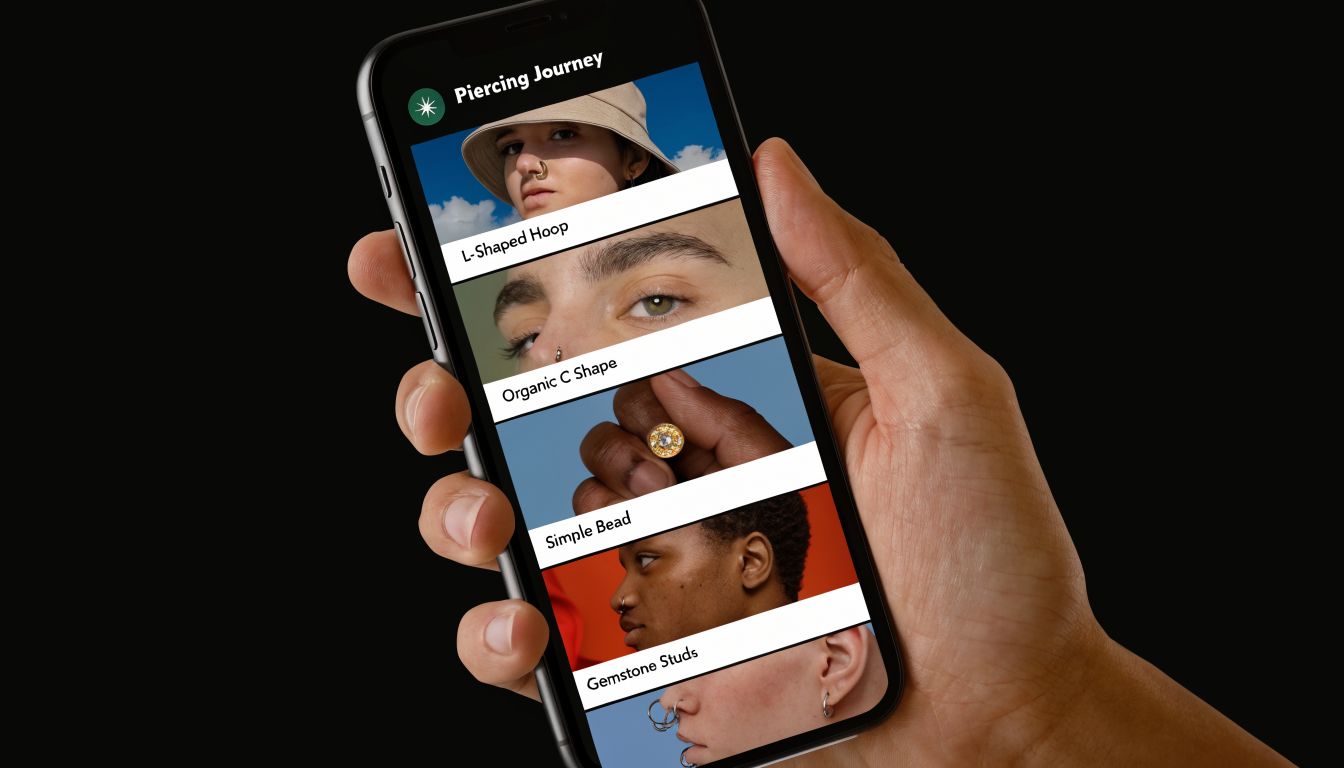
For some people, a delicate look matters most. For others, security matters more because they know they catch jewellery on towels, clothing, or while washing their face. A common preference is for both. They want something subtle that also stays put and heals well.
That's why nostril piercing gauge is such an important first conversation. Gauge is the thickness of the jewellery or needle used for the piercing. It sounds technical, but it's really just a sizing system. Once you understand it, a lot of the mystery disappears.
Practical rule: The best nostril piercing isn't the smallest jewellery possible. It's the size that suits your nose, your lifestyle, and the way fresh piercings behave while healing.
A safe piercing experience should feel calm and clear. Your piercer should explain what they're using, why they're using it, and what that means for healing and future jewellery choices. You shouldn't be left guessing whether 18G, 20G, or a hoop you bought online will work for your nose.
If you're near Croydon or Bournemouth, that local, face-to-face advice matters even more than internet inspiration. Photos can show style. They can't assess your nostril shape, tissue thickness, or whether a certain size will sit neatly on your face.
What Exactly Is a Piercing Gauge
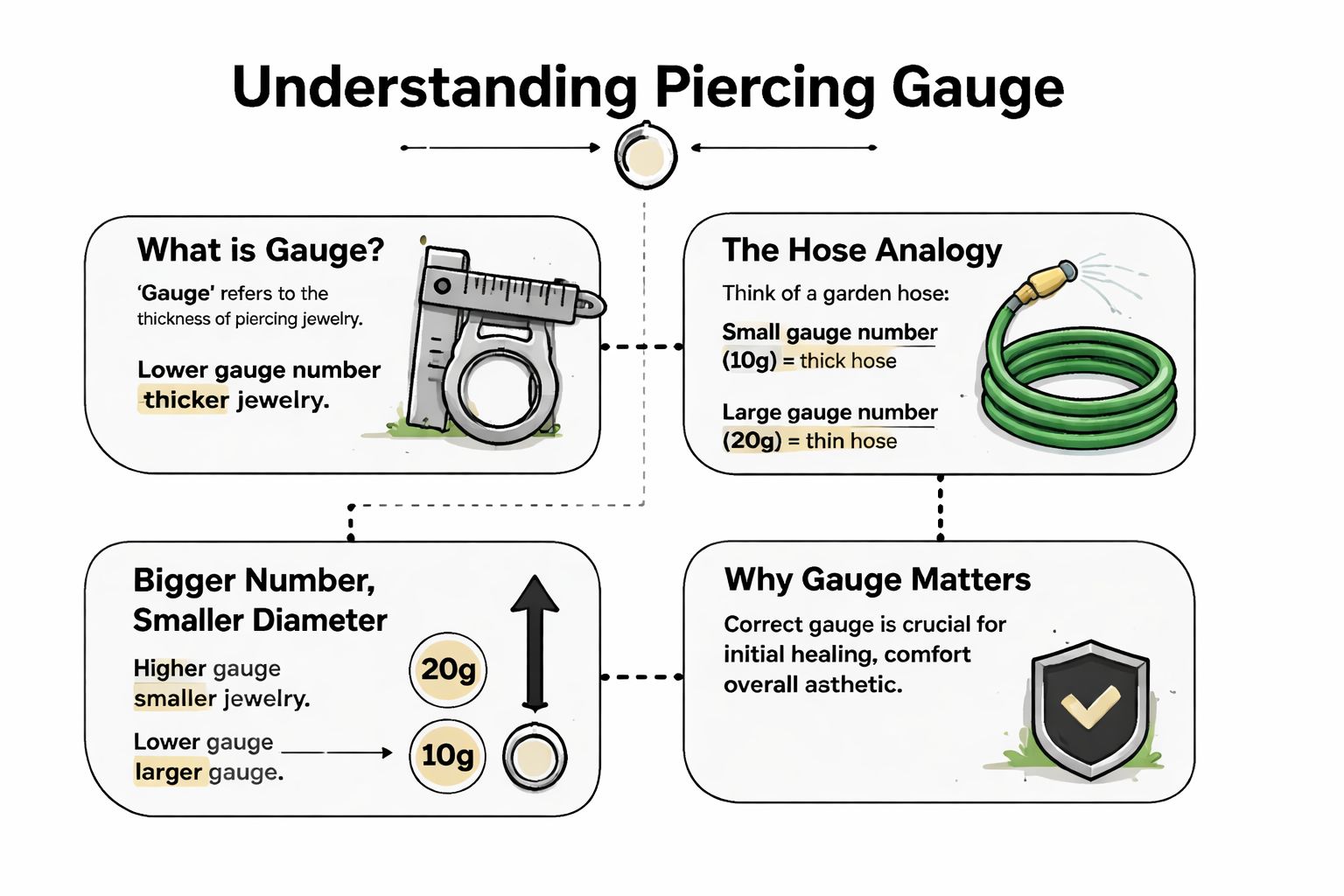
Gauge means thickness. That's the whole idea. The confusing part is that the numbers work in reverse.
A smaller gauge number means thicker jewellery. A larger gauge number means thinner jewellery. So 18G is thicker than 20G, and 16G is thicker than 18G.
That's why people get mixed up. It feels backwards at first.
A simple way to picture it
Think of garden hoses. A thicker hose has a wider body than a thinner one. Piercing jewellery works the same way. The only odd bit is the numbering system.
So if someone says:
- 20G, they mean a thinner piece
- 18G, they mean a slightly thicker piece
- 16G, they mean thicker again
That thickness matters because it affects how the jewellery sits in the piercing channel. A very thin piece can look delicate, but it may also feel less sturdy in daily life. A slightly thicker piece can offer more stability without looking heavy.
Why people care about gauge
Gauge isn't just a studio term. It affects practical things you'll notice every day:
- How secure the jewellery feels when you wash your face or change clothes
- How easy it is to find replacement jewellery in the same size
- How the finished piercing looks on your specific nose
- How much support the piercing channel has while it settles
If you ever forget the system, remember this. Bigger number, thinner jewellery. Smaller number, thicker jewellery.
Piercing gauge to millimetre conversion chart
Here's a straightforward conversion table so the sizes feel more real.
| Gauge (G) | Thickness (mm) |
|---|---|
| 22G | 0.64 mm |
| 20G | 0.81 mm |
| 18G | 1.02 mm |
| 16G | 1.29 mm |
| 14G | 1.63 mm |
You don't need to memorise the chart. Most clients only need to understand where nostril sizes usually sit within it. For standard nostril piercings, the conversation is usually around 20G, 18G, and sometimes 16G.
One point that helps
People often assume thinner automatically means better because it looks more refined. In practice, that's not always true. The right gauge is a balance between appearance and support. A well-chosen size can still look neat while being far easier to live with during healing.
The Most Common Nostril Piercing Gauges Explained
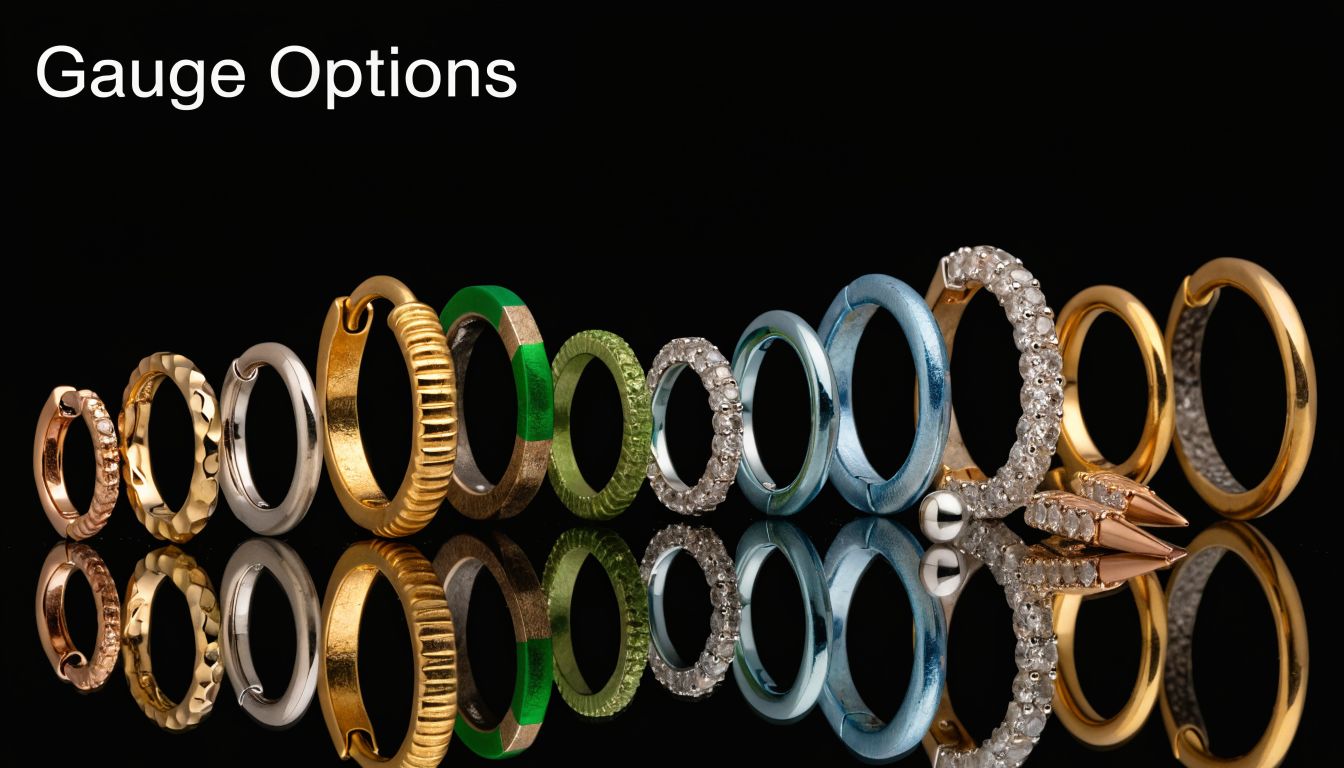
When clients ask about nostril piercing gauge, they're usually comparing three options. 20G, 18G, and 16G. Each has a different look and feel, and each suits a slightly different situation.
20G for a delicate look
20G is on the thinner side for a nostril piercing. It tends to appeal to people who want a very fine, subtle appearance, especially with a small gem or neat minimalist stud.
That said, thinner jewellery can be less forgiving in a fresh piercing. It may not feel as sturdy if you're someone who touches your face a lot, catches jewellery on towels, or wants a slightly more secure fit from day one.
For the right anatomy, it can still be a perfectly sensible option. It's just usually chosen with a clear reason, not because “smaller must be better”.
18G for the best balance
For many professional piercers, 18G is the sweet spot. It still looks refined in the nostril, but it gives more structure than 20G.
In the UK, nostril piercings are usually performed at 18G or 20G. The same source notes that 18G measures 1.02mm thick and is favoured for its sturdier fit during healing.
That professional preference makes sense in real life. An 18G nostril piercing often gives clients what they want: a piercing that still looks elegant, but doesn't feel flimsy.
16G for a bolder presence
16G is thicker again. Some people love that because it creates a stronger visual presence and can suit a more obvious jewellery style. It can also feel substantial.
But 16G isn't automatically the best choice for every nose. On smaller or more delicate nostrils, it can look heavier than intended. Some anatomies carry it beautifully. Others don't.
That's why a good piercer checks the actual shape and thickness of your nostril instead of choosing by trend alone.
Quick comparison
| Gauge | General look | Typical appeal | Watch-out |
|---|---|---|---|
| 20G | Fine and delicate | Minimal look | Can feel less sturdy |
| 18G | Balanced and neat | Good mix of appearance and support | Often the default for a reason |
| 16G | More noticeable | Bolder styling | May not suit every anatomy |
A nostril piercing gauge should match your anatomy first, your style second, and passing trends last.
The question clients really mean to ask
Very often, the question “Which gauge should I get?” is really about one of these:
- “I want it to look tiny.”
- “I want it to heal with as little drama as possible.”
- “I want to wear a hoop later.”
- “I don't want it to catch or move around.”
Those are much more useful questions, because they lead to the right recommendation. If someone wants the finest possible look, 20G may come up. If they want the strongest balance of subtle appearance and stability, 18G often wins. If they want a more pronounced style and have the anatomy for it, 16G may be discussed.
A consultation should turn those preferences into a proper fit, not just a random number.
Choosing Your Gauge for Studs Versus Hoops
Most professional piercers start fresh nostril piercings with a stud, usually a flat-back style, rather than a hoop. That isn't about being strict. It's about making healing less eventful.
A hoop moves more. It can rotate through the channel, knock against the nostril, and shift when you sleep, wash your face, or dry off with a towel. A properly fitted stud usually stays calmer.
Why a stud is usually the smarter start
A fresh piercing is trying to form a stable channel. Less movement generally means less irritation. That's why a stud is often the safer starting point, especially if this is your first facial piercing.
If you love hoops, starting with a stud doesn't block that plan. In many cases, it supports it. A well-healed piercing is far easier to convert into a hoop later than an irritated piercing that never settled properly.
Gauge is only part of the fit
People often focus only on thickness, but nostril jewellery also needs the right length and diameter.
According to the sizing guidance in this nostril jewellery size chart, the standard nostril stud length for initial jewellery is 1/4" to 5/16" (6.35-7.94mm) to allow for swelling. For hoops, common diameters are 5/16" and 3/8", which affects how close the ring sits to the nose.
That means two people can both wear 18G, but one may need a different stud length or hoop diameter for the jewellery to sit properly.
Fit matters more than trend. A hoop that looks perfect in a photo may sit too tight, too loose, or too far forward on your own nostril.
A good way to think about it
- Gauge is the thickness
- Length is how far the stud extends through the tissue
- Diameter is the size of the hoop's circle
All three work together. If one is off, the jewellery can feel awkward even if the other two are correct.
For first-time clients, that's often the biggest surprise. Choosing nostril jewellery isn't just picking a pretty top. It's choosing a set of measurements that has to work with your face and the healing process.
Your Professional Piercing in Croydon and Bournemouth
A good nostril piercing appointment shouldn't feel rushed or mysterious. You should know what's happening, what size is being used, and why your piercer recommends that option for you.
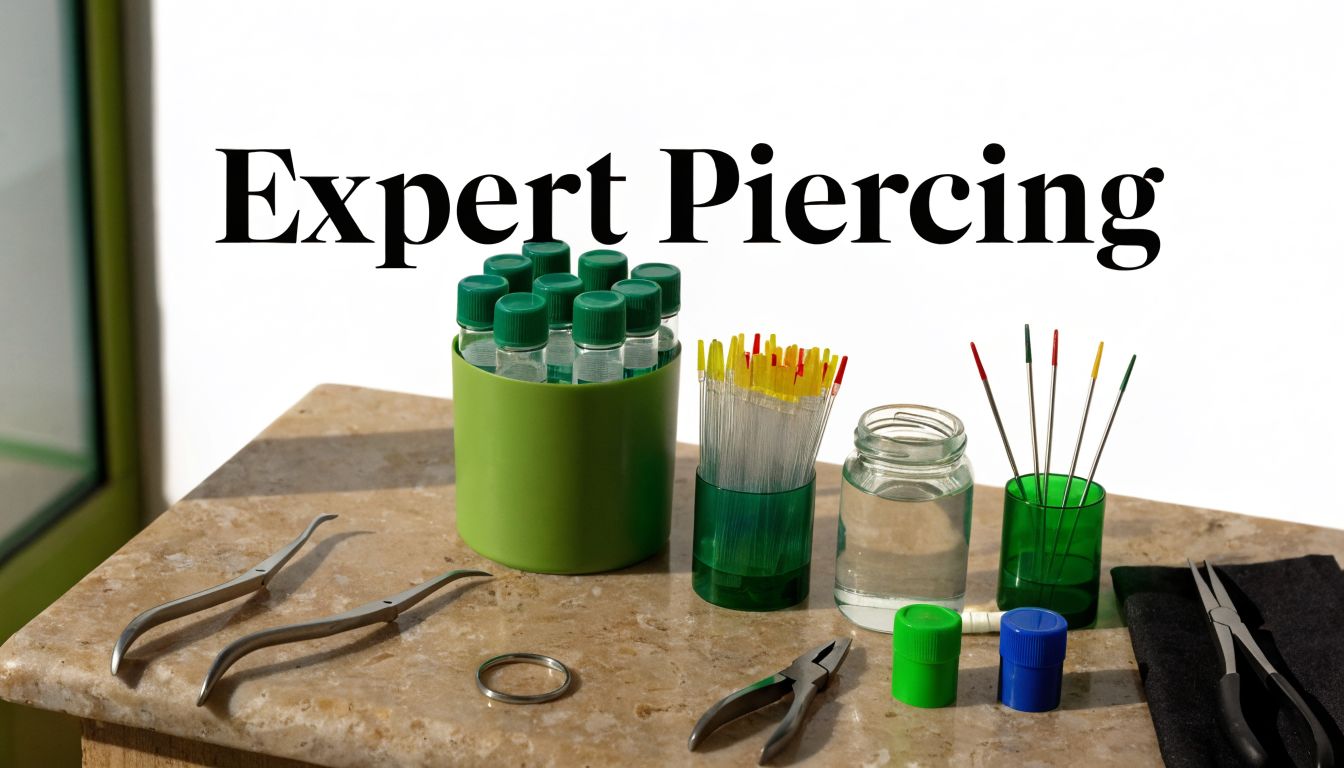
What a proper appointment looks like
A professional nostril piercing should include:
- A real consultation so your piercer can assess nostril shape, placement, and jewellery fit
- Single-use sterile needles rather than a piercing gun
- High-quality starter jewellery, ideally implant-grade titanium for a fresh piercing
- Clear aftercare advice in plain English
Piercing guns are a poor choice for nostrils. Nostrils need precision, appropriate jewellery, and a method that gives your piercer control over placement and fit. A sterile needle setup is the standard you want.
Why local studio standards matter
If you're choosing between studios in Croydon or Bournemouth, the details matter more than décor or social media posts. Ask how they size initial nostril jewellery. Ask whether they use implant-grade titanium. Ask whether they pierce nostrils with single-use sterile needles.
Most professional piercers start nostril piercings at 20G or 18G. Many prefer 18G because the slightly thicker bar is less likely to migrate while the piercing heals.
That gives you a useful picture of what experienced studios are doing in practice. They aren't choosing a nostril piercing gauge at random. They're choosing what tends to give clients a stable, wearable result.
A trustworthy piercer won't just ask what looks nice. They'll ask how you heal, how you sleep, what jewellery you want later, and whether your anatomy suits the size you've chosen.
If you're ready to discuss your options with a professional in Croydon or Bournemouth, call 01202 900050 (Bournemouth) / 020 8686 7730 (Croydon) or message 07752 913846 (Bournemouth) / 07902 490584 (Croydon) on WhatsApp.
Aftercare Healing and Changing Your Jewellery
The first job after getting pierced is simple. Leave it alone as much as possible.
Clean it gently with sterile saline, avoid twisting or spinning the jewellery, and try not to touch it unless you're cleaning it. Fresh nostril piercings don't benefit from fiddling. They benefit from calm, consistent care.
What helps most during healing
- Use sterile saline rather than harsh products
- Keep hands off unless cleaning is necessary
- Watch for snagging on towels, clothes, and bedding
- Be patient if it looks slightly temperamental in the early stages
Nostril piercings often take 4 to 6 months to heal fully. That means even if it feels better sooner, it may not be ready for jewellery changes as early as you'd hope.
Don't rush the first change
Changing your stud too early is one of the easiest ways to irritate a nostril piercing that was doing fine. The channel can shrink, become sore, or react badly to jewellery that's the wrong size or shape.
For your first jewellery change, it's usually best to go back to a professional piercer. They can confirm that it's healed enough, match the new piece to the original nostril piercing gauge, and check length or hoop diameter so you don't undo months of good healing.
If you start with the right size and treat it gently, your piercing has a much better chance of becoming the easy, everyday piece you wanted from the start.
If you're looking for a trusted place to explore safe nostril piercing options, Piercing Near Me helps you find professional studios, clear guidance, and experienced support for clients in Croydon, Bournemouth, and beyond.