
You've just left the studio, or you're standing in the bathroom staring at the mirror, trying to decide whether that new nostril stud needs a spray, a wipe, or complete hands-off silence. That uncertainty is normal, because a fresh nostril piercing isn't jewellery yet, it's a small wound inside a moving, damp, high-contact part of your face. The job over the next few weeks is not to scrub it clean, it's to keep it calm, reduce bacteria without irritating the channel, and let your body do the healing.
What Fresh Nostril Piercings Need in the First Week
The first week is where many people misread the signals. A little redness, some tenderness, and a few crusty bits near the jewellery edge can look alarming, so the instinct is to keep cleaning until the area feels “safe”. That usually works against healing, because a nostril piercing sits in a spot that gets breath, mucus, movement, and constant contact from your own hands.
The better frame is simple. A nostril piercing is a healing wound, and it usually does best with quiet, steady care rather than constant attention. Healing commonly takes 2 to 6 months depending on the person and the source you follow, so the first week is the opening stretch. The finish line is months away. In UK aftercare, the safest baseline stays the same, gentle saline care twice a day, then leave it alone.
Rule one: Clean hands only. If your hands aren't clean, keep them off the piercing.
That matters more than it sounds. A body-piercing hygiene study found that only 27.9% of respondents cleaned the piercing site daily and only 30.9% washed their hands before touching the pierced part, which shows how often normal habits drift away from good aftercare scienceinsights.org. Fresh nostril piercings also sit in a category where infection and medical issues come up often enough to treat them seriously, with Cleveland Clinic noting that infections and related problems are common in body piercings outside the earlobe.
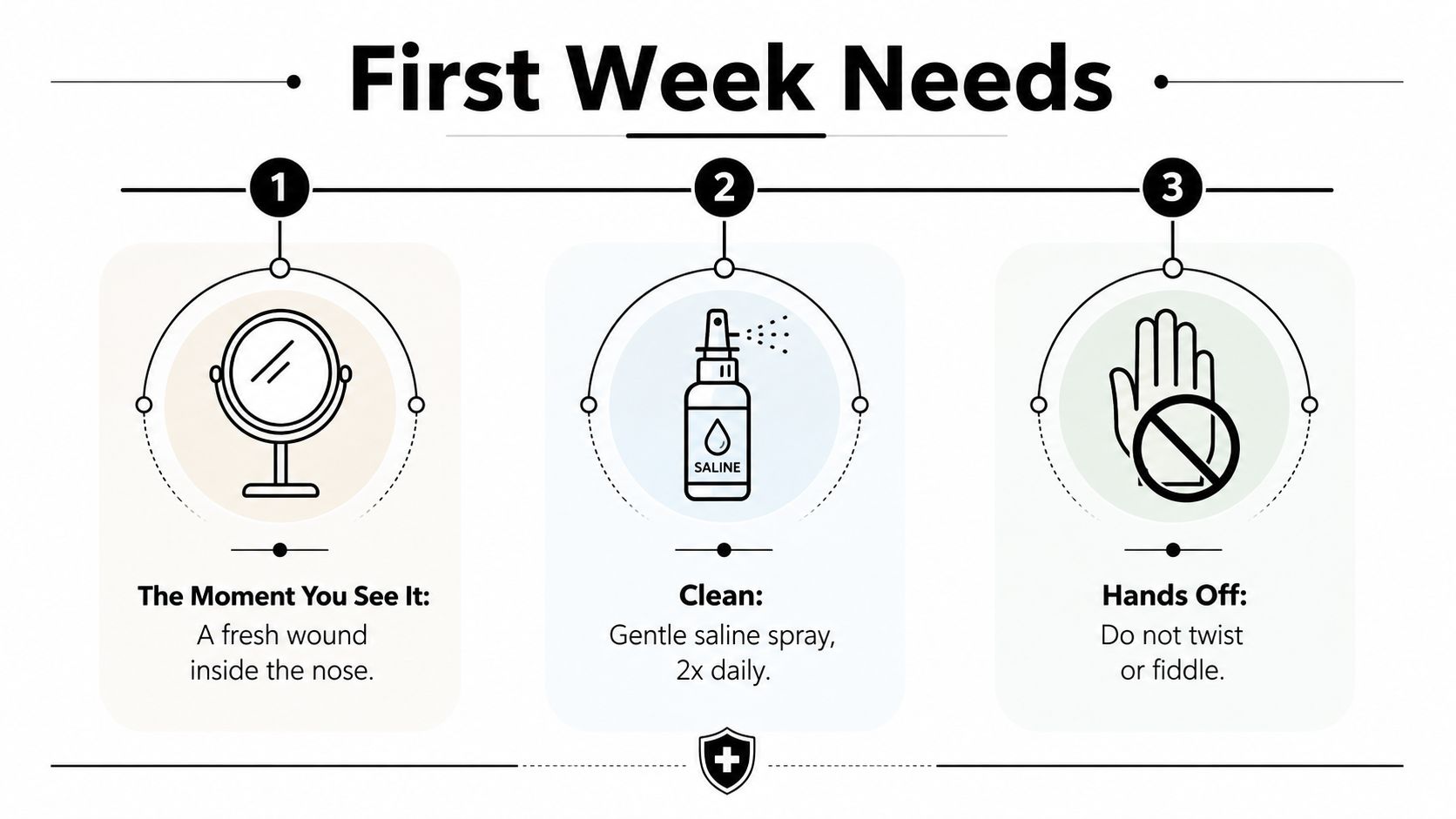
What you want in week one is not perfectly calm skin. Mild tenderness, some swelling, and a gradual settling are normal if the routine stays boring. The jewellery itself also matters, because poor fit can keep a wound irritated even when the cleaning is fine, so it helps to separate aftercare from style choices by reviewing nostril piercing jewellery options.
If the area looks irritated, the first question is usually whether you have been doing too much, not too little. Saline twice a day is enough for most fresh nostril piercings, and extra wiping, rotating, or picking at crusts tends to add friction instead of helping. A clean, light routine gives the channel room to settle without being constantly disturbed.
Supplies You Need for Nostril Piercing Cleaning
Most bathroom shelves fill up fast with products that do not belong near a healing nostril. A fresh piercing does better with a short, boring routine than with a crowded kit. Keep it plain, keep it sterile, and keep it dry.
The core supplies are straightforward:
- Sterile saline wound-wash spray, ideally 0.9% sodium chloride, because that is the format most professional aftercare guidance points toward.
- Disposable paper towel or similar clean paper product for drying.
- Clean hands as the only real tool that needs to touch the piercing.
- Optional backup mix, if you run out of spray, using 1/4 teaspoon of non-iodised or sea salt in 1 cup of warm water.
I still prefer pre-packaged sterile saline because it removes guesswork. Mixing your own solution makes it easier to get the ratio wrong, and anything that is not sterile enough can irritate a fresh wound. If you are buying over the counter, look for wound-wash saline with 0.9% sodium chloride, not a product loaded with extras or fragrance.
A small point that saves a lot of irritation, drying matters. A damp piercing stays upset longer, and cloth towels bring friction and stray fibres into the channel. That is why I prefer the basics over a bigger kit.
There is one product I would point a new client toward if they want a simple reference. A sterile saline wound-wash spray is the cleanest place to start, and you can compare it with the kind of aftercare spray described in saline spray for piercing guidance.
What does not belong in the kit matters just as much. Skip cotton buds, cotton wool, perfumed soap, antiseptic sprays, alcohol, hydrogen peroxide, antibacterial soap, and anything that sounds strong enough to blast a wound clean. Those products are either too harsh, too fibrous, or too drying for ongoing nostril piercing cleaning NHS.
Your Twice-Daily Cleaning Routine in Real Life
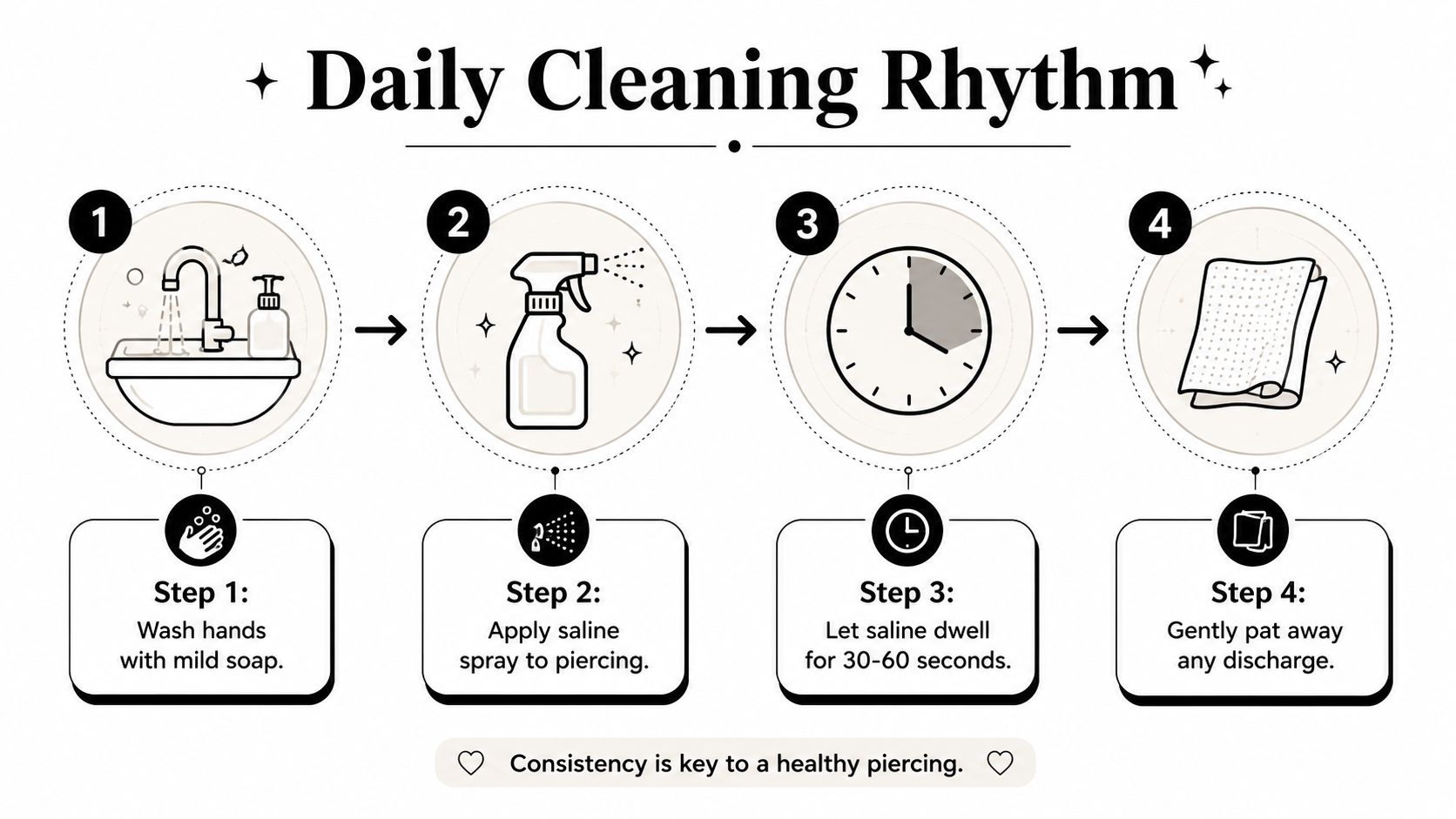
A new nostril piercing does best with a routine that is steady, light, and predictable. Morning and evening cleaning give it enough support without poking at it all day. Start with clean hands every time. A nostril is small, and one careless touch can add more irritation than the cleaning removes.
Use your sterile saline wound-wash spray directly on the piercing, then let it sit briefly so any crusting or dried discharge softens. After that, dry the area with a fresh paper product. That drying step matters. A damp piercing hangs onto irritation longer, and cloth towels add friction and stray fibres to the channel.
If you run out of spray, the backup mix stays the same, 1/4 teaspoon of non-iodised or sea salt in 1 cup of warm water. Use it as a gentle rinse or soak, not as a reason to keep fussing with the jewellery Healthline. The goal is to loosen debris and calm the area, not to make the piercing look freshly polished.
Practical rule: If the jewellery moves, you've probably done too much.
Leave the stud or ring alone. Turning it does not help healing, it irritates the channel. The habit of rotating jewellery “so it doesn't stick” is one of the quiet ways people keep a piercing sore for longer than it needs to be. The fistula needs to settle, not get nudged back open every day.
A real-life miss does not call for a reset. If you get home from the gym sweaty, forget your evening clean, and notice the area looks a bit grumpy, wash your hands, do one saline rinse, dry it properly, and stop there. Over-cleaning creates irritation dressed up as diligence.
Habits That Damage Healing Piercings
The biggest problem with nostril piercing cleaning is usually overconfidence. People clean too hard, too often, or with the wrong tools, then wonder why the area keeps acting up. Gentle care beats frantic “sterile chaos” every time.
The common mistakes that backfire
Cotton buds and cotton wool look harmless, but they shed fibres that can catch around the jewellery and irritate the channel. Alcohol and hydrogen peroxide sound clean, yet they are too harsh for a fresh piercing and can strip healing tissue. Antibacterial soap is not the answer either, because it tends to dry the skin and leave the area more reactive than before.
Twisting the jewellery is another habit that keeps showing up. It feels like a small adjustment, but it drags debris through the fistula and re-traumatises the wound. The cleaner the piercing looks, the more tempting it is to fiddle with it, and that is exactly why so many piercings stay inflamed longer than they should.
Safe choices versus habits that slow healing
| Choice | Use This | Skip This |
|---|---|---|
| Cleaning fluid | Sterile saline wound wash, 0.9% sodium chloride | Alcohol, hydrogen peroxide, antiseptic sprays |
| Drying | Fresh paper towel or disposable paper product | Cloth towels, shared towels, cotton wool |
| Touching | Clean hands only, and only when needed | Twisting, spinning, playing with the jewellery |
| Debris removal | Soften crusts first, then wipe gently | Picking, scraping, or forcing crusts off |
There is a real trade-off here. Twice-daily saline care gives the piercing a controlled, low-irritation environment, but only if you leave it alone between cleans. Over-cleaning, harsh chemicals, and repeated movement all keep the tissue inflamed instead of letting it settle and strengthen.
Reading Your Healing Spotting Normal Versus Infected
A fresh nostril piercing can look a bit messy before it looks settled. Mild soreness, light redness, and a little crusting are all part of normal early healing, especially in the first few weeks. The useful question is not whether there is any discharge or colour change, it is whether the area is calming down or getting more reactive.
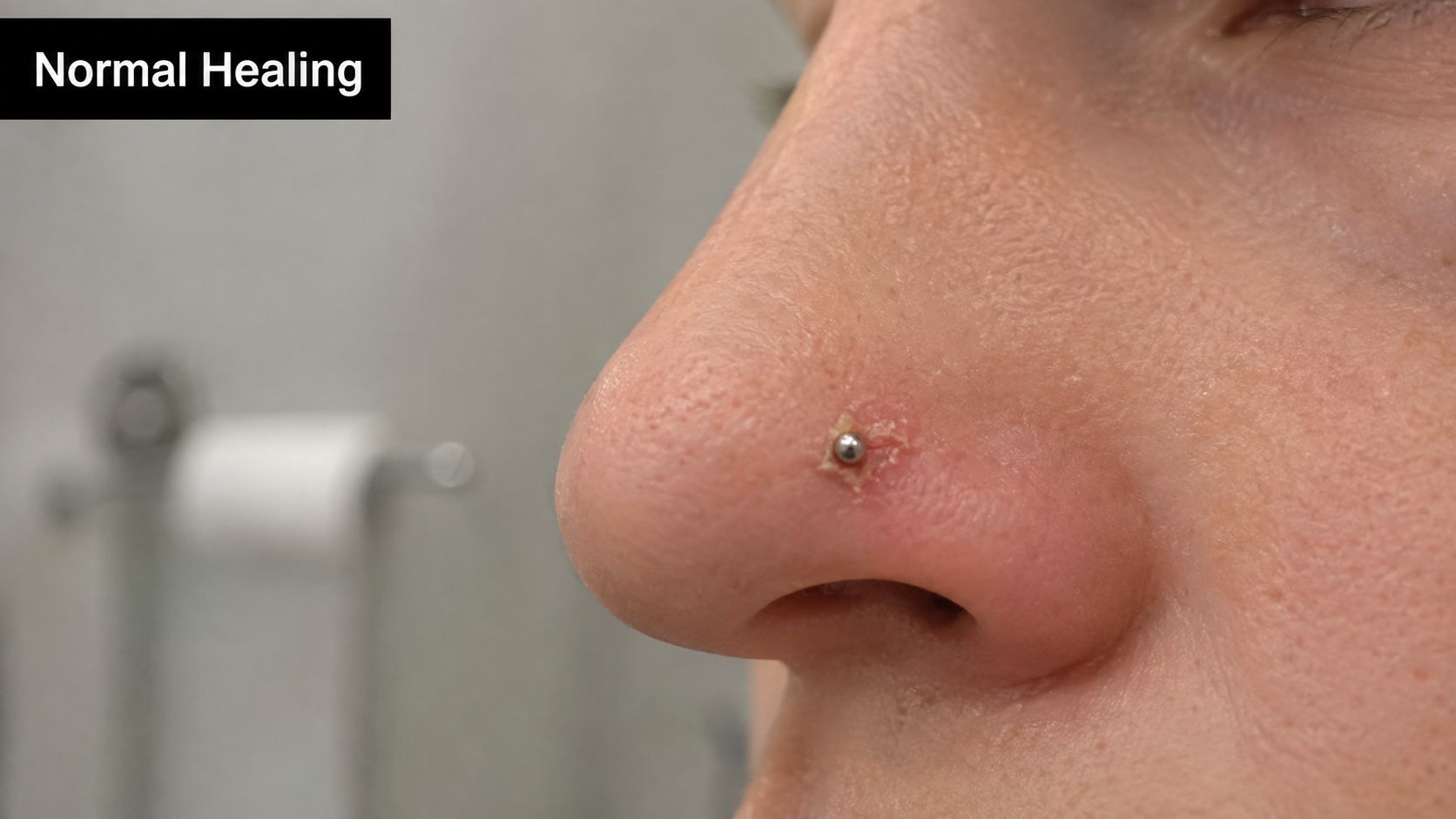
Normal healing stays fairly local. The skin around the piercing may feel tender, look slightly pink, and form crusts that are clear, white, or pale. That pattern is different from a piercing that keeps getting hotter, more swollen, or steadily more painful instead of easing.
A flare-up after a snag, sleep pressure, or a rough clean usually deserves a calmer response first. Give it one to two days of gentle care and leave the jewellery alone. If it settles when you stop picking at it and return to saline cleaning, irritation is more likely than infection.
What needs attention
- Normal healing: slight crusting, mild tenderness, small amounts of redness, and occasional itchiness.
- Likely irritation: swelling after snagging, a bump that appears after over-cleaning, or soreness that improves when you stop fiddling.
- Possible infection: heat, significant swelling, thick green or yellow discharge, pain that spreads, or feeling generally unwell.
A nostril piercing can look angry without being infected. The risk changes when the area gets hot, more swollen, or starts producing thick discharge, and that is the point to stop guessing and get proper advice Cleveland Clinic. NHS. The safest response to a suspicious change is calm, not panic, and certainly not harsher cleaning.
Healing Timeline and When to Step the Routine Down
The common mistake is treating every stage of healing as if it needs the same amount of cleaning. It doesn't. Early nostril piercing cleaning protects the channel while it is raw, then the job shifts to steady maintenance, and later it becomes a matter of getting out of the way and letting the tissue settle.
A realistic month-by-month rhythm
In weeks 1 to 2, keep the routine tight. Clean twice daily, dry it properly, and leave the jewellery alone while the skin around it settles. That early phase is when the piercing is most reactive, so the less motion you create, the better.
In months 2 to 3, the piercing usually settles into a more stable phase, even though it is still healing internally. Many people can reduce from twice-daily cleaning to once daily at this point, provided there is no extra irritation, crusting, or recent snagging. Let the piercing's behaviour decide the pace, rather than the calendar on its own.
By months 4 to 6, the fistula is usually consolidating and becoming more stable, which is why people often think about a first jewellery change at the studio instead of at home. Even then, outside appearance can be misleading. A piercing that looks settled can still be sensitive inside, and if anything still feels off, a guide on nose piercing not healing is the better place to start than guessing at home.
Keep the care calm enough to avoid provoking it. Cleaning should settle the piercing, not keep waking it up.
Swimming, saunas, and long periods of pressure on the nose are still poor choices until the piercing is clearly stable. Glasses resting on the bridge can also turn into a friction issue if the piercing is still tender. If you are unsure whether you have reached the step-down point, hold the line a little longer and keep the routine steady rather than rushing the change.
Booking Back Into the Studio When Something Feels Off
A good piercer is part of aftercare, not just the person who did the first placement. If the piercing starts to swell persistently, the jewellery feels like it's sinking into the skin, the angle looks like it's changing, or a bump keeps returning after you've already removed the obvious irritants, that's the moment to get it seen rather than guessed at.
There's also no prize for trying to troubleshoot everything at home at 11pm. If the jewellery is embedding, migrating, or the piercing doesn't look right, a studio check is the sensible move. A calm professional can tell the difference between a temporary irritation bump and a fitting issue that needs a quicker fix, and that's often the difference between a small correction and a long healing problem. If you've reached the point where the piercing has become a repeated worry, the guidance at nose piercing not healing is the right place to start.
For clients in Croydon and Bournemouth, Timebomb Tattoo & Piercing is set up for that kind of follow-up conversation. Call 01202 9000 50 or message 07752913846 on WhatsApp if something feels off, or if you want a proper six-week check rather than relying on guesswork. A real piercer can look at the jewellery, the angle, and the surrounding skin in one visit, which is usually faster and safer than trying to self-diagnose every flare-up.
Piercing Near Me helps you find professional piercing support, clear aftercare, and the right next step when a nostril piercing needs a second look. If you want practical guidance and a straightforward way to book with a trusted studio, visit Piercing Near Me and use it to keep your healing calm, clean, and properly supported.