
If there's one piece of kit you absolutely need for a new piercing, it's a quality saline spray. This isn't just any saltwater mix; it’s a specific, sterile solution containing 0.9% sodium chloride and purified water. That's it. It’s designed to gently clean your new piercing without interfering with your body’s natural healing.
Why Saline Spray Is The Gold Standard For Piercing Aftercare
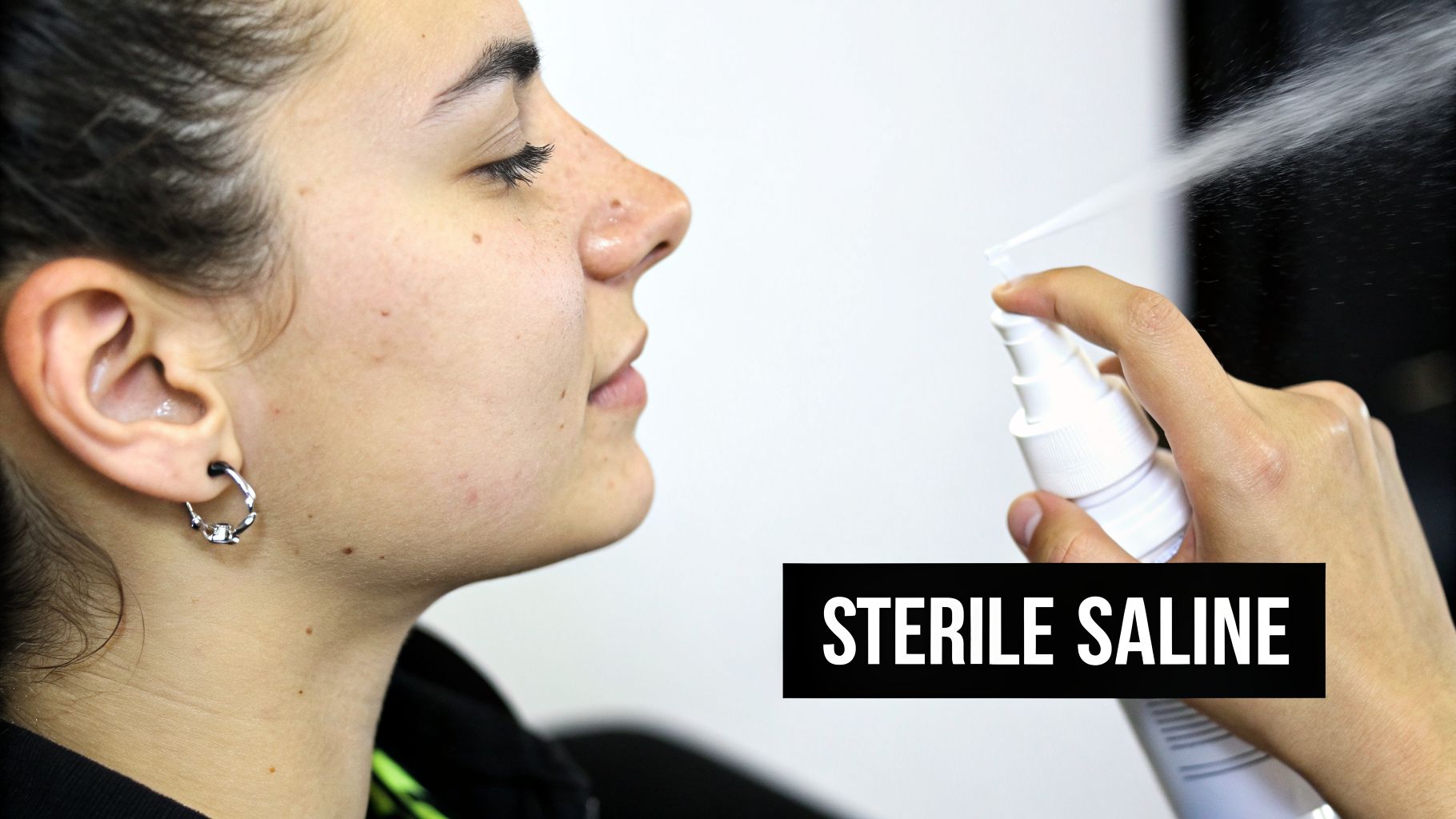
Think of a fresh piercing as a delicate wound that needs the right environment to heal. Your body is doing all the hard work, and your job is simply to keep the area clean and free from irritation. Imagine you’re trying to nurture a tiny seedling—you wouldn't pour harsh chemicals on it. You’d give it pure, clean water. A sterile saline spray for your piercing works on exactly the same principle.
Stepping Away From Outdated Methods
For years, the go-to advice often involved things like rubbing alcohol, hydrogen peroxide, or strong antibacterial soaps. We’ve learned the hard way that these old-school methods actually do more harm than good. They’re far too aggressive for a healing piercing.
- They destroy healthy tissue: Alcohol and peroxide are indiscriminate. They don't just kill bacteria; they also destroy the fragile new cells your body is working so hard to build.
- They cause major irritation: These chemicals strip your skin of its natural moisture, leading to dryness, flaking, and itching that can seriously delay healing.
- They invite complications: All that irritation is a recipe for disaster. It's a leading cause of those dreaded irritation bumps and can leave your piercing vulnerable to infection.
A proper saline solution, on the other hand, is perfectly balanced to work with your body, not against it.
The magic is in its composition. An isotonic saline solution has the same salt concentration (0.9%) as your own body's fluids, like tears and blood. This means it can effectively flush away bacteria, dried lymph (the 'crusties'), and other debris without any stinging, burning, or damage to that delicate healing tissue.
Simple, Safe, and Effective
The best thing about using a sterile saline spray is its beautiful simplicity. The ingredients list should be short and sweet: purified water and 0.9% sodium chloride. If you see anything else—preservatives, perfumes, or other chemical additives—put it back on the shelf. Those extras are completely unnecessary and only introduce a risk of irritating your piercing.
The results speak for themselves across the professional piercing world. In the UK, switching to saline-based aftercare has been a game-changer, drastically cutting down on healing problems. Improper aftercare is one of the most common causes of piercing complications.
Top-tier studios insist on sterile saline, including our own Timebomb Tattoo & Piercing studios in Croydon and Bournemouth.%. That’s a massive improvement over the national average and a testament to getting aftercare right. You can dive deeper into UK piercing industry trends to see the data for yourself.
By choosing a professional saline spray, you're using the safest, most effective method recommended by experts everywhere. It’s a small investment that makes a huge difference in ensuring your piercing heals beautifully.
Saline Spray Vs Other Aftercare Methods
It's easy to get confused by all the different aftercare advice out there. This quick table breaks down why professional saline spray is the clear winner compared to other common or outdated methods.
| Method | Safety & Sterility | Effectiveness | Convenience |
|---|---|---|---|
| Sterile Saline Spray | Highest. Packaged sterile, no-touch application prevents contamination. | Excellent. Gently cleans and irrigates without damaging new tissue. | High. Ready to use, no mixing required. Portable and easy to apply. |
| Homemade Salt Soaks | Low. Risk of contamination from water, salt, and containers. Hard to get the ratio right. | Moderate. Can be effective if done perfectly, but often too salty or not salty enough. | Low. Requires measuring, mixing, and finding a clean container for every use. |
| Alcohol/Peroxide | Very Low. Damages healthy cells, causes chemical burns, and dries out the skin. | Detrimental. Actively delays healing and increases the risk of irritation and bumps. | High. Readily available, but its use is strongly discouraged by professionals. |
| Antibacterial Soap | Low. Often contains harsh chemicals, dyes, and fragrances that cause irritation. | Poor. Can strip natural oils, dry out the piercing, and leave behind a residue. | Moderate. Seems easy, but proper rinsing is difficult and often incomplete. |
As you can see, while other options might seem convenient or are based on old advice, they come with significant risks to the health of your piercing. Sterile saline spray provides the perfect balance of safety, effectiveness, and convenience for a smooth healing process.
So, How Does Saline Spray Actually Help a Piercing Heal?
Think of your new piercing as a tiny, controlled wound. Your body is amazing and immediately gets to work, sending in a construction crew of cells to rebuild the tissue. The whole point of aftercare is to be the perfect assistant to that crew—to help them out, keep their work area clean, and most importantly, stay out of their way.
That’s exactly where saline spray comes in. It’s not some harsh chemical cleaner meant to nuke everything in sight. It's designed to work with your body, creating the perfect conditions for it to do its job.
The Magic is in the Balance: What "Isotonic" Means
The secret sauce is that word you see on the label: isotonic. All this means is that the solution has the same salt-to-water ratio (0.9% sodium chloride) as your own body fluids, like blood and tears.
This is a bigger deal than it sounds. Because the solution is a perfect match for your body, it has a few key advantages:
- It Doesn’t Sting: It feels like nothing at all. There's no shock, no burn, and no damage to the fragile new cells your body is working so hard to build.
- It Keeps Things Hydrated: A healing piercing needs to stay lightly moisturised. If it dries out and cracks, it not only hurts but also creates new openings for bacteria to get in, setting your healing back.
- It Flushes Gently: It has just enough oomph to soften and lift away any debris without you needing to use force.
This perfect balance is precisely why a sterile saline spray is the gold standard for aftercare. It supports your body’s natural healing rhythm instead of fighting against it.
Gently Dealing With 'Crusties'
As your piercing heals, your body will secrete a fluid called lymph. When this dries, it forms those little ‘crusties’ you’ll find clinging to your jewellery. This is totally normal, but letting them build up can trap bacteria and clog up the piercing channel, leading to irritation bumps and other problems.
A gentle mist of saline spray works to soften this dried lymph, allowing it to be wiped away easily without you having to pick or twist the jewellery. This simple act of flushing is crucial for preventing infections and those dreaded irritation bumps that can form when debris gets trapped under the skin.
Basically, the saline spray acts like a gentle rinse, clearing away dust, dried fluid, and any other gunk before it has a chance to cause trouble. You're keeping the site clean without disrupting the delicate healing work happening underneath.
Why Harsh Cleaners Do More Harm Than Good
On a microscopic level, healing is all about new skin cells migrating to close the wound. These cells are incredibly delicate. When you douse them in harsh stuff like alcohol or hydrogen peroxide, you’re basically torching the construction site.
These substances are cytotoxic, which is a fancy way of saying they’re toxic to cells—including the healthy new ones you need. They cause a chemical burn, forcing your body to stop what it's doing and start the healing process all over again from scratch.
A sterile, isotonic saline spray, on the other hand, is biocompatible. It provides the ideal, stable environment for those important cells to get on with their job quickly and efficiently. Time and time again, modern wound care has shown that a clean, moist, and balanced environment leads to the best healing outcomes. A good saline spray gives you exactly that in a safe, convenient bottle.
Your Step-By-Step Guide To Using Saline Spray Correctly
So, you've got your sterile saline spray. That's half the battle won. But knowing how to use it properly is what really separates a smooth heal from a frustrating one. Let's walk through the simple, effective way to clean your new piercing so you can feel confident in your aftercare from day one.
Before You Begin: Preparation Is Key
First things first: never, ever touch your new piercing with unwashed hands. Think about all the things your hands come into contact with all day—door handles, phones, keyboards. They're a magnet for bacteria, and the last thing you want is to introduce that to a fresh, open wound.
Always start by washing your hands thoroughly with antibacterial soap and warm water for at least 20-30 seconds. Get in between your fingers and under your nails, then dry them completely with a clean paper towel. This single step is your best defence against infection.
The Correct Cleaning Process
Now that your hands are clean, you're ready. The goal here is to gently flush the area, not to scrub or agitate it.
Get a Good View: Find a comfortable spot in front of a well-lit mirror. You need to see exactly what you're doing, especially for trickier placements like a daith or helix piercing.
Mist, Don't Drench: Hold the saline canister about 10-15 centimetres away from your piercing. Give it a quick, light spray—just enough to saturate the entry and exit points. A one or two-second burst is plenty.
Let It Soak: Leave the saline on the piercing for 30-60 seconds. This little pause gives the solution time to soften any dried lymph fluid (what we affectionately call 'crusties') that has built up around the jewellery.
Dry Gently but Thoroughly: This is just as crucial as the cleaning. A piercing left damp can become a breeding ground for bacteria, slowing everything down. Gently pat the area completely dry with a piece of sterile non-woven gauze or a fresh paper towel.
Whatever you do, don't use your regular bath towel. They can easily snag on jewellery and often hold onto moisture and bacteria. For those hard-to-reach spots, you can even use a hairdryer on its coolest, lowest setting to get it bone dry without any contact.
This simple routine works with your body's own incredible healing ability, as this diagram shows.
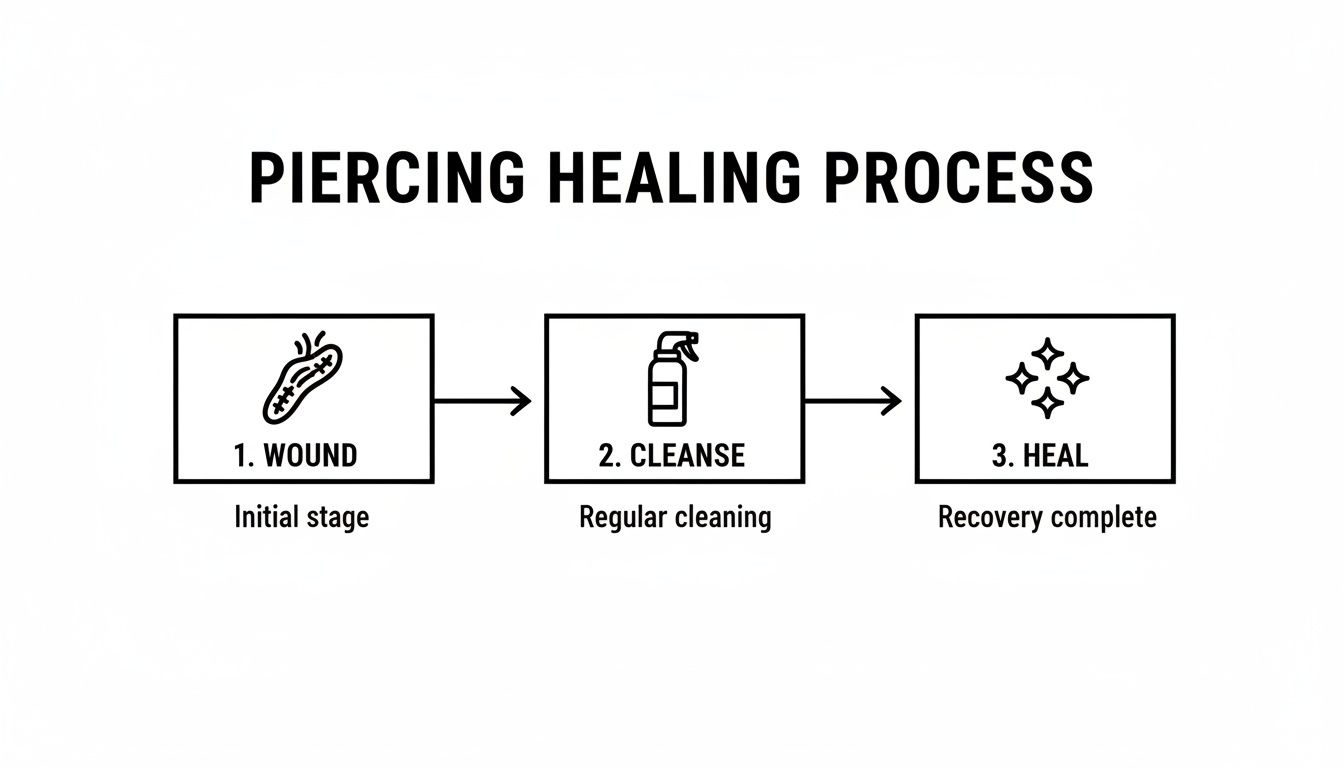
As you can see, consistent and gentle cleansing is the bridge between a fresh piercing and a beautifully healed one.
How Often Should You Clean Your Piercing?
While consistency is your friend, it is possible to have too much of a good thing. Over-cleaning can irritate the skin, stripping its natural oils and leading to dryness, which only complicates healing.
For most new piercings, cleaning twice a day—once when you wake up and once before bed—is the sweet spot. It's enough to keep the site clean without disrupting the fragile new tissue that's trying to form.
Of course, always listen to the specific advice from your piercer. They might suggest a slightly different schedule depending on your piercing, your skin, or even your job. It's a simple habit to get into, and sticking with it is your ticket to a happy, healthy piercing. For a deeper dive into specific placements, you can read our aftercare for helix piercing guide.
The data backs this up. Correct saline spray use helps cartilage piercings heal well. For you, this means that while misting a new navel or scaffold piercing a few extra times a day might feel helpful at first, overdoing it can actually delay healing. It’s all about finding that perfect balance.
Choosing The Right Saline Product For Your Piercing
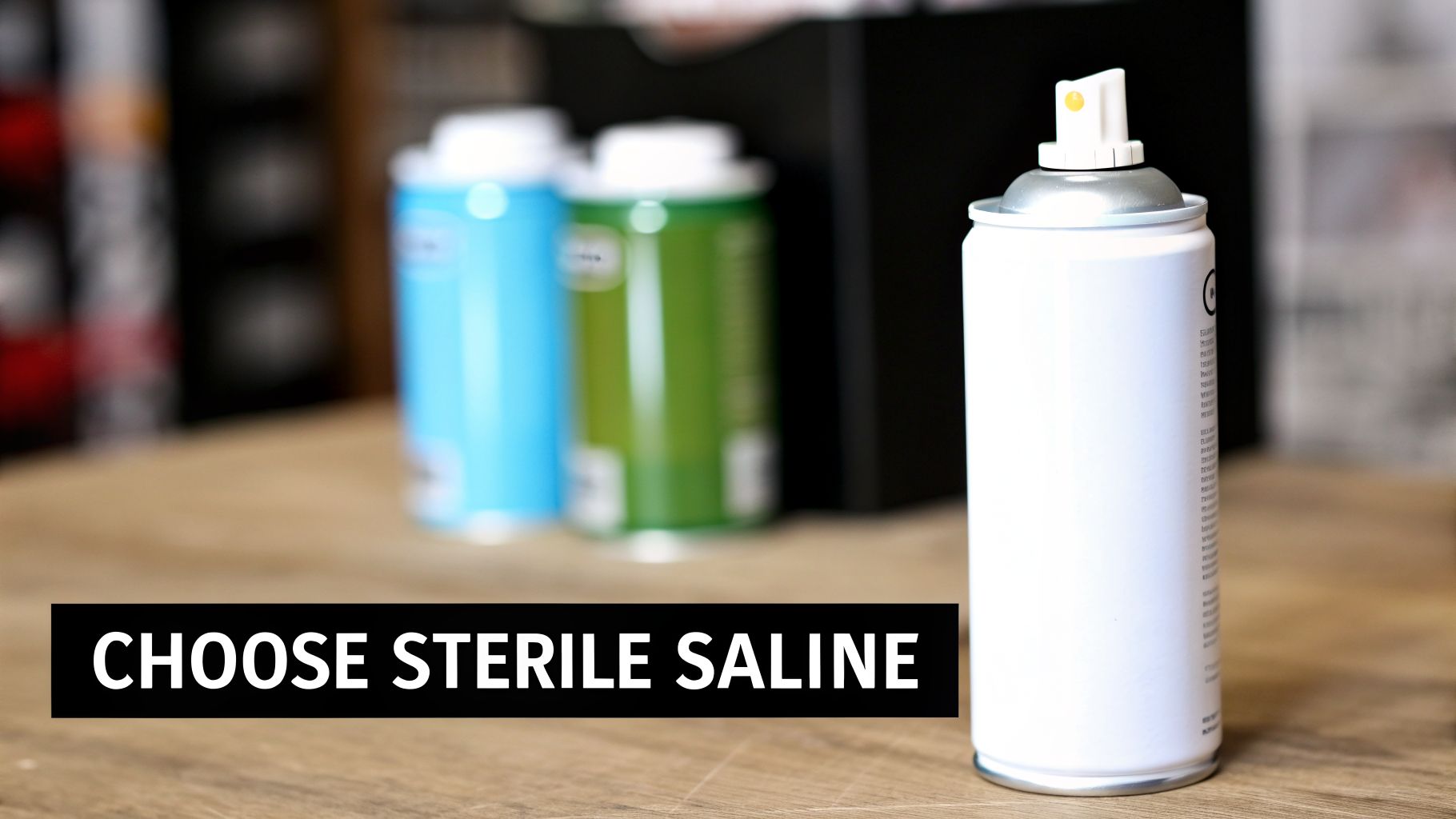
When you’re standing in the chemist's aisle, it’s easy to feel a bit lost. You’ll see a whole wall of products that seem right, but when it comes to healing a new piercing, picking the correct one is crucial. It’s just as important as how you clean it, and grabbing the wrong bottle can cause a world of irritation and set your healing back weeks.
It’s tempting to think any saline will do, but products like contact lens solution, nasal sprays, and eye drops are absolutely off-limits. They might have saline in them, but they are not made for wound care. Think of it like this: you wouldn't use shampoo to wash your dishes. It's the wrong tool for the job.
Those other products are loaded with extra ingredients—preservatives, buffers, and chemicals designed to disinfect contacts or extend the product's shelf life. For a sensitive, fresh piercing, these additives are just irritants. They can cause stinging, redness, and even chemical burns, actively working against your body’s efforts to heal.
How To Read The Label Like A Pro
So, how do you pick the right one? It’s actually much simpler than you might think. You just need to get good at reading the ingredients list. A genuinely safe and effective saline spray for piercing aftercare will have an incredibly short one.
Here’s what to look for on the packaging:
- "Sterile" on the Label: The can or bottle must clearly state the solution is sterile. This is your guarantee it was packaged in a controlled, clean environment and is free from any nasty microorganisms.
- Just Two Ingredients: The list should read: 0.9% sodium chloride and purified water. That’s it. Anything else is an additive that has no business near your healing piercing.
- No Hidden Extras: Double-check for words like "preservatives," "additives," "perfumes," or any other chemical names. If you see them, put the product back on the shelf.
This simple two-ingredient formula is what’s known as an ‘isotonic’ solution, which means it perfectly matches the natural salt level of your own body. It’s the gentlest, most effective way to flush a fresh piercing without disrupting the delicate healing tissue.
Sterile Saline Spray Vs Homemade Saline Solution
You’ve probably seen guides online about making your own salt water. While it seems like a savvy way to save a bit of cash, it's one of the riskiest things you can do for a new piercing. The "do-it-yourself" approach is full of problems that can seriously compromise your healing. Let's break down the key differences.
| Feature | Professional Sterile Saline Spray | Homemade Salt Water Solution |
|---|---|---|
| Sterility | Guaranteed sterile until the last drop, thanks to pressurised can technology. | Non-sterile. Made in a home environment with tap water, introducing bacteria. |
| Purity | Contains only 0.9% sodium chloride and purified water. No additives. | May contain impurities from tap water (chlorine, minerals) and non-iodised salt. |
| Consistency | The 0.9% ratio is medically precise, creating a perfect isotonic solution. | Ratio is a guess. It's nearly impossible to get the measurement right at home. |
| Safety | Safely flushes the wound without causing cellular damage or irritation. | Too much salt (hypertonic) dehydrates healing cells; too little is ineffective. |
| Convenience | Ready to use instantly with a gentle, directional mist. | Requires time to mix, cool down, and then apply, often with unhygienic methods. |
Ultimately, investing in a proper sterile saline spray isn't just about convenience; it's about safety. You're paying for a product that is guaranteed to be sterile, precisely balanced, and designed to give your piercing the best possible chance to heal without complications.
The main issue with homemade soaks is the complete lack of sterility. Your kitchen is not a laboratory. The mug you mix it in, the spoon you stir with, the salt container, and even the air itself can introduce bacteria right into your solution. This is especially dangerous for piercings in delicate areas, like a stud piercing on the nose, which are very vulnerable to infection.
Getting the salt-to-water ratio right is also a guessing game. A little too much salt creates a hypertonic solution that actually sucks moisture out of your healing cells, leading to dryness, irritation, and the dreaded piercing bumps. With a professional spray, that risk is completely eliminated.
You've got the saline spray and you're ready to go, but great aftercare is as much about what you don't do as what you do. Even with the best intentions, a few common slip-ups can easily irritate a new piercing and set your healing back.
Think of it like this: your body is trying to build a delicate new tunnel of skin, and your job is to create the calmest, cleanest environment for it to work in. Avoiding these classic mistakes is a massive part of that.
You Can Have Too Much of a Good Thing
It’s completely understandable to think that cleaning your piercing constantly will help it heal faster. Unfortunately, the opposite is true. We see it all the time—people over-clean out of caution, but washing more than twice a day strips away the natural oils your skin needs to stay healthy. This leads to dryness, flakiness, and irritation that can easily be mistaken for an infection.
Hands Off The Jewellery!
This is the big one. We've all felt that almost irresistible urge to check on a new piercing by giving the jewellery a little twist or slide. But take it from us: this is one of the worst things you can do. Every time you move the jewellery, you're tearing that fragile new skin (the fistula) that's trying to form inside. You're also introducing bacteria from your fingers and practically inviting irritation bumps to form.
The only time your hands should go near your piercing is for a few seconds during cleaning, and only after they've been thoroughly washed. Otherwise, leave it completely still. Your body knows what to do.
This "hands-off" rule absolutely extends to changing the jewellery. Even if it looks fantastic on the outside after a few weeks, the tissue on the inside is still healing and incredibly delicate. Wait for your piercer to give you the official all-clear before swapping it out, or you risk tearing the piercing and starting the healing process all over again.
Avoiding Bad Advice and The Wrong Products
Just as important as using the right saline spray is knowing what to avoid. There's a lot of outdated "piercing wisdom" out there that can do serious harm.
- Harsh Antiseptics: Steer clear of things like alcohol and hydrogen peroxide. They are far too aggressive for a healing wound and will destroy the new, healthy cells your body is working so hard to build.
- Thick Ointments & Creams: Antibacterial ointments or petroleum jelly might seem like a good idea, but they create an airtight seal. This traps moisture and bacteria, creating the perfect environment for an infection to brew rather than preventing one.
- Sleeping On It: This is especially crucial for cartilage piercings like a helix or conch. Constant pressure overnight can cause major swelling, pain, and even permanently change the angle of your piercing.
Getting this right has genuinely transformed piercing aftercare in the UK. Most professional studios, including ours in Croydon and Bournemouth, won't let you leave without a proper saline spray. A simple saline routine works far better than so-called 'cures' like tea tree oil, which can irritate the skin. The shift toward professional products is a huge factor in the body piercing market's growth and, more importantly, in happier, healthier piercings.
When To See Your Piercer And Signs Of Trouble
Your sterile saline spray is the workhorse of good aftercare, but it isn’t a magic wand. Knowing the difference between a normal healing process and a genuine red flag is one of the most important skills you can have. Your body gives you clues, and learning to read them will tell you exactly when it's time to call for backup.
For the first few weeks, it's completely normal to see some mild redness, a bit of swelling, and feel some tenderness around the new piercing. You’ll almost certainly notice a clear or whitish fluid that dries into 'crusties' on your jewellery. This isn't pus; it's just lymph fluid, and it’s a positive sign that your body is healing properly. A gentle clean with your saline spray is all it takes to clear it away.
Distinguishing Irritation From Infection
Here's a common scenario: you see a bump and immediately think "infection." But more often than not, what you're dealing with is just an irritation bump.
These are small, angry-looking bumps that pop up right next to the piercing. They’re usually caused by some kind of physical stress—maybe you snagged your jewellery, slept on it funny, or are wearing low-quality metal. While they look alarming, they aren't a medical emergency. The key is to find the cause of the irritation and eliminate it.
A true infection, on the other hand, is a different beast entirely and needs to be taken seriously. Don't try to wait it out.
The single most important rule of piercing aftercare is this: never remove the jewellery from a suspected infection. Taking it out can allow the piercing channel to close, trapping the infection inside your body. This can lead to a far more serious problem, like an abscess. Always speak to your piercer or a doctor first.
Red Flags You Should Never Ignore
If you spot any of the signs below, it's time to stop guessing and get in touch with your professional piercer right away. They've seen it all and are your first and best line of defence. They can tell you if a trip to the doctor is in order.
Look out for these clear signs of infection:
- Thick, Opaque Discharge: Pus that is yellow, green, or dark.
- Spreading Redness: Redness that travels far beyond the immediate piercing site.
- Intense Pain: Pain that is severe, throbbing, or gets noticeably worse over time.
- Excessive Swelling: Swelling that makes the jewellery feel uncomfortably tight or starts to 'swallow' it.
- Feeling Unwell: If you develop a fever, chills, or nausea, it could signal that the infection is becoming systemic.
When in doubt, just reach out. Your piercer can quickly assess the situation and guide you on what to do next. For a general idea of what to expect, you can also check our guide to typical ear piercing healing times to see how your own progress measures up.
Common Questions & Expert Answers on Saline Spray
Even when you’ve done your homework, it's totally normal to have a few questions about your new piercing. Let's clear up some of the most common ones so you can feel completely at ease with your aftercare.
Can I Go Overboard With The Saline Spray?
Absolutely. It’s a classic case of ‘too much of a good thing’. We often see people who think more is better, but over-cleaning can actually do more harm than good. Your body needs a chance to heal, and that doesn't happen when the area is constantly damp.
Spraying more than 2-3 times a day can strip away the skin’s helpful, natural oils, leaving the area dry, tight, and irritated. This just gets in the way of the healing process. Stick to the twice-a-day routine, and you'll be giving your piercing exactly what it needs.
What's The Real Difference Between A Spray And A Soak?
This is a big one, and the difference is huge when it comes to safety. A proper sterile saline spray for piercing is your best friend. It comes in a pressurised, sealed canister, delivering a fine mist without you ever having to touch the piercing. This means no bacteria from your hands, the air, or a dirty cup can get near the healing tissue.
A saline soak, where you dip your piercing into a bowl of saltwater, is an older method we strongly advise against. It's an open invitation for bacteria. Think about it: the bowl, your hands, and even a slightly off salt-to-water ratio can introduce germs and cause serious irritation. The spray is simply the safest, most effective choice.
Key Takeaway: The best saline sprays will only ever list two ingredients: purified water and 0.9% sodium chloride. That’s it. This ‘isotonic’ formula perfectly matches your body’s natural fluids, making it gentle and non-irritating. If you see any other additives, fragrances, or preservatives, it's the wrong product for a healing piercing.
How Long Do I Need To Keep Using The Spray?
You'll want to keep up your saline routine for the entire initial healing period your piercer laid out for you. This can vary a lot depending on where the piercing is—from 6-8 weeks for something simple like an earlobe to six months or more for tricky cartilage spots.
It’s so tempting to stop once it starts looking and feeling better, but trust us, the tissue deep inside is still mending and is incredibly fragile. Don’t cut your aftercare short! The best move is to wait until your piercer gives you the all-clear at a follow-up appointment.
Ready to start your piercing journey with experts you can trust? Piercing Near Me is your guide to finding safe, professional studios in the UK, connecting you with the experienced teams at Timebomb Tattoo & Piercing. Book your appointment with confidence at https://piercingnearme.co.uk and get the best care from start to finish.
Trackbacks/Pingbacks