
You're sitting in the studio chair, trying to decide whether the sharp-looking jewellery is worth the worry. You may have searched “does a navel piercing hurt?” several times, hoping for one reassuring number. The more useful question is different: what makes navel piercing pain last longer than expected?
The needle sensation is brief. The experience can include tenderness, pressure sensitivity and occasional aching while the piercing heals around waistbands, sitting, bending and everyday movement. UK guidance says a navel piercing can take 6 months to 1 year to heal, so treating it like a quick wound that settles within a few days often leads to unnecessary irritation (Chartered Institute of Environmental Health guidance).
What a Navel Piercing Actually Feels Like
You've approved the markings and settled back in the chair. The piercer cleans the skin with a cool antiseptic wipe, checks the alignment once more and asks you to breathe normally. At this point, most of the discomfort comes from anticipation rather than the piercing itself.
The needle creates a brief, sharp, pressure-heavy pinch. You'll usually feel the entry point first, followed by a tug or pushing sensation as it exits through the upper navel ridge. Jewellery insertion adds a little pressure, but the procedural moment is over quickly, usually within roughly two to five seconds, including insertion. That timing is a practical description of the appointment experience, not a guaranteed measurement for every client.
What clients often notice: the sensation is more concentrated than prolonged. It's a pinch, pressure and slight tug, rather than a long-lasting burn.
Within minutes, the sharpness usually changes into a warm, dull ache. The area may feel tight when you stand up or bend, and the skin around the jewellery can become sensitive to a fingertip, a waistband or the edge of a towel. A faint throbbing sensation can happen as the fresh wound begins its early healing response.
That short needle moment and the later healing tenderness are separate experiences. If you're judging navel piercing pain only by what happens in the chair, you're missing the part that determines whether the piercing remains comfortable. The following days and months are shaped more by pressure, friction, anatomy and aftercare than by the needle itself.
The piercing forms a new channel, often called a fistula, through the tissue. Your body has to line and strengthen that channel while the jewellery remains in place. That's why a piercing can look tidy from the outside while still feeling sore if clothing catches it or your abdomen folds over it.
What Affects How Much a Navel Piercing Hurts
Pain varies because the piercer isn't working with an identical piece of skin on every client. A defined innie with a clear upper lip may offer a straightforward path for a curved barbell. A shallow navel, an outie or a navel that collapses when you sit may require a different angle, a different placement or a floating design.
Placement also changes the pressure you feel. A piercing through the upper ridge, a lower placement and a floating navel each use different tissue. Skin thickness, previous surgery or scar tissue can make the area feel firmer and less flexible. A skilled piercer assesses the navel while you're standing and sitting, because the fold can change shape when your abdomen relaxes.
Body composition should be discussed without judgement. More or less soft tissue doesn't automatically make a piercing better or worse, but it can affect the amount of pressure needed, the way the navel folds and the jewellery length required. Breathing matters too. Holding your breath can tense the abdomen, while calm breathing helps the piercer work with your natural position.
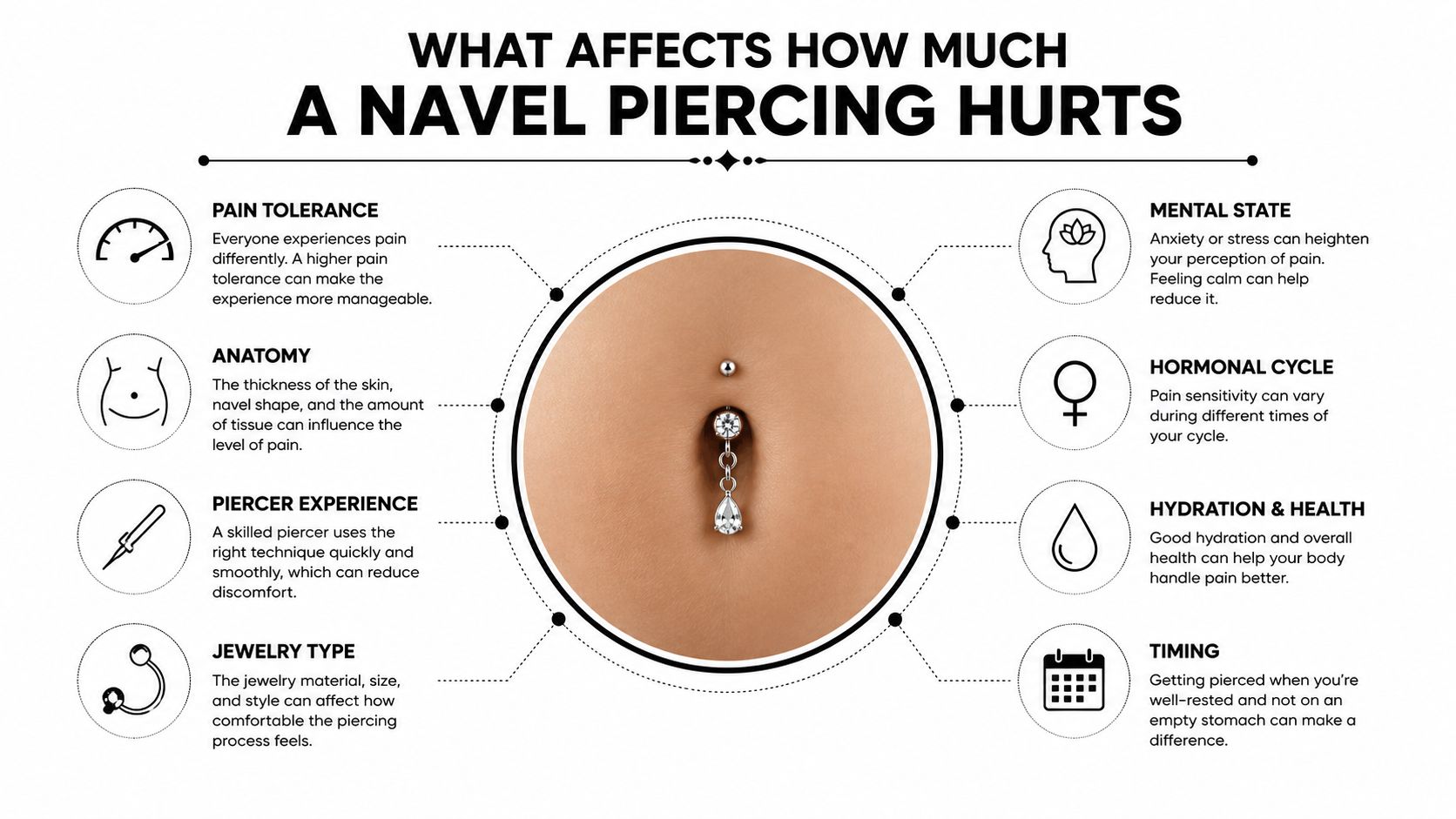
The mechanical factors you can influence
Clothing and movement become live variables as soon as you leave the studio.
- Waistbands: tight jeans, belts and high-waisted clothing can press directly on the jewellery.
- Daily movement: bending, sitting and stretching can pull the channel in different directions.
- Exercise: contact sports and core-focused movement increase the chance of snagging.
- Sleeping position: lying face-down places direct pressure on a fresh piercing.
A consultation should turn these variables into decisions. Tell the piercer what you wear to work, whether you train regularly and how you sleep. The right placement and bar length can reduce rubbing before aftercare even begins.
Your Pain Timeline From Needle to Healed
During the first few hours, expect warmth, tightness and a tender feeling around the entry and exit points. The jewellery may feel more noticeable when you stand, sit or reach upwards. A small amount of swelling and clear or pale fluid that dries into light crusting can occur during normal healing.
By the first few days, soreness should remain manageable and should gradually become less intrusive. The area may sting if clothing catches it, but it shouldn't become progressively hotter, redder or more painful. A navel piercing can have an uneven recovery, with quiet days followed by a flare after pressure or accidental movement.
How the stages usually feel
- The first day: warmth, mild throbbing and pressure sensitivity are common. Avoid testing the jewellery by touching or moving it.
- The first week: swelling and crusting may be most noticeable. Clean softened discharge gently instead of picking it away.
- The following weeks: waistbands, bending and exercise often become the main triggers. A piercing that feels fine in loose clothing may ache after a day in a tight outfit.
- The longer healing period: the surface can look settled while the deeper channel remains vulnerable to snags. A sudden tender spot after catching the jewellery doesn't automatically mean infection, but it does mean the area needs less friction.
UK aftercare information gives navel piercings a healing window of 6 months to 1 year, and another UK public-health source describes a range from 4 months to 1 year (body-piercing safety guidance from White Horse District Council). Jewellery changes should be guided by the piercer rather than by how calm the surface looks.
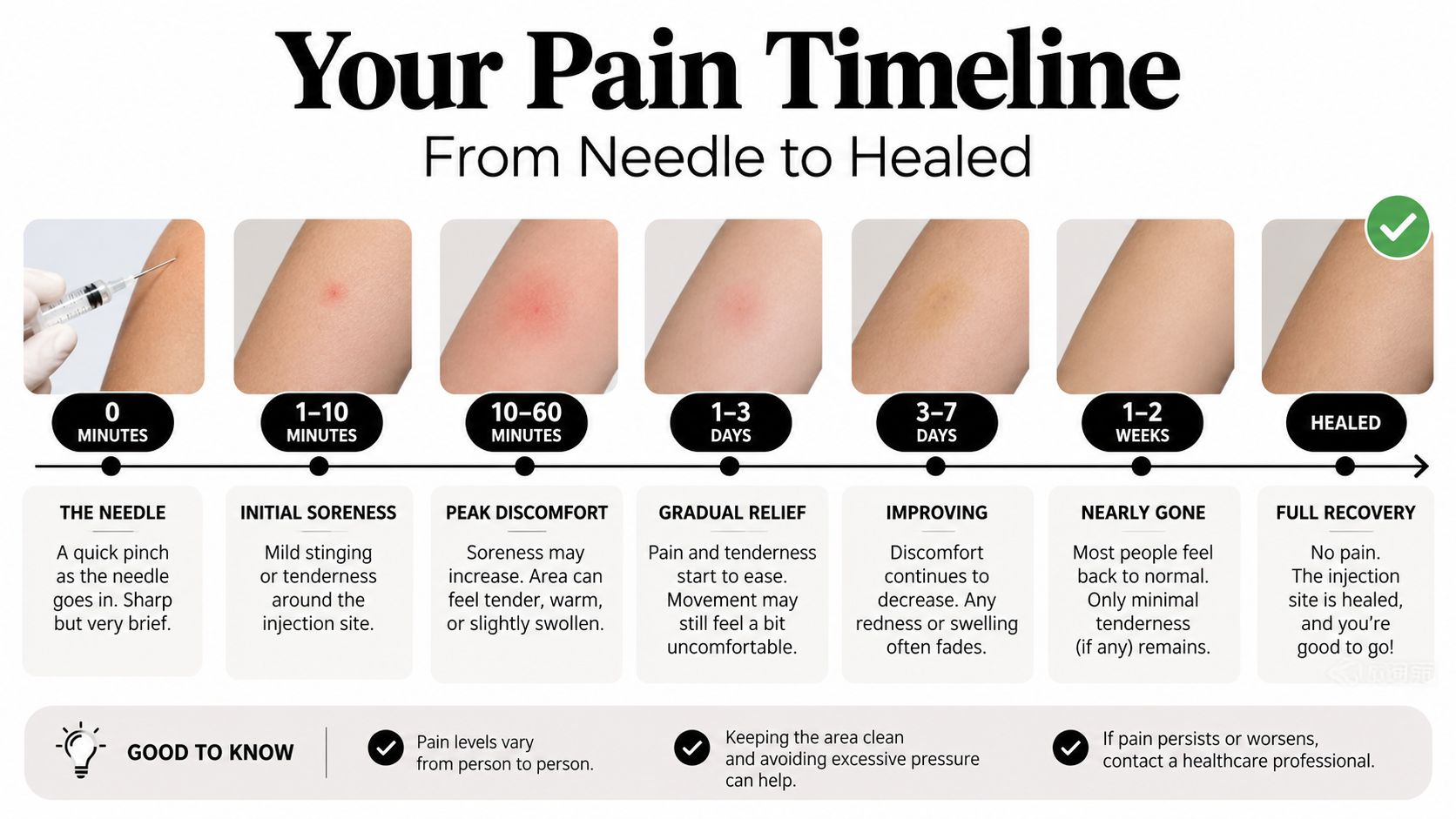
A useful milestone is not complete silence. It's a pattern of decreasing sensitivity, less frequent crusting and fewer flare-ups after ordinary movement. Persistent escalation is different and deserves assessment.
Practical Ways to Manage the Pain
The most effective pain relief usually comes from removing pressure rather than applying stronger products. Wear breathable clothing that doesn't flatten the jewellery against your abdomen, and change out of anything that rubs after sitting, bending or sweating. During a flare-up, avoid belts and high-waisted leggings.
Use sterile saline according to your piercer's advice. A commercial wound-wash saline containing 0.9% sodium chloride can be applied gently, and many aftercare routines use it twice daily for 5 to 10 minutes. UK local-authority guidance also describes a warm saline compress made with 1/4 level teaspoon of preferably sea salt in an egg cup or shot glass of warm water, used to soften discharge before cleaning (Braintree Council body and surface piercing aftercare).
Reduce contact and accidental pulling
- For sleep: lie on your side and support your hip with a pillow so you're less likely to roll onto your stomach.
- For contact sport: use a clean, breathable adhesive bandage during the activity, then remove it carefully afterwards.
- For work: cover the area with a breathable plaster if your uniform catches the jewellery.
- For the gym: wipe sweat away with sterile saline rather than tap water, and stop exercises that pull across the navel.
- For swimming: avoid pools, hot tubs and the sea for at least six weeks, because soaking a fresh piercing exposes it to avoidable contamination.
Don't use tea tree oil, alcohol or hydrogen peroxide. These can irritate healing tissue and prolong tenderness. Don't twist dry jewellery, force off crusts or remove the jewellery without medical advice, particularly if infection is possible.
For short-term discomfort, some people may use paracetamol appropriately during the first 48 hours, provided it's safe for them and they follow the packet directions. Ibuprofen should only be considered after the first week if appropriate for your health, medicines and circumstances, rather than used as an automatic piercing remedy.
For a fuller routine, see this UK belly button piercing aftercare guide, then ask your piercer to adapt it to your jewellery and anatomy.
Why the Navel Stays Sore for Months
A navel piercing can feel almost settled, then complain after a long car ride, a tight waistband or a night spent on your stomach. The reason is its location. Sitting compresses the abdomen, bending changes the fold's angle, breathing moves the skin, and clothing may press the jewellery repeatedly.
The needle creates a brief injury. The longer part of the experience is the healing channel adapting to movement and contact. Surface skin can look calm while deeper tissue is still strengthening, so a later ache does not automatically mean the piercing has failed. It often means the area has been mechanically irritated again.
Friction is the hidden source of many flare-ups
Tights, belts and high-waisted garments can rub the jewellery and keep the wound inflamed, according to Chartered Institute of Environmental Health guidance on navel healing. A small amount of pressure repeated throughout the day can act like rubbing a healing blister. Each contact may be minor, but the tissue receives little uninterrupted time to settle.
The navel's fold can also trap moisture and increase contact between skin, clothing and jewellery. HealthyChildren.org guidance on body piercings describes tight-fitting clothing as a factor that can macerate skin, delay healing and raise the risk of infection and persistent pain.
Historical UK survey data shows why this site deserves patience. A British Medical Journal survey examined 2,146 people in England with piercings outside the earlobe. Among 242 navel piercings, 73 were infected, or 30.2%, and 36 were abscesses, or 14.8%. The survey also reported that about one-third of all complications were linked to navel piercings (UK navel piercing complication data).
Soreness often reflects a high-movement location rather than the short needle moment. It should ease when pressure stops. Pain that becomes hotter, redder, more swollen or increasingly intense needs a different response.
Signs Your Pain Is Not Normal
Normal healing discomfort is usually dull, intermittent and linked to pressure or movement. You may notice tenderness after clothing rubs the area, or a short-lived ache after a minor snag. It should trend towards calmer periods rather than intensify without an obvious trigger.
NHS guidance says an infected piercing may become swollen, painful, hot and very red or dark, and it may produce white, green or yellow pus (NHS advice on infected piercings). UK environmental-health guidance also identifies severe burning, throbbing and increasing tenderness as warning signs.
| Symptom | Normal Healing | Seek Help |
|---|---|---|
| Pain | Dull, occasional and related to movement or pressure | Escalating, severe or increasingly throbbing |
| Redness | Limited to the immediate piercing area | Spreading redness, especially beyond the local site |
| Heat | Mild local warmth early on | Heat extending beyond the piercing |
| Discharge | Clear or pale fluid that dries lightly | Thick yellow or green discharge, particularly with odour |
| Jewellery | Visible and mobile enough for normal swelling | Feels tighter or appears embedded as swelling increases |
| General health | You otherwise feel well | Feeling hot, cold or shivery, or developing a fever |
The specific signs listed above should not be dismissed as ordinary navel piercing pain. Red streaking along the skin, a temperature above 38°C, rapidly increasing swelling or jewellery becoming embedded require prompt medical attention. Embedded jewellery is a piercing-specific emergency because swelling can pull the jewellery deeper into tissue, so don't wait for a routine studio appointment.
Who should assess the problem
Contact a piercer for a position check, irritation bump, suspected jewellery-size problem, snagging injury or possible metal sensitivity. Nickel-containing jewellery can cause an itchy, irritated reaction that differs from infection, but it still needs a professional review and may require a jewellery change.
Contact your GP or NHS service if you have spreading redness, pus, marked heat, systemic symptoms, worsening pain or suspected embedding. Don't remove jewellery on your own if infection is suspected unless a clinician tells you to, because closing the channel can complicate drainage.
For a visual checklist, use this guide on how to tell if a piercing is infected.
Choosing a Studio That Reduces Pain Risk
The studio you choose has more influence over long-term navel piercing pain than any pain-rating chart. A careful piercer reduces unnecessary tissue trauma, chooses jewellery that suits your anatomy and gives you a realistic healing plan before the needle touches your skin.
Look for a consultation rather than a rushed transaction. The piercer should assess your navel while standing and sitting, mark the placement for your approval and discuss how your usual clothing and movement may affect the jewellery. A standard barbell length isn't automatically right for every navel.
The safety checks worth asking about
- Training: ask whether the piercer has current bloodborne-pathogen training.
- Sterilisation: the studio should use an autoclave and be able to explain its testing and monitoring process.
- Needles: insist on a single-use hollow needle, never a piercing gun for a navel.
- Jewellery: implant-grade titanium or solid gold of at least 14k is a sensible material discussion for fresh work.
- Placement: you should see and approve the marks before piercing.
- Aftercare: written guidance should explain cleaning, friction control and escalation signs.
Membership of a professional association such as APP or UKAPP can provide an additional point to investigate, but membership alone shouldn't replace your own questions. Verify any required local licensing with your council, and walk away if a studio can't explain its sterilisation process or show autoclave spore-strip documentation when asked.
A piercer who skips anatomy, refuses to mark placement or focuses on jewellery upsells is showing you that speed matters more than fit.
A consultation-first booking model is a pain-reduction strategy. The piercer can select a suitable curved or floating setup, account for how your navel folds and avoid a bar that catches constantly. You can use professional piercers near you to compare local options, then contact the studio with specific questions before booking.
Frequently Asked Questions About Navel Piercing Pain
Does numbing cream work for a navel piercing?
Topical lidocaine can reduce sensation at the skin surface, but it can't reliably numb the full depth of the tissue channel. Reputable piercers often advise against numbing cream because it can change the skin's texture or make accurate marking and placement harder. Ask the studio before applying anything, rather than arriving with cream already on the area.
Does a floating navel hurt less?
A floating navel generally sits in thinner skin above the navel rather than passing through the ridge in the same way as a standard placement. Some clients therefore find it slightly less uncomfortable, but anatomy determines whether it's suitable. The less painful option isn't useful if the jewellery presses, folds or migrates in your particular navel.
Can pregnancy make an existing piercing hurt?
As the abdomen stretches, the fistula can be pulled upwards and sideways. That creates pulling, pressure and tightness sensations that differ from the original needle pain. Speak with a qualified piercer and your maternity clinician about jewellery choices and irritation, particularly if the skin becomes thin, sore or damaged.
When can jewellery be downsized?
Many piercers schedule a downsize at 6 to 8 weeks, once initial swelling has resolved, but the timing depends on your healing and anatomy. A bar that stays unnecessarily long can catch on clothing and create repeated movement. Don't change it yourself. Have the original piercer assess the fit and replace it only when the tissue is ready.
If pain is worsening rather than settling, don't assume a downsize will solve it. Heat, pus, spreading redness, systemic illness or embedding need medical review, while mild snagging and fit concerns can usually begin with a piercer check.
For questions before booking or a non-urgent aftercare concern, you can contact the studio by phone on 01202 900050 (Bournemouth) / 020 8686 7730 (Croydon) or WhatsApp on 07752 913846 (Bournemouth) / 07902 490584 (Croydon).
Piercing Near Me offers consultations, appointments and walk-ins for clients seeking professional piercing services, including navel placements, in its Croydon and Bournemouth studios. Visit Piercing Near Me to explore local options, discuss your anatomy and plan jewellery and aftercare that reduce avoidable navel piercing pain.