
UK health authorities linked an unsafe piercing aftercare spray to 26 cases of severe Pseudomonas aeruginosa infection across England in 2016, and they recommended simple saline soaks instead. A piercing cleaner spray is only sensible when it's a gentle sterile saline wound wash, not a harsh antiseptic.
You've probably bought a new piercing, noticed a little crusting, and reached for a dedicated spray because the bottle promises cleanliness and faster healing. That instinct is understandable, but the product's label matters more than its branding. A spray can irritate fragile tissue, dry the area, or give you false confidence while you keep touching the jewellery.
For UK aftercare, I favour clean hands, gentle saline, careful drying, and patience. If you're unsure whether your product is suitable, call 01202 900050 (Bournemouth) / 020 8686 7730 (Croydon) or WhatsApp 07752 913846 (Bournemouth) / 07902 490584 (Croydon) for professional guidance.
The UK Warning About Piercing Cleaner Sprays
It is often assumed a product sold specifically for piercing aftercare must be safe. UK public-health advice directly challenges that assumption. In 2016, Public Health England warned that an unsafe aftercare spray was linked to 26 cases of severe Pseudomonas aeruginosa infection across England, and advised people to stop using the product immediately and seek urgent medical help if infection was suspected. Read the Public Health England warning about the infected aftercare spray.
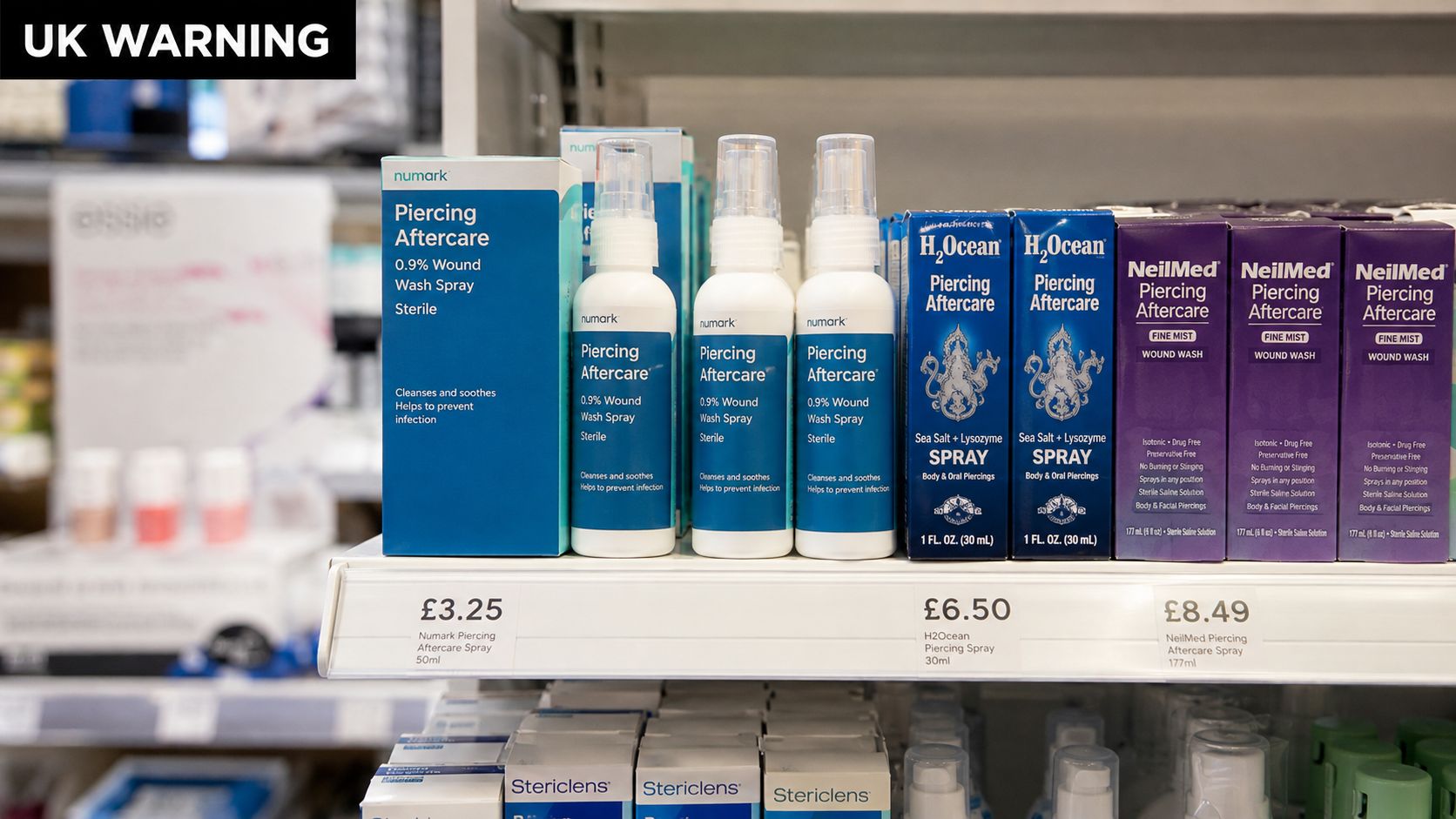
That warning doesn't mean every piercing cleaner spray is dangerous. It means you must judge the contents and intended use, rather than trusting the word “aftercare” on the packaging. A sterile saline wound wash is a very different product from a broad antibacterial spray containing chemicals that may be too aggressive for a healing piercing.
What the warning means for your choice
A fresh piercing is healing tissue with jewellery passing through it. Your aim is to remove surface discharge without stripping or chemically irritating the skin that's forming around the jewellery. Stronger does not mean safer, and a product that makes the area feel tight, hot, dry, or sore is working against you.
Public Health England advised cleaning hands before checking the site, using warm saline, and drying with disposable paper towel or kitchen roll. It also warned that mild antibacterial solutions and soaps should only be considered for ear piercings if a pharmacist advises their use and the manufacturer's directions are followed. They aren't suitable for delicate sites such as nostrils, septum piercings, or vertical lip piercings.
My rule: If a spray is marketed as a powerful disinfectant, leave it on the shelf unless a qualified healthcare professional has specifically told you to use it.
Good piercing safety starts before aftercare. Ask your piercer how equipment is sterilised, and review autoclave sterilisation for piercing before booking.
Saline Versus Antiseptic Sprays
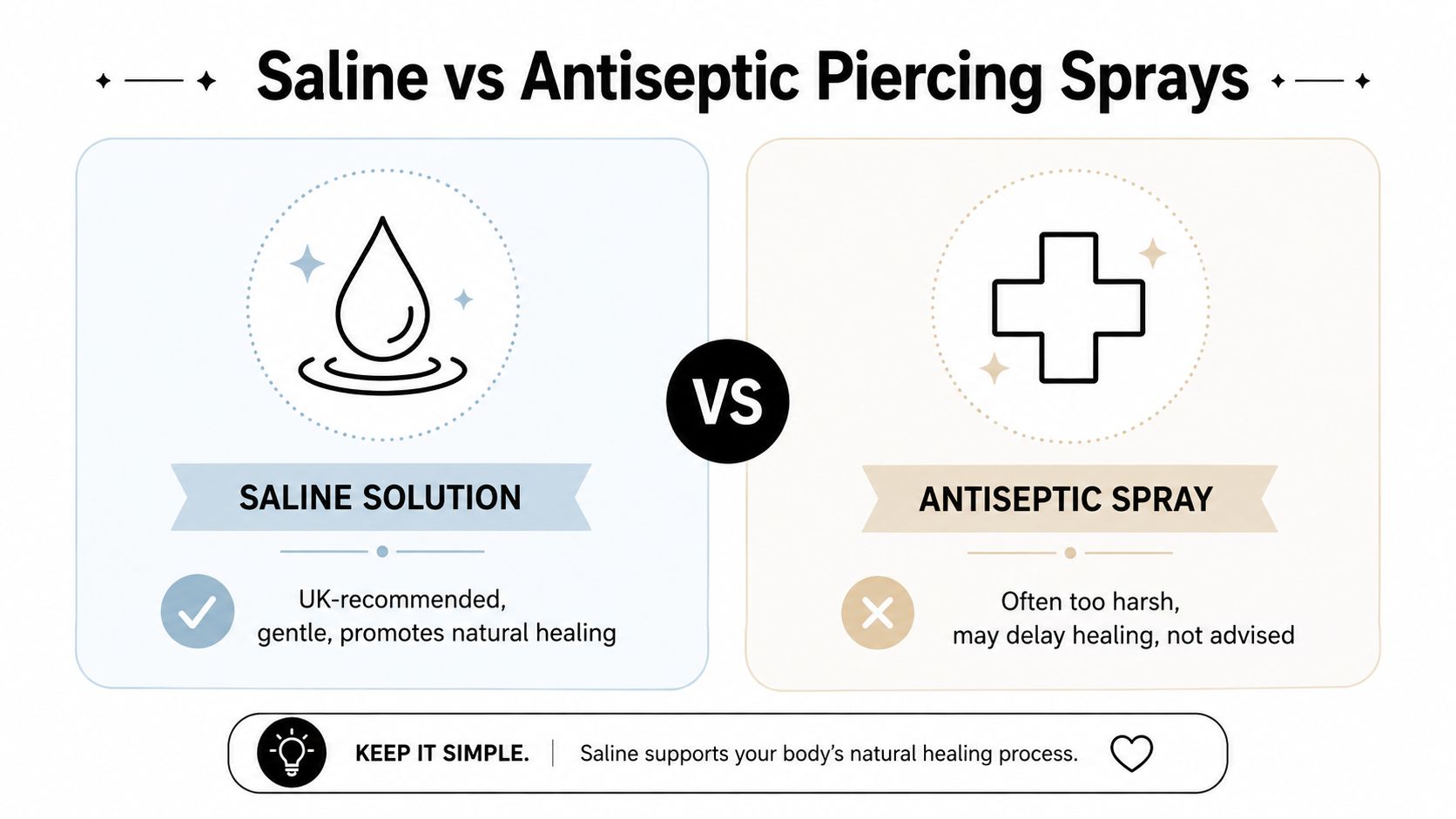
The practical difference is simple. Saline rinses the area gently, while antiseptic products are designed to act chemically against microorganisms. That chemical action may be useful in a clinical situation, but it isn't automatically appropriate for delicate healing tissue.
UK NHS advice supports warm, salty water to soften crusting and allow gentle cleaning around the jewellery. The earlier Public Health England warning adds an important reason to avoid arbitrary antiseptics. An unsuitable aftercare spray was associated with severe infections, so the safest default is a sterile saline product rather than a medicated formula chosen for its aggressive claims.
Read the ingredient panel
Look for a product described as a sterile saline wound wash. Check that the ingredients are limited to sodium chloride and purified or sterile water. Avoid assuming that words such as “medical strength”, “antibacterial”, or “disinfecting” make a product more suitable.
| Product type | My view for routine piercing aftercare |
|---|---|
| Sterile saline wound wash | The sensible choice for gentle rinsing |
| Homemade saline | Use the UK benchmark carefully and prepare it hygienically |
| Antiseptic spray | Avoid as a default, especially on delicate sites |
| Antibacterial soap | Only consider for an ear piercing if a pharmacist advises it |
The NHS advice on infected piercings reinforces saline-based cleaning and gentle jewellery handling. It doesn't support repeatedly attacking a healing piercing with harsh chemicals because the area looks untidy.
Saline isn't a cure for infection
Saline can soften crusting and rinse away surface debris, but it isn't a substitute for medical assessment. If you suspect infection, don't keep escalating your cleaning routine or swap products repeatedly. Seek medical advice, and don't remove jewellery from an infected piercing unless a healthcare professional tells you to.
For a product-focused explanation, see this guide to saline spray for piercing aftercare. The key point remains the same: choose a sterile, simple rinse and use it sparingly.
How to Use Piercing Cleaner Spray Correctly
A saline spray works best when you stop treating the piercing like a dirty object that needs scrubbing. Your hands, the nozzle, the jewellery, and the drying material can all introduce unnecessary contact, so keep the routine controlled.
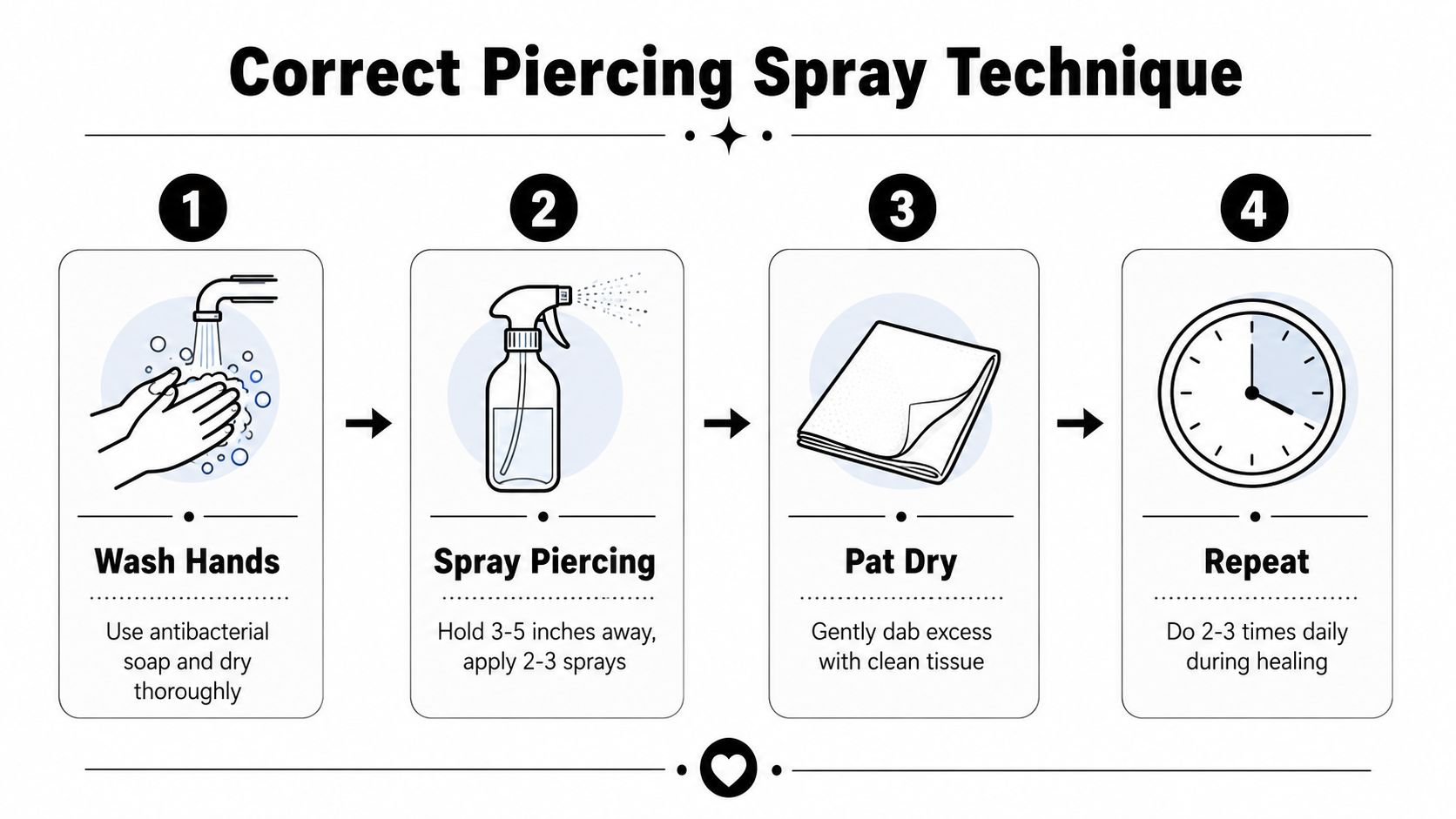
Wash your hands. Clean them thoroughly before checking or touching the piercing. Hand hygiene prevents you transferring ordinary surface contamination into a healing channel.
Apply the saline. Spray the front and back of the piercing, or let the solution run gently over the site. Don't press the nozzle against your skin or jewellery.
Let crusting soften. Give the saline a few minutes to loosen dried discharge. Don't pull crusts away while they're dry, because that can disturb fragile tissue.
Dry carefully. Pat around the area with disposable paper towel or kitchen roll. Don't use a fabric towel, which can carry residue and catch on jewellery.
Leave the jewellery alone. Don't twist or turn it while the piercing is dry. Movement can irritate the channel and prolong soreness.
Keep the dose modest
More spray doesn't create a cleaner piercing. UK aftercare product directions commonly advise using only 1 to 2 pumps per application and limiting use to 1 to 2 times daily, while warning that over-application can irritate skin. Don't spray repeatedly throughout the day because you're anxious about a small amount of normal crusting.
The NHS approach is deliberately uncomplicated. Its guidance recommends warm salty water to soften crusting and gentle handling of jewellery, rather than relying on medicated sprays. You'll find a practical routine in this guide to cleaning a new piercing.
If the area becomes increasingly dry, red, or sore after spraying, stop the product. A comfortable, gradually improving piercing is a better sign than one that feels aggressively stripped clean.
Saline Soaks Versus Spray Applications
A spray is useful when a piercing is difficult to reach, but it is not automatically the better option. A saline soak or warm compress softens hardened crusting more effectively. UK public-health guidance recommends mixing 1/4 level teaspoon of preferably sea salt in an egg cup or shot glass of warm water. Apply it as a soak or with clean cloth or gauze.
Use warm water, never scalding water. The aim is to loosen dried material so it can clear without scraping. Pat the area dry with disposable paper towel or kitchen roll, then leave the jewellery alone.
| Choose a saline soak or compress when | Choose a sterile saline spray when |
|---|---|
| Crusting has hardened around the site | You need a convenient rinse |
| The piercing is easy to position over a small clean container | The placement makes soaking impractical |
| Warm moisture will soften surface discharge | You are travelling or away from your normal routine |
Both methods require restraint. A longer soak does not improve healing, and an easier spray does not justify repeated applications. Clean the piercing gently, then leave it undisturbed.
Keep the site dry between cleaning and avoid deliberate soaking during the early healing period. UK local-authority guidance permits normal bathing and showering, but advises avoiding submersion for at least 4 days after treatment. Avoid baths, swimming, hot tubs, and similar activities during that window. The UK council body-piercing aftercare guidance also advises avoiding direct handling of a newly pierced site at this stage. A spray should support a simple routine, not replace careful handling and sensible water precautions.
Signs a Piercing Cleaner Is Too Harsh
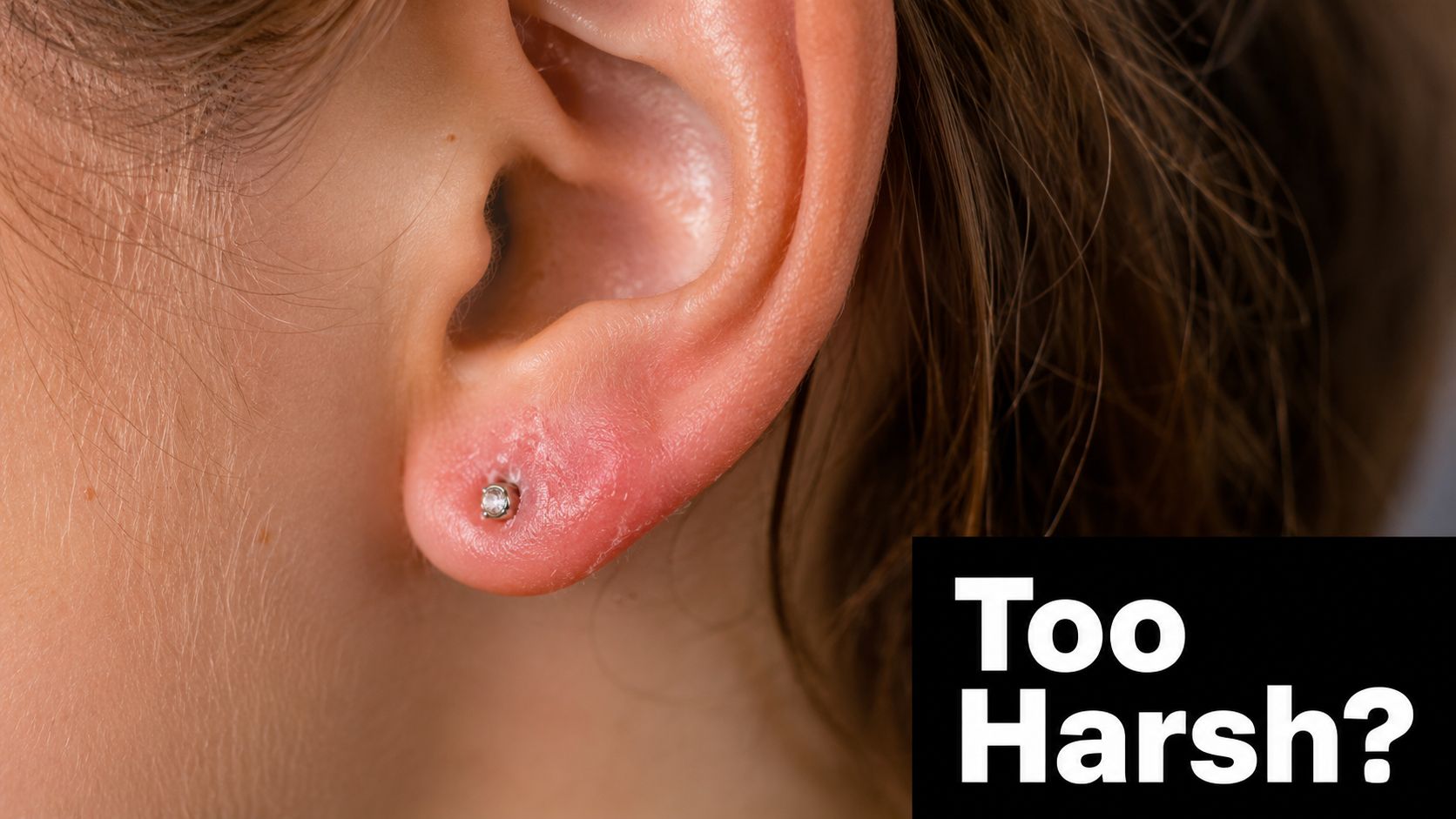
A suitable piercing cleaner should not leave the surrounding skin feeling raw. Persistent redness, excessive dryness, stinging, and worsening irritation are clear reasons to stop using the product, particularly if those symptoms appear after each application.
The UK government alert on the unsafe spray specifically reinforces that irritation, redness, or drying should trigger discontinuation. Don't respond by applying more product, changing the spray more often, or adding another antiseptic. Remove the suspected irritant from your routine and ask for appropriate advice.
Check the piercing site
Look at the skin without repeatedly touching it. Mild tenderness and some crusting can occur during normal healing, but a piercing that becomes progressively hotter, more painful, swollen, or inflamed needs professional attention rather than stronger home cleaning.
Pay particular attention to placement. Public Health England's advice warns that antibacterial solutions and soaps aren't suitable for delicate areas such as the nostrils, septum, and vertical lip piercings. Ear piercings are different, but even there, antibacterial products should only be used if a pharmacist advises them and you follow the manufacturer's instructions.
Know when to seek help
- Stop the product: Discontinue any spray that causes redness, drying, or irritation.
- Simplify aftercare: Return to gentle saline cleansing and avoid unnecessary touching.
- Contact a clinician: Seek medical advice if symptoms persist or infection is suspected.
- Keep jewellery in place: Don't remove jewellery from an infected piercing unless advised by a healthcare professional.
The UK guidance on saline solution for piercing care supports stopping products that irritate or dry the site. Your piercing should feel gently cared for, not chemically burned.
Essential Aftercare Safety Habits
A sterile saline spray cannot compensate for poor hand hygiene, trapped moisture, or jewellery that is repeatedly turned. The product matters, but daily handling often determines whether the piercing settles or stays irritated.
Use this routine:
- Wash your hands first: Clean your hands before checking the piercing or touching the jewellery.
- Keep the area reasonably dry: Shower normally, then pat the site dry with disposable paper towel or kitchen roll.
- Do not twist dry jewellery: NHS guidance advises leaving jewellery still when the piercing is dry.
- Avoid fabric towels: Fibres can catch on jewellery, while the material may leave residue behind.
- Manage bleeding calmly: If bleeding returns during the first few days, apply firm, steady pressure to the pierced site.
- Leave suspected infections alone: Do not remove jewellery from an infected piercing. Seek medical advice instead.
The NHS recommends cleaning a piercing twice a day and using warm salty water to soften crusting. It also advises avoiding swimming for the first 24 hours after piercing. For genital piercings, avoid sex until the piercing has healed. For mouth piercings, avoid oral sex until healing has occurred. Follow the NHS-linked piercing aftercare guidance for these restrictions.
Your piercer should provide clear verbal and written instructions. Those instructions should explain normal healing, the product to use, how often to clean, how to dry the site, and which warning signs need medical attention. “Spray it” is not enough. Ask for specific guidance before you leave.
Choose a sterile saline wound wash, apply it gently, and stop using it if the skin becomes dry, red, or sore. Do not switch to a stronger antiseptic spray because healing looks slow. Public Health England guidance warns that antibacterial solutions and soaps can be unsuitable for delicate piercing sites, and harsh products can make irritation harder to assess.
Piercing Near Me provides information for finding professional piercing services and personalised aftercare. Visit Piercing Near Me to explore options in the UK. If you need help choosing a product or dealing with a healing concern, call 01202 900050 (Bournemouth) / 020 8686 7730 (Croydon) or WhatsApp 07752 913846 (Bournemouth) / 07902 490584 (Croydon) before the problem worsens.