
You've left the studio with fresh jewellery, an aftercare sheet, and one nagging question: what happens next? You might be watching the area in the mirror, wondering whether a little crusting is normal, whether the post looks too long, or whether you should wait until something hurts before asking for help.
A follow-up appointment gives you a calm, professional checkpoint during healing. It's a chance to assess the piercing, check the jewellery fit, review your routine, and deal with small concerns before they become harder to manage. The right timing depends on the placement and how your body is responding, so a follow-up isn't a rigid ceremony. It's part of sensible, personalised aftercare.
Why Follow Up Appointments Matter After a Piercing
A client might leave with a perfectly placed helix piercing, feel fine for several days, and then notice that the post catches on their hair. Another client may see a small irritation bump but assume it's part of healing. Both situations deserve attention, even if neither feels like an emergency.
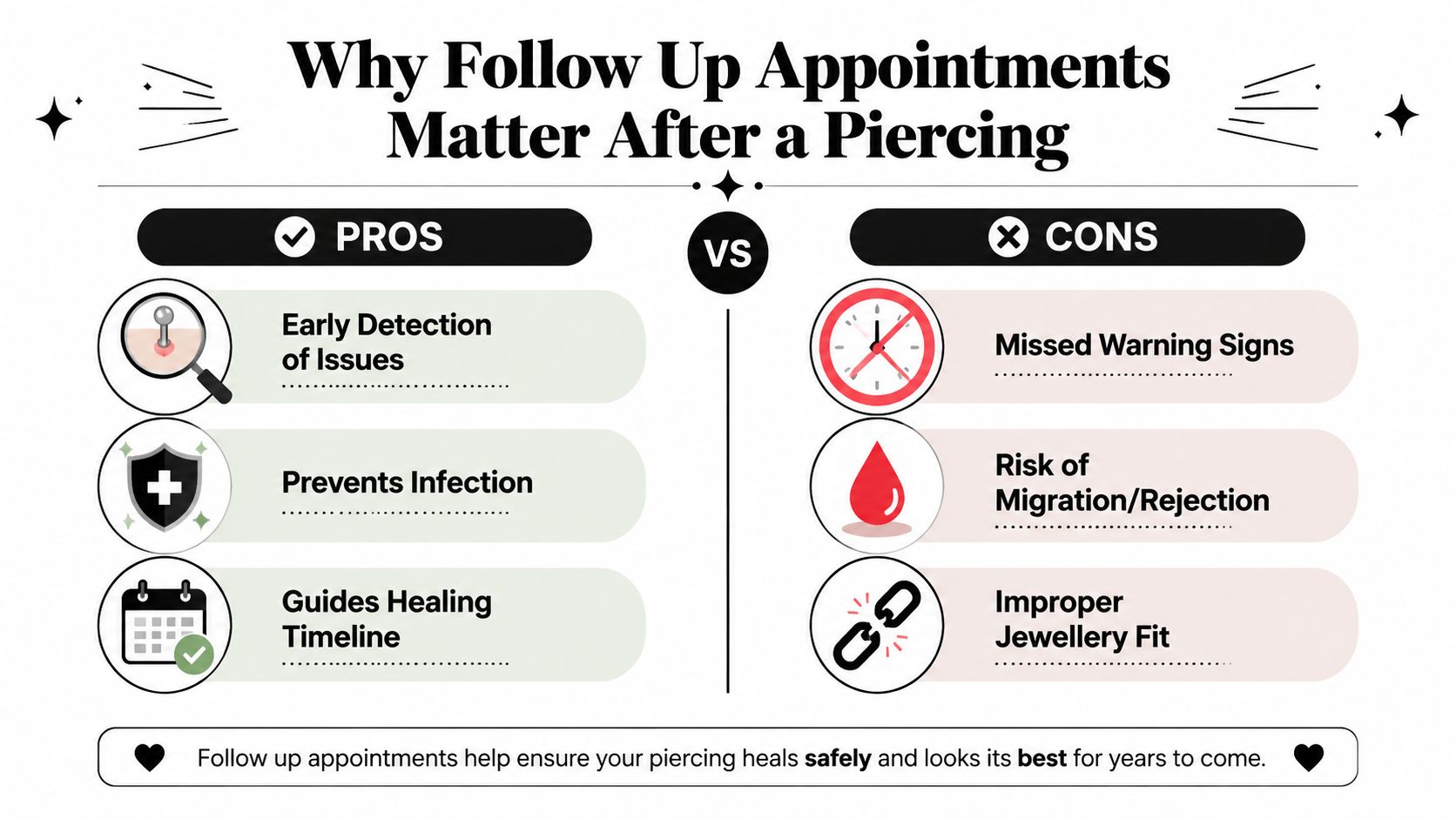
Follow up appointments create a structured point between the initial piercing and a fully settled channel. Your piercer can assess the angle, the surrounding tissue, and the way the jewellery sits when swelling changes. They can also spot problems you may not recognise, such as pressure from an unsuitable post, early embedding, or movement that encourages migration.
A professional check is more than an infection check
Healthy healing doesn't always mean the area feels completely normal. Mild tenderness, dried lymph, and temporary sensitivity can occur, while a piercing can still need a jewellery adjustment. Looking at the site yourself is useful, but you can't easily judge the angle, pressure, or depth from a mirror.
Your piercer can compare what they see with the original placement and explain whether the appearance fits the healing stage. If the jewellery is too long, they may recommend a downsize. If it's too tight, they can act before the skin begins to grow over an end.
Practical rule: If you're unsure whether a change is normal, ask before you start treating it yourself or removing the jewellery.
Follow-up care shows long-term responsibility
A responsible studio remains involved after the needle has been put away. The appointment protects your comfort, helps preserve the placement, and gives you clear advice instead of leaving you to search through conflicting aftercare posts.
That support matters in a wider NHS context too. Follow-up care is a major part of outpatient activity in England, with NHS guidance distinguishing first appointments from subsequent follow-up attendances in its hospital outpatient dataset. NHS hospital outpatient activity data shows why ongoing review is a normal part of managing care, not an optional extra reserved for people with obvious complications.
What Happens During a Piercing Follow Up Check
A follow-up check is usually focused and practical. You won't be asked to repeat the original procedure, and your piercer should explain what they're assessing before touching the area.
The visual inspection
First, the piercer examines the site under good lighting. They'll look at the colour of the tissue, swelling, crusting, discharge, the shape of any bump, and whether the jewellery appears to sit at the intended angle.
This visual stage helps separate ordinary healing changes from signs that the area is being irritated. It also gives you a chance to point out anything you've noticed, such as bleeding after sleeping on the piercing or a change in how the end sits.
The tactile assessment
Your piercer may gently feel the surrounding tissue, using clean or gloved hands as appropriate. This helps identify heat, firmness, hidden swelling, or tenderness that you've become used to.
The assessment should be controlled and gentle. You shouldn't be expected to tolerate forceful movement, spinning, or unnecessary handling of the jewellery. Tell the piercer if the area is painful, and mention what caused the discomfort, whether it was touch, pressure, movement, or contact with clothing.
Measuring and adjusting the jewellery
The final part focuses on fit. Your piercer checks whether the post, ring, or barbell allows room for the current tissue condition without creating excess movement. They'll also check that threaded ends are secure and that the jewellery isn't catching on hair, masks, towels, or clothing.
If healing is progressing well, they may suggest a shorter post or a suitable jewellery change. That decision should follow an assessment, not a fixed calendar date. Bring your questions, your aftercare product details, and any photos that show how the area has changed between visits.
Typical Healing Timelines and When to Return
Healing varies by placement, jewellery, anatomy, daily pressure, and aftercare. A lobe piercing and a cartilage piercing shouldn't be managed to the same timetable, because the tissue responds differently and the risk of irritation isn't identical.
UK wound-care guidance also supports a risk-stratified approach rather than one universal review date. One NHS leaflet describes wounds commonly being redressed or reviewed in 5 to 7 days, while another recommends full reassessment at least every 2 weeks, with weekly review for wounds healing by secondary intention or showing deterioration. NHS wound-care guidance illustrates the underlying principle: review frequency should reflect the condition and risk of the site.
| Piercing Type | Full Healing Time | First Follow-Up | Second Follow-Up |
|---|---|---|---|
| Lobe | Often several weeks | Around the early healing stage | If jewellery fit or symptoms need review |
| Helix or conch | Often several months | During the early swelling and irritation stage | Later in healing, if required |
| Nostril | Several months is common | During the early settling stage | If the channel or jewellery needs reassessment |
| Tongue or lip | Often faster than cartilage | An early check is sensible | If swelling, jewellery, or function remains concerning |
| Navel or nipple | Often a longer healing process | During the early tissue-change stage | A later progress review may be useful |
These are guides, not promises. A piercing that looks settled on the outside may still be healing internally. Don't change jewellery just because the surface appears calm, and don't delay a review if the jewellery feels tight, keeps snagging, or seems to be shifting.
For more placement-specific context, see this guide to ear piercing healing times. Your piercer can then tailor the next appointment to the actual condition of your piercing rather than relying on a generic schedule.
Jewellery Tightening Replacement and Hygiene Checks
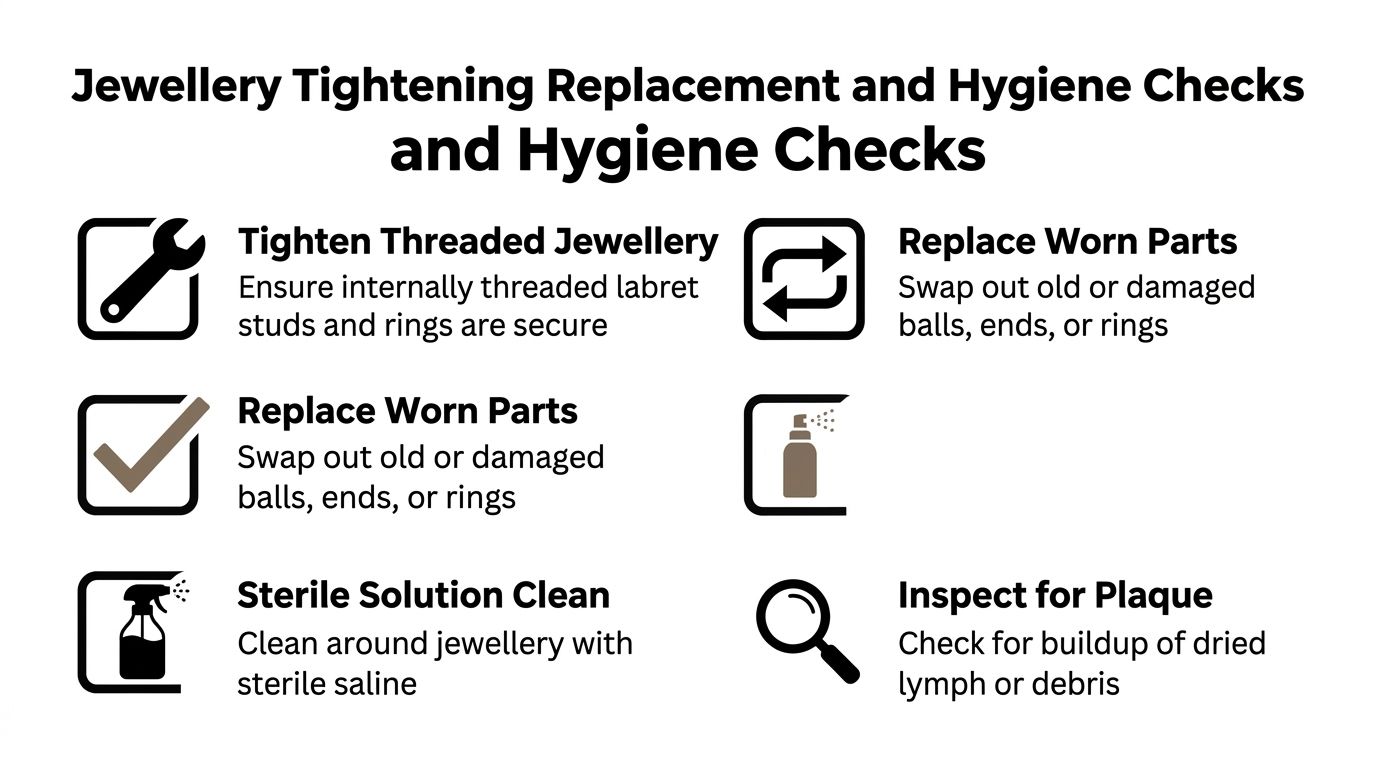
Jewellery can loosen through ordinary movement. Hair, clothing, bedding, and accidental knocks all place stress on threaded ends, rings, and posts. During a check, your piercer examines each component and uses suitable clean or sterile equipment to tighten or replace anything that isn't secure.
A longer initial post may have been necessary to accommodate swelling. Once that swelling reduces, excess length can move more than needed and catch on fabric. A professional may recommend a downsize, but only after checking that the channel and surrounding tissue are ready.
What your piercer assesses
- Security: Threaded ends should sit firmly without being forced or over-tightened.
- Fit: The jewellery should allow appropriate room without pressing into the tissue or swinging excessively.
- Condition: Scratched, damaged, or worn components may need replacement.
- Material: Your piercer may discuss whether implant-grade titanium or solid gold is more suitable for your ongoing wear.
- Surface cleanliness: Dried lymph, product residue, and debris can indicate that your routine needs adjusting.
You can read practical guidance on how to clean piercing jewellery, but avoid turning a follow-up into a DIY tightening session. Small ends can be difficult to grip, and repeated handling introduces friction and contamination.
Hygiene starts before the follow-up
A safe piercing studio should use sterile, single-use needles for piercing. UK local-authority guidance says needles should be examined for imperfections before use and discarded if a defect is found, with sterile packaging or a sterile surface used until immediate use. Body-piercing hygiene guidance sets out these controls clearly.
Infection-control guidance also states that single-use items must not be cleaned and sterilised for another client and that used needles belong in a sharps container immediately after use. Essex Health Protection Unit guidance explains why a follow-up check should sit within a wider system of safe procedure, clean handling, written aftercare, and proper records.
When to Seek Help Before Your Scheduled Appointment
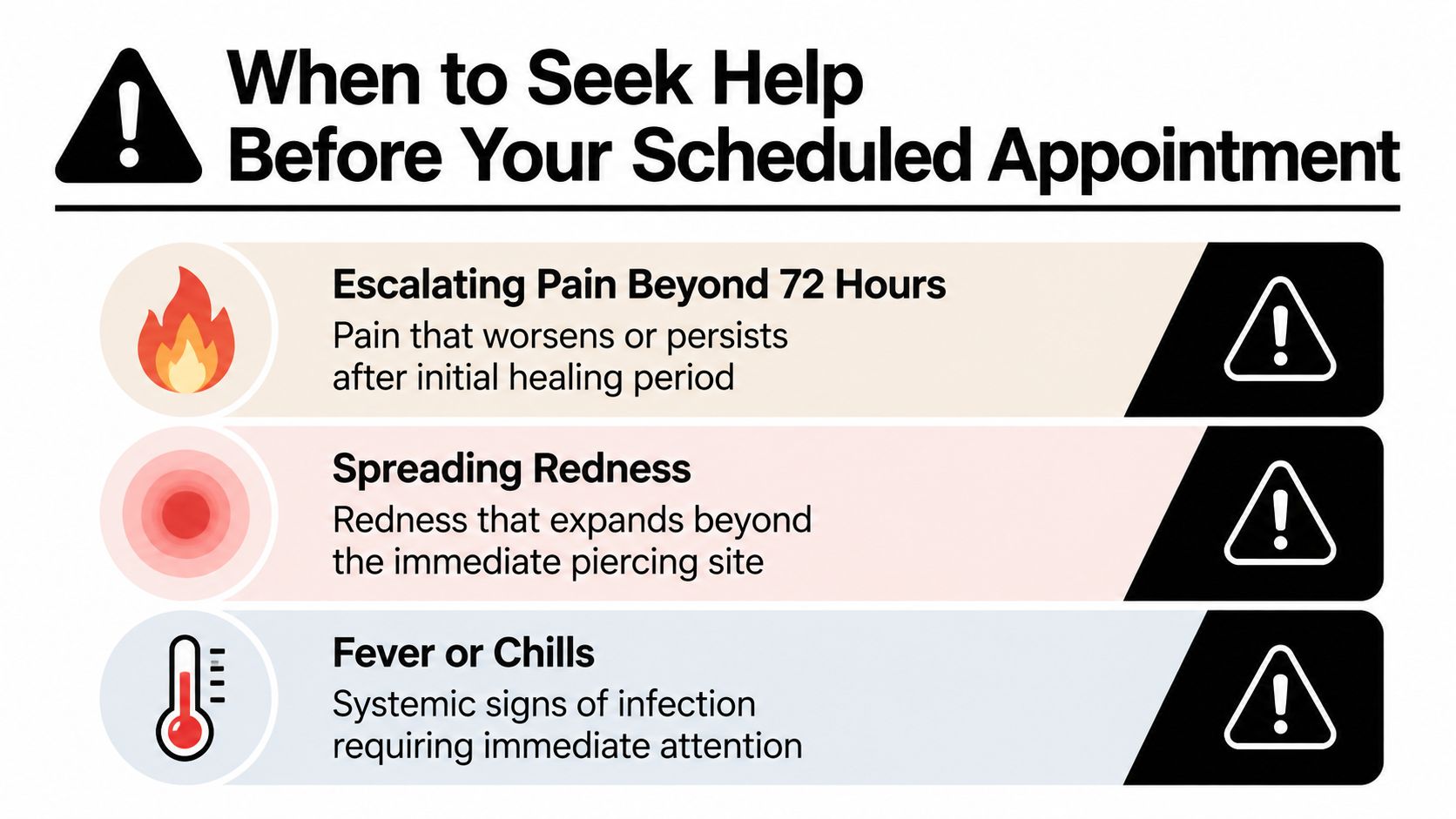
Don't wait for a routine appointment if the piercing is getting worse quickly. A small amount of tenderness or clear dried lymph can occur during healing, but escalating symptoms need a different response.
Contact the studio promptly if jewellery is pressing into the tissue, disappearing beneath the skin, or becoming difficult to move because of swelling. If an end appears embedded, don't force it out and don't remove jewellery without professional or medical advice.
Signs that deserve early attention
- Worsening pain: Pain that keeps increasing rather than gradually settling should be assessed.
- Spreading redness: Redness that moves beyond the immediate piercing area is more concerning than localised irritation.
- Thick or foul-smelling discharge: This needs professional advice, particularly when paired with heat or swelling.
- Significant swelling: Seek urgent medical assessment if swelling affects breathing, eating, or vision.
- Jewellery loss: Contact the studio quickly if jewellery falls out, especially while the channel is still fresh, because reinsertion may become difficult as the opening contracts.
A local council aftercare guide advises clients to seek medical advice if slight redness, swelling, or pain doesn't improve within 24 hours, and says not to remove jewellery from an infected piercing before getting medical guidance. Body-piercing aftercare guidance provides a useful escalation rule, but it doesn't replace an assessment from a GP or urgent-care service when symptoms are severe.
For a fuller symptom guide, use how to tell if a piercing is infected. A clear photo can help a studio decide whether you need an early visit, but a photo isn't a substitute for medical care when you feel seriously unwell.
How to Book Cancel or Reschedule Your Follow Up
The easiest time to arrange your next check is before you leave the studio. Ask whether the appointment has been booked, whether you'll receive an email or text confirmation, and what to do if the healing site changes before the date.
If you haven't booked yet, contact the studio through its available channel. Have your piercing date, placement, jewellery type, and preferred days ready. That information helps the team understand whether you need a routine fit check, an earlier assessment, or advice from a medical professional.
Booking options
- In person: Ask at the desk after your piercing session.
- By phone: Call 01202 9000 50 during opening hours.
- By WhatsApp: Message 07752913846 with your name, piercing location, and a clear description of the concern.
- For non-urgent questions: Send a clear photo if the studio offers photo triage, but explain when the photo was taken and what has changed.
Give the studio as much notice as you can when cancelling or rescheduling. A scheduled slot uses staff time, so early notice lets the team reorganise the diary and offer the appointment to another client. If you've missed a booking, contact the studio rather than assuming you can turn up later.
Digital healthcare has made waiting lists easier to view in some settings, but NHS App waiting-list guidance notes that not all waiting times appear in the app, a list can take 2 weeks to show, and providers may not have supplied the relevant data. A private studio follow-up should still be confirmed directly with the studio.
Your Follow Up Care Checklist for Confident Healing
Use this checklist as a simple record between visits:
- Save the contact details: Keep 01202 9000 50 and 07752913846 somewhere easy to find.
- Confirm the date: Check your booking message and add the appointment to your calendar.
- Observe without overhandling: Look for changes in swelling, colour, discharge, jewellery position, and comfort, but don't twist or play with the jewellery.
- Keep aftercare consistent: Follow the written routine from your piercer and avoid adding harsh products because the piercing looks unsettled.
- Record changes: Note when a bump, snag, swelling change, or jewellery problem began. A clear photo can help you explain the pattern.
- Ask about fit: Mention posts that catch, ends that loosen, or jewellery that feels tight.
- Escalate early: Contact the studio before the appointment if symptoms are worsening, jewellery is embedding, or the site needs urgent review.
- Seek medical help when needed: Severe swelling, systemic illness, or suspected infection requires medical advice rather than waiting for a studio check.
Kent County Council guidance says written aftercare should reinforce verbal advice, clients should be encouraged to return if healing causes concern, and follow-up visits should be recorded. UK skin-piercing aftercare guidance supports the idea that follow-up is a documented part of responsible care, not an informal favour.
You're not expected to diagnose your own piercing. Attend the planned review, keep communication open, and let a qualified piercer assess changes you can't confidently interpret.
Piercing Near Me helps you find professional piercing services in Croydon and Bournemouth, with information on consultations, jewellery, hygiene, and personalised aftercare. Visit Piercing Near Me to explore studios and arrange the follow-up support that fits your healing journey.