
Many individuals hear “antibacterial” and assume antibacterial soap for piercings must be the safest choice. That advice is dangerously incomplete. UK public health and professional piercing guidance treats antibacterial soap as a limited, site-specific option, while saline remains the preferred routine cleaner for most healing piercings.
The problem isn't that every antibacterial product is automatically harmful. The problem is using one product on every piercing, cleaning too often, scrubbing jewellery, or ignoring early signs of dryness and irritation. Your ear lobe, nostril, septum, cartilage, and vertical lip don't present the same healing conditions, so they shouldn't receive identical aftercare.
Why Antibacterial Soap Is Not a Universal Solution
Antibacterial soap sounds logical because it targets bacteria. A fresh piercing, however, is a healing wound, not a household surface. Strong or repeated cleansing can irritate the surrounding skin, strip away protective surface oils, and disturb the tissue that's trying to close and strengthen around the jewellery.
UK guidance has never treated antibacterial soap as a universal healing method. Public Health England guidance from 2016 described mild antibacterial solutions and soaps as an option for ear piercings only, with pharmacist advice and the manufacturer's instructions followed. It also warned against using that approach on nostrils, septums, and vertical lip piercings because those tissues are delicate. The guidance is summarised in this UK piercing aftercare guidance resource.
That distinction matters. A recommendation that may be acceptable for a particular ear piercing can be inappropriate for a nasal or oral site. Generic internet advice removes the most important part of the instruction, the part that tells you where the product may be used and when to stop.
The real aftercare mistake
Clients often make one of three errors:
- They choose strength over compatibility: A product that feels “powerful” can leave delicate tissue dry, tight, or irritated.
- They treat cleaning as sterilisation: Home cleansing supports hygiene, but it doesn't sterilise a healing piercing.
- They keep using a product through irritation: Redness, drying, and discomfort aren't signs that a cleanser is “working harder”.
The British Body Piercing Association places saline first and antibacterial soap second, if it's needed from a pharmacy. Local authority guidance also limits cleaning and turning to no more than twice daily, because repeated detergent exposure and mechanical movement can create microtrauma.
Practical rule: If a cleanser makes the skin increasingly dry, red, tight, or sore, stop using it and ask a pharmacist or experienced piercer for site-specific advice.
The sensible approach is simple. Use saline as the default, keep your hands clean, avoid unnecessary touching, and reserve antibacterial soap for the narrow circumstances where UK guidance and a qualified professional support it.
What UK Public Health Guidance Actually Says
The UK position is more cautious than the typical “use antibacterial soap on every new piercing” recommendation. Public Health England guidance issued in 2016 said that, after cleansing, a pierced area should be dried with fresh disposable paper towel or kitchen roll. For ear piercings only, mild antibacterial solutions and soaps could be used on the wound site, provided a pharmacist advised their use and the manufacturer's instructions were followed. The same advice excluded nostrils, septums, and vertical lip piercings because delicate tissue is more easily damaged. See the published UK public health warning and guidance.
The wording creates a clear decision rule. Antibacterial soap isn't a default product for every piercing. It's a conditional option, restricted by anatomy and moderated by the skin's response.
How professional guidance adds context
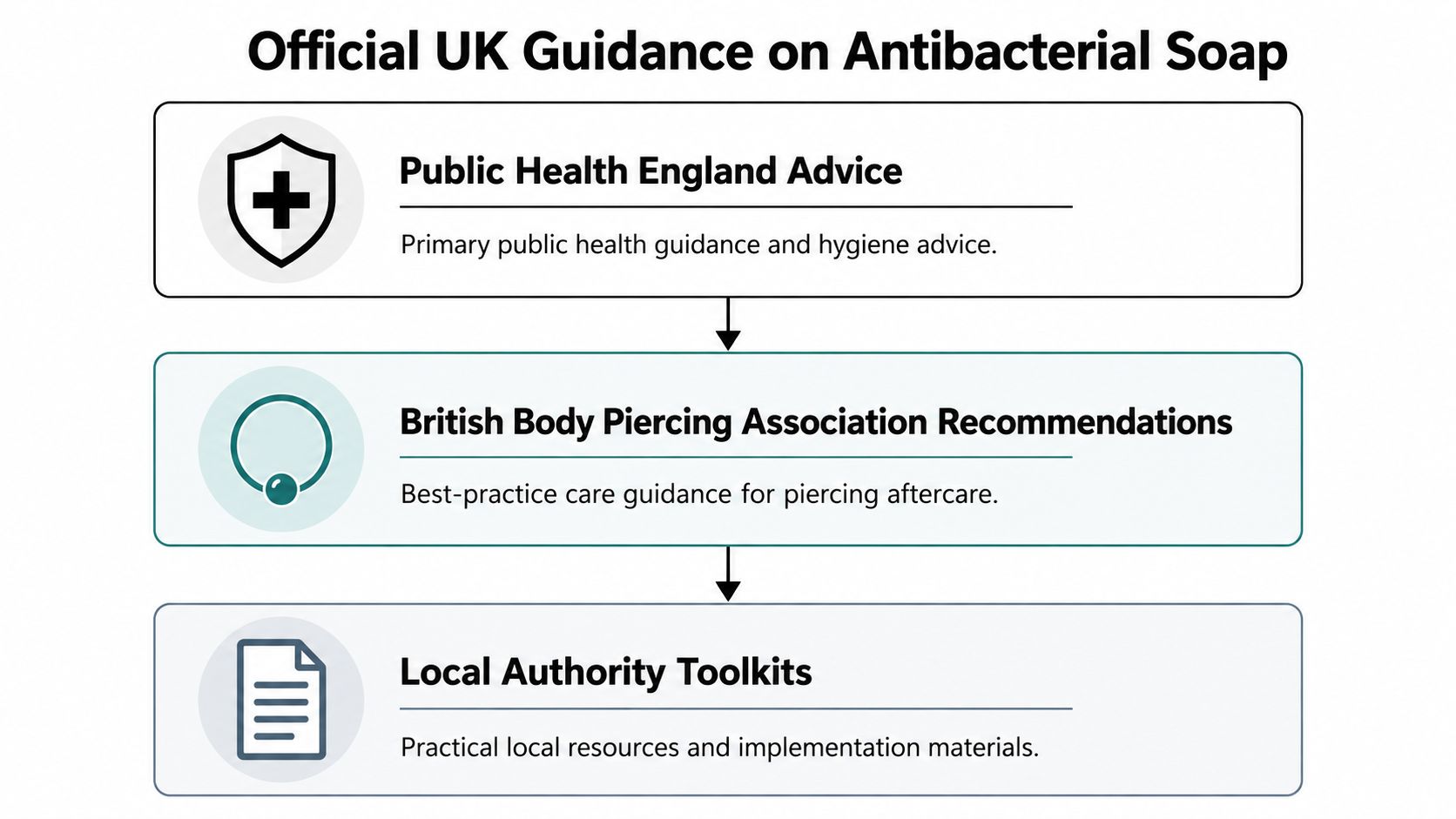
The British Body Piercing Association recommends saline solution to reduce infection risk and describes salt water as more hygienic than unsalted tap water. Antibacterial soap appears as something that may be obtained from a local pharmacy if needed, not as the foundation of routine aftercare. Its guidance also says to clean only twice daily and dry carefully after cleaning. You can review the British Body Piercing Association aftercare recommendations.
Local authority toolkits reinforce the same hierarchy. Ordinary handwashing requires liquid soap, while a piercing wound may be washed with mild antibacterial solutions and soaps only if irritation, redness, or drying doesn't occur. That conditional wording should guide your decision more than product packaging.
A practical reading of the guidance looks like this:
- Wash your hands with soap and water before touching the piercing.
- Use saline as the routine cleaner unless a professional gives a different, site-specific recommendation.
- Consider mild antibacterial soap only for an appropriate ear-piercing situation, with pharmacist advice.
- Never use that advice as permission for nostril, septum, or vertical lip piercings.
- Stop if the area becomes irritated, red, or excessively dry.
This isn't overcautious bureaucracy. It's a recognition that healing tissue responds differently according to location, moisture, friction, and sensitivity. One bottle cannot replace that assessment.
Saline Solution vs Antibacterial Soap
Saline wins as the routine option because it cleans without making antibacterial action the central goal. The British Body Piercing Association advises washing a pierced area with saline to reduce infection risk, noting that salt water helps reduce bacteria levels and is more hygienic than unsalted tap water. Antibacterial soap is presented as a pharmacy option if needed, not the standard first choice. The comparison is supported by this UK professional aftercare guidance on saline and antibacterial soap.
UK guidance also provides a measurable saline preparation: use warm water with 1/4 level teaspoon of preferably sea salt to an egg cup or shot glass of water. That exact ratio gives clients a practical protocol rather than encouraging repeated washing with a detergent because the label says antibacterial.
For further practical information, see this guide to saline spray for piercing aftercare.
| Criteria | Saline Solution | Antibacterial Soap |
|---|---|---|
| Routine role | Preferred cleaner in UK professional guidance | Secondary, conditional option |
| Suitable approach | Supports gentle cleansing of many piercing sites | Site-specific, especially restricted around delicate tissue |
| Preparation or source | UK guidance gives a measurable warm-water and salt mix | Obtain from a pharmacy when advised |
| Main concern | Incorrect salt strength or poor hygiene during preparation | Dryness, irritation, and over-cleansing |
| Use with sensitive sites | Still requires anatomy-aware care | Not suitable for nostrils, septums, or vertical lip piercings under the cited UK guidance |
| Stop point | Stop and seek advice if the area reacts badly | Stop if irritation, redness, or drying develops |
Why the distinction matters
Saline isn't a magic infection treatment, and antibacterial soap isn't automatically a better disinfectant for living tissue. Your aim is to keep the area clean while allowing the body to repair it. Excessive detergent, friction, and product residue can work against that aim.
Use a sterile saline wound wash when possible, or prepare saline carefully according to the stated UK ratio. If you're considering antibacterial soap, ask a pharmacist or your piercer whether it suits the exact piercing site. Don't substitute a general handwash recommendation for personalised aftercare.
Cleaning Frequency and Technique That Works
Over-cleaning is one of the most common ways clients disrupt a new piercing. They clean repeatedly because the area still looks unfamiliar, then twist the jewellery to “work the product in”, scrape off crusts, and wonder why the piercing stays sore.
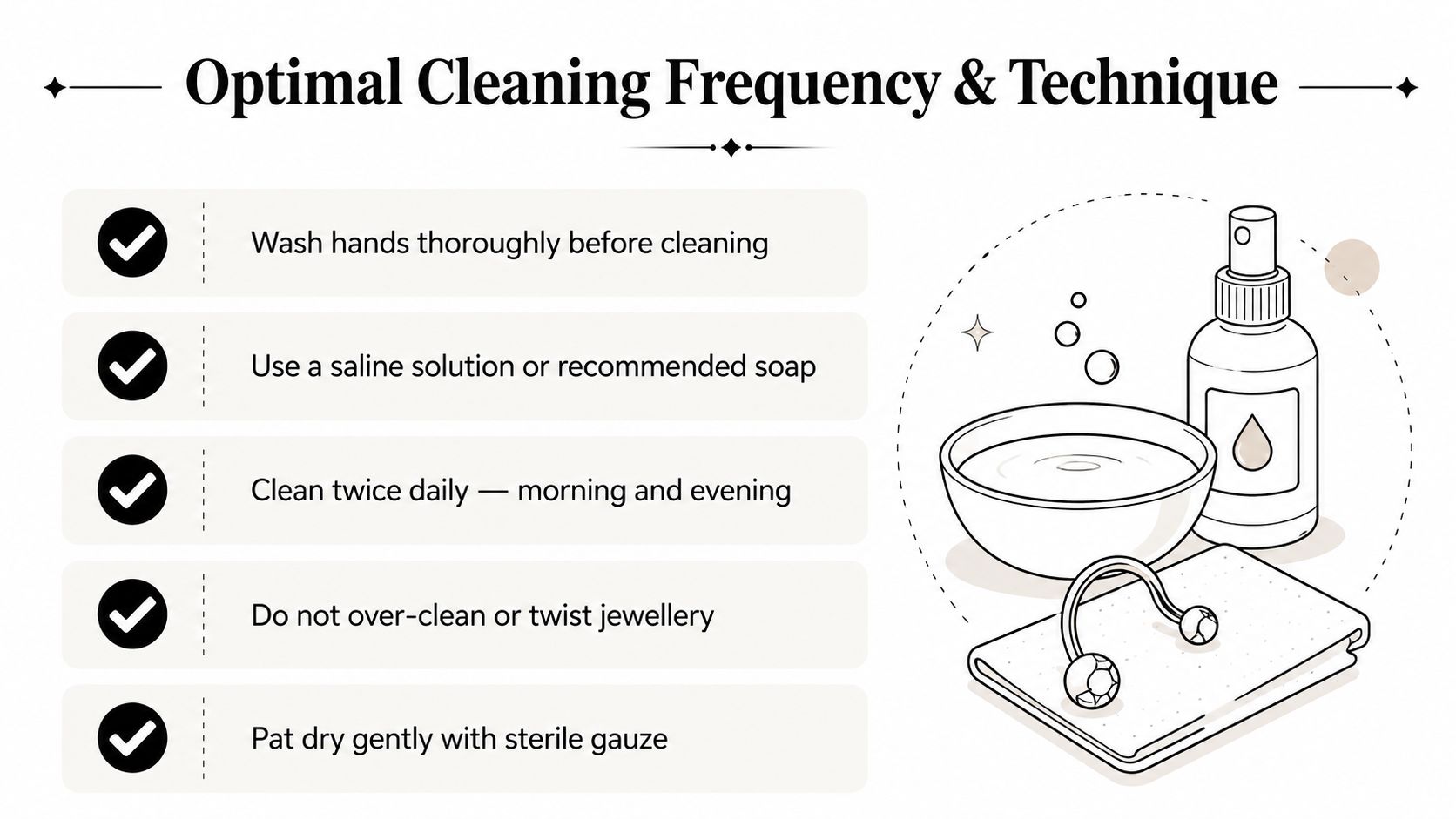
UK local authority aftercare advice recommends washing hands with soap and water before touching a piercing, using liquid soap if cleansing is needed, and limiting cleaning or turning to no more than twice daily. The local authority body-art aftercare leaflet explains why that limit matters: repeated mechanical manipulation and detergent exposure can remove protective surface lipids and crusts too aggressively, increasing microtrauma and prolonging inflammation.
A controlled cleaning method
- Wash your hands thoroughly. Use soap and water before you bring your fingers near the jewellery.
- Choose the recommended solution. Saline is the preferred routine choice. Use antibacterial soap only when it has been recommended for that piercing.
- Apply gently. Let the solution reach the area without scrubbing, picking, or rotating the jewellery.
- Rinse away residue where appropriate. Soap left on the skin can contribute to irritation.
- Dry with fresh disposable material. Pat carefully with fresh paper towel or kitchen roll, rather than rubbing.
- Leave the jewellery alone. Don't turn, pull, or repeatedly check it throughout the day.
UK advice also warns against using a communal towel after cleansing. A shared towel can transfer contamination back to the area you've just cleaned. For more detailed practical steps, use this guide on how to clean a new piercing.
The twice-daily limit isn't permission to rush. It's a safeguard against turning aftercare into repeated trauma. Clean deliberately, dry carefully, and give the tissue uninterrupted time between sessions.
Anatomy-Specific Aftercare for Different Piercing Sites
A healing lobe piercing and a fresh septum piercing may both contain jewellery, but that doesn't make them interchangeable. The tissue, moisture, movement, friction, and exposure differ. Good aftercare follows the anatomy instead of forcing every site into the same routine.
The UK toolkit position is especially clear for nostrils, septums, and vertical lips. Antibacterial products shouldn't be used on those sites, and the toolkit warns that such products can kill beneficial bacteria. It also says antibacterial soap isn't suggested for healing piercings because it may over-dry and irritate the skin. Read the UK body-piercing aftercare toolkit for that site-specific caution.
Ear piercings
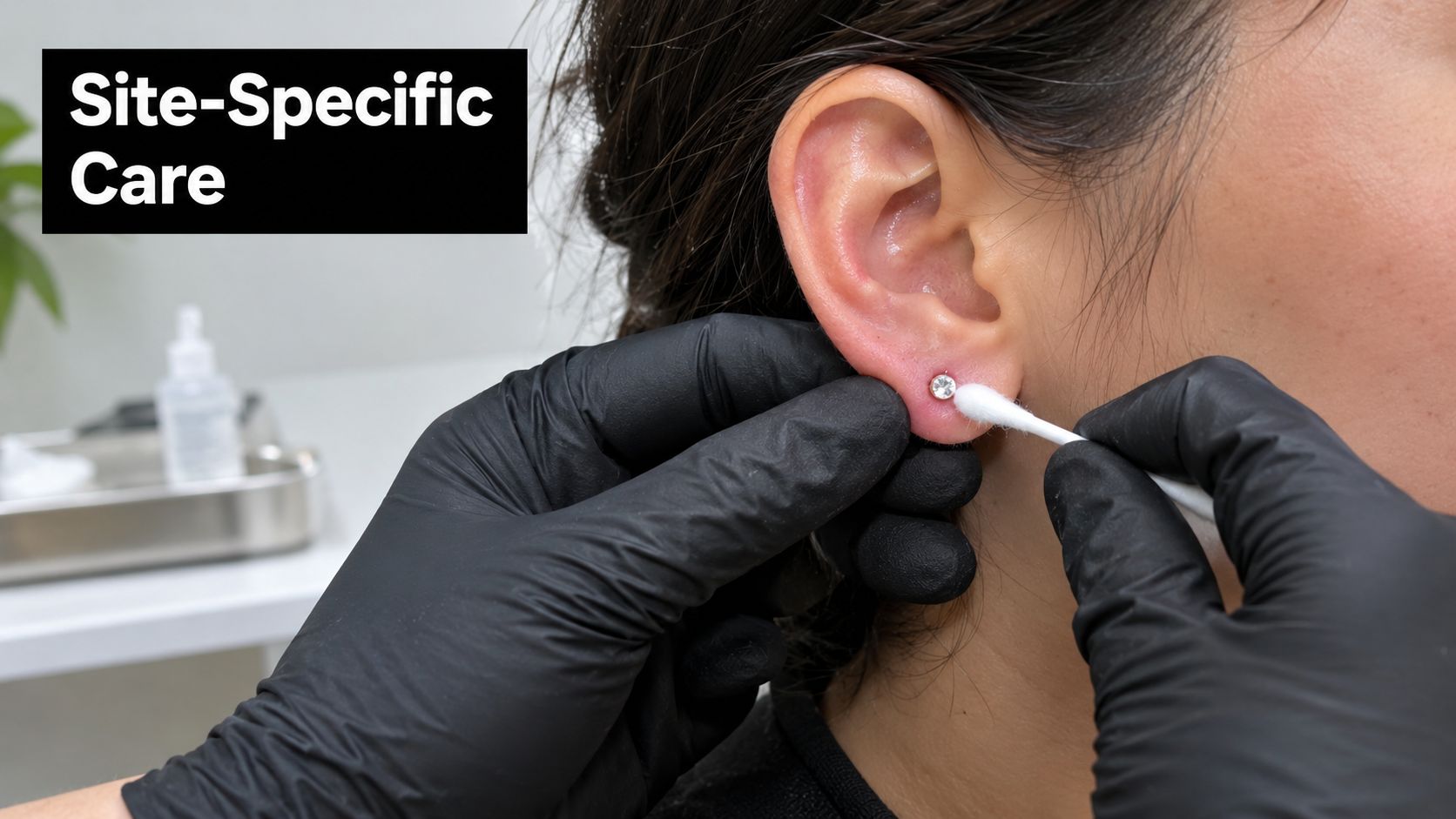
For an ear piercing, mild antibacterial soap may be considered only within the conditions already outlined, including pharmacist advice and strict attention to the product instructions. That doesn't make it compulsory. Saline remains the cleaner I'd normally place first for routine care, especially when the skin looks calm and the piercing is progressing normally.
Cartilage deserves extra respect because pressure from sleeping, headphones, helmets, hair, and phones can create irritation that no cleanser will solve. If the problem is friction, changing the soap won't fix the cause.
Nose and facial sites
Nostrils and septums require a gentler approach. Don't apply antibacterial soap because a friend used it successfully on an ear. The cited UK guidance specifically excludes these sites because delicate tissues are more vulnerable to damage.
Vertical lip piercings also need anatomy-specific care. Avoid broad antiseptic routines and follow professional guidance appropriate to the oral and external parts of the piercing. Local authority advice reinforces the principle that cleansing should be adapted to the piercing location, not selected by a product's strongest-sounding label.
If you're unsure which category your piercing falls into, stop experimenting. Ask the piercer who performed it, or speak with a pharmacist when considering a medicated cleanser.
Your Complete Aftercare Routine
A reliable routine is deliberately boring. The fewer unnecessary variables you introduce, the easier it is to identify what helps and what irritates the piercing.
Morning and evening
Clean the piercing no more than twice daily, following the local authority and professional guidance already described. Start by washing your hands with soap and water. If saline is your chosen cleaner, use a suitable saline solution and apply it without twisting the jewellery or scraping at crusting.
If you prepare saline yourself, follow the UK guidance ratio of 1/4 level teaspoon of preferably sea salt to an egg cup or shot glass of warm water. Use a clean container, don't guess the concentration, and discard the mixture rather than storing it for repeated use. A sterile saline wound wash can simplify the process.
Drying and daily protection
After cleansing, pat the area dry with fresh disposable paper towel or kitchen roll. Don't use a communal towel, and don't rub the piercing dry. Moisture trapped around jewellery can add irritation, while friction can disturb the healing channel.
Keep your routine focused:
- Hands first: Clean hands before every contact.
- Solution second: Choose saline by default, and use antibacterial soap only when a professional has advised it for the site.
- Movement never: Don't twist, pull, or rotate jewellery as part of cleaning.
- Watch the skin: Increasing dryness, redness, or irritation means the product or technique needs review.
- Remove distractions: Keep cosmetics, hair products, dirty headphones, and unnecessary touching away from the area.
Piercing Near Me publishes cleaning and aftercare information and connects clients with piercing services in Croydon and Bournemouth. Its platform can help you find studios offering consultations, walk-ins, and appointments, alongside guidance on jewellery, preparation, and healing.
Your aftercare should feel calm and controlled. If you're repeatedly adding products because the piercing looks unsettled, simplify the routine and get advice instead of escalating the cleansing.
When to Seek Professional Piercing Advice
Stop using an antibacterial cleanser if the piercing becomes increasingly irritated, red, or dry. UK public health guidance treats those changes as a reason to stop, not as evidence that you need more soap. A pharmacist can advise on a suitable product, while an experienced piercer can assess placement, jewellery fit, friction, and cleaning technique.
Seek help promptly if you're worried about persistent symptoms, worsening discomfort, unusual discharge, or swelling that doesn't settle. This guide to recognising a potentially infected piercing can help you decide when professional input is appropriate, but it shouldn't replace medical care when symptoms are severe or rapidly worsening.
Piercing Near Me helps clients access consultations, walk-ins, and appointments at studios in Croydon and Bournemouth. For enquiries, call 01202 9000 50 or message WhatsApp on 07752913846.
Visit Piercing Near Me to find professional piercing services in Croydon and Bournemouth, with personalised placement, jewellery, and aftercare support. If you're unsure whether antibacterial soap is suitable for your piercing, book a consultation before you irritate the healing tissue further.