
A buyer stands in a high-street jeweller, or scrolls between two online listings, trying to understand why one J pendant costs a few pounds while another costs hundreds. Both may look polished in their product photographs, yet the difference can sit in the metal, chain construction, hallmarking, repairability and how well the piece tolerates everyday wear.
A J initial necklace is a small purchase with a surprisingly large number of decisions behind it. You need to choose the right metal, chain length, pendant scale and level of personalisation, then match them to the recipient and the occasion. This guide gives you a practical UK framework, so you can buy a letter J pendant with confidence rather than regret.
Why a J Initial Necklace Deserves a Considered Choice
A J has a natural hook and a clean, recognisable shape. That gives it enough character to stand alone on a fine chain, while its relatively simple silhouette also makes it easy to wear beside a second pendant, a birthstone or a plain chain. It can represent a first name, a surname, a partner, a child or a private association that only the wearer understands.
That emotional flexibility explains why the material choice matters. The UK jewellery market was estimated at USD 5.76 billion in 2024 and is projected to reach USD 9.41 billion by 2033, with a projected 5.7% compound annual growth rate from 2025 to 2033, according to Grand View Research's UK jewellery market analysis. The same source projects the necklace segment to grow at 5.9% over that period, while women represented around 69.2% of UK jewellery demand in 2024.
Those figures don't tell you which J pendant to buy, but they do put the decision in context. Initial necklaces sit within a broad, growing category where shoppers already expect personal meaning, gift suitability and online convenience. The question isn't whether a J necklace can be fashionable. It's whether the particular piece is built for the way it'll be worn.
My practical rule: Buy the cheapest finish only when you want a short-term styling piece. Choose solid gold when the necklace is meant to stay in the family.
A buyer comparing a plated J pendant with a solid-gold alternative should ask four direct questions:
- Metal: Will the finish remain attractive, and could the wearer react to the alloy?
- Chain: Is it fine and delicate, or strong enough for frequent wear?
- Personalisation: Does the letter alone say enough, or would an engraving, stone or second initial make it more meaningful?
- Purpose: Is this a trend-led accessory, a birthday token, an anniversary gift or a future keepsake?
The UK jewellery and watches retail market was estimated at £5,950 million in 2023 and is projected to reach £6,618 million by 2028, a reported growth rate of 4.8%, in Grand View Research's UK market outlook. That report also found that 69% of jewellery shoppers said jewellery is easy to shop for online, so a product page has to give you more than an attractive photograph. Look for metal specifications, chain measurements, clasp details, returns information and a clear explanation of personalisation.
The Three Core Decisions Behind Every J Initial Necklace
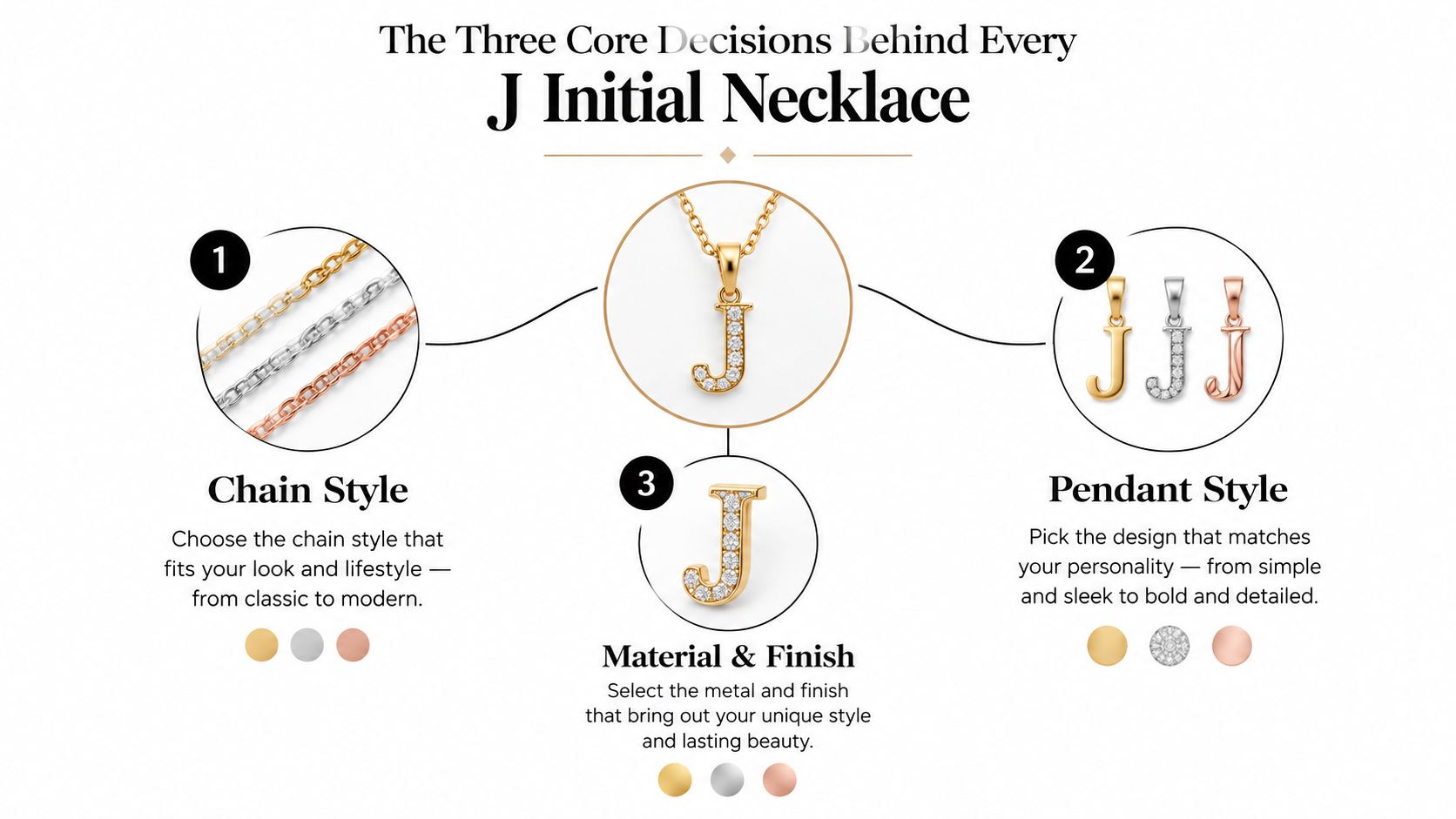
Every J initial necklace comes down to three choices: metal, chain and customisation. Get those right and the style usually follows naturally.
Start with the metal
Think of gold purity like milk. 9ct and 18ct gold are both real gold, but 18ct contains more of the active ingredient, while 9ct combines gold with a larger proportion of other metals for a different balance of colour, hardness and price. Sterling silver is a separate precious metal, while plating is a surface treatment rather than a solid precious-metal construction.
Gold-plated jewellery has a thin gold coating over a base metal. Vermeil has a gold coating over sterling silver, so the foundation is more valuable and generally more suitable for shoppers who want a precious-metal base without paying for solid gold. Two pendants can look almost identical on the day they arrive, but their long-term behaviour can differ sharply once friction, water, sweat and cosmetics enter the picture.
Choose the chain as carefully as the letter
A delicate cable chain gives a classic, easy-to-layer look. A box chain has a squarer profile and can feel more structured, while a snake chain creates a smooth, close-fitting line that puts visual focus on the pendant. For a J initial, I favour a chain that supports the letter without competing with it.
Check the chain width, not just the overall appearance. A UK retailer listing for a 9ct gold J pendant specifies a 0.7 mm chain width, a 46 cm length, a diamond-cut curb chain and a 25-link construction, details recorded in the UK initial jewellery range. A finer chain keeps the necklace light and discreet, but a slightly stronger chain is a better choice for someone who rarely removes jewellery.
Decide how much meaning to add
The plain J is often the strongest option for daily wear. Add a birthstone when the gift marks a month or birth, choose a second initial for a partner or child, or use a small disc when you want the letter to remain the visual centre.
Font choice changes the personality of the necklace. A serif J feels traditional, a clean sans-serif letter looks modern, and a handwritten style feels softer. Ask whether the pendant will be worn alone before selecting a highly decorative letter. Details that look charming in a product photograph can become visually crowded once the necklace is layered.
Comparing Metals From Gold-Plated to 18ct Gold
The price spread in the UK is wide. Current listings range from a £4 gold-plated J pendant to an 18ct yellow-gold diamond Initial J necklace priced at £940, while many mid-market options sit between £29.99 and £320, as reflected in the UK retail examples cited in the market-gap research. Those prices aren't interchangeable. You're paying for the metal content, finish, workmanship, chain quality and the genuine prospect of repair.
| Metal | Typical UK Price | Durability | Tarnish and Skin Notes |
|---|---|---|---|
| Gold-plated | Entry-level, with a cited example at £4 | Suitable for occasional or trend-led wear | The surface can wear through with friction, water, sweat and cosmetics. Base metals may irritate sensitive skin or leave discolouration |
| Gold vermeil | Mid-market | Better foundation than ordinary plating because the base is sterling silver | The gold surface still needs care. Silver beneath can tarnish if exposed to moisture and chemicals |
| Sterling silver | Mid-market, with UK listings included in the £29.99 to £320 spread | Solid precious-metal option, though softer and more prone to surface marks than gold | Can tarnish and may react with sweat or cosmetics. Look for 925 or sterling silver details |
| 9ct gold | Higher mid-market | A strong choice for regular wear and meaningful gifts | More resistant to tarnish than silver, though alloy content can matter to sensitive skin |
| 18ct gold | Fine-jewellery tier, with a cited example at £940 | The strongest choice for a long-term or heirloom purchase | Usually resists tarnish well, but confirm the exact alloy if the wearer has metal sensitivities |
The table is a buying guide, not a promise that every item in a category behaves identically. A well-made clasp and carefully finished pendant can outlast a poorly assembled piece in a more expensive metal. Ask for the alloy details, plating information and care instructions before you compare prices.
UK hallmarking is a useful test of what you're buying. In the UK, sterling silver items above 7.78 g and gold items above 1 g must be hallmarked, according to the hallmarking information associated with a UK J initial necklace listing. A hallmark helps confirm metal fineness and legal compliance, particularly when a necklace is heavy enough to cross the relevant threshold.
My recommendation: Choose plated gold for an outfit-led piece, vermeil or sterling silver for accessible everyday value, 9ct gold for a lasting gift, and 18ct gold when the necklace is intended to become an heirloom.
Vermeil is the sensible middle ground for shoppers who want a gold appearance and a precious-metal base. Sterling silver is better if the recipient prefers a cooler tone or frequently changes their jewellery. For anyone prone to skin reactions, don't rely on the colour alone. Check the full material description and ask the seller which metals touch the skin.
For mixed-metal outfits, a J pendant doesn't have to match every other piece perfectly. A considered combination of silver and gold can make a simple initial look more contemporary. Use this guide to mixed silver and gold jewellery for ideas, but keep the J as the anchor rather than adding several competing focal points.
Chain Lengths and Pendant Sizes That Flatter
Chain length changes the entire impression of a J initial. A shorter necklace feels neat and deliberate, while a longer one gives the letter more space and makes layering easier.
Use the neckline first:
- 40 cm: Sits around the collarbone and works well with open crew necks, boat necks and simple evening tops.
- 45 cm: Falls a little lower and is the safest everyday choice for many wardrobes.
- 50 cm: Reaches towards the mid-chest and works particularly well as the lower piece in a layered arrangement.
- 60 cm or longer: Creates a statement line over knitwear, shirts and higher necklines.
A 10 to 15 mm J usually looks balanced on a single delicate chain. A pendant of 20 mm or more makes a stronger statement, while an initial under 8 mm can lose legibility when paired with a very fine 1 mm chain. These proportions are useful starting points, but the letter's font and weight matter just as much as its measurement.
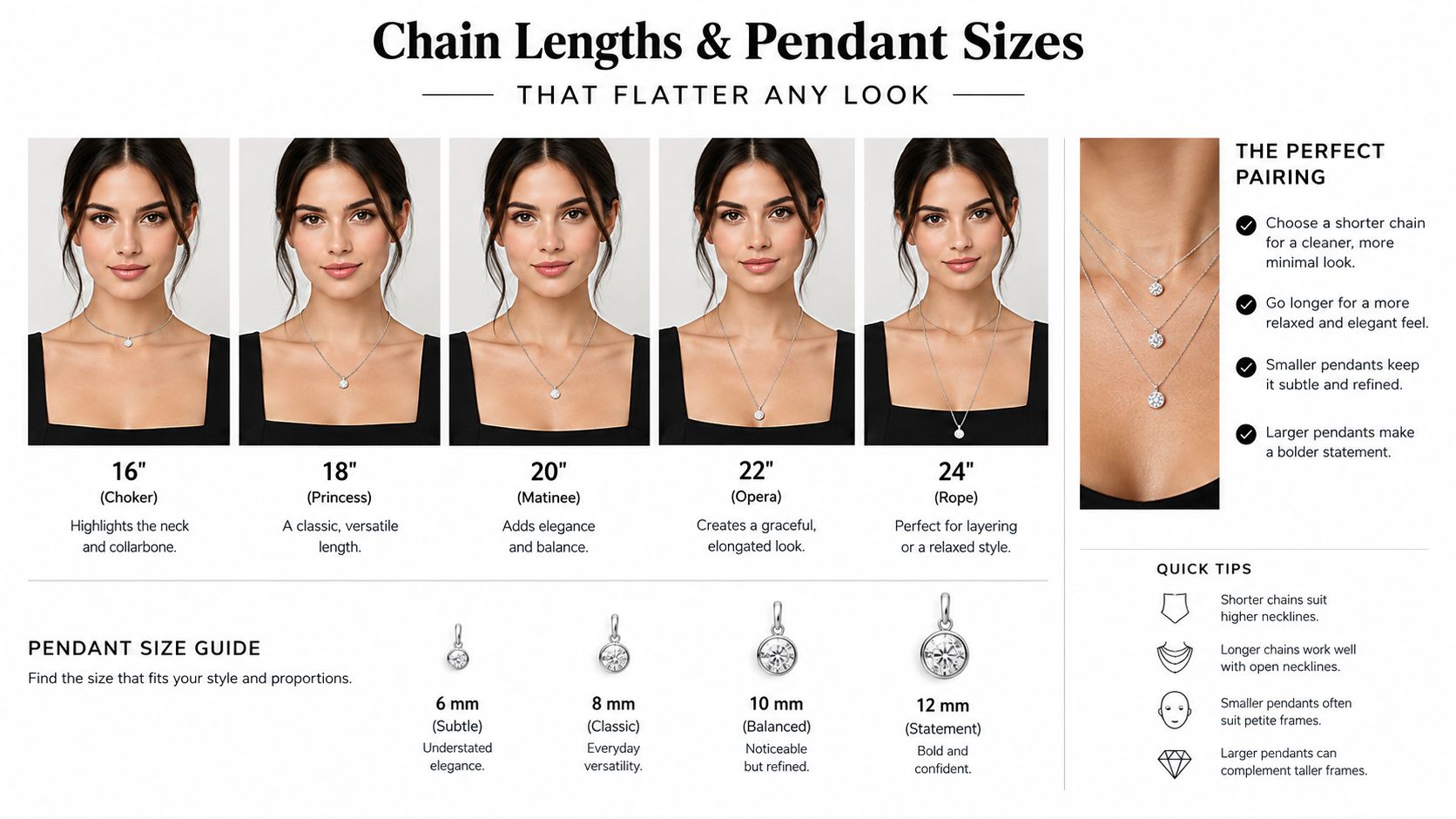
Use a simple frame rule if you can't measure the recipient. A shorter torso usually looks more balanced with a shorter chain and smaller pendant, while a longer frame can carry a 50 cm chain comfortably. For a V-neck, choose a length that follows the neckline or sits just above its point. For a button-down shirt, a mid-length chain can disappear between the buttons, so a shorter or longer option is usually more effective.
Chain thickness affects drape. Fine chains sit lightly and move more freely, while thicker chains hold their line and support larger initials. A spring-ring clasp can work well on a light necklace, but I prefer a lobster clasp for a piece intended for frequent wear because it feels easier to operate and gives a more secure fastening.
Customisation and Gifting Angles That Work
A standalone J initial is the cleanest choice when the recipient has a minimal style. It also leaves room for the wearer to add meaning later. A second initial, tiny disc or birthstone can turn the necklace into a modular set, especially if the chain has enough length and the extra charm doesn't crowd the original pendant.
Personalisation works best when it follows the occasion. An engraved back plate can carry a date, short message or location, while the front remains simple. Solid gold and sterling silver usually give an engraver a more dependable surface than a plated pendant. Deep engraving can cut through a thin gold layer, exposing the base metal and making the result look unfinished sooner.
Customisable jewellery is moving towards collectable systems rather than one-off pendants. Harper's Bazaar UK's charm necklace coverage describes a market where buyers can add initials, numbers, zodiac symbols and other charms to a necklace system. That makes a J a practical first purchase for someone who may later want to build a personal collection.
| Price Tier | Typical Metal | Best For | Lead Time |
|---|---|---|---|
| Entry-level | Gold-plated or simple silver finishes | Teen birthdays, stocking fillers and trend-led gifts | Usually standard dispatch, unless engraving is added |
| Mid-market | Vermeil, sterling silver or lighter gold options | Thoughtful anniversaries, graduations and personal milestones | Allow extra time for engraving or added stones |
| Fine jewellery | 9ct or 18ct gold | Significant anniversaries, new-mum gifts and keepsakes | Confirm production and engraving timing before ordering |
For a bridesmaid or graduation gift, a matching J style can feel personal without being overly formal. For a new parent, the letter can represent the child while remaining wearable with work clothes and casual outfits. A milestone purchase deserves more attention to chain strength, hallmarking, warranty and repair options than a spontaneous fashion buy.
If you're considering a solid-gold piece for a piercing-related jewellery collection or a long-term gift, compare construction and material guidance in this solid-gold piercing jewellery guide. An in-store consultation is worthwhile when you're choosing between a plain letter and a more elaborate design, particularly if the recipient has never worn a pendant before.
Care Habits That Keep the Pendant Looking New
Good care is mostly about timing. Put the necklace on after perfume, moisturiser, make-up and hair products have dried, then remove it before showering, swimming or exercising. Chlorine and sweat can accelerate silver tarnish, while repeated chemical exposure and friction can shorten the life of gold plating.
A simple routine by material
- Gold-plated pieces: Keep them dry and wipe them with a soft cloth after wear. Don't use abrasive polish, which can remove the surface finish.
- Vermeil: Rinse gently with lukewarm water and mild soap when needed, then dry completely. Avoid soaking or scrubbing the pendant.
- Sterling silver: Use a dedicated silver cloth and store the necklace with an anti-tarnish strip. Keep it away from damp bathrooms.
- Solid gold: A soft polishing cloth is usually enough for light marks. Inspect the clasp and chain rather than waiting for a break.
Store the J pendant in a soft pouch or lined jewellery box, separately from chains that could scratch or tangle it. Lay the chain flat when possible, fasten the clasp before storage and dry the necklace fully before putting it away.
The jewellery cleaning guidance offers further practical advice on gentle cleaning methods. The same habits apply here: last on, first off, keep the piece dry and inspect the clasp regularly. A quick monthly check can catch a loose jump ring or weakened fastening before the necklace disappears down a plughole.
Choosing Your J Initial Necklace With Confidence
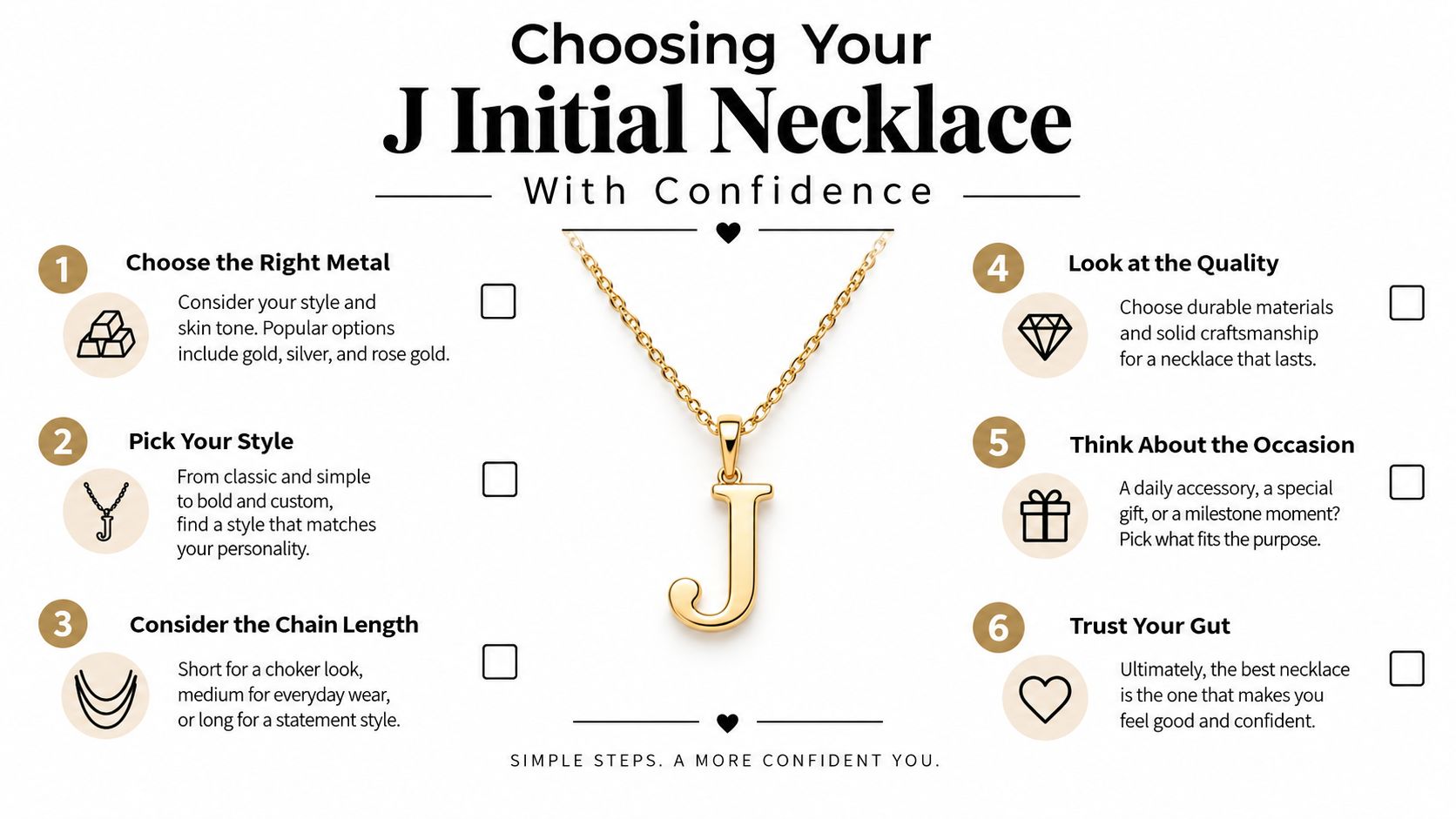
Make the decision in this order, because each answer affects the next.
1. Set the metal expectation
Decide whether the wearer prefers yellow gold, white metal or a mixed-metal look. Then consider skin sensitivity and lifestyle. Someone who sleeps, showers and exercises in their jewellery needs a more durable construction than someone who changes accessories for each outfit.
2. Match the chain to the wardrobe
Look at the recipient's usual necklines. A 45 cm chain is a dependable everyday starting point, while 50 cm gives a layered outfit more breathing room. If you're buying without asking, choose a versatile length and check whether the seller offers adjustment options.
3. Choose the letter's visual weight
A plain J is discreet and flexible. A larger initial becomes the main accessory, while a tiny letter suits a minimalist wearer. Make sure the font remains legible at the size you're buying, especially if the chain is exceptionally fine.
4. Decide whether to personalise further
Add a birthstone for a birthday or new-baby gift, a second initial for family meaning, or an engraving for a private message. Keep the front uncluttered if the necklace will be worn every day.
5. Match the spend to the purpose
The UK market includes very low-cost plated pieces, mid-market options and fine-jewellery designs. A cited retail spread runs from £4 to £940, while many listings sit in the £29.99 to £320 range, so compare what the price buys rather than assuming a higher figure automatically means better design.
Before you buy, ask for the exact metal, chain width, pendant dimensions, clasp type, hallmark information and care instructions. If you're still torn between two J pendants, use the brand's live chat or book an in-person consultation so someone can compare the pieces against your intended use. For phone contact, 01202 9000 50 is displayed in a familiar UK format, while WhatsApp is available on 07752913846. GOV.UK's phone-number guidance supports readable spacing and familiar domestic formatting, and UK area-code guidance explains that landline grouping is convention-based.
Piercing Near Me helps customers explore jewellery choices and book consultations at professional studios in Croydon and Bournemouth, including guidance on suitable solid-gold and implant-grade options. Visit Piercing Near Me to arrange personalised advice before choosing your J initial necklace or planning a related jewellery appointment.