
A professional tongue piercing in the UK typically costs £35 to £55, covering the procedure and basic jewellery at quality studios. That's the practical starting range for anyone comparing reputable piercing studios.
You've probably searched online, found one listing that looks surprisingly cheap, then opened another studio's price list and wondered why the total is much higher. The difference often isn't just the piercer's fee. One studio may charge separately for the barbell, while another includes implant-grade jewellery, sterile equipment and aftercare in the quoted price.
That makes the advertised tongue pierced price only part of the decision. The sensible comparison is the all-in cost, alongside the jewellery specification, hygiene standards and support you'll receive if your tongue needs a follow-up check.
What Is the Typical Tongue Pierced Price in the UK?
A first-time client called recently after finding several different prices online. One local listing showed a low entry fee, another quoted a package price, and a central studio charged more but included the initial barbell and an aftercare kit. None of those prices was automatically wrong. They were selling different packages.
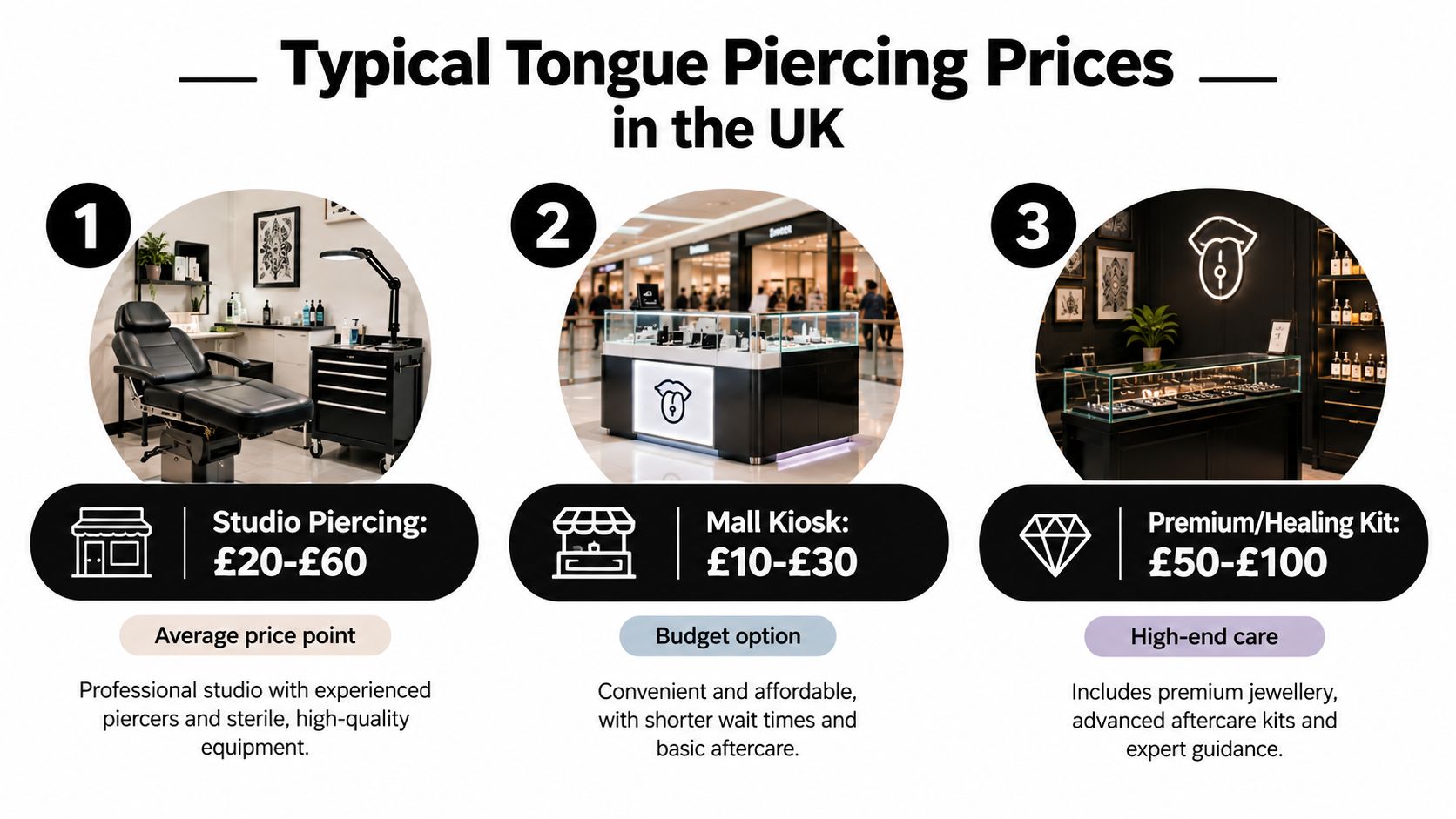
Published UK studio examples show £35 at multiple locations, £38.50 at one studio, £40 in Farnham, £50 in Canterbury and Worthing, and £55 in Soho. These examples create a spread of at least £20 between different UK markets, as shown by UK piercing price examples. Location, jewellery and what the studio bundles into the appointment all affect the final bill.
What the headline price should represent
At a reputable studio, you're paying for more than a few seconds with a needle. The service should involve an anatomy assessment, accurate placement, sterile single-use equipment, suitable initial jewellery and clear aftercare guidance. Some studios also include saline or an aftercare kit, while others treat those as separate purchases.
Older UK price lists have shown tongue piercing fees of £20, while more current listings commonly sit around the mid-£30s to £50 range. That shift doesn't prove that every expensive studio offers better work, but it does show why an old price list or a bargain advert may not reflect the current cost of a properly equipped appointment.
You can use a UK piercing price guide to compare the general structure of piercing fees, but always check the individual studio's own terms before booking. Ask whether the displayed price includes the jewellery, whether the jewellery is implant-grade and whether a follow-up sizing check is included.
Practical rule: Compare the final price for a safe, correctly sized tongue barbell, not the smallest number on a search result.
A quote that falls below the usual professional range deserves questions, not automatic enthusiasm. It may be a genuine promotion, but it may also exclude the jewellery or aftercare you'll need before leaving the studio.
Factors That Influence Your Total Cost
The final bill usually reflects several separate choices. Studio location is one of them. A studio in a busy central area may have higher rent and operating costs than one outside the city centre, so prices can differ even when the procedure is similar. The price examples above show that variation across UK locations.
The jewellery specification matters just as much. A studio may provide implant-grade titanium with internally threaded ends as standard, while another may advertise a basic piercing fee and ask you to select and pay for jewellery separately. Decorative ends, upgraded materials and replacement jewellery can all change what you spend.
Jewellery changes the calculation
A 2025 industry estimate valued the UK body piercing jewellery market at around USD 0.36 billion, representing approximately 5.25% of global sales, according to the body piercing jewellery market estimate. That wider market helps explain why jewellery isn't a minor accessory in the price. It's a central part of the service and directly affects the quality and suitability of the initial piercing.
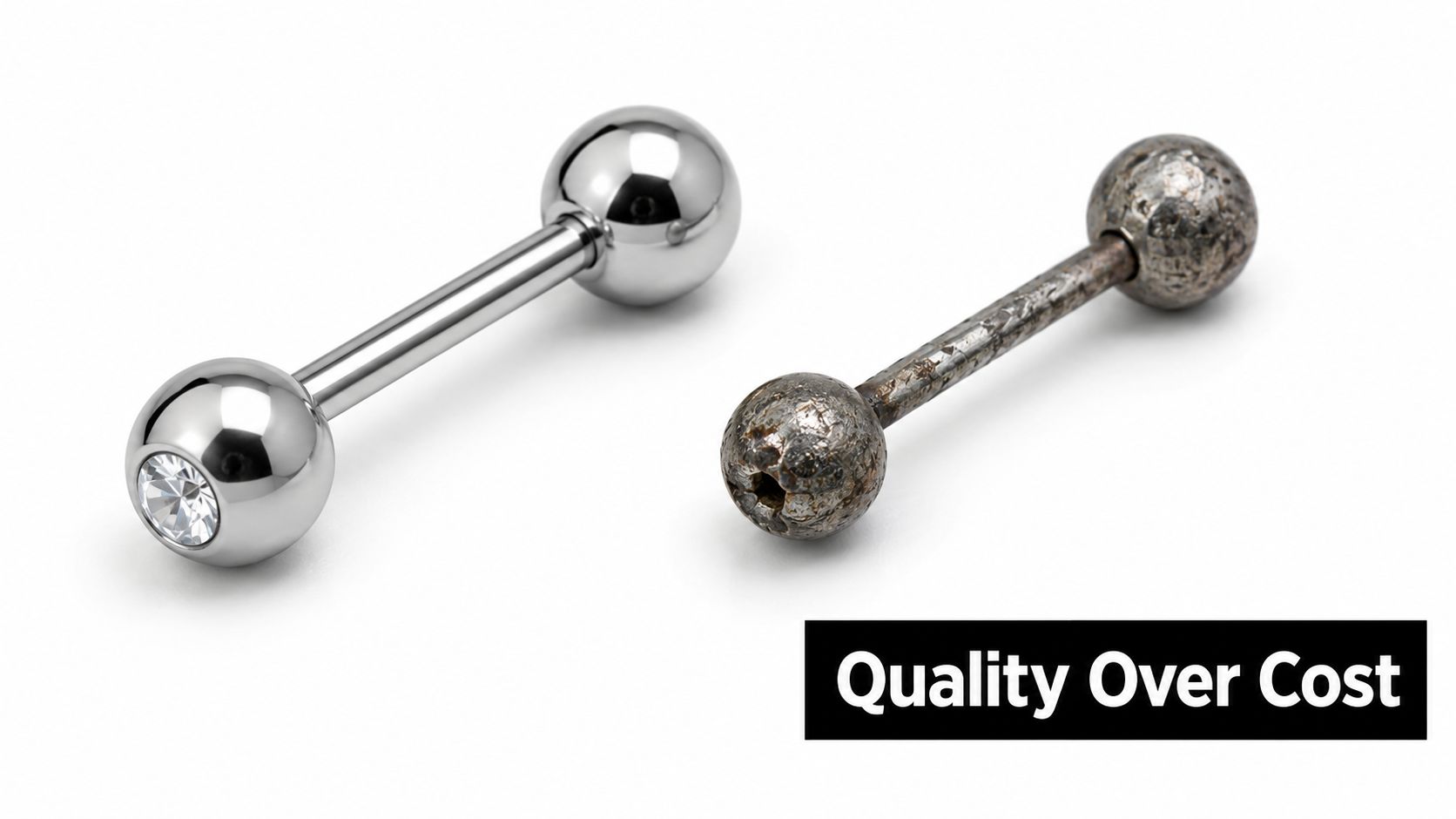
Medical-grade titanium and internally threaded jewellery usually command a higher price than an unspecified bar. That premium can be sensible because the jewellery sits in a fresh oral piercing and must accommodate early swelling without creating unnecessary pressure or movement.
Experience and appointment standards
A trained piercer also spends time assessing whether your anatomy is suitable, identifying a safe placement and selecting an appropriate bar length. A studio with experienced staff may charge more because it has invested in sterile supplies, training, insurance, premises and consultation time.
Many studios include the consultation within the appointment rather than listing it as a separate charge. Others may charge for a consultation or require a jewellery purchase before the piercing. Read the booking conditions carefully, especially if the studio has a non-refundable deposit.
The clearest price lists separate the service into understandable parts:
| Price element | What to check |
|---|---|
| Piercing fee | Does it cover the procedure and consultation? |
| Initial jewellery | Is the barbell included, and what material is it? |
| Aftercare | Are saline or oral-care products supplied? |
| Follow-up | Is a fit check or bar change included? |
A higher total can represent a more complete package. A lower total can still be fair, but only if you know exactly what you'll need to add.
Understanding What Is Included in the Fee
Two studios can advertise different prices and leave you with almost the same final cost. The first might list a piercing fee and charge for jewellery at checkout. The second might quote one higher amount that already includes a medical-grade barbell and an aftercare kit.
One UK studio states that oral piercing prices consist of the piercing fee plus the jewellery cost, with tongue piercing from £20 and jewellery from an additional £20. Another lists tongue piercing from £50, including medical-grade internally threaded jewellery, sterile packed gloves and a complete aftercare cleaning kit, as shown in this UK piercing price comparison.
Compare like with like
A low advertised fee isn't a useful saving if you still need to buy the correct jewellery before the appointment. Ask these questions before paying a deposit:
- Is the initial barbell included? If not, ask for the full jewellery range and the expected final total.
- What material is supplied? Look for implant-grade titanium or another clearly specified suitable material, rather than a vague description such as “standard steel”.
- Does the jewellery accommodate swelling? The first bar needs appropriate length, and your piercer should explain what happens once swelling reduces.
- What aftercare comes with the appointment? Written instructions are important, and some studios include saline or a cleaning kit.
- Is a follow-up check included? Ask whether a later fit assessment or bar change carries another fee.
The guide to titanium piercing jewellery explains why the material specification deserves attention when you compare products. Titanium is often selected for fresh piercings because reputable studios can specify its grade and finish rather than relying on an unclear metal description.
The all-in figure is the useful figure
Suppose Studio A quotes a low piercing fee but excludes jewellery and aftercare. Studio B charges more upfront and includes an internally threaded titanium bar, sterile supplies and cleaning guidance. Studio B may be better value even before you consider convenience, because you've already paid for the core items needed for a responsible appointment.
Don't treat every extra as an unnecessary upsell. Some upgrades are cosmetic, such as a decorative end. Others affect the suitability of the jewellery itself. Your priority should be a correctly fitted, high-quality initial bar before you spend more on appearance.
A transparent studio should be able to tell you what you'll pay before the needle is opened.
If a price list doesn't make that clear, contact the studio and request an itemised quote. The answer you receive tells you a lot about how organised the booking process will be.
Why Cheaper Options Can Cost More in the Long Run
The cheapest tongue piercing is rarely the cheapest complete experience. A low fee may leave you paying separately for jewellery, aftercare products or a later bar change. Worse, poor placement, unsuitable metal or inadequate instructions can create problems that cost more to resolve than choosing a competent studio at the start.
Oral piercings need particular care because the mouth is involved in eating, speaking and daily hygiene. UK local-government guidance warns that oral piercing complications can become serious, with infection requiring medical advice and, in some cases, urgent support, antibiotics and strict aftercare. Torbay Council's oral piercing aftercare guidance sets out why safety and aftercare deserve a place in your budget.
Use this booking process
First, request the all-in price. Ask for the procedure, initial jewellery, aftercare supplies and any expected follow-up to be listed separately. You want clarity before you arrive, not a surprise at reception.
Next, confirm the jewellery. Ask whether the bar is implant-grade titanium, whether it's internally threaded and whether the piercer will choose the length after assessing your anatomy. Don't accept an unspecified metal just because it keeps the price low.
Then, check the studio's hygiene process. The appointment should use sterile, single-use needles and appropriate gloves. A clean environment and a clear explanation of the procedure are basic signs of professional practice, not luxury extras.
Finally, plan for the healing stage. Ask when the piercer expects to review the jewellery and whether that appointment is included. Leaving an unsuitable bar in place can create avoidable irritation and may increase contact with teeth or gums.
Know when price should stop being the deciding factor
A reputable studio won't promise that complications are impossible. It will reduce avoidable risks by checking your anatomy, using suitable jewellery and giving you practical aftercare instructions. That is what the extra spend should buy.
Don't book purely because a price looks cheap. Book when you understand what the fee covers and you feel comfortable asking questions about the needle, jewellery, aftercare and follow-up.
How to Budget for Your Tongue Piercing
Start with the quoted all-in price, then identify anything the studio excludes. Your budget should cover the appointment itself, suitable initial jewellery and the basic products you'll use while the piercing settles. If the studio separates these costs, add them together before comparing it with a bundled package.
Build your personal checklist
Write down the answers to these questions:
- What is the complete appointment price? Include the piercing and initial barbell.
- What material will be used? Ask for a clear jewellery specification.
- Is aftercare supplied? Check whether the studio provides saline, an oral rinse recommendation or written instructions.
- Will I need a later jewellery change? Ask whether the follow-up is included or charged separately.
- What happens if the piercer advises against the piercing? Confirm the studio's policy before paying a deposit.
You should also allow room in your budget for a jewellery upgrade if the standard option doesn't suit you. Decorative ends are optional, but the quality and correct fit of the initial barbell are not areas where I'd recommend cutting corners.
Consider the practical cost of healing
A tongue piercing can affect your routine while it heals. You may prefer softer foods and need suitable oral-care products, so plan for those purchases rather than treating them as unexpected expenses. You'll also need time for careful cleaning and for a professional review if the jewellery needs adjusting.
Age and consent requirements can affect whether a booking can go ahead. A UK body-piercing code of practice states that clients must be over 18 for body piercings other than ear, nose, lip, eyebrow or navel piercings, with specific requirements for younger clients and listed piercings. Council guidance differs in how it describes consent and local practice, so confirm the policy with the studio before making arrangements.
For under-16s, Leeds City Council's skin-piercing guidance explains that there is no statutory age of consent for cosmetic body piercing, while also outlining legal limits and the inability of a child to consent to an indecent assault. That's a reason to check the studio's own policy rather than rely on a general online price list.
Aftercare and Additional Costs to Expect
The price you pay on piercing day isn't necessarily the end of your spending. You may need an alcohol-free oral rinse or saline, and you might later pay for a shorter replacement bar once the initial swelling has reduced. Ask whether the studio supplies these products or expects you to buy them separately.
Keep aftercare simple
The NHS guidance for infected piercings advises cleaning new piercings twice a day with warm salty water, avoiding picking crusting and not twisting jewellery while it's dry. It also recommends drying with a clean paper towel, avoiding swimming for the first 24 hours and avoiding oral sex until the piercing has healed.
Follow the advice your piercer gives you, but don't compensate for uncertainty by constantly touching or cleaning the jewellery. Excessive handling can irritate the site. Use clean products, maintain good oral hygiene and contact a healthcare professional if you notice worsening soreness, inflammation or yellowish discharge.
Healing guidance varies. UK NHS-linked advice says new jewellery should remain in place for at least 6 weeks before changing it, while other official UK guidance gives oral piercing healing estimates ranging from about 2 to 4 weeks or 4 to 8 weeks, depending on the source. Use the tongue piercing healing guide as preparation, but let your piercer assess whether your individual piercing is ready for a jewellery change.
Don't budget only for the moment you get pierced. Budget for the jewellery, care and professional support that help you heal properly.
If you're unsure about a quote, contact the studio before booking and ask for the complete figure. Piercing Near Me offers guidance for finding professional piercing services, including studios in Croydon and Bournemouth, with information about jewellery, consultations and aftercare. Visit Piercing Near Me, or call 01202 900050 (Bournemouth) / 020 8686 7730 (Croydon) and WhatsApp 07752 913846 (Bournemouth) / 07902 490584 (Croydon) to discuss your options before arranging an appointment.