

So, you’ve got a new tongue piercing, or you're thinking about getting one. The big question on everyone's mind is always, "How long until this thing is healed?" It's a great question, and the answer has two parts. You'll be over the worst of it in about 4 to 6 weeks, but for the piercing to be truly, fully healed from the inside out, you're looking at closer to 8 weeks.
Your Tongue Piercing Healing Timeline at a Glance
Getting your tongue pierced is a big deal, and knowing what to expect during the healing process makes everything go a lot smoother. It's not just a waiting game; it's an active process where your body is building a brand new tunnel of tissue (called a fistula). Think of it less like a countdown and more like a series of stages.
Here at Timebomb Tattoo & Piercing, we've guided countless clients through this journey. We see our job as not just doing the piercing, but making sure you have the knowledge and support to heal it perfectly. When you walk out of our studio, our partnership is just beginning.
Key Healing Milestones
To take the guesswork out of it, we've broken down the healing process into a few key phases. Knowing what’s normal (and what’s not) is half the battle.
- The First 1-2 Weeks: Swelling and Soreness: No getting around it, this is the toughest part. Your tongue will swell up quite a bit, making talking and eating feel strange. Expect some tenderness and be prepared to take it easy.
- Weeks 2-4: The Swelling Goes Down: You'll notice a huge improvement as the swelling subsides. This is a crucial window to come back and see your piercer for a shorter barbell. That initial long bar is essential for accommodating the swelling, but leaving it in too long can risk chipping your teeth.
- Weeks 4-8: Maturing and Final Healing: Your piercing will probably look and feel pretty good by now, but don't be fooled! The tissue inside is still getting stronger and solidifying. Sticking with your aftercare routine right to the end is vital for a happy, healthy piercing.
Healing an oral piercing is a team effort between you and your body, with your piercer as the coach. The absolute best thing you can do is follow your aftercare instructions to the letter—it’s the surest way to avoid problems and keep your healing on track.
It can feel like a lot to remember, but you're never on your own. If you have any worries at all, big or small, our expert team is here to help. Just give us a call on 01202 900050 (Bournemouth) / 020 8686 7730 (Croydon) or drop a message to our WhatsApp at 07752 913846 (Bournemouth) / 07902 490584 (Croydon) for quick, professional advice.
The Week-By-Week Healing Stages Explained
Knowing what to expect as your new tongue piercing heals can make the whole process feel much less mysterious. Think of it like this: your body is working hard to create a stable, healthy tunnel of tissue (called a fistula) around the jewellery. Understanding the stages of this journey helps you spot if things are going well and know when to get help if they aren't.
This visual timeline gives you a great overview of the two main phases: the initial recovery and the full maturation of the piercing.
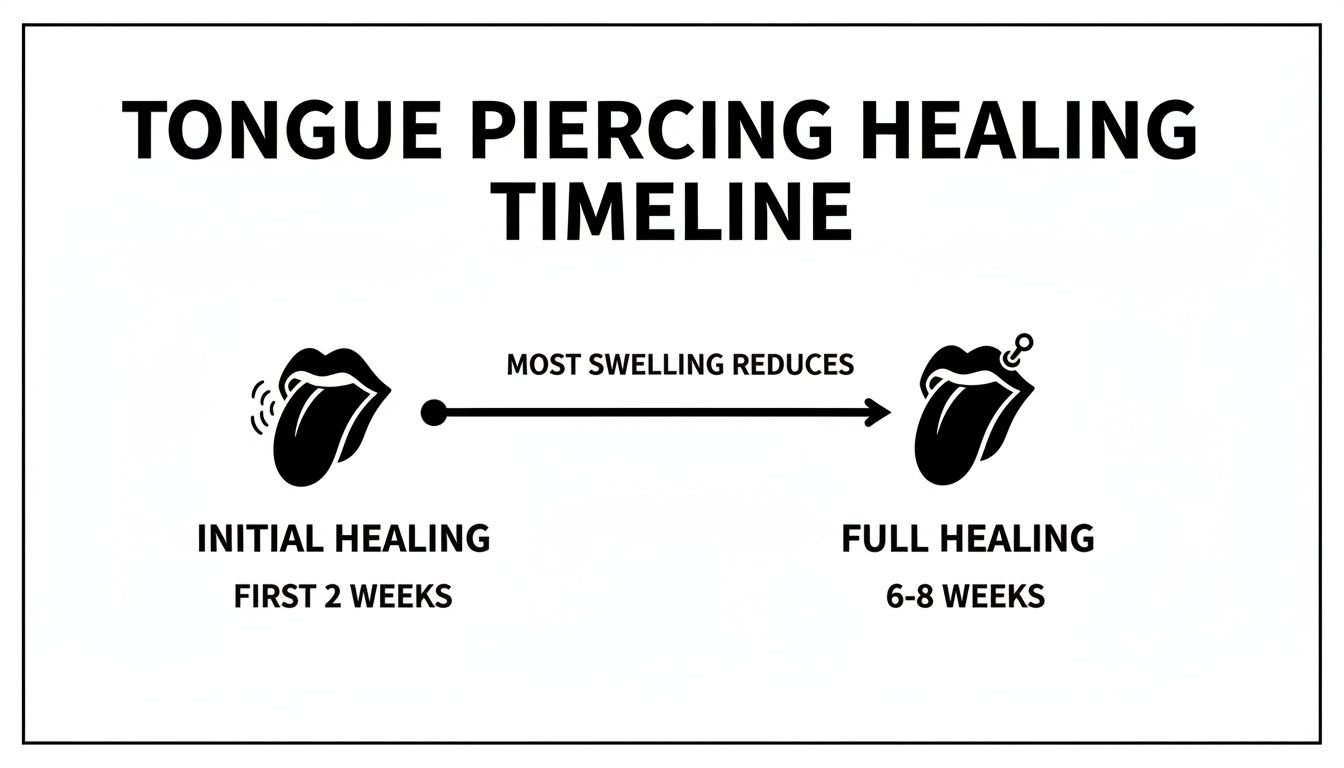
The main takeaway here is that while the worst of the symptoms disappear fairly quickly, the inside of the piercing takes a bit longer to become truly strong and permanent.
Day 1 to Day 7: The Swelling Phase
Let's be honest, the first week is the toughest part. But it's also where you'll see the most change from one day to the next. For the first 3 to 5 days, you can count on your tongue swelling up quite a bit. This is totally normal – it's just your body's natural inflammatory response kicking in.
During this initial phase, you'll likely experience:
- Significant Swelling: Your tongue will feel quite big and clumsy in your mouth.
- Soreness and Tenderness: The piercing site will be sensitive, making talking and eating a little awkward.
- Increased Saliva: Don't be surprised if you're drooling more than usual; it's just your mouth reacting to something new.
- A Temporary Lisp: The combination of swelling and a barbell will almost certainly affect your speech for a few days.
Your best friends during this time will be soft, cool foods. Think smoothies, yoghurts, and ice cream. Gently sucking on ice chips can also feel amazing and really helps to keep the swelling down. A strict cleaning routine is absolutely vital right now. For a full breakdown, check out our guide on how to clean a new piercing.
Week 2 to Week 4: The Downsizing Milestone
As you head into the second week, you should start to feel some real relief. The swelling will go down noticeably, which is a fantastic sign that your body is moving on to the next healing stage. The soreness will begin to fade, and you'll find talking and eating much more comfortable.
This period also brings a crucial milestone: downsizing your jewellery. The first barbell you get is deliberately extra-long to give your tongue room to swell. Once that swelling has subsided, usually around the 2-week mark, it's essential to swap it for a shorter bar. If you leave the long one in, you risk chipping your teeth or damaging your gums.
Whatever you do, don't try to change the jewellery yourself for the first time. Always go back to your professional piercer. They'll make sure the new barbell is the perfect length and fit it correctly. This step is non-negotiable for the long-term health of both your piercing and your teeth.
Week 4 to Week 8: The Maturing Phase
After a month, your piercing will probably feel pretty settled and comfortable. The surface wound has closed, but deep inside, that fistula is still getting stronger. It’s easy to get a bit lazy with your aftercare at this point, but staying consistent is key to avoiding any late-stage problems.
It's interesting to see how this plays out in real-world data. Major issues like prolonged swelling are uncommon when the piercing is done in a professional studio with implant-grade materials. Many clients see initial healing within about four weeks when they follow proper aftercare. The mouth heals quickly, which is why oral piercings often heal faster than many other body piercings. You can read more about these oral piercing findings on Medical News Today.
By the time you reach the end of week eight, your piercing should be fully healed. The tissue channel will feel smooth, stable, and resilient. If you have any worries at all during your healing journey, please don't hesitate to reach out. Our team is always here to help. You can give us a call on 01202 900050 (Bournemouth) / 020 8686 7730 (Croydon) or drop a message to our WhatsApp at 07752 913846 (Bournemouth) / 07902 490584 (Croydon).
Your Essential Aftercare Routine for Safe Healing
Now that you've got your new tongue piercing, the real work begins. Think of your aftercare as your direct line of communication with your body—it's how you tell it to heal calmly and correctly. The goal is simple: keep the area clean without causing any extra fuss. This is where you take charge of the healing process.
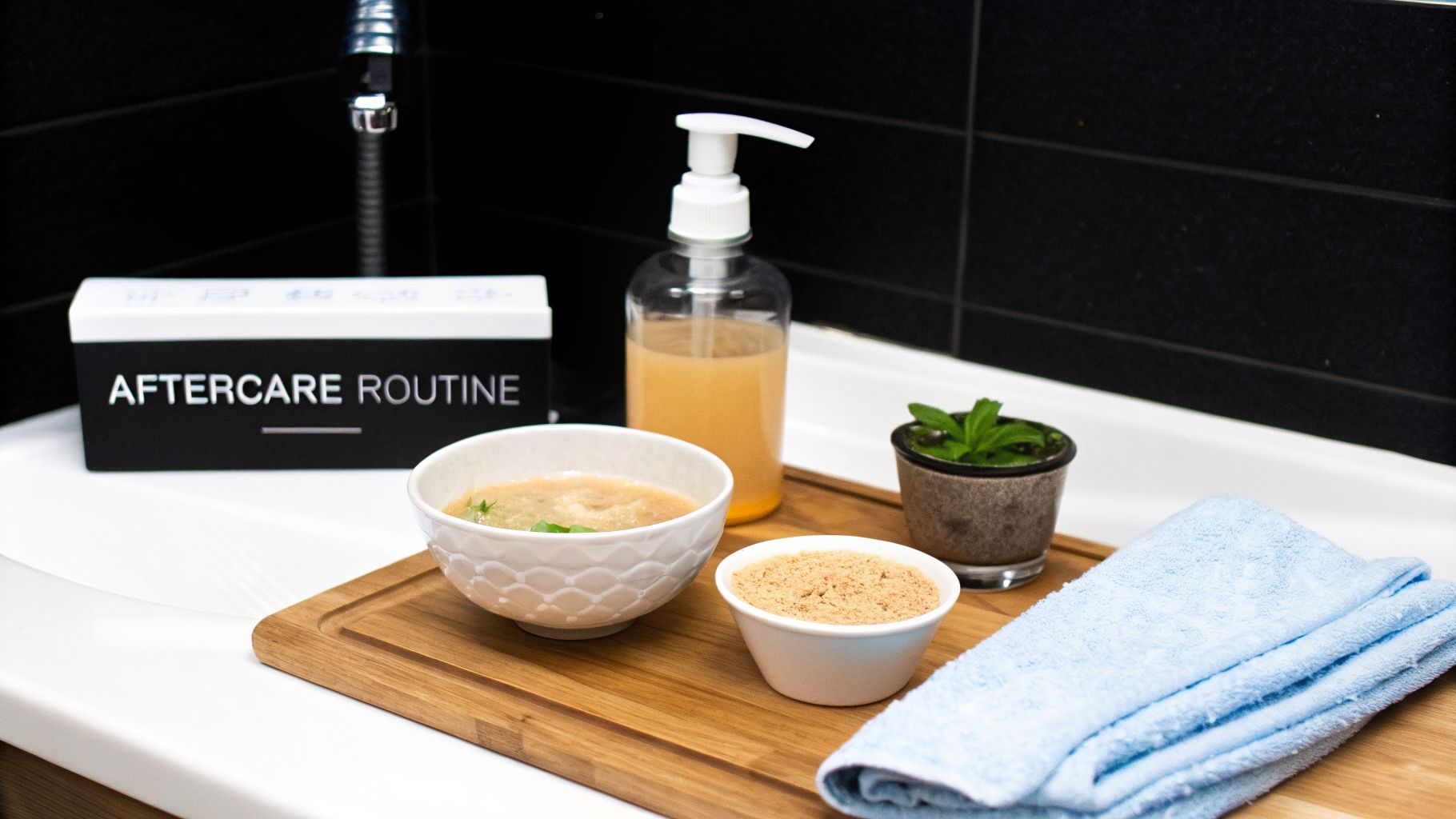
When it comes to tongue piercings, a simple and consistent routine always beats a complicated one. You just need to gently flush away bacteria and food bits without irritating the brand-new, sensitive tissue.
Mastering Your Cleaning Routine
Your best friend for the next few weeks will be a sterile saline solution or a non-iodised sea salt rinse. Swish it around your mouth for about 30-60 seconds, 2-3 times per day. It's especially important to do this after you eat or drink anything other than water to stop food from getting trapped.
A pre-made sterile saline spray is usually the easiest and most hygienic way to go. We've got a whole guide packed with advice on using a saline spray for piercing aftercare. Whatever you do, steer clear of alcohol-based mouthwashes. They are far too aggressive and will only hinder your healing.
Crucial Tip: It’s tempting to clean constantly, but please don't. Over-cleaning can strip away the helpful bacteria your mouth needs to heal and will just make the piercing angry. Stick to a gentle, consistent schedule.
Foods to Eat and Foods to Avoid
For the first week or two, what you eat has a massive impact on your comfort and swelling. Your diet will need a temporary makeover.
Embrace These Soft Foods:
- Cool Smoothies and Yoghurts: Not only are they easy to eat, but the coolness is incredibly soothing.
- Soups and Broths: Just make sure they're lukewarm, not hot. Heat will only increase the swelling.
- Ice Cream and Ice Lollies: A perfect excuse to indulge! They actively help reduce swelling and feel fantastic.
- Mashed Potatoes or Avocado: Soft, filling options that don’t require much chewing.
Avoid These Irritants:
- Spicy Foods: Anything with chilli or strong spices will cause a very unpleasant burning sensation.
- Crunchy Foods: Crisps, nuts, and crusty bread can easily knock or snag the jewellery.
- Acidic Foods: Think citrus fruits, tomatoes, and vinegar. They can seriously sting and irritate the fresh piercing.
- Sticky Foods: Caramel, toffee, and gummy sweets are a nightmare to get off your jewellery.
Lifestyle Adjustments for Fast Healing
Beyond your diet, a couple of lifestyle tweaks are non-negotiable. Smoking and drinking alcohol are two of the biggest culprits for a delayed or complicated heal. Alcohol increases swelling and bleeding, while the chemicals in smoke and vape products introduce bacteria and cause major irritation. We strongly advise avoiding both for at least the first two weeks.
The good news? The tongue is one of the fastest-healing piercings, thanks to saliva’s natural antibacterial properties. Professional UK studios typically see an initial healing window of 4-6 weeks, with the piercing feeling fully settled around the 8-week mark. Following your aftercare properly really does reduce the risk of complications, so your efforts pay off.
If you have any questions or if something just doesn't feel right with your piercing, please don't guess. We're here to help. You can give us a call at 01202 900050 (Bournemouth) / 020 8686 7730 (Croydon) or drop a message to our WhatsApp on 07752 913846 (Bournemouth) / 07902 490584 (Croydon) for professional advice.
How to Spot and Handle Healing Complications
Knowing what’s normal and what’s a red flag during the healing process is absolutely crucial. While the vast majority of tongue piercings heal without any drama, being able to spot the early warning signs of a problem will give you peace of mind and, more importantly, keep you safe.
Think of this as your field guide to spotting trouble before it really starts.
It’s completely normal to see a thin, whitish-clear fluid called lymph. That’s just your body’s natural cleaning crew doing its job. However, if you start seeing thick, yellow, or green pus, that’s a clear sign of infection.
Likewise, some serious swelling is expected in the first week. But if it seems to be getting worse instead of better, or you notice angry red streaks moving away from the piercing site, it's time to get professional advice.
Clear Signs of a Problem
Keep a close eye out for these specific symptoms. If you experience any of them, don't just wait and hope they disappear.
- Worsening Pain or Swelling: Your pain and swelling should be at their worst within the first week and then gradually get better. If they suddenly ramp up again after this point, something isn't right.
- Coloured or Smelly Discharge: Thick, yellow, green, or greyish discharge is a classic sign of infection, especially if it comes with an unpleasant odour.
- Excessive Bleeding: A tiny bit of bleeding in the first day or so can happen. But if it’s persistent or heavy, that’s not normal.
- Fever or Chills: If you start feeling generally unwell, like you're coming down with the flu, it could mean an infection is spreading. This needs immediate attention.
In our experience, the full healing time for tongue piercings in the UK can take up to 8 weeks. The good news is that most piercings done at professional studios heal without any issues. While it might look healed on the outside within a month, the tissue deep inside needs that full time to properly strengthen. To get a better idea of the healing stages, you can explore these piercing healing insights from Healthline.
Crucial First Step: If you think you have an infection, do not take the jewellery out! Removing the barbell can allow the piercing hole to close up, trapping the infection inside. This can lead to a much more serious problem, like an abscess. Always leave the jewellery in to allow for drainage.
What to Do If You Suspect a Complication
If any of those warning signs pop up, the most important thing is not to panic or try to self-diagnose from a random web search. Your first and best move is always to contact a professional.
We are your first line of defence. Our piercers have seen it all and can quickly assess the situation, giving you accurate advice on what to do next. Please contact our team for an urgent consultation.
- Phone: 01202 900050 (Bournemouth) / 020 8686 7730 (Croydon)
- WhatsApp: 07752 913846 (Bournemouth) / 07902 490584 (Croydon)
Never hesitate to reach out. It is always, always better to be safe than sorry, and we're here to support you through every single stage of your healing journey.
Why Your Piercer and Jewellery Choice Are Everything
Your healing journey doesn’t kick off once you walk out of the studio door. The real starting line is the moment you decide who’s doing the piercing and what they’re putting in it. Getting these two things right is the single biggest step you can take towards a smooth, fuss-free healing process.
Think of it this way: you wouldn't let a medical student perform surgery on you. A truly experienced piercer isn't just someone who knows how to use a needle; they're a specialist with an intimate knowledge of oral anatomy. They know exactly where to place the piercing to sidestep major nerves and blood vessels, making the whole experience safer and minimising trauma to the tissue from the get-go.
The Professional Piercer's Touch
Here at Timebomb Tattoo & Piercing, we see our expertise as your first line of defence against a difficult heal. A professional approach makes all the difference.
- Sterile, Single-Use Needles: We only ever use brand-new, sterilised, single-use needles. A hollow needle, unlike a blunt-force piercing gun, creates a clean, precise channel for the jewellery. This means far less trauma to your tongue, which in turn leads to a quicker and cleaner healing period. You can read more about why this matters in our guide to piercing guns vs needles.
- Anatomy-Led Placement: Getting the position just right is vital. A piercing that’s even slightly off can cause ongoing pain, nerve issues, or even excessive bleeding.
- Smart Jewellery Sizing: Any good piercer knows that a new tongue piercing will swell—a lot. We'll fit you with an initial barbell that’s long enough to give your tongue room to breathe during that first week. This simple bit of foresight prevents the jewellery from sinking into the tissue, which is a serious and painful complication you definitely want to avoid.
Choosing a reputable piercer isn't about paying for a name. It’s an investment in your own safety. Their experience is what stands between a smooth recovery and a long, painful struggle.
Why We Insist on Implant-Grade Titanium
The metal your first barbell is made from is just as important as the person who puts it there. This piece of metal will live in your mouth for weeks on end, so it has to be something your body can happily tolerate. That’s why we will only use implant-grade titanium for fresh tongue piercings.
There’s a good reason for this. Implant-grade titanium is the same stuff used for medical implants like bone screws and hip replacements. Crucially, it's 100% nickel-free. Nickel is one of the biggest culprits behind metal allergies and skin irritation, and the last thing you want is an allergic reaction compounding the initial swelling. Starting with titanium drastically cuts the risk of itching, redness, and excess swelling that can throw your healing timeline way off course.
Ultimately, a successful healing experience is a partnership between you and your piercer. By starting with a professional studio that puts skill and quality materials first, you're setting yourself up for success from day one. If you have any questions or want to chat about our process, give us a call on 01202 900050 (Bournemouth) / 020 8686 7730 (Croydon) or drop a message to our WhatsApp at 07752 913846 (Bournemouth) / 07902 490584 (Croydon).
Your Tongue Piercing Healing Questions, Answered
Even after reading a full guide, you probably still have a few questions bouncing around. That's completely normal. Think of this section as our final sit-down chat, where we tackle the most common queries we get from clients day in and day out.
Our goal is to swap any lingering worries for solid confidence as you start your healing journey.
When Can I Change My Tongue Piercing Jewellery?
I know you're probably already eyeing up some exciting new jewellery, but you’ve got to be patient with this first step. You can only change the initial long barbell once the swelling has completely settled, which usually takes around the 2 to 4-week mark.
It’s absolutely vital that you come back to your piercer for this first change. We'll fit a shorter bar that won't risk damaging your teeth and gums. Please don't try to do this yourself the first time around. Since the piercing isn't fully healed internally for up to 8 weeks, you'll want to avoid swapping jewellery just for fun until then, as it can easily damage the delicate new tissue.
Can I Smoke or Vape After Getting My Tongue Pierced?
Honestly, the best advice is to avoid smoking or vaping entirely for at least the first two weeks. The mix of chemicals, heat, and suction can really irritate a new piercing, slowing down healing and massively increasing your risk of infection. Your body is already working overtime to heal, and smoking just makes its job so much harder.
If you absolutely can't stop, you need to be incredibly diligent. Make sure you rinse your mouth with a sterile saline solution immediately after every single smoke or vape. But truly, the fastest and safest route to a happy piercing is to just put it on hold for a little while.
A few weeks of sticking it out can save you from weeks or even months of painful problems. Your long-term piercing health is well worth the temporary hassle.
What Should I Do If I Think My Tongue Piercing Is Infected?
First things first: don't panic, and do not remove the jewellery. Taking the bar out is the biggest mistake people make. It can cause the hole to close up, trapping the infection inside and potentially leading to a much nastier problem, like an abscess.
Instead, get in touch with a professional straight away. You can call our studio on 01202 900050 (Bournemouth) / 020 8686 7730 (Croydon) or drop a message to our WhatsApp at 07752 913846 (Bournemouth) / 07902 490584 (Croydon). Keep an eye out for tell-tale signs like thick yellow or green discharge, a foul taste or smell, pain that's getting worse, or a fever. While you're waiting for advice, just keep up with your gentle saline cleaning.
Is It Normal to Have a Lisp After a Tongue Piercing?
Yes, a temporary lisp is completely normal! It’s one of the most common things people experience in the first week or two. Your tongue is swollen and is also just getting used to the new piece of metal that's suddenly living there.
Once the swelling goes down and your tongue adapts to the barbell, your speech will return to normal. In fact, gently practising talking can help you get used to it faster. If you're still struggling to speak clearly after a few weeks, it's worth checking in with your piercer to make sure your jewellery is the right size.
For trusted advice and to find a professional piercer who puts your safety first, visit Piercing Near Me. You can book your next appointment with total confidence at our Croydon or Bournemouth studios through our easy-to-use booking platform.