
You spot a beautifully balanced ear on the train. Two clean lobe piercings, a subtle stack above them, jewellery that suits the ear instead of fighting it. The look feels easy. Getting it right takes planning, precise placement, and a studio that treats hygiene and healing with the same care as the final styling.
That is what multiple earlobe piercings should be. Personal, well-spaced, and realistic for your anatomy.
At Timebomb Tattoo & Piercing, we plan lobe work as both design and clinical procedure. We look at how your ear sits, where swelling is likely to affect spacing, what jewellery will heal best, and whether your idea is sensible for one appointment or better staged over time. That balance matters, especially if you want a curated result rather than a set of piercings that feel crowded six months later.
If you are collecting ideas for a more styled ear, our guide to full ear piercings and curated ear planning gives useful inspiration. In the studio, the conversation is always more specific. We map placements to your actual ear, explain the trade-offs clearly, and make sure you leave with a plan that looks good now and still makes sense once everything has healed.
Your Introduction to the Curated Ear
You come in with screenshots, a rough idea of how many lobe piercings you want, and one sensible question. Can your ear carry that layout well, and will it still look right once the swelling settles?
That is the starting point.
A curated ear is a planned set of placements that suits your anatomy, your jewellery preferences, and the pace your body can heal. The goal is not to copy somebody else’s ear exactly. The goal is to build a version that fits your ear cleanly, heals predictably, and still gives you room for future changes if you want them.
Why this style has become so popular
Multiple lobe work is now one of the most common things clients ask us about, especially from people who want more styling options without jumping straight into cartilage. That popularity has also created a lot of rushed advice online. In the studio, we slow it down and assess what your tissue can support, how close placements can safely sit, and whether your plan should happen in one visit or over a few appointments.
We keep sessions sensible because healing quality decides the final result.
For many clients, that means starting with a manageable number of piercings rather than filling the whole lobe at once. In Croydon and Bournemouth, we regularly see the same pattern. Clients want a polished ear, but they also want to sleep properly, keep up with aftercare, and avoid preventable irritation from overloading one appointment.
Practical rule: A curated ear should look deliberate on day one and still make sense six months later.
What makes the process work
Good lobe planning is part styling and part clinical judgement. We check:
- Your lobe shape and tissue depth so each piercing sits in stable, healthy tissue
- Your existing holes because older placements, scar tissue, or stretched angles can affect spacing
- Your jewellery plan since studs, small hoops, and stacked looks all need different room
- Your routine and healing habits because more piercings mean more cleaning, more swelling, and more chances to catch them
- Your long-term goals so today’s placement does not limit what you may want next year
That consultation matters more than clients expect. A layout that looks balanced on a flat reference photo can sit completely differently on a real ear. We mark placements, talk through trade-offs clearly, and explain why we may adjust spacing by a millimetre or two. That is usually the difference between a lobe set that looks refined and one that feels cramped.
If you want ideas before you come in, our guide to full ear piercing ideas and placements is a useful place to start. Bring references if you like. We will help you turn them into a plan that works for your ear, not just for the photo.
Defining Your Multiple Earlobe Piercing Style
Some clients want symmetry. Others want a more relaxed, collected-over-time look. Both can work beautifully. The important part is knowing what you’re asking for, because “more lobe piercings” can mean several very different layouts.
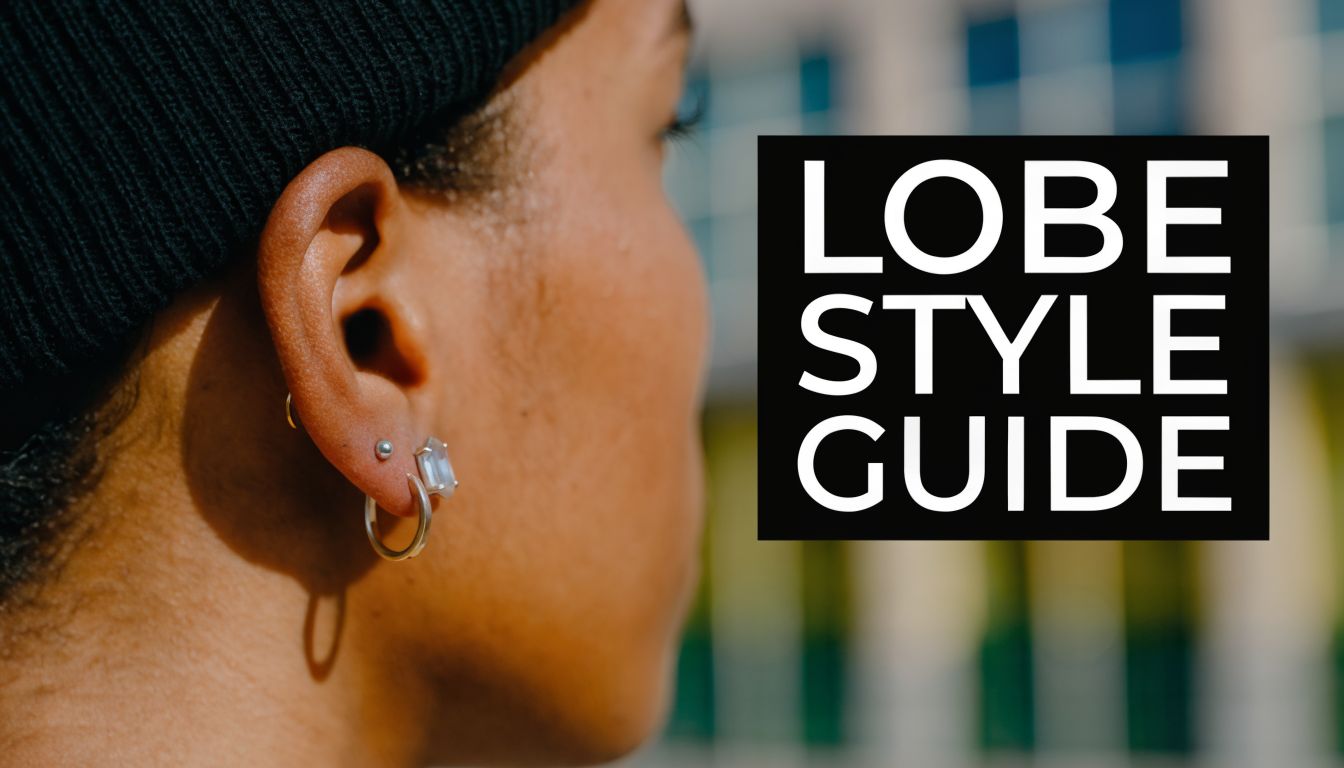
Second and third lobe piercings
This is the most familiar route. A second lobe sits above or beside the original first piercing, and a third lobe continues that line upward. It suits people who want a clean progression and easy jewellery styling.
This layout tends to appeal if you like:
- Classic balance with matching studs or mini hoops
- Simple daily wear that works in the office, at uni, or dressed up
- Room to build later without committing to a more unusual arrangement
A straight line of lobe piercings can look very polished, but only if the spacing follows the shape of your ear rather than a ruler.
Stacked lobes
A stacked lobe places one piercing slightly above another instead of extending sideways. It creates depth and gives the ear a more styled, intentional look.
Clients often choose stacked lobes when they want:
- a more modern finish
- tiny jewellery that sits close together
- a curated ear effect without moving into cartilage
Stacked placements rely heavily on tissue depth and available height in the lobe. On the right ear, they look fantastic. On a smaller lobe, forcing the layout usually leads to crowding.
If a style only works in a photo but not on your anatomy, it isn’t the right plan.
Constellation and soft asymmetry
A constellation style is less rigid. Instead of a tidy line or obvious stack, the piercings create a small cluster that feels organic. This can be subtle or more artistic depending on jewellery.
It tends to suit people who:
- mix metals or shapes
- want one ear to feel slightly different from the other
- prefer a collected look over strict matching
These are some of the easiest arrangements to get wrong without proper mapping. What looks effortless usually comes from very careful placement.
Planning Your Perfect Lobe Placements
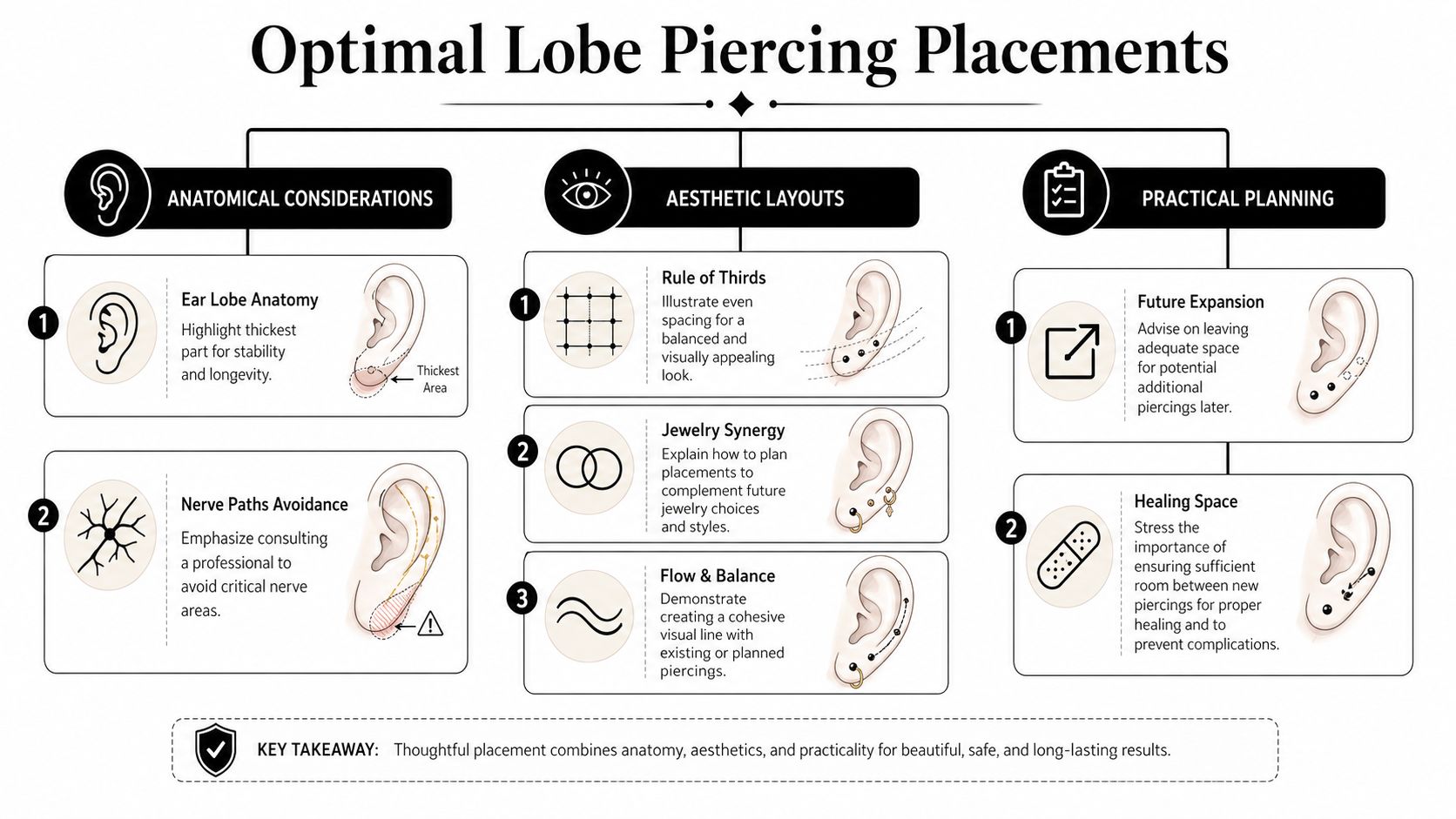
Good placement is what separates a beautiful healed ear from one that feels crowded, awkward, or hard to wear. We don’t just mark where a stud could go. We map where it should go so each piercing has enough room to heal and enough visual space to make sense.
Spacing is non-negotiable
Think of your lobe like a small garden bed. If everything is planted too tightly, nothing has room to settle properly. Professional piercers in the UK recommend a minimum of 3mm spacing between multiple earlobe piercings, and triple stacks are only suitable when the lobe has enough height, ideally over 12mm, as explained in this stacked lobe guide.
That gap matters for two reasons. First, tissue needs room to swell and recover around each piercing separately. Second, the jewellery needs visual breathing room so the final look doesn’t collapse into one cluster unless that clustered effect is intentional.
What we assess during placement
When we mark an ear, we’re checking far more than “does this look centred?”
- Lobe height and thickness decide whether a second, third, or stacked layout is realistic.
- Existing piercings can help or cause problems depending on angle and age.
- Jewellery shape changes the plan. Tiny bezel studs sit differently from future hoops.
- Long-term balance matters. Today’s placement should still work if you add more later.
A second lobe that looks slightly unusual in marker can look perfect once jewellery is in. That’s because ears are curved, and flat visual assumptions often fail on real anatomy.
A well-placed lobe piercing looks easy. Reaching that point takes measuring, visual judgement, and the confidence to say no when a layout is too tight.
Layouts that tend to work best
Some arrangements are consistently strong because they respect both anatomy and styling.
| Layout | Best suited to | Main consideration |
|---|---|---|
| Straight second and third | Minimal, tidy styling | Keep the line following your ear shape |
| Vertical stack | Tiny stud combinations | Needs enough lobe height |
| Triangle cluster | Softer curated looks | Requires careful spacing |
| Offset asymmetry | Mixed jewellery wearers | Needs a clear visual anchor |
The main mistake people make is planning only for today. We’d rather leave a touch more room now than discover later that there’s nowhere sensible to add the piece you really wanted.
Your Piercing Day at Timebomb Tattoo & Piercing
You arrive with two reference photos saved, one ear in mind, and a fair bit of nervous energy. We see that every week in Croydon and Bournemouth. A good appointment slows the process down, answers the practical questions, and leaves you knowing exactly why each decision was made.
At Timebomb, the day starts with consent forms, medical checks, and a proper consultation. We ask what you wear daily, whether you use over-ear headphones, if you sleep on one side, and how much healing you can realistically manage. That matters more than people expect. A layout can look great on paper and still be the wrong choice for your routine.
Once we agree the plan, we mark the ear and let you check it from different angles in the mirror. We make small adjustments if needed so the finished result suits your anatomy, jewellery goals, and the way your ear sits in real life. If you are building a curated ear over time, we will say so clearly and leave room for future pieces rather than crowding the lobe on day one.
The consultation and setup
Our setup is clinical for a reason. We prepare a sterile, single-use needle for each piercing, fit jewellery that allows for early swelling, and work on a clean, organised station. You can ask questions at any point. We would rather pause and explain than rush you through it.
We also talk you through session size. Two or three lobe piercings can heal well for the right client, but more is not always better. If your plan is too ambitious for one visit, we will tell you and explain the trade-off. Better spacing and easier healing usually give the best long-term result.
The piercing itself
The piercing part is brief. The careful part is everything around it.
We clean the skin, confirm the marks one last time, and pierce in the agreed order. You will feel a sharp pinch and a moment of pressure, then we fit the jewellery and check that it sits correctly. If one side feels more sensitive than the other, that is normal.
Before you leave, we clean the area again and give you clear aftercare advice in plain English. If you want a realistic sense of ear piercing healing times for different placements, we are happy to talk that through at the studio as well, because healing several lobes at once needs a bit more planning than a single first lobe.
A smooth appointment comes from preparation, sterile technique, and honest advice.
For consultations or questions, call us on 01202 9000 50 or send a message to our WhatsApp on 07752913846.
Aftercare for Multiple Earlobe Piercings
Healing one lobe piercing is straightforward when you leave it alone and clean it properly. Healing several at once takes more discipline. Each piercing is its own wound. If you treat the whole ear as one area and get lazy with cleaning or sleeping habits, irritation builds fast.
Your daily routine
The basic plan is simple. Consistency is where people slip.
- Clean with sterile saline twice daily. Don’t overdo it. Clean enough to remove build-up, then leave the area alone.
- Dry carefully. Moisture trapped around several piercings can keep tissue irritated.
- Keep hands off. Don’t twist, spin, or “check” the jewellery.
- Be careful with hair, headphones, collars, and towels. Multiples create more snag points.
- Sleep off the piercing side if you can. Pressure is one of the most common reasons a healing lobe turns grumpy.
Healing can stay on track beautifully when materials and planning are right. According to the UK Health Security Agency, infection in multi-lobe piercings can reach 22% with low-quality nickel-based jewellery, while the risk falls to under 4% when implant-grade titanium is used by a professional studio. The same source notes that healing too many piercings at once can extend recovery by 30%, from 6-8 weeks to 12-16 weeks, which is why realistic planning matters so much, as summarised in this jewellery and ratio guide.
What not to do
A lot of aftercare problems come from “trying to help”.
Avoid:
- Alcohol, tea tree oil, and harsh antiseptics unless a medical professional tells you otherwise
- Removing jewellery early because the outside can look calmer before the channel is ready
- Changing to hoops too soon if the area is still tender or crusting
- Over-cleaning which can leave tissue dry and reactive
If you want a clearer sense of realistic healing windows, this guide to ear piercing healing times is useful background reading.
Signs that need attention
Some tenderness, warmth, and mild swelling are expected early on. That isn’t the same as a problem. We become more concerned when you have persistent pressure, jewellery sitting too tight, worsening redness, or discharge that doesn’t improve with proper aftercare.
Keep your routine boring. Clean, dry, leave it alone. Most healthy lobe piercings do best when you stop interfering with them.
If something feels off, get it checked before it escalates. Early advice is usually simpler than late damage control.
Choosing Your Piercing Jewellery
Jewellery does more than finish the look. It affects swelling, pressure, cleaning, and how neatly each lobe piercing settles over time. We see this every week at Timebomb. A well-placed piercing can still become awkward if the post is too short, the metal is poor quality, or the design moves too much during healing. In those situations, professional standards make all the difference.
What we use for fresh lobe piercings
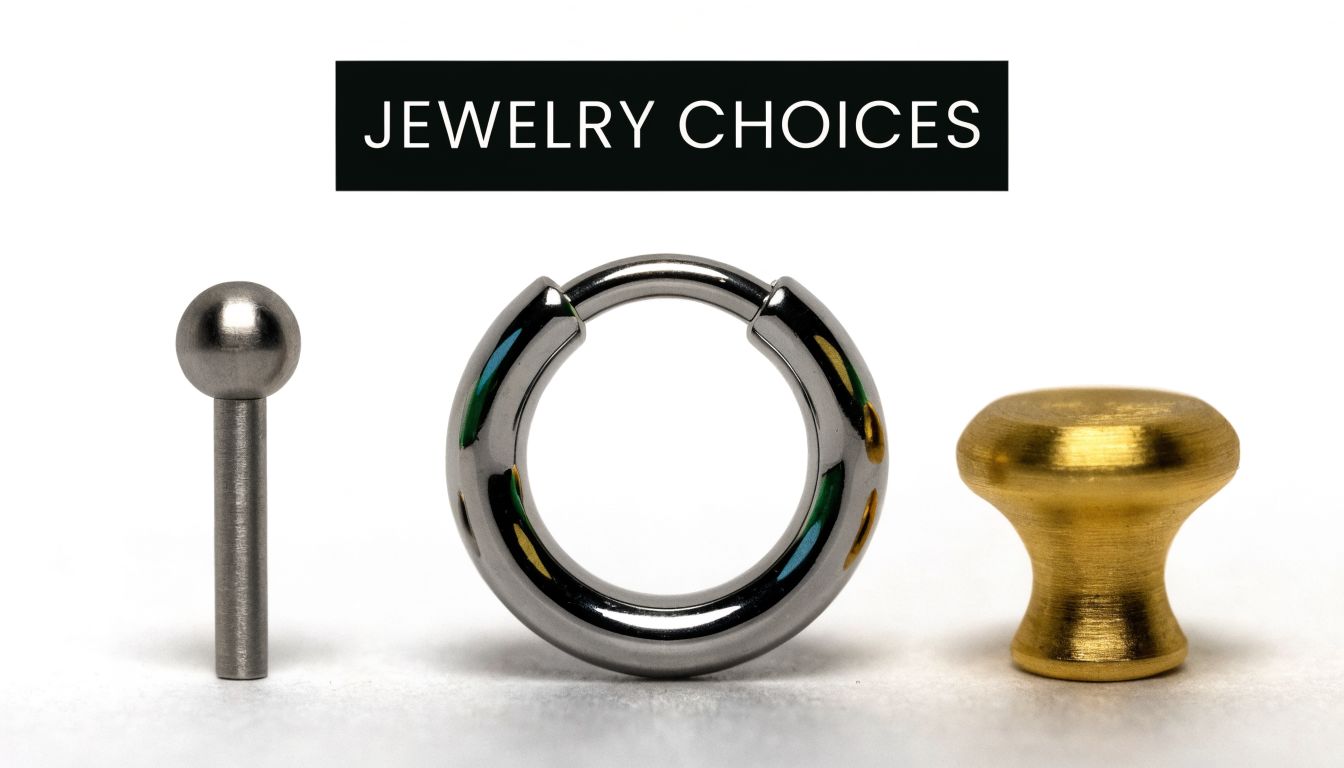
For fresh lobe work, we usually fit flat-back studs in implant-grade titanium. For most clients, that means jewellery in the 20 gauge to 18 gauge range with enough post length to allow for normal early swelling. The exact fit depends on your lobe thickness, placement, and whether you are healing one piercing or several close together.
Post length matters more than people expect. A tight post can press into the tissue and make an otherwise straightforward piercing sore, red, and difficult to clean. One that is too long can catch on hair, clothing, or headphones. At your consultation, we check all of that before we pierce so the starter jewellery suits both your anatomy and your planned layout.
If you want a clearer idea of why studios recommend titanium so often, this guide to implant-grade titanium piercing jewellery for healing piercings is a good place to start.
Implant-Grade Jewellery Materials Compared
| Material | Best For | Pros | Cons |
|---|---|---|---|
| Implant-grade titanium | Fresh piercings, sensitive skin, multiple healing piercings | Lightweight, stable, low irritation risk, easy choice for starter jewellery | Cooler colour if you want a rich yellow tone straight away |
| Solid gold | Healed piercings, or selected fresh jewellery in studio-approved designs | Premium finish, classic look, warm tone | Not every gold piece is suitable for fresh piercings, and quality varies a lot |
| Surgical steel | Some healed piercings | Familiar appearance, widely available | I would not choose it first for sensitive skin or for clients already healing several piercings |
| Mystery metal or nickel-heavy jewellery | None | Lower upfront price | More likely to irritate the piercing and cost you more later if healing goes off course |
Studs first, hoops later
For fresh multiple earlobe piercings, studs are usually the better starting point. They stay still, clean up easily, and put less stress on a new channel. That matters even more if you are building a balanced ear with closely spaced second, third, or stacked lobe placements.
Hoops have their place. They can look brilliant once the piercing is stable. They just are not the piece we rush into if the goal is a smooth heal and a tidy final result.
We tell clients in Croydon and Bournemouth the same thing in the studio. Choose starter jewellery for healing first, then choose styling jewellery when the piercing is ready. That approach is less exciting on day one, but it gives you a much better chance of ending up with the curated ear you wanted in the first place.
Potential Risks and Smart Preparation
The safest piercing is the one planned realistically. If your anatomy doesn’t support a layout, if you’re not ready to care for several fresh piercings, or if you’re tempted by poor-quality jewellery for the sake of speed or price, those choices tend to catch up with you.
A professional studio reduces risk from the start. Sterile single-use needles, clean handling, proper jewellery fitting, and a realistic session plan solve most of the problems we see from rushed or casual piercing setups.
Before you book
A little preparation goes a long way:
- Choose a real studio that uses sterile single-use needles and high-quality jewellery
- Eat beforehand so you’re not going into the appointment shaky
- Bring ID because age checks matter
- Think about your week ahead including sleep, sport, travel, and work dress codes
For younger clients, UK rules are clear. Parental consent is required for anyone under 16 having earlobe piercings, and professional studios in places such as Croydon and Bournemouth enforce ID checks. NHS data from 2025 also indicates an 18% higher complication rate in minors pierced without proper supervision and aftercare guidance, and piercers often advise teens to wait 6 months between additional lobe piercings, as noted in this guidance on second ear piercing style.
What works and what doesn’t
What works is patience, sensible spacing, and professional assessment.
What doesn’t work is trying to force too many piercings into one session, especially when you haven’t considered healing, school, sport, or how you sleep.
Styling Ideas and Frequently Asked Questions
A good curated ear should still feel like you. That might mean tiny matching studs, mixed metals, delicate hoops after healing, or one ear kept minimal while the other carries more detail.
Quick answers
How much do multiple earlobe piercings hurt?
Usually less than people fear. Lobes are generally easier than cartilage, but each additional piercing can make you more aware of the area by the end of the session.
Can I get both ears done at once?
Sometimes, yes. Whether it’s a good idea depends on how many piercings you want and how you sleep. If you regularly switch sides in the night, a more conservative plan is often wiser.
How do I sleep with new lobe piercings?
Try not to put direct pressure on them. Keep hair away, change pillowcases regularly, and be mindful when turning over.
When can I switch jewellery?
When the piercing is fully settled, not just less sore. If you’re unsure, let a piercer assess it first.
Styling ideas that stay wearable
- Office-friendly. First and second lobes with tiny matching studs.
- Soft curated look. A first lobe hoop once healed, paired with a second stud and a tiny stack.
- Bolder mix. Third lobe sparkle with mixed stud shapes and one asymmetrical ear.
- Teen-friendly start. A neat second lobe now, then reassess later rather than overloading the ear.
The best styling plan is one that leaves room to evolve. You don’t need to build the whole ear in one afternoon.
If you’re ready to explore safe, well-planned multiple earlobe piercings, Piercing Near Me makes it easy to find trusted guidance and connect with professional studios linked to Timebomb Tattoo & Piercing in Croydon and Bournemouth. It’s a practical place to start if you want clear advice on placement, jewellery, healing, and booking with confidence.