

You've probably seen chest dermal piercings sitting neatly at the sternum or just below the collarbones and had a similar thought. They look polished, minimal, and far more delicate than the daily experience of wearing one.
Then the practical questions start. Will it catch on tops? Will a bra ruin it? Is it one of those piercings that looks good in photos but constantly struggles in real life? Those are exactly the right questions to ask before booking.
Chest dermals sit in a more advanced corner of body piercing. They're not rare because they're mysterious. They're niche because they ask more from the piercer, more from the placement, and more from the client's daily routine. That matters in the UK, where non-traditional piercing choices have been established for a long time. A peer-reviewed survey of body piercing in England found that 10% of 10,503 adults had ever had a body piercing, and ear piercings excluding the lobe were reported by 1.8% overall in that sample, showing that people were already choosing beyond the most standard placements (peer-reviewed England body piercing survey).
A chest dermal can be a beautiful piercing. It can also be a poor choice for the wrong anatomy, clothing habits, or lifestyle. The difference usually isn't taste. It's biomechanics.
At Timebomb Tattoo & Piercing, that's the part worth slowing down for. A good consultation for a chest dermal isn't about persuading someone to go ahead. It's about checking whether the placement has a fair chance of settling well, staying centred, and not being irritated all day by pressure, friction, and movement.
Your Guide to Chest Dermal Piercings
Many individuals who ask about chest dermal piercings arrive with two conflicting thoughts. They love the look, and they suspect it's more complicated than social media makes it seem. They're right on both counts.
A chest dermal isn't just “a piercing on the chest”. It's a very specific type of body modification that sits in skin which moves every time you dress, sleep, exercise, stretch, lean forward, or wear anything fitted across the sternum. That's why this piercing rewards careful planning and punishes rushed decisions.
Practical rule: If a placement looks elegant but lives under constant pressure, friction, or snagging, longevity usually suffers.
Some clients are ideal candidates. Their chosen point sits on a flatter part of the chest, outside a bra line, away from necklaces, and clear of regular compression from gym wear or work uniforms. Others like the same aesthetic but have a routine that works against it from day one. In those cases, the right advice may be to alter the placement, postpone it, or choose something more stable.
That's the value of getting honest guidance before the procedure, not after problems appear. With chest dermals, “can it be done?” is only the first question. “Will it behave well on your body?” is the one that matters more.
What Is a Chest Dermal Piercing
A chest dermal piercing is a single-point surface anchor set into the skin of the chest, usually with one visible top sitting flush on the surface. There is no separate exit point, which is what makes it different from a standard piercing channel.
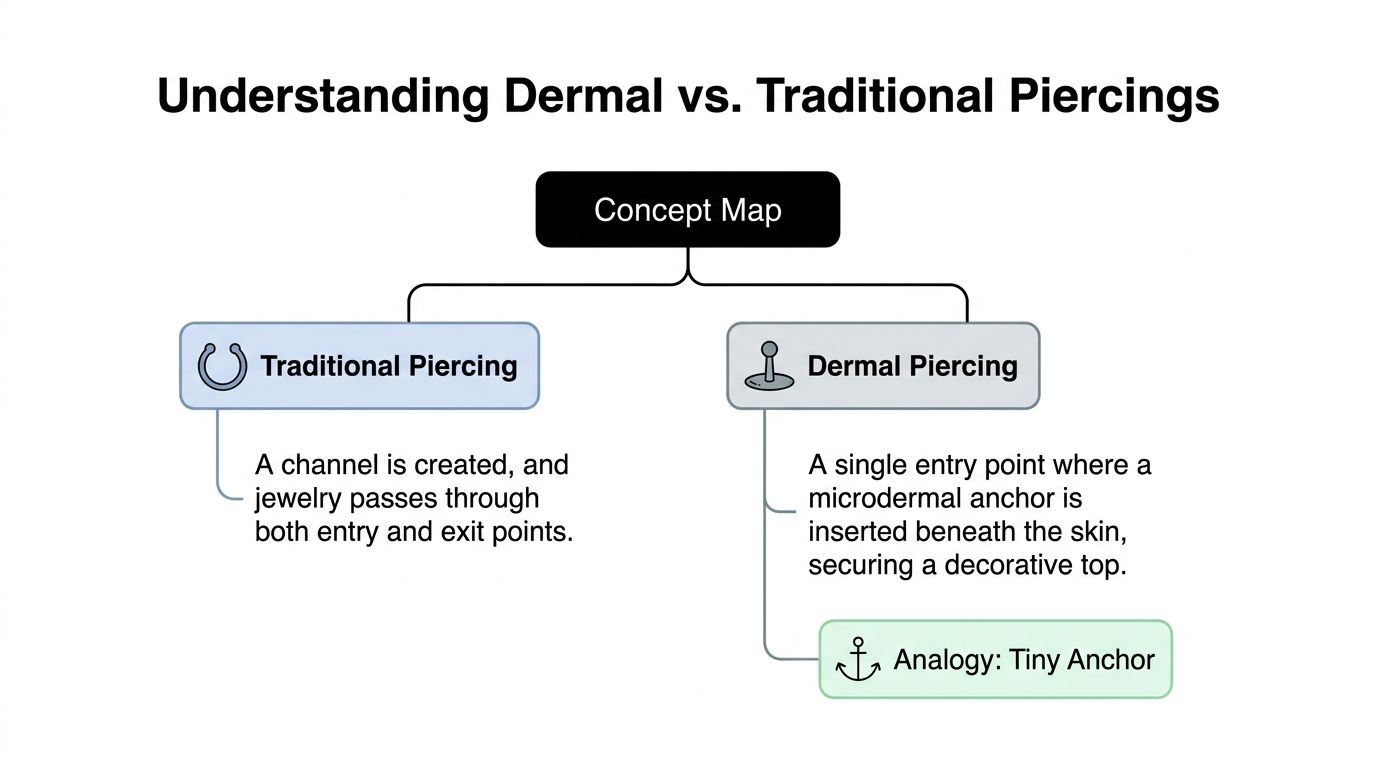
How the jewellery works
The jewellery has two parts. A small anchor sits under the skin, and a threaded top attaches above it. Once fitted well, the result is a single gem or disc that appears to rest neatly on the chest rather than passing through it like a barbell or stud.
This design gives chest dermals their clean, minimal look, but it also explains why they demand precision. The anchor has to sit at the correct depth and angle, with enough stable tissue around it to support healing. If placement is off, even by a small amount, the piercing can become irritated, sit crooked, catch more easily, or start to migrate.
At Timebomb Tattoo & Piercing, this is the point I want clients to understand before they book. A dermal may look small on the surface, but it behaves more like a fixed anchor than a simple decorative stud.
What makes a chest dermal different from other chest piercings
A chest dermal is chosen for appearance first. It creates a pinpoint piece of jewellery in a place where a bar or ring would not work. That makes it useful for clients who want a very specific look along the sternum or upper chest.
It also makes the piercing less forgiving.
Because only one end is visible, the stability of the whole piece depends on how well the anchor settles under skin that moves all day. On the chest, that movement comes from posture, sleep position, fitted tops, sports bras, lace bra edges, seatbelts, gym wear, and necklaces. The piercing itself is small. The forces acting on it are not.
Why material choice matters
For a fresh chest dermal, jewellery quality affects healing, comfort, and how calmly the tissue responds. In the studio, implant-grade titanium is usually the strongest starting point because it is light, reliable, and well suited to fresh piercings. Other materials can be appropriate in selected cases, but only if the sizing, threading, finish, and overall jewellery quality are right for dermal use.
| Material | Key Benefit | Best For |
|---|---|---|
| Implant-grade titanium | Lightweight, biocompatible, and widely chosen for fresh piercings | Initial chest dermal placement |
| Implant-grade steel | Strong and durable | Selected cases where suitable jewellery options are available |
| Gold designed for body jewellery use | Decorative finish with a premium look | Healed dermals where appropriate fit and quality are confirmed |
Good jewellery helps, but it does not override poor placement or a difficult lifestyle fit. A well-made chest dermal still needs the right anatomy, the right position on the chest, and realistic day-to-day protection if you want it to last.
Ideal Placement and Suitability for Your Body
Placement is the single biggest factor in whether chest dermal piercings settle well or become a constant irritation. People often focus on pain first, but the make-or-break question is whether the chosen spot can remain undisturbed on your body.
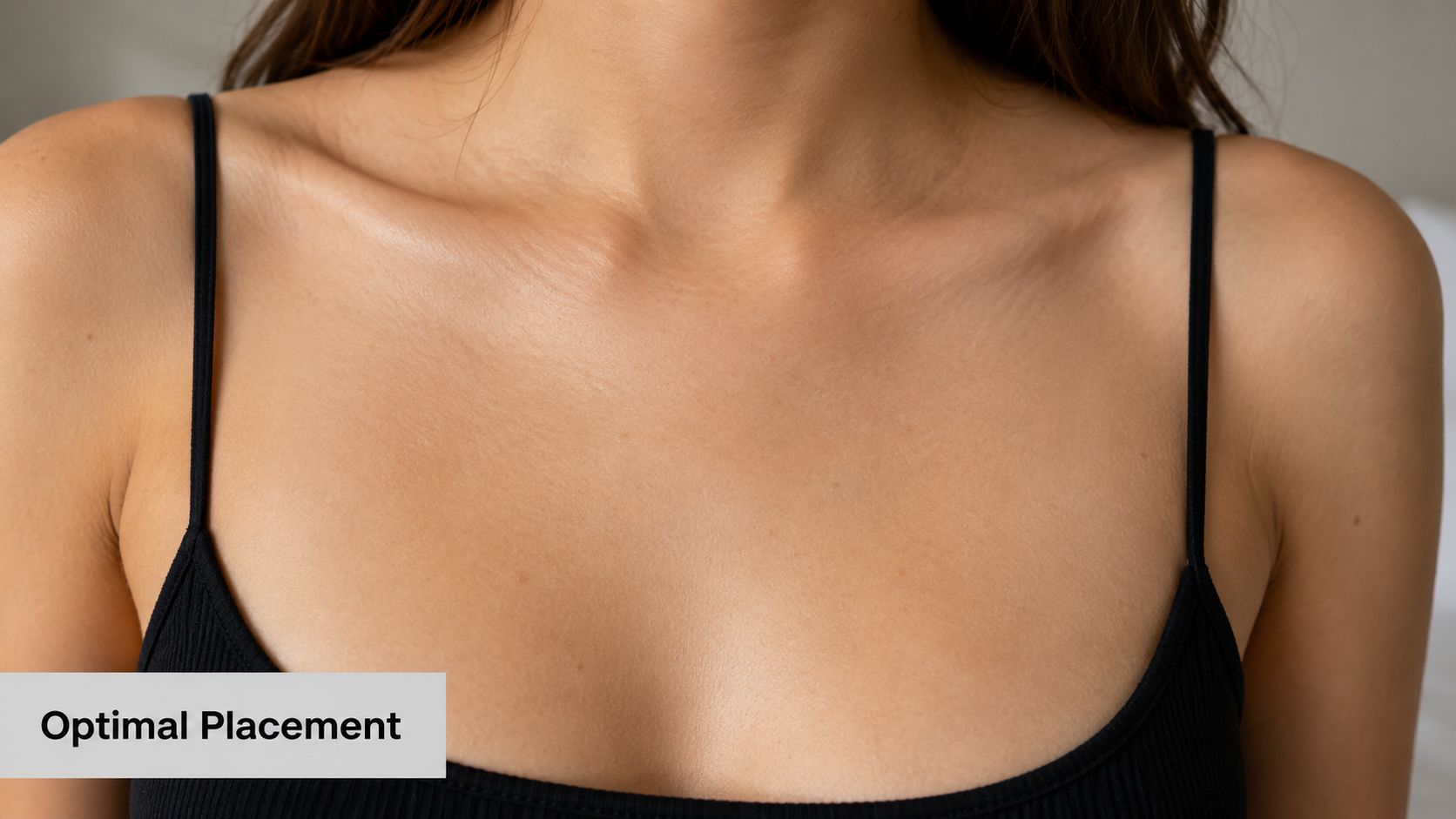
General dermal guidance points out something most quick guides skip. The main risks are rejection and infection, and longevity can range from a few months to several years, with outcomes heavily affected by site-specific biomechanics such as chest movement or bra contact (dermal piercing guide discussing site-specific biomechanics).
What usually works better
A good chest dermal placement usually shares a few traits:
- Flat skin surface that lets the anchor sit evenly rather than fighting a curve or crease
- Distance from the bra line if you regularly wear bras, sports bras, or structured tops
- Minimal necklace contact so the top isn't being rubbed or knocked through the day
- Low day-to-day compression from uniforms, shapewear, gym tops, or tight necklines
The sternum can be suitable, but only if the exact point avoids repeated pressure and shear. Small differences matter. A placement that sits just clear of a band or seam may do well. A placement that lands directly under daily friction often struggles.
The bra-line test
Such conditions often lead many chest dermals to fail before they begin. If an underwire, band, lace edge, or firm sports bra will cross the jewellery, the site is under constant challenge. Even gentle repeated pressure can keep a dermal irritated.
Ask yourself these questions:
- Do you wear a bra most days? If yes, where does the band or centre sit?
- Do you rely on compression sportswear? If yes, will it press directly over the site?
- Do your tops pull across the chest when you move? If yes, that tension matters.
- Do you often wear seatbelts over a high sternum area for long drives? That contact can matter too.
If the jewellery would spend its life being pressed, dragged, or shifted, the placement may be technically possible but practically poor.
Lifestyle matters more than people expect
Body shape is only part of the story. Lifestyle decides how much abuse the piercing takes after you leave the studio.
A chest dermal tends to be less cooperative if you:
- Sleep on your front and put body weight onto the site
- Train in high-friction sportswear that compresses the sternum
- Do contact sport or physically demanding work where bumps and catches are common
- Change clothing quickly with fitted necklines, lace, or textured fabrics that snag
By contrast, people who wear looser clothing, can protect the area during healing, and don't put regular pressure on the chest usually give the piercing a much better chance.
At Timebomb Tattoo & Piercing, suitability checks should be practical, not flattering. The aim isn't to force your anatomy into a trend. It's to find out whether the piercing will sit well enough to justify doing it at all.
Pain Risks and Long-Term Longevity
Pain is usually the least important part of this piercing, even though it's the first thing many clients ask. The procedure is brief. The longer story is whether the anchor stays calm, centred, and stable once everyday life starts acting on it.
What the piercing feels like
Most clients describe a quick sharp moment followed by pressure as the anchor is placed. The pressure sensation is distinctive because this isn't a standard through-and-through channel. It's more about pocket creation and seating than a simple pass with jewellery following behind.
The chest can feel manageable during the appointment, then more noticeable when clothing rubs later that day. That doesn't automatically mean something is wrong. Fresh dermals are sensitive to movement, pressure, and knocks in a way many people don't expect.
The main risks on the chest
Professional guidance for sternum and chest placements notes that this area is higher risk because of clothing friction and skin tension, which increase the chances of rejection and tilting over time. It also notes that the site often bleeds slightly during insertion and needs careful aftercare to reduce snagging and monitor for heat, swelling, or visible movement toward the surface (professional chest dermal guidance on friction and rejection risk).
Three long-term issues matter most:
- Rejection means the body gradually pushes the anchor upwards.
- Migration means the anchor shifts from its intended position.
- Infection means the site becomes contaminated and increasingly inflamed.
Rejection and migration are often driven by mechanics. Constant tugging from clothes, repeated side pressure, sleeping directly on the area, or one hard snag can start the process.
How to spot trouble early
Warning signs are usually progressive, not dramatic at first:
- The top sits higher than before
- The piercing looks angled rather than centred
- More of the post or anchor shape becomes visible
- Redness keeps returning without a clear cause
- The area feels hot, swollen, or increasingly sore
A chest dermal rarely “suddenly fails” without earlier signs. Most problem piercings tell you they're struggling before they fully reject.
What longevity really looks like
The hard truth is that chest dermal piercings are not best judged by how good they look on day one. They should be judged by how well they integrate with the body over time. A well-placed dermal with good technique and careful aftercare may settle very nicely. A badly chosen site can fight from the start, even if the procedure itself was perfect.
If a dermal does reject or needs removal, it can leave a small scar. That's one reason experienced piercers would rather say no than place a chest dermal in a spot that's set up to fail.
The Professional Piercing Procedure Step by Step
A good chest dermal appointment starts before any tool touches the skin. The critical aspect is assessing whether the placement makes sense on your chest, with your bra, your clothing, and the way you move day to day. At Timebomb Tattoo & Piercing, that decision is part of the procedure, not a quick chat at the start.
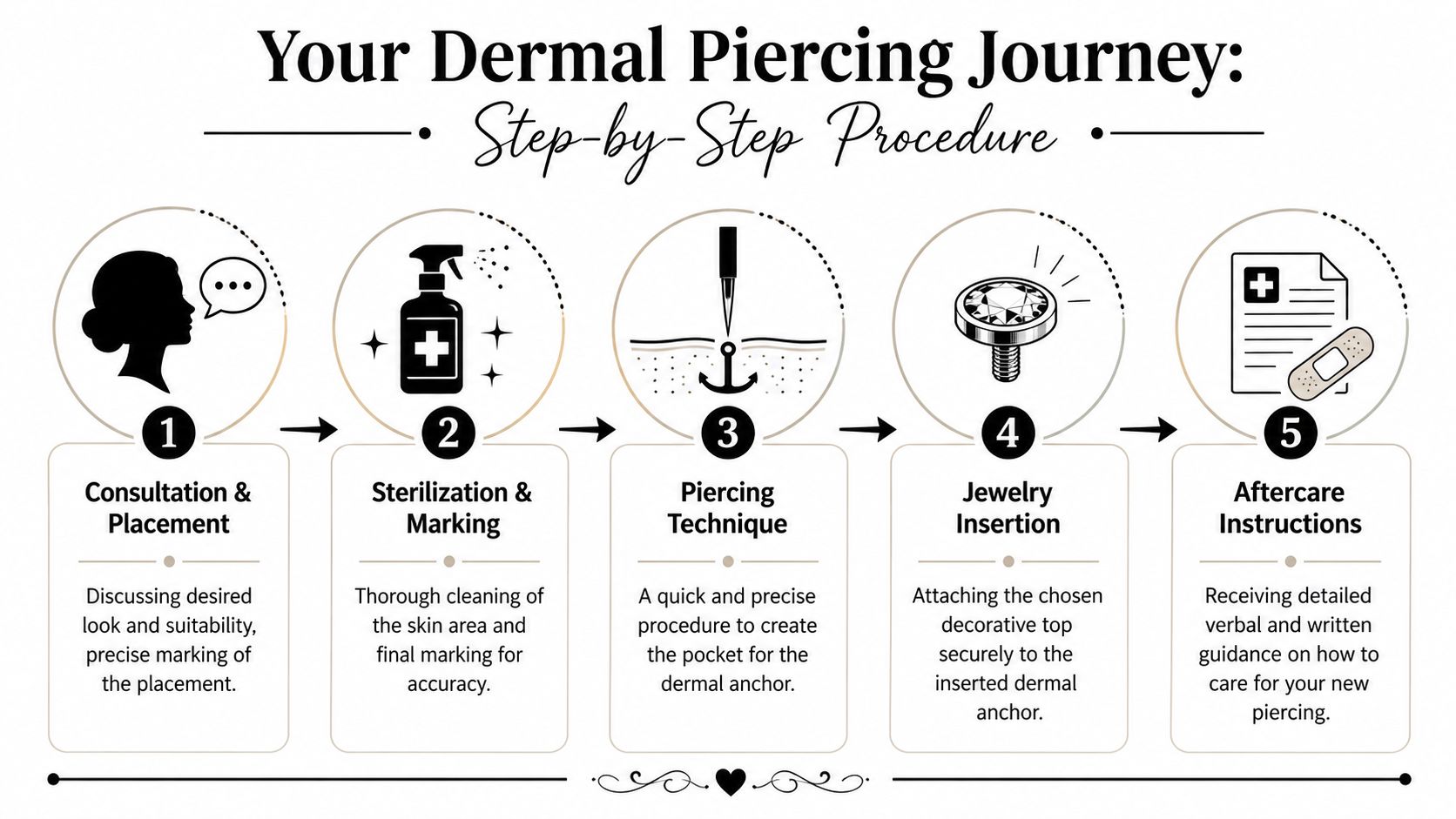
What happens at the appointment
Consultation and placement check
The appointment begins with a proper look at the chest both standing still and moving naturally. We check posture, skin tension, cleavage shape, and whether a bra edge, sports bra band, necklace, seat belt, or regular clothing is likely to rub the jewellery. Some placements look balanced on a marker pen drawing but become poor choices once the body moves.Cleaning and marking
The area is cleaned thoroughly, then marked with care. Clients are shown the position in a mirror and asked to sit, stand, and shift naturally before anything proceeds. Small adjustments matter on the chest because a few millimetres can be the difference between a placement that sits neatly and one that catches all the time.Creating the pocket
A dermal is not pushed straight through like a standard piercing. A small opening and pocket are made so the anchor can sit under the skin at the correct angle and depth. The method must be controlled and gentle. Too shallow, and the anchor struggles for stability. Too deep, and the jewellery may not sit cleanly at the surface.Placing the anchor
The anchor is inserted and seated so it lies flat and secure beneath the skin. This stage needs a steady hand and patience. If the base is twisted, tilted, or under tension from the start, the piercing often behaves poorly even if it looks acceptable at first glance.Attaching the top and checking the result
Once the anchor is sitting properly, the top is fitted and the site is checked again. The final check is not just cosmetic. It confirms that the jewellery sits in line with the tissue and that nothing about the placement is under obvious strain.
What good technique looks like
Good dermal work is careful, sterile, and unhurried. Tools should be sterile. Jewellery should be suitable for implantation and chosen for the specific site, not picked only for appearance. The piercer should also explain why the chosen position has the best chance of lasting on your body, rather than placing it where a photo reference looks nice.
If you are comparing methods more broadly, read why needle piercing is preferred over piercing guns for controlled tissue handling.
At Timebomb Tattoo & Piercing, clients are talked through the placement logic as well as the procedure itself. That matters with chest dermals. A technically clean piercing in a high-friction spot is still a poor long-term choice.
What clients usually notice
The actual insertion is brief.
The longer part is the setup, the marking, and the decision-making around placement. That is exactly how a chest dermal should be done. On this part of the body, precision and suitability do more for long-term success than speed ever will.
Healing Timeline and Aftercare Essentials
Healing is where chest dermal piercings are won or lost. General guidance often places dermal healing in the range of 1 to 3 months, while chest and sternum service guidance commonly gives 8 to 12 weeks as the practical healing window. That same guidance also notes that the piercing can be pushed out over time and may leave a small scar if it rejects or is removed (UK-facing chest dermal healing guidance).
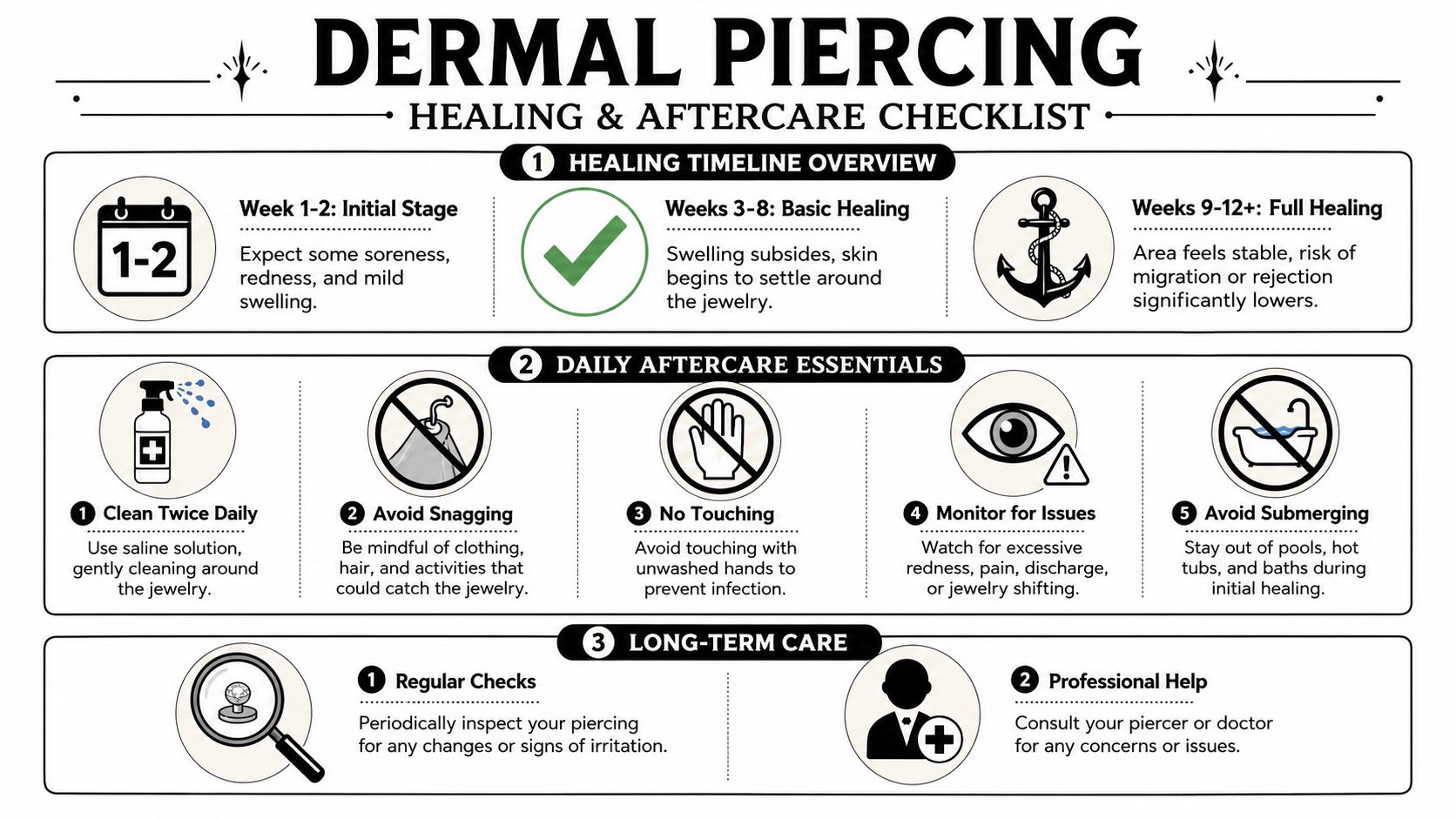
What normal healing looks like
Early healing can include tenderness, light redness, slight bleeding, and mild crusting. None of that is unusual on a fresh dermal. What you want is gradual settling, not increasing drama.
A simple way to think about the healing period:
- Early stage means the site is vulnerable to knocks and pressure.
- Middle stage means the surface may look calmer, but the anchor still needs stability.
- Later stage means the area feels more settled, though the piercing still benefits from sensible care.
Don't assume “it looks fine” means “it can handle anything”. Surface calm and internal stability aren't always the same.
Daily care that actually helps
Use a routine you can keep up with consistently. For many clients, that means sterile saline, gentle drying, and keeping friction low. If you need a simple product overview, this guide to saline spray for piercing care is a useful starting point.
Focus on these basics:
- Clean gently with sterile saline and let debris soften rather than picking at it
- Pat dry carefully with clean disposable material rather than rubbing with a towel
- Protect it from snagging when dressing, undressing, and sleeping
- Leave it alone unless you are cleaning it
- Keep products off it such as heavy creams, perfumes, or body lotions directly around the site
What to avoid during healing
Many chest dermals are irritated by avoidable habits rather than bad luck.
- Don't twist or fiddle with the top
- Don't sleep directly on it if your body position puts pressure there
- Don't wear tight, rubbing clothing over the site if you can help it
- Don't submerge it in baths, pools, or hot tubs during the vulnerable stage
- Don't let necklaces, lace, loofahs, towels, or seatbelts repeatedly catch it
The biggest enemy of a healing chest dermal usually isn't the cleaning routine. It's repeated mechanical irritation.
When to get advice quickly
Contact your piercer or a medical professional if you notice worsening heat, strong swelling, concerning discharge, spreading redness, or visible movement of the anchor toward the surface. The earlier a problem is assessed, the better the chance of limiting irritation and scarring.
Long-term care matters too. Even a healed chest dermal can become irritated by new gym wear, a changed bra style, weight training movements, or one bad catch on clothing. A chest dermal isn't “done forever” just because the initial healing period has passed. It stays a placement that rewards awareness.
Book Your Consultation in Croydon or Bournemouth
A chest dermal should only go ahead if the placement suits your body and your routine. That decision is best made face to face, with the skin marked properly and actual pressure points checked, not guessed.
Timebomb Tattoo & Piercing offers that kind of consultation in Croydon and Bournemouth. If you're considering chest dermal piercings, the important part isn't just choosing a nice top. It's checking anatomy, clothing habits, healing practicality, and whether the position you want is likely to behave well over time. If you'd like background reading first, this overview of microdermal anchor piercing basics is a helpful companion.
Expect straightforward advice, careful placement assessment, and jewellery selected with healing in mind. Sometimes the right outcome is a yes. Sometimes it's a better placement. Sometimes it's deciding that your bra line, training routine, or sleep position makes another piercing the smarter choice.
To book or ask questions, call 01202 9000 50 or message WhatsApp 07752913846. If you're unsure whether your chest anatomy, clothing, or lifestyle make you a good candidate, ask before you commit. That's exactly what a proper consultation is for.
If you're comparing studios, jewellery standards, and aftercare before you book, Piercing Near Me helps you find safe, professional piercing services with clear guidance for Croydon and Bournemouth clients considering advanced placements like chest dermals.