
You've just had your ear pierced, you get home, and then the obvious question lands. Can you wash your hair? Can you have a bath? What if water gets on it by accident?
That worry is completely normal. A new ear piercing needs to stay clean, but it also needs to be protected from the wrong kind of water exposure. That's where people get mixed messages, especially when they hear phrases like ear piercing bath and assume any soaking is part of aftercare.
At Timebomb Tattoo, we keep it simple. Showers are usually manageable with care. Submerging a fresh piercing is not. And the phrase “ear bath” in a studio setting means something very different from soaking your actual ear at home.
Your New Piercing and Water The First 48 Hours
The first two days are when individuals often feel the most unsure. You want to keep yourself clean, but you also don't want to do anything that knocks the healing process off course.
A fresh piercing is still a wound. That means controlled contact with clean running water is very different from sitting with the piercing submerged in bathwater. During this early window, your job is to keep things calm, clean, and undisturbed.
What matters most right away
The jewellery itself helps. For initial piercings, implant-grade titanium ASTM F-136 is the gold standard recommended by the APP because it's inert and biocompatible, which makes it a strong choice for healing in contact with moisture and skin. You can read more about that in this overview of implant-grade titanium standards for piercing jewellery.
That doesn't mean water can't cause problems. It means good jewellery removes one avoidable source of irritation. What still matters is how you treat the area.
Practical rule: In the first 48 hours, think rinse, not soak.
What to do and what to avoid
| Situation | Better choice | Avoid |
|---|---|---|
| Washing yourself | A quick shower | A long bath |
| Hair care | Careful rinse with products kept away from the piercing | Letting shampoo sit around the piercing |
| Cleaning the piercing | Leave it alone unless you've been given aftercare instructions | Twisting, rotating, or overhandling it |
A few basics make a big difference:
- Keep hands off: If you're checking it every hour, you're irritating it every hour.
- Be careful with hair: Tie long hair back so it doesn't drag wet product over the jewellery.
- Watch clothing and towels: Anything that snags can create swelling or soreness.
- Sleep smart: Try not to put pressure directly on the new piercing.
If your piercing is on the lobe, helix, conch, or another ear placement, the same logic applies. Water from a shower isn't the same as soaking. If you want a realistic sense of how long different placements can take to settle, this guide to ear piercing healing times is useful.
How to Shower Safely With a New Ear Piercing
A shower is usually the easiest way to stay clean without making the piercing angry. The trick is to keep it brief, lukewarm, and gentle.
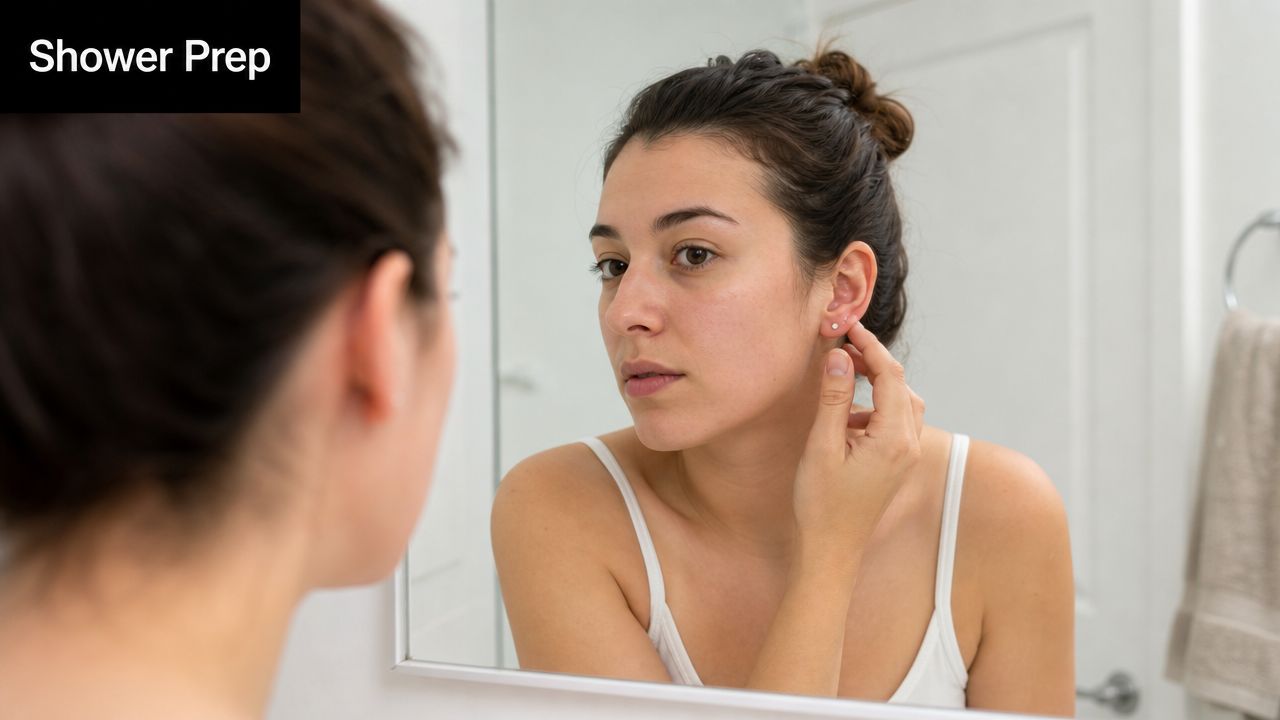
Before you get in
Set yourself up first. Tie long hair back. Keep shampoo, conditioner, hairspray, and strongly fragranced products away from the piercing as much as you can.
You don't need a complicated ritual. You just want to avoid having product sit on the area, because residue can irritate the skin around the channel.
While you're in the shower
Let clean water run near the piercing rather than blasting it straight on. If you tilt your head slightly, you can let water pass over the area without direct pressure. That's especially helpful for cartilage piercings, which can get grumpy fast if they're knocked about.
A quick rinse can help soften any dried discharge around the jewellery. What doesn't help is standing under hot water for ages and treating the piercing like it needs soaking.
Keep the water lukewarm, not hot. Heat tends to encourage swelling, and a fresh piercing doesn't need extra irritation.
What works best in practice
Some habits make healing easier:
- Use a gentle shower stream: High pressure can sting and disturb the site.
- Rinse off product thoroughly: Shampoo left behind is a common reason piercings feel itchy later.
- Don't scrub the area: Your fingers, flannels, and exfoliating gloves don't belong anywhere near a fresh piercing.
- Keep the shower short: Clean is good. Overexposure isn't.
Here's the simplest way to understand it:
| Shower habit | Good idea | Bad idea |
|---|---|---|
| Water contact | Light rinse | Direct force on the piercing |
| Temperature | Lukewarm | Hot |
| Products | Kept away and rinsed off fast | Soap and shampoo sitting on the site |
| Handling | Leave jewellery alone | Twisting or checking it mid-shower |
This applies whether you've had a straightforward lobe done or something more delicate like a flat, tragus, or conch. A shower should leave the piercing cleaner, not more irritated.
Navigating Baths and Avoiding Submersion
This is the part people usually search for most. If you're wondering whether an ear piercing bath is safe when the piercing is fresh, the honest answer is no if that means soaking it in bathwater.
Bathwater starts clean, then quickly stops being clean. It mixes with soap, shampoo, skin residue, and whatever else is coming off your body. Sitting a new piercing in that water isn't aftercare. It's unnecessary exposure.
Why submersion is the problem
A healing piercing does better with fresh running water than with still water. In a bath, the jewellery and the piercing channel stay in contact with the same water the whole time. That's not what you want with a new opening in the skin.
If you really want a bath, keep your head and ears completely out of the water. That's the line. No dipping your ear under for a second. No rinsing your hair back into the tub. No “it'll probably be fine”.
What an ear bath actually means in a studio
The language can get confusing. In professional UK piercing settings, the term ear bath can refer to an ultrasonic jewellery bath, not soaking the ear itself. As explained in this note on professional ultrasonic jewellery cleaning for healed piercings, it's used to deep-clean jewellery after it's removed from a fully healed piercing. It is not a treatment for a fresh piercing.
That distinction matters. New piercings should keep their jewellery in place. Fully healed piercings can sometimes have jewellery removed, cleaned properly, and reinserted. Those are completely different situations.
If someone tells you to “give it an ear bath,” make sure you know whether they mean your ear or the jewellery. For a new piercing, the answer isn't soaking.
If you're bathing a child or teen
Be extra careful around splashing. Keep hair washing separate if needed. Parents often assume a shallow bath is harmless, but ears get dipped more easily than people realise, especially with younger clients.
The safest option during early healing is simple. Shower if you can. If you do take a bath, keep the piercing dry above the waterline the whole time.
The Crucial Post-Wash Drying and Cleaning Routine
What you do after water exposure matters nearly as much as the wash itself. A piercing left damp stays in a warm, moist environment, and that's where irritation tends to build.
Dry it properly
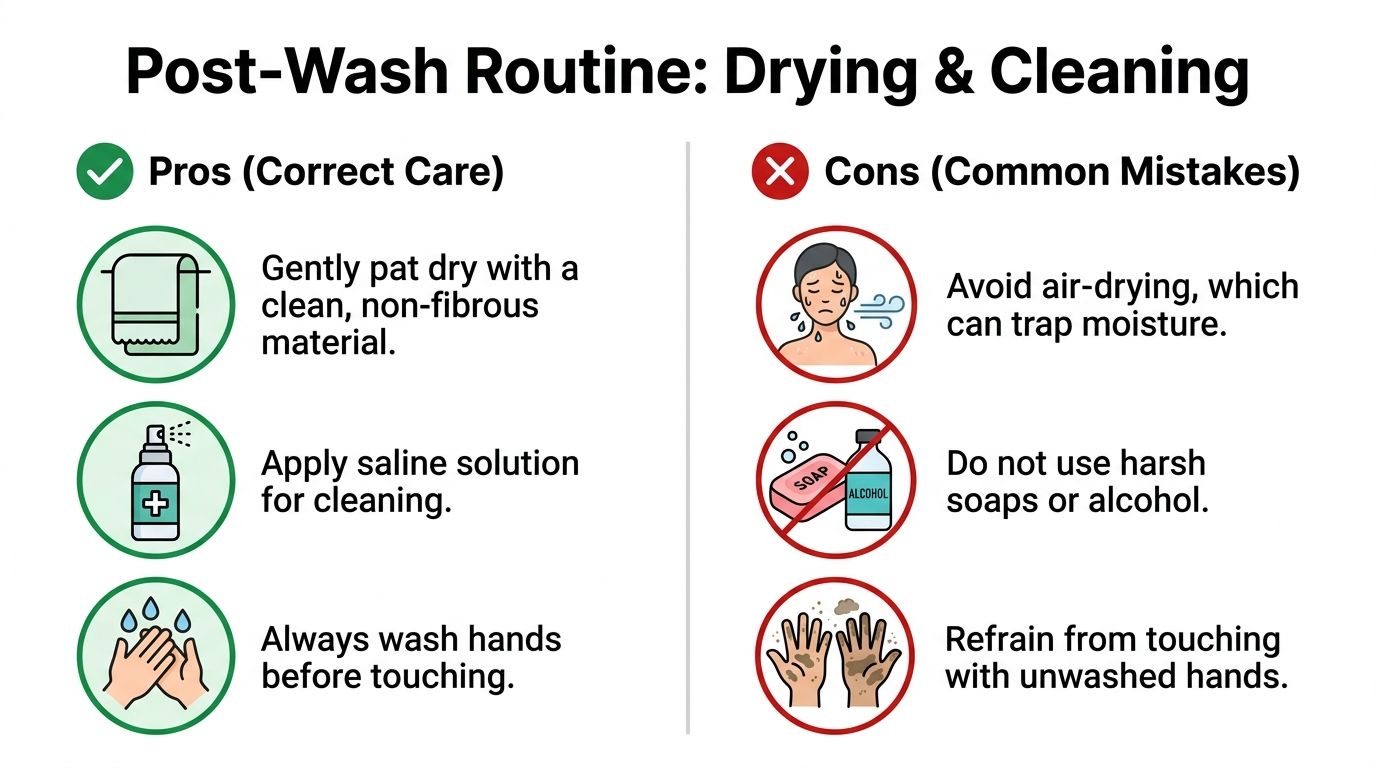
Skip the bath towel. Even a clean-looking towel can leave fibres behind or catch on the jewellery. The safer option is disposable, non-woven gauze, used gently around the area.
A hairdryer on a low, cool setting can also help if you keep it gentle and don't blast the piercing.
- Use light pressure: Dab around the area rather than rubbing.
- Be patient: Moisture trapped behind the ear or around the backing can linger.
- Check both sides: Front and back both need attention.
Clean after the wash, not during it
Once the area is dry or mostly dry, use your sterile saline solution as directed by your piercer. Spray the front and back so the piercing is irrigated gently. Then pat the surrounding area dry again.
The point of saline is to rinse and loosen debris without being harsh. It isn't there to replace basic hygiene, and it shouldn't be left to dry into salty residue if that starts irritating your skin.
Aftercare note: Saline should help the piercing settle. If your skin looks drier and angrier every day, the routine may need adjusting.
A lot of trouble comes from overdoing it. People scrub, soak, add tea tree, use alcohol, or keep the whole area constantly wet. None of that helps a wound heal well.
If you want a fuller breakdown of a sensible routine, this guide on how to clean a new piercing is a good reference.
Water You Must Avoid Pools Hot Tubs and The Sea
Some water is manageable. Some water is off-limits while you heal.
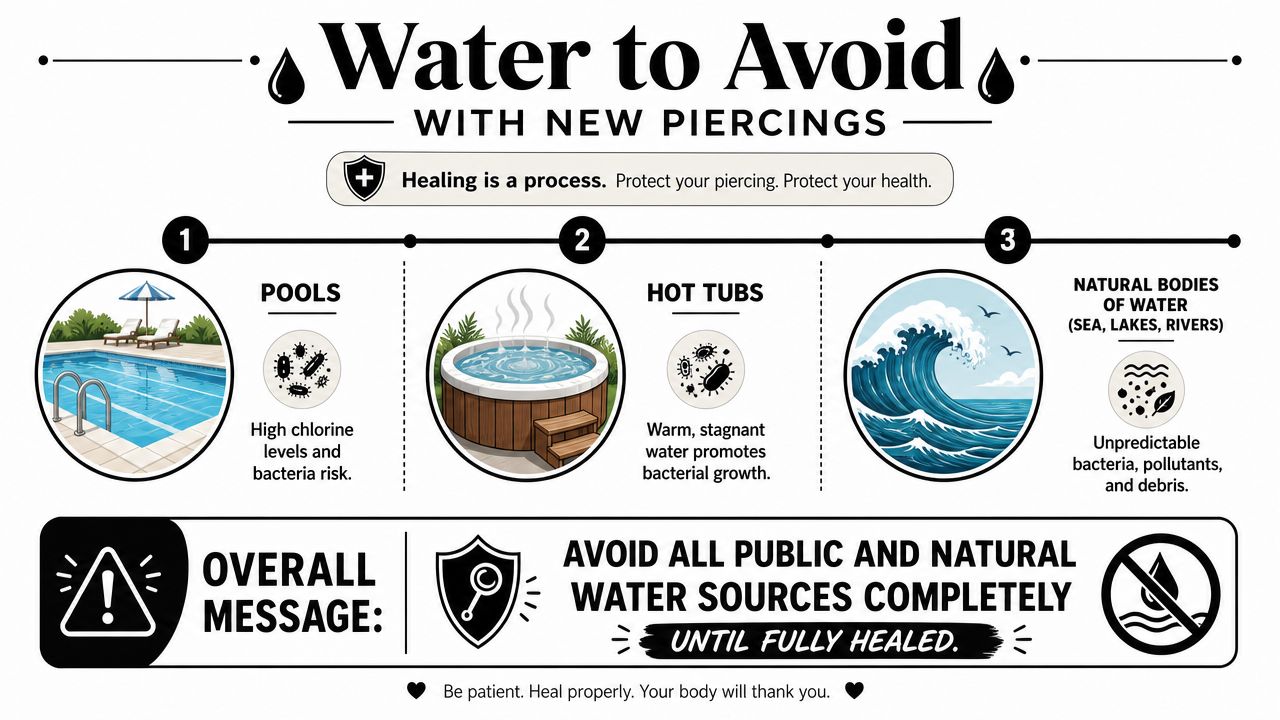
Pools, hot tubs, lakes, rivers, and the sea all need to wait. They each bring a different problem, but the result is the same. More irritation, more contamination, and more chances to turn a calm healing process into a stressful one.
Why these environments cause trouble
Chlorinated pools can still sting and dry out a healing piercing. Hot tubs are worse because warm water gives bacteria a friendlier environment. Natural water adds its own mix of unknowns, including debris and contaminants.
In England, research published on non-lobe body piercing prevalence and complications found that among women aged 16 to 24, nearly half had a body piercing at a site other than the earlobe, and complications occurred in about one-third of cases. That same source notes that a significant share of problems were linked to poor aftercare and contaminated environments such as swimming pools.
A safe waiting guide
Use this as a baseline:
| Piercing type | Before swimming is even worth considering |
|---|---|
| Lobe | At least 6 to 8 weeks |
| Cartilage | A minimum of 6 to 9 months |
Those are not “it's fully settled for everyone” dates. They're conservative points where you can start thinking about exposure more carefully. Cartilage especially likes to look better before it is better.
The simple rule
- No pool days
- No hot tubs
- No sea dips
- No lakes or river swims
If you've booked a holiday right after your piercing, keep the piercing out of the water. That's less exciting, but far easier than trying to calm down an angry helix halfway through a trip.
Is It Healing or Infected When to Contact Your Piercer
Most new piercings go through a stage where they look slightly dramatic but are still healing normally. A bit of redness, light swelling, tenderness, and some clear or whitish crust is common. That alone doesn't mean infection.
The things that need attention are the changes that keep escalating instead of settling.
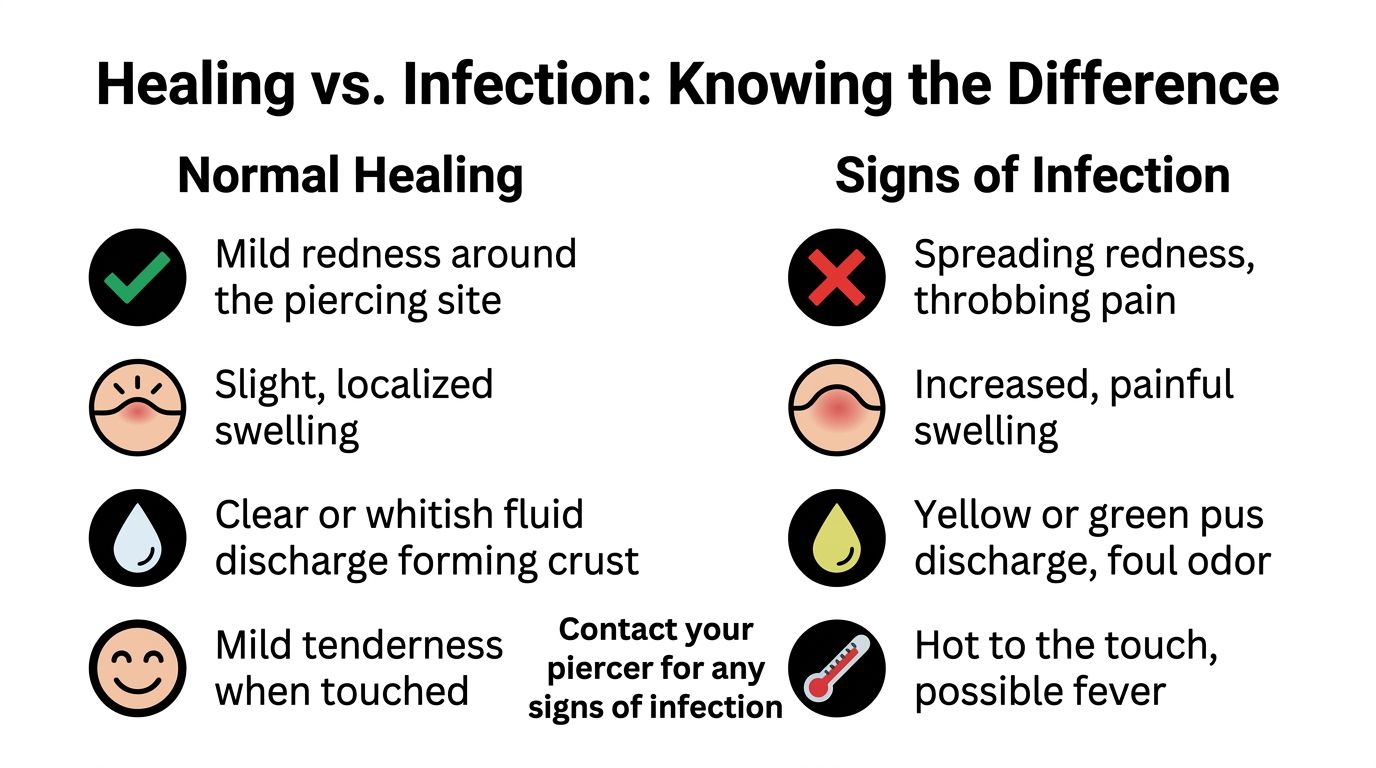
Signs that are usually part of normal healing
| Normal healing | More concerning signs |
|---|---|
| Mild redness close to the piercing | Redness spreading outward |
| Slight local swelling | Increased, painful swelling |
| Clear or whitish crust | Yellow or green discharge |
| Tenderness if knocked | Throbbing pain, heat, or feeling unwell |
If you're seeing the right-hand column, don't leave it to chance. Contact your piercer and get proper advice early.
Why good technique matters
A good start lowers the odds of trouble. A 2022 UK comparison of piercing methods reported complication rates of up to 43% for ear piercings done with guns, compared with 3 to 9% for piercings done with single-use disposable needles. That's why professional technique, sterile setup, and proper aftercare matter so much from day one.
A piercing can be irritated without being infected. But if you're not sure which one you're looking at, ask. Waiting usually doesn't make diagnosis easier.
When to get in touch
Contact your piercer if:
- The redness is spreading
- The swelling is getting worse, not better
- There's yellow or green discharge
- The area feels hot
- You feel unwell or feverish
- The jewellery looks embedded or under pressure
If you want a more detailed breakdown, this guide on how to tell if a piercing is infected can help you compare symptoms.
For clients of Timebomb Tattoo in Bournemouth or Croydon, or if you're unsure at all, please contact us immediately. You can call us on 01202 9000 50 or send a picture to our piercers via WhatsApp on 07752913846. We are here to help.
If you're looking for a safe studio, clear aftercare, and practical guidance before or after your appointment, Piercing Near Me makes it easy to find trusted options and book with confidence.