

Ready for new jewellery, but not sure whether “fast healing” means healed enough to leave alone, sleep on, or change? This distinction is often overlooked. A piercing can settle quickly on the surface and still be nowhere near fully matured underneath.
Healing speed comes down to anatomy. Soft, fleshy tissue with strong blood flow usually settles faster because your body can move oxygen and nutrients into the area more efficiently. Dense cartilage is different. It has less circulation, so even a well-behaved cartilage piercing tends to ask for more patience and better habits.
That's why the fastest healing piercings are usually the ones placed in softer tissue, or in areas where the body recovers cleanly when jewellery size, placement, and aftercare are right. It's also why the wrong habits can turn an easy heal into a frustrating one. Sleeping on it, touching it, changing jewellery too early, or starting with poor-quality metal all slow things down.
Below are seven of the fastest healing piercings people ask me about most often. I'm also going to explain why each one behaves the way it does, what tends to help, and what reliably causes trouble. If you want a piercing that looks good without months of unnecessary drama, these options offer a good beginning.
1. Earlobe Piercing
If you want the clearest answer to “what heals fastest?”, start with the lobe. Earlobe piercings have an estimated healing time of 6 to 8 weeks according to professional piercing guidance, and that's why they're the standard recommendation for first-time clients.
The reason is simple. The lobe is soft tissue, not cartilage. It has reliable blood flow, it moves less aggressively than many facial areas, and it's usually easier to protect in day-to-day life. That combination makes it forgiving, provided the jewellery is high quality and you don't keep fiddling with it.
A plain titanium stud is still the easiest start. It suits almost everyone, gives the channel room to settle, and doesn't add the extra movement that hoops often do in a fresh piercing. If you're building an ear curation later, the lobe also gives you the best foundation.
What helps it heal cleanly
A quick-healing piercing can still get irritated if you treat it casually. The fastest lobe heals usually come from boring habits done consistently.
- Choose body-safe jewellery: Implant-grade titanium or solid gold is the safer starting point for a fresh lobe.
- Keep cleaning simple: Sterile saline twice daily is enough. If you want a fuller overview of timing and expectations, ear piercing healing times are worth reviewing before you book.
- Protect it while sleeping: A travel pillow or sleeping on the opposite side can prevent pressure and crooked healing.
- Reduce snagging: Hair down, scarves, and over-ear clothing changes can all catch the jewellery.
Practical rule: Clean it, dry it, leave it alone.
What doesn't work is twisting the earring “to stop it sticking”, using tea tree oil, or changing to fashion jewellery too soon because the outside looks calm. Lobes are fast, but fast doesn't mean careless.
2. Nostril Piercing
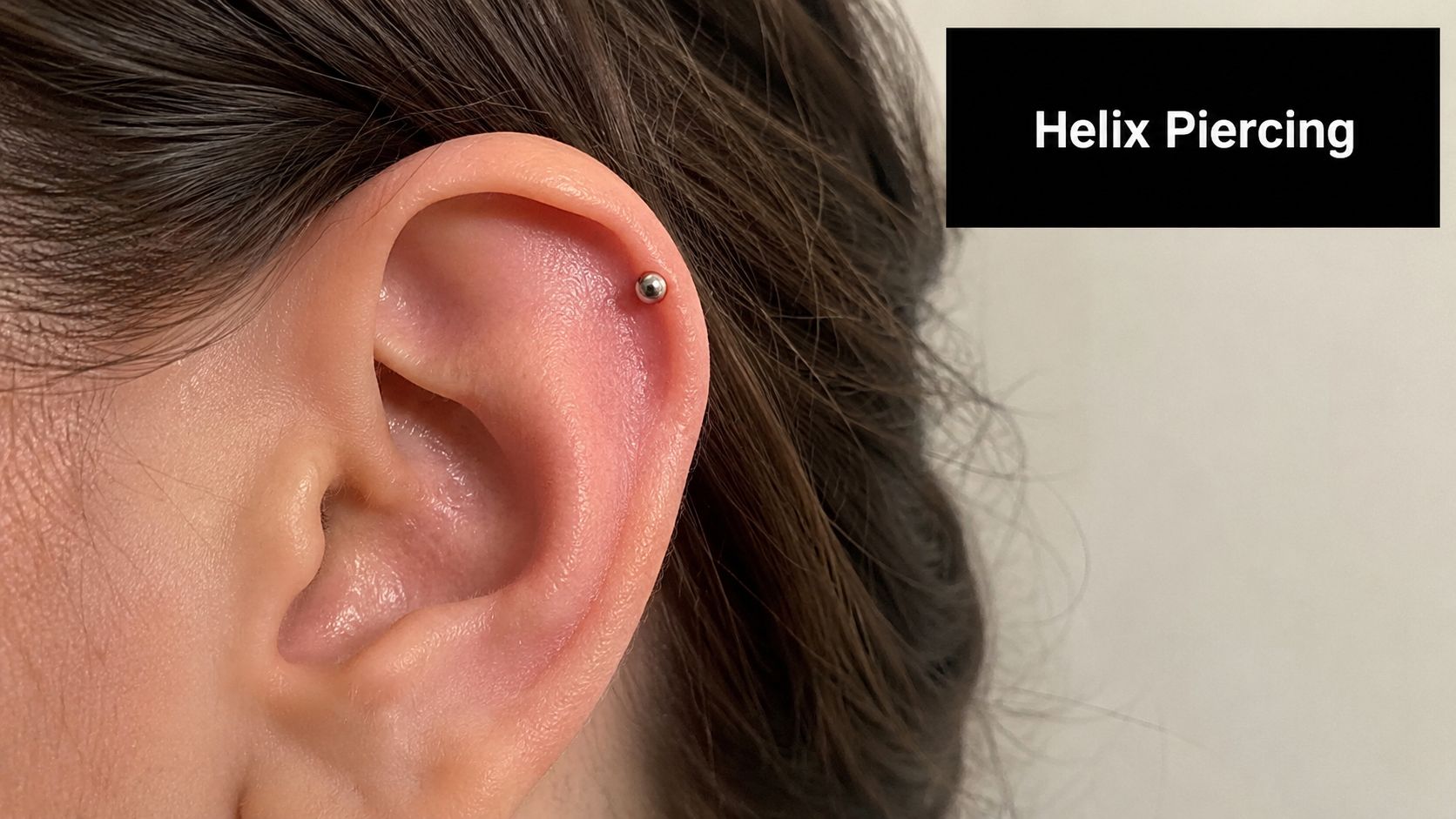
The nostril is one of the fastest healing piercings people choose when they want something visible but still easy to wear with most styles. It sits on soft tissue beside the nasal opening, so it often settles more smoothly than people expect, especially when fitted with a well-sized stud.
Culturally, it has huge range. Some clients want a nostril piercing because it connects with South Asian jewellery traditions. Others come in because they've seen it worn in alternative scenes, or because it now feels completely mainstream. That versatility is part of its appeal. A tiny titanium bead can read subtle. A bright gem or gold end turns it into the focal point of the face.
Here's the main trade-off. The nostril is easy to bump. Towels, skincare, makeup, jumpers, and pillow friction all get involved far more often than people realise.
What clients get right and wrong
For fresh nostrils, a stud usually behaves better than a hoop. Hoops rotate, catch, and drag dried discharge through the channel. That's one of the fastest ways to create an irritation bump.
- Pick the right starter jewellery: Implant-grade titanium or gold keeps things straightforward.
- Be careful with face products: Foundation, SPF, cleansers, and spot treatments near the piercing often cause unnecessary irritation.
- Delay jewellery changes: If you're unsure what's realistic, this guide to nostril piercing healing time is useful before you decide on a hoop.
- Watch your bedding: A clean pillowcase matters more than people think.
A nostril piercing usually behaves well when you stop giving it reasons to flare up.
The people who struggle most are usually doing too much, not too little. They over-clean, they inspect constantly, and they swap jewellery the minute the swelling drops.
3. Septum Piercing
A well-placed septum can be one of the smoothest facial heals in practice. Not because it's magical, but because the correct placement goes through the softer “sweet spot” tissue rather than thick cartilage. When that anatomy is suitable, clients often find the healing period easier than they expected.
It's also one of the most flexible looks on this list. Visible ring for a statement. Retainer or flipped-up jewellery when you need it discreet. That's why it's stayed popular across rock style, queer fashion, mainstream beauty, and everyday wear.
The catch is precision. A badly placed septum is rarely a minor inconvenience. It can mean more pain, more swelling, and a far rougher recovery.
The placement matters more than the jewellery style
I'd take a plain, correctly fitted titanium horseshoe in the right spot over a fancier ring in the wrong spot every time. Septums reward good anatomy assessment.
- Choose an experienced piercer: Septum work is technique-led. The placement must suit your anatomy.
- Keep aftercare gentle: A simple sterile saline routine is enough. If you need a dependable product, saline spray for piercing is the right category to look for.
- Don't keep flipping it: Constant movement during the early phase creates irritation.
- Be gentle when ill: Colds and hay fever don't ruin a septum piercing, but rough nose blowing can.
Studio advice: If a septum feels dramatically worse each day instead of calmer, get it checked early.
What doesn't help is trying to self-manage every issue with stronger products. Septums hate overreaction. They usually want less interference, not more.
4. Helix Piercing
How fast does a helix really heal if you do everything right?
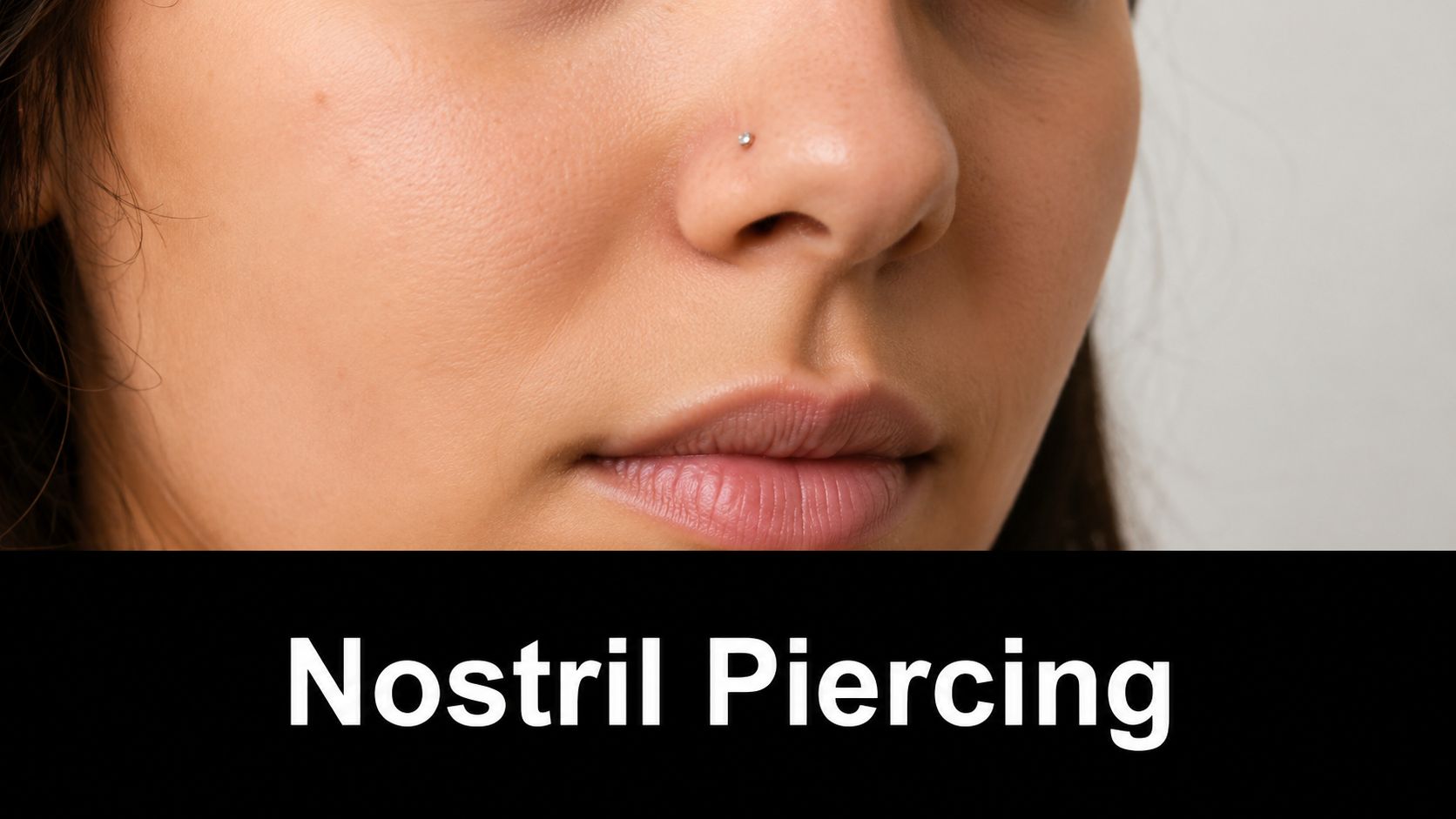
Faster than many cartilage piercings, slower than soft-tissue placements. The reason is simple. A helix goes through cartilage, which has less blood supply than the lobe or nostril, so healing tends to be steadier and less forgiving of pressure.
That trade-off catches people off guard. The placement looks simple, but the outer rim of the ear gets knocked constantly by hair, glasses, helmets, hats, over-ear headphones, and sleep. A helix can look calm on the surface while the channel is still settling underneath.
Why helix healing often slows down
In the studio, helix problems are usually mechanical. Repeated pressure and snagging cause more trouble than a missed clean ever will.
- Choose proper piercing technique: Cartilage should be pierced with a sterile needle by a trained professional, not a gun.
- Start with implant-grade titanium jewellery: Good material removes one common source of irritation.
- Protect it while sleeping: A travel pillow or a deliberate side-sleeping adjustment can prevent weeks of setback.
- Reduce daily friction: Tight hats, hair caught around the post, and heavy headphones can keep a helix in a cycle of irritation.
Jewellery choice matters here. I usually advise a well-fitted stud for the initial heal because hoops move more, and movement creates more opportunity for swelling, bumps, and angle changes. Once the tissue is stable, a ring can work well. Early on, stability wins.
Helix piercings reward patience. If it feels fine for a few days, that does not mean it is ready for a jewellery change or regular pressure. Calm healing is the goal. Fast healing usually follows good placement, suitable anatomy, and fewer interruptions.
5. Conch Piercing
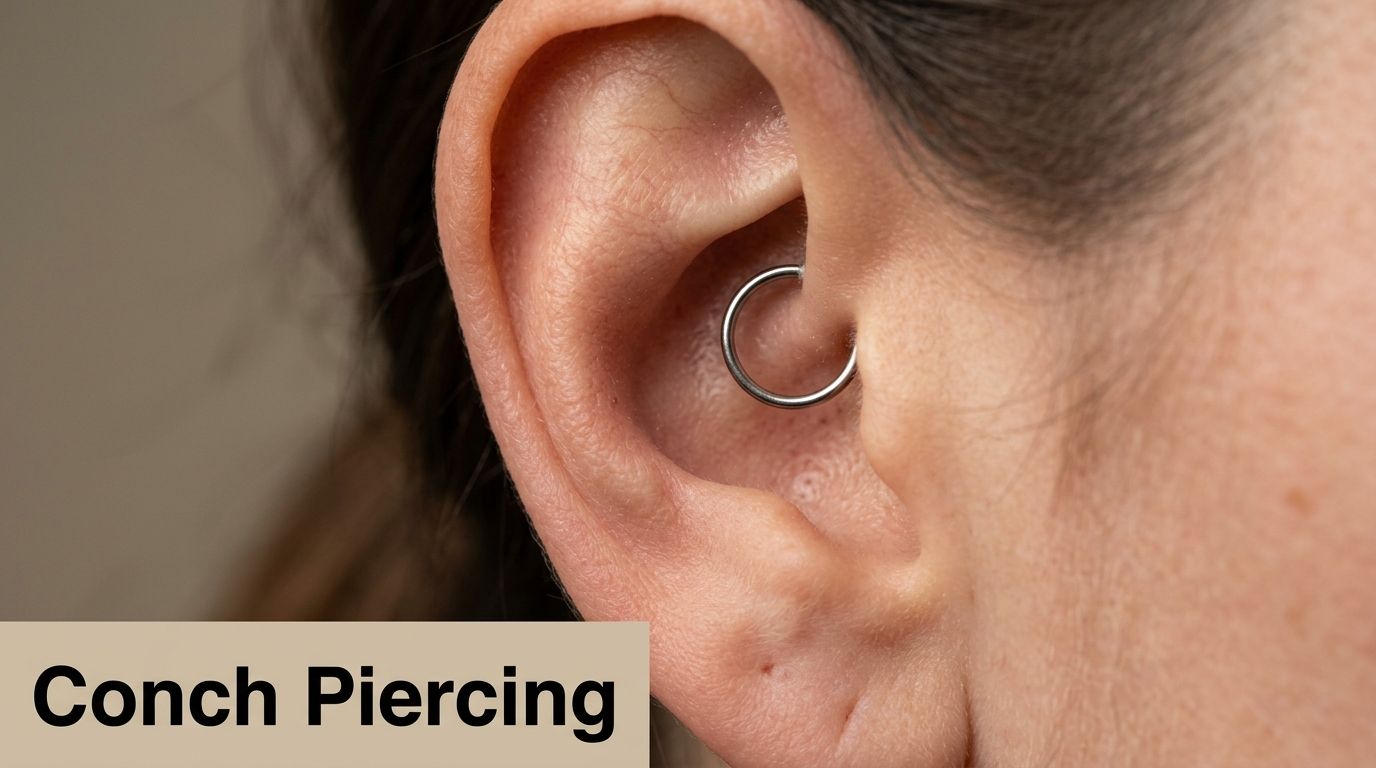
The conch has presence. Even a simple stud looks deliberate because the placement sits in the bowl of the ear where jewellery naturally draws the eye. It's one of the faster cartilage piercings in relative terms, but I still treat it with the same respect as any ear cartilage work.
Inner conch and outer conch placements can both look excellent, but they don't suit every ear the same way. A good piercer should assess depth, curve, and how the jewellery will sit once swelling settles. That's especially important if your long-term goal is a hoop after healing rather than a stud.
What makes conch healing easier than clients expect
The conch can be less snag-prone than a helix for some people because it sits more protected inside the ear. That said, sleeping on it will still undo good progress very quickly.
- Get the anatomy checked first: A thoughtful placement makes cleaning and long-term jewellery options much easier.
- Use saline around the base of the jewellery: Dried build-up around the front or back can create irritation if it's left sitting there.
- Keep hair and hair products away: Hairspray, dry shampoo, and conditioner residue are regular culprits.
- Leave the inside of the ear alone: Cotton buds pushed into the area usually make things worse.
Clients often panic when a conch gets moody for a while. Small irritation bumps aren't unusual with cartilage. The useful question isn't “how do I make it disappear today?” It's “what keeps aggravating it?”
6. Snug Piercing
The snug is the most selective piercing on this list. It can heal well, and it can look brilliant in a curated ear, but it is not for every anatomy. If the ridge isn't defined enough, forcing the placement is a mistake.
When it does suit the ear, the snug creates a strong line through the inner cartilage that looks more unusual than a standard helix or conch. It's popular with clients who already have a few healed piercings and want something that adds structure to the whole ear design.
Be honest about the trade-off
The snug may be listed among faster inner-ear cartilage options in some guides, but it still behaves like cartilage and still demands consistency. This isn't the piercing I'd call low-maintenance.
- Have your anatomy assessed properly: “I like the look” isn't enough if your ear won't support the piercing well.
- Use suitable jewellery: Implant-grade titanium curved barbells are usually the most sensible starting point.
- Avoid pressure at night: Snugs dislike side-sleeping intensely.
- Expect some attitude: Minor swelling and irritation can happen even when aftercare is good.
The snug is worth it when the anatomy is right and the client is patient. It's frustrating when either one is missing.
What doesn't work is treating it like a lobe because it sits tucked inside the ear. It's still a cartilage piercing, and cartilage remembers every bad habit.
7. Anti-Tragus Piercing
The anti-tragus is a small placement with a surprisingly strong visual effect. It sits opposite the tragus and can bring real balance to an ear, especially if you already have a tragus, lobe stack, or conch.
I like it for clients who want something distinctive without committing to a large statement piercing. It's less common, which gives it that “what is that?” factor, but it still integrates well into a wearable ear setup.
What to expect from healing
Because it's cartilage, the anti-tragus still needs patience and protection. The biggest issue is pressure. Earbuds, sleep, helmets, and phone habits all tend to hit this area.
- Book with someone who knows the placement: Tiny cartilage areas leave less room for error.
- Stick to implant-grade titanium: Curved barbells are often the most stable option.
- Keep pressure off it: This piercing does badly when compressed over and over.
- Don't rush the first jewellery change: Stability matters more than variety in the early stage.
One thing I always tell clients is that uncommon piercings aren't automatically harder. They're just less forgiving of poor placement and impatience. Done well, the anti-tragus can heal cleanly and look excellent.
7 Fastest-Healing Piercings: Quick Comparison
| Piercing | Implementation Complexity 🔄 | Resource & Aftercare ⚡ | Expected Outcomes 📊 | Ideal Use Cases 💡 | Key Advantages ⭐ |
|---|---|---|---|---|---|
| Earlobe Piercing | Low, simple soft-tissue placement, minimal anatomy constraints | Low, saline clean twice daily, implant‑grade jewellery | Heals 6–8 weeks; low complication rate; highly versatile look | First‑timers, all ages, foundation for ear collections | Fastest healing, minimal pain, high jewellery versatility |
| Nostril Piercing | Low to moderate, soft tissue beside nasal opening, straightforward placement | Low, saline care, avoid makeup and touching, implant‑grade jewellery | Heals 6–10 weeks; visible facial accent that's easily styled or concealed | Facial statement or subtle looks; professional settings where discreetness needed | Quick facial healing, versatile jewellery, easily concealable |
| Septum Piercing | Moderate, requires anatomical precision and experienced piercer | Moderate, saline soaks, avoid flipping early, implant‑grade jewellery | Heals 6–10 weeks; concealable yet bold when shown; low migration risk | Clients who want reversible statement or mix of alternative/professional styles | Concealable, bold impact, adaptable to many styles |
| Helix Piercing | Moderate, curved outer cartilage, good placement skill needed | Moderate, saline soaks, protect from pressure, implant‑grade jewellery | Heals 8–12 weeks; good for stacking and aesthetic combinations | Building ear galleries, visible upper‑ear styling | Faster healing among cartilage piercings; excellent for stacking |
| Conch Piercing | Moderate to high, inner cartilage depth and placement matter | Moderate, saline soaks, careful cleaning, avoid tight earbuds | Heals 8–12 weeks; strong focal point for statement jewellery | Focal piece in ear galleries; bold, fashion‑forward looks | Large area for statement pieces; reliable healing with care |
| Snug Piercing | High, anatomy‑dependent, precise inner‑ridge placement required | Moderate, saline soaks, curved jewellery, avoid sleeping on side | Heals 8–12 weeks; distinctive look but prone to bumps in some cases | Experienced collectors seeking balanced ear symmetry | Unique aesthetic that enhances ear gallery balance |
| Anti‑Tragus Piercing | Moderate to high, small pointed cartilage, careful placement needed | Moderate, saline soaks, avoid pressure/sleeping on side, implant‑grade jewellery | Heals 8–12 weeks; provides strong visual balance opposite tragus | Paired designs with tragus; clients wanting distinctive inner‑ear placements | Strong aesthetic impact; good healing when accurately placed |
Your Piercing Aftercare and Next Steps
Want the quickest route to an easy heal? Choose a piercing that suits your anatomy, then protect it from irritation every day.
Healing speed comes down to tissue type, blood flow, placement, jewellery fit, and how much the area gets knocked around in daily life. That is the part many studio lists skip. An earlobe usually settles faster than cartilage because soft tissue has a stronger blood supply. A septum often heals smoothly because the sweet spot passes through a thin membrane rather than dense cartilage. By contrast, helix, conch, snug, and anti-tragus piercings deal with firmer tissue and more pressure from sleep, headphones, hair, and phone use.
Aftercare is simple, but consistency matters. Clean the piercing with sterile saline, keep hands off the jewellery, and leave the jewellery still. Do not twist it. Do not sleep on it. After showers or cleaning, dry the area gently so moisture does not sit against the channel.
Healing also has stages. A piercing can look calm and feel fine before the fistula has fully strengthened. UKAPP's explanation of healing at the cellular level explains why tissue keeps remodelling long after the early tenderness fades. In practice, that means jewellery changes should happen on your piercer's timeline, not just when the piercing seems settled.
Small habits make a real difference. Pressure from travel pillows, tight clothing, helmets, earbuds, makeup, hair products, and rough towel drying can all slow healing. If a piercing starts to feel hot, develops worsening swelling, or produces thick yellow or green discharge, speak to your piercer promptly so you can address the cause early.
If you want a professional opinion before you book, or if you need help choosing jewellery and placement that will heal well on your anatomy, the team at Timebomb Tattoo & Piercing can help. We use single-use sterile needles, implant-grade titanium jewellery, and aftercare that matches the piercing you have. For consultations and appointments in Croydon or Bournemouth, call 01202 9000 50 or message WhatsApp on 07752913846.
If you're comparing studios, jewellery options, or healing advice before you book, Piercing Near Me is a practical place to start. It helps you find safe, professional piercing services with clear aftercare guidance, trusted studio information, and direct routes to book with experienced piercers in Croydon and Bournemouth.