
A nostril piercing usually takes 2 to 8 months to heal, and some guidance puts the more typical initial healing window at 2 to 4 months. The part that catches first-time clients out is that this isn't one simple countdown. A piercing can look settled on the outside while the tissue inside is still delicate and easy to irritate.
If you're staring at a fresh nostril stud in the mirror and wondering when it will stop feeling “new”, that's the right question to ask early. Good healing is less about waiting for redness to fade and more about giving the channel enough time to strengthen properly.
That's where most mistakes happen. People feel better, assume they're healed, twist the jewellery, swap to a hoop, catch it on a towel, or stop aftercare too soon. Then the piercing flares up and they think something has gone wrong, when often the issue is that the inside hadn't finished healing.
A well-done nostril piercing can heal smoothly, but patience isn't optional. Safe studios build that into everything they do, from placement and jewellery choice to the aftercare advice you're given on the day.
Understanding Your Nostril Piercing Healing Journey
You get pierced on Saturday, clean it carefully for a week, and by the second or third week it looks settled in the mirror. That is the point where many first-time clients get caught out. The outside can calm down well before the inside of the piercing channel has finished repairing.
A nostril piercing heals in two layers. The skin you can see often settles first. The tissue inside the nostril and around the jewellery takes longer to strengthen, especially because that area moves every time you smile, wash your face, sleep on one side, or catch the stud with a towel. A piercing that looks calm can still be easy to irritate.
That is why healing times come as a range, not a single promise. Earlier guidance in this article covered the usual timeline. In practice, what matters day to day is whether the fistula, the healed channel around the jewellery, is becoming stable without repeated setbacks.
What first-time clients usually notice first
First-time clients often do well in the first few days because they are paying close attention. Trouble tends to show up in the middle phase, once the piercing looks ordinary and stops demanding respect.
Common mistakes at this stage include:
- Touching the jewellery absent-mindedly because the tenderness has eased
- Letting skincare, makeup, or hair products sit on the site
- Reading a calm surface as a green light to stop aftercare
- Changing to a different stud or hoop before the channel is ready
A settled appearance is encouraging. It is not proof of full healing.
What good healing looks like in real life
Good healing is usually quiet. The area stays comfortable, any crusting becomes less frequent over time, and cleaning does not trigger fresh swelling or soreness every few days.
Clients sometimes assume more care means better care. In a piercing, that often backfires. Over-cleaning, rotating the jewellery, checking it constantly, or switching products because of one irritated day can keep the tissue inflamed longer than necessary.
A good studio prepares you for that from the start. The goal is not to get the piercing looking fine for a few weeks. The goal is to let it heal strongly enough that normal movement, routine cleaning, and later jewellery changes do not set you back. That takes patience, and it takes following the aftercare you were given rather than guessing once the redness fades.
The Four Stages of Nostril Piercing Healing
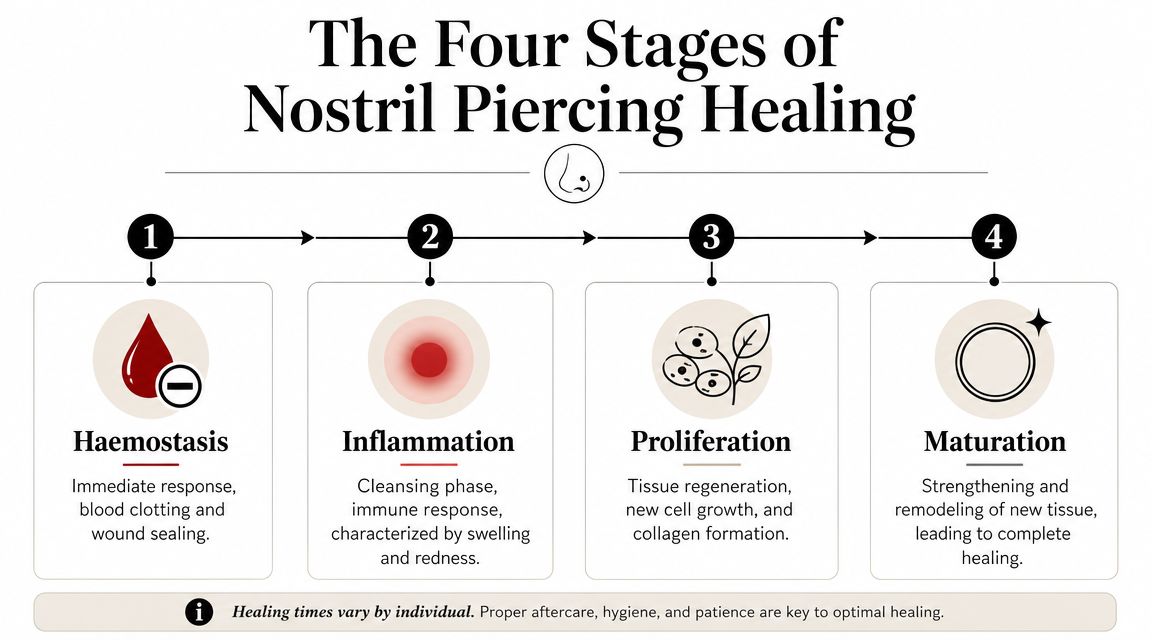
Healing makes more sense if you picture your body building a tunnel through soft tissue. At first, it's just trying to stop bleeding and protect the area. Then it cleans up damage, lays down new tissue, and finally strengthens that tissue so the tunnel can hold up over time.
That last part is why nostril piercings can be deceptive. The entrance and exit may look tidy long before the tunnel itself is strong.
How the stages work
Haemostasis
This starts immediately after the piercing. Your body works to stop bleeding and seal the wound. You may notice a tiny amount of blood at the time of the piercing or shortly after. That's normal and part of the first repair response.
Inflammation
This is the clean-up phase. The area may look pink or red, feel warm, and swell slightly. A first-time client often worries here, but mild swelling and tenderness are expected while the immune system clears debris and starts protecting the wound.
Proliferation
The tunnel begins to form. New tissue develops around the jewellery, and at this stage, “crusties” often appear. Those dried deposits are usually just healing fluid drying on the jewellery. They aren't glamorous, but they're common.
Maturation
This is the slow stage. The tissue remodels, strengthens, and becomes less reactive. This is also where many people get impatient because the piercing looks much better than it is internally.
Nostril Piercing Healing Stages
| Stage | Typical Duration | What to Expect |
|---|---|---|
| Haemostasis | Immediate | Minor bleeding, clotting, wound sealing |
| Inflammation | Early healing phase | Redness, tenderness, slight swelling |
| Proliferation | Active tissue-building phase | Crusting, reduced soreness, forming channel |
| Maturation | Longest phase | Strengthening tissue, less visible irritation, internal settling |
What to trust more than appearance
Guidance discussing nostril healing stages notes that nostril healing is often put at 2 to 4 months, while some piercer guidance puts it at 2 to 3 months and suggests that if there have been 2 to 3 weeks with no crust or discharge, it may be fully healed. The useful takeaway isn't that you should self-clear it on a strict date. It's that reduced discharge tells you more in the short term than appearance alone.
Practical rule: if it looks healed but still produces crust, gets sore when knocked, or flares after cleaning, treat it like it's still healing.
What works best during these stages is simple. Clean it gently, leave the jewellery alone, avoid snagging it, and don't judge progress by looks alone. A nostril piercing that heals well is usually one that wasn't disturbed while the body was trying to finish the job.
Key Factors That Influence Your Healing Speed
A nostril piercing can look calm on the surface and still be vulnerable inside. That gap explains why one client feels settled after a few weeks while another is still getting flare-ups months later. The outside can stop looking angry long before the channel underneath has finished strengthening.
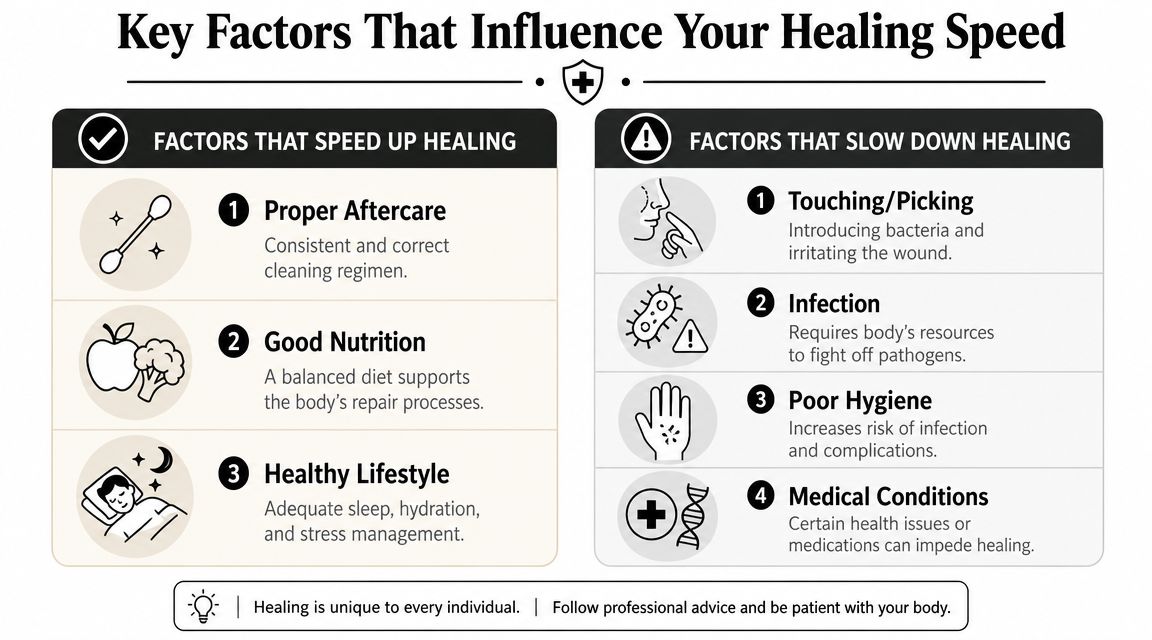
Healing speed depends on two things. How well the piercing was set up on day one, and how much irritation it deals with afterwards. Good anatomy assessment, correct placement, a sterile needle, and implant-grade jewellery give the tissue a fair start. Poor fit or poor placement can slow healing from the beginning, even if the piercing looked fine when it was done.
Jewellery choice matters more than clients expect. Starter jewellery needs enough room for swelling, but not so much that it shifts, catches, or gets knocked every time you wash your face. Material matters too. Quality titanium, solid gold suited for fresh piercings, or other studio-approved options are less likely to trigger irritation than low-grade mystery metal.
The same is true of lifestyle. Sleep, stress, friction, and hygiene all affect how settled the piercing stays. If you sleep on that side, wear heavy makeup around it, keep touching it, or snag it with towels and clothing, the tissue has to keep dealing with small setbacks. A single bump rarely ruins a piercing. Repeated bumps keep it from progressing.
One of the most common trade-offs is choosing a hoop too early. Hoops suit some healed nostrils well, but during healing they move more, rotate debris through the channel, and put pressure on the entry and exit points as they turn. A well-fitted stud is usually easier for the tissue to tolerate while the inside is still immature.
Over-cleaning causes trouble too. Clients often assume that extra cleaning means better healing. In practice, constant wiping, twisting, soaking, and checking usually keeps the piercing irritated. A simple routine done properly is more helpful than an aggressive one. If you need product guidance, use a sterile saline spray for piercing aftercare and keep the rest of the routine restrained.
Some factors are yours to control. Some are not. Anatomy, immune response, allergies, and general health vary from person to person. What you can control is where you go, what jewellery you start with, and how much interference the piercing deals with once you leave the studio.
For most clients, better healing comes down to a short list:
- Choose an experienced piercer who uses sterile single-use needles and jewellery meant for fresh piercings
- Start with jewellery that suits healing, not just the look you want long term
- Keep your hands off except during cleaning
- Reduce pressure and snagging from phones, towels, face washing, and sleep
- Get the fit checked early if the jewellery feels tight, excessively long, or keeps catching
That is the core difference between a piercing that only looks settled and one that is healing well underneath. Patience helps, but setup and aftercare decide how much patience the piercing will need.
Your Daily and Weekly Aftercare Routine
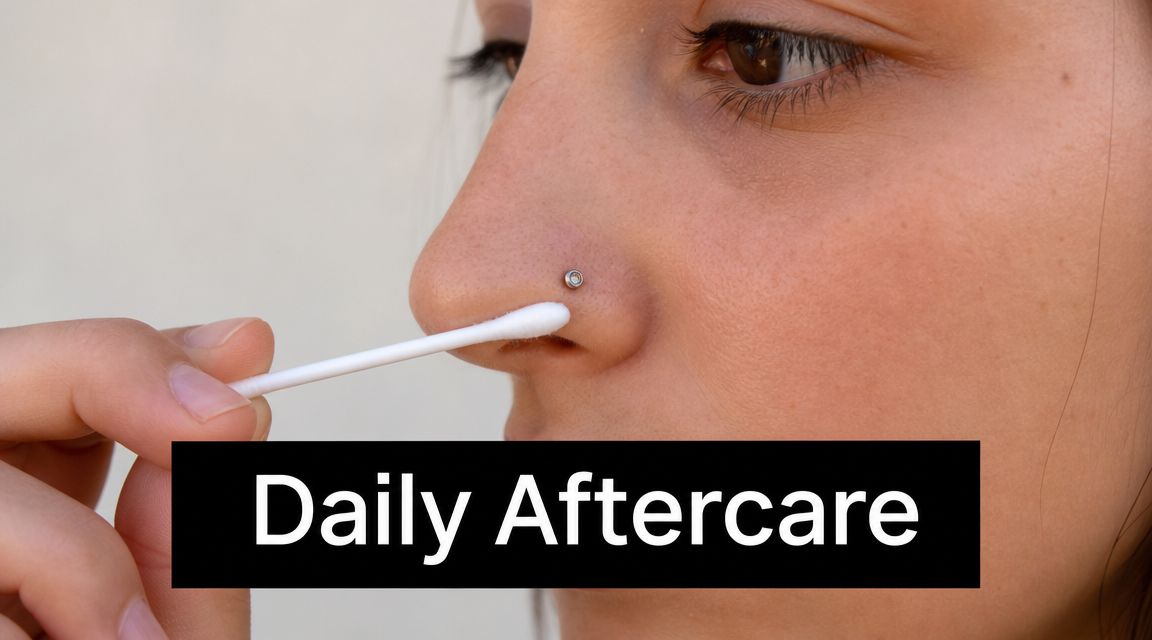
The best aftercare for a nostril piercing is steady and restrained. You're not trying to scrub a wound into healing. You're keeping the area clean while giving the body a quiet environment to repair itself.
Your core routine
Follow a simple routine and stick to it:
- Wash your hands first. If your hands aren't clean, don't touch the piercing.
- Use sterile saline twice daily. If you need guidance on product choice and technique, read this guide to saline spray for piercing aftercare.
- Let softened crust come away naturally. Don't pick at it dry.
- Pat dry with clean disposable material if needed. Avoid rough fabric and avoid dragging fibres across the jewellery.
What works and what doesn't
What works is consistency. A gentle saline cleanse in the morning and evening is usually enough for most clients, provided you aren't contaminating the site the rest of the day.
What doesn't work:
- Twisting the jewellery to “stop it sticking”
- Using alcohol or peroxide
- Applying creams, ointments, or tea tree oil
- Submerging it in pools, hot tubs, or questionable water
- Letting makeup or skincare sit directly on the piercing
If crust builds up, soften it first. Don't scrape it off. Dry, stuck crust pulled through the channel can create irritation that sets you back.
Leave it alone between cleans. Most angry nostril piercings are overhandled.
Weekly habits that make a difference
Healing isn't just about the two minutes you spend cleaning. It's also about what happens around the piercing all week.
Keep an eye on practical habits:
- Be careful when drying your face
- Watch for phone, pillow, or glasses pressure
- Keep hair products away from the site
- Change pillowcases regularly
- Don't let other people handle the jewellery
If anything feels off, don't wait until it becomes a bigger problem. A quick check-in can save you a lot of aggravation. For direct studio advice, call 01202 900050 (Bournemouth) / 020 8686 7730 (Croydon) or message WhatsApp 07752 913846 (Bournemouth) / 07902 490584 (Croydon).
Is It Healing or Infected What to Look For
Most first-time clients ask this at some point, and usually for good reason. A healing nostril piercing can look a bit rough before it looks settled. That doesn't automatically mean infection.
The key is to look for pattern, not panic over one symptom in isolation.
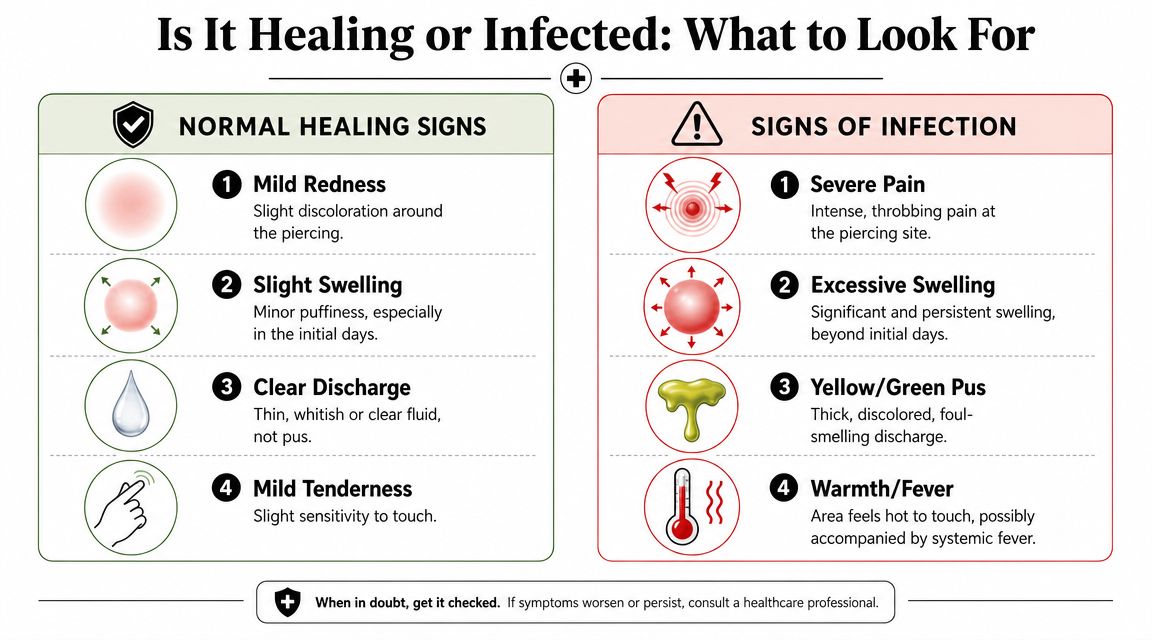
Normal healing signs
A piercing that's healing normally may have:
- Mild redness close to the entry point
- Slight swelling, especially early on or after being knocked
- Clear or whitish discharge that dries into crust
- Mild tenderness if it catches or gets pressed
Those signs usually improve gradually. They may come and go a bit, especially if the jewellery has been bumped, but the overall trend should be calmer over time.
Signs that need more attention
A possible infection tends to feel worse, not merely different. Warning signs include:
- Pain that increases rather than settles
- Marked swelling that doesn't ease
- Thick yellow or green discharge
- A foul smell with obvious inflammation
- Heat at the site or feeling unwell generally
If you want a fuller symptom breakdown, this guide on how to tell if a piercing is infected is a useful companion.
If the piercing is irritated, aftercare and jewellery fit often need review. If you suspect infection, you need proper medical advice.
Irritation versus infection
A lot of nostril problems are irritation. The difference matters. Irritation often comes from movement, pressure, harsh cleaning, or poor jewellery fit. Infection is a medical concern. The two can overlap, but they aren't the same thing.
Use this quick comparison:
| Healing or irritation | Possible infection |
|---|---|
| Local mild redness | Redness that spreads or worsens |
| Light crusting | Thick discoloured pus |
| Tender if knocked | Strong, persistent, throbbing pain |
| Settles with gentler care | Keeps worsening despite leaving it alone |
If you're unsure, ask. That's what follow-up support is for. Don't remove jewellery on a guess, and don't self-treat with random products from the bathroom cupboard. If you need advice from the studio, call 01202 900050 (Bournemouth) / 020 8686 7730 (Croydon).
When Can You Change Your Nostril Jewellery
You wake up, the redness has settled, it no longer feels sore, and the stud looks fine in the mirror. That is the point where many people change it too soon.
A nostril piercing often looks healed before it is healed through the full channel. The outside calms down first. The inside takes longer to strengthen, and that hidden healing time is what decides whether a jewellery change goes smoothly or sets you back with irritation, swelling, or a bump.
The first piece of jewellery is part of the healing plan, not something to swap as soon as it stops drawing attention. In studio practice, the first change is usually a timing and fit decision, not a style decision. A piercing may be calm enough for a professional downsize earlier on, while a full style change often needs much more patience.
Downsize versus style change
A downsize is done by your piercer once the early swelling has dropped and the original post has become too long. Less excess length means less movement, fewer snags, and a better chance of steady healing.
A style change is different. That means changing to a different top, a different shape, or a hoop because you prefer the look. Leave that until the piercing is healed well internally, not just quiet on the surface.
What I recommend in practice
For a first jewellery change, let your piercer assess it in person. Jewellery fit, angle, tissue condition, and any history of bumps all matter. Two nostril piercings done on the same day can be ready at different times.
Keep these rules in mind:
- Do not change the initial jewellery yourself unless your piercer has told you it is ready
- Do not judge it by appearance alone
- Be careful with hoops early on, because extra movement can irritate the channel
- Use implant-grade, correctly fitted jewellery for any change
- Book a check-up if you are unsure, especially if the piercing has been crusty, snagged, or temperamental
If you are weighing up studs, hoops, sizes, or thread types, this guide to nostril piercing jewellery options for each healing stage will help you choose more safely.
The clients who wait a bit longer usually have the easier time. The ones who swap jewellery because it "looks healed" are often back in the studio asking why it has become angry again.
Trackbacks/Pingbacks