
In the UK, a septum piercing is usually around £25 to £35 including jewellery in informal pricing discussions, but that headline figure is rarely the full ticket. Treat it as a service fee, because the final amount can rise once the studio adds the jewellery you want and the standard of metal they use.
If you're comparing quotes right now, that's probably the bit that feels fuzzy. One studio says one number, another says something lower, and by the time you're at the counter the “cheap” one can turn into the pricier appointment. The reason is simple, septum pricing is usually a service plus jewellery purchase, not a single fixed fee, and that distinction matters more than people realise.
Why Septum Piercing Prices Vary So Much in the UK
A septum quote looks simple until you ask what's inside it. People search for a septum piercing price with a budget in mind, then get caught out because the studio has only priced the piercing itself, not the ring, clicker, or metal upgrade.
The headline number is only the starting point
The cleanest way to read a quote is to ask whether it's service-only or all-in. UK pricing discussions consistently describe septum piercing as a service plus jewellery purchase, because studios often quote a base fee and then add the jewellery choice on top, especially when clients want implant-grade titanium or gold instead of the basic starter option, and that's the main reason the total changes from one studio to the next. Independent pricing guides also show that septum piercings tend to sit above simpler nose piercings because placement accuracy and specialist aftercare matter more, which is why a cheap-looking quote can still become expensive once the desk conversation starts. The practical version is this, if a studio won't spell out what's included, you don't really have a price yet. You've got a starting point.
Practical rule: if the quote doesn't say whether jewellery is included, assume it isn't.
Two studios can quote different numbers and both be honest
That's not a contradiction, it's pricing structure. One studio may advertise the piercing alone, another may bundle basic jewellery, and a third may include a higher-grade starter ring, which makes their figures look unrelated even if the underlying work is similar. For UK clients comparing options, the useful question isn't “Which number is lowest?” It's “Which number buys the same thing?”
This is why local comparison matters more than chasing a single national figure. If you want a broader UK price reference point, use the local studio listings first and then check what the line items cover, rather than treating the headline quote as the final answer. A useful starting point for local comparison is this septum piercing prices overview, because it pushes you to look at the structure, not just the sticker price.
The Two Cost Centres Behind Every Quote
Every sensible septum quote has two moving parts, and if the studio doesn't separate them clearly, I'd be wary. The first is the piercer's service fee, the second is the jewellery specification. Those two things behave differently, so they should never be treated as the same cost.
What the service fee is really paying for
The service fee covers the appointment itself, the piercer's time, the consultation, the sterile single-use needle, the setup, and the studio's overheads. You're paying for competence, clean procedure, and accurate placement. That's the part you don't want to bargain down.
A septum piercing also has a technical sweet spot. The standard benchmark is 16 gauge (1.2 mm) with a common diameter of 8 mm (5/16") (roserypoetry.com). That's the useful baseline because it tells you what “standard” means when a studio says starter jewellery. If your anatomy needs a different fit, or you want a larger diameter, the price moves because the jewellery gets less interchangeable and the studio has to match the piece to your nose rather than pulling a generic item from a tray.
What the jewellery line changes
Clients get stung, pun intended. A basic ring at a standard size is one thing. A decorative clicker, a larger diameter, or a solid gold piece is another. Even if the piercing itself is identical, the jewellery line can push the total up fast because the material and the fit are doing different jobs.
If you want a deeper look at what studios stock, compare the jewellery choices here: UK body jewellery options. The lesson is blunt, the service fee buys the piercing, the jewellery fee buys the metal. If you can separate those two in your head, you can separate a fair quote from a padded one.
How Jewellery Material Moves the Final Total
Material is the biggest lever in the whole equation. If a studio gives you a price that sounds too good, check the metal first, because the difference between a basic piece and a heal-friendly upgrade is usually where the numbers start to climb.
Basic, healing-grade, premium
In practice, UK clients are usually offered three tiers. Basic surgical steel is often the entry point, implant-grade titanium or niobium is the sensible healing standard, and 14k to 18k gold is the premium upgrade. The lower tier can keep the quoted figure attractive, but it's not always the best choice for a fresh septum, especially if your skin is sensitive. Implant-grade jewellery costs more because it's the kind of metal reputable piercers want in a healing piercing, and that's the sort of detail that should be visible in the quote, not hidden until you're already sat in the chair.
Comfort now versus regret later
A cheaper metal can irritate a fresh piercing and make the healing process more awkward than it needs to be. Titanium and niobium are popular because they're used as safer, higher-quality starting points, while gold sits at the luxury end and should be chosen because you want the material, not because you've been pushed into an unnecessary upsell. That's why I tell clients to decide on the metal before they walk in, not after the tray is open.
A good studio won't sell you jewellery by guilt. It'll explain the metal, the fit, and the reason the piece costs what it does.
The price logic is simple. If the studio includes implant-grade jewellery in the headline number, that quote may be better value than a cheaper service-only deal that forces an upgrade on the day. If you want to compare material choices without guesswork, start with the studio's jewellery range and ask what's included before you book, because the metal is the part you'll live with after the appointment is over.
Hidden Line Items Beyond the Piercing Fee
A serious septum budget doesn't stop at the chair. The first appointment is only part of the spend, and clients who ignore the add-ons end up surprised later. The honest way to price a septum piercing is to think in line items, not slogans.
The extras that quietly raise the bill
Some studios charge separately for a consultation, especially if they're doing a proper anatomy check and placement discussion before piercing. That's not automatically a bad sign, because anatomy matters and a rushed placement is far more expensive to fix than a careful consultation. A second piece of jewellery can also come into play later if the initial ring needs downsizing after swelling settles, and that's another cost people forget when they're comparing quotes.
Aftercare products are part of the total spend too. Sterile saline spray is the standard practical purchase, and it's not optional if you want the piercing to heal cleanly. The cheapest appointment on the board can become the most expensive one if it's followed by a rushed upgrade, an extra jewellery swap, and a pile of aftercare products bought in a panic at the counter.
How to read an all-in quote properly
A higher all-in quote often saves money because it removes the guesswork. A bare-bones quote looks cheaper only until you add the extras. If a studio is transparent, it should tell you whether the price includes consultation, starter jewellery, and any aftercare guidance you'll use.
Think about your first few months, not just the day of piercing. A quote that bundles the important parts can be better value than a stripped-back price that forces decisions on the spot. If the studio is serious about clarity, it should be happy to spell out what's in and what's out before you commit.
Croydon and Bournemouth Pricing Cues
Local pricing has to be read through local overheads. Croydon and Bournemouth don't operate on the same cost pressures, so you should expect the quote structure to feel similar even if the exact number isn't.
Croydon should look like an inclusive mid-band quote
Croydon sits in a London-adjacent market, so rent, staffing costs, and competition all push reputable studios towards more inclusive pricing. In plain English, that usually means the quote may look a bit higher, but it should be clearer about what's included. If the studio is doing things properly, implant-grade jewellery should be a standard discussion, not an awkward upsell.
Bournemouth should stay competitive without cutting corners
Bournemouth has different overheads and a stronger South Coast value expectation, so pricing should stay competitive while still keeping hygiene and jewellery quality at the centre. Don't confuse competitive with cheap. The right question is whether the studio is still using sterile, professional practice and offering sensible jewellery, because that's what protects the piercing and your money.
If you want the number that matters, ask for it directly. Call 01202 900050 (Bournemouth) / 020 8686 7730 (Croydon) or message 07752 913846 (Bournemouth) / 07902 490584 (Croydon) and ask for a confirmed, itemised quote before you book. That's the cleanest way to know whether the price is service-only, jewellery-included, or hiding add-ons you'll only discover at the desk.
Booking and Preparation Without Surprise Charges
A smooth booking usually means a cleaner bill. People who ask the right questions before the appointment rarely get hit with a surprise, because the studio has already told them what the price includes and what it doesn't.
The booking script I'd use myself
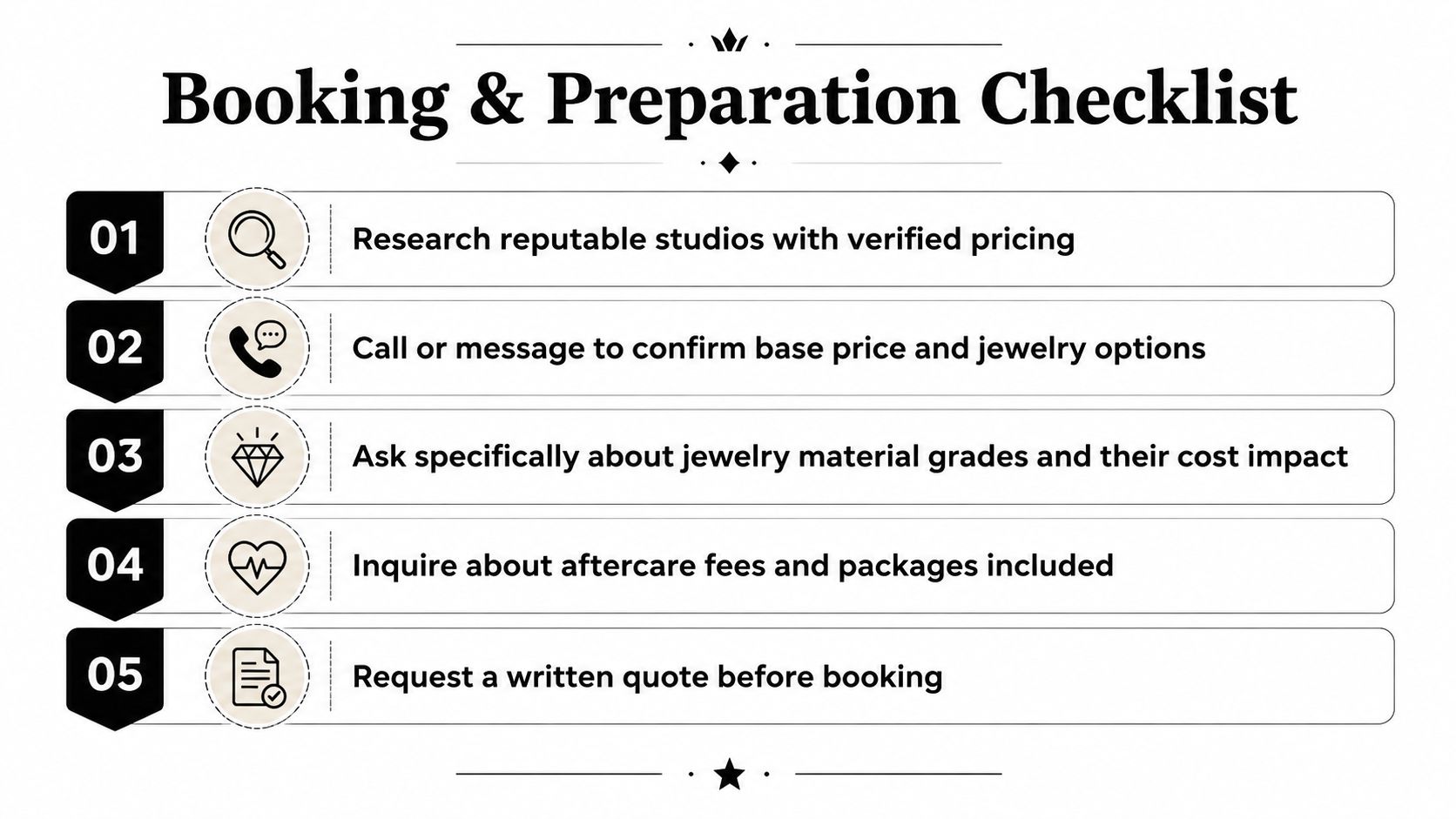
Start by asking whether the quoted figure includes jewellery, consultation, and aftercare advice. Then ask what material they fit as standard, because that's where the price usually shifts. If you're under 18, ask what ID or consent policy applies before you travel, because that saves a wasted visit and stops awkward last-minute conversations at the desk.
Preparation matters too. Eat beforehand, skip alcohol, and don't turn up after taking blood-thinning medication unless a medical professional has told you it's fine. Bring a clear idea of the jewellery you want, not just “something nice”, because vague decisions are exactly how clients end up paying for upgrades they didn't plan for.
What to ask for in writing
A written quote is the safest version of a booking. If the studio can send a message with the base price, jewellery inclusion, and any consultation requirement, you've got something concrete to compare. That protects you from a changing figure on the day and keeps the conversation professional.
Booking through the studio's own site keeps the appointment, pricing, and aftercare guidance tied together, which matters more than people think when they're dealing with a fresh piercing and a budget. If the studio is organised, the written quote should match the booking, not drift from it.
Aftercare as a Real Cost Component
A septum piercing doesn't stop costing money when you leave the studio. Aftercare is part of the true price, because the healing period determines whether your original spend stays neat or turns into a mess of extra products and avoidable problems.
Healing time affects your budget
The NHS says septum healing typically takes up to 8 weeks and advises cleaning with sterile saline while avoiding touching, twisting, or moving the jewellery (NHS-aligned aftercare guidance). That's not just a hygiene note, it's a budgeting point. A piercing that's handled badly can need more products, more caution, and sometimes more professional help than you expected.
A clean pillowcase routine, regular saline use, and a disciplined hands-off approach are cheap compared with dealing with irritation. The piercing fee looks small if you ignore the healing window, but the true cost lives in the weeks after the appointment. If you're comparing studios, the one that gives clearer aftercare guidance is usually the one taking the work seriously.
Budget for the boring stuff
Sterile saline spray should be treated like part of the purchase, not an optional extra. So should the habit changes that keep the piercing calm, like not twisting the jewellery and not sleeping on a dirty pillowcase. If a downsizing appointment becomes necessary later, that's another reason to ask the studio upfront what follow-up care might cost.
You'll find more practical guidance on body piercing aftercare if you want to plan the full healing period properly. The cheapest septum piercing is the one that heals cleanly the first time.
Smart Decisions and Quick Pricing FAQs
The decision comes down to three things. Studio reputation, jewellery material, and whether consultation and aftercare are bundled. If you keep those three levers in mind, the rest of the noise falls away fast.
FAQ
- Is the quoted figure all-in? Ask directly. If the studio won't say whether jewellery is included, assume it isn't.
- Is a septum cheaper than other facial piercings? It's often priced in the mid-range, but the final total depends more on jewellery and studio standards than the piercing alone.
- Can I buy jewellery separately later? Yes, but the initial piece still matters because it affects healing and comfort.
- What if the price changes on the day? Stop and ask why. If the quote was clear beforehand, there should be no surprise jump without a reason.
If you want the price to stay controlled, get the quote in writing before you go. Then use the studio's contact details, 01202 900050 (Bournemouth) / 020 8686 7730 (Croydon) and 07752 913846 (Bournemouth) / 07902 490584 (Croydon), or visit Piercing Near Me to lock in a confirmed itemised price with a studio that can tell you exactly what you're paying for.