
You’ve probably got a tab open with jewellery styles you like, a few screenshots saved on your phone, and one big question running underneath all of it. How do you get pierced safely without ending up with cheap jewellery, bad advice, or a healing nightmare?
That’s the point where most first-time clients get stuck. The look is easy to fall in love with. The practical side is where people get overwhelmed.
Good uk body jewellery isn’t just about picking something pretty. It’s about choosing the right shape, the right material, the right size, and the right studio for your anatomy and healing. When those parts line up, a piercing feels straightforward. When they don’t, people end up blaming the piercing when the problem lay with the jewellery or the fit.
Your First Step into the World of UK Body Jewellery
A lot of first appointments start the same way. Someone walks in wanting a nostril, helix, navel, or septum piercing, excited about the final look but unsure about everything before that. They’ve heard mixed advice from friends, seen fashion jewellery sold as piercing jewellery, and don’t know which details matter.
That uncertainty is normal. Piercing has been mainstream in the UK for a long time. A landmark survey in England of over 10,000 adults found that 10% had a body piercing somewhere other than their earlobe, and nearly half of women aged 16 to 24, 46.2%, reported having one. For first-timers, that matters because it means you’re not stepping into something unusual or fringe. You’re joining a form of self-expression that’s already part of everyday life.
What first-timers usually worry about
Most nerves come from a few practical points:
- Pain: People want to know if it will hurt. The honest answer is yes, briefly, but the process is fast and controlled in a professional studio.
- Healing: Clients worry about doing something wrong afterwards. Usually, problems come from over-cleaning, touching, or wearing poor jewellery.
- Choosing the wrong thing: This is common. A style can suit one anatomy beautifully and be a poor choice for another.
- Looking too bold: Plenty of jewellery options are subtle. A small polished titanium piece can be very understated.
What actually makes the difference
The biggest shift happens when you stop treating body jewellery like fashion accessories and start treating it like body-safe equipment first, style second.
Practical rule: Your first piece should be chosen for healing, not for maximum decoration.
That doesn’t mean boring jewellery. It means starting with something your body can tolerate well. Once the piercing is established, your options open up.
The right mindset before you book
If you’re new to uk body jewellery, keep it simple. Ask three questions before anything goes near your skin:
| Question | Why it matters |
|---|---|
| What material is this? | Material affects irritation, allergy risk, and healing quality. |
| Is this the right shape for a fresh piercing? | Some styles look good but heal badly as starter jewellery. |
| Is it fitted for my anatomy? | The wrong length or diameter causes pressure, swelling issues, and movement. |
A good studio should answer those clearly, without vague wording or sales talk. If they can’t tell you the exact material or why that jewellery shape was chosen, that’s a warning sign.
Exploring Popular Body Jewellery Types and Styles
Jewellery names can sound technical when you first hear them. In practice, most pieces are easy to recognise once you know what each one is built to do.
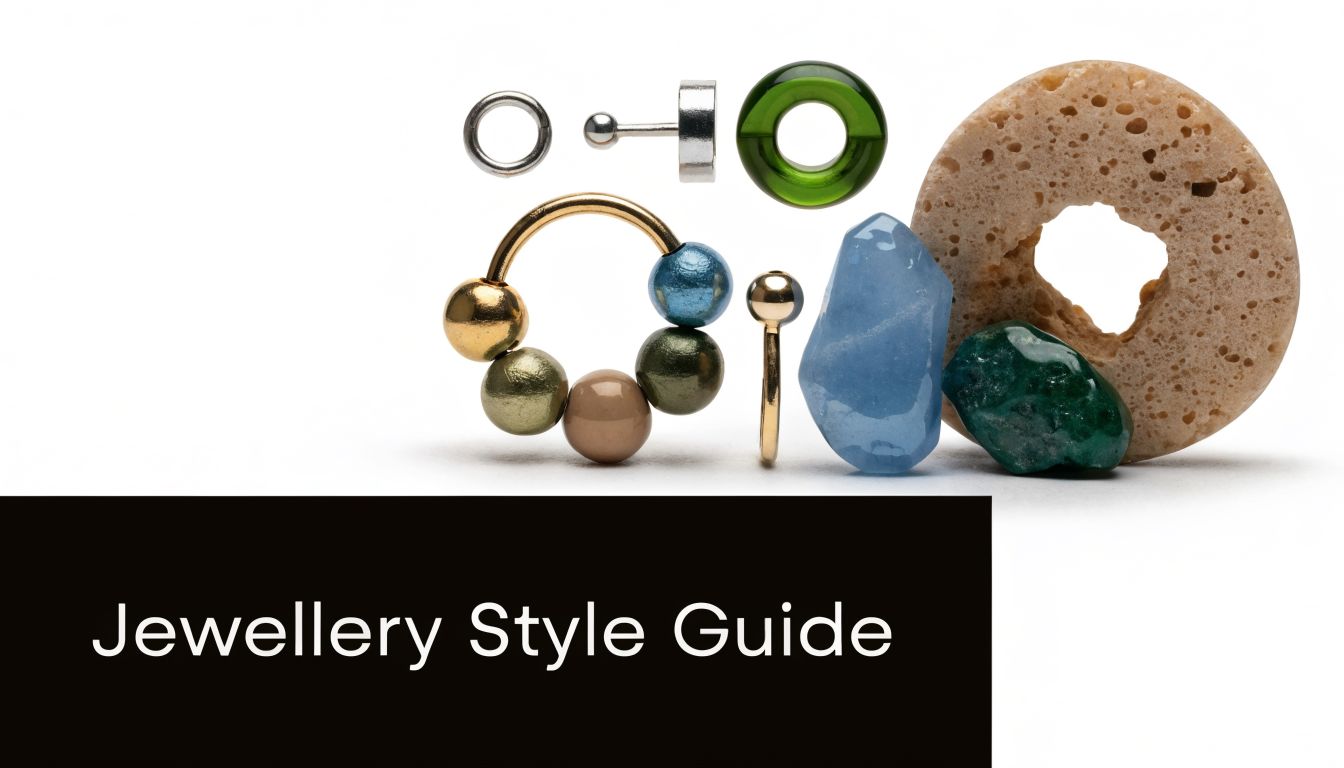
Studs and bars
These are the workhorses of piercing.
Labret studs
A labret stud has a flat disc on one end and a decorative top on the other. Think of it as a very secure stud with a flat back instead of a butterfly clasp.
They’re commonly used for:
- Lips
- Nostrils
- Helix
- Flat
- Conch
- Tragus
For many fresh piercings, this is one of the most practical choices because the flat back sits neatly and doesn’t snag as much as bulkier designs.
Straight barbells
A straight barbell looks like a small dumbbell. It has a straight post with a ball or attachment at each end.
You’ll usually see them in:
- Tongue piercings
- Nipple piercings
- Industrial piercings
- Some ear cartilage placements
Straight barbells need correct length more than almost any other style. Too short and they compress tissue. Too long and they move around too much.
Curved barbells
A curved barbell follows a gentle banana shape. It’s often the standard for:
- Navel piercings
- Rook piercings
- Eyebrow piercings
- Some anatomy-dependent placements
Curved barbells work when the piercing channel itself suits a curve. If the angle is wrong, even nice jewellery won’t sit well.
Rings and circular styles
Rings are popular because they look clean and classic, but they’re not always the best first choice.
Hinged segment rings
These click open and shut with a hidden seam. They’re popular in healed:
- Septum piercings
- Daith piercings
- Helix piercings
- Nostril piercings
They look sleek, which is why clients love them. The downside is that very ornate versions can be awkward for a fresh piercing.
Captive bead rings
A captive bead ring holds a bead in place under tension. It’s an older studio staple and still useful in some placements.
It can be a good option when you want a classic ring look without a decorative hinge mechanism, though insertion and removal are more fiddly than with clickers.
Circular barbells
These are often called horseshoes. They’re ring-shaped, but with a gap and a ball on each end.
You’ll often find them in:
- Septum
- Daith
- Eyebrow
- Lip placements, depending on anatomy
They’re practical because the balls can be changed, and the jewellery can be styled up or down easily.
A ring isn’t automatically “better” because it looks more finished. In many fresh piercings, a well-fitted stud heals with less drama.
Decorative shapes matched to the body
Some jewellery is made for a specific placement.
| Jewellery style | Common placement | Why it works |
|---|---|---|
| Navel curve | Belly button | Follows the shape of the tissue |
| Septum clicker | Septum | Easy to wear once healed, strong visual effect |
| Flat-back end | Lip or cartilage | Low profile and easier to manage daily |
| Small gem nostril stud | Nostril | Simple, secure, and neat |
What to ask for in the studio
If you want a smoother consultation, use descriptive language instead of guessing names.
Try this:
- “I want something minimal and flat-backed.”
- “I like the look of a ring later, but I’m happy to heal with a stud.”
- “I want gold colour, but only if it’s suitable for a fresh piercing.”
That gives your piercer something useful to work with. Good uk body jewellery starts with matching the shape to the piercing, not just choosing whatever looks nicest in a tray.
Decoding Jewellery Materials The Gold Standard for Safety
Material is where safe piercing either starts well or goes wrong early. Clients often spend ages comparing gem colours and almost no time asking what the jewellery is made from. That’s backwards.
For a fresh piercing, the material isn’t a minor detail. It’s one of the biggest factors in whether the area settles cleanly or becomes irritated for weeks.
Why implant-grade titanium leads the pack
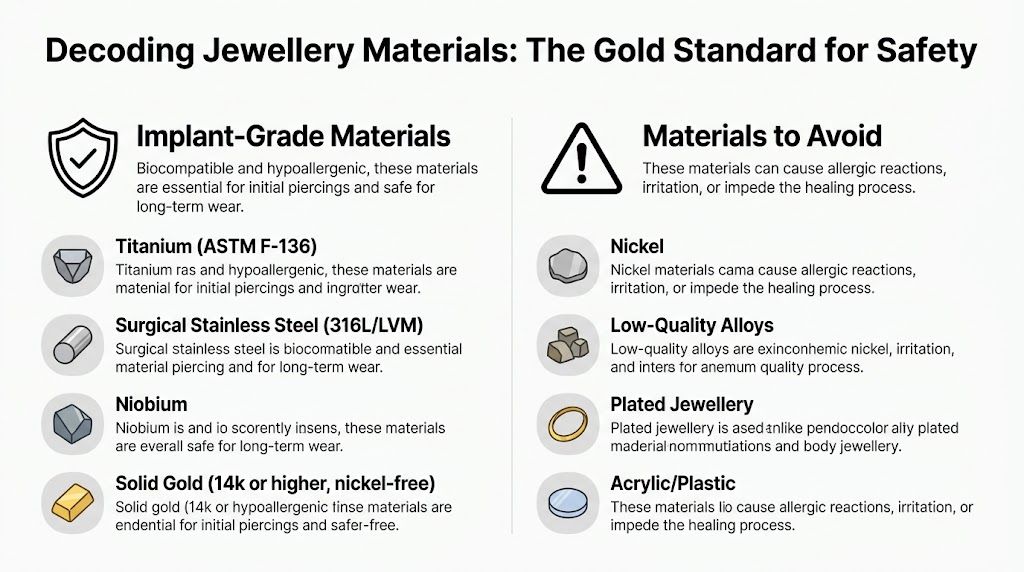
If you want the short version, ASTM F136 implant-grade titanium is the material most professional piercers want to see in initial jewellery.
That isn’t marketing language. Implant Grade Titanium ASTM F136 is 45 to 60 percent lighter than surgical steel, meets the EC Nickel Directive for items in contact with broken skin because it’s naturally nickel-free, and is the same grade used by the NHS for bone pins.
Those points matter in real life:
- Lighter jewellery puts less drag on a fresh piercing.
- Nickel-free composition reduces a common source of irritation.
- Medical implant use tells you the material standard is serious, not vague.
A lot of clients notice the comfort difference quickly. Titanium feels less heavy, especially in cartilage and navel placements where pressure and movement can slow things down.
What “surgical steel” often hides
Many first-time clients are often misled regarding the term. The phrase surgical steel sounds safe, but it’s often used far too loosely.
The problem isn’t that all steel is identical. The problem is that many sellers use the label without telling you the exact grade, whether it’s appropriate for a healing piercing, or whether it contains enough nickel to cause issues for sensitive clients.
316L or ASTM F138 surgical steel contains 6 to 13 percent nickel and isn’t suitable for fresh piercings under the broken-skin nickel restrictions covered by the EC Nickel Directive. It becomes acceptable only after full epithelisation, typically 6 to 12 weeks post-piercing, depending on the piercing and the individual healing process. That makes generic “starter steel” a poor recommendation for a new piercing.
If a seller only says “surgical steel” and can’t state the grade, that’s not enough information for a fresh piercing.
Safe material choices and weak material choices
Here’s the practical comparison most clients need:
| Material | Fresh piercing suitable | Practical note |
|---|---|---|
| ASTM F136 titanium | Yes | Best all-round choice for initial jewellery |
| Properly alloyed solid 14ct+ gold | Sometimes, if suitable | Needs to be solid and appropriate for piercing use |
| Generic surgical steel | No for fresh piercings | Too often sold without meaningful grade detail |
| Plated jewellery | No | Plating can wear and expose poor base metals |
| Acrylic or mystery metal | No | Best avoided in healing tissue |
If you like warm-toned jewellery, there are good titanium and gold options available after discussing suitability with your piercer. For example, if you’re browsing decorative healed options like gold daith jewellery, the key is still the same. Make sure the material spec is clear and the piece suits the placement.
What works in the studio and what doesn’t
What works:
- Implant-grade titanium with a stated standard
- Smooth polish and clean finishing
- Internally threaded or threadless quality pieces
- Jewellery chosen for the piercing, not just the look
What doesn’t:
- Mystery metal from online marketplaces
- Heavy decorative pieces in fresh piercings
- Cheap plated jewellery sold as piercing-safe
- Any item with no clear material specification
The price question
Titanium usually costs more than budget steel. That’s the trade-off. You pay more up front for a material that gives a fresh piercing a better chance to heal calmly.
From a practitioner’s point of view, that’s money well spent. Replacing poor jewellery later, dealing with swelling, and troubleshooting avoidable irritation is usually far more frustrating than choosing the right material at the start.
UK Piercing Regulations Sizing and Legal Guidance
A client might walk into the studio with the right jewellery style in mind, then lose the appointment over one missing document or the wrong age for that placement. That is a normal part of UK piercing. Good studios check the legal side before a needle ever comes out.
Age checks and parental consent
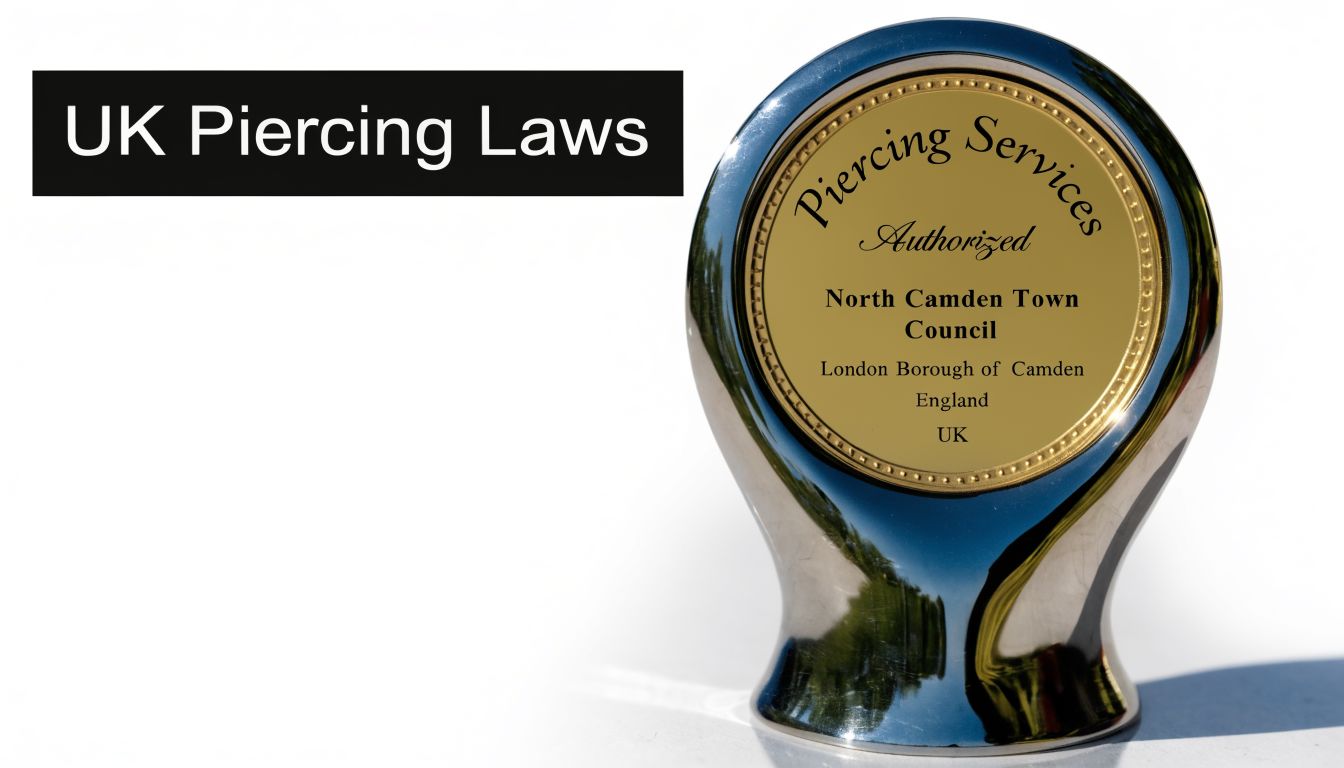
One of the biggest gaps in uk body jewellery advice is clear guidance on age limits, ID, and consent. Professional studios must follow local council bylaws, often requiring photo ID for clients aged 16 and over, plus written parental consent with the parent present for most piercings on under-16s.
Studios are strict about this for good reason. We are checking age, capacity to consent, and whether the placement is one we are willing and allowed to perform under our local rules and insurance. Those details can vary between councils and studios, especially for teens.
If you want a placement-specific example, this guide on UK nose piercing age requirements and consent rules shows the kind of policy detail worth checking before you travel.
Bring these to avoid problems
- Photo ID for the person being pierced. Do not rely on a verbal age confirmation.
- A parent or guardian in person where required. Many studios will not accept consent by phone or text.
- Completed consent forms. Missing details can delay or cancel the appointment.
I have seen more appointments stopped by missing ID than by any jewellery issue.
What licensing actually tells you
In the UK, piercing businesses usually need local registration or licensing for skin-piercing activities. For a client, that is a useful baseline check. It shows the studio is operating within local public health rules rather than from an informal back room or pop-up setup.
Licensing is not a guarantee of excellent piercing. It does tell you the studio should have proper hygiene procedures and a traceable business presence. The rest comes down to standards inside the room.
A studio worth booking should be able to show or explain:
- A clean, organised procedure area
- Single-use sterile needles
- Clear consent and ID checks
- Jewellery records with known material specifications
- Aftercare explained in plain English
Sizing without the jargon
Poor sizing causes a lot of preventable trouble. Jewellery can pinch, embed, catch constantly, or sit at a bad angle even when the material is fine.
The three measurements clients need to understand are gauge, length, and diameter.
Gauge
Gauge is the thickness of the bar or ring. If the gauge is wrong, the jewellery may not pass through the piercing properly or may feel looser than it should.
Length
For bars, length is the wearable space between the ends. Fresh piercings often need extra room for swelling, especially in cartilage and areas irritated by heat, exercise, or humid weather.
Diameter
For rings, diameter is the inside width of the ring. A ring that is too small can press and create constant tension. A ring that is too large moves too much and catches more easily on hair, towels, and clothing.
How to measure jewellery at home
Use a ruler with millimetre markings or, better still, callipers. Measure only the part that sits through the tissue. Decorative ends do not count toward fit.
| Measurement | What to measure | Common mistake |
|---|---|---|
| Gauge | Thickness of the bar | Guessing by eye |
| Length | Straight wearable post only | Measuring end to end including balls |
| Diameter | Inside width of a ring | Measuring the outside edge |
If you are between sizes or replacing jewellery for a still-settling piercing, ask a studio to measure it for you. Anatomy varies, swelling varies, and one person’s “standard size” can be completely wrong for someone else. That is why experienced piercers size for the ear, nose, or navel in front of them, not for the photo a client saved on their phone.
Choosing the Right Jewellery for Healing and Long-Term Style
The jewellery that heals well isn’t always the jewellery that gives the finished look you have in mind. That’s normal. A fresh piercing and a healed piercing have different needs.
Healing jewellery has a job to do
Starter jewellery should create the best conditions for calm healing. That usually means simple, stable, and easy to clean.
A flat-back stud in a helix, for example, often behaves better than a ring during the early stage. A plain navel curve usually heals more predictably than a large decorative dangle. The reason is movement. The more a fresh piercing shifts, knocks, twists, or catches, the more likely it is to stay irritated.
Stud first or ring first
This is one of the most common style dilemmas.
A stud usually wins for healing because it sits more still. It’s often the better choice for nostril and cartilage work when the goal is a smooth start.
A ring can be appropriate in some placements, but clients need to be realistic about the trade-off. Rings rotate. They collect more crusting around the curve. They also catch more easily on towels, hair, and clothing.
The best-looking jewellery on day one is often the piece that causes the most hassle by week two.
When to switch to something decorative
Changing jewellery too early is one of the quickest ways to set a piercing back. Even if the outside looks settled, the inside may still be delicate.
Good timing depends on the placement, how your body heals, and whether the jewellery change is simple or more complex. For many clients, the safest first change is done by the piercer, not in a bathroom mirror with shaky hands and poor lighting.
Build your style in stages
A sensible way to approach uk body jewellery is to split it into phases:
- Phase one: Heal with the most suitable starter piece.
- Phase two: Downsize or refine the fit once swelling has passed.
- Phase three: Move into decorative jewellery once the channel is stable.
That approach gives you better long-term results. You don’t lose style by waiting a bit. You gain a piercing that’s more likely to stay comfortable and look clean.
Where to Buy Safe Jewellery The Studio vs Retailer Debate
You book a piercing, pick a lovely piece online, and turn up expecting it to be fitted on the day. Then we check it and find the post is too short, the ring is the wrong diameter, or nobody can confirm what the metal is. That situation is common, and it is why where you buy your jewellery matters almost as much as what you buy.
A professional studio sells more than a product. It gives you fitting, material verification, sterile handling, and someone accountable if the piece is wrong for your anatomy or stage of healing.
What a studio adds that a listing page can’t
In practice, the difference usually comes down to four things.
- Material clarity: A good studio should be able to tell you exactly what the jewellery is made from, not hide behind vague terms like “hypoallergenic”.
- Correct fitting: Gauge, wearable length, and ring diameter need to suit both the piercing and your anatomy.
- Safe installation: For healing piercings, insertion technique matters. Poor fitting can irritate tissue even if the jewellery itself is decent.
- Proper troubleshooting: If a piece is causing pressure, snagging, or swelling, an experienced piercer can usually spot the cause quickly.
That last point saves clients a lot of grief. Jewellery problems often get mistaken for aftercare problems, allergies, or “my body just rejects everything,” when the issue is a poor fit.
Retailer convenience vs studio accountability
Online shops and high street retailers are not automatically bad. They can work well for healed piercings if you already know your measurements, understand what materials you tolerate, and are confident changing jewellery safely.
First-time clients usually do not have that information yet. Teen clients and parents often have even more questions, especially in the UK where age rules, ID checks, and consent policies vary by placement and studio. A reputable piercer will explain what is appropriate, what is legal, and what is likely to heal well, rather than just selling the style that looks best in a photo.
| Buying source | Typical strength | Typical risk |
|---|---|---|
| Professional studio | Fitting, verification, installation | Higher upfront cost |
| Anonymous online marketplace | Convenience | Unknown material, poor sizing, no real support |
| Fashion retailer | Easy access | Style-first buying, limited piercing knowledge |
The higher studio price often reflects sterilisation, staff training, and time spent checking fit. For a fresh or irritated piercing, that trade-off is usually worth it.
The weak point with fashion-led sellers
A lot of retail jewellery is merchandised like earrings or accessories. Body jewellery sits inside a piercing channel, and that changes the standard completely. Surface finish matters. Threading matters. Millimetres matter.
I see the same pattern regularly in UK studios. Clients buy a cheap ring because it looks similar to the studio version, then come in with swelling, bumps, or a piece that does not sit correctly. The problem is not always the metal itself. Sometimes it is a sharp thread, a rough polish, or the wrong wearable length.
If you are still healing, buy through a professional piercer and have it fitted for you. If the piercing is healed and you want to shop around, ask for exact specifications and keep your aftercare simple if the change irritates the area. A plain routine with sterile saline is usually enough, and this guide to saline spray for piercing aftercare explains what to look for.
Practical buying advice
Ask direct questions before you buy:
- What is the exact material?
- What gauge is it?
- What is the wearable length or internal diameter?
- Is it suitable for a healing piercing or only a healed one?
- Can the studio fit it and check the size in person?
For bookings and consultations, the phone number is 01202 900050 (Bournemouth) / 020 8686 7730 (Croydon) and the WhatsApp number is 07752 913846 (Bournemouth) / 07902 490584 (Croydon).
Safe jewellery buying usually starts with a proper conversation, not a checkout basket.
Practical Aftercare for Healthy Healing in the UK
A clean piercing doesn’t need constant interference. Most healing problems come from people doing too much, not too little.
What to do
Keep your routine plain. Use a sterile saline wound wash and leave the jewellery alone apart from cleaning.
For many clients, that means:
- Wash your hands before touching the area
- Use sterile saline on the piercing
- Let warm water run over it in the shower
- Pat dry with clean disposable paper if needed
- Avoid sleeping on it, twisting it, or picking crusting
If you want a product-focused guide, this page on saline spray for piercing covers the basics of what you’re looking for.
What not to do
A lot of old piercing advice still circulates. Skip it.
- Don’t twist the jewellery: That just drags irritation through the channel.
- Don’t use alcohol or harsh antiseptics: They dry the tissue and can make healing feel worse.
- Don’t apply tea tree oil: It’s too aggressive for many piercings.
- Don’t swap jewellery early: Even if it “looks fine,” the inside may not be ready.
Leave healing piercings bored. Quiet, clean, and undisturbed usually beats constant fiddling.
UK climate matters more than people think
Climate gets ignored in many aftercare guides. It shouldn’t. Coastal areas like Bournemouth can be humid for much of the year, and some piercers find surface piercings take longer to settle in damp conditions.%.
That matters most for piercings exposed to friction, sweat, tight clothing, or long hair. Navel piercings, dermals, and some cartilage placements can become grumpy in warm, damp conditions if clients aren’t careful.
Make small adjustments if you’re active
- Gym sessions: Clean sweat off gently afterwards and avoid pressure from tight waistbands or headphones.
- Swimming: Ask your piercer for placement-specific advice before getting into pools or the sea with a fresh piercing.
- Humidity and rain: Keep the area dry after showers and damp weather rather than letting moisture sit around the jewellery.
A simple routine done consistently works far better than a cupboard full of products.
Your UK Body Jewellery Questions Answered
Can I bring my own jewellery to be pierced with
Usually, no. Most professional studios won’t use outside jewellery for fresh piercings because they can’t verify the material, finish, or sterility with confidence. Even if it looks sealed, that doesn’t mean it meets the standard a piercer is willing to put through fresh tissue.
How do I know if it’s irritated or infected
Minor irritation usually looks localised. You might see some redness, tenderness, or crusting, especially after sleeping on it or catching it.
Possible infection signs are more serious and need proper attention. If the area becomes increasingly hot, very swollen, or starts producing concerning discharge, contact your piercer and seek medical advice when appropriate.
When can I change my jewellery for the first time
Not as soon as one might hope. The safest first jewellery change is usually done by your piercer once the piercing is stable enough. That reduces the chance of forcing the channel, scratching the inside, or fitting the wrong size.
Is expensive jewellery always better
Not automatically. The key is verified material, correct fit, and suitable design. A simple implant-grade titanium piece is often a better choice than a heavier, more decorative item made from a poorer material.
If you’re ready to book, compare placements, or find a trusted studio, Piercing Near Me makes it easier to choose safe, professional piercing services in the UK. You can explore guidance, check options for Croydon and Bournemouth, and take the next step with more confidence.
Trackbacks/Pingbacks