
Thinking about a gold daith piercing? It's a fantastic choice. This unique piercing, tucked into the inner fold of your ear's cartilage, makes a real statement. But its location also means it needs some special consideration, especially when it comes to the jewellery you choose. Getting it right from the start is key to a happy, healthy piercing.
Your Essential Guide to Choosing Gold Daith Jewellery
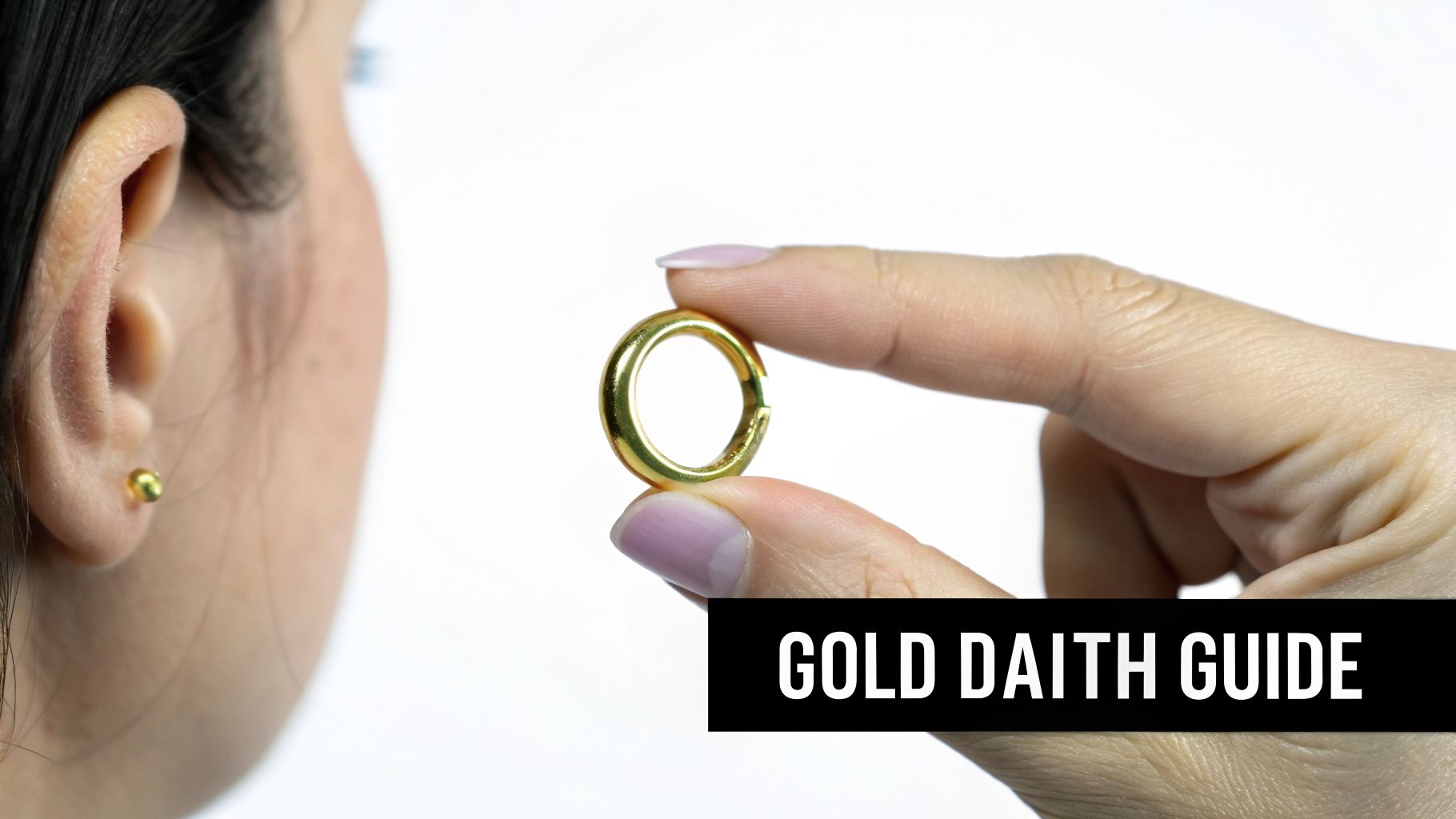
The daith is more than just another piercing; it's a commitment. Because it sits in a snug, less-exposed spot, the healing process can be delicate. The wrong material can easily lead to irritation, allergic reactions, or just a frustratingly long healing time. That's why we always steer our clients toward high-quality gold.
But not all gold is created equal. This guide is here to walk you through everything you need to know, so you can choose your jewellery with confidence. We’ll break down the crucial differences between solid gold, gold-filled, and gold-plated pieces. Think of it like this: solid gold is a solid oak table—sturdy, timeless, and built to last. Plated gold is more like a flat-pack table with a thin wood-effect veneer. It looks good at first, but it won't stand up to the wear and tear of daily life in a healing piercing.
What You'll Discover
We believe knowledge is power, especially when it comes to your body. We’ll cover all the essentials to make sure you’re fully prepared. Here’s what we'll get into:
- Gold Types: We'll demystify the jargon around gold jewellery. You'll learn exactly what makes a piece implant-grade and why you should avoid lower-quality alternatives for a fresh piercing.
- Styles and Sizing: From sleek seamless rings to stunning clickers and classic captive bead rings, we'll help you find a style that not only looks great but also fits your anatomy perfectly.
- Aftercare Mastery: A great piercing is a team effort. It's 50% your piercer's skill and 50% your aftercare. We’ll give you a straightforward plan to keep your new piercing clean and healthy.
- Finding a Pro: The person holding the needle is just as important as the jewellery they use. We’ll point you toward our trusted studios in Croydon and Bournemouth, where your safety is always the number one priority.
Our goal is simple: we want you to absolutely love your new daith piercing and have a smooth, complication-free experience from day one.
Understanding the unique challenges of cartilage piercings is the first step. If you're curious about other placements and how they compare, you can find more in our complete ear piercings guide.
Ready to start your journey? Our expert teams at the Croydon and Bournemouth studios are here to guide you. For a consultation, to book an appointment, or just to ask a few questions, give us a call on 01202 900050 (Bournemouth) / 020 8686 7730 (Croydon) or send a message on WhatsApp to 07752 913846 (Bournemouth) / 07902 490584 (Croydon).
Why Gold is a Game-Changer for Healing a Daith Piercing
When it comes to a brand-new daith piercing, the jewellery you start with is arguably the most critical choice you'll make for a smooth healing process. This isn't just about looks; it's about working with your body, not against it. For a piercing as sensitive as the daith, which can easily take 6-9 months to settle down, high-quality gold isn't just a luxury—it's the best tool for the job.
Think of it like this: your body is designed to protect you. When you get a piercing, your immune system immediately goes on high alert to assess this new, foreign object. If it detects a material it doesn't like—often found in cheaper, low-quality metals—it can trigger a whole host of problems, from irritation and swelling to a full-blown rejection.
It's All About Biocompatibility
This is where the magic of implant-grade gold comes in. The term we use in the industry is biocompatible, which is just a professional way of saying your body will accept it as a neutral party. It won’t pick a fight. This is the very same principle behind medical implants like surgical screws or pacemakers; they're made from materials the human body can safely heal around.
By choosing biocompatible gold for your daith, you're not just buying a piece of jewellery. You're making a conscious investment in your body's health and giving your new piercing the best possible head start.
This is doubly important for a daith piercing. Tucked away in that tight fold of inner cartilage, it gets less airflow and can be a real hotspot for moisture and irritation. Starting with a non-reactive metal like gold simply removes a major variable from the healing equation.
A Smoother Heal with Fewer Headaches
Ultimately, a smoother healing journey means you get to enjoy your beautiful new piercing much sooner. Here’s how implant-grade gold really helps:
- Avoids Common Allergies: So many people have sensitivities to nickel, a common metal used to bulk out cheaper alloys. True implant-grade gold is specifically designed to be free from these known irritants.
- Keeps Bacteria at Bay: Gold has a non-porous surface. Lower-grade metals can corrode over time, creating tiny microscopic pits where bacteria love to hide, which can lead to infection.
- No Unwanted Skin Stains: Ever seen a cheap ring turn someone's finger green? That’s a chemical reaction between the metal, your skin, and the environment. High-quality gold won't tarnish or react, keeping your piercing and your skin pristine.
This focus on premium, body-safe materials is something we're seeing more and more across the UK. More clients now ask for solid gold from the start, especially for cartilage piercings like the daith.
There’s a good reason for this. Low-quality, plated or non-precious metals are more likely to irritate a healing piercing, while solid, nickel-free gold is far less reactive. If you want to learn more, you can explore more interesting facts about this stylish piercing and see why so many are making the switch.
Starting off on the right foot with the right material lays the foundation for a piercing you’ll love for a lifetime. If you’re unsure what’s best for you, our expert piercers are always here to guide you.
Give us a call at 01202 900050 (Bournemouth) / 020 8686 7730 (Croydon) or drop us a message on WhatsApp at 07752 913846 (Bournemouth) / 07902 490584 (Croydon) for a chat.
When it comes to picking out jewellery for a new daith piercing, you’ll find yourself faced with a lot of choices—solid gold, gold-filled, gold-plated. It’s easy to get lost in the jargon, but understanding the difference is absolutely crucial. Choosing the wrong type of gold isn't just a matter of quality; it can lead to irritation, allergic reactions, and a real headache during the healing process.
Think of it like this: implant-grade solid gold is like a beautifully crafted, solid oak table. It’s a timeless investment, built to last a lifetime without causing any trouble. Gold-plated jewellery, on the other hand, is more like that cheap flat-pack table with a wood-effect sticker on top. It looks fine at first, but it won't be long before it scuffs and peels, revealing the particle board underneath.
For a fresh daith piercing, which is tucked away in a sensitive fold of cartilage and can take months to heal, that distinction means everything. Any professional piercer worth their salt will tell you the same thing: implant-grade solid gold is the only safe bet. It's the only material that is guaranteed to be body-safe and free from the mystery metals that can cause your body to react.
Why Solid Gold is the Gold Standard
So, what makes solid gold the undisputed champion for new piercings? In the professional piercing world, "solid gold" specifically refers to nickel-free 14k or 18k alloys. Pure 24k gold is far too soft for body jewellery—it would bend and scratch in no time. To make it durable enough for everyday wear, it’s mixed with other strong, biocompatible metals.
Here’s why that matters for your daith:
- It’s Biocompatible: Your body doesn't see implant-grade gold as a foreign invader. It heals calmly around the jewellery, which dramatically reduces the risk of an allergic reaction.
- It Lasts a Lifetime: Solid gold won’t tarnish, flake, or wear away over time. The piece you’re pierced with will look just as stunning years from now.
- It’s Non-Porous: A smooth, solid surface leaves no microscopic nooks or crannies for bacteria to hide in. This is a massive advantage for preventing infection during that long healing journey.
This commitment to quality materials is making a real difference. Implant-grade titanium and solid 14k or 18k gold are both good choices for a fresh daith. What matters most is that the metal is genuinely body-safe and nickel-free, and that the jewellery fits your anatomy. You can find out more about daith piercing trends and see why this choice has become so popular.
A Quick Word on Gold-Filled and Gold-Plated Jewellery
You’ll undoubtedly see pieces labelled "gold-filled" or "gold-plated," but these are strictly for fully healed piercings and should never be used to start with. It's vital to understand the "why" behind this rule to keep your new piercing safe.
To help you see the differences at a glance, we've put together a simple comparison.
Gold Jewelry Comparison for Daith Piercings
| Feature | Solid Gold (14k/18k Implant Grade) | Gold-Filled | Gold-Plated |
|---|---|---|---|
| Composition | An alloy of pure gold and other metals, consistent throughout. | A thick layer of gold heat-bonded to a base metal (e.g., brass). | An extremely thin layer of gold electroplated onto a base metal (e.g., copper, nickel). |
| Safety for New Piercings | The only safe option. Biocompatible and nickel-free. | Unsafe. Base metal can become exposed and cause irritation. | Completely unsafe. The thin plating wears off quickly, exposing mystery metals. |
| Durability | Excellent. Will not tarnish, chip, or wear away. A lifetime piece. | Fair. More durable than plated, but will eventually wear down. | Poor. Scratches and flakes easily, especially with daily wear. |
| Best For | New piercings, healing piercings, and anyone with metal sensitivities. | Fully healed piercings only, for short-term wear. | Healed piercings for occasional wear, but not recommended for sensitive skin. |
The takeaway is simple: gold-filled and gold-plated jewellery just aren't built for the job of healing a new piercing.
Gold-Filled jewellery has a thicker layer of gold bonded to a base metal like brass. While it’s a step up from plated, that gold layer can still wear down, exposing your skin to the metal underneath and potentially causing a reaction.
Gold-Plated is the most fragile option. A microscopically thin layer of gold is coated over a base metal, which is often nickel or copper—two common culprits for skin allergies. This layer can scratch and flake off with alarming speed, especially in a moist, dynamic environment like a daith piercing.
For a new daith piercing, there is simply no substitute for implant-grade solid gold. Trying to heal with gold-plated or filled jewellery is like putting a cheap, fraying plaster on a deep cut—it’s not going to work and will almost certainly make things worse.
If you’re feeling unsure about which material is right for your body and lifestyle, our expert piercers are always here to guide you. Get in touch with our studios in Bournemouth or Croydon by calling 01202 900050 (Bournemouth) / 020 8686 7730 (Croydon) or by dropping us a message on WhatsApp at 07752 913846 (Bournemouth) / 07902 490584 (Croydon).
Finding Your Perfect Fit and Style
So, you’ve decided on high-quality solid gold—excellent choice. Now for the fun part: picking a style and size for your new daith jewellery. This is about more than just looks; getting the fit right is absolutely crucial for a happy, healthy piercing. A beautiful piece that doesn't fit correctly can cause all sorts of problems, from constant irritation to pressure bumps and even migration.
I always tell my clients to think of it like buying new shoes. A pair that’s too tight will give you blisters, and one that’s too loose will just be a constant annoyance. It’s the same with a daith ring. The wrong size can completely derail your healing journey. We focus on two key measurements: gauge and diameter.
Gauge is simply the thickness of the post that passes through the piercing. For daiths, the industry standard is almost always 16 gauge (1.2mm). The diameter is the internal width of the ring, and this is where it gets personal. Everyone's ear anatomy is unique, so a ring that fits one person perfectly might be way too tight or loose on you.
Popular Styles for Gold Daith Jewellery
While the options are endless, three classic styles are consistently popular for daith piercings, and for good reason. They're secure, comfortable, and look fantastic.
Captive Bead Rings (CBRs): You can't go wrong with a classic. A CBR is a simple ring where the gap is closed by a small bead, held in place by the ring's tension. They have a clean, timeless look and are incredibly secure, which is why we often recommend them for fresh piercings.
Seamless Rings: If you're after a super clean, minimalist look, a seamless ring is for you. It looks like a single, unbroken hoop of gold that hugs the cartilage. We gently twist it open to insert it and then close it, creating a flawless, subtle finish.
Clickers: These are the ultimate in convenience. Clickers have a small, hinged section that literally "clicks" shut, making them a breeze to put in and take out yourself once your piercing has fully healed. They often come in more decorative designs with gems and intricate patterns, making them a brilliant choice for an upgrade.
This chart can help you visualise why the type of gold you choose is so important at different stages of your piercing’s life.
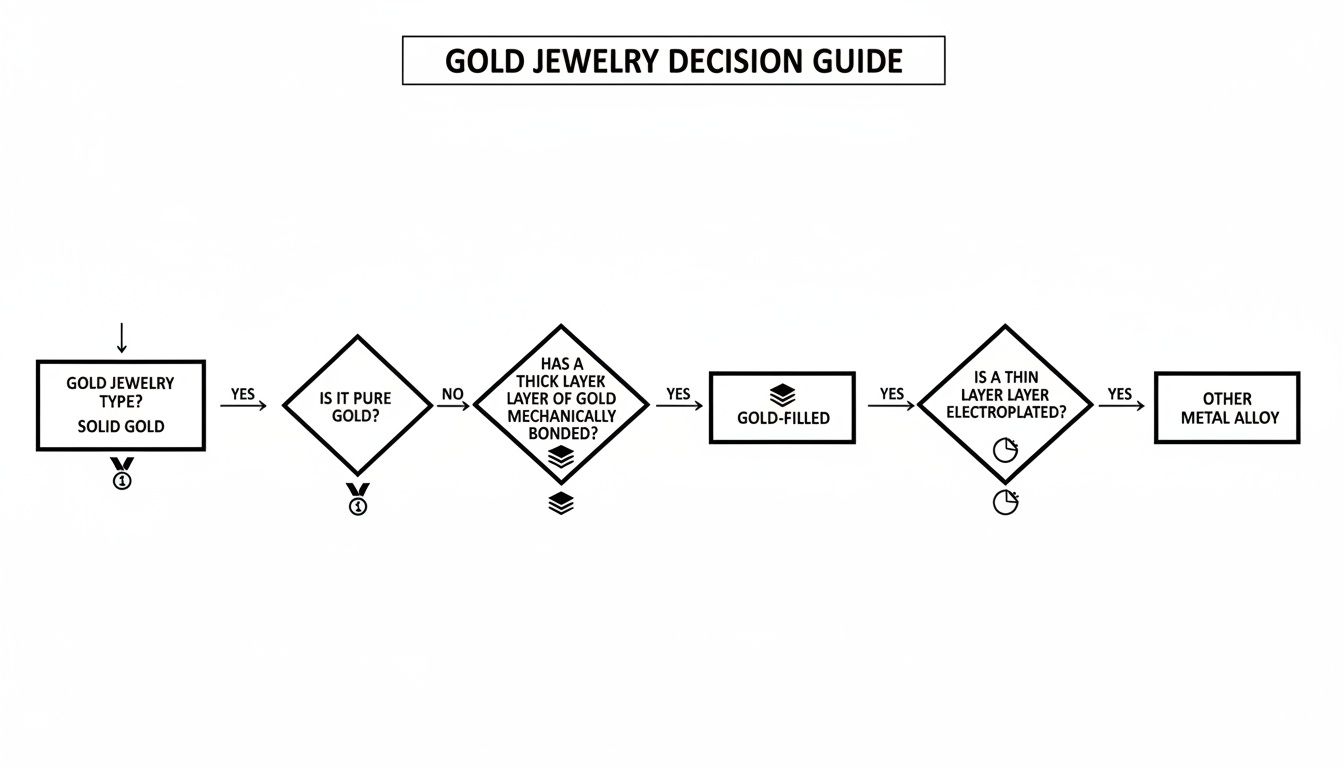
As you can see, solid, implant-grade gold is the only safe bet for a new piercing. The other options are only suitable once you're 100% healed.
The Non-Negotiable Step: Professional Fitting
Honestly, trying to guess the right diameter for your daith is a recipe for disaster. This is where a professional piercer is indispensable. We’re trained to assess the specific curves and space in your ear to choose a ring that leaves just enough room for initial swelling but isn't so big that it will move around and cause irritation. An incorrectly sized ring is hands-down one of the biggest reasons for healing problems we see.
Getting your initial gold daith jewellery fitted by a professional isn't just a good idea—it's essential for the health of your piercing. A piercer’s experience takes the guesswork out of the equation, helping you avoid pressure sores, irritation bumps, and a frustratingly long healing time.
Here in the UK, gold daith jewellery has become incredibly popular, especially since the mid-2010s. This boom has gone hand-in-hand with the rise of high-quality studios in places like Croydon and Bournemouth. Social media has done a lot to show how good a well-placed daith with a 14k solid gold captive bead ring can look. For a deeper dive into how piercing jewellery has evolved, you can explore this detailed American timeline.
A quick chat with a piercer allows you to pick a style you love while we make sure it’s the perfect anatomical fit. If you want to discuss sizing or see our selection of implant-grade gold jewellery, our teams in Croydon and Bournemouth are here to guide you. Give us a call on 01202 900050 (Bournemouth) / 020 8686 7730 (Croydon) or drop a message on WhatsApp to 07752 913846 (Bournemouth) / 07902 490584 (Croydon) to book a consultation.
Looking After Your New Gold Daith Piercing
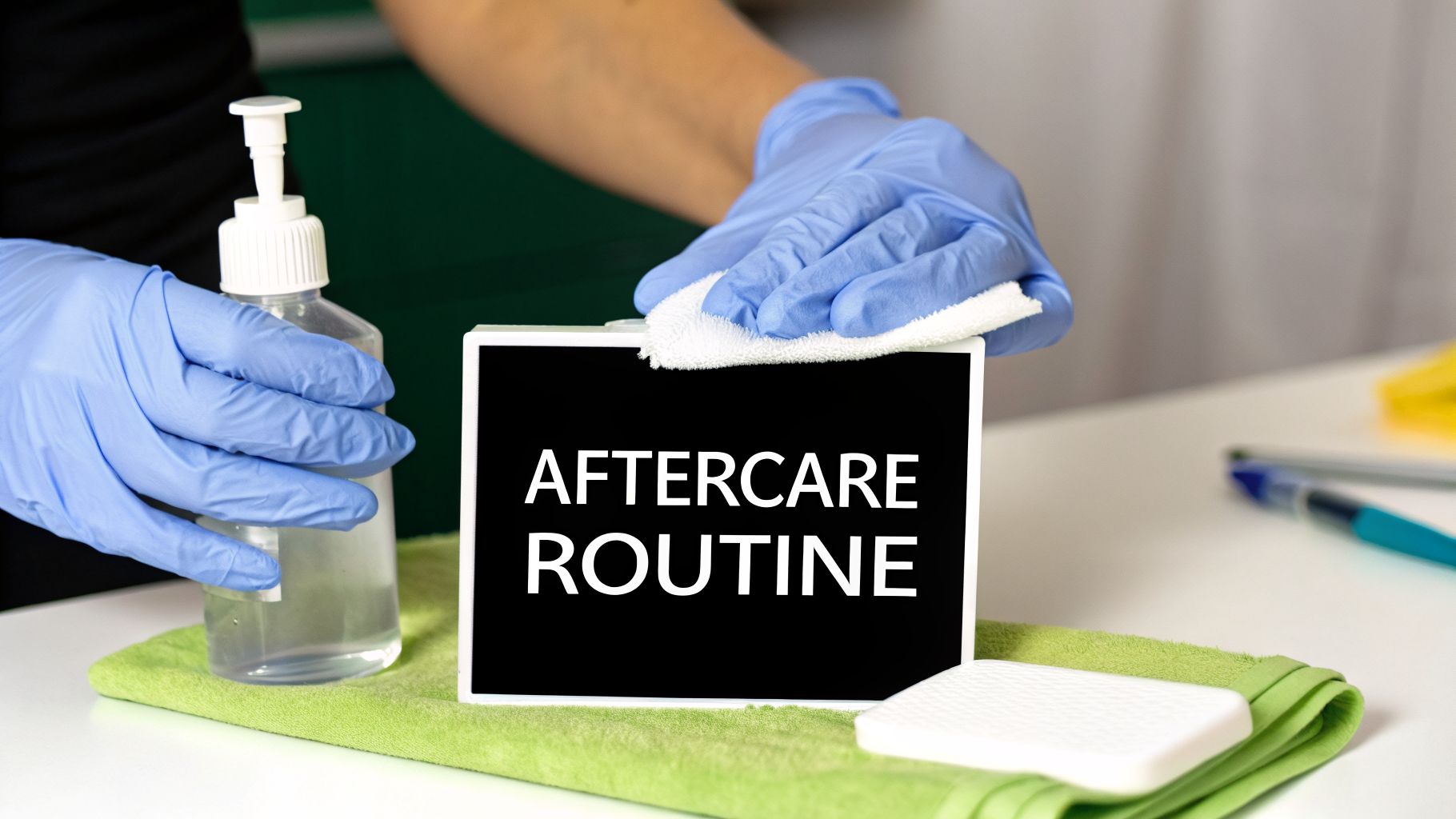
Getting your daith pierced is the exciting part, but the real journey starts now. A great piercing is a team effort—we handle the expert placement and initial jewellery, and you take over with dedicated aftercare. This is where your commitment makes all the difference in helping your beautiful new gold daith jewellery heal perfectly.
The healing process can feel like a long road, but it’s actually quite simple if you follow the right steps. Your only goals are to keep the piercing clean, dry, and free from any kind of irritation. Just think of it as a tiny, healing wound that needs to be left alone to do its thing.
Our piercers in Croydon and Bournemouth will always give you advice tailored to you, but this guide lays out the essential groundwork. Trust me, consistency is your best friend here.
The Essential Cleaning Routine
The absolute golden rule of piercing aftercare is to keep it simple. Your body is a healing machine, and your job is just to give it a clean, supportive environment. The only thing you need is a sterile saline solution.
Wash Your Hands First, Always: Before you even think about touching your ear, give your hands a thorough wash with soap and water. This is non-negotiable; it’s the number one way to prevent infection.
Clean Twice a Day: Give the piercing a good spritz with a sterile saline spray, making sure you get the solution into both the entry and exit points. A quick clean in the morning and another in the evening is all it takes.
Pat It Dry, Gently: After cleaning, don't let it air dry. Take a fresh piece of non-woven gauze or a paper towel and carefully pat the area completely dry. A hairdryer on its coolest setting works wonders, too. Lingering moisture is a magnet for bacteria, so don't skip this step.
It’s so important to use the right stuff. Steer clear of harsh products like rubbing alcohol, hydrogen peroxide, or scented soaps. They are far too aggressive and will only irritate the delicate healing tissue, slowing everything down. To see why we’re so passionate about this, you can learn more about why a sterile saline spray for piercing is the only medically-approved choice.
What To Avoid During Healing
Honestly, what you don't do is just as crucial as your cleaning routine. The daith is tucked away inside the ear, which unfortunately makes it prone to getting bumped and bothered by everyday habits. Being mindful of these things will make your healing journey so much smoother.
No Fiddling: Fight the urge to touch, twist, or turn your jewellery. The only time your clean hands should go near it is when you’re drying it. Let the gold daith jewellery sit still.
Don't Sleep On It: This is probably the toughest rule to follow, but it’s one of the most important. Sleeping on a new piercing puts pressure on it, which can lead to nasty irritation bumps and even cause the piercing to heal at an awkward angle. Try sleeping on your other side, or grab a travel pillow and rest your ear in the hole.
Keep It Dry Outside of Cleaning: After a shower, make a point to get in there with some gauze or the cool hairdryer to ensure it's completely dry.
Ditch the Earbuds for Now: In-ear headphones are a double threat—they can introduce bacteria and put direct pressure on your daith. Switch to over-ear headphones that don’t touch the piercing until you're fully healed.
Remember this: irritation is the number one enemy of a healing daith. If you see bumps, persistent redness, or swelling, it's your body's way of telling you that something is bothering the piercing. A simple "less is more" approach is always the best path to a happy, healthy piercing.
If you have any worries at all, please don't guess or wait it out. Our teams are here to help. Just give us a call on 01202 900050 (Bournemouth) / 020 8686 7730 (Croydon) or drop a message on WhatsApp to 07752 913846 (Bournemouth) / 07902 490584 (Croydon) for professional advice you can trust.
Ready to Get Your Gold Daith Piercing?
You’ve done your homework. You know that high-quality, implant-grade gold is the only way to go, and you understand just how critical the right fit and aftercare are for a happy, healthy piercing. Now for the most important part: taking that knowledge and turning it into a beautiful reality.
Choosing a professional, reputable piercer isn't just a final box to tick; it's the single most crucial decision you'll make. Think of it this way: you wouldn't buy a custom-made suit and then ask a friend to tailor it. Getting a piercing from an expert is just as vital as the implant-grade gold you put in it. This ensures everything, from the placement to the healing advice, is handled with the precision and care you deserve.
What to Expect When You Visit Us
When you walk through our doors, you’re not just another appointment on the books. We see it as the start of a partnership. Our entire process is built around making you feel comfortable, informed, and genuinely excited.
Here’s a glimpse of what your experience with our expert piercers will look like:
- A Proper Chat: First, we'll sit down and talk. We want to hear your ideas, look at your unique ear anatomy, and answer every single one of your questions. This helps us get the placement and jewellery style absolutely perfect for you.
- Choosing Your Jewellery: This is the fun part! You'll get to explore our hand-picked collection of stunning, implant-grade gold daith jewellery. We’ll help you find a piece that not only looks incredible but is also ideal for healing.
- A Truly Sterile Procedure: Your safety is everything. We use a brand-new, sterile, single-use needle for every single client, without exception. Our studio doesn't just meet health and safety standards—we aim to exceed them.
- Clear Aftercare Guidance: You'll leave feeling completely confident. We’ll give you simple, personalised aftercare instructions and make sure you know exactly how to look after your new piercing for a smooth healing journey.
Visit Our Studios in Croydon and Bournemouth
Piercing Near Me is run by Timebomb Tattoo & Piercing, and our teams in Croydon and Bournemouth are ready to welcome you.
Timebomb Tattoo & Piercing – Croydon
- Address: 22 George Street, Croydon CR0 1PA, United Kingdom
- Hours: Monday to Saturday, 11 AM - 6 PM
Timebomb Tattoo & Piercing – Bournemouth
- Address: 109 Old Christchurch Road, Bournemouth BH1 1EP, United Kingdom
- Hours: Monday to Saturday, 11 AM - 6 PM. Closed Sunday.
Your piercing experience should be exciting, not a source of anxiety. Choosing a professional studio gives you peace of mind, knowing an expert is looking after every detail and putting your health and safety first.
Ready to book or just have a few more questions? Getting in touch is easy. Give us a call on our dedicated line, 01202 900050 (Bournemouth) / 020 8686 7730 (Croydon), or pop a quick message over to our WhatsApp at 07752 913846 (Bournemouth) / 07902 490584 (Croydon).
Book your consultation today and take the final step towards your gorgeous new gold daith piercing. To learn more about what separates a great piercing experience from a bad one, have a look at our guide on finding a professional ear piercing near me.
Your Gold Daith Piercing Questions, Answered
Thinking about a gold daith piercing? It's completely normal to have a few questions swirling around before you take the plunge. We get it, and we've heard them all.
To make sure you feel confident and informed, we’ve put together honest answers to the questions we’re asked most often. Let's clear the air on everything from healing practicalities to the real cost.
The Big Question: Do Daith Piercings Really Help with Migraines?
This is probably the number one question we hear. You’ve likely seen stories online from people who swear their migraines vanished after getting a daith piercing. While these personal accounts are compelling, it's crucial to know there is no conclusive scientific evidence to back this up.
The relief some people feel is often thought to be a powerful placebo effect or a temporary sensation similar to what you’d get from acupuncture. For this reason, we always advise getting a daith piercing because you love how it looks, not as a medical treatment. See it as a gorgeous piece of body art first and foremost; any other effect is just an unproven bonus.
Can I Wear Headphones with a New Daith Piercing?
This is a really practical one that affects your day-to-day life. During the healing period, you absolutely must avoid in-ear headphones (earbuds). We’re talking for the entire initial healing phase, which can easily take 6-9 months, sometimes longer.
Putting earbuds in can cause a whole host of problems:
- Pressure and Irritation: They press directly on the piercing, which can trigger nasty irritation bumps and even push the jewellery, causing it to heal at an awkward angle.
- Bacteria Hotspot: Let's be honest, earbuds aren't sterile. Pushing them in can introduce bacteria straight into a fresh wound, seriously increasing your risk of infection.
- Healing Disruption: The simple act of putting them in and taking them out disturbs the delicate new tissue, preventing it from healing peacefully.
The safe alternative? A good pair of over-ear headphones that sit around your ear, not on or in it. A little patience now goes a long way. Wait until your piercer gives you the all-clear before even thinking about using earbuds again.
Think of it this way: a few months without your earbuds is a tiny trade-off for a healthy, beautifully healed piercing that will last a lifetime. It’s one of the single best things you can do to ensure a smooth healing journey.
What’s the Real Cost of a Gold Daith Piercing in the UK?
When you’re budgeting for your piercing, remember you're paying for two things: the piercer's service and the jewellery itself. Costs can vary a bit from studio to studio, but here's a realistic idea of what to expect.
- The Piercing Service Fee: At most professional UK studios this is somewhere between £30 and £50. At Timebomb, a daith is £30 in Bournemouth and £35 in Croydon, including implant-grade titanium jewellery and an aftercare pack. Ask the studio about gold options and prices. This isn't just for the piercing itself—it covers the piercer's time and skill, a full sterile setup, and the consultation.
- The Gold Jewellery: Here's where the price can really change. A piece of implant-grade, solid 14k or 18k gold daith jewellery will typically start around £60 and can go up to £200+. The final price comes down to the design's complexity, the weight of the gold, and if it's set with any gemstones.
To avoid any surprises, always ask for a full price breakdown during your consultation before you get started.
At Piercing Near Me, our mission is to connect you with top-tier professionals who put your safety and happiness first. Ready to get that stunning daith piercing? Check out https://piercingnearme.co.uk or get in touch with our team directly. You can call us on 01202 900050 (Bournemouth) / 020 8686 7730 (Croydon) or drop us a message on WhatsApp at 07752 913846 (Bournemouth) / 07902 490584 (Croydon).
Trackbacks/Pingbacks