
You've got the tab open, your phone in your hand, and the mirror is doing that unhelpful thing where every possible placement looks both exciting and slightly terrifying. Maybe you're thinking about a helix stud in Croydon, or a septum in Bournemouth, and the question isn't whether you want the piercing, it's whether the studio is safe enough to trust with it. A good tattoo and piercing studio should make that decision easier, not harder, with clear hygiene, clear consent, and clear answers before you book.
The first step is learning what separates a polished-looking studio from a properly run one. That means knowing what to ask about sterile needles, jewellery quality, licensing, and the way the studio handles your health information. If you're under 18, it also means checking age rules before you build the whole day around a booking, which is why UK piercing age guidance matters before you get too far. Once those basics make sense, choosing a placement becomes much less random.
The Moment You Decide to Get Pierced
A lot of first-timers start in the same place, standing in front of a mirror and trying to decide whether the idea is brave or a mistake. A student in Bournemouth might keep looking at their septum from every angle, while someone in Croydon might be set on a helix but worried about sleeping on it. That nervous pause is useful, because it's the moment to switch from impulse to practical thinking.
Four decisions matter first
Before you book, ask yourself four simple things. Which studio feels transparent about hygiene and aftercare, which piercer can explain the placement without rushing you, which jewellery will suit the piercing and your skin, and which consent process makes sense for your age and situation. If a studio can't answer those clearly, it's not the right place to start.
Practical rule: if the studio's answers sound vague before you pay, they'll probably be vague after your piercing too.
The placement itself matters, but it's not the only thing that matters. A helix, for example, puts pressure on sleep habits and headphones. A septum is less visible day to day, but it still needs a piercer who can explain how the jewellery sits and what healing will feel like in real life. For readers still checking the basics of timing and age, the safest move is to slow down and compare the studio's answers, not just its Instagram feed.
What you want is a place that treats your questions as normal. That's the first sign you're not dealing with a rushed front desk, you're dealing with a proper tattoo and piercing studio that expects nervous first-timers and knows how to guide them.
What a Modern Tattoo and Piercing Studio Actually Does
A modern studio is more than a waiting area with a few pretty photos on the wall. In a combined tattoo and piercing studio, the front desk, consultation area, sterilisation space, piercing room, and aftercare point all serve different jobs. When each part is organised properly, the client experience feels calm instead of improvised.
Timebomb Tattoo & Piercing runs two locations, one in Croydon for South London clients and one in Bournemouth on the South Coast. Both locations offer walk-ins, appointments, and consultations, which matters because some piercings are simple enough for same-day bookings, while others deserve a proper conversation first. The useful thing for a first-timer is that the studio can move from questions to procedure without making you guess which door to stand behind.
Reading the studio layout
The reception and consultation zone should feel like a place where you can ask about placement, jewellery, and aftercare without pressure. A dedicated sterilisation area is a good sign because it shows the studio separates preparation from procedure, instead of pretending everything happens on one surface. Aftercare support should be easy to find too, whether that's a printed sheet, a verbal run-through, or both.
The setup tells you a lot before anyone touches a needle. If the studio has clear zones, clean surfaces, and visible handwashing facilities, that usually reflects the way the team thinks about risk. If the front-of-house answer to every question is “we're fine,” that's not enough.
Timebomb's model is useful because it serves people who want different levels of help. Some clients know exactly what they want and just need efficient booking. Others need a calmer consult, especially when choosing between ear, facial, and body placements. A studio built to handle both types of client usually has better systems behind the scenes.
Safety Standards That Should Be Non-Negotiable
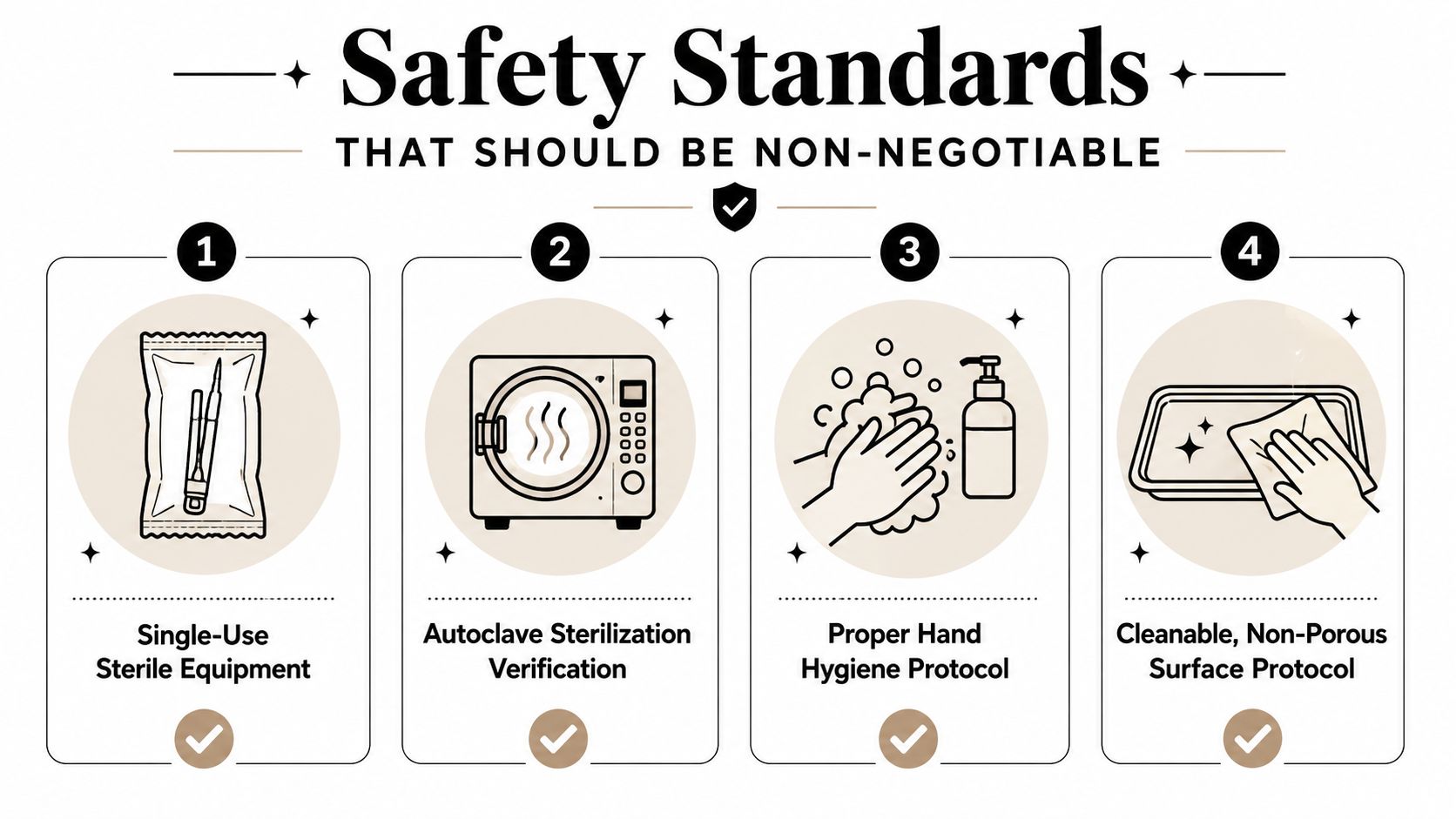
If you are standing at the counter trying to judge whether a studio is safe, the key question is simple. Does the studio control the points where infection risk starts and spreads. UK public-health guidance treats skin piercing as a bloodborne-infection risk, so single-use sterile needles, clean gloves, handwashing, skin disinfection, and safe sharps disposal are not extras, they are part of the basic job CIEH and NHS guidance on tattooing and skin piercing.
The four checks that matter most
A proper studio should open single-use sterile needles in front of you and never reuse or resterilise them. UK local-authority guidance says anything that pierces the skin must be sterile, and that single-use needles bought sterile must be used before expiry and not reused sterile needle guidance. Jewellery should also be implant-grade, so it is fair to ask whether the studio uses ASTM F136 titanium or solid 14k+ gold for fresh piercings.
Waste handling matters just as much. UK environmental-health guidance separates contaminated waste from general waste, because used sharps and blood-exposed disposables need a different disposal route from everyday rubbish infection control guidance. If a studio cannot explain its dirty-to-clean workflow in plain English, that is a warning sign, not a small gap in service.
Ask this directly, “Do you open sterile needles in front of the client, and how do you handle contaminated waste after the appointment?”
Another point gets overlooked in a lot of studio listings. Licensing and hygiene oversight in England can vary across local authorities, and a UK study found problems such as inadequate handwash provisions alongside that inconsistency regulation and hygiene oversight study. That means you cannot rely on appearance alone. You need to ask how the studio is inspected, what local standards it follows, and where the handwashing station is.
If a studio answers those questions clearly, you are in good territory. If it dodges them, choose somewhere else. For people comparing providers, a reference page about single-use needles can help frame the right questions before booking, but the main test is still the same, whether the studio behaves like sterility is the rule, not the slogan.
Your Step-by-Step Client Journey
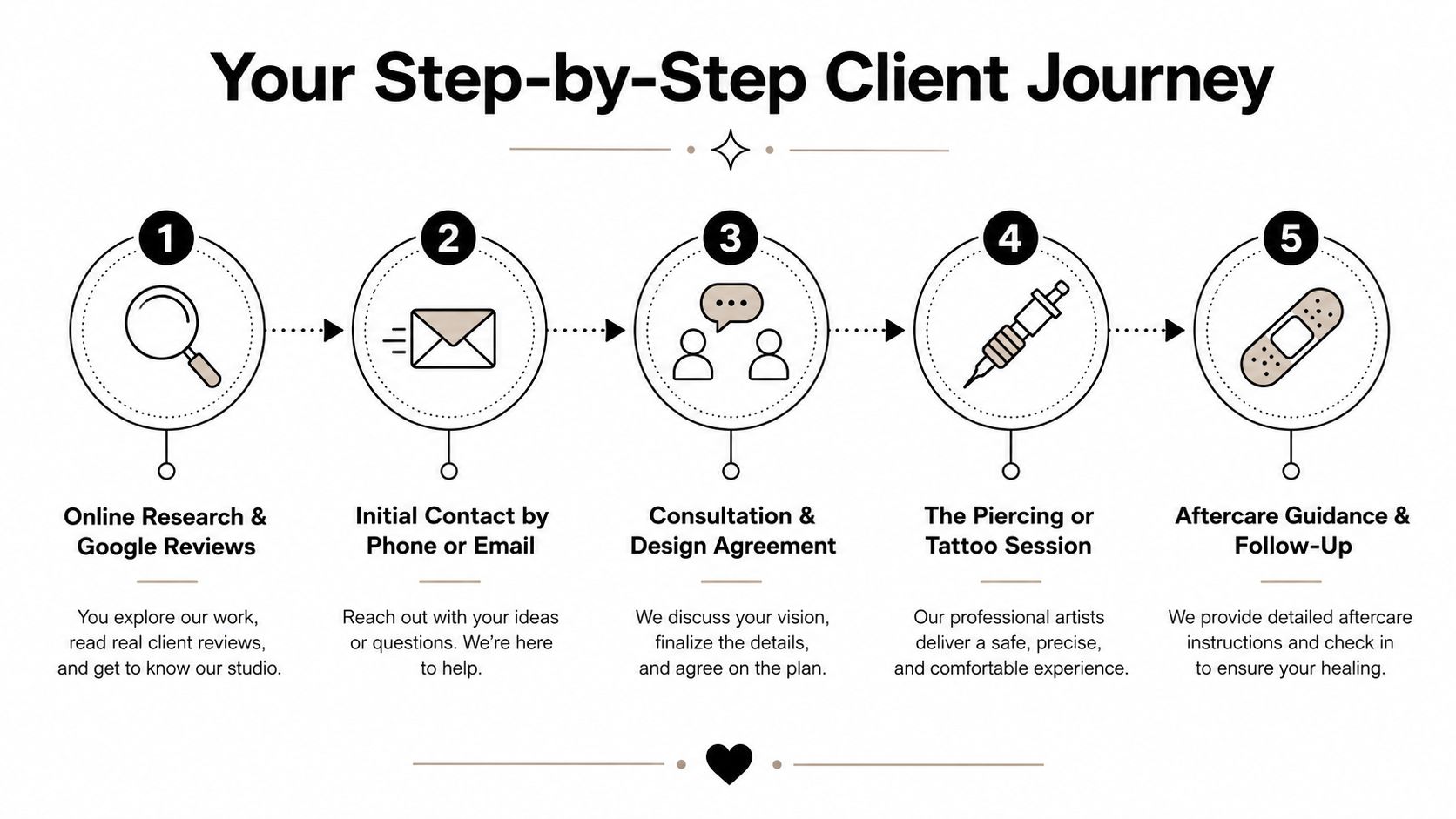
The journey usually starts before you ever visit. Many people check Google reviews, scan service menus, and compare location pages, which is sensible as long as you use those pages to ask better questions, not just to chase the prettiest photos. Piercing Near Me works as a central booking and information hub for Timebomb's Croydon and Bournemouth studios, so it's a sensible place to check services and studio details before you decide.
From first message to chair
The next step is usually a call, email, or WhatsApp message. Bournemouth clients can use 01202 9000 50 or WhatsApp 07752913846 to ask about placement, availability, or whether a walk-in makes sense for the piercing they want. That early contact is where you find out whether the studio is busy, whether the piercer recommends a consult, and whether your preferred jewellery style is suitable.
Consultation is where the vague idea becomes a real plan. A good piercer talks through placement, angle, jewellery, and what your daily routine might do to healing. Some piercings are quick walk-in jobs, especially simple ear placements, but others need a calmer conversation because small changes in angle or jewellery length can affect comfort and recovery.
After that comes arrival, consent, and the actual appointment. You should expect the piercer to check what you're having done, confirm the jewellery, and make sure you still want to proceed. Aftercare shouldn't be an afterthought either. You need verbal guidance and written instructions, plus a way to contact the studio if something feels wrong later.
Good sign: if the piercer repeats your aftercare back to you in plain language, they're more likely to care about the healing result than the transaction.
The final stage is follow-up. A responsible studio treats aftercare as part of the service, not an optional extra. That's especially important if you're new, because once the appointment ends, you're the one doing the daily cleaning and watching for irritation.
Popular Piercings and Realistic Healing Times
Different placements ask different things of your body. Ear piercings often fit into daily life more easily than face or body placements, but they still need sensible jewellery and patience. A helix can be a good first cartilage option for someone who wears one side to sleep less often, while a septum can suit someone who wants something less visible at work.
Healing times for ear piercings are easiest to understand when you think in lifestyle terms, not just calendar terms. If you wear helmets, sleep on one side, use over-ear headphones, or play contact sports, those habits affect comfort and the kind of placement you should choose. Downsizing jewellery at the right stage matters too, because healing doesn't end on the day the swelling drops.
Popular Piercings at a Glance
| Placement | Typical Starting Jewellery | Approximate Healing Time |
|---|---|---|
| Lobe | Straight post, often small stud | Usually one of the quicker ear options |
| Helix | Longer post for swelling | Often slower than lobe because cartilage heals differently |
| Conch | Flat-back stud or other suitable starter piece | Needs patience and care with headphones |
| Tragus | Short starter stud | Can be awkward if you wear earbuds often |
| Flat | Low-profile starter jewellery | Watch for snags from hair and clothing |
| Daith | Curved jewellery suited to the placement | Can be fiddly to clean at first |
| Nostril | Stud or ring-style starter depending on placement | Usually manageable, but still sensitive to snags |
| Septum | Captive-style or horseshoe-style starter option | Often easier to hide than other facial placements |
| Bridge | Straight barbell | Needs careful placement because it's central and exposed |
| Eyebrow | Curved barbell | Can be bumped easily during daily life |
| Navel | Curved barbell | Clothing friction matters a lot |
| Dermal | Internal anchor style jewellery | Requires careful long-term attention |
| Surface | Surface bar or specialist jewellery | Needs realistic expectations about movement and rejection risk |
The main point is not that one piercing is “better” than another. It's that some placements fit certain routines better. If you sleep heavily on one side, wear headphones all day, or need your piercing to stay discreet, that should shape the choice as much as the look of the jewellery.
Consent, Screening, and Your Rights as a Client
A respectful intake form should help a piercer do the job safely, not make you feel judged. UK training and advocacy material warns that studios sometimes overreach, asking vague questions like “list all medications” or using yes/no tick boxes about HIV or hepatitis in ways that can feel stigmatising. The better approach is risk-based screening, with questions linked to the procedure, the healing process, and any genuine safety concern training and advocacy guidance.
What a good studio asks
A sensible piercer may ask about recent antibiotics, skin conditions, pregnancy, haemophilia, keloid history, allergies, or anything else that could change the advice. They should explain why they're asking, and they should keep the language private and non-judgemental. If the questions feel blunt, the piercer should still sound professional, not curious for its own sake.
Age and consent matter just as much. A good studio will have a clear policy for under-16s, will expect appropriate photo ID where relevant, and will turn away anyone who can't consent comfortably. That isn't being fussy, it's protecting the client and the studio from a rushed decision.
You should also leave with written aftercare instructions and a route back to the studio if you need help. Verbal reassurance is nice, but it doesn't replace something you can read later when the piercing is sore and you're trying to remember the cleaning routine.
If a studio makes you feel silly for asking about consent or health screening, walk away.
That reaction tells you a lot. A good piercer welcomes health questions because they know better intake leads to better healing. A poor one treats them like an inconvenience.
Booking, Locations, and What to Do Next
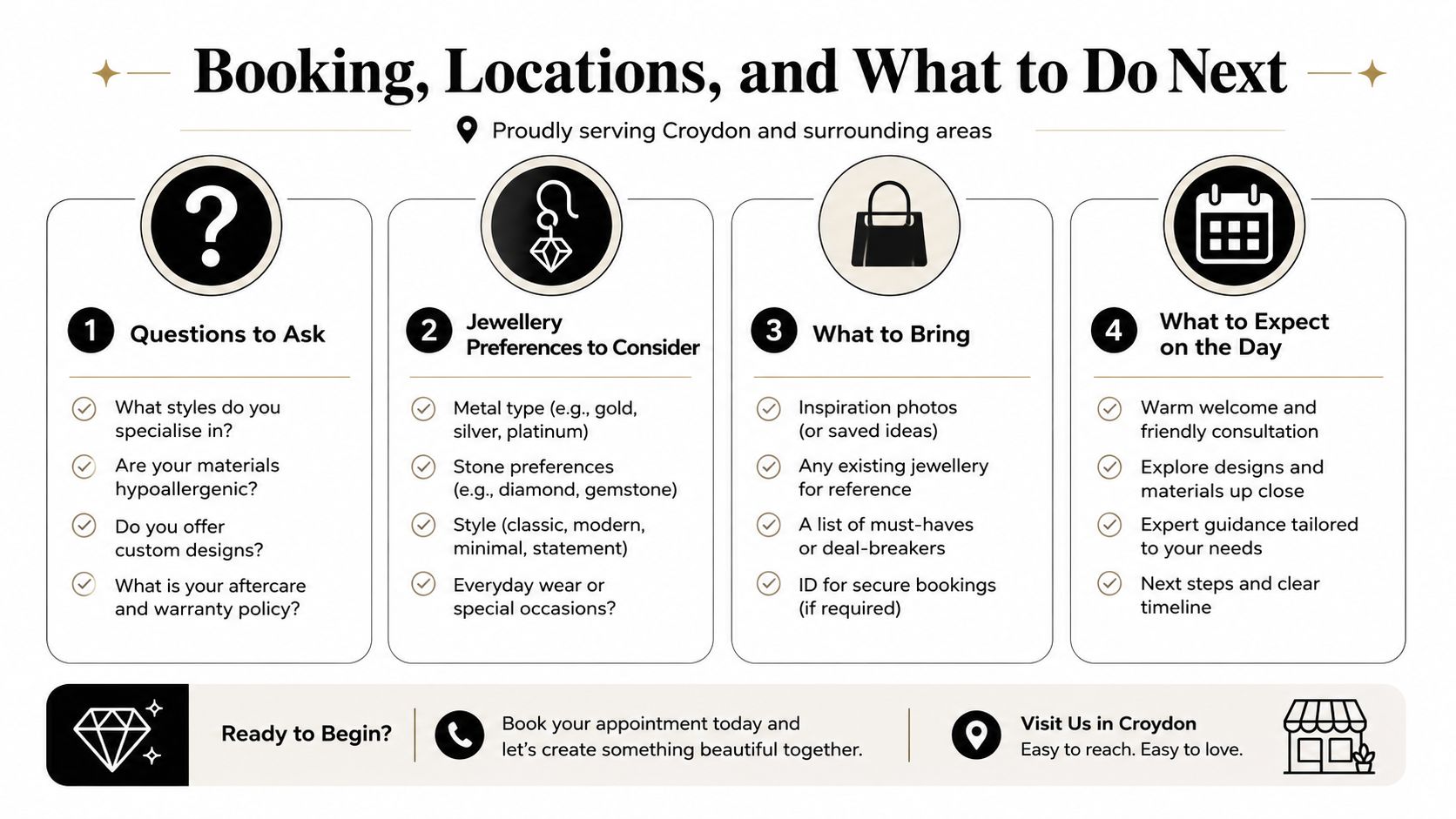
If you're in Croydon, your checklist is simple. Ask what jewellery is used for your chosen placement, whether the studio opens sterile needles in front of you, and whether you need a consult before the day itself. Bring photo ID if you're age-sensitive, wear clothing that gives easy access to the area, and plan for the fact that aftercare is your part of the job once you leave.
Bournemouth clients can use the same checklist, then contact the studio directly on 01202 9000 50 or 07752913846 on WhatsApp if they want to talk through the booking first. The central hub at Piercing Near Me lists the studio information, service options, and the practical details that make booking less guesswork and more planning. That's the right way to approach a piercing appointment, with questions, not assumptions.
A solid studio should never resent a careful client. It should welcome the questions, explain the hygiene steps, and give you enough clarity to decide with confidence. The studio does part of the work, but your cleaning routine and aftercare discipline carry the rest, so choose a place that gives you the tools to heal well and the respect to ask for them.
Trackbacks/Pingbacks