
A tragus piercing typically takes 6 to 12 months to fully heal, and for some people it can take up to 18 months. If you're checking the mirror and thinking it already looks fine after a few months, that's exactly where many first-time clients get caught out.
You've probably either just had your tragus done, or you're planning it and trying to work out what the healing journey looks like in real life. That's smart. Tragus piercings are small, stylish, and very wearable, but they sit in dense cartilage, so they need more patience than anticipated. The biggest confusion I see in the studio is simple: the outside can look calm long before the inside is finished healing.
That gap between looking healed and being healed is what matters most. If you understand that from the start, you'll avoid the usual mistakes like changing jewellery too early, sleeping on it, or assuming a little irritation means something has gone badly wrong.
Your New Tragus Piercing and the Healing Journey Ahead
You get home, catch your new tragus in the mirror, and it already looks like it belongs there. Then bedtime arrives, your phone presses against that side of your face, and suddenly you realise this tiny piece of jewellery needs a lot more respect than its size suggests.
That surprises plenty of first-time clients.
A tragus piercing can look settled well before it is fully healed. The outside often calms down within a few months, while the inner channel keeps repairing for much longer. Cartilage heals a bit like a road repair under the surface. The top layer may look finished first, but the structure underneath still needs time before it can handle pressure, movement, or a jewellery change without irritation. If you want a clearer overview of how cartilage piercings heal in real life, our guide to cartilage piercing healing timelines and stages breaks that down in plain English.
Why the tragus takes longer than expected
The tragus is made of dense cartilage rather than soft earlobe tissue. Blood flow is more limited there, so your body repairs it more slowly and with less room for error. That is why a piercing can stop feeling sore, look neat in photos, and still be too delicate for sleeping on, knocking, or swapping jewellery at home.
You may also notice light swelling, tenderness, or small bits of dried discharge early on. That usually means your body is building and protecting the piercing channel. It can look untidy, but it is often part of normal healing rather than a sign that something has gone wrong.
The mistake that sets healing back
The common slip-up is treating “looks healed” as “is healed.”
At around the point where the outside seems calm, many clients start testing it. They twist the jewellery, try a shorter bar they bought online, wear earbuds for hours, or sleep on that side again. The piercing then gets irritated, and they assume healing has stalled for no reason. In reality, the tissue was still immature.
That is why we treat the piercing appointment as the start of the job, not the finish. At Timebomb Tattoo & Piercing, clients in Croydon and Bournemouth can book with experienced local piercers who explain the timeline clearly, fit jewellery correctly from day one, and stay available if healing becomes confusing later. Good placement matters. Good aftercare advice matters. Having a studio you can come back to matters just as much, especially in that awkward stage where the tragus looks fine but still needs patience.
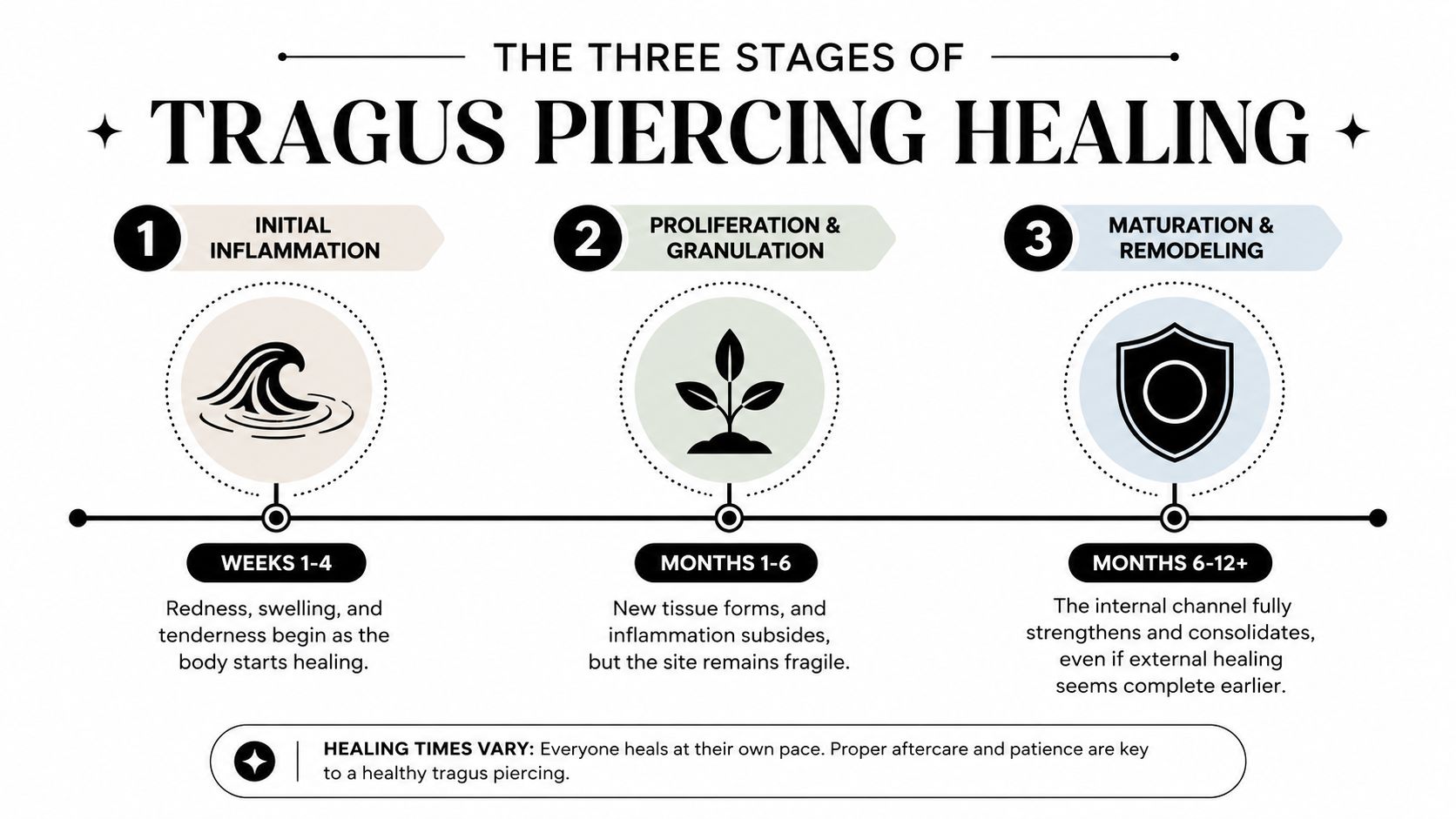
The Three Stages of Tragus Piercing Healing
A tragus piercing does not heal in one straight line. It behaves more like a cut that closes on the surface first, while the deeper tissue keeps rebuilding for months afterward. That is the part first-time clients often do not expect.
Stage one initial inflammation
The first stage starts straight after the piercing and usually covers the early days into the first couple of weeks. This is the fresh wound stage, so redness, mild swelling, tenderness, and a warm feeling around the area are all common.
You might also notice a little dried discharge.
That can look alarming the first time you see it, but it is often just lymph fluid drying around the jewellery while your body starts forming the channel. A tragus sits in cartilage, and cartilage tends to complain when it has been disturbed. That does not mean anything has gone wrong.
Stage two proliferation and granulation
This middle stage is where confusion creeps in. The outside often settles down enough that the piercing looks neat, feels less sore, and stops drawing your attention every hour. Many clients read that as healed.
Usually, it is only calmer.
Inside the piercing, your body is still laying down new tissue and organising it into a stable channel. That is why a tragus can seem fine for weeks, then flare up after one night of sleeping on it or one early jewellery change. The skin has improved. The deeper tissue has not finished its job.
A good rule of thumb is this: many tragus piercings start to look healed somewhere around the three to six month mark, but full healing often takes longer. If you want a broader picture of how cartilage piercings behave over time, this guide to cartilage piercing healing stages and timelines explains why surface progress can be misleading.
A house under construction works as a useful comparison here. Once the walls are up, it looks close to finished from the street. Inside, there is still plenty of work left before it is ready.
Stage three maturation and remodelling
The final stage is the quiet one. By this point, the piercing may look settled enough that you forget it is still healing, but the channel is still strengthening and becoming more stable. This stage often stretches into the later months, and for some people it takes a year or more before the tissue is fully mature.
That difference matters. Looking healed and being fully healed are not the same thing.
This is why experienced piercers stay cautious even when a tragus appears calm. Pressure from earbuds, swapping jewellery too soon, or repeated knocks can still irritate the channel because the tissue is stronger than it was, but not finished.
Here is the timeline in a simple format:
| Stage | Typical timeframe | What you'll notice |
|---|---|---|
| Initial inflammation | Early days to first couple of weeks | Redness, swelling, tenderness, light crusting |
| Proliferation and granulation | Following months | Looks calmer, feels easier, still delicate underneath |
| Maturation and remodelling | Later months, often up to a year or longer | More stable, less reactive, still benefits from patience |
Essential Aftercare for a Healthy Tragus Piercing
You leave the studio, glance in the mirror that evening, and the piercing already looks neat and settled. That early calm can be misleading. A tragus often looks better long before the channel is strong enough to cope with pressure, fiddling, or jewellery changes, so aftercare is really about protecting tissue that still has a lot of work left to do.
Good aftercare is simple for a reason. Healing cartilage behaves a bit like fresh plaster. It may seem dry on the surface, but it is still easy to mark if you keep pressing on it.
What to do every day
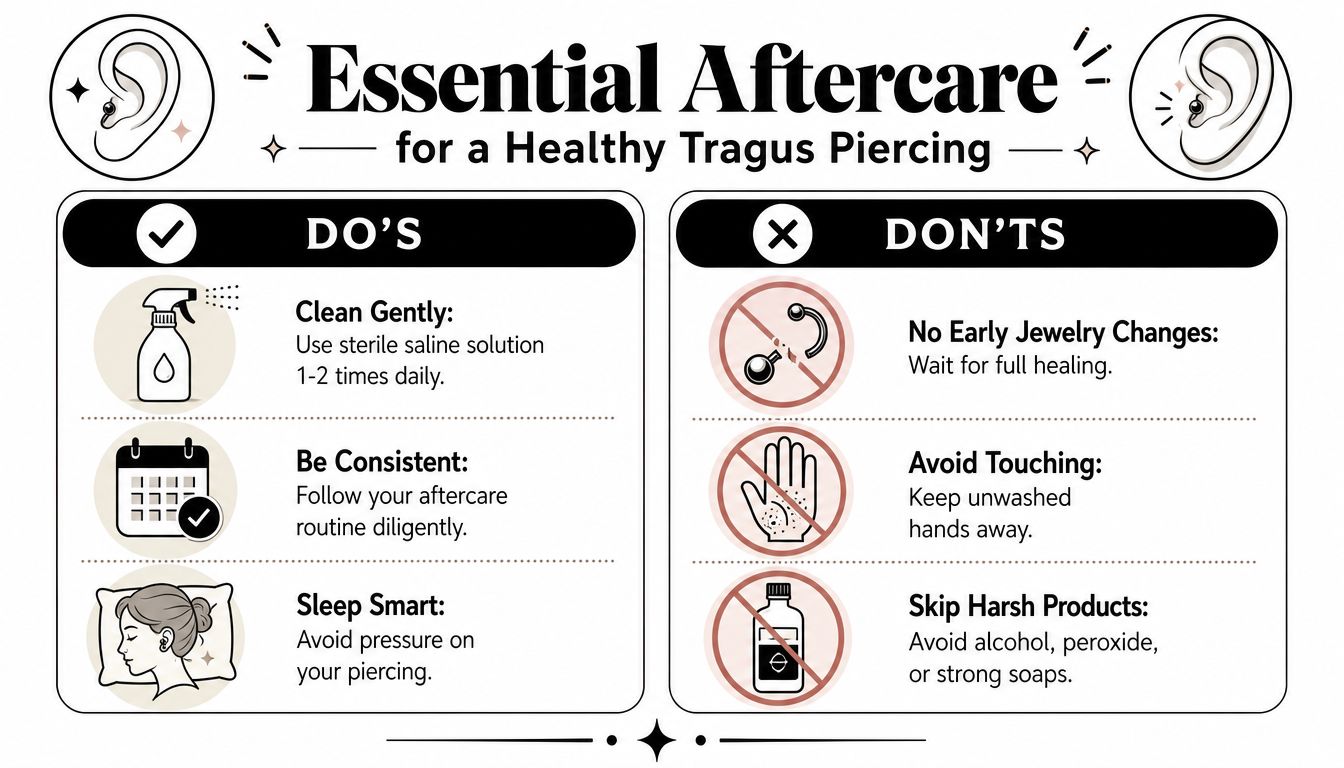
For most clients, the best routine comes down to gentle cleaning, careful drying, and leaving the jewellery alone. Our guide to using saline spray for piercing aftercare explains the basics, and ELLE UK on tragus piercing care also notes the importance of avoiding pressure and harsh products.
A practical routine looks like this:
- Clean with sterile saline: Spray the front and back gently. Let any dried discharge soften on its own instead of picking at it.
- Pat dry with something clean and low-lint: Non-woven gauze or clean paper towel works well. Fluffy towels can leave fibres behind.
- Wash your hands before any contact: If you do need to touch the area, clean hands first.
- Sleep with the ear protected: A travel pillow or donut pillow helps keep pressure off the tragus if you roll in your sleep.
Consistency matters more than intensity. One calm clean each day, plus rinsing in the shower if needed, is usually far better than repeated cleaning sessions that keep the area irritated.
What to stop doing immediately
Tragus piercings sit in a spot that gets more contact than people expect. Phones, earbuds, hair, and absent-minded touching can all keep a piercing stuck in the "almost fine" stage for months.
Avoid these common causes of setbacks:
- In-ear headphones: They press directly on the tragus and can rub bacteria and moisture into the site.
- Pressing a phone to your ear: Even light pressure repeated every day can keep cartilage annoyed.
- Twisting or moving the jewellery: The channel heals best when it stays still.
- Using alcohol, tea tree oil, or antibiotic cream: These often dry out or inflame tissue that is trying to repair itself.
- Changing the jewellery because it looks healed: This is one of the biggest mistakes we see. Calm skin at the surface does not mean the inside is finished healing.
That last point catches out a lot of first-time clients. At around a few months, a tragus can stop feeling sore and start looking normal. That is progress, but it is not the same as full healing.
When to ask for help
If the jewellery starts to feel tight, the area becomes more swollen after being stable, or you are dealing with a persistent bump, get it checked before trying home remedies. Early advice can prevent a small irritation from turning into a long delay.
You can call us on 01202 900050 (Bournemouth) / 020 8686 7730 (Croydon) or send a photo to our WhatsApp on 07752 913846 (Bournemouth) / 07902 490584 (Croydon) for advice from our team. That gives you a direct route to an experienced piercer in Croydon or Bournemouth who can tell you whether you need a simple aftercare tweak, a jewellery adjustment, or a closer look.
Factors That Influence Your Healing Speed
Two people can get the same tragus piercing on the same day and have very different healing experiences. The broad timeline matters, but your day-to-day habits often decide whether healing feels smooth or frustrating.
Biology and everyday behaviour
Your body does the healing, so your general state matters. If you're run down, stressed, or not taking great care of yourself, the piercing may stay irritated for longer. On the other hand, people who leave it alone, clean it gently, and avoid trauma usually give themselves the best chance of a calmer heal.
The biggest non-medical influence is simple mechanical stress. A tragus gets bumped by hair, caught by clothing, pressed by phones, and slept on without you even realising. Cartilage doesn't love repeat disturbance. Even small, regular pressure can keep a piercing in a cycle of irritation.
Friction is often the hidden cause
If a tragus seems to heal, then flares up again, I usually look at routine first.
Common examples include:
- Side sleeping: Repeated pressure can keep the area swollen and tender.
- Earbuds: These can press directly on the tragus and trap irritation.
- Face touching: Lots of people absent-mindedly tap or check the jewellery.
- Snagging: Towels, hats, and hair can all tug on the site.
Those habits can make people think their body “just heals slowly”, when the actual issue is repeated disturbance.
The earwax point people forget
Outer-ear hygiene matters more than many guides explain. The overlooked issue is earwax build-up near the piercing. Earwax itself is naturally protective, but build-up close to a new tragus can trap bacteria and contribute to infection, which is why careful outer-ear hygiene deserves attention in aftercare plans, as noted in Urban Body Jewelry's tragus aftercare information.
That doesn't mean digging around the piercing or over-cleaning your ear canal. It means being sensible about keeping the surrounding outer ear clean and dry without disturbing the jewellery.
A slow-healing tragus often has a practical cause. Pressure, friction, moisture, or poor fit are usually worth checking before you assume anything more complicated.
Normal Healing versus Signs of Trouble
You clean your tragus, the swelling has gone down, and it stops feeling sore unless you catch it. A lot of first-time clients look at that stage and assume they are finished healing. With cartilage, that is where mistakes often start.
A tragus can look healed on the outside months before it is fully healed inside. The surface may seem calm, while the deeper channel is still delicate and easy to irritate. That is why a piercing can seem settled, then flare up again after an early jewellery change, a knock, or a bit of pressure.
What normal healing can look like
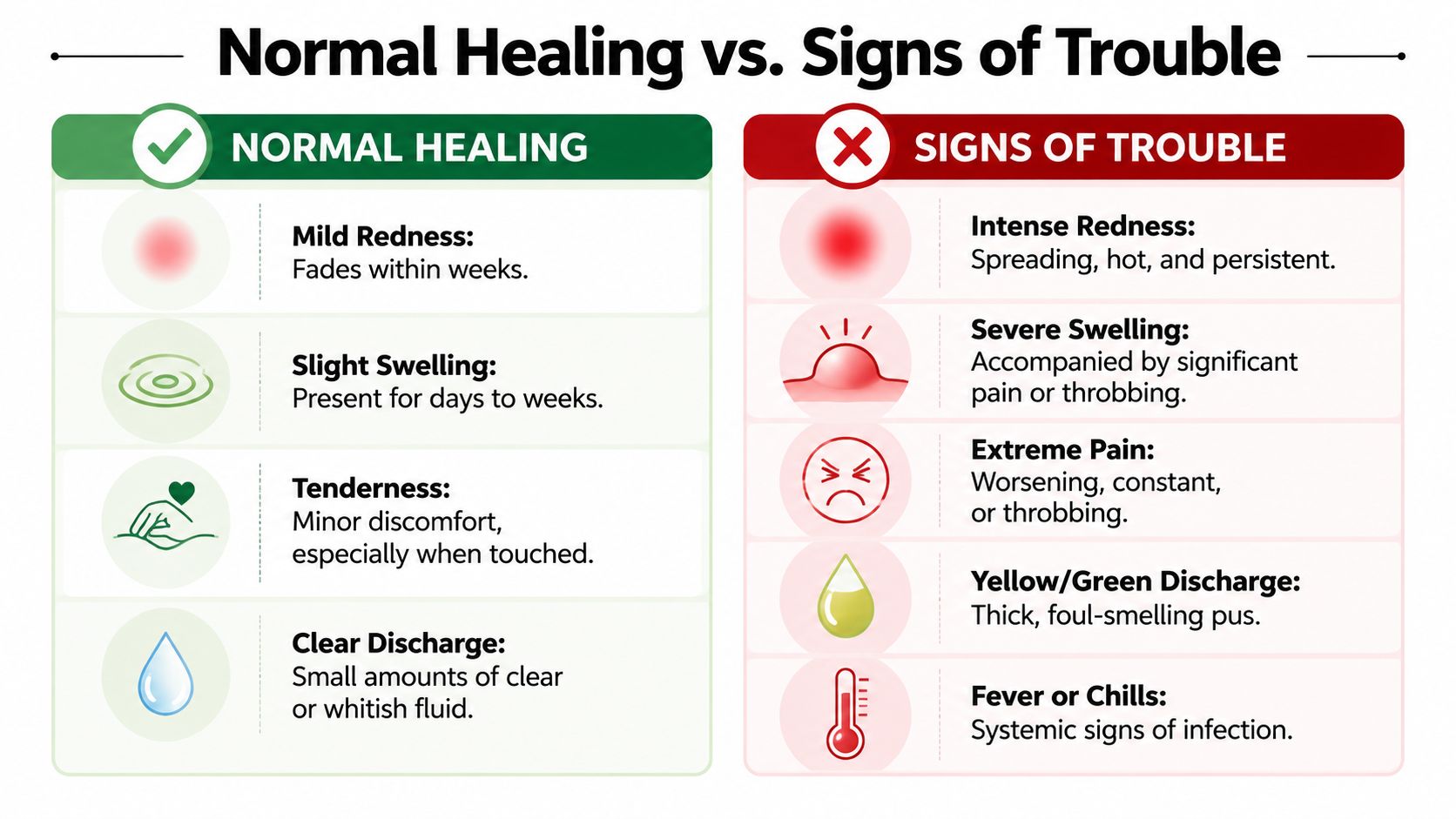
In the early and middle part of healing, a tragus often behaves like a wound that is quiet one week and touchy the next. Mild redness close to the piercing, light swelling, tenderness if you press on it, and clear or whitish fluid that dries into crust are all common. They are signs your body is still repairing the area.
A small bump can also appear. In many cases, that points to irritation rather than infection. Pressure from sleeping on that side, earbuds, or catching the jewellery can keep the piercing in an unsettled state.
Here is a simple comparison:
| Normal healing | Signs of trouble |
|---|---|
| Mild redness close to the piercing | Redness that spreads beyond the area or feels hot |
| Light swelling that gradually settles | Swelling that increases or becomes very pronounced |
| Tender if knocked or touched | Pain that becomes stronger, constant, or throbbing |
| Clear, pale, or whitish dried discharge | Thick yellow or green discharge, especially with a bad smell |
Why the timeline confuses people
Cartilage heals slowly because it has less blood flow than softer tissue. In plain terms, it does not get the same steady supply of oxygen and repair cells that a lobe piercing gets. A lobe often forgives small mistakes. A tragus usually remembers them.
That slower repair process is why the difference between looking healed and being healed matters so much. Many tragus piercings look calm partway through healing, but the tissue inside can still be fragile for much longer. If you are unsure whether what you are seeing is normal, getting a check from an experienced local piercer is safer than guessing. Our guide to professional piercing shops in Croydon is a good place to start if you want in-person advice.
When to get it checked
Pay attention to the direction things are going.
If the piercing is slowly settling, that usually fits normal healing. If it is becoming hotter, redder, more swollen, or more painful, that needs attention. The same goes for discharge that changes from light and crusty to thick, dark, or foul-smelling.
A good rule in the studio is simple:
- Gradually calmer over time: usually healing
- Sudden flare-up after seeming settled: often irritation, sometimes a sign to get it assessed
- Worsening heat, spreading redness, or unpleasant discharge: speak to a piercer or medical professional promptly
You do not need to panic over every bit of crusting. You do need to respect a tragus that is telling you it is struggling. Patience usually prevents the problems that force a much longer recovery.
Your Trusted Piercing Studios in Croydon and Bournemouth
The hardest part of tragus healing usually isn't the piercing itself. It's judging what's safe months later, when the piercing looks settled and you're tempted to treat it like finished work.
That's where experienced support matters. One of the most common misunderstandings is the difference between external healing at 3 to 6 months and full cartilage remodelling at 6 to 12+ months, which can lead to early jewellery changes and complications. That specific point is highlighted in this discussion of tragus healing stages and client mistakes, and it's something professional piercers in Croydon and Bournemouth can safely guide clients through.
Here's the studio view.

Why local support makes healing easier
At Timebomb Tattoo & Piercing, we don't just pierce and send you on your way. We help clients understand placement, jewellery fit, cleaning, and when a check-up is worth doing. That matters with a tragus, because a tiny fit issue or a bit of repeated pressure can change how the piercing settles over time.
If you're based near London, our guide to professional piercing shops in Croydon is a useful starting point for finding trusted local support.
When a studio visit is the safest option
A professional check is especially useful if:
- You want jewellery changed: Don't guess based on appearance alone.
- You've developed a bump: Pressure, angle, or jewellery fit may be involved.
- You keep catching it in your sleep: Sometimes your routine needs adjusting, not your cleaning.
- You're unsure what's normal: Reassurance early can save months of irritation later.
If you'd like advice, a check-up, or to book with our friendly team, call 01202 900050 (Bournemouth) / 020 8686 7730 (Croydon) or message 07752 913846 (Bournemouth) / 07902 490584 (Croydon) on WhatsApp.
Frequently Asked Questions About Tragus Healing
When can I change my tragus jewellery
A tragus often fools people. It can stop looking red and crusty months before the tissue inside has finished healing.
That is why I tell clients to split this into two different moments. One is a studio change because the bar is too long, the fit needs adjusting, or swelling has settled. The other is a style change because you want different jewellery. Those are not the same decision, and treating them as the same is one of the easiest ways to set healing back.
If your jewellery needs downsizing, let a piercer do it at the right time. If you just want a new look, wait until the piercing is fully healed, not just calm on the surface. A tragus can look settled somewhere in the middle of healing and still react badly to an at-home swap.
Can I wear earbuds or headphones while it heals
Earbuds are a common cause of irritation because they press right into the area you are trying to leave alone. Even light pressure, repeated every day, can keep the channel angry.
Over-ear headphones are usually easier, but only if the cup does not squash the ear. The simple test is this. If the device touches the tragus or jewellery, it is slowing things down.
For the first part of healing, many clients do best with one earbud on the opposite side or speaker audio instead.
What's the bump next to my piercing
Usually, a bump next to a tragus is irritation. Cartilage is stubborn, and it tends to complain in a small, raised way when it is getting knocked, slept on, over-cleaned, or squeezed by poor jewellery fit.
The useful question is not “What cream should I buy?” It is “What keeps winding this piercing up?” Pressure is often the answer. So is moisture trapped after showers, fiddling with the jewellery, or a post that is either too long or too tight.
A piercer can check the angle and fit. That saves guesswork.
Why does it look healed but still feel sensitive
Because the outside and the inside heal at different speeds.
The skin around the entry and exit can look settled while the cartilage deeper in the ear is still maturing. A good comparison is fresh paint on a wall that feels dry on top but still marks if you press it too soon. Your tragus can seem fine for weeks, then flare up after one night of sleeping on it or an early jewellery change.
That is why “looks healed” often happens earlier, while “fully healed” takes longer. Mild tenderness that slowly improves can be part of that process. Pain that gets stronger, spreading redness, heat, or discharge needs a professional check.
If you're ready to find a trusted local studio, book a consultation, or compare professional piercing options in Croydon and Bournemouth, visit Piercing Near Me. It's a straightforward way to connect with experienced piercers, get clear aftercare guidance, and choose a safe place for your next piercing.
Trackbacks/Pingbacks