
You've had your tragus pierced for a while, the stud feels settled, and now you want the look that probably inspired you in the first place. A neat little hoop that sits close, looks intentional, and finishes the ear properly.
That switch is where a lot of people run into trouble. Not because hoops are bad, but because fit matters more in the tragus than almost anywhere else on the ear. The tissue is small, the placement is tight, and a ring that's slightly off can pinch, twist, snag, or keep the piercing irritated for far longer than it should.
At Timebomb Tattoo, we treat the first change to a tragus piercing hoop as a fitting job, not a simple jewellery swap. If you're not sure what size you need, or whether your piercing is ready, it's always worth asking before you force a ring through a channel that isn't stable yet. You can call us on 01202 900050 (Bournemouth) / 020 8686 7730 (Croydon) or message 07752 913846 (Bournemouth) / 07902 490584 (Croydon) on WhatsApp.
From Stud to Hoop The Tragus Piercing Journey
In the UK, the tragus didn't come from an ancient piercing tradition. It grew with the modern cartilage piercing boom, first becoming established around the same time as rook and daith piercings in the 1980s, then rising sharply in popularity around 2005, which is why it sits so naturally in today's curated ear styling culture, as outlined in this tragus piercing history summary.
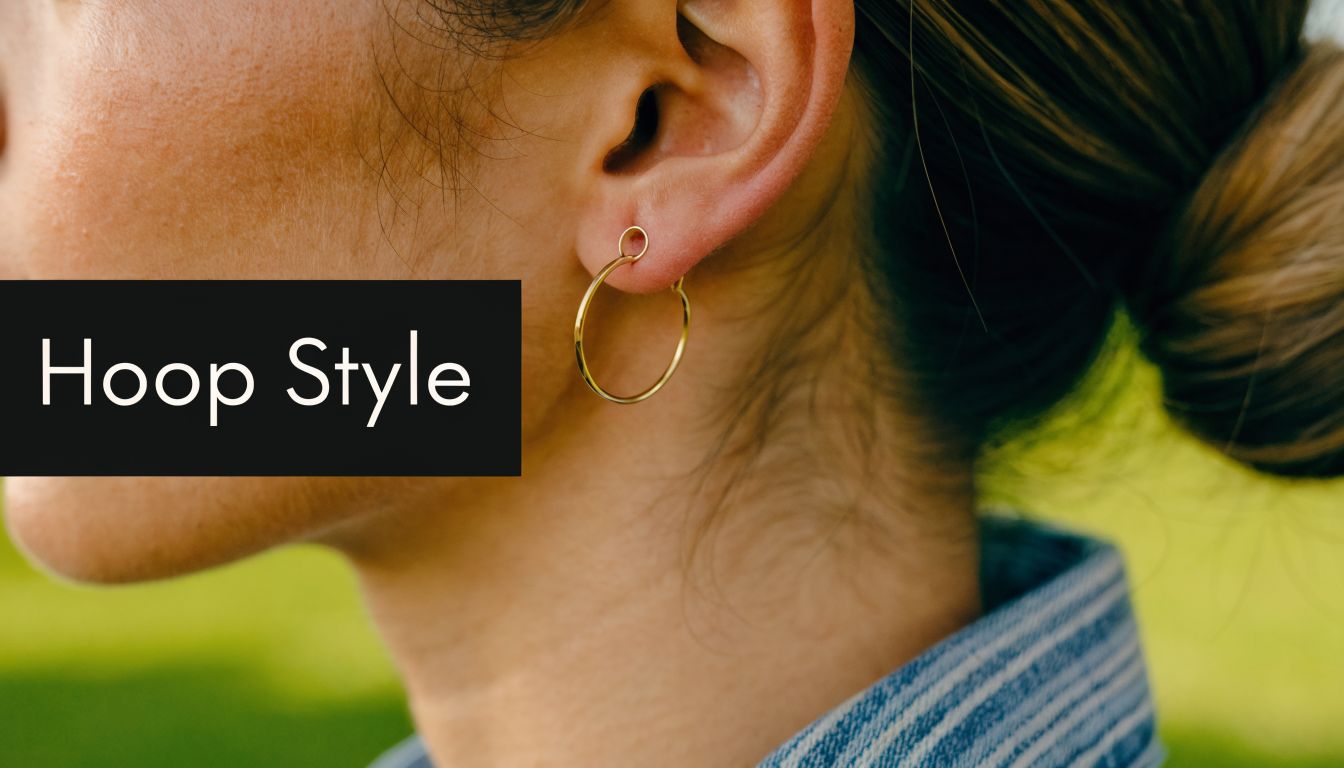
That modern popularity is part of why so many people want a tragus piercing hoop. A well-fitted hoop can look clean from the front, balance lobe jewellery nicely, and give a more finished cartilage look than a plain stud. But it only works when the piercing placement, the cartilage thickness, and the ring diameter all agree with each other.
Why the switch needs care
A tragus hoop isn't just a style choice. It changes how the piercing behaves day to day. A stud tends to stay put. A hoop moves, rotates, catches on things more easily, and puts pressure on a curved path instead of a straight one.
That's why the move from stud to hoop should be treated as a separate stage.
- Healing comes first: A piercing can feel calm before it's strong enough for ring movement.
- Sizing is personal: The tragus is a small flap of cartilage in front of the ear canal, so compact sizing matters and “standard size” advice only gets you so far.
- Placement affects fit: A centrally placed tragus can suit one ring size, while a placement closer to the edge may need a different inner diameter.
A good tragus hoop should look easy. If it looks like it's pulling, standing away from the ear, or squeezing the tissue, the fit isn't right.
What works best in practice
The safest route is simple. Heal with the correct straight jewellery first. Let the piercing settle fully. Then have the tragus measured for a ring that matches your anatomy, not a chart pulled from a product page.
That's the difference between a hoop you enjoy wearing and one that causes a bump two weeks later.
Is Your Tragus Piercing Ready for a Hoop
The biggest mistake people make is assuming “it feels fine” means “it's ready”. Those aren't the same thing. A tragus can stop being sore long before the channel is mature enough to cope with the movement of a ring.
Expert piercers recommend starting with a straight labret because hoops need to be larger to allow for swelling, and that extra size increases movement, snagging, migration risk, and irritation during healing, as explained in Lynn Loheide's tragus healing guidance.
Signs it may be ready
Before changing to a tragus piercing hoop, look for a piercing that behaves normally day after day.
- No tenderness: Pressing nearby shouldn't produce that sharp cartilage ache.
- No crusting: Ongoing crust usually means the channel is still reactive.
- No discharge: Especially after a shower or after gentle movement.
- No flare-ups: Sleeping awkwardly, cleaning, or light contact shouldn't set it off.
If you still get random soreness, intermittent swelling, or a bit of wetness around the jewellery, wait.
Signs you should leave the stud in
A piercing that only seems healed can still become irritated fast once you add a ring. I see this most often when someone changes jewellery because the front looks settled, but the back or inner angle of the piercing is still delicate.
Hold off if any of these sound familiar:
- It still gets sore after being knocked
- You're still cleaning away crust
- The jewellery feels tight some days and fine on others
- You can't move the existing jewellery comfortably during cleaning
- It recently had a bump
For a broader overview of how cartilage piercings settle at different stages, our guide to ear piercing healing times can help you judge where you are.
If you have to talk yourself into believing it's healed, it probably isn't ready for a hoop yet.
Why patience saves trouble
A ring adds motion. Motion adds friction. Friction turns a quiet piercing into an irritated one very quickly. Waiting until the channel is stable gives you a far better chance of switching once and leaving it alone, which is exactly what a fresh jewellery change needs.
How to Choose Your Perfect Tragus Hoop
A tragus hoop can look tiny in the tray and still be completely wrong once it is in your ear. The fit depends less on a generic size chart and more on where your piercing sits, how thick your tragus is, and how much room the tissue needs when you talk, chew, sleep, and wear earbuds.
At Timebomb Tattoo, I do not size a tragus by diameter alone. I check the angle of the piercing, the distance from the hole to the outer edge of the tragus, and whether the jewellery will sit against flat tissue or press into a raised ridge. That is what prevents the common problems people blame on the hoop itself, pressure soreness, irritation bumps, and gradual migration.
Material matters
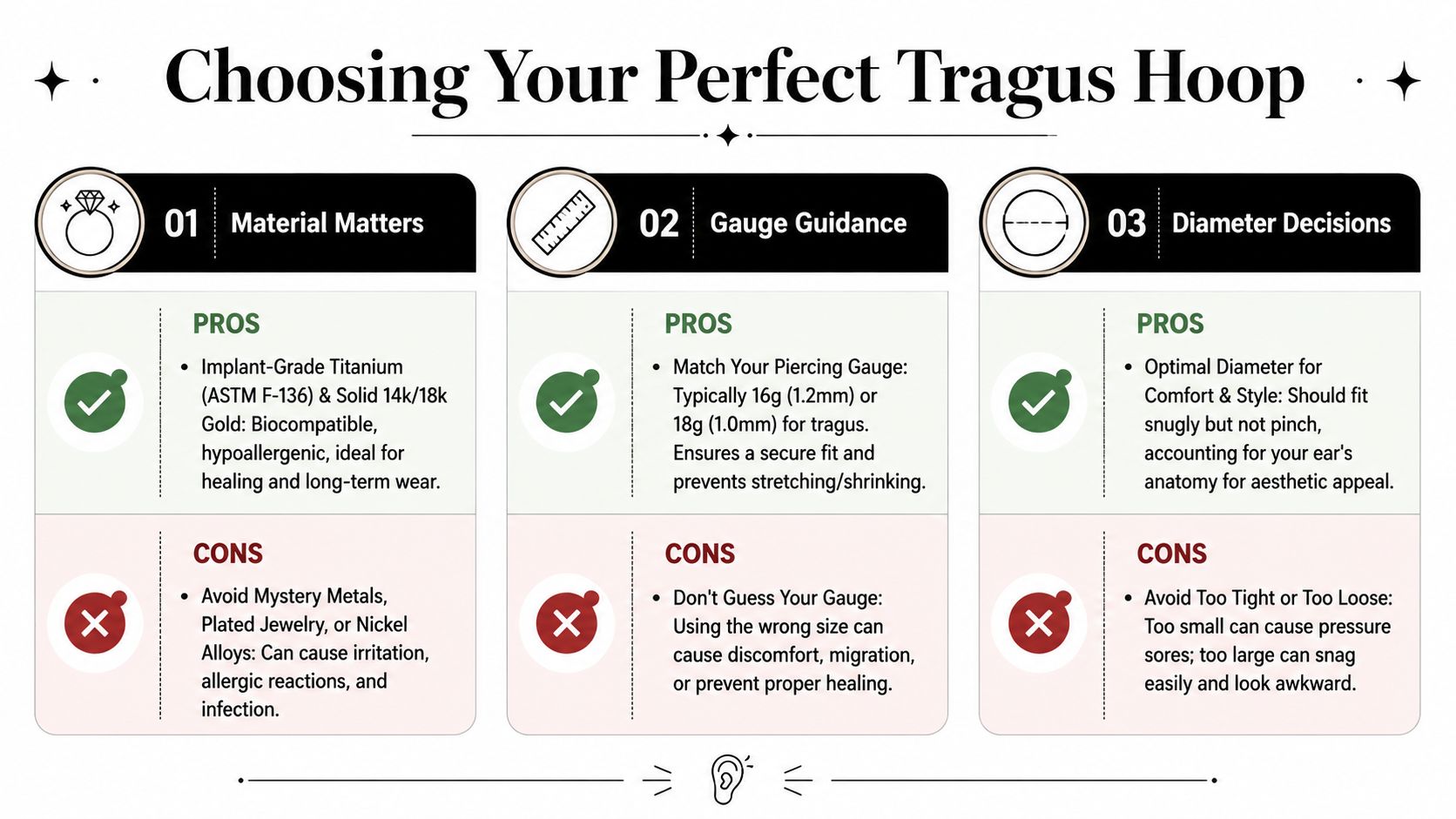
Cartilage is fussy about surface quality. A well-polished piece in a safe material usually settles better than a cheap ring with rough joins or questionable plating.
Here is what we recommend for a first tragus hoop:
| Material | Best For | Considerations |
|---|---|---|
| Implant-grade titanium | Sensitive skin, daily wear, first hoop change | Light, reliable, and usually the easiest material for cartilage to tolerate |
| Solid gold | Fully healed piercings and a warmer finish | Choose solid, well-made jewellery with good polish and suitable hoop construction |
| Plated jewellery | Short-term fashion wear only | Coating can chip or wear through, which often irritates the channel |
| Mystery metal or nickel-heavy alloys | Avoid | More likely to cause reactivity, itching, and ongoing tenderness |
If you want a warmer tone without guessing on quality, our guide to gold tragus jewellery options can help you compare styles that are suitable for healed piercings.
Gauge and closure style
The gauge should match the piercing you already have. Going thinner can make the ring feel loose and can encourage the channel to shrink around it. Going thicker usually means unnecessary force, and force is how people damage a settled piercing during a simple jewellery change.
Closure style matters too.
- Clickers: The easiest option for many clients. Good for everyday wear if the hinge is well made.
- Seam rings: Clean look, but the join must stay out of the piercing channel.
- Captive bead rings: Secure, classic, and often better changed with tools or a piercer's help.
If you are choosing your first hoop, a high-quality clicker is usually the least awkward option.
Diameter is what decides comfort
Most healed tragus hoops fall into a small size range, but that range only gives you a place to start. Two clients can wear the same gauge and need completely different diameters because one piercing sits close to the rim and the other sits deeper in thicker cartilage.
When I assess a tragus for a hoop, I look at three things first:
- Cartilage thickness
- Distance from the piercing to the edge of the tragus
- How snug you want the finished look to be
A snug fit can look great, but only if the ring clears the tissue without pressing into it. If the hoop sits too tight, it can leave denting, stay sore after sleeping on it, or create a pressure bump at one side of the channel. If it is too large, it swings more, catches more easily, and can irritate the piercing through constant movement.
That trade-off matters. The best tragus hoop is not the smallest ring you can get in. It is the one that sits neatly while giving the tissue enough breathing room.
If you want your first hoop to behave well, get the tragus measured in person. A small change in diameter can be the difference between a ring you forget about and one that keeps reminding you it is there.
The Safe Way to Change Your Jewellery at Home
If your tragus is fully settled and the jewellery has been properly sized, changing it at home can be straightforward. The key word is gentle. If you hit resistance and keep going, that's when you turn a calm piercing into an angry one.
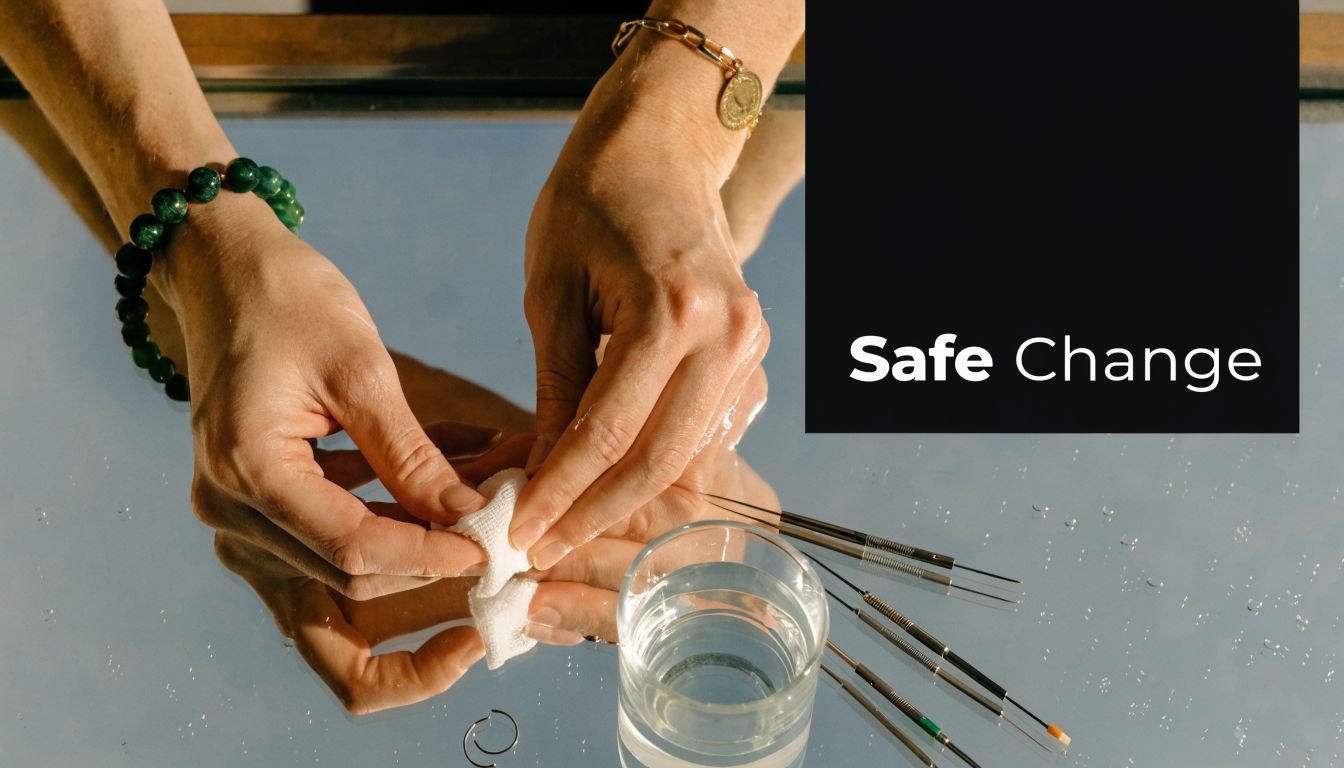
Before you start
Set everything out first. Good light, clean hands, clean jewellery, mirror, and some sterile gauze make the whole process easier.
Do this in order:
- Wash your hands thoroughly
- Rinse the area gently if there's any dried build-up
- Check the new hoop opens and closes properly before it goes near your ear
- Take your time
If you're working with a clicker, make sure the hinge is smooth. If it's a seam ring or captive bead ring, be realistic about whether you can handle it cleanly without fumbling around the ear.
The actual change
Remove the existing labret carefully. Support the jewellery so you're not dragging on the piercing channel. Once the stud is out, guide the new ring through slowly and follow the path of the piercing rather than trying to force a new angle.
A small amount of water-based lubricant can help if the jewellery is awkward, but you should never need to push hard. Pain, scraping, or a sense that the jewellery “won't catch” are all signs to stop.
- Mild awareness is normal: You might feel a little sensitivity.
- Sharp pain isn't normal: Stop and don't keep testing it.
- Resistance is useful information: It usually means the angle is wrong, the channel isn't ready, or the jewellery size is off.
If the ring doesn't go in smoothly, the smart move is to stop. Forcing jewellery through cartilage rarely ends well.
When to get us to do it
There's no prize for doing your first jewellery change alone. If the ring is tiny, the closure is awkward, or you're nervous, let a piercer handle it. We're always happy to do jewellery changes safely at Timebomb Tattoo. To arrange that, call 01202 900050 (Bournemouth) / 020 8686 7730 (Croydon) or send a WhatsApp message to 07752 913846 (Bournemouth) / 07902 490584 (Croydon).
Aftercare and Troubleshooting Common Hoop Issues
The first week after switching from a stud to a hoop is where fit really shows itself. A hoop that suits your tragus anatomy settles down. A hoop that is slightly too tight, too loose, or sitting at the wrong angle usually starts advertising that fact quickly through tenderness, pressure, or extra movement.
That is why I do not judge a tragus hoop by diameter on paper alone. I look at how the ring sits against the outer edge of the tragus, whether it is pressing on the entry or exit point, and how much clearance you have when you talk, chew, and sleep on that side. A hoop can be technically "the right size" and still be wrong for your ear.
What is normal after the switch
A little tenderness for a few days is common. Mild redness is common too. Some clients also notice the hoop more when chewing or cleaning around the ear, because a ring moves differently from a flat-back labret.
Keep the aftercare boring and consistent:
- Clean only when needed: If you see dried discharge or the area looks irritated, use a proper saline spray for piercings.
- Leave the ring alone: Do not spin, twist, or flip it.
- Reduce pressure: Be careful with earbuds, over-ear headphones, helmets, hats, phones, and your sleeping position.
- Keep products off it: Hair spray, makeup, and heavy skincare around the ear can all stir things up.
The common problems, and what they usually mean
An irritation bump is the issue I see most often after a hoop change. In a tragus, it usually comes back to mechanics rather than mystery. The ring may be too snug and pressing into the channel. It may be too large and swinging constantly. Sometimes the piercing had healed enough for a change, but not enough for the extra motion of a hoop.
A pressure problem often has a specific look. The ring sits tightly against the tissue, leaves an indent, or feels sharper by the end of the day. A movement problem looks different. The hoop shifts every time you touch your ear, catch it on hair, or sleep on it, and the piercing stays mildly angry without settling.
If you are not sure which one you are dealing with, look at the jewellery while your ear is relaxed in the mirror. Then look again after chewing or talking for a minute. That simple check often shows whether the ring has enough breathing room for your anatomy.
For urgent advice about swelling, heat, or a hoop that suddenly feels too tight, call Timebomb Tattoo on 01202 900050 (Bournemouth) / 020 8686 7730 (Croydon).
Red flags that need attention
Contact your piercer promptly if you notice:
- Swelling that is increasing rather than settling
- Yellow or green discharge
- Heat coming from the area
- Throbbing pain
- The ring starting to sink, press in, or sit crooked
- Fast worsening after the jewellery change
Do not try to solve those signs by forcing the ring to move or by swapping jewellery again at home. In cartilage, that usually creates a bigger problem.
If a hoop keeps giving you trouble, going back to a well-fitted labret is often the fastest way to calm the piercing down. That is not a failure. It is a practical reset, and sometimes it tells us the channel needed more time or a different hoop size based on your tragus shape.
Your Tragus Hoop Questions Answered
Can I put a hoop in straight after getting pierced if I want that look?
No. For a fresh tragus, a straight labret is the better option because it stays more stable and places less mechanical stress on the piercing while it settles. Starting with the aesthetic you want later often causes problems that delay getting that look at all.
Why does my hoop feel tight even though the size looked right online?
Because online sizing only shows the ring, not your anatomy. A tragus hoop can look correct on a chart and still be wrong for your ear if your cartilage is thicker, your piercing sits deeper, or the angle of placement needs more clearance. This is why in-person measuring is so useful for first changes.
Is a snug hoop always better than a slightly looser one?
Not always. A snug fit looks neat, but only if it isn't pressing on the channel. Slightly looser can be the better choice if your tragus is thicker or if you want a ring that sits comfortably without constant contact pressure. The best hoop is the one that looks balanced and stays calm.
If you want help choosing a safe, well-fitted tragus piercing hoop, Piercing Near Me makes it easier to find trusted professional support through Timebomb Tattoo & Piercing in Croydon and Bournemouth. Browse jewellery guidance, learn more about safe piercing standards, and book with confidence at Piercing Near Me.