
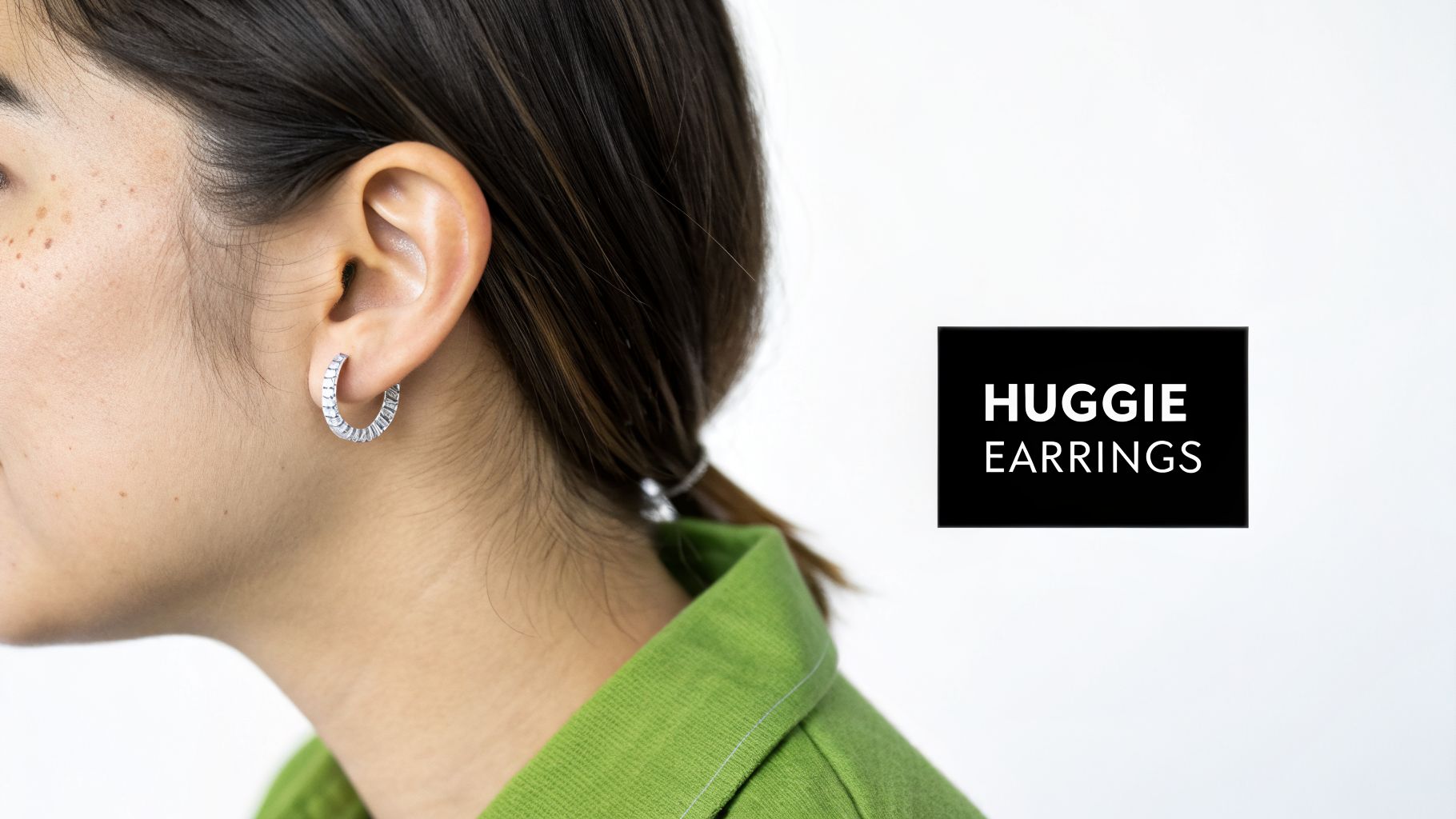
If you’ve ever wondered what huggie earrings are, you’ve come to the right place. Think of them as the cosier, more practical cousin of the classic hoop earring. Their name says it all – they are small hoops designed to sit snugly against your ear, literally "hugging" the lobe or cartilage.
This clever design gives you the beautiful circular shape of a hoop but with the fuss-free comfort of a stud. It’s a perfect combination that has made them a go-to choice for so many people.
What Makes Huggies So Special?
Unlike larger, traditional hoops that can sometimes get caught in your hair or on a jumper, huggies are built for real life. Their close-fitting profile means you can wear them comfortably all day, every day – whether you're working out, sleeping, or just getting on with things.
The real genius is in their closure. Most huggies use a hinged or clicker-style clasp that securely snaps into place, forming a complete, seamless ring. You'll never have to worry about losing a fiddly butterfly back again, which is a massive win for anyone who's ever had an earring go rogue.
At its heart, the appeal of a huggie is that it perfectly blends style with practicality. You get the look of a hoop without the risk of it catching or pulling, which is brilliant for active lifestyles and especially for new, healing piercings.
To give you a quick overview, here are the key features that define a huggie earring.
Huggie Earrings at a Glance
| Feature | Description |
|---|---|
| Fit | Sits very close to the ear, "hugging" the lobe or cartilage. |
| Size | Typically small in diameter, usually between 5mm and 15mm. |
| Closure | Often features a hinged clasp or 'clicker' for a secure, seamless loop. |
| Profile | Low-profile and lightweight, making them ideal for constant wear. |
This combination of features makes them incredibly versatile, which helps explain their recent explosion in popularity.
A True Modern Jewellery Staple
In the last few years, huggies have become the undisputed star of the 'curated ear' look. If you love the idea of creating a personalised stack of different earrings, huggies are the perfect starting point. Their small size means they slot in beautifully alongside other pieces in both lobe and cartilage piercings.
And this isn't just a feeling; the numbers back it up. Small hoops, including huggies, have become one of the most popular earring styles in the UK. This massive surge was driven largely by social media, where UK influencers shared over 1.2 million posts with the #HuggieEarrings tag in that year alone, as detailed in reports on the huggie earring trend.
It really goes to show how this tiny but mighty style has completely captured our imagination.
Choosing the Best Materials for Your New Piercing
When you’re buzzing with excitement for a new piercing, it’s all too easy to get caught up in the style of the jewellery. But let’s be clear: the material you choose for that first piece of jewellery is the single most important decision you'll make for a safe, smooth healing journey.
Think of it this way: your body sees a new piercing as a wound. The jewellery is a foreign object sitting right in the middle of it. If you put the wrong thing in there, your body is going to fight back with irritation, allergic reactions, and potentially even nasty infections. That’s precisely why professional studios like Timebomb Tattoo & Piercing are so strict about only using implant-grade metals.
The Gold Standard: Implant-Grade Titanium
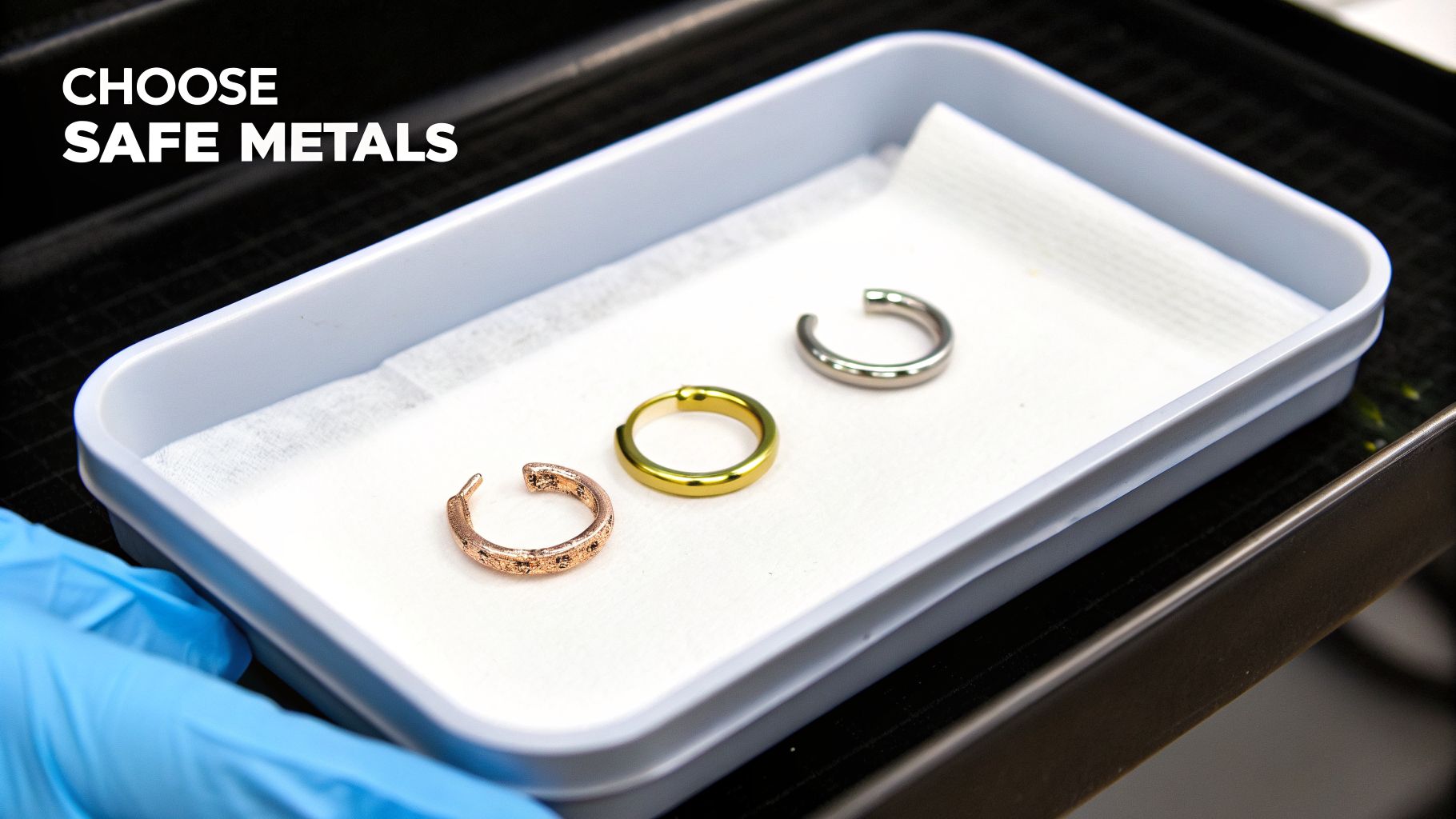
For any fresh piercing, nothing beats implant-grade titanium (ASTM F-136). This isn't your average "titanium" you might find in a high-street shop. This is the specific, certified grade of metal trusted for surgical implants like bone screws and hip replacements—things designed to live inside the human body safely.
So, why is it so good? It's almost entirely free of nickel, a notorious allergen that causes reactions in up to 17% of women and 3% of men. Because it's so biocompatible, your body basically doesn't see it as a threat. This means a much happier, faster, and less complicated healing process for you.
Your piercer's commitment to using implant-grade titanium is a direct reflection of their commitment to your health. It’s a non-negotiable standard for safe practice, ensuring the healing process starts on the best possible footing.
Other Body-Safe Options
While titanium is our top pick every time, there are a couple of other great materials for fresh or fully healed piercings, especially if you've got your heart set on the timeless look of gold.
- Solid 14k or 18k Gold: The key word here is solid. Plated jewellery is a no-go, but solid gold is a fantastic, safe alloy. You have to make sure it's nickel-free, though, as some gold alloys (particularly white gold) can contain it. Yellow and rose gold are generally safer bets.
- Niobium (Nb): A bit like titanium's cool cousin, niobium is another highly biocompatible elemental metal. It’s incredibly rare for it to cause a reaction and, as a bonus, it can be anodised to create a whole rainbow of vibrant colours for your huggie earrings.
Materials to Strictly Avoid for New Piercings
Knowing what to steer clear of is just as crucial as knowing what to choose. Cheap, unregulated jewellery from fast-fashion stores or online marketplaces can be a recipe for disaster.
You absolutely must avoid huggie earrings made from "mystery metals." They are often packed with high levels of nickel, lead, and other nasty irritants. Plated jewellery is another huge red flag for a new piercing; that thin coating wears off surprisingly fast, exposing the cheap, reactive metal underneath. This can lead to irritation, that dreaded green skin, or a full-blown infection.
Finally, be wary of the term "surgical steel." It sounds official, but many grades contain more than enough nickel to cause serious problems for anyone with a sensitivity. Always, always insist on certified, implant-grade metals from a piercer you trust.
Huggie Earrings vs Hoops vs Studs
Trying to choose between huggies, traditional hoops, and classic studs? It’s a common question, and honestly, there's no single "best" option. Each style has its own unique strengths, and the right one for you really boils down to your piercing, your personal style, and your day-to-day life.
Let’s start with the classic stud earring. It’s the foundation of most people’s jewellery collection. A good stud is discreet, versatile, and brilliant for adding a simple point of sparkle. For fresh piercings, studs with flat-back labret posts are the gold standard. The main downside comes with the traditional butterfly backs, which can be a nightmare to sleep on and have a knack for disappearing.
At the other end of the scale, you have traditional hoops. These are all about making an impact. They create beautiful movement, frame the face, and are impossible to miss. But that visibility comes with a catch—literally. Their larger size makes them prone to snagging on jumpers, hair, and pillows, which is a real risk for irritation, especially with healing piercings or if you're always on the go.
The Perfect Middle Ground
This is exactly where huggie earrings come in. They give you that complete, seamless circle you love in a hoop, but with the snug, low-profile fit of a stud. Because they sit so closely to the earlobe or cartilage, the chance of them catching on anything is dramatically reduced. This makes them one of the most comfortable and secure styles you can wear, even 24/7.
For so many people, huggies hit that sweet spot between style and practicality. The secure clicker mechanism means you’re not going to be hunting for lost backs, and the snug fit is a game-changer for sleeping. This is especially true for cartilage piercings like the helix or tragus, where a bigger hoop could cause pressure and irritation.
Huggies expertly bridge the gap between the subtlety of a stud and the presence of a hoop. They deliver the visual appeal of a ring without the practical downsides of a larger diameter, making them the ultimate everyday earring.
The numbers back this up. Huggie earrings are an incredibly popular choice for piercings here in the UK. Their small, close-fitting design, typically around 10mm in inner diameter, is far less likely to snag than larger, traditional hoops, making them a safe and stylish choice for almost anyone. You can dive deeper into the long and fascinating history of earrings and their evolution on GatsbyJewellery.co.uk.
To help you visualise the differences and make your choice a little easier, we've put together a quick comparison.
Huggie vs Hoop vs Stud Comparison
This table breaks down the key features of each earring type, helping you see at a glance which one best fits your needs.
| Feature | Huggie Earrings | Traditional Hoops | Stud Earrings |
|---|---|---|---|
| Sleeping Comfort | Excellent: Snug fit prevents pressing or poking. | Poor: Can get caught and press uncomfortably into the head. | Fair to Poor: Butterfly backs often cause discomfort. |
| Security | Excellent: Secure clicker or hinge closure is very reliable. | Good: Various clasps, but larger size can be pulled open. | Fair: Butterfly backs can loosen and fall off easily. |
| Snag Risk | Very Low: Sits flush against the ear, minimising catching. | High: Prone to snagging on hair, clothing, and towels. | Low: Minimal profile, but posts can sometimes catch. |
| Visual Style | A subtle, seamless ring that “hugs” the ear. | A bold, statement-making circle that frames the ear. | A single, focused point of sparkle or design. |
Ultimately, whether you choose a huggie, hoop, or stud depends on balancing comfort, security, and the look you want to achieve for that specific piercing.
One of the best things about huggie earrings is just how versatile they are. While they look great in a standard lobe piercing, their small, compact design is what makes them the undisputed champion of the modern ear curation trend. They’re the perfect building blocks for styling multiple piercings all over the ear, both safely and comfortably.
Unlike bigger hoops that can snag or get in the way, a huggie’s snug fit is ideal for more ambitious placements. This is exactly why their popularity has exploded for cartilage piercings, where a low profile and all-day comfort are non-negotiable.
This diagram shows you exactly what we mean, illustrating how a huggie’s profile differs from a classic hoop or stud.
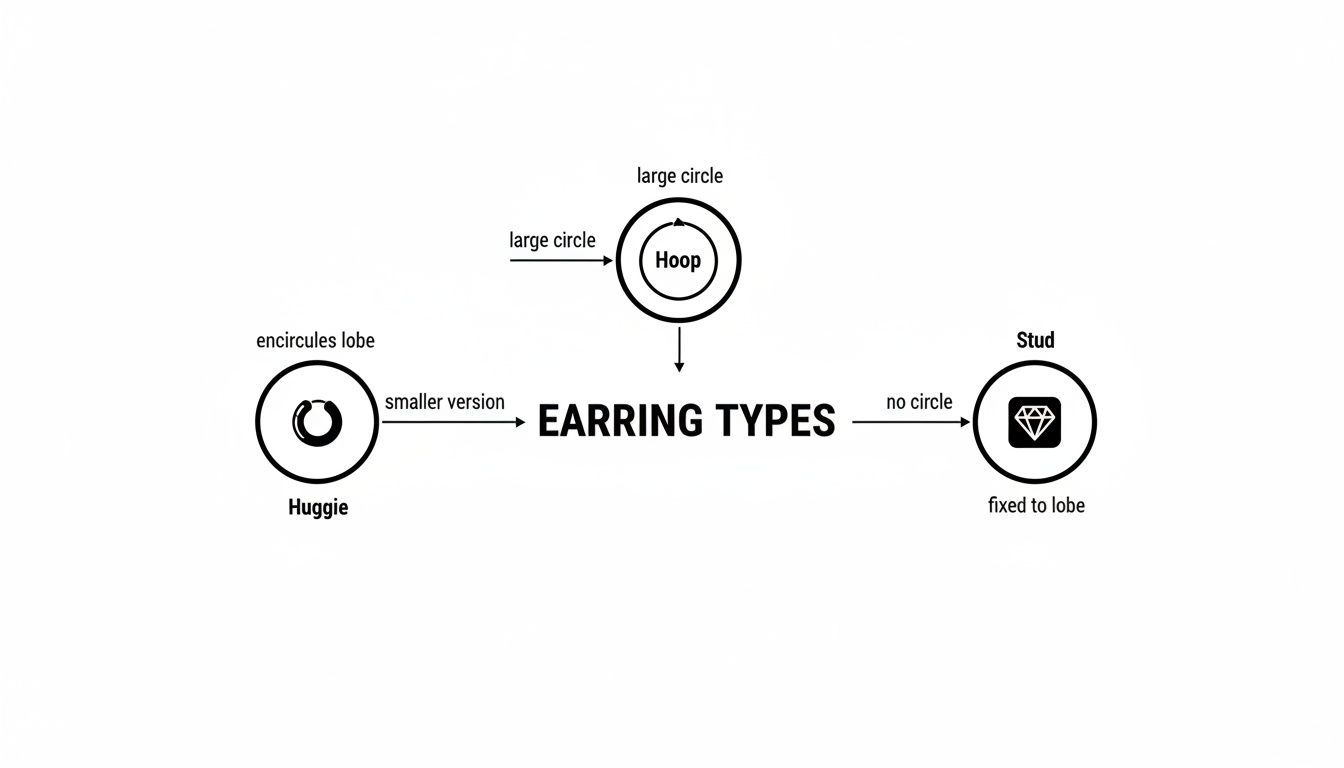
As you can see, huggies offer the best of both worlds: the complete circle of a hoop with the compact, secure feel of a stud.
Popular Cartilage Piercings for Huggies
Because they’re so adaptable, you can wear huggies almost anywhere. But they really come into their own in certain cartilage piercings. Getting the size just right is key, and a good piercer will always measure your ear’s unique anatomy to find the perfect fit.
Here are a few of the most popular spots where we see clients wearing huggies:
- Helix Piercing: Placed on the outer rim of the upper ear, the helix is a classic. A small 6-8mm huggie fits beautifully here, creating a neat little ring that follows the natural curve of your ear.
- Tragus Piercing: This is the little nub of cartilage just in front of your ear canal. A tiny 5-6mm huggie is often the perfect choice to wrap around it snugly without feeling bulky or interfering with earphones.
- Conch Piercing: Found in the inner cup of your ear, a conch piercing makes a real statement. A larger huggie, usually around 10-12mm, can frame this area perfectly, giving you a striking orbital look.
- Daith Piercing: Tucked into the innermost fold of cartilage, a daith piercing is practically made for a huggie. This piercing requires a ring from the start, and a huggie provides a secure and comfortable option that sits neatly inside the ear.
Creating Your Custom Ear Stack
The trend for curated "ear stacks" is where huggies truly shine. They’ve become an absolute staple in the UK piercing scene, forming the backbone of creative combinations across lobes and cartilage.
At Timebomb Tattoo & Piercing, huggies are a popular choice for multi-piercing ear projects. Clients love the way you can stack them up the ear to create a totally personalised look.
Our piercers are often praised in reviews for their eye for detail, mapping out placements on each client’s anatomy to get a balanced and stylish result. For those interested in the history, you can read more about different earring types and their significance at Wikipedia.
The secret to a great ear stack is playing with different sizes and textures. You could start with a larger huggie in your first lobe piercing, then graduate to smaller ones in your seconds and thirds. Mixing a simple, plain metal huggie with one that has pavé stones or a different texture adds depth and makes the whole look more interesting.
An experienced piercer at Timebomb can work with you to plan a cohesive stack that's not only beautiful but, most importantly, safely performed and perfectly suited to you.
Your Piercing Aftercare and Cleaning Guide
So, you’ve got a gorgeous new piercing! Getting it done is the exciting part, but the real magic happens over the next few weeks and months. Proper aftercare is what makes the difference between a happy, healthy piercing and a problematic one.
The best news? Looking after your new piercing is surprisingly simple. Forget what you might have heard about complicated routines or old wives' tales. At Timebomb, our piercers will always tell you that less is more.
The Professional Cleaning Method
The only thing you need is a sterile saline solution. That’s it. Clean your piercing with it twice a day. This stuff is brilliant because it's isotonic, meaning it has the same salt concentration as your body, so it cleans the piercing without drying out or irritating the delicate healing skin.
Just spray the saline directly onto the front and back of your huggie earring. Let it sit for a minute or two to soften up any of those 'crusties' (that's just dried lymph fluid, a totally normal sign of healing). Then, gently pat the area dry with a clean piece of kitchen roll or non-woven gauze. Please don't use a bath towel—they can snag your jewellery and are often breeding grounds for bacteria.
Piercing Aftercare Dos and Don'ts
To keep things healing smoothly, there are a few golden rules to follow. Stick to these, and you’ll avoid most of the common issues that can slow things down.
- DO clean your piercing twice daily with a sterile saline solution.
- DO wash your hands thoroughly with soap and water before you touch your piercing for any reason.
- DO pat the area dry with a fresh, disposable paper product after cleaning.
- DON'T twist, turn, or fiddle with your huggie earring. Moving it around only damages the healing tissue.
- DON'T use harsh products like alcohol, peroxide, or antiseptic soaps. They’re far too aggressive and will do more harm than good.
- DON'T sleep directly on your new piercing. The pressure can cause serious irritation and even make the piercing migrate or change angle.
Twisting your jewellery is probably the most stubborn piercing myth out there. All it actually does is drag bacteria into the healing fistula (the little tunnel your piercing creates) and tear the fragile new skin cells trying to form inside. Just leave it alone!
Finally, be patient. Healing takes time, and you can't rush your body. A lobe piercing might feel settled fairly quickly, but cartilage takes much, much longer to fully heal. For a full breakdown of what to expect, check out our guide on ear piercing healing times. A little bit of care now will make sure your new huggie looks amazing for years to come.
Book Your Safe Piercing in Croydon or Bournemouth
Feeling inspired to add some huggies to your ear setup? Finding the right studio is the single most important decision you'll make, and at Timebomb Tattoo & Piercing, we take that responsibility seriously. Your safety is, and always will be, our number one priority.
Our piercers are the heart of what we do. They’re not just technicians; they're experienced artists who understand how to work with your unique anatomy to get the placement just right. Every single piercing is performed with a sterile, single-use needle. This isn't just a preference—it's the gold standard for hygiene, creating a clean, precise channel that heals far better than the blunt force trauma from a piercing gun.
Why Choose Timebomb for Your Piercing
The jewellery you start with makes all the difference. We only stock a carefully selected range of beautiful, implant-grade jewellery, including nickel-free titanium and solid gold huggie-style rings. This means your piercing begins its journey with the safest, most body-neutral materials possible, dramatically reducing the chances of allergic reactions or irritation getting in the way of a smooth heal.
We also know that a great piercing doesn't end when you walk out the door. Our team will walk you through the entire aftercare process, making sure you leave feeling confident and fully equipped to look after your new addition. We're here to answer your questions long after your appointment is over.
Choosing a reputable piercer is an investment in your health and the final look of your piercing. At Timebomb, we merge artistry with uncompromising safety standards, giving you the confidence to get pierced right.
Schedule Your Appointment Today
Whether you’re ready for your very first piercing or adding the finishing touch to your collection, we’d love to help. Our friendly teams in both Croydon and Bournemouth are here to offer a professional consultation and an exceptional piercing service.
- Timebomb Croydon: Book your appointment at our London studio.
- Timebomb Bournemouth: Schedule a visit to our South Coast location today.
Let's get you started on the right foot with a piercing that's safe, stylish, and perfectly placed.
Frequently Asked Questions About Huggie Earrings
We get asked a lot of questions about huggies, and it's no wonder—they're fantastic pieces of jewellery. We've put together answers to some of the most common queries that come up in our studios, helping you get properly clued-in before you commit.
Can I Get Pierced with a Huggie Earring Initially?
That’s a great question, and the answer is yes, but with a slight twist. When you get a fresh piercing, we won't use a tight-fitting fashion huggie. Instead, our piercers will fit you with a slightly larger body-safe, implant-grade huggie-style ring.
This initial ring needs a little extra room to allow for swelling, which is a completely normal part of healing. Once everything has calmed down and fully healed, you can come back to "downsize" to that perfectly snug huggie you've been picturing. Starting with the right size is one of the most important steps for a happy, healthy piercing.
Are Huggie Earrings Comfortable to Sleep In?
Oh, absolutely. This is one of their biggest selling points! Because they click shut and sit flush against your ear, there are no posts or butterfly backs to dig into your head while you sleep.
Their low-profile, seamless design makes them one of the most comfortable earring styles available for 24/7 wear. This is especially beneficial for cartilage piercings, which can be easily irritated by pressure during the night.
It’s this all-day, all-night comfort that makes so many people fall in love with them for both new and well-established piercings.
How Do I Know What Size Huggie to Get?
Finding the right size all comes down to two things: your unique ear anatomy and where the piercing is located. A huggie that’s perfect for one person's lobe might be far too tight for someone else’s.
While there are general guidelines, it’s always best not to guess.
- Lobe Piercings: Usually need an inner diameter of 8mm to 10mm for that classic hug.
- Cartilage (like a tragus or helix): Often need smaller sizes, around 5mm to 7mm, to fit snugly.
Honestly, the only way to guarantee a perfect fit is to have it measured by a professional. Pop into Timebomb in Croydon or Bournemouth, and our piercers will measure you up properly, recommending a size that looks great and feels even better. And remember, good aftercare is vital; you can learn all about it in our guide to using saline spray for piercing aftercare.
Ready to start your ear curation project with the perfect huggie? Our expert piercers at Timebomb in Croydon and Bournemouth are here to guide you, from choosing the right spot to making sure it heals beautifully. Book your safe, professional piercing with us today by visiting Piercing Near Me.