
You've found a navel piercing you love, saved a few photos, and now you're choosing the jewellery. The obvious question is probably, “Which one looks best?” A safer first question is, which piece will support the piercing while it heals?
Navel piercing jewellery has to work with movement, swelling, clothing and your individual anatomy. A curved barbell that sits comfortably during healing may be less exciting than a large ring or dangling charm, but it gives the tissue a calmer environment. Once the piercing is fully settled, you'll have much more freedom to prioritise sparkle, colour and drama.
Introduction to Navel Piercing Jewellery Choices
A first jewellery decision can feel surprisingly complicated. You may be comparing gold-coloured titanium, a jewelled curved barbell and a ring, while trying to understand gauge, length, threading and material grades at the same time. It's easy to choose with your eyes and overlook the parts that make a piece comfortable.
That's where a good piercer helps. Navel jewellery is both decoration and equipment. The bar passes through healing tissue, the ends rest against skin, and the whole piece moves whenever you bend, sit, exercise or pull clothing across your waist.
The popularity of this piercing is well established in UK survey data. A survey published in the Journal of the Royal Society of Medicine found that 10% of adults in England had ever had a body piercing somewhere other than the earlobe, based on 1,049 pierced adults among 10,503 respondents. Within that pierced group, the navel was the most common site, representing 33% of recorded piercings. The same dataset found that women made up the overwhelming share of navel cases. Read the original UK body-piercing survey
Start with the healing stage
Fresh and healed piercings need different priorities. During healing, swelling and tenderness make material, bar length and a smooth profile more important than an elaborate design. After healing, you can consider more decorative tops, different finishes and, where your piercer agrees, alternative forms.
UK guidance reflects that practical concern. Local-authority advice treats navel jewellery as a hygiene and suitability issue, requiring jewellery to be pre-sterilised, kept sterile until use and made from high-quality, hypoallergenic materials free from nickel and other toxic metals. Where gold is used, guidance specifies solid 14ct or 18ct gold rather than an unspecified plated product. See UK local-authority body-piercing guidance
You'll also need to account for your waistbands, work clothes and daily movement. Tight clothing can press against the area, creating irritation that a beautiful piece cannot solve. The aim is simple: choose jewellery that gives the tissue room to settle, then change your style when the piercing is ready.
How Navel Piercing Jewellery Works With Your Body
Think of your navel as a curved doorway, not a flat wall. The jewellery has to follow that curve as your abdomen moves, especially when you sit down or bend. That's why a curved barbell usually suits navel anatomy better than a straight bar.
A curved barbell has a gently shaped shaft with a top end and a bottom end. The lower end sits inside or just below the navel, while the upper end rests above it. The curve helps the jewellery follow the natural fold instead of pushing directly against one side.
Practical rule: The jewellery should move with your anatomy, not force your anatomy to accommodate the jewellery.
Gauge and wearable length
Gauge describes the thickness of the bar. UK body-jewellery suppliers commonly specify 1.6 mm, also called 14g, for navel bars. Wearable length describes the usable space between the ends, not the total length of the jewellery.
A fresh piercing may need additional room for swelling. Too little room can allow the ends to press into the tissue or become embedded. Too much room creates unnecessary movement, gives clothing more to catch and can make the jewellery sit awkwardly when you bend.
The correct length depends on your tissue, the depth of your navel and the amount of swelling present. A standard measurement is only a starting point, not a guarantee. A piercer should assess the area in person before deciding whether a bar needs more or less space.
Profile and threading
The profile is how far a decorative end projects from the skin. A low-profile end sits close to the body and usually offers fewer opportunities for snagging. Large stones, heavy charms and raised shapes may look attractive, but they can catch on clothing or press into the fold.
Threading affects the surface that passes through the piercing. Internally threaded jewellery keeps the threaded section inside the bar, leaving a smoother end for insertion. UK suppliers commonly describe internally threaded, implant-grade titanium as a preferred configuration because the smoother profile can reduce mechanical irritation. See an example of internally threaded titanium navel jewellery
Jewellery should feel stable without feeling tight. If the bar constantly swings, the ends dig in or the top catches when you pull on clothing, the fit needs professional review rather than a home adjustment.
Safe Materials That Protect Healing Skin
Material quality matters most when the piercing is fresh because the bar stays in prolonged contact with healing tissue. A polished, traceable metal gives your piercer a more reliable starting point than a product with an unclear composition or an attractive colour coating.
Titanium, steel and niobium
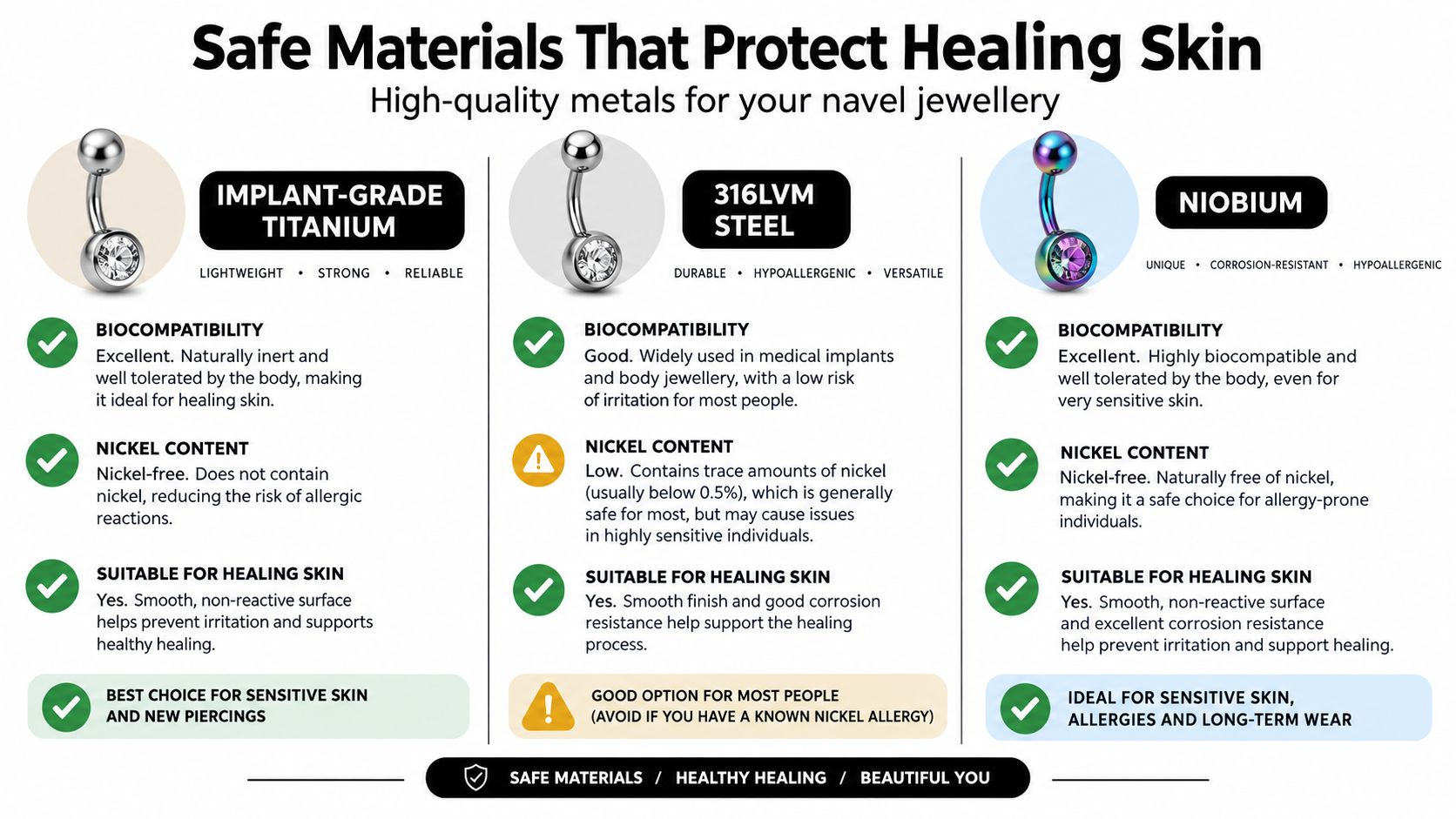
Implant-grade titanium is widely favoured for fresh piercings, particularly when it meets ASTM F136 or ASTM F1295. The UK Association of Professional Piercers requires initial navel jewellery to use implant-grade titanium or implant-grade steel with valid mill certificates. Those certificates help verify that the metal meets the stated specification. Review UKAPP jewellery verification guidance
Implant-grade steel can also be suitable where it meets ASTM F138. Steel may contain nickel, so someone with a known sensitivity should discuss alternatives with the piercer. UK material guidance identifies implant-grade titanium such as ASTM F136 as safe for body piercing, and an industry source states that metal inserted into a fresh flesh wound during or immediately after piercing must contain no more than 0.05% nickel by mass. Read UK body-jewellery material guidance
Niobium is another body-jewellery material, but the important question remains the same: ask what specification applies and whether the piece is appropriate for a healing piercing. Material names alone don't replace traceability, finish quality or professional fitting.
| Material | UK standard and suitability | Best use case |
|---|---|---|
| Implant-grade titanium | ASTM F136 or ASTM F1295, with mill-certificate verification | A strong first choice for fresh navel piercings, especially for people concerned about nickel |
| Implant-grade steel | ASTM F138, with appropriate documentation | Fresh or healed wear when the grade is verified and the wearer has no relevant sensitivity |
| Niobium | Discuss the exact product and suitability with your piercer | A considered alternative when the piece is properly made and appropriate for the piercing stage |
| Solid gold | UK guidance specifies solid 14ct or 18ct gold where gold is used | A healed piercing or a professionally selected option when the alloy and construction are suitable |
Pre-sterilised jewellery must stay sterile until insertion. A sealed pouch, clear material information and a piercer who can answer questions about the grade are reassuring signs. Vague labels such as “surgical steel”, unknown plating or very cheap metal without documentation deserve caution.
For a wider look at titanium options, see this guide to titanium piercing jewellery. Choose the metal first, then choose the colour and decorative details.
Styles and Sizes From Bars to Rings
The shape of navel piercing jewellery changes how it behaves during everyday movement. A piece that looks delicate in a product photograph may sit differently on a real navel, especially when the wearer bends or a waistband passes over it.
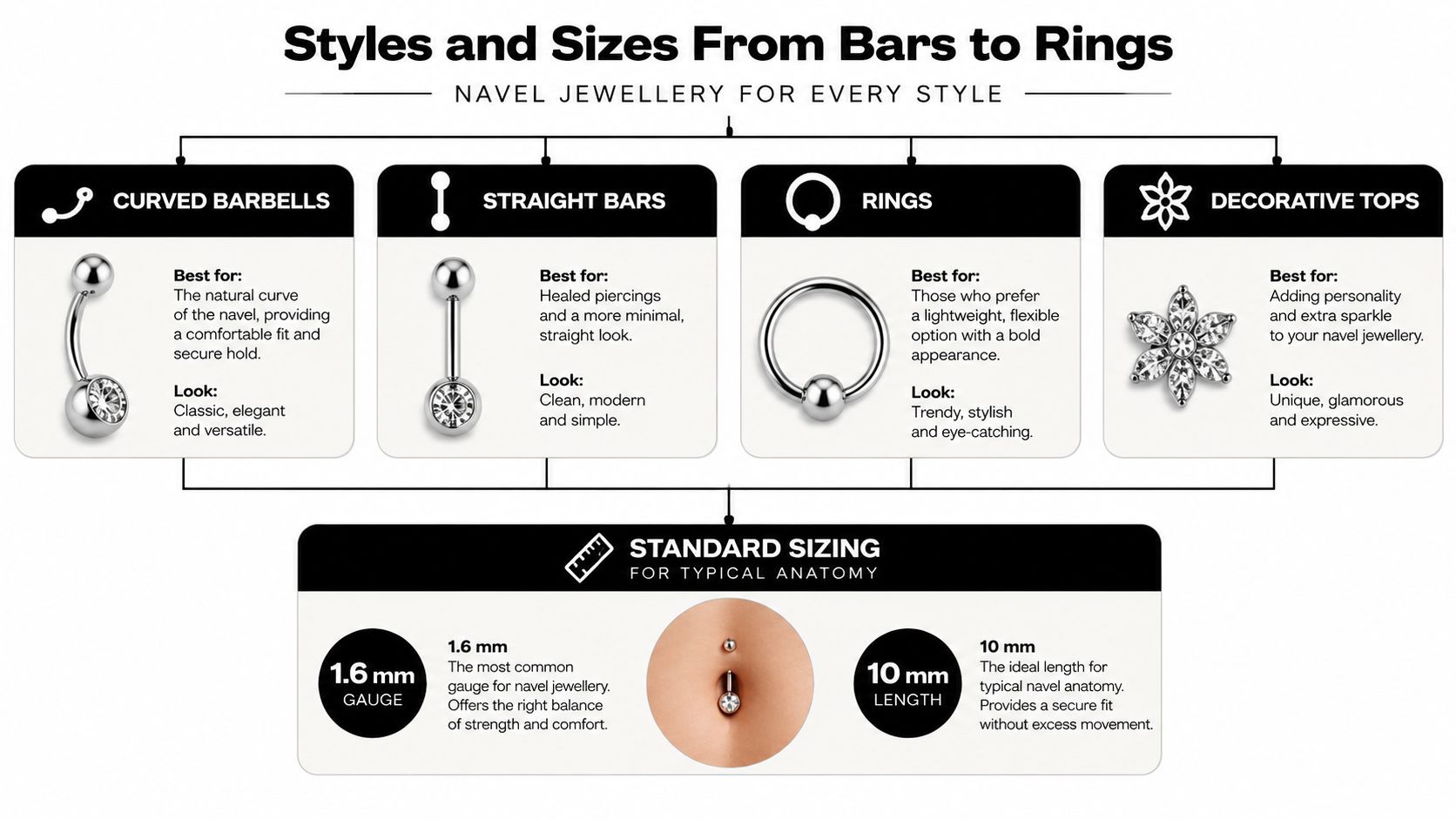
Curved barbells
A curved barbell is the usual starting form because it follows the fold of the navel. It can have a simple ball, a small gem, a flat disc or another low-profile end. For a fresh piercing, the safest-looking choice is often the least complicated one, with enough room for swelling and no heavy decoration pulling downwards.
Straight bars
A straight bar may suit some placements, but it isn't automatically interchangeable with a curved barbell. The piercer needs to assess the tissue and angle. Using a straight bar because it is available can create pressure at the entry and exit points.
Rings and decorative tops
Rings create a different movement pattern. They can rotate, catch on clothing and place changing pressure on the piercing channel. That doesn't make every ring unsuitable forever, but it makes rings a poor default while swelling and tenderness remain.
Decorative tops deserve the same scrutiny. A small, smooth end may be comfortable for daily wear, while a large stone or dangling charm can snag during dressing, sleeping or exercise. Heavier designs are better considered after the piercing has settled and a piercer confirms that the tissue can tolerate the change.
During healing, low profile beats high drama. Style has more room once the tissue is stable.
Standard size is only a starting point
For standard anatomy, UK suppliers commonly list 1.6 mm, or 14g, with a 10 mm wearable length. That measurement can be useful when comparing products, but it isn't a substitute for an anatomy check. Some people need a different length because their navel is deeper, their tissue is fuller or their initial swelling is greater.
An internally threaded implant-grade titanium bar is a practical configuration because the insertion surface is smoother and the metal is non-reactive when it meets the relevant implant specification. The aim is to reduce avoidable friction while the channel settles.
Your lifestyle matters too. Someone who wears high-waisted work trousers may need a lower-profile end than someone who mostly wears loose clothing. Someone who exercises frequently may prefer a simple bar over a dangling design. For information about ring construction, you can view captive bead rings, but don't transfer ring advice to a fresh navel piercing without a professional assessment.
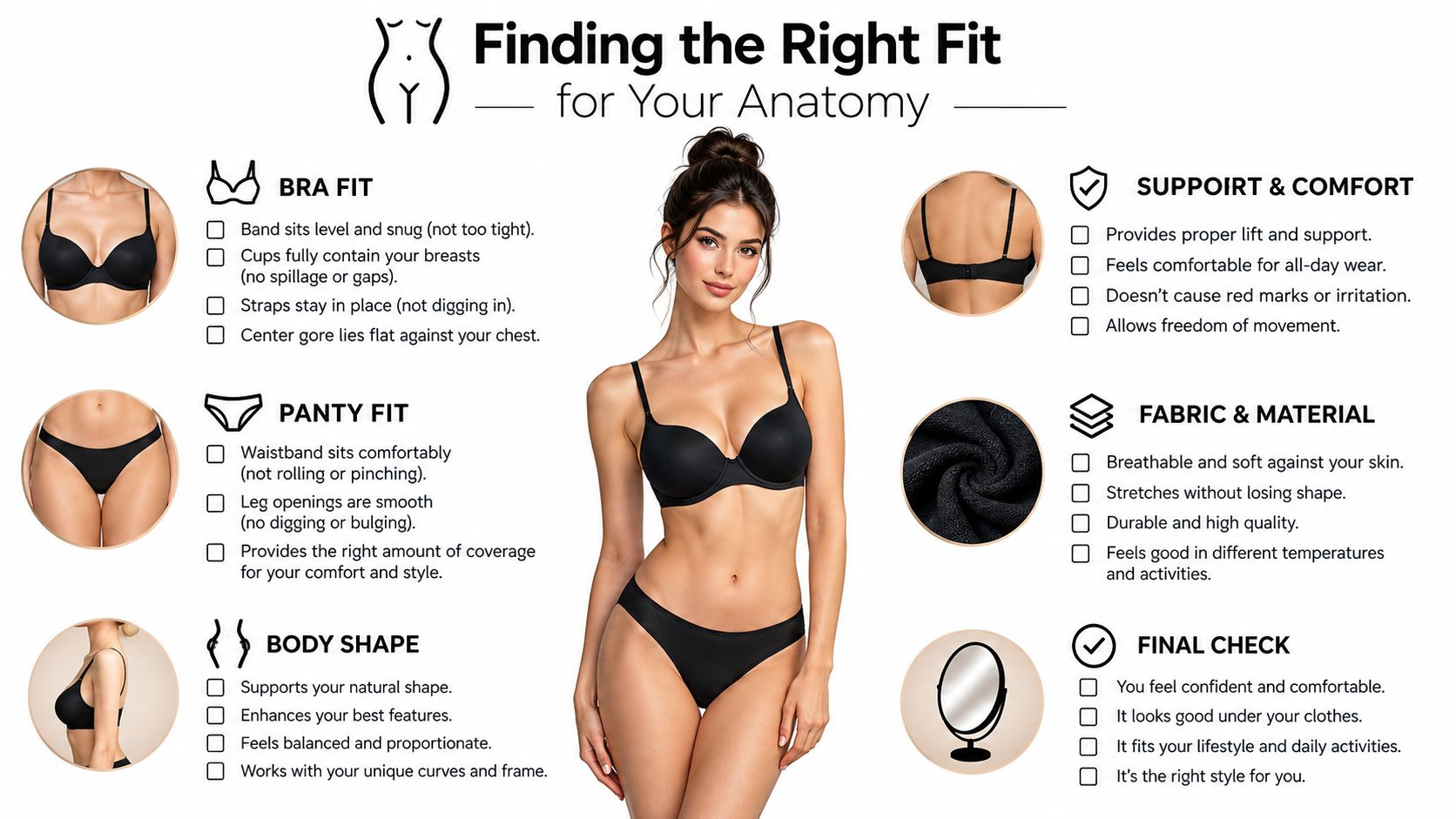
Finding the Right Fit for Your Anatomy
A jewellery piece can be made from an excellent material and still fit badly. Your navel depth, the way the upper fold moves and the pressure from clothing all affect the result.
Start by looking at the navel while standing, then sit and bend naturally. Does the fold close tightly around the jewellery? Does the upper end press into the skin? Does the bar become visibly tense when you sit? These changes matter because a navel piercing experiences movement throughout the day, not just while you're standing in front of a mirror.
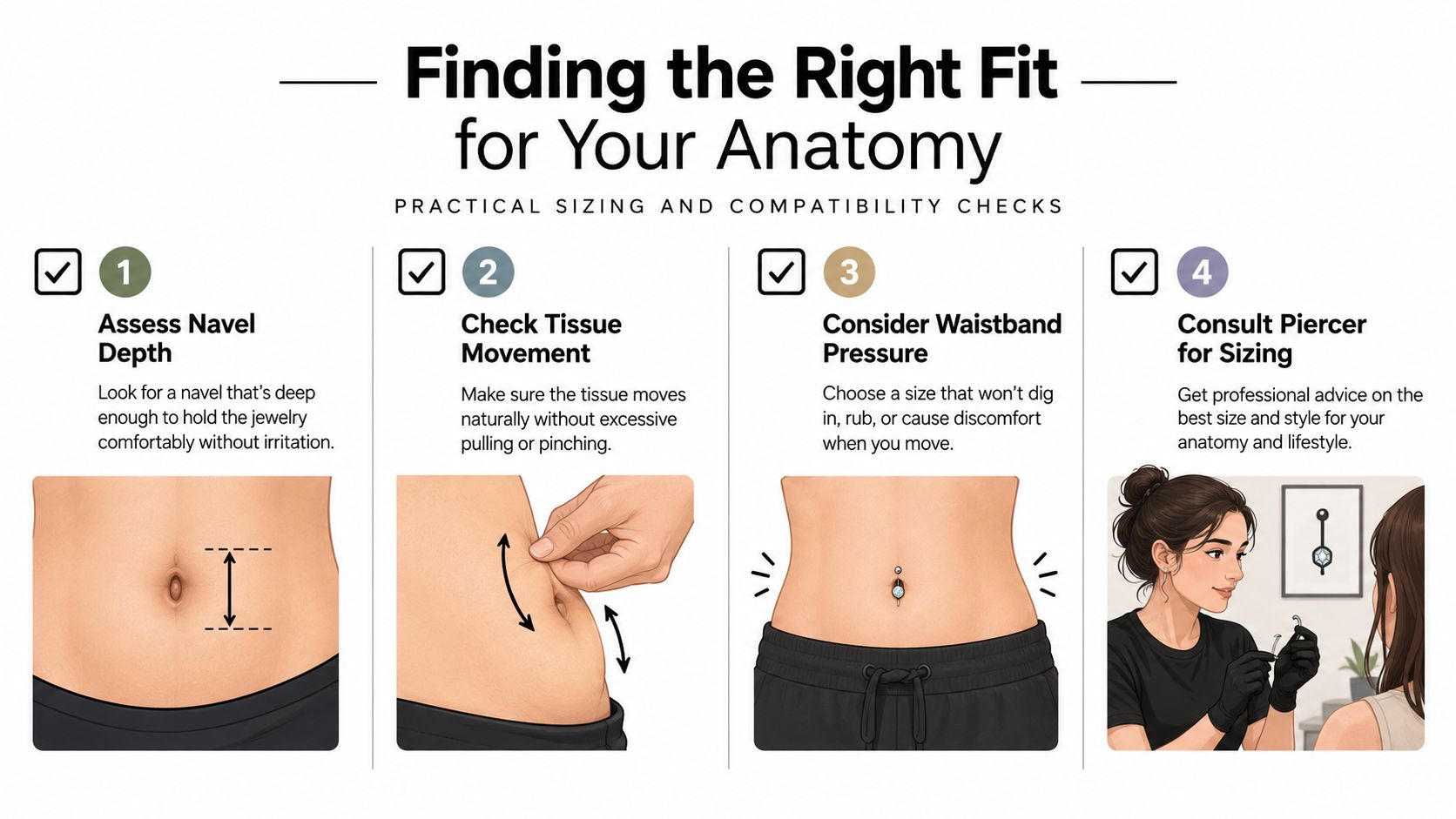
Four checks before choosing
- Assess depth. A deeper navel may accommodate a different bar length or a floating navel style, while a shallow fold may need a carefully selected low-profile arrangement.
- Watch tissue movement. If skin folds over an end when you sit, ask the piercer whether the profile or placement needs review.
- Consider waistband pressure. Belts, high-waisted trousers and firm skirts can repeatedly press on the jewellery, even when the piece looks comfortable at home.
- Ask for professional sizing. A piercer can measure the actual wearable space and account for swelling rather than relying on a product listing.
A little extra length can be useful immediately after piercing, but that doesn't mean a longer bar should remain indefinitely. Once swelling has reduced, a piercer may recommend downsizing. Changing too early can trap swelling, while leaving excessive length in place can allow constant movement and snagging.
Signs that the fit needs attention
Persistent redness, pressure marks, an end appearing to sink into the skin or unusually frequent catching are reasons to contact your piercer. Don't twist the jewellery, force a shorter bar into place or remove it without advice. If the tissue looks as though it is thinning between the holes, arrange a professional assessment promptly.
Try-on handling should also be hygienic. Don't place unpackaged jewellery against a fresh piercing, and don't assume that cleaning a low-grade piece makes it suitable for insertion. Sterility and material verification need to be addressed before fit and appearance.
If you'd like personalised sizing support, call 01202 9000 50 or message the studio team on WhatsApp at 07752913846. A conversation about your current bar, clothing and symptoms can help identify whether you need an in-person check.
Hygiene and Daily Care to Keep Jewellery Comfortable
Good aftercare protects the piercing and reduces the chance that clothing or handling will create avoidable irritation. The routine doesn't need to be complicated. It needs to be consistent, gentle and suited to the jewellery you're wearing.
A UK local-authority aftercare document recommends cleaning a navel piercing with saline twice each day, avoiding tight clothing such as belts or high-waisted clothing, and not swimming during the first 24 hours after piercing. Read the Braintree body and surface piercing aftercare document
Use clean hands before touching the area. Apply the saline as advised by your piercer, allow residue to rinse away where appropriate and pat the area dry with a clean disposable product. Avoid harsh cleansers, aggressive scrubbing and unnecessary rotation. The jewellery doesn't need to be moved to become clean.
A routine that protects the fit
- Morning: Check whether the ends sit normally and whether clothing has left a pressure mark.
- After washing: Dry the fold carefully so moisture doesn't remain trapped around the jewellery.
- During dressing: Pull waistbands away from the piercing rather than dragging fabric across it.
- Before bed: Notice new swelling, heat, discharge or tenderness and contact your piercer if symptoms are worsening.
Tight waistbands are a common source of trouble because they apply repeated pressure rather than one obvious impact. Even a lightweight curved barbell can become irritating if a rigid waistband presses it into the navel for hours.
Avoid changing jewellery just because the outside looks calm. Navel piercings can appear settled before the deeper channel has finished healing. UK navel aftercare guidance gives a minimum healing period ranging from four months to one year and advises that jewellery changes usually happen between six and twelve months, on the advice of and by the piercer. Review UK navel-piercing aftercare guidance
Don't self-treat a persistent problem by swapping metals, applying strong products or taking the jewellery out. A piercer can distinguish a sizing issue from pressure irritation or a possible infection, and can advise when medical care is needed. For practical aftercare information, see this belly-button piercing aftercare guide.
Choosing Jewellery With Confidence and Next Steps
A sensible decision follows a clear order. Material comes first, fit comes next, style follows, and aftercare protects the result. That sequence doesn't take personality out of the choice. It prevents a decorative feature from becoming the cause of avoidable irritation.
For a fresh piercing, ask the studio to show you the implant-grade documentation, explain the proposed gauge and wearable length, and describe how much room has been allowed for swelling. Ask whether the ends are low profile and internally threaded, and explain the clothes and activities you wear most often.
For a healed piercing, bring the jewellery you currently wear or take clear photographs while standing and sitting. Mention any history of bumps, pressure, migration or sensitivity. A piercer can then discuss whether you're ready for a shorter bar, a different top, a ring or a more decorative design.
UK guidance consistently connects navel jewellery with sterility, material quality and clothing pressure. That connection makes sense in everyday life. A well-made piece cannot prevent every healing problem, but the right material, smooth finish and appropriate length remove several unnecessary sources of friction.
You don't need to know every technical term before booking. You only need to be honest about your anatomy, routine and concerns. If you're unsure, contact the studio on 01202 9000 50 or WhatsApp 07752913846 before ordering jewellery online or changing an existing bar.
Piercing Near Me offers consultations, appointments and walk-in support through professional studios in Croydon and Bournemouth, with guidance on placement, implant-grade jewellery and personalised aftercare. Visit Piercing Near Me to explore navel piercing options and arrange advice before choosing your next piece.