
For most, a septum piercing is surprisingly manageable, often feeling like a brief sharp pinch rated around 2 or 3 out of 10, followed by quick relief. Some clients experience a sharper sensation, but the intense part is short rather than prolonged.
You may be reading this while looking in the mirror, touching the skin beneath your nose, and wondering whether the visible needle will hurt more than the piercing itself. That hesitation is normal. The nose is sensitive, and watery eyes or a sneeze-like reflex can make the moment look dramatic, even when the actual discomfort is brief.
UK guidance gives a useful, grounded way to think about the experience. Correct placement targets soft tissue rather than dense cartilage, and local council rules distinguish septum piercing from cartilage work. The result isn't guaranteed to feel identical for everyone, but professional placement, calm preparation, and gentle aftercare make the experience far more manageable than many first-time clients expect.
What to Expect from Your First Septum Piercing
You might arrive at the studio having changed your mind twice on the way there. One minute you're excited about a small horseshoe ring, and the next you're imagining pressure, tearing eyes, and a needle somewhere near the centre of your face. A professional appointment replaces that uncertainty with a series of clear, controlled steps.
Before the needle
The piercer should first discuss your anatomy, jewellery, placement, and any relevant concerns. They'll examine the tissue inside your nose and identify the area commonly called the sweet spot. This consultation matters because the aim is to place the jewellery through the thin soft tissue of the septum, not through firm cartilage.
Once placement is agreed, the piercer prepares the area and explains what you'll feel. You may notice pressure from the fingers or equipment before the needle arrives. That build-up can feel longer than the piercing itself because anticipation gives your brain time to focus on every sensation.
The piercing moment
The needle passes through quickly when the placement and technique are right. Expect a sharp pinch or sting, followed by watering eyes, nasal pressure, or the urge to sneeze. Those reactions can happen automatically because the nose is closely connected to the tear ducts and surrounding nerves, so they don't prove that the pain is severe.
Practical rule: Keep your face relaxed, breathe steadily, and follow the piercer's instructions rather than pulling away from a sensation that will be over quickly.
The jewellery insertion usually feels like pressure rather than a second piercing. Afterward, your nose may feel full, tender, or slightly sore. Torbay Council's UK septum aftercare guidance says some swelling and soreness are expected, particularly if the area is knocked during healing.
Understanding the Septum Sweet Spot
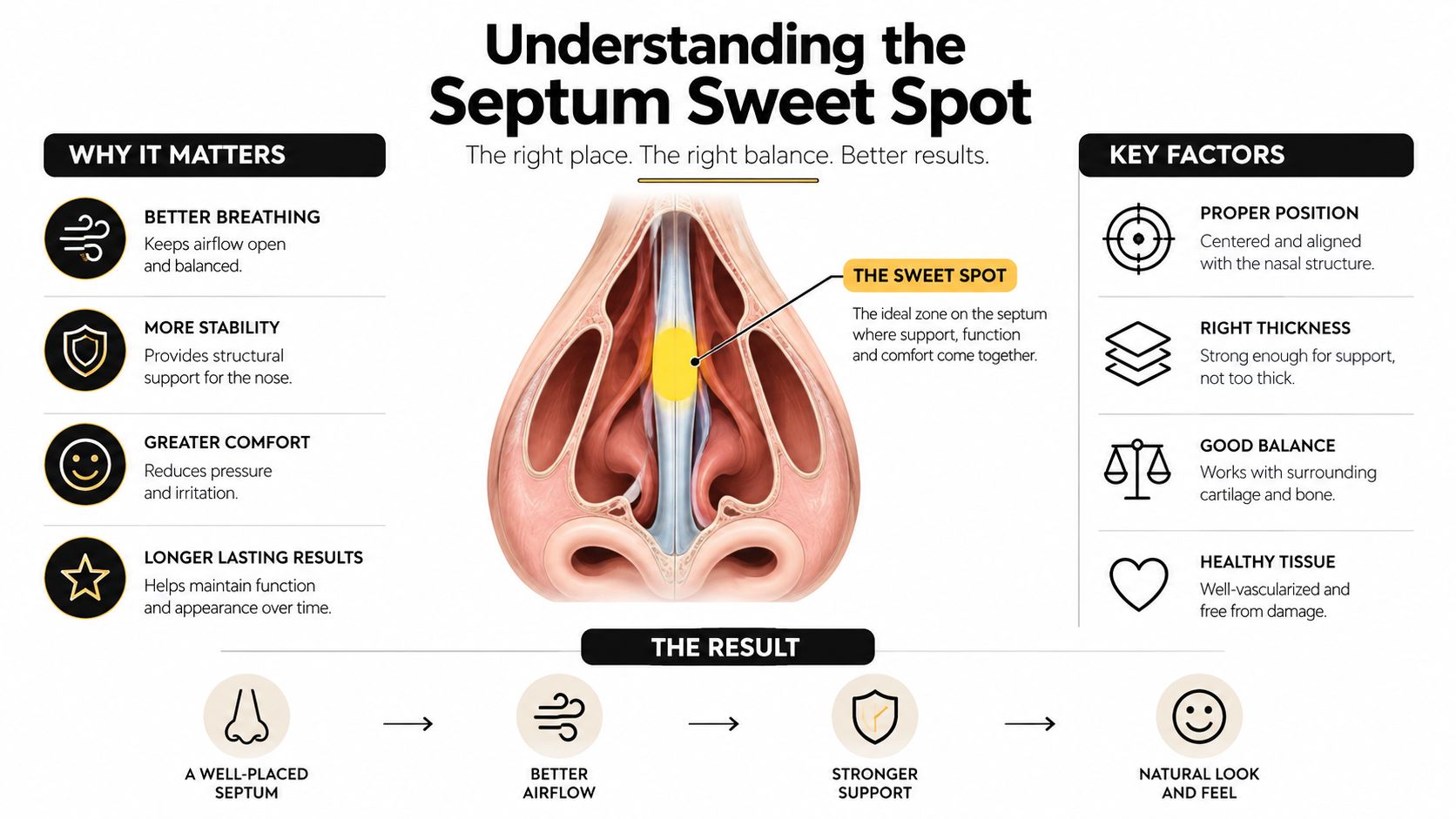
The most important answer to “does a septum piercing hurt” lies in where the needle goes. The septum contains a thin area of flexible tissue beneath the firmer cartilage at the front of the nose. Piercers commonly call this the sweet spot, although its position and size vary between clients.
A correctly placed piercing passes through this softer tissue rather than dense cartilage. Soft tissue offers less resistance, which helps explain why the sensation is usually a short, sharp pinch instead of the heavier pressure associated with cartilage work. The septum piercing placement guide can help you understand why an anatomy assessment should happen before any needle is used.
Why cartilage changes the sensation
Cartilage is denser than the intended soft-tissue area. Passing a needle through cartilage can therefore create more resistance, increase discomfort, and leave the nose feeling sore for longer. That isn't the intended technical outcome for a standard septum piercing.
Redbridge Council's body piercing code of practice permits piercing to the nose septum while excluding cartilage. This local-government distinction reinforces a basic safety principle: the target is the septum's soft tissue, not the hard structure forming much of the nasal framework.
Anatomy also explains why two clients can describe the same appointment differently. One person may have an easy-to-locate sweet spot, while another may have less accessible tissue or greater sensitivity. A skilled piercer should assess that variation instead of using a fixed position for every nose.
Placement is more important than bravado
A forceful approach doesn't make a piercing better. The goal is controlled precision, clean equipment, and an accurate path through suitable tissue. A brief sting can still occur with excellent technique, but avoidable trauma is a different matter.
If a piercer rushes the marking stage or dismisses your questions, take that seriously. You should understand where the jewellery will sit, how the appointment will proceed, and what aftercare will involve before consenting to the piercing.
Septum Piercing Pain Compared to Other Piercings
Pain scales are personal, so comparisons work best when they describe the sensation rather than pretending every client experiences a universal ranking. UK beauty coverage places septum piercings towards the lower end for many people. One UK article describes them as “one of the least painful piercings on the body”, while another gives a typical rating of 2 or 3 out of 10 in its discussion of the experience, as reported by ELLE UK's septum piercing coverage.
An earlobe piercing is often used as a familiar reference because the sensation is a quick pinch in soft tissue. A septum piercing can feel sharper or more surprising because the nose may water and create pressure, but that visible reaction doesn't necessarily mean the pain is worse.
A useful sensory comparison
| Piercing experience | What you may notice |
|---|---|
| Earlobe | A quick, localised pinch |
| Septum sweet spot | A brief sharp sting, pressure, and possible watery eyes |
| Cartilage piercing | Firmer resistance and potentially more persistent soreness |
| Nostril piercing | A sharp sensation in a sensitive area, with individual variation |
This table isn't a promise about your personal pain threshold. It gives you language for the differences. A septum can feel more dramatic than an earlobe because your eyes may water immediately, while the actual sharp sensation remains short.
A separate UK feature includes a piercer's estimate of 6 or 7 out of 10 for some clients, while still describing the sharp pain as brief and noting watery eyes and a sneeze-like feeling. That wider range is useful because it prevents false reassurance. Many may find the experience manageable, but no responsible piercer can guarantee that everyone will rate it the same way.
Watery eyes are a normal nasal response, not a reliable pain score.
Individual anatomy, personal sensitivity, emotional tension, and placement all influence the appointment. If you're comparing septum pain with an ear or nose piercing, focus less on finding a perfect ranking and more on choosing a professional who can assess your anatomy accurately.
How Piercer Technique Affects Your Comfort
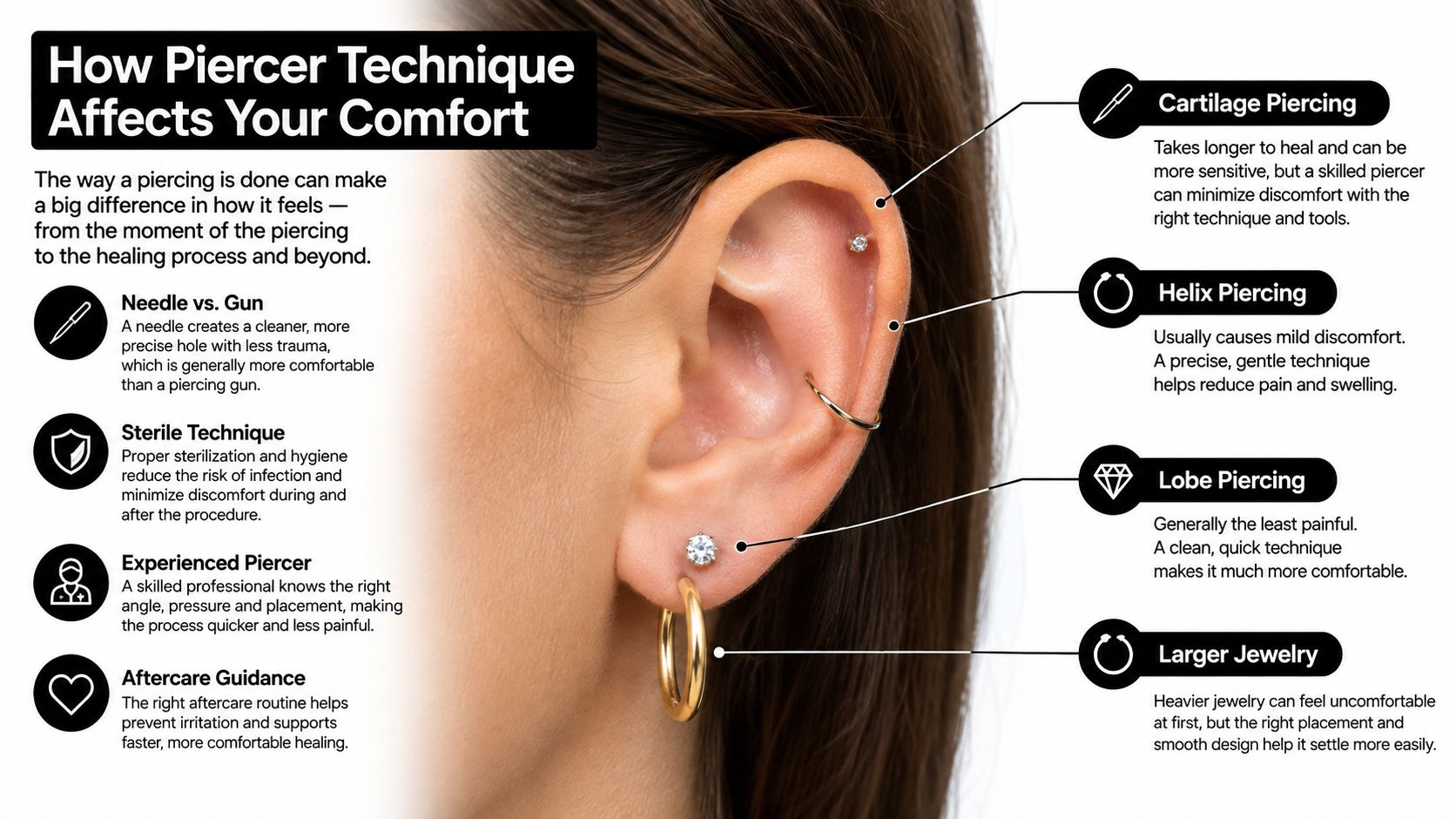
The needle matters, but the person using it matters more. A professional piercer checks your anatomy, marks the intended entry points, prepares a hygienic workspace, and uses a single-use sterile needle designed for piercing. Precision reduces unnecessary movement and helps the needle follow the planned route.
What to check before booking
Ask practical questions rather than relying only on photographs of jewellery. A reputable studio should be able to explain:
- Placement: How will the piercer locate your soft-tissue sweet spot?
- Equipment: Will the piercer use a single-use sterile needle rather than a piercing gun?
- Jewellery: What material and size are suitable for your anatomy?
- Aftercare: Will you receive clear guidance for cleaning and handling the new piercing?
The distinction between a piercing gun and a sterile needle is especially relevant for facial work. A needle allows a trained piercer to create a controlled channel at a specific location, while a gun isn't an appropriate substitute for precise septum placement.
How to make the appointment easier
Arrive with enough time to settle rather than rushing through the door already tense. Tell the piercer if you're nervous, and ask them to explain the breathing cue before they begin. Look away if watching the process increases your anxiety. You can also agree on a pause signal before the appointment starts.
During the piercing, don't hold your breath or jerk your head away. A relaxed face gives the piercer a steadier working area and helps you process the brief sensation without turning it into a struggle.
The same discipline continues afterward. Don't test the jewellery, repeatedly flip it, or touch it to check whether it feels secure. Mechanical irritation can turn a short-lived appointment into a more uncomfortable healing period.
Pain Management and Aftercare Essentials
A painful moment doesn't automatically mean the piercer was aggressive. A precise piercing can still produce a sharp pinch, while a poorly placed or repeatedly irritated piercing may remain uncomfortable long after the needle has gone. The useful question is whether the pain settles and whether the aftercare protects the tissue.
Use mild saline, not harsh products
Torbay Council recommends cleaning a septum piercing twice daily with a warm salt solution made from 1/4 level teaspoon of sea salt to an egg cup or shot glass of warm water. Follow that saline aftercare guidance carefully, and avoid turning cleaning into scrubbing.
UK government guidance specifically warns that antibacterial wash isn't suitable for delicate septum tissue. It also advises against twisting the jewellery and against using towels to dry the site, because friction and retained moisture can increase irritation.
Keep contact to a minimum
Wash your hands before any necessary contact. Let the saline soften residue rather than picking at it, and use a clean, gentle method recommended by your piercer to remove loosened material. Avoid knocking the jewellery while dressing, washing your face, or blowing your nose.
Gentle care beats aggressive cleaning. More product and more pressure won't make a healing piercing healthier.
Some soreness and swelling are expected after a new piercing, and the area may flare if it gets bumped. Pain that steadily worsens, marked swelling, heat, or concerning discharge deserves medical advice rather than stronger home cleaning.
Ready to Book Your Safe Septum Piercing
The most reassuring answer to “does a septum piercing hurt” isn't that you'll feel nothing. You may feel a sharp pinch, your eyes may water, and your nose may feel tender afterward. The more useful conclusion is that correct anatomy, careful technique, and low-irritation aftercare keep the experience manageable.
A safe appointment begins before you sit in the piercing chair. Choose a studio that explains placement, uses sterile single-use equipment, and offers jewellery suited to your anatomy. Ask questions until you understand the process, and tell the piercer if anxiety is making it difficult to relax.
Your preparation checklist
- Discuss anatomy first: Make sure the piercer checks the soft-tissue area rather than assuming every nose has the same structure.
- Choose suitable jewellery: Ask about fit and body-safe materials before the piercing begins.
- Plan gentle aftercare: Use the recommended saline routine and avoid unnecessary movement.
- Watch the healing response: Expected tenderness should settle, while worsening symptoms need professional attention.
For clients in Croydon, Bournemouth, and nearby UK areas, Piercing Near Me is a booking and information option that connects visitors with Timebomb Tattoo & Piercing studios, consultations, jewellery selection, sterile single-use needles, and personalised aftercare. The platform can help you explore facial and body piercing services while preparing questions for your appointment.
You don't need to prove that you can tolerate extreme pain. You only need to choose a qualified professional, communicate clearly, and care for the piercing gently once you leave. For booking questions, the phone number is 01202 9000 50, and WhatsApp is 07752913846.
Piercing Near Me helps clients explore professional piercing services in Croydon and Bournemouth, including septum consultations, jewellery selection, sterile needle procedures, and aftercare support. Visit Piercing Near Me to review your options and take the next step towards a carefully planned septum piercing.