
You've probably done what most first-time septum clients do. You've looked at photos, saved a few jewellery styles you like, then gone down a rabbit hole of people saying their piercing was easy, awful, crooked, perfect, too low, too high, or “through the cartilage”. That mix of excitement and uncertainty is normal.
A good septum piercing doesn't come down to luck. It comes down to septum piercing placement. More specifically, it comes down to whether a professional can assess your anatomy properly and place the piercing in the right tissue for your nose.
Your Guide to the Perfect Septum Piercing
Septum piercings sit in that rare category of looking bold while still being flexible. You can wear a subtle ring, a decorative clicker, or a circular barbell that flips up when you need it hidden. That's part of why they've become such a normal choice rather than a niche one. One cited industry source notes that about 1 in 5 people have some form of nose piercing, which puts septums within a mainstream facial-piercing category in the UK according to this nose piercing overview.
What matters more than trend, though, is tissue. When piercers talk about the sweet spot, they mean the small area at the front of the septum where placement is usually most comfortable and practical. If the jewellery sits where it should, the piercing tends to feel better, heal better, and look better.
A lot of clients come in worried about one thing above all else. They don't want a septum that hangs too low, sits too far back, or ends up visibly uneven. Those are fair concerns, and they're exactly why the consultation matters more than people think.
If you're still weighing up the experience itself, this guide to septum piercing pain levels is a useful companion read. Pain is part of the conversation, but placement is the factor that shapes almost everything that follows.
A well-done septum piercing should look intentional. It shouldn't look like the jewellery was forced to work around a bad angle.
The biggest reassurance I can give any first-time client is simple. A great outcome is achievable. You don't need to know the anatomy in advance, and you don't need to guess where the piercing should go. You do need a piercer who checks carefully, marks accurately, and adapts the plan to your nose rather than trying to make every nose fit the same template.
Understanding Your Nasal Anatomy
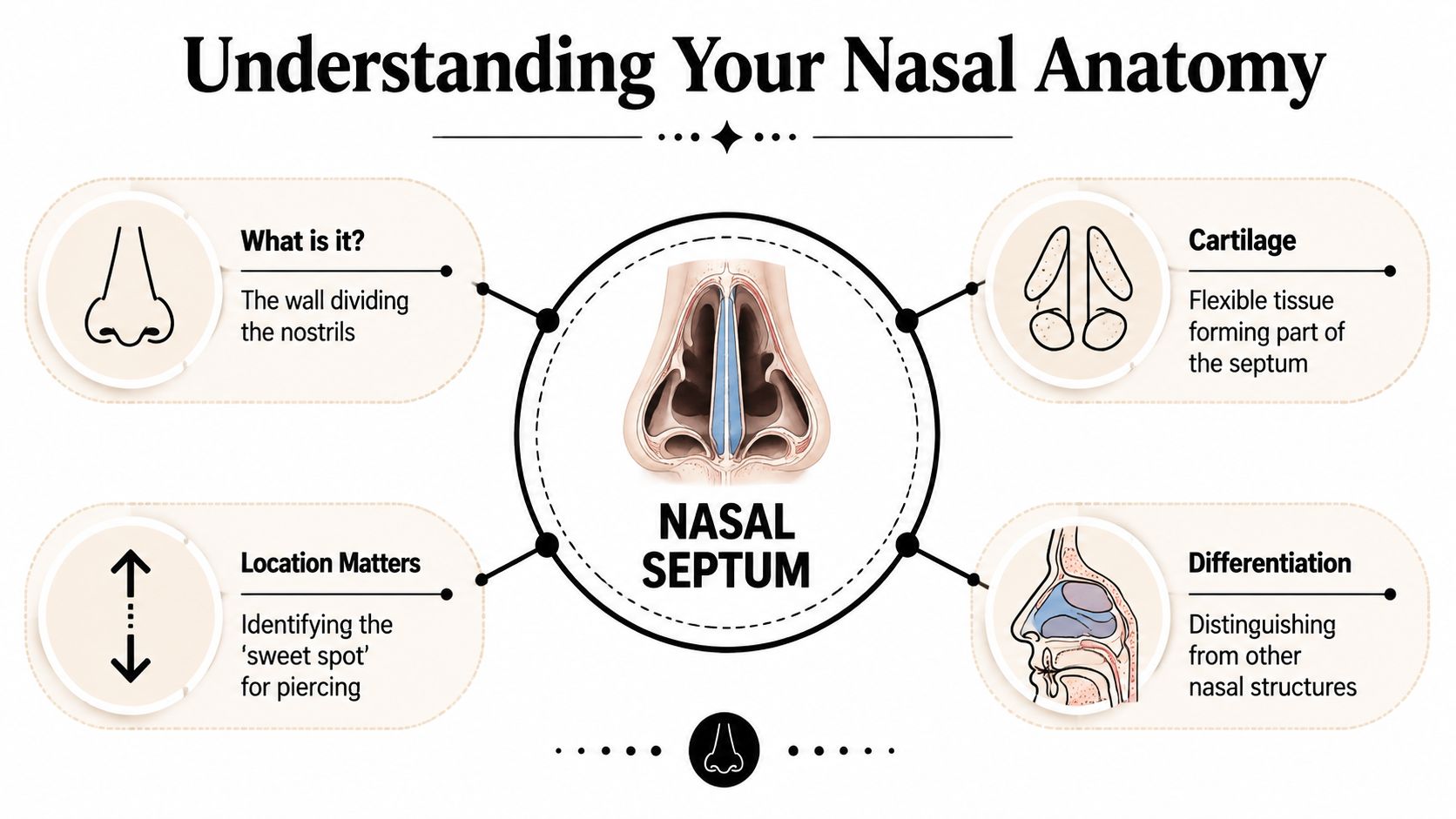
The word “septum” is often used to mean the whole bit between the nostrils, but anatomically it's more specific than that. The nasal septum is the wall that divides the two nasal passages. Different parts of that structure feel different, and that matters when a piercing is involved.
What a piercer is actually looking for
The part clients hear about most is the sweet spot. The correct placement is the thin anterior sweet spot at the front of the septum, high and tight to the nostrils rather than farther back against the face, because that avoids the tougher lower cartilage and reduces healing trauma, as outlined in this safe septum placement guide.
A simple way to picture it is this. Think of the front of the nose as having a small soft membrane area before you get into firmer structure. That softer zone is what a competent piercer is trying to identify. It isn't guessed by eye alone, and it isn't the same size or shape on every person.
Soft tissue and firm cartilage aren't the same job
Clients often assume the whole inner septum feels roughly the same. It doesn't. Some tissue is more forgiving. Some is firmer and less suitable for a standard septum piercing. That difference is why two septum experiences can sound completely different even when the jewellery looks similar from the outside.
A proper septum piercing is not about putting jewellery “somewhere in the middle”. It's about finding the place where the body is most likely to tolerate it well.
- Front matters: The right placement sits toward the front, not deep inside the nose.
- Height matters: “High and tight” usually gives a neater, more natural hang.
- Tissue matters: Soft tissue behaves differently from tougher cartilage during healing.
- Symmetry matters: A ring can look off-centre even when the piercing technically went through the correct general area, if angle and anatomy aren't respected.
Practical rule: If a piercer treats septum placement like a generic mark-and-go service, that's a red flag. This piercing needs anatomical judgement.
Why first-time clients get confused
Online advice often gets reduced to “just pierce the sweet spot”, but that phrase skips the skilled part. The skill is in identifying it correctly, checking whether your anatomy supports it, and choosing a path that gives both a safe channel and a good-looking result. That's where experience shows.
The Sweet Spot vs Cartilage Placement
A client can walk in saying, “My friend's septum was easy, so mine should be too.” Then I examine the nose and find that the difference between a straightforward piercing and a long, frustrating heal comes down to a few millimetres of tissue choice.
That is why placement matters so much here. A properly placed septum passes through the soft membrane near the front of the septum. A poorly judged one catches firmer cartilage. From the outside, both may look similar on day one. During healing, they behave very differently.
What correct placement tends to feel and look like
In the right tissue, the piercing is usually quick, direct, and easier for the body to settle. Jewellery tends to hang more naturally under the nose, and there is usually more flexibility with retainers or flip-up jewellery if that is part of the plan.
It also gives the piercer more control over the final appearance. If a client wants a bolder look, the better solution is usually jewellery diameter or style, not pushing the placement farther back into less suitable tissue.
What cartilage placement changes
Cartilage placement often creates the problems clients blame on themselves. Ongoing tenderness, stubborn swelling, awkward jewellery angle, and a ring that seems to sit too deep are common signs. The issue is not that the client is “bad at healing.” The issue is that the channel was made in tissue that does not tolerate a standard septum piercing well.
This matters even more with anatomy that is slightly off-centre. On a deviated septum, a rushed piercer may chase visual symmetry and end up forcing the piercing into a worse path. A good result sometimes means accepting a placement that is anatomically correct first, then choosing jewellery that helps it read well from the front.
| Factor | Sweet Spot Placement | Cartilage Placement |
|---|---|---|
| Tissue used | Softer membrane near the front of the septum | Firmer septal cartilage |
| Typical position | High and close to the front | Deeper or farther back |
| Initial sensation | Sharper, cleaner, usually brief | Heavier pressure, often more intense |
| Healing pattern | Usually simpler and more predictable | Often slower and more reactive |
| Jewellery hang | More natural when sized well | More likely to look forced, tilted, or tucked back |
| Long-term comfort | Better suited to everyday wear | More likely to stay temperamental |
The Association of Professional Piercers notes in its aftercare guidance for oral and facial piercings that healing time varies by placement, anatomy, jewellery, and aftercare. In practice, septums placed in the correct soft tissue usually settle far more smoothly than those driven through cartilage.
A septum also should never be approached with blunt-force equipment. If you want a clear explanation of why needle technique matters, read this guide to nose piercing with a piercing gun.
The trade-off a skilled piercer actually makes
Good septum work is a balance between anatomy, angle, and appearance. Piercing farther back can make a large ring appear to fit, but it often creates a worse channel. Piercing in the right tissue may mean choosing different jewellery at first, then adjusting the look once the piercing is stable.
That is professional judgement. The goal is not just to get jewellery in place. The goal is a piercing that sits well, heals well, and still looks right months later.
How a Professional Piercer Assesses Your Anatomy
A proper consultation is part visual assessment, part touch, and part judgement. Here, the difference between an experienced piercer and a rushed one becomes obvious.
The most important point is that not every nose presents the same sweet spot in the same way. A UK-relevant concern that often gets skipped in mainstream advice is whether the client's anatomy permits a clean textbook placement at all. Existing guidance often says to find the soft front of the septum and avoid harder lower cartilage, but it also leaves out how a piercer should adapt when the septum is deviated, the tip is rigid, or the jewellery would otherwise lean to one side, as discussed in this anatomy-focused placement article.
The hands-on assessment
Before any mark is made, the piercer should examine the nose from the front and underneath. Then comes gentle palpation. In plain terms, that means feeling the tissue carefully to locate where the softer area begins and where firmer resistance starts.
This part can't be replaced by looking at photos or copying someone else's placement. Two noses can look similar from the front and still need different placement decisions underneath.
A solid assessment usually includes:
Checking the front view
The piercer looks at symmetry, nostril shape, and how visible the jewellery is likely to be.Checking the underside
This reveals more about tissue access, natural lean, and whether one side sits differently.Feeling for the usable tissue
The goal is to identify the safest workable channel, not just any soft-feeling point.Testing the visual line
The piercer considers how the jewellery will hang once it's in place, not just where the needle enters.
Deviated septums and uneven noses
A deviated septum doesn't automatically rule out a piercing. What it does mean is that perfect textbook symmetry may not be possible in the way clients imagine it. A good piercer works for the best visual result on your face, which sometimes means adjusting angle or entry points so the jewellery appears balanced when worn.
That's an important distinction. The goal isn't to force geometric perfection inside a nose that isn't symmetrical. The goal is to make the jewellery sit well from the angles people see.
- Some noses need a visual compromise: Internally “even” can look crooked externally.
- Some noses have a tiny sweet spot: That calls for patience and exact marking.
- Some noses are poor candidates: A professional should say so plainly if the anatomy doesn't support a safe result.
If a piercer says you're not a suitable candidate, that can be a sign of skill, not reluctance.
Marking is where confidence gets built
Once the assessment is done, the next step is marking. Reputable piercers don't rush past this. They mark, check, adjust, and make sure the placement works both anatomically and visually before proceeding.
Clients often think the needle is the hard part. In truth, the decision-making before the needle matters more. A few millimetres can change comfort, healing, and the way the jewellery hangs.
Visual Outcomes and Jewellery Considerations
Placement and jewellery always work together. You can't judge one without the other. A lot of disappointment with septum piercings comes from people expecting a jewellery issue to fix a placement problem, or expecting placement to compensate for jewellery that was the wrong size for their anatomy.
How height changes the look
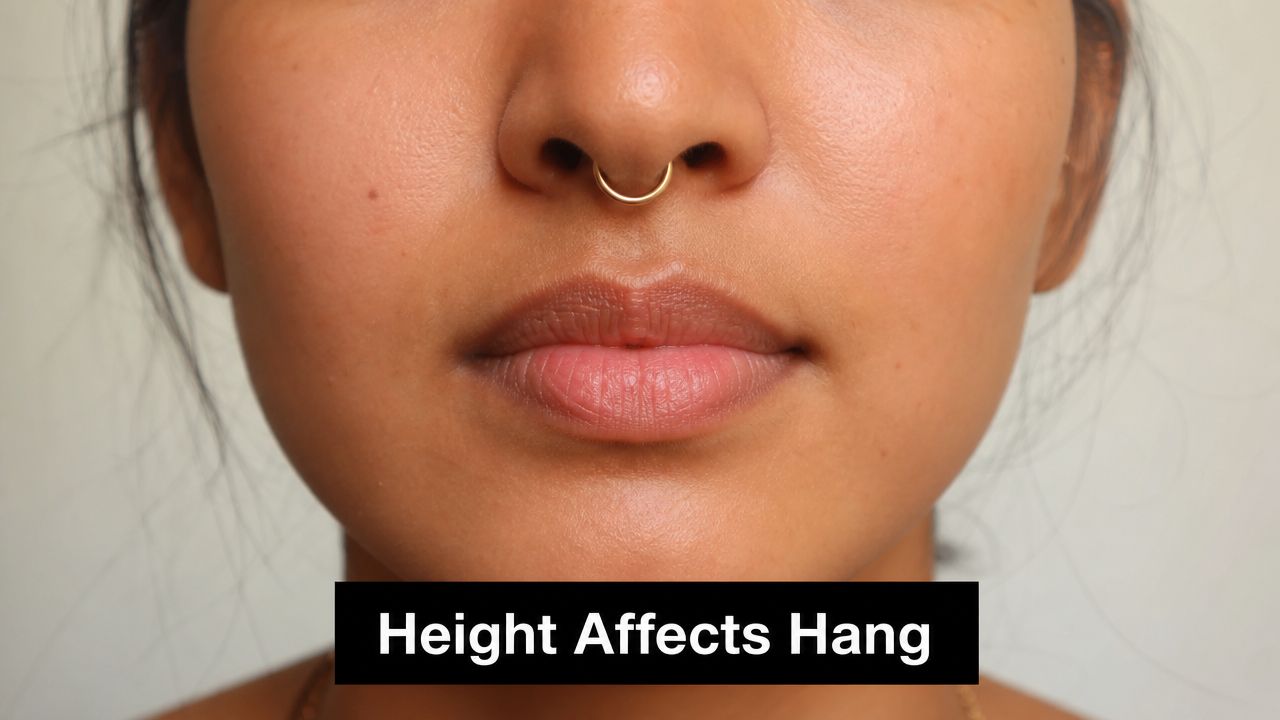
A high and tight septum piercing usually gives a snug, neat appearance. Smaller rings and circular barbells tend to sit close under the nose rather than hanging low. That's often what clients mean when they say they want the piercing to look clean.
A lower or farther-back placement can create a heavier visual drop, but not in a good way. It can make the jewellery look disconnected from the shape of the nose. If someone wants a bigger visible ring, the better answer is usually a larger diameter rather than pushing the piercing back into a worse position.
Matching style to the piercing
Jewellery choice should support the anatomy and the placement. Common starting styles include circular barbells, retainers, and some simpler ring options suitable for fresh piercings. Decorative clickers are usually more of a healed-piercing conversation, especially when the wearable shape is more elaborate.
A few practical points help here:
- Circular barbells: Good for clients who may want the option to flip the jewellery up.
- Retainers: Useful when concealment matters, but only if the placement allows comfortable wear.
- Larger diameter rings: Increase visual impact without compromising placement depth.
- Snug fit: Keeps the piece looking tidy and reduces the sense that it's dangling awkwardly.
For fresh jewellery materials, it's worth understanding why many clients choose titanium piercing jewellery when comfort and biocompatibility are priorities.
Jewellery should follow the piercing. The piercing shouldn't be misplaced just to suit a ring someone picked from a photo.
Flipping up and concealment
One of the reasons septums are so popular is discretion. A properly fitted circular barbell or retainer can often be worn concealed inside the nose. That only works comfortably when the placement is right and the sizing is sensible.
Poorly placed septums are often the ones that don't flip well, don't sit flat, or feel as though the jewellery is fighting the anatomy. If you need a piercing that can alternate between visible and hidden, tell your piercer before anything is marked. That changes the planning.
Preparing for Your Piercing Consultation
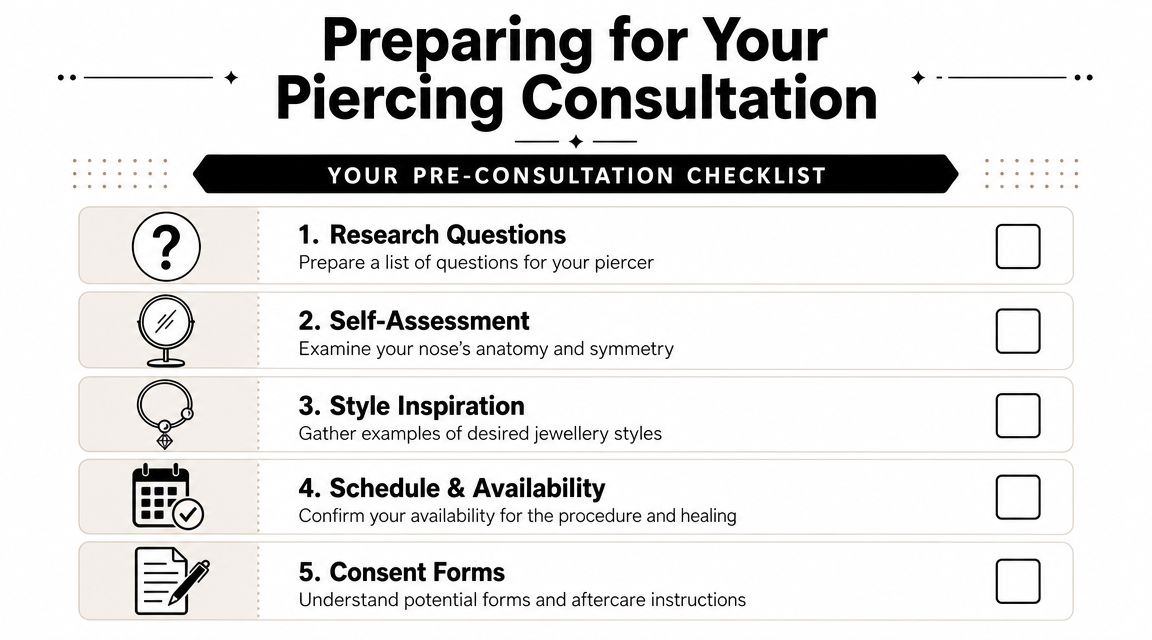
A consultation goes best when you arrive with a clear idea of what you want the piercing to do for you. That doesn't mean you need to know the technical details. It means you should know whether you want subtle or bold jewellery, whether you need to hide it sometimes, and whether you're open to hearing that your anatomy may limit certain looks.
What to think about before you go
A little prep makes the appointment smoother and usually leaves you feeling more confident.
Your preferred look
Bring a few reference photos if you have them, but stay open-minded. The best placement for your nose may not match someone else's exactly.Whether concealment matters
If you need to flip the jewellery up for work, family, or sport, say that upfront.Your tolerance for compromise
Some clients want absolute symmetry. Some want the best overall appearance on their own anatomy. Those aren't always the same thing.Your questions
Ask how the piercer will assess your sweet spot, what jewellery they recommend, and what kind of aftercare you'll need.
What should happen at the appointment
The consultation should feel calm and methodical, not hurried. A professional usually checks your anatomy, discusses suitable jewellery, marks the placement, then lets you view and approve it before proceeding.
You should also get clear aftercare instructions. Fresh septums are usually straightforward when treated gently, but they still need proper cleaning and sensible handling.
Go into the appointment ready for a conversation, not a transaction. The best piercings come from collaboration between client and piercer.
One more practical point. Eat beforehand, stay hydrated, and give yourself enough time that you're not rushing in stressed. Clients do better when they're settled.
Book Your Safe Septum Piercing in Croydon or Bournemouth
You sit down expecting a quick yes or no, and the right piercer starts by checking your anatomy. That is the standard to look for with a septum. Placement has to be assessed on your nose, not guessed from a photo, copied from a friend, or rushed to fit a trend.
A good studio will check where the workable tissue sits, whether the channel can be placed cleanly, and how your anatomy affects the final look. If your septum is deviated, that does not automatically rule the piercing out. It may mean adjusting the angle, choosing different jewellery, or being honest that one placement will heal and sit better than another. That judgment comes from experience.
For appointments and consultations with Timebomb Tattoo & Piercing, contact the studio directly:
- Phone: 01202 900050 (Bournemouth) / 020 8686 7730 (Croydon)
- WhatsApp: 07752 913846 (Bournemouth) / 07902 490584 (Croydon)
You can also visit either location in person:
- Croydon studio: Timebomb Tattoo & Piercing, Croydon
- Bournemouth studio: Timebomb Tattoo & Piercing, Bournemouth
If you want advice before booking, ask about placement, jewellery size, concealment, and how your anatomy may affect symmetry. A professional piercer should be comfortable answering those questions clearly. That conversation often tells you as much about the studio as the piercing itself.
A safe septum piercing should feel well planned, well executed, and well supported after you leave the studio. That's what first-time clients deserve.
Trackbacks/Pingbacks