
You're probably in the same spot as a lot of first-time tragus clients. You've seen a neat little gold stud that makes the whole ear look more polished, you know you want something refined rather than flashy, and then the questions start. What kind of gold is safe? Does karat matter? Is a hoop a bad idea? Why do piercers keep talking about gauge?
Those are the right questions to ask. With tragus jewelry gold, the best choice isn't just about colour or style. It's about getting jewellery that suits cartilage, heals well, and still looks good months from now.
Your First Step to a Stunning Gold Tragus Piercing
A typical first visit goes something like this. Someone comes into the studio with a screenshot of a tiny gold tragus stud and says, “I want this, but I don't want to get it wrong.” That's sensible. Tragus piercings are small, but the jewellery choice matters a lot because the tragus is firm cartilage, not soft lobe tissue.
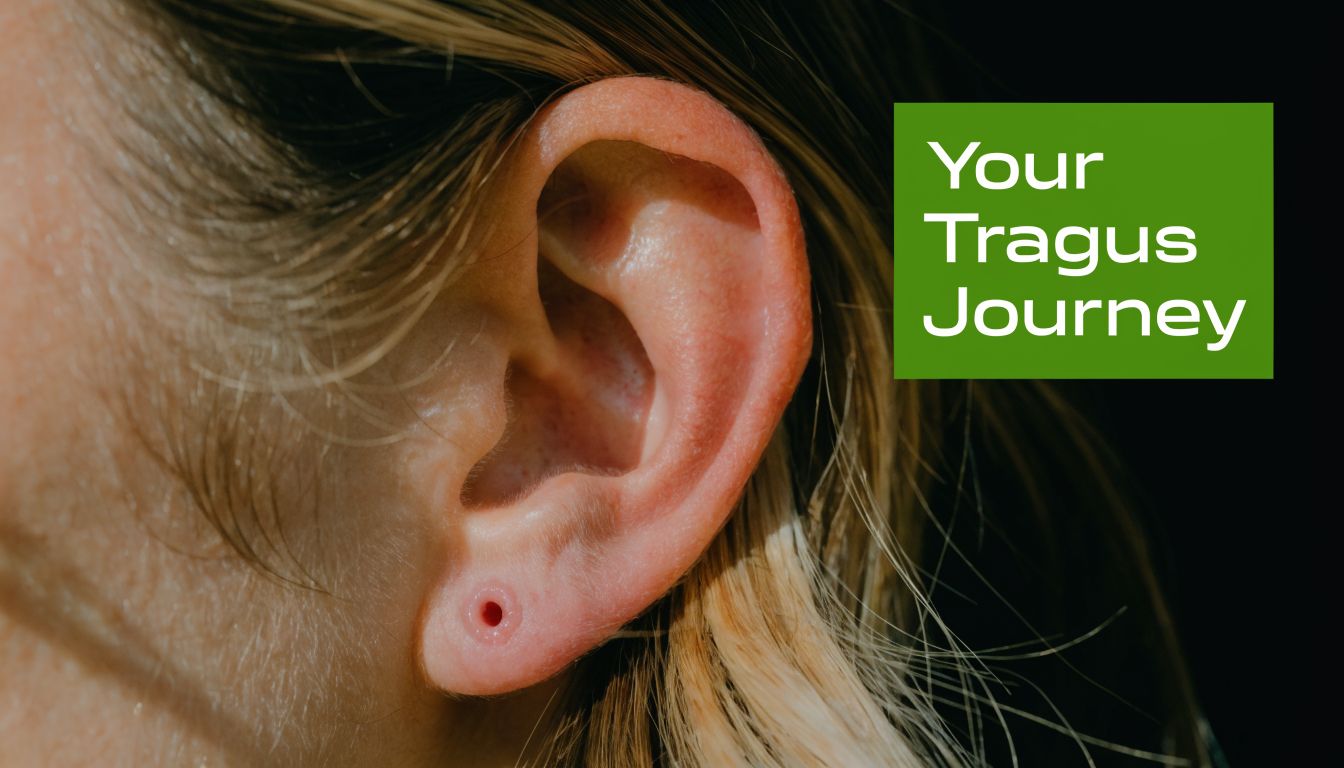
In UK studios, gold has become a much more common request for this placement. Gold tragus jewellery demand increased by 28% from 2022 to 2025, and Timebomb Tattoo & Piercing in Croydon and Bournemouth reports that 65% of tragus clients choose 14k or 18k gold flat-back studs in 16g (1.2mm) gauge, according to this UK tragus jewellery demand report.
That tells you two things straight away. First, you're not overthinking it by looking at gold. Second, most experienced clients and piercers don't choose gold at random. They tend to choose solid 14k or 18k flat-backs because they balance appearance, comfort, and wearability.
What clients usually get confused about
Some people think “gold” automatically means safe. It doesn't. Gold-plated jewellery, mystery alloys, and fashion jewellery sold online can all look similar in a product photo.
Others assume any tiny earring will fit a tragus. It won't. A tragus piercing needs the right thickness and the right post length for your anatomy.
Good piercing jewellery should feel boring on paper and beautiful in the ear. The safety details matter more than the sparkle at the start.
If you're choosing your first piece, keep your focus narrow. Ask what the gold is, whether it's suitable for a fresh cartilage piercing, and whether the size has been selected for your ear rather than pulled from a generic chart.
Choosing the Right Gold Karat and Type
The biggest mistake I see is buying jewellery labelled “gold” without checking what kind of gold it is. For a tragus piercing, that detail decides whether the piece stays comfortable or becomes a source of irritation.
Solid gold and plated gold are not the same
A simple way to think about it is this. Solid gold is the material itself. Gold plating is a surface layer over another metal.
That's why professionals are cautious about plated pieces. UK piercing professionals stock 14K solid gold as a standard for initial tragus piercings because plated jewellery can deteriorate after 6-12 months, exposing base metals that trigger inflammation, as noted in this professional gold tragus jewellery guide.
If you want an easy analogy, solid gold is like a slab of stone all the way through. Plating is paint on the outside. It may look fine at first, but once that surface wears down, what's underneath starts to matter very quickly.
Gold Karat Comparison for Tragus Piercings
| Karat | Purity | Best For | Pros | Cons |
|---|---|---|---|---|
| 9k | Lower gold content than 14k and 18k | Healed piercings, depending on alloy quality | Usually more affordable, harder wearing | Not the standard most professional UK piercers choose for fresh tragus piercings |
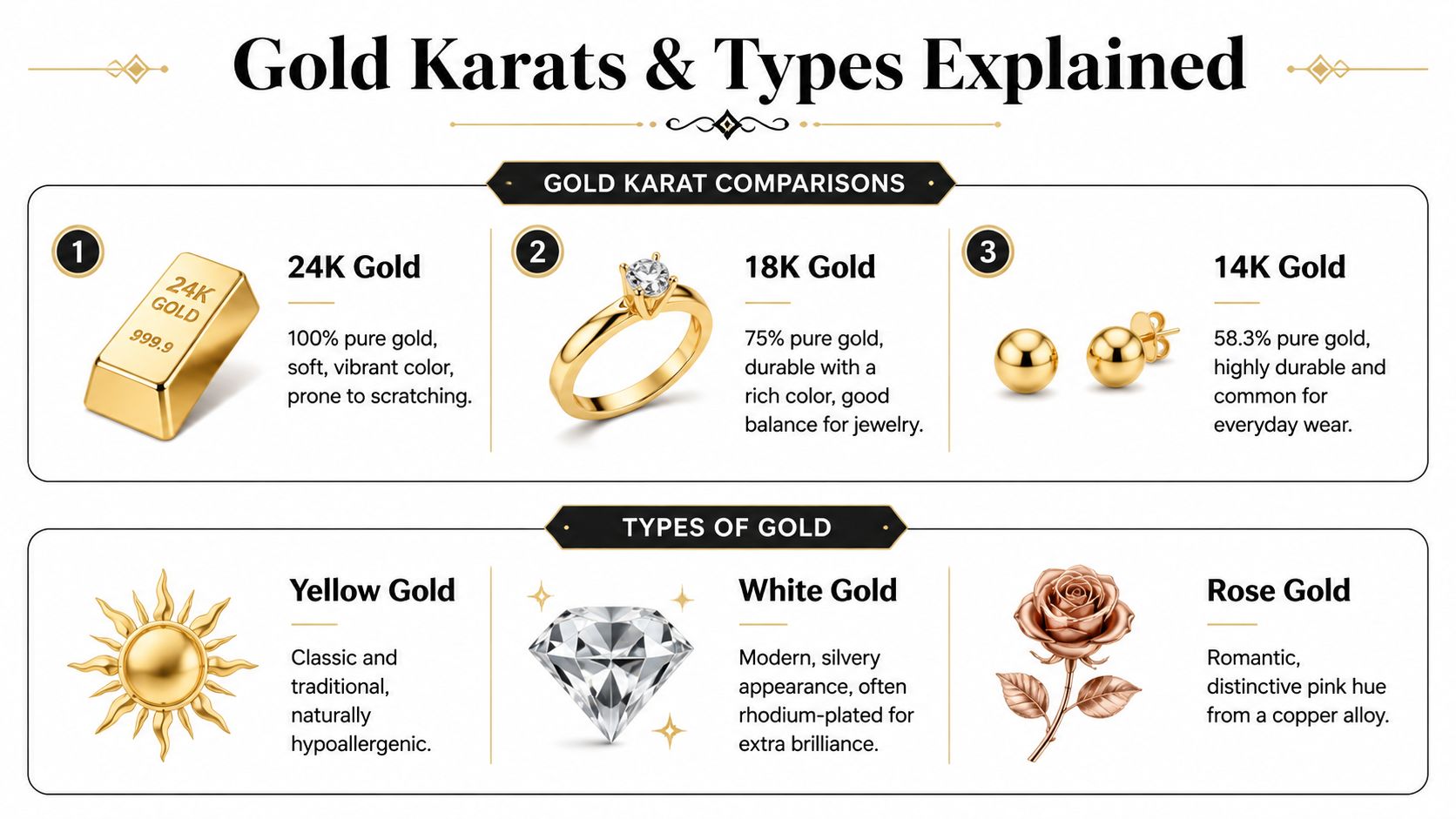
| 14k | 58.3% pure gold | Fresh and healed tragus piercings | Strong balance of durability and quality, widely stocked by professional studios | Higher cost than lower-karat options |
| 18k | 75% pure gold | Clients wanting a richer gold look in a high-quality piece | Richer colour, premium feel | Softer than 14k and typically more expensive |
What 14k and 18k mean in practice
For a tragus, 14k solid gold is often the practical favourite. It's durable enough for daily wear and commonly available in studio-grade jewellery. 18k gold has a richer colour and feels more luxurious, but it can be softer.
That doesn't mean 18k is wrong. It means your piercer should match the jewellery to your anatomy, lifestyle, and whether the piece is for an initial piercing or a healed one.
What to check before you buy
Use this short checklist when someone offers you “gold tragus jewellery”:
- Ask if it's solid gold. If it's plated, filled, or vaguely described, I'd pass for a fresh tragus.
- Ask the karat clearly. For new cartilage piercings, 14k and 18k are the options most clients are really looking for.
- Check UK quality details. If you're buying outside a studio, look for proper hallmarking and clear material information.
- Be wary of bargain listings. Very cheap “gold” often turns out to be plated fashion jewellery rather than suitable body jewellery.
If you like the look of coordinated ear jewellery, it can help to compare nearby placements too. This gold daith jewellery guide is useful for seeing how gold works across different cartilage styles.
Practical rule: If a seller makes the style obvious but the material vague, treat that as a warning sign.
Yellow, white and rose gold
Colour is the fun part, but choose it after the material standard is sorted.
- Yellow gold gives the most classic tragus look.
- White gold suits cooler-toned jewellery wardrobes, but you still want clarity on the alloy.
- Rose gold can look softer and more fashion-led, though not every studio will stock the same range in every finish.
The safest mindset is simple. Pick your quality first, then your colour, then your top design.
Finding the Correct Gauge and Length
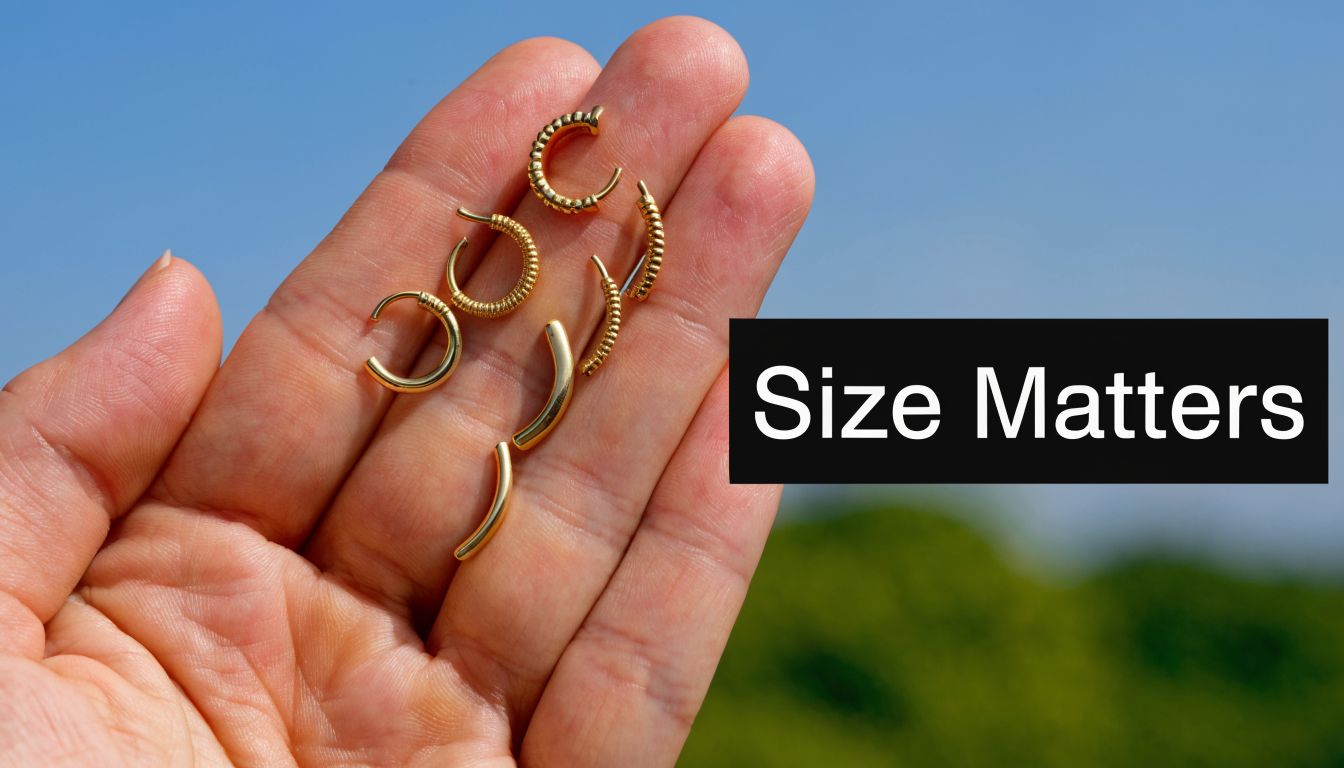
Most first-time clients hear “16 gauge” and nod politely while thinking, “I have no idea what that means.” Fair enough. Gauge just means the thickness of the jewellery post.
For tragus piercings, that thickness matters. Professional piercers in the UK use a 16 gauge (1.2mm) needle for tragus piercings, and using undersized jewellery such as a 20g stud can cause the piercing channel to shrink over time, leading to complications and potential closure, according to this tragus sizing guide from Maison Miru.
Gauge means thickness
Think of it this way. Your tragus piercing is made at a certain size. If you later put in jewellery that's too thin, the channel can contract around the smaller piece.
That's why random high-street studs aren't a smart substitute. A lobe earring may fit through the hole loosely at first, but long-term it can change the piercing in a way that makes proper jewellery harder to wear.
Length means fit
Length is the measurement of the post from end to end. For fresh piercings, piercers usually choose a post that allows for swelling rather than one that sits tight on day one.
Once the area settles, many clients come back for a shorter post so the jewellery sits neater and catches less. That's called a downsize. It's one of the most useful parts of good aftercare because a post that's too long for too long can move around more than it should.
What a good fit should feel like
A correctly fitted gold tragus stud should feel secure, not pinching, not floating around excessively, and not burying into the tissue.
A piercer will usually assess:
- Your tragus thickness
- How much room there is at the back
- Whether you wear earbuds often
- How flat or prominent the area is
- Whether the chosen top is lightweight and practical
If your tragus jewellery keeps spinning, pressing, or sitting at an odd angle, that's often a sizing issue rather than a “my body hates piercings” issue.
This is why one-size-fits-all advice causes trouble. Two clients can choose the same gold top and need different post lengths to make it work properly.
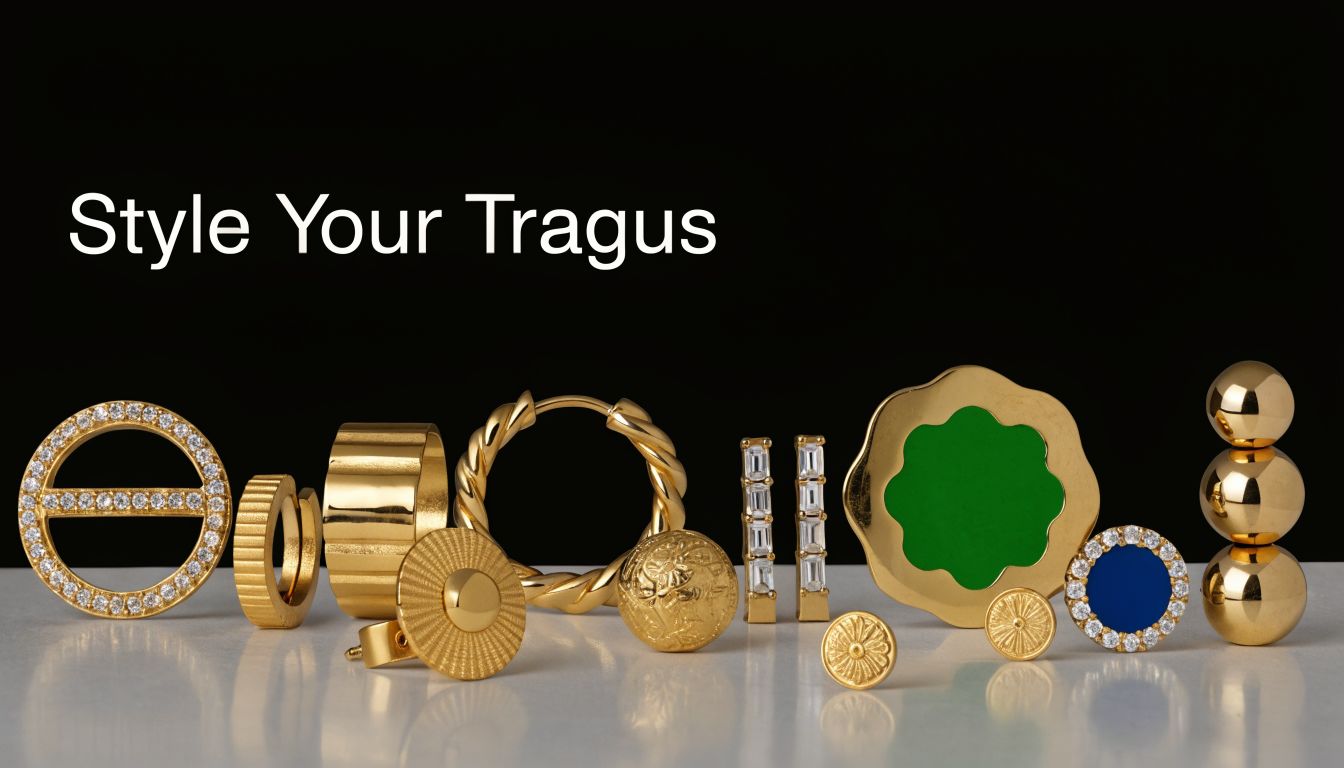
Exploring Gold Tragus Jewellery Styles
Style matters, but in a tragus piercing, the mechanism matters just as much as the look. A beautiful piece that snags, twists, or adds pressure isn't the right starting point.
Best style for a fresh tragus
For most new tragus piercings, the best option is a flat-back labret stud in solid gold with either a threadless or internally threaded top.
Why piercers prefer it:
- Low profile. It sits neatly and is less likely to get knocked.
- Comfortable back. The flat disc is kinder behind the tragus than a butterfly back.
- Less movement. That helps the piercing settle more calmly.
- Cleaner design. Smooth components usually mean less irritation.
Externally threaded jewellery is less appealing for fresh piercings because rougher threading can drag through the channel during insertion or changes.
Good healed options
Once your tragus is fully settled and your piercer is happy with it, your options open up.
Flat-back studs
These still suit a healed tragus brilliantly. You can keep things minimal with a plain polished disc, a tiny bezel-set gem, or a delicate geometric top.
Clicker hoops
These are a favourite for clients who want a cleaner ring style without fiddling with separate beads. The hinge makes them easier to handle, but they still need the right diameter or they'll press uncomfortably.
Seamless rings and CBRs
A smooth ring can look elegant in a healed tragus, especially if you want a very light, understated finish. Captive bead rings have a more classic body jewellery feel and can work well if you like a slightly more traditional piercing look.
Choosing style by stage
Here's the simplest way to decide:
| Healing stage | Best jewellery style |
|---|---|
| Fresh piercing | Flat-back labret stud |
| Settled but still healing | Usually stay with the stud your piercer fitted |
| Fully healed | Studs, clickers, seamless rings, CBRs depending on fit |
A lot of clients want a hoop immediately because that's what they've seen in photos. Sometimes that look works later, just not first.
The right tragus jewellery journey often starts with the least dramatic piece and ends with the style you wanted all along.
What to Expect and What to Ask Your Piercer
A proper consultation shouldn't feel rushed. You should leave knowing what you're having fitted, why it suits your tragus, and how to look after it.
One of the strongest reasons piercers favour implant-grade gold is performance during healing. A 2023 UK Health and Safety Executive study found that 92% of tragus piercings using implant-grade gold jewellery experienced zero migration or rejection issues after 6 months, according to this UK HSE tragus piercing study.
What usually happens in the chair
At a good studio, the appointment is part assessment, part conversation.
Your piercer should look at the tragus itself, check that the anatomy is suitable, and talk through jewellery options that match both healing needs and your style. They should also explain where the piercing will sit and whether your preferred top size makes sense for the space available.
Single-use sterile needles, clean set-up, and clear aftercare instructions should be standard, not treated like extras.
Questions worth asking
If you're nervous, save this list in your phone and bring it with you.
- Is this piece solid 14k or 18k gold?
- Is it suitable for an initial cartilage piercing?
- What gauge are you using?
- What post length are you choosing for me and why?
- Will I need a downsize appointment?
- Is a stud better than a hoop for my healing stage?
- How should this sit once swelling settles?
You can also browse broader options in this UK body jewellery guide before your appointment so the terminology feels more familiar.
When a consultation is a good sign
A strong consultation often sounds calm and specific. The piercer answers directly, explains sizing without jargon, and doesn't pressure you into a style that isn't right for the stage of healing.
Ready for a chat? Call us on 01202 9000 50 or send a message to our WhatsApp on 07752913846 to book your consultation.
Keeping Your Gold Tragus Piercing Clean and Healthy
Aftercare doesn't need to be complicated. In fact, the best aftercare is usually quite plain. Keep it clean, keep your hands off it, and stop trying every internet tip that promises faster healing.
UK dermatologists recommend sterile saline sprays for aftercare, as trendy healing oils can trap humidity and slow the 8-12 month healing time for tragus piercings, especially in coastal conditions such as Bournemouth, as noted in this UK-focused tragus aftercare guidance.
The basic routine that works
For most clients, the routine is:
- Use sterile saline spray as advised.
- Clean gently without scrubbing.
- Dry the area carefully if moisture lingers.
- Leave the jewellery alone unless your piercer tells you otherwise.
If you want a more detailed walkthrough, this guide on how to clean a new piercing is a useful companion.
What to avoid
A lot of irritation comes from “helpful” habits that make things worse.
- Don't twist the jewellery. A fresh tragus doesn't need to be turned.
- Don't use oils. They can trap moisture and residue.
- Don't use harsh antiseptics unless specifically advised. Overcleaning dries tissue and stirs up irritation.
- Don't sleep on it if you can avoid it. Pressure slows things down.
- Don't swap jewellery early just because the outside looks settled.
UK-specific things clients overlook
Bournemouth clients often deal with extra humidity. That means moisture management matters. Drying the area after cleaning and after a shower becomes more important.
Croydon clients often ask about day-to-day irritation from commuting, phones, hair products, and constant touching. Those little bits of contact add up. The cleaner and calmer you keep the environment around the piercing, the better.
Healing is usually slower when the jewellery is fine but the daily habits are rough.
When to check back with your piercer
Get in touch if the jewellery feels too tight, starts sitting oddly, or the area becomes increasingly irritated rather than gradually calming down. A quick in-studio check can often sort out a fit issue before it becomes a bigger problem.
If you're ever unsure whether something is normal, ask. You're not bothering your piercer. That follow-up support is part of the service.
Gold Tragus Jewellery FAQs
A few questions come up in almost every consultation, especially from people buying their first serious piece of tragus jewellery gold.
Can I start with a gold hoop instead of a stud
You might love the look of a hoop, but most fresh tragus piercings behave better with a flat-back stud. It moves less, catches less, and usually sits more predictably while the area settles.
Hoops often make more sense later, once the piercing is stable and your piercer can size the ring properly.
Is all online gold tragus jewellery safe
No. Many buyers get caught out here.
A 2025 UK Piercing Association survey found that 28% of cartilage piercing complications stemmed from non-implant-grade metals, which is why vague online listings are a real problem, according to this UKPA complication summary on gold surface tragus jewellery.
If a seller doesn't clearly state the material quality, hallmarking details, or whether the piece is appropriate for body piercing, I wouldn't trust it for a tragus.
What if I already have a healed tragus and the hole seems smaller now
That can happen if you've worn thinner jewellery for a while. A tragus piercing can contract around whatever you keep in it.
Don't force larger jewellery through it at home. Let a professional assess whether it can be tapered back safely or whether a different size is needed.
How do I know when I can change my tragus jewellery
The safest answer is when your piercer says it's ready, not when it merely looks calm from the outside. Cartilage often settles externally before the inside is fully stable.
Signs that it's too soon include lingering tenderness, crusting, pressure, or a piercing that still reacts when bumped. If you want to switch from your first gold stud to a ring, patience usually gives you a much better result.
If you're looking for trusted advice, safe studio standards, and help finding the right tragus jewelry gold for your anatomy and style, Piercing Near Me is a smart place to start. You can explore professional guidance, compare reputable options, and connect with experienced UK studios that take jewellery quality, hygiene, and aftercare seriously. For direct help, call 01202 9000 50 or message WhatsApp 07752913846.