
A navel piercing typically takes 6 to 12 months to fully heal. That's the honest answer to be aware of before planning outfit changes, holidays, or a jewellery swap.
If you've just had your navel pierced, you're probably doing what nearly everyone does in the first few days. Looking at it in the mirror, checking whether it's “normal”, and wondering how long you need to baby it before it feels settled. The tricky part is that a navel piercing can look calmer on the outside long before the inside is properly stable.
Your New Navel Piercing Journey Begins
A navel piercing has one of the slower healing patterns in body piercing because the area bends, folds, and deals with regular friction from waistbands, movement, and day-to-day clothing. Guidance commonly used by piercers places full healing in the 6 to 12 month range (navel piercing healing guidance). That long window isn't there to scare you. It's there to stop you making the classic mistake of treating a fresh piercing like a quick recovery.
That matters even more for first-time clients in the UK. If you're in Croydon, Bournemouth, or anywhere else, good aftercare advice won't promise a fast finish. It will tell you to expect a long healing project, not a few easy weeks.
What most new clients get wrong
People often judge healing by appearance alone. If the redness settles and the jewellery stops feeling sore every time you move, it's easy to assume you're nearly done. In reality, the internal channel is still maturing for much longer.
Practical rule: A calm-looking piercing is not always a healed piercing.
That's why I tell clients to think in stages, not days. Your job isn't to rush it. Your job is to keep it quiet, clean, and unbothered for long enough that the tissue can do its work.
A better way to set expectations
Focus on three things early on:
- Daily comfort: Small improvements matter more than chasing a perfect look.
- Low friction: Waistbands, belts, rough towels, and constant touching cause more trouble than people realise.
- Professional check-ins: If you're unsure whether your anatomy, placement, or jewellery is working for you, ask a piercer instead of guessing.
If you're still deciding whether a navel piercing is right for you, it's also worth checking the UK rules around belly button piercing age requirements in the UK.
The Navel Piercing Healing Timeline Explained
The easiest way to understand navel piercing healing time is to stop thinking of it as one long blur. It helps to break it into clear stages so you know what's ordinary, what's annoying but manageable, and what deserves a closer look.
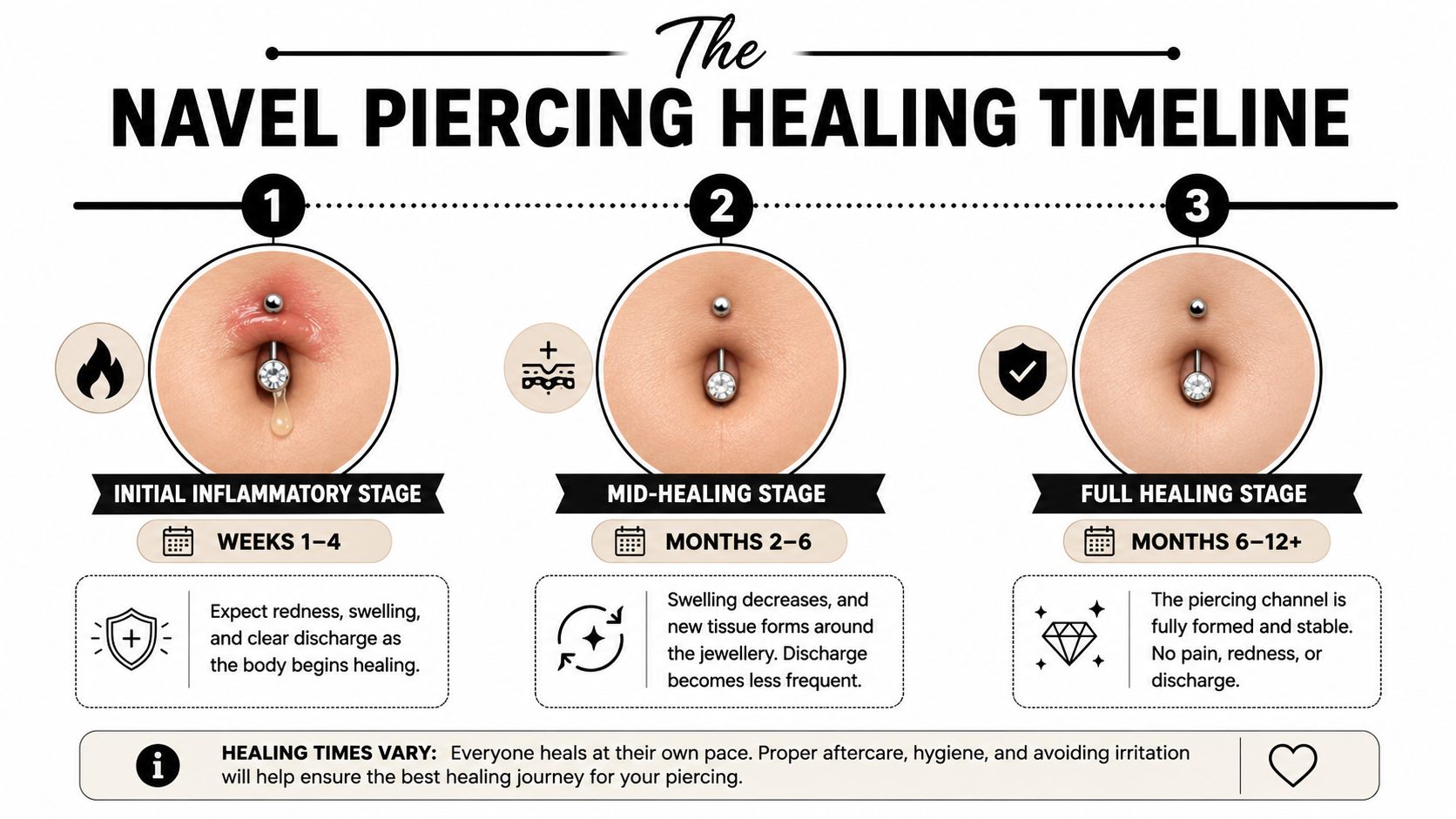
The three stages at a glance
| Healing Stage | Typical Duration | What to Expect |
|---|---|---|
| Initial inflammatory stage | Weeks 1 to 4 | Redness, swelling, tenderness, clear discharge, sensitivity to movement |
| Mid-healing stage | Months 2 to 6 | Reduced swelling, less redness, occasional crusting, tissue forming around jewellery |
| Full healing stage | Months 6 to 12+ | Stable channel, calm skin, no ongoing pain, redness, or discharge |
Initial inflammatory stage
This is the fresh piercing stage. The area often looks more dramatic than it feels, or vice versa. Mild redness, slight swelling, and some tenderness are common, especially when clothing catches the jewellery or the area gets knocked.
You may also notice a clear or whitish fluid that dries around the jewellery. Most clients call these “crusties”. They're part of normal healing and don't automatically mean something is wrong.
What works here is simple. Keep the area clean, keep pressure off it, and don't start fiddling with the bar because you're nervous about how it looks.
Mid-healing stage
Many people become overconfident when the piercing usually becomes less dramatic. Swelling eases off, the area often looks tidier, and the jewellery may feel more settled in place. That doesn't mean it's ready for rough treatment, swimming, tight clothes, or a jewellery change.
This stage is delicate because the tissue is still building around the jewellery. You can undo good progress with repeated friction, sleeping on your front, or wearing high-waisted bottoms that constantly press into the piercing.
A navel piercing often behaves well for a while before it reacts. Irritation from clothing or snagging doesn't always show up immediately.
Full healing stage
By the later stage, the piercing should feel stable in ordinary daily life. It shouldn't stay red, it shouldn't feel sore every time you move, and it shouldn't keep producing discharge. This is the point where the channel is becoming properly mature rather than just superficially calm.
Some people land at the lower end of the healing range. Others need longer. Navel piercings don't care about your holiday plans, your gym routine, or the fact that your friend's healed faster.
The practical lesson is straightforward. Judge healing by consistency over time, not by one good week.
Essential Aftercare for a Healthy Piercing
Good aftercare is boring. That's exactly why it works. The healthiest navel piercings usually come from simple routines done consistently, not from complicated product stacks or internet hacks.
What to do every day
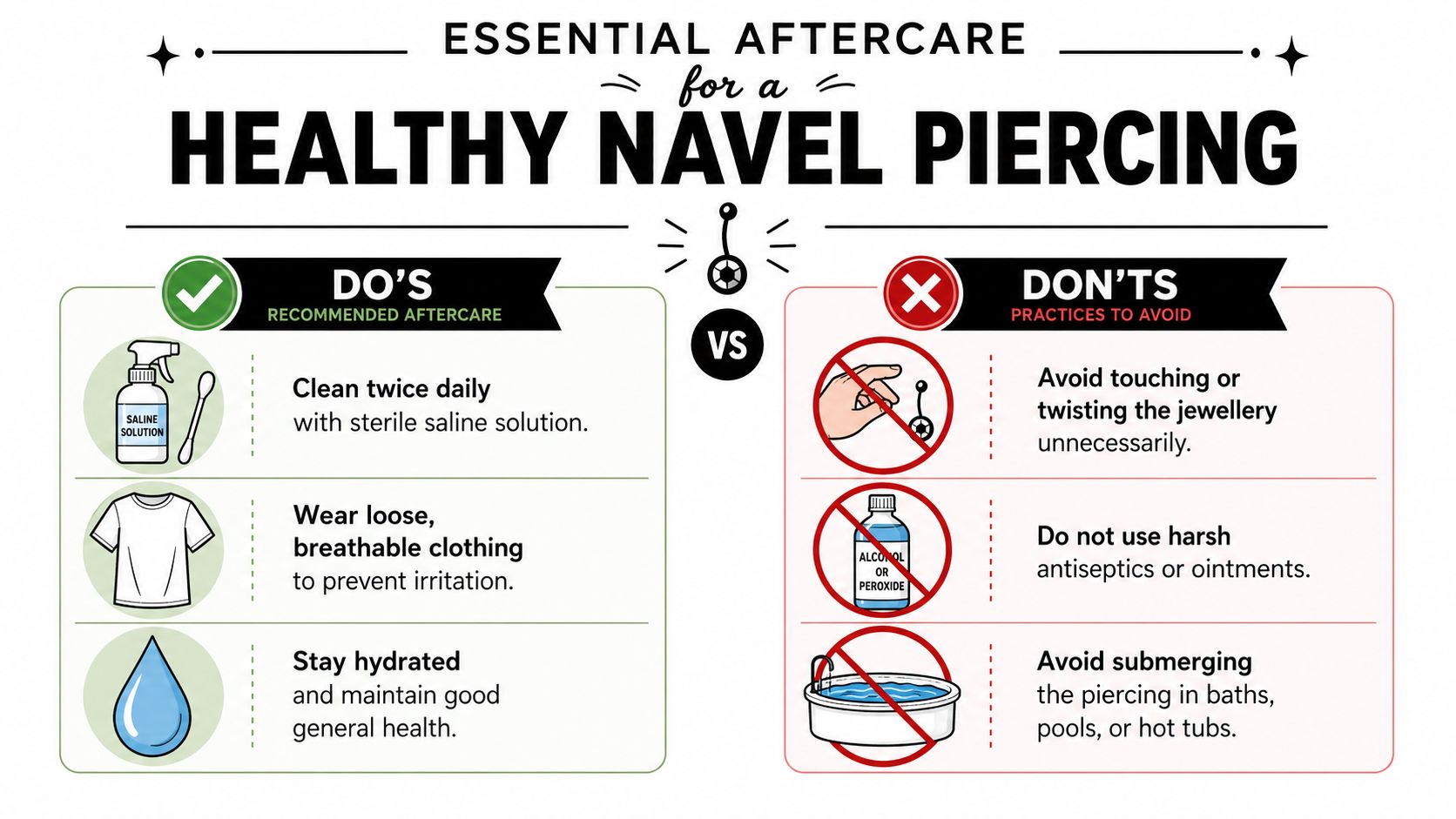
Use a sterile saline solution and clean the piercing gently. A routine many piercers recommend is cleaning twice daily, then leaving it alone the rest of the time. If you want a product guide, this overview of saline spray for piercing aftercare is a useful starting point.
A practical routine looks like this:
- Wash your hands first: Don't touch the area with unwashed hands.
- Apply sterile saline: Let it soften any dried discharge.
- Pat dry gently: Use clean non-woven gauze or another clean disposable option.
- Leave the jewellery alone: Don't twist, rotate, or “check” it.
What tends to slow healing down
A lot of irritation comes from people trying too hard. They over-clean, use the wrong products, or keep moving the jewellery because they think movement prevents sticking. It doesn't. It usually just annoys the tissue.
Avoid these common mistakes:
- Harsh products: Alcohol, peroxide, strong antiseptics, ointments, and oils can irritate the area.
- Constant touching: If you keep handling the jewellery, you keep reintroducing irritation.
- Over-cleaning: More isn't better. Excess cleaning can dry and aggravate the skin.
- Submerging the piercing: Baths, pools, and hot tubs increase exposure to things your healing piercing doesn't need.
What works best: Clean it gently, dry it properly, and then stop interfering.
Small habits that make a real difference
Loose, breathable clothing usually helps more than people expect. A soft top that doesn't rub the jewellery is often better for healing than a fitted outfit that keeps pressing into the area all day.
General health matters too. If your body is run down, stressed, or constantly irritated by poor sleep and friction, healing rarely feels smooth. You don't need perfection. You need fewer setbacks.
Factors That Influence Your Healing Speed
Two people can get the same piercing on the same day and have very different experiences. That doesn't always mean one person is “doing aftercare wrong”. Navel piercing healing time is affected by several practical variables, and some matter more than people think.
Anatomy and placement
Not every navel suits a standard navel piercing equally well. The shape of the tissue, how defined the upper lip is, and how the area folds when you sit all affect how much stress the jewellery takes during healing.
If the jewellery sits under constant pressure because the anatomy isn't ideal, irritation can become a repeating problem. In practice, that means a well-assessed placement from the start matters more than chasing a cure later.
Clothing and daily movement
This is one of the biggest real-world issues. Tight waistbands, shapewear, high-waisted jeans, belts, and rough fabrics can keep the area in a low-grade state of irritation. The piercing may not flare up dramatically every day, but repeated friction adds up.
Watch for patterns like these:
- Morning soreness: Often linked to sleep position or tight nightwear.
- End-of-day redness: Common when clothing has rubbed the jewellery for hours.
- Random flare-ups: Frequently caused by gym wear, waistbands, or snagging.
Lifestyle and recovery capacity
Healing isn't just about what touches the piercing. It's also about what your body has available to repair tissue. Rest, stress levels, hydration, and general health all influence how settled a piercing feels across the months.
That's why comparisons don't help much. Your friend may wear different clothes, sleep differently, move differently, and have a different healing pattern altogether.
A navel piercing usually does best when your routine supports it instead of fighting it. Less pressure. Less movement. Less irritation.
Troubleshooting Common Healing Concerns
Most healing worries fall into one of two categories. Either the piercing is irritated, or something more serious may be developing. Knowing the difference helps you respond properly instead of panicking or ignoring a real problem.
What's usually normal
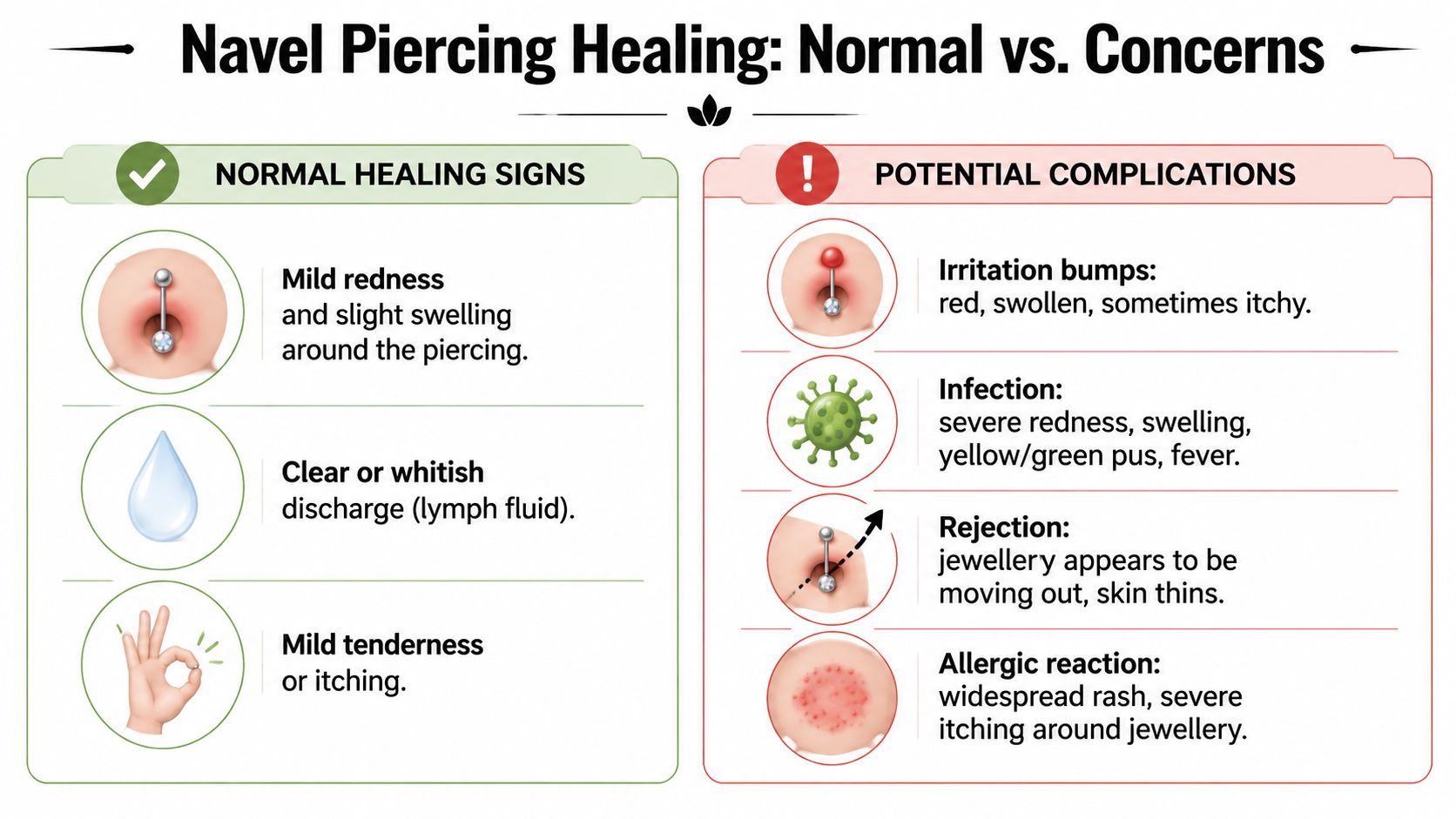
A healing navel piercing can have mild redness, slight swelling, some tenderness, and clear or whitish discharge that dries around the jewellery. Mild itching can also happen as the tissue settles.
These signs are annoying, but they're not automatically a crisis.
| Normal healing signs | Potential concerns |
|---|---|
| Mild redness close to the piercing | Redness that spreads or becomes severe |
| Slight swelling | Marked swelling, heat, or worsening pain |
| Clear or whitish discharge | Yellow or green pus |
| Mild tenderness or itching | Fever, strong pain, or feeling unwell |
| Small amounts of crusting | Jewellery appearing to move out, with thinning skin |
Irritation bumps and everyday setbacks
An irritation bump usually points to a cause you can identify. Friction, moisture build-up, low-quality jewellery, sleeping pressure, harsh products, or repeated snagging are common triggers.
When that happens, strip the routine back to basics:
- Check for friction: Waistbands and fitted tops are frequent offenders.
- Review your aftercare: Saline only. No experiments.
- Stop touching it: Curiosity is one of the biggest causes of repeat irritation.
- Get the jewellery assessed: If the fit or material isn't right, aftercare alone won't solve everything.
If a navel piercing keeps flaring up, look at what's happening around it. Clothing, pressure, and movement often explain more than the cleaning routine.
When to contact a piercer and when to see a GP
Contact your piercer promptly if the piercing is persistently irritated, the jewellery looks as if it's shifting position, or the skin between entry and exit points appears thinner. Those can be signs that the piercing is struggling mechanically.
See a GP if you have severe redness, significant swelling, yellow or green pus, fever, or symptoms that are escalating rather than settling. Don't remove the jewellery on a whim if you suspect infection. Get proper medical advice first.
Calm action is better than guessing. A good piercer can assess placement, pressure, and jewellery. A GP should handle symptoms that suggest infection or wider illness.
Choosing Jewellery and When to Change It
Jewellery choice matters more with a navel piercing than many clients expect. This area moves constantly, catches on clothing easily, and doesn't tolerate poor-quality metal well during healing.
Best materials for fresh piercings
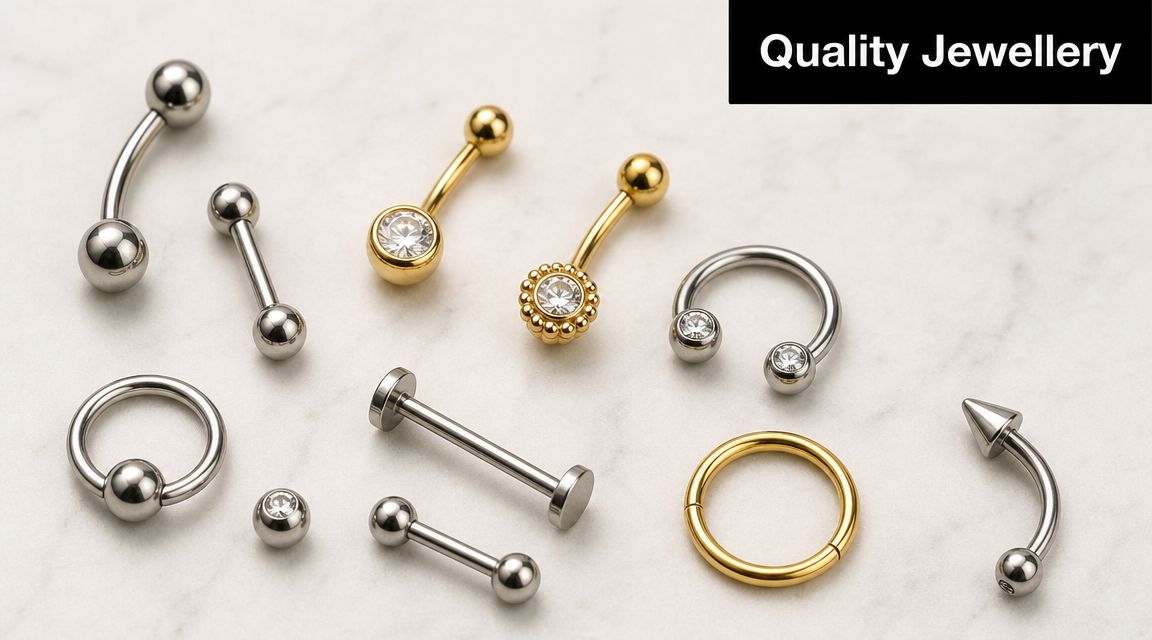
For initial jewellery, professional studios commonly favour implant-grade titanium and high-quality solid gold options because they're suited to long healing periods and are less likely to create avoidable irritation. If you want to compare suitable options, have a look at titanium piercing jewellery for healing piercings.
Cheap mystery-metal jewellery is where a lot of trouble starts. If the material quality is poor, you can end up trying to troubleshoot a problem that isn't really about aftercare at all.
Don't change it too early
This is one of the clearest safety rules. Guidance advises waiting at least 3 to 6 months before changing jewellery, and sometimes longer, until there is no redness, swelling, discharge, or tenderness because premature changes can disrupt tissue remodelling and extend recovery (guidance on changing belly button jewellery during healing).
That's the trade-off. Changing jewellery early might give you a look you want now, but it can set the healing back badly.
Leave the first jewellery change to timing, not impatience.
For many clients, the best move is to let a professional piercer handle the first swap when the piercing is properly ready. It's safer, cleaner, and much less likely to end in a flare-up.
Your Local Piercing Experts in Croydon and Bournemouth
If you're based near Croydon or Bournemouth and want a proper opinion on a healing navel piercing, speak to a studio that handles body piercings every day. That matters when you need someone to assess anatomy, jewellery fit, irritation, or whether a piercing is healing well rather than just looking settled.
Timebomb Tattoo & Piercing is known locally for a safety-first approach. Clients generally want the same few things from a studio: experienced piercers, clear aftercare, sterile single-use needles, and jewellery that won't create unnecessary problems during a long healing period. Those basics aren't extras. They're the standard you should expect.
When it's worth getting checked
You don't need to wait until something has gone badly wrong to ask for help. Book in or message if:
- You're unsure about irritation: A quick assessment can often spot friction or jewellery issues.
- You want the first jewellery change done properly: This is one of the most common times people accidentally damage a healing piercing.
- You're planning a new navel piercing: Anatomy checks matter.
Contact details
For advice, consultations, walk-ins, or appointments, contact the studio directly:
- Phone: 01202 9000 50
- WhatsApp: 07752913846
If you're choosing between studios or want reassurance before booking, a direct conversation usually clears things up faster than another hour of scrolling through mixed advice online.
Navel Piercing Healing FAQ
Can I go swimming with a new navel piercing
It's best to avoid swimming while the piercing is fresh and still vulnerable. Pools, hot tubs, lakes, and similar environments expose the area to irritants and bacteria. If swimming can't be avoided for a specific reason, ask your piercer for practical advice based on how new the piercing is and how it's behaving.
How long should I avoid high-waisted jeans
Avoid them for as long as they're pressing, rubbing, or catching on the jewellery. For some clients, that means skipping them during the touchiest early stretch. For others, it means being selective much longer because the waistband keeps landing exactly on the piercing. The test is simple: if the clothing leaves the area sore, red, or aggravated, it isn't helping.
What should I do if I accidentally snag my piercing
Stay calm. Wash your hands, clean the area gently with sterile saline, and leave it alone. Then monitor it closely over the next few days.
Look for these signs:
- Brief soreness only: Usually settles with careful aftercare.
- Persistent swelling or renewed discharge: The snag may have irritated the tissue more than you think.
- Jewellery sitting differently: Get it checked by a piercer.
If the piercing becomes increasingly painful, starts producing yellow or green pus, or you feel unwell, seek medical advice.
Is it normal if it looks healed before it feels fully settled
Yes. That's one of the reasons navel piercings catch people out. The outside often calms down before the inside is fully mature. If you treat “looks fine” as “is healed”, you can easily create setbacks.
Should I remove the jewellery if I'm worried
Not automatically. Removing jewellery without proper advice can make some problems harder to manage. If you're worried, get the piercing assessed by a professional piercer, and see a GP if symptoms suggest infection or you feel unwell.
If you're looking for safe, professional guidance before getting pierced or while a navel piercing heals, Piercing Near Me helps you find trusted studios, clear aftercare advice, and experienced support in Croydon, Bournemouth, and beyond. For direct help with bookings or questions, you can also call 01202 9000 50 or message 07752913846 on WhatsApp.