
So, you're thinking about getting a navel piercing? Great choice! One of the first things people ask is, "How old do I have to be?" The rules around the belly button piercing age in the UK can seem a bit confusing, so let's clear it up.
While there isn't a single, UK-wide law that sets a specific minimum age, the professional industry has a very clear standard: you generally need to be 16 years old and have a valid photo ID. That said, many of the best studios, including places like Timebomb Tattoo & Piercing, often set their own, stricter policies to ensure you have the best and safest experience possible.
A Quick Guide to UK Belly Button Piercing Age Rules
Let's get straight to it. Although there’s no overarching national law, the professional piercing community takes its responsibility seriously. For anyone under 16, getting a navel piercing is tricky; even with a parent present, most top-tier studios will politely decline. They're not just being difficult—they have your best interests at heart.
This is because a navel piercing is a real commitment. It needs a mature body to heal well and a responsible person to look after it properly. Studios enforce these age limits to make sure you’re ready for the healing journey and can handle the aftercare yourself. Think of it as a partnership for a successful piercing.
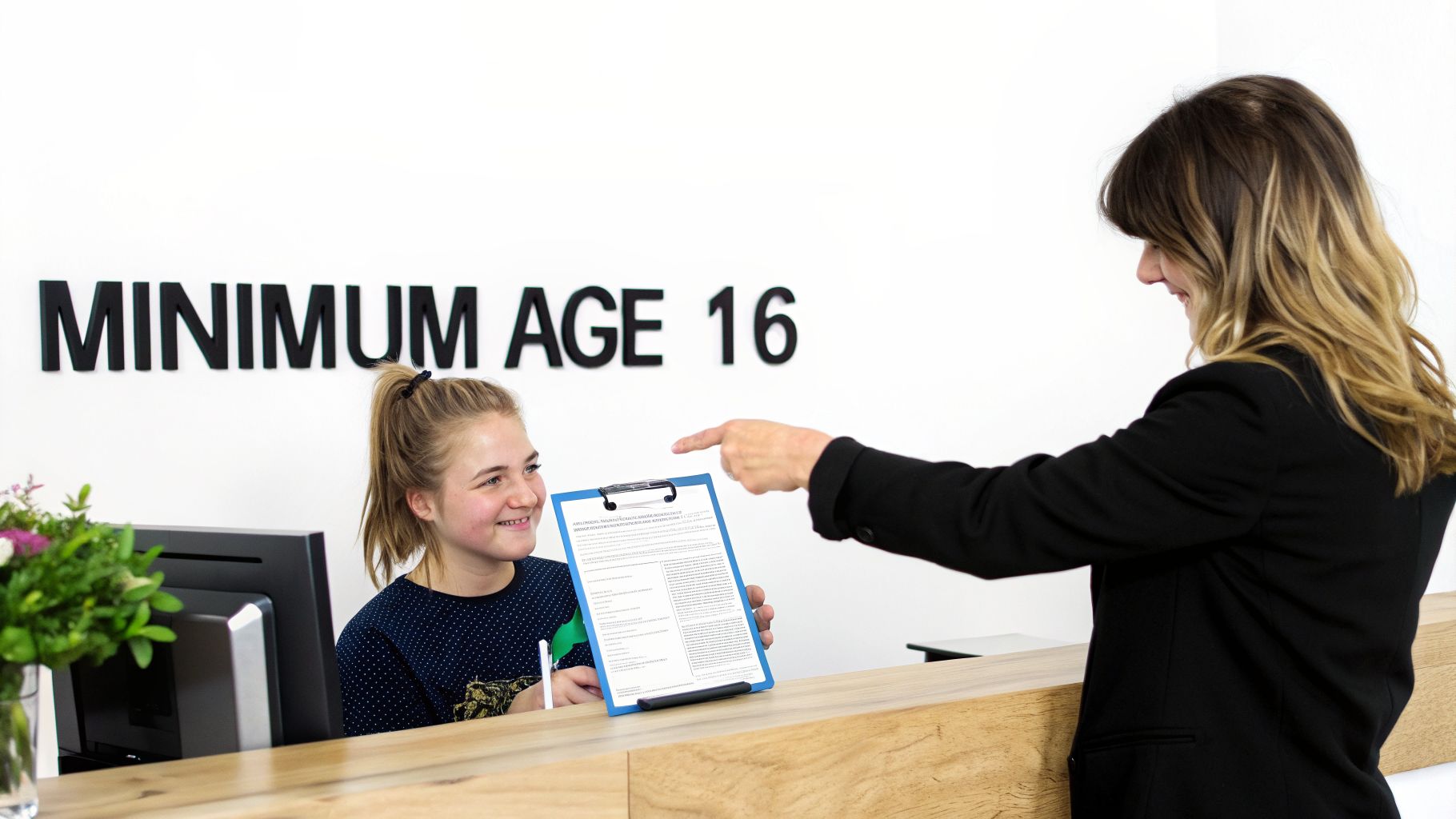
UK Navel Piercing Age and Consent Requirements at a Glance
To give you a crystal-clear picture, we've put together a table that breaks down what you can typically expect in a professional UK studio. It's a handy reference for what you'll need to bring on the day.
Keep in mind that different piercings can have different age rules. For example, what's required for a belly button piercing might not be the same as for other popular piercings. You can see how this compares by reading our guide on nose piercing age requirements in the UK.
| Age Group | Typical UK Requirement | Common Reputable Studio Policy | Required Documentation |
|---|---|---|---|
| Under 16 | Parental consent required | Piercing often declined due to healing risks | Parent/Guardian ID & Client's Birth Certificate |
| 16-17 | Legally able to consent themselves | Often requires valid photo ID (e.g., Passport) | Valid Photo ID (Passport, Provisional Licence) |
| 18+ | Full consent; no restrictions | May require ID if you look under 25 (Challenge 25) | Valid Photo ID if requested by the studio |
Essentially, once you're 16, you're generally good to go with the right ID. If you're under 16, reputable piercers will almost always advise you to wait a little longer. This isn't just about ticking boxes; it's about setting your new piercing up for a smooth, trouble-free healing process.
Understanding Official Regulations and Studio Policies
A lot of people get confused about the belly button piercing age here in the UK, and it's easy to see why. Unlike tattoos, which are strictly for those 18 and over, the rules for body piercing aren't set by one single national law.
Instead, it's a bit of a mixed bag. Local councils are the ones who create the bylaws for piercing studios in their area. This patchwork of regulations means that what’s required in one town might be different in another. To cut through the confusion and put safety first, the professional piercing industry has simply created its own higher standard.
The Law vs. How a Professional Studio Actually Works
You might stumble across legal terms like ‘Gillick competence’ online. It’s a concept from medical law that suggests someone under 16 could consent to their own treatment without their parents' say-so. In the real world of professional piercing, though, we don't rely on that.
Why? Because it’s a grey area, and your safety is not something we’re willing to gamble on. Reputable studios will flat-out refuse to pierce anyone under 16 without parental consent, and for good reason. We, and many others, even have higher age limits for certain piercings. This isn't about finding legal loopholes; it’s a professional commitment to making sure you’re ready for the piercing and the aftercare that follows.
At Timebomb Tattoo & Piercing, your safety is everything. We’re all about being transparent and creating a secure environment, which is why our studio policies often go above and beyond the minimum legal requirements.
Our Policy at Timebomb Tattoo & Piercing
To make sure things are straightforward and safe for everyone, our studios in Croydon and Bournemouth follow the same clear rules. We have a firm age requirement for navel piercings and a strict ID process.
- Age Requirement: We will only perform a navel piercing on clients who are at least 16 years old. This helps ensure your body is developed enough for the piercing to heal well, and that you’re mature enough to handle the aftercare commitment.
- Identification: We run a Challenge 25 policy. So, if you’re lucky enough to look under 25, please don't be offended when we ask for ID! You'll need to bring a valid, government-issued photo ID like a passport or a provisional driving licence.
- Parental Consent: If you’re 16, we strongly recommend having a chat with a parent or guardian before coming in. While you can legally consent yourself, having their support during the healing process can make a world of difference.
Our policies aren’t just red tape—they’re there to protect you and ensure you’re making a decision you feel great about. Part of that commitment also means using the safest equipment. We only ever use single-use, sterile needles, never piercing guns. To see why that’s so important, have a read of our guide on the piercing gun vs needle method.
At the end of the day, any good studio has these rules to look out for you. They make sure every person getting pierced is genuinely ready for it, which means better healing and a much happier experience all round. If you’ve got any questions about our policies or want to check if you’re eligible, just get in touch. Our team is always happy to help.
Give us a call at 01202 900050 (Bournemouth) / 020 8686 7730 (Croydon) or drop a message to our WhatsApp at 07752 913846 (Bournemouth) / 07902 490584 (Croydon).
Is Your Anatomy Right for a Navel Piercing?
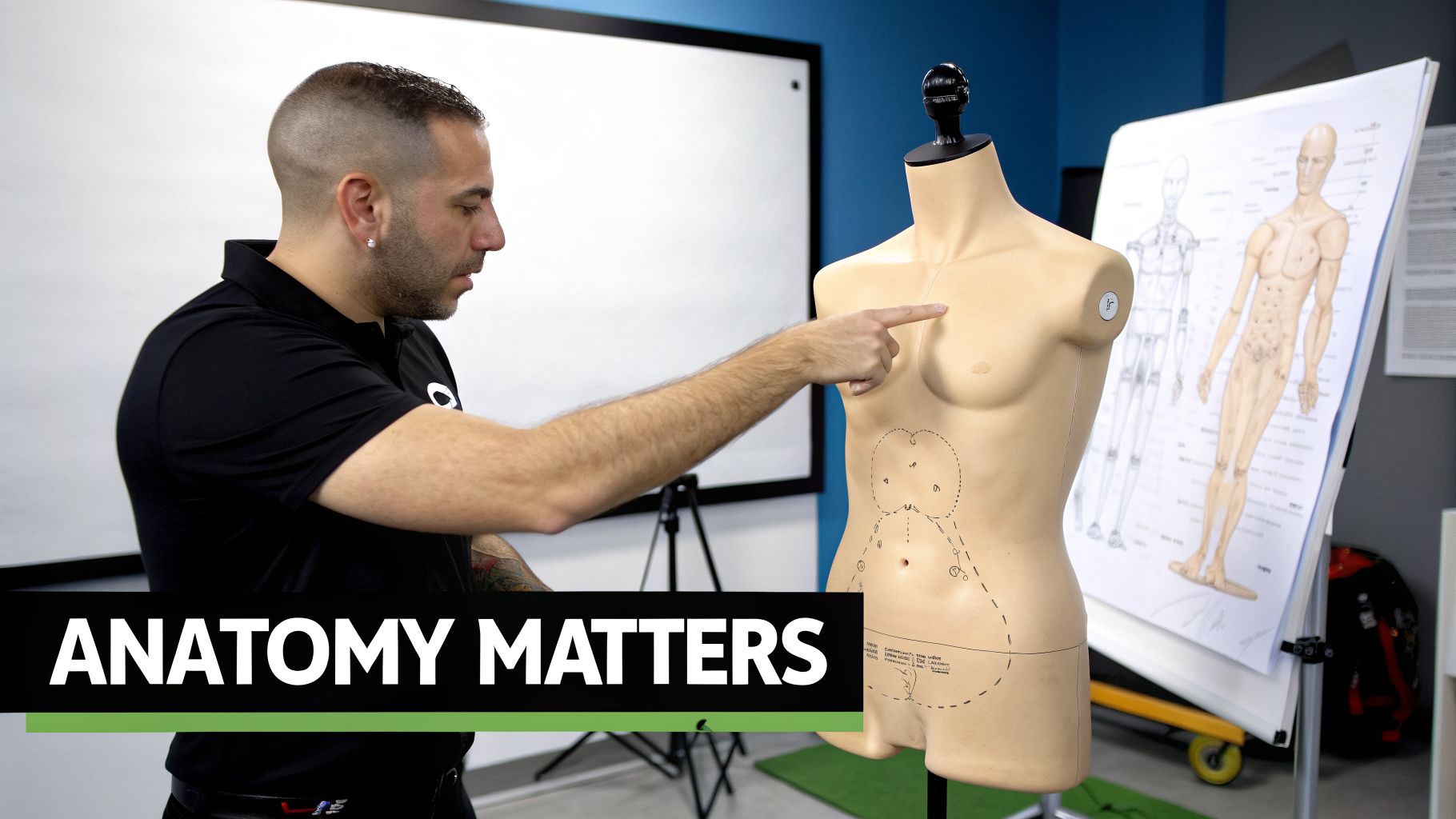
Before we even talk about age, we need to talk about anatomy. While the rules around the belly button piercing age in the UK are about maturity, the biggest hurdle is often your body's unique shape. It’s a simple matter of physics, really. Not every navel is built to safely house and heal a traditional piercing.
And just to be clear, this has absolutely nothing to do with your weight, size, or how fit you are. It’s purely down to the natural structure of your navel and the skin around it. A good piercer isn’t just looking at your belly button; they're assessing how the tissue moves and folds. This anatomy check is a crucial, non-negotiable part of the process at any studio worth its salt.
What Makes a Navel "Suitable"?
So, what are we looking for? When you come in for a consultation, the first thing our piercers check for is a defined "lip" or flap of skin at the top of your navel. This little ridge needs to be prominent enough to hold the jewellery securely without causing any strain.
We also need to see how your navel behaves when you sit down. If your stomach naturally folds and causes the navel to collapse or "wink" shut, it can be a problem. This traps moisture and puts constant pressure on the jewellery, which is a recipe for irritation, migration (where the piercing moves from its original spot), and even rejection.
A few common issues we look for:
- A "Collapsing" Navel: If the skin folds right over the piercing site when you sit, healing can be incredibly difficult due to trapped moisture and pressure.
- A Shallow Navel: Without a well-defined ridge of tissue, the piercing might sit too close to the surface, making it much more likely to be pushed out by your body.
- An "Outie": The tissue structure of an "outie" navel is completely different, and it simply can't support a traditional piercing.
- Surgical Scars: Old scar tissue from surgery in the area can complicate placement and make healing unpredictable.
The Professional Consultation Is Essential
This is exactly why you need an experienced professional. At Timebomb Tattoo & Piercing, our team will get you into a private room and have a quick look. We'll ask you to stand up and sit down to see exactly how your body moves. From there, we can give you an honest, safety-first opinion.
It's no surprise so many people want a navel piercing. It's often less painful than a cartilage piercing since it only goes through soft tissue. But that soft, pliable tissue is precisely why an expert assessment is so important—everyone's anatomy is wildly different. If you want to dive deeper, you can find great insights from UK piercing professionals on just how unique navels can be.
A great piercer isn’t just someone who can perform the piercing; they are an expert who knows when not to. Our priority is your long-term health and a beautiful, healed outcome.
If a traditional piercing won't work for you, don't worry—it’s not necessarily a "no." We might be able to offer a "floating" navel piercing instead. This style uses a small gem on top and a flat disc that sits inside the navel, avoiding the pressure caused by a standard barbell. It’s a fantastic alternative for navels that tend to collapse.
In some cases, the safest advice is to avoid the piercing altogether. This careful, personalised check is how we look after you. If you're wondering about your own anatomy, just ask! You can send a clear photo to us on WhatsApp at 07752 913846 (Bournemouth) / 07902 490584 (Croydon) for a quick look, or call 01202 900050 (Bournemouth) / 020 8686 7730 (Croydon) to book a free, no-obligation consultation.
Forget the Rules: The Rise of Midlife and Mother-Daughter Piercings
Let's be honest, the old idea that a belly button piercing is just for teenagers living their best 90s pop-star fantasy is completely outdated. We're seeing a brilliant shift in who's getting pierced, with people from every stage of life choosing navel piercings to express themselves. The old, unwritten rules about the belly button piercing age in the UK are being thrown out the window—not by law, but by a society that's finally embracing personal style at any age.
Of course, the comeback of 90s and Y2K fashion has something to do with it, but what we're seeing in our studios goes far beyond a simple trend. It’s about confidence, empowerment, and feeling great in your own skin. Style simply doesn't have an expiry date.
A New Wave of Self-Expression
Here at Timebomb Tattoo & Piercing, we’ve definitely noticed a growing wave of what you might call 'midlife piercings'. Women in their 30s, 40s, and even 50s are walking in, genuinely excited to finally get the navel piercing they’ve always thought about. For a lot of them, it was something they couldn't get when they were younger, whether because of parents, jobs, or just life itself getting in the way.
Now, they're doing it purely for themselves. It’s a personal statement that has nothing to do with age and everything to do with owning your style. We love seeing this happen, as it gives anyone who might have been on the fence the confidence to finally go for it.
This isn't just a feeling we have; it's a real cultural movement. The growing popularity of piercings for people aged 40 and over shows a huge shift in social attitudes. It challenges those tired old stereotypes and proves body modification is a form of self-expression for absolutely everyone.
This trend is so noticeable that it's even been picked up by major newspapers. Reports are highlighting a massive spike in piercings among older demographics in the UK, with high-end piercing brands seeing a huge part of their customer base in this exact age group. It’s solid proof that piercings are no longer just for the youth. If you want to dive a bit deeper, you can read more about the rise of midlife piercings in The Times.
A Shared Bonding Experience
On top of the rise in midlife piercings, we've had the absolute pleasure of welcoming countless mother-daughter pairs into our Croydon and Bournemouth studios. These appointments are genuinely heartwarming and create a one-of-a-kind bonding moment that they'll both look back on for years.
Getting pierced together can be a way to celebrate a big achievement, share an inside joke, or just mark a special point in your relationship. It’s become a modern-day rite of passage that closes the generation gap.
Here’s why it makes for such a special experience:
- Mutual Support: Let's face it, facing the needle is less daunting when you have your best supporter right there with you. It’s built-in encouragement.
- A Lasting Memory: It's an experience that creates a tangible, shared memory. Every time you catch a glimpse of your piercing, you’ll be reminded of that day.
- Celebrating Style Together: It’s a wonderful way to acknowledge that personal style is a value you both share, not something that only belongs to one generation.
At Timebomb, we make sure these appointments get the special attention they deserve. Our professional piercers ensure both mother and daughter feel totally comfortable, well-informed, and excited for their new jewellery. We pride ourselves on creating a welcoming space for clients of all ages who are looking for true professionalism and artistry.
Whether you're thinking about a piercing to mark a new chapter in your life or to share a moment with someone you love, we're here to help. Our team is always ready to answer your questions and walk you through the process. Just give us a call on 01202 900050 (Bournemouth) / 020 8686 7730 (Croydon) or drop a message to our WhatsApp at 07752 913846 (Bournemouth) / 07902 490584 (Croydon) to chat about your ideas.
Your Piercing Journey: Preparation, Healing, and Aftercare
So, you’ve decided on a navel piercing. Fantastic! The excitement is real, but what you do next is what truly makes for a great experience. Getting properly prepared for your appointment and knowing how to look after your new piercing will make the whole process smoother and help you heal without a hitch. Let's walk through everything you need to know.
Think of your appointment day like sitting an exam or running a race – you wouldn't do it on an empty stomach. Your body handles the piercing process far better when it's properly fuelled, which is the best defence against feeling dizzy or faint.
Getting Ready for Your Appointment
A little bit of planning on the day of your piercing can make a world of difference. Following these simple but crucial steps will have you feeling relaxed, confident, and ready to go.
- Eat a Proper Meal: Have something substantial to eat about 1-2 hours before you come in. This keeps your blood sugar levels stable and is the single most important thing you can do to prevent feeling light-headed.
- Stay Hydrated: Sip on water throughout the day. A well-hydrated body is a happy body, and it puts you in a better position to heal well.
- Dress Comfortably: This one’s a biggie. Opt for loose-fitting trousers or a skirt. High-waisted jeans, tight leggings, or any clothing that puts pressure on your stomach is a no-go, as it will seriously irritate a new piercing.
- Avoid Alcohol and Caffeine: It's best to steer clear of alcohol and too much caffeine for at least 24 hours before your appointment. They can thin the blood, which may lead to more bleeding and sensitivity during the piercing.
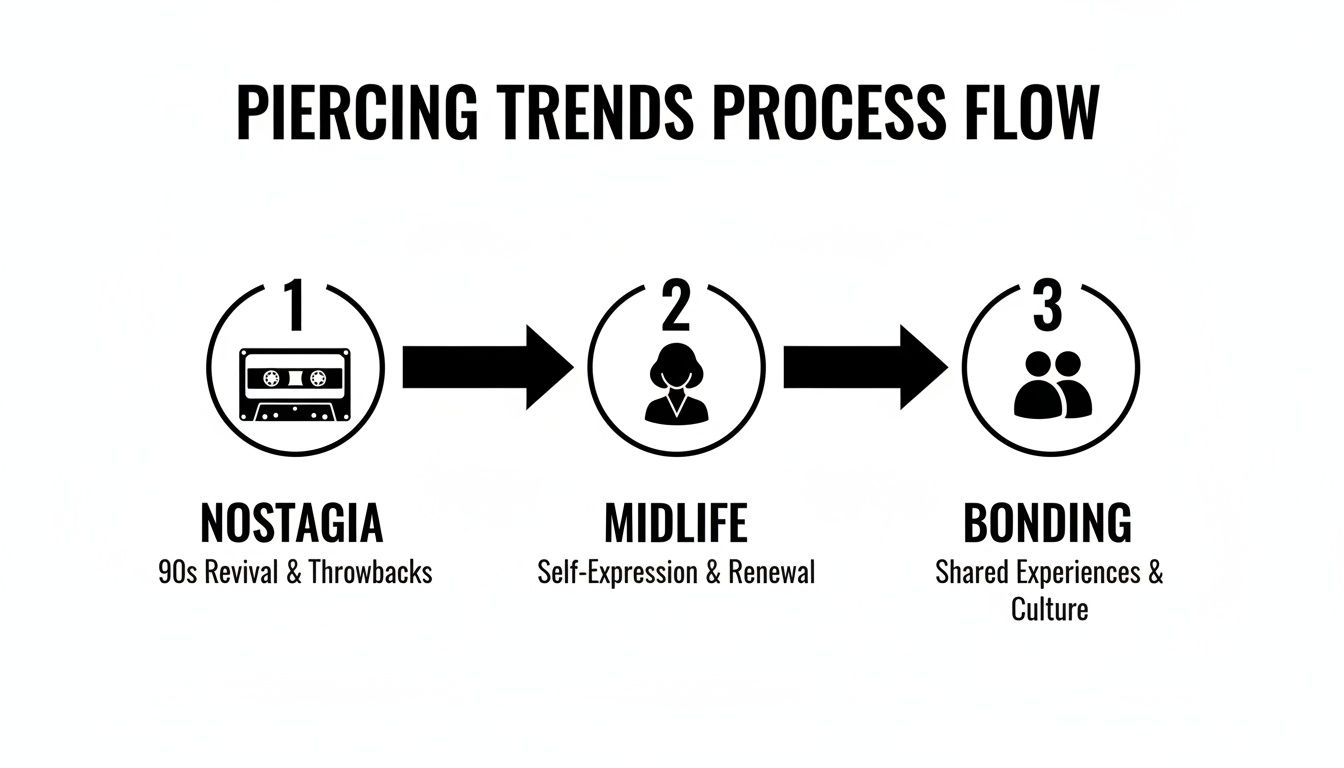
As this shows, the appeal of piercings has really broadened. We see it all – from people reliving their '90s nostalgia to others marking a new chapter in midlife or even getting piercings as a family.
The Piercing Procedure Demystified
We know the thought of the needle can be nerve-wracking, but the actual piercing is over in a flash. Our piercers at Timebomb Tattoo & Piercing are highly trained to make the whole thing as quick and comfortable as possible.
First, we'll have a chat about placement, then thoroughly clean your navel and mark the spot with a little dot for you to approve. Once you’re happy, we use a sterile, single-use needle to create the piercing swiftly. Your chosen piece of implant-grade jewellery is inserted straight away, and that’s it – you’re done!
We only ever use needles for piercings, never guns. A needle creates a clean, precise opening that heals much more easily. A piercing gun, on the other hand, uses blunt force, which causes unnecessary trauma to the tissue and can lead to a lot of problems down the line.
Your Most Important Job: Aftercare
Here’s where you take over. The success of your piercing is now in your hands, and your aftercare routine is the most critical part of the entire journey. A navel piercing is a real commitment, typically taking anywhere from 6 to 12 months to fully heal. Your dedication during this time will make all the difference.
Your job is simple: clean the piercing twice a day with a sterile saline solution. That's it. Always wash your hands thoroughly first, and resist the temptation to touch, twist, or fiddle with your jewellery. The less you mess with it, the better it will heal.
It’s just as important to know what not to do. For the first few months, you must avoid swimming pools, hot tubs, baths, and the sea, as these are breeding grounds for bacteria. Keep wearing loose, low-rise clothing to prevent snagging or pressure. If you need guidance, our team can help you find the best saline spray for your piercing to make sure you’re using a quality product.
It's also vital to learn the difference between what's normal and what's not. A bit of redness, swelling, and some clear or whitish fluid are all perfectly normal parts of the healing process. However, if you notice thick yellow or green pus, spreading redness, or increasing pain, it could signal an infection.
Our job doesn't end when you walk out the door. If you have any worries at all during your healing, we are here to support you. Just send a clear photo of the piercing to our WhatsApp at 07752 913846 (Bournemouth) / 07902 490584 (Croydon) for a quick bit of advice, or call the studio on 01202 900050 (Bournemouth) / 020 8686 7730 (Croydon) to book a free check-up. We're committed to helping you heal your piercing perfectly.
Your Navel Piercing Questions, Answered
Thinking about a navel piercing always brings up a few key questions. It's totally normal to want to know everything about the process—from how much it's going to hurt to how long you'll be nursing it back to health. At our studios in Croydon and Bournemouth, we've heard them all.
We've put together the most common queries we get day in, day out. These are the real, honest answers you need to feel confident and ready for your appointment.
How Much Does a Belly Button Piercing Hurt?
This is easily the question we get asked the most, and honestly, the answer usually comes as a relief. The piercing itself is just a quick, sharp pinch that’s over in a couple of seconds. On a pain scale, most of our clients put it at around a 4 out of 10.
The whole procedure is incredibly fast. We use a single-use, hollow needle to create a clean channel for the jewellery, which is much less traumatic than it sounds. Of course, everyone's pain threshold is different, but the brief sting is something nearly everyone finds manageable.
What Is the Total Cost for a Navel Piercing?
For a professional navel piercing in the UK, you should expect the price to be somewhere between £40 and £70. This typically covers the cost of the piercing service itself, plus a standard piece of implant-grade titanium jewellery to get you started.
The final price tag can shift a bit depending on the jewellery you choose. A simple titanium barbell will keep you at the lower end of that range. If you fall in love with something a bit fancier, like a piece with a gemstone or a unique design, the cost will naturally go up. Just remember, this isn't the place to cut corners—investing in high-quality, body-safe metal is non-negotiable for a happy, healthy piercing.
How Long Does a Belly Button Piercing Take to Heal?
When it comes to healing, a navel piercing is a marathon, not a sprint. This isn't like an earlobe that's happy in a few weeks. You're looking at a healing time of anywhere from 6 to 12 months for it to be fully healed on the inside.
Why so long? It's all about the location. Your stomach is constantly moving, bending, and twisting, and your clothes can rub against it. Your main job is to be patient. You need to stick with your aftercare routine for the entire healing period, even if it looks and feels fine on the surface after a few months.
Can I Go Swimming After Getting My Navel Pierced?
This is a firm no, at least for a while. You absolutely must keep your new piercing out of pools, hot tubs, lakes, and the sea for at least the first 2-3 months. These bodies of water are basically a soup of bacteria just waiting to cause a nasty infection.
Even after that initial period, it's best to be cautious until you're fully healed. If you do decide to take a dip later in the healing process, make sure you give the piercing a thorough clean with a sterile saline solution as soon as you get out.
Think of your new piercing as a small, open wound for the first few months. Keeping it clean and dry is your number one job, as this is what protects it from contamination and helps it heal beautifully.
What Should I Avoid During Healing?
Giving your new piercing the best possible chance to heal means avoiding a few common pitfalls. If you can steer clear of these, you'll dodge most of the common healing complications.
- High-Waisted Clothing: That favourite pair of high-rise jeans will have to take a break. Anything that sits on or rubs against your navel will cause friction and pressure. Stick to low-rise bottoms and looser tops for a while.
- Touching or Twisting the Jewellery: It's an old myth that you need to rotate your piercing. Don't do it! All this does is drag in bacteria and irritate the delicate healing tissue. The best thing you can do is leave it completely alone.
- Harsh Cleaning Products: Step away from the alcohol, hydrogen peroxide, and strong antibacterial soaps. They are far too aggressive for a healing piercing and will only dry out the skin, making healing take even longer. A simple sterile saline solution is all you need.
- Sleeping on Your Stomach: Putting pressure on the piercing all night can lead to irritation and may even cause it to heal at an angle. Try to get used to sleeping on your back or side.
What Are the Signs of an Infection?
It's crucial to know the difference between what's normal for a healing piercing and what might be a sign of trouble.
Normal Healing Symptoms:
- Some redness, swelling, and tenderness for the first week or so.
- A tiny bit of bleeding in the first few days is common.
- A clear or whitish fluid (this is lymph, not pus) that dries into 'crusties' around the jewellery.
Signs of a Possible Infection:
- Thick discharge that is yellow, green, or grey.
- Redness and heat that spreads out from the piercing site.
- Pain, throbbing, or swelling that gets worse days after being pierced.
- An unpleasant smell coming from the area.
If you suspect an infection, the most important thing is not to remove the jewellery. Get in touch with us right away. You can send a clear photo over to our WhatsApp at 07752 913846 (Bournemouth) / 07902 490584 (Croydon) or call 01202 900050 (Bournemouth) / 020 8686 7730 (Croydon) to book a check-up. We're here to help you figure out what's going on and what to do next.
Ready to take the next step on your piercing journey? At Piercing Near Me, we connect you with the trusted professionals at Timebomb Tattoo & Piercing in Croydon and Bournemouth. We're dedicated to ensuring your experience is safe, clean, and positive from start to finish. Book your consultation today and let our expert team bring your piercing vision to life.