
You've noticed redness, swelling, maybe some discharge, and now your mind has gone straight to worst-case scenario. That reaction is normal. Feeling calm isn't the typical response to an angry piercing.
The good news is that not every unhappy piercing is infected, and even when infection is involved, the safest next step is usually simple, gentle care rather than aggressive home remedies. Good infected piercing treatment starts with one question: is this infection, or is it irritation from pressure, touching, unsuitable jewellery, or over-cleaning?
If you're unsure and want a professional opinion, you can call 01202 9000 50 or message 07752913846 on WhatsApp for guidance.
Is Your New Piercing Infected or Just Irritated
The first distinction matters because people often treat irritation too harshly and make it worse. A healing piercing can be pink, slightly swollen, tender, and produce a little clear or pale fluid that dries into crust. That can look alarming if it's your first piercing, but it isn't automatically infection.
What worries me more is a piercing that feels increasingly hot, develops thick pus, becomes more painful rather than less, or shows redness that starts spreading out into the surrounding skin. If you also feel generally unwell, that moves it out of the “watch and clean it carefully” category.
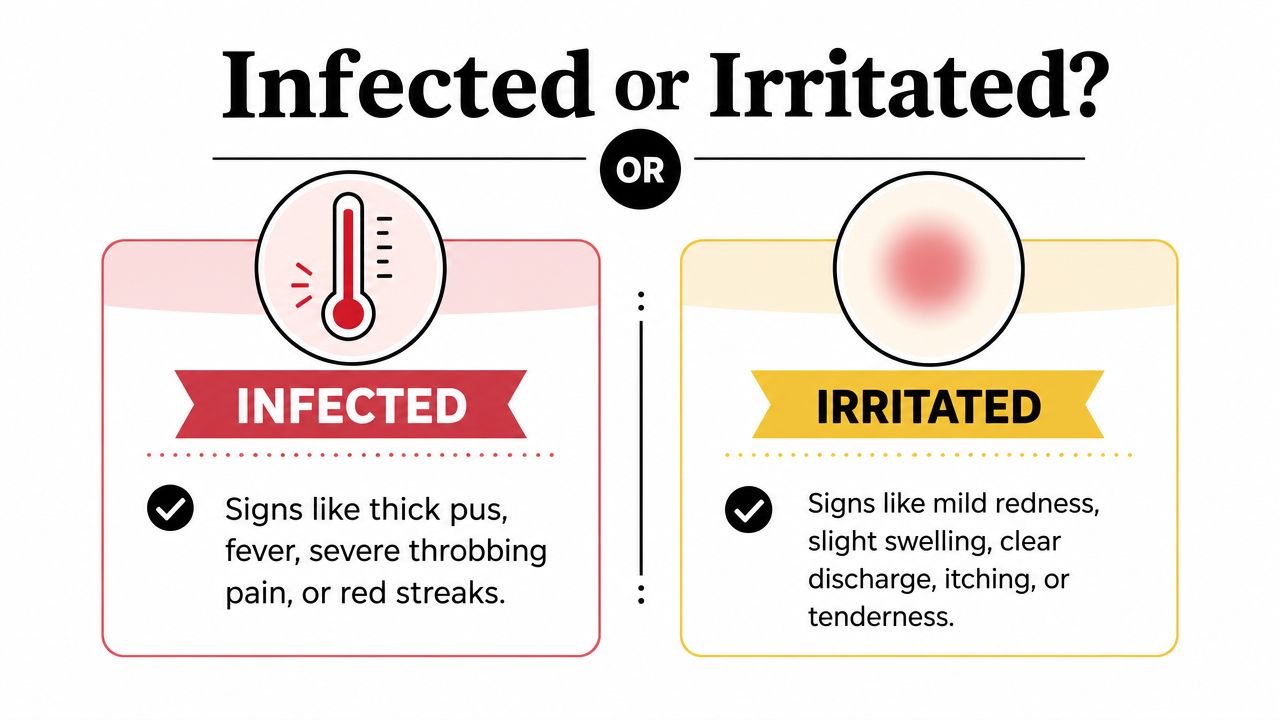
A quick comparison
| More likely irritation | More likely infection |
|---|---|
| Mild redness close to the piercing | Redness that spreads or deepens |
| Slight swelling | Increasing swelling with heat |
| Itching or general tenderness | Stronger pain, throbbing, worsening soreness |
| Clear or pale discharge that dries | Thick yellow or green pus |
| Flare-ups after sleeping on it, catching it, or touching it | Symptoms that worsen even when you leave it alone |
What usually causes irritation
Irritation is often mechanical. A bar might be too short for swelling. A ring might move too much. Hair, headphones, hats, phones, makeup, skincare, and sleeping on the piercing can all keep tissue inflamed.
Sometimes the problem isn't bacteria at all. It's pressure, friction, or metal sensitivity. That's why guessing can lead you in the wrong direction.
Practical rule: If the piercing is merely irritated, harsh “infection treatments” often add more trauma and slow healing.
What an actual infection tends to look like
For ear and cartilage piercings, evidence-based guidance points to a conservative first response for minor local infection: wash your hands, clean with sterile saline, use a warm compress, avoid hydrogen peroxide and alcohol, and keep the jewellery in place while it heals. Cleveland Clinic also notes that more severe infections may need oral antibiotics, while minor local infections are often treated conservatively first with topical or oral antibiotics when clinically appropriate, as outlined in Cleveland Clinic's guidance on infected ear piercings.
If you're hovering between “it's probably irritated” and “I think this is infected”, treat it gently, stop all the extras, and watch whether it settles or escalates.
Your Safe At-Home Infected Piercing Treatment Plan
If the piercing looks mildly infected, the aim is to support healing without trapping moisture, tearing tissue, or introducing new bacteria. Keep the routine boring. That's usually what works best.
The NHS says an infected piercing may need antibiotics and recommends cleaning the piercing twice a day with warm salty water, gently turning the jewellery while cleaning, and drying the area with a clean paper towel. The same guidance also says to avoid swimming for the first 24 hours after piercing, as outlined by the NHS advice on infected piercings.
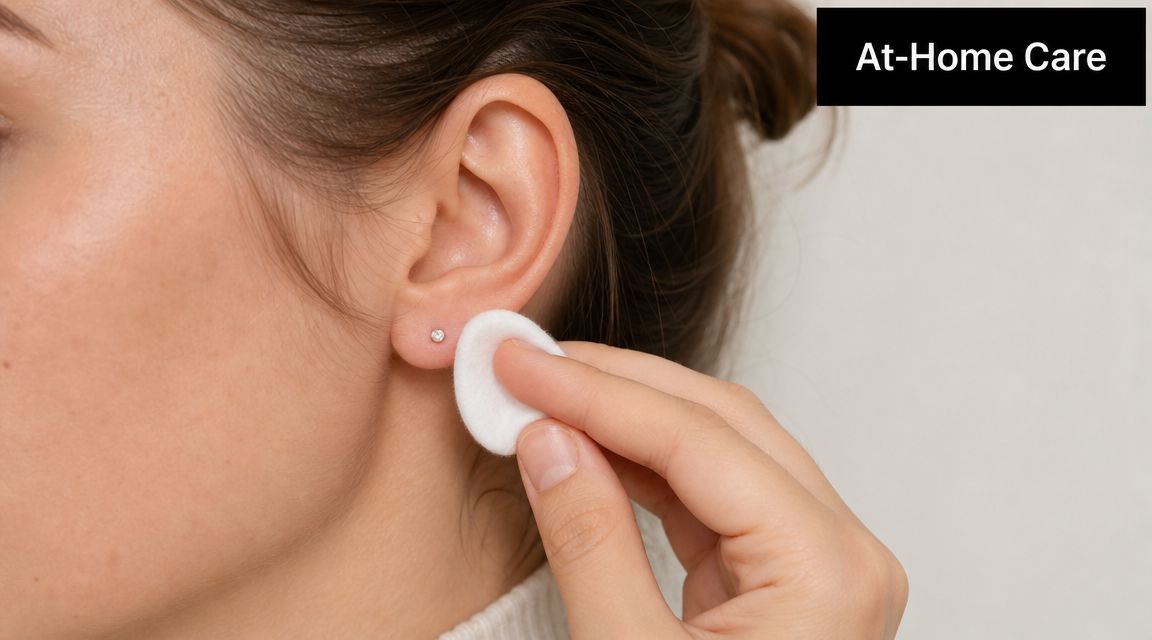
The safest home routine
Wash your hands first
Don't touch the piercing before you've washed your hands properly. Most setbacks start with avoidable contamination.Use sterile saline or warm salty water
Sterile saline wound wash is the cleanest option. If you're following NHS-style home care, keep it simple and gentle.Soften and lift away discharge gently
Let the saline sit on the area. Don't scrub. If crust softens, wipe it away carefully rather than picking at dry build-up.Apply a warm compress
A warm compress can help calm the area and encourage drainage without squeezing or forcing anything.Dry it properly
Pat dry with clean disposable paper towel. Cloth towels can hold moisture and bacteria, and they often snag jewellery.
What consistency looks like
You don't need a complicated routine. You need a repeatable one.
- Clean twice daily: More than that often becomes over-cleaning.
- Keep it dry between cleans: Piercings hate being constantly damp.
- Leave it alone the rest of the time: No fiddling, checking, twisting, or “just having a look”.
- Reduce pressure: Don't sleep on it, and keep hair, headphones, and phones away from the site where possible.
Gentle care is active treatment. A piercing doesn't heal faster because you keep interfering with it.
When home care is enough, and when it isn't
If symptoms are mild and localised, this approach is a sensible start. If symptoms are getting worse, if swelling is becoming significant, or if you're seeing obvious pus and spreading redness, home care may not be enough on its own.
For a broader aftercare routine for new piercings, see this guide on how to clean a new piercing properly.
What to Avoid When Treating an Infected Piercing
Bad infected piercing treatment usually comes from panic. People throw everything at it. Tea tree oil, alcohol, hydrogen peroxide, ointments, constant cleaning, rotating the jewellery, changing the jewellery themselves. That combination is often worse than doing very little.
The hard truth is that a piercing isn't a cut on normal skin. It's a healing channel lined with fragile tissue. If you keep irritating that channel, it stays inflamed.
The products that commonly make things worse
Evidence-based protocols warn against hydrogen peroxide and alcohol because they irritate healing tissue. Mayo Clinic also advises that twisting or excessively touching jewellery can mechanically irritate tissue and delay healing. That's one reason so many stubborn “infections” are prolonged by the aftercare itself.
Here's what I'd keep away from:
- Hydrogen peroxide and alcohol: They're too harsh for healing tissue.
- Random antiseptics: Strong products can dry and inflame the channel.
- Thick creams used without proper advice: They can sit around the piercing and make cleaning harder.
- Homemade mixtures of uncertain strength: If it isn't clean and consistent, it's not helping.
Mechanical mistakes matter too
A lot of people focus only on bacteria and miss the physical irritation they're causing every day.
- Twisting the jewellery: This reopens delicate tissue.
- Touching it to check it: Even clean hands can still irritate.
- Sleeping on it: Pressure can create swelling that looks far worse the next morning.
- Using fibrous pads or towels: Stray fibres catch on jewellery and keep the site inflamed.
If your routine feels forceful, stinging, or abrasive, it's probably not a good routine.
The trade-off most people miss
There's a difference between cleaning and disturbing. Good aftercare removes debris and reduces bacterial load. Bad aftercare keeps the wound in a constant state of micro-trauma.
That's why “more treatment” isn't always better treatment. With infected piercing treatment, the safest routine is usually the one that does the least damage while still keeping the site clean.
Should You Remove or Change Your Piercing Jewellery
It's common to want to remove the jewellery the second a piercing looks infected. That instinct makes sense, but it can create a bigger problem.
Both Cleveland Clinic and Mayo Clinic state that jewellery should usually be left in place during treatment because the piercing tract needs to stay open so infection can drain rather than becoming trapped and forming an abscess, as noted in Mayo Clinic's piercing aftercare guidance.
Why removal can backfire
If you take jewellery out too soon, the outer openings can start closing while irritation or infection remains inside the channel. That can trap discharge and swelling under the surface. Once that happens, the situation often becomes more painful and harder to manage.
That's why self-removal isn't usually the safe move.
When a jewellery change can help
There are times when jewellery itself is part of the problem, but those are professional decisions, not panic decisions.
A piercer may decide that:
- The bar is too short: swelling needs extra room.
- The shape is wrong for the placement: movement is causing repeated irritation.
- The metal may be contributing to the reaction: implant-grade titanium is often the safer option for sensitive clients.
If jewellery quality is the issue, this overview of implant-grade titanium piercing jewellery options explains why material choice matters.
Leave the jewellery in unless a qualified clinician or experienced piercer tells you otherwise.
Red Flags That Require Professional Help
Mild problems can often settle with careful home care. Some signs mean you shouldn't wait and see.
If the piercing is getting more painful, more swollen, or more obviously unwell rather than calmer, you need an assessment. Piercing issues can turn from local irritation into something medical surprisingly quickly, especially in cartilage.
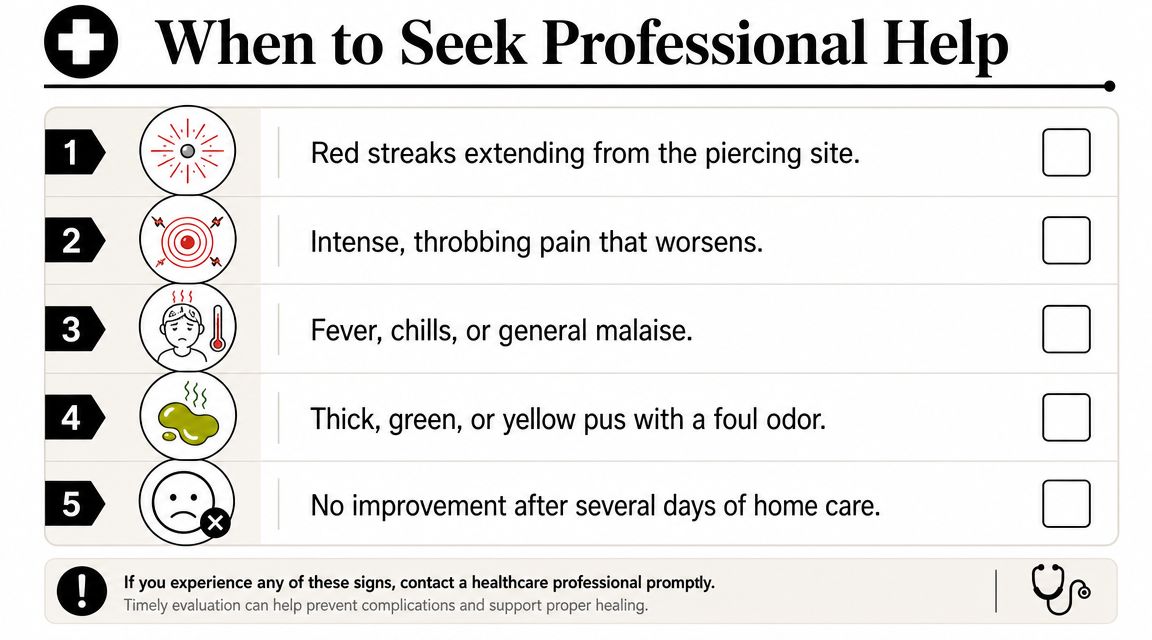
Get medical help if you notice these signs
- Spreading redness: The problem is moving beyond the immediate piercing site.
- Worsening pain or throbbing: Healing discomfort should not keep ramping up.
- Fever, chills, or feeling unwell: That suggests more than a local flare-up.
- Thick, foul-smelling pus: This needs proper assessment.
- Rapid swelling or embedded jewellery: The jewellery may no longer be safe in that position.
When to see a GP and when to see a piercer
A GP or urgent medical service is the right choice if you have signs of spreading infection, fever, marked swelling, or symptoms that suggest antibiotics may be needed.
A professional piercer is the right first stop if the issue seems driven by pressure, jewellery fit, angle, or metal sensitivity. A good piercer can often spot whether the problem is mechanical before you make it worse at home.
Don't wait for it to become obvious
The NHS approach to infected wounds is practical: clean with sterile saline, keep the area dry, and seek review if signs of infection spread or don't improve. In piercing terms, that means redness, swelling, pus, worsening pain, or fever are your cue to escalate rather than repeatedly manipulating the jewellery.
If you're asking yourself whether it's bad enough to get checked, that's often your sign to get it checked.
Get Expert Piercing Help in Croydon and Bournemouth
When a piercing isn't settling, an in-person assessment is often the fastest way to stop the spiral of guessing, Googling, and trying random fixes. A skilled piercer can look at the placement, jewellery length, swelling pattern, pressure points, and signs of irritation in a way that's difficult to judge on your own.
That's especially useful when the piercing may not be infected at all. A lot of troubled piercings are reacting to angle, jewellery material, sleeping pressure, or accidental trauma. The treatment path is different in each case, and the safest answer depends on what's going on.
What a proper piercing check should cover
A good appointment should focus on the underlying cause, not just the symptom. That usually includes:
- Jewellery assessment: Is the bar too short, too tight, too heavy, or unsuitable for the placement?
- Material review: Is the metal likely to be contributing to irritation?
- Healing behaviour: Does the swelling pattern look mechanical or infectious?
- Aftercare audit: Are you cleaning well, or over-cleaning and delaying healing?
How to get help
If you're near Croydon or Bournemouth and want experienced support, you can explore professional piercers near you and arrange a proper assessment.
If you'd rather speak to someone first, call 01202 9000 50 or send a WhatsApp message to 07752913846. If you're panicking, that first conversation alone can help you decide whether you need a piercer, a GP, or both.
The main thing is this: don't try to “fix” a struggling piercing by force. The safest infected piercing treatment is calm, gentle, and based on what the piercing is doing.
If you need a trusted next step, Piercing Near Me helps you find experienced professional support for assessments, aftercare advice, and safer jewellery choices in Croydon and Bournemouth. If your piercing looks angry, painful, or isn't healing as expected, get proper guidance before it turns into a bigger problem.