
Typing “professional piercers near me” usually means you’re already halfway committed. You’ve picked the placement, saved a few photos, and now the nerves kick in. The problem isn’t finding a studio. It’s figuring out which one is safe, skilled, and worth trusting with your body.
That uncertainty is normal. A polished Instagram feed can hide weak technique, poor jewellery choices, or rushed consultations. A proper studio feels different. You get clear answers, sensible advice, and a process that’s organised from the first message to the final aftercare check-in.
Starting Your Search for a Professional Piercer
A good search starts before you look at a single photo. First decide what you want pierced, what style of jewellery you prefer, and whether you need a studio that handles simple ear piercings, advanced cartilage work, or body placements. A studio that does excellent lobes may not be the one you want for a rook, conch, septum, or dermal.
Start with the practical details
Check these first:
- Location and access: Pick somewhere you can return to easily if you need a downsize, jewellery change, or healing check.
- Booking style: Some people prefer appointments. Others need walk-ins.
- Studio communication: If a studio is vague before you book, it usually won’t become more organised later.
- Pricing clarity: A trustworthy studio should explain what the fee covers and what jewellery options affect the final cost. If you want a rough idea of common charges, this piercing price guide helps you understand the usual structure.
Search for fit, not just convenience
The best result on the map isn’t automatically the best piercer for you. A first-timer often needs patient consultation, realistic anatomy advice, and aftercare support that doesn’t feel rushed. A more experienced client may care most about advanced placement, jewellery sizing, or matching an existing ear project.
Professional piercing should feel calm and methodical. If the studio makes you feel hurried before you’ve even booked, pay attention to that.
What works is a short list. Pick two or three studios, then compare them properly. Don’t rely on one nice photo or one glowing review. The right choice usually becomes obvious once you look at hygiene, jewellery standards, communication, and whether the piercer explains their decisions clearly.
Your Vetting Checklist for Finding a Great Piercer
A strong vetting process saves a lot of trouble later. You’re not just looking for someone who can make a hole in the right place. You’re looking for someone who can assess anatomy, choose suitable jewellery, minimise trauma, and give aftercare advice that matches the piercing.
What matters
Experience claims are easy to write on a website. Evidence is harder to fake. For advanced placements in Bournemouth and Croydon, a common issue is that clients can’t easily verify APP-style standards from a simple listing. Cheap, non-implant jewellery and poor technique cause many avoidable infections, which is why needle-only studios using compliant jewellery are the safer choice.%. The same source notes that locator tools can return zero Bournemouth or Croydon hits, which leaves clients relying on studio claims alone. See the details on Bournemouth Piercing’s discussion of experience and APP adherence.
That matters because “20+ years of experience” only means something if the work supports it.
Studio Vetting Checklist
| Check | What to Look For |
|---|---|
| Portfolio quality | Healed results, clean angles, balanced placement, jewellery that suits the anatomy |
| Jewellery material | Implant-grade titanium, not mystery metal or cheap alloy |
| Technique | Needle-only work, especially for cartilage and body piercings |
| Consultation style | Anatomy assessment, health questions, and clear explanation of what will or won’t work |
| Reviews | Clients mentioning cleanliness, patience, professionalism, and aftercare support |
| Policies | Clear ID, consent, booking, and age restriction information |
| Follow-up | Availability for healing checks, downsizing, or troubleshooting |
How to read a portfolio properly
Fresh piercings can look impressive even when they’re poorly planned. Look for:
- Balanced placement: The jewellery should sit naturally with the client’s anatomy.
- Appropriate jewellery: A good piercer won’t force a style that looks nice in photos but heals badly.
- Variety: Lobes, cartilage, nostril, septum, navel, and more. Breadth suggests real day-to-day experience.
- Consistency: One excellent image means very little. Repeatedly neat work matters more.
Reviews tell you more than star ratings
Read the written comments. Skip straight to the details clients mention without prompting.
Useful signs include:
- Clean process: Clients describe the room, setup, and hygiene.
- Good bedside manner: Especially important for first-timers and nervous clients.
- Honest refusal: A strong piercer sometimes says no if anatomy or timing isn’t right.
- Aftercare support: Good studios don’t disappear once the piercing is done.
Practical rule: Choose the piercer who explains the “why”, not the one who just says “yeah, we can do that.”
The best vetting question is simple. Would you still trust this studio if the social media feed disappeared tomorrow? If the answer is yes, you’re probably looking at the right shortlist.
Hygiene Standards and Critical Safety Red Flags
Clean branding isn’t the same as clean practice. A professional studio should be able to show you exactly how it keeps procedures sterile, how jewellery is handled, and how cross-contamination is avoided.
Essential Standards
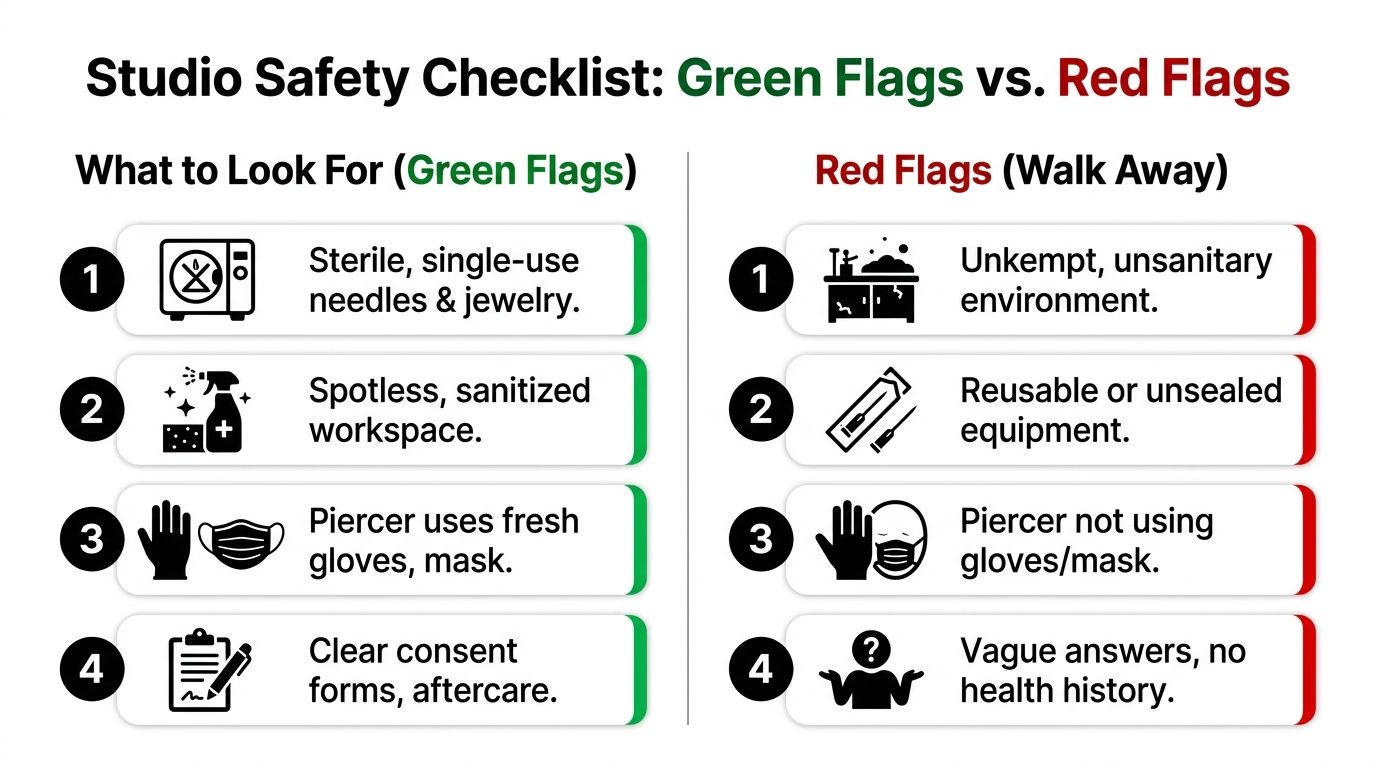
Studios following UKAPP-style standards prioritise single-use needles, implant-grade titanium (ASTM F-136), and proper sterilisation, with equipment processed in an autoclave. Most problems with new piercings come down to poor aftercare, low-quality jewellery or poor initial technique, which is why those three things matter more than price.
In practical terms, you should see a piercer who opens sterile items fresh, sets up deliberately, and keeps the procedure area controlled.
Green flags and walk-away signs
Good signs:
- Single-use sterile equipment: Needles opened in front of you.
- A proper sterile field: The setup looks intentional, not improvised.
- Fresh gloves: Changed whenever needed during the process.
- Implant-grade jewellery: Titanium should be standard, not an upgrade they struggle to explain.
- A real consultation: Health history, placement discussion, and aftercare instructions.
Walk away if you see:
- Piercing guns for cartilage or body work: If you want the difference explained clearly, this guide on piercing gun vs needle is worth reading.
- Loose or unsealed tools: Sterile items should not be sitting around.
- Externally threaded or low-quality jewellery: It’s a common shortcut.
- Messy stations: Tidy decor means nothing if the working area is poorly managed.
- Vague answers: A professional should explain what they use and why they use it.
The studio should make safety visible
You shouldn’t have to drag basic information out of the piercer. Safe practice usually looks calm and obvious. Consent forms are organised. The piercer asks relevant health questions. Jewellery options are explained in plain English.
If a studio acts irritated when you ask about needles, sterilisation, or jewellery material, leave. A good piercer won’t treat safety questions as an inconvenience.
Preparing for Your Consultation and Piercing Day
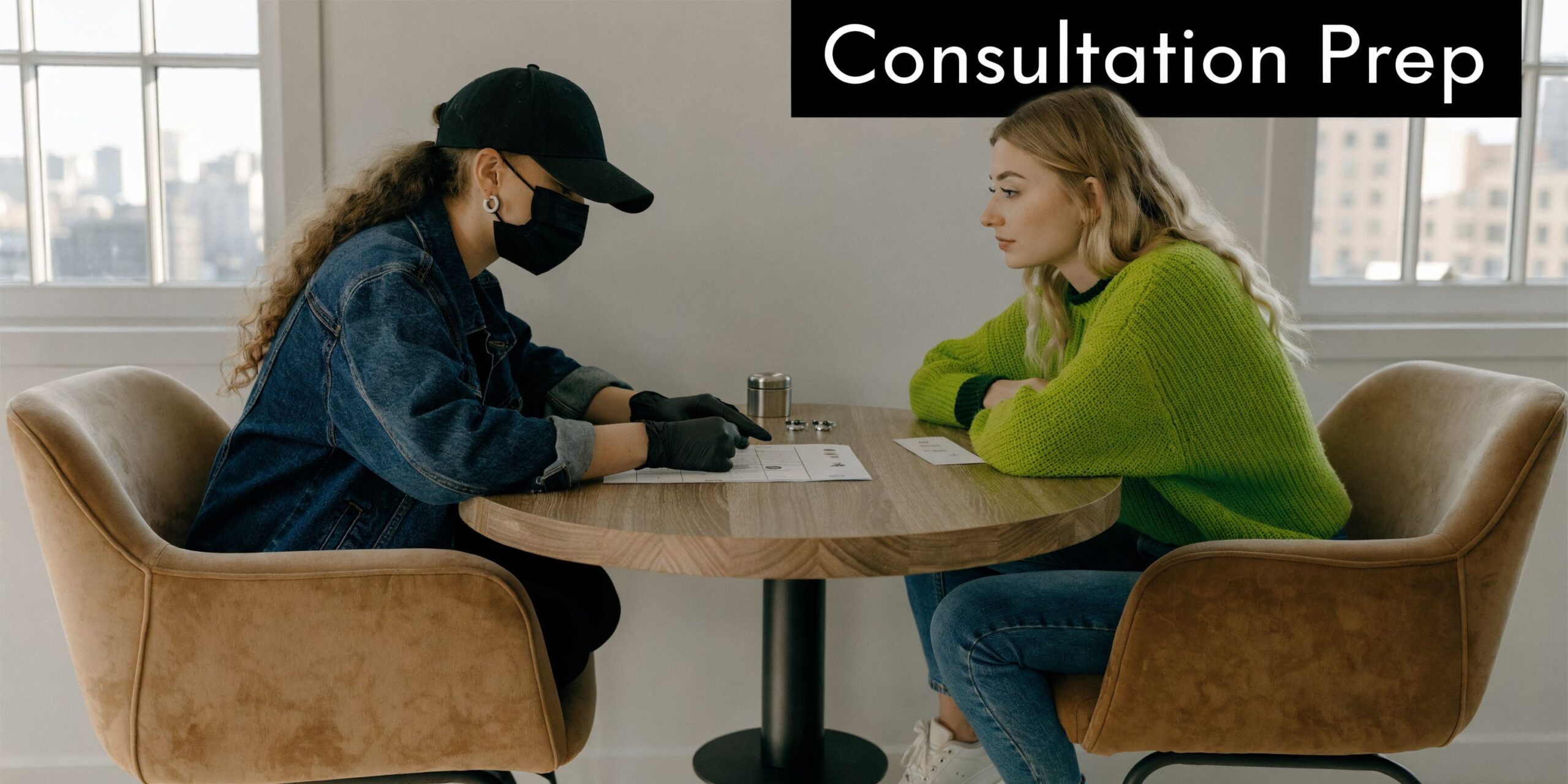
The consultation tells you almost everything. It shows how the piercer thinks, how they communicate, and whether they’ll tailor the piercing to you instead of copying a photo blindly.
Questions worth asking
Bring reference photos if you like, but expect a good piercer to adjust the plan. Ask things such as:
- Does my anatomy suit this piercing?
- What jewellery shape and size would you start with?
- What should I expect during healing?
- When will I need a check-up or downsize?
- What would make you refuse this piercing today?
That last question is useful. Skilled piercers have limits, and they should be comfortable saying no.
The best consultation isn’t the one where you hear “yes” fastest. It’s the one where you get the safest answer.
How to prepare on the day
Your body handles stress better when the basics are covered. Keep it simple.
- Eat beforehand. Don’t arrive on an empty stomach.
- Drink water. Being dehydrated makes everything feel worse.
- Avoid alcohol. It’s not sensible before a piercing.
- Wear practical clothing. If you’re getting a navel or body piercing, don’t turn up in something tight or awkward.
- Bring your ID. This matters even more if a parent or guardian needs to attend.
What the appointment should feel like
You should never feel rushed into the chair. A proper appointment usually includes paperwork, anatomy assessment, jewellery selection, marking, confirmation, the piercing itself, and aftercare instructions you can follow.
Pay attention to how the piercer reacts if you need a minute. Good professionals are used to nervous clients. They’ll slow down, explain what’s happening, and keep the process steady.
If your plan changes during the consultation, that’s not a bad sign. It often means the piercer is prioritising your anatomy over the idea in your head. That’s exactly what you want.
Meet Our Trusted Piercers Timebomb Tattoo & Piercing
When people ask what a properly run studio looks like in practice, Timebomb Tattoo & Piercing is a strong example. The Croydon and Bournemouth studios match the standards clients should be looking for, especially if they want a supportive experience rather than a rushed transaction.
Why they stand out
Timebomb works with the fundamentals that matter most. Single-use needles. Implant-grade titanium jewellery. Clear consultations. Clean, organised rooms. Calm staff who don’t make first-timers feel silly for asking basic questions.
Timebomb has been piercing since 2003. That kind of longevity matters when it’s backed by day-to-day studio practice, not just a line on a website.
What clients usually need most
First-timers often need reassurance that the process will be explained properly. Parents arranging ear piercings for teens need clear policy information before they travel. More experienced clients want confidence that cartilage, septum, navel, or dermal work will be assessed carefully rather than pushed through for the sake of a booking.
That’s where a solid studio earns trust. It doesn’t just perform the piercing. It guides the decision.
A good appointment at Timebomb typically means you can ask about placement, healing, jewellery sizing, and whether your anatomy is suitable before anything starts. That makes a real difference, especially for piercings that look simple online but heal poorly when they’re badly placed.
Booking and contact details
If you want to contact Timebomb Tattoo & Piercing directly, use:
- Phone: 01202 900050 (Bournemouth) / 020 8686 7730 (Croydon)
- WhatsApp: 07752 913846 (Bournemouth) / 07902 490584 (Croydon)
That direct line matters. A proper studio should be reachable for pre-booking questions, policy checks, and post-piercing support.
Your Guide to Effective Aftercare and Healing
A piercing appointment is brief. Healing isn’t. Most preventable problems happen later, when people clean too aggressively, sleep on the area, wear irritating clothing, or treat normal healing as if something has gone wrong.
The routine that works
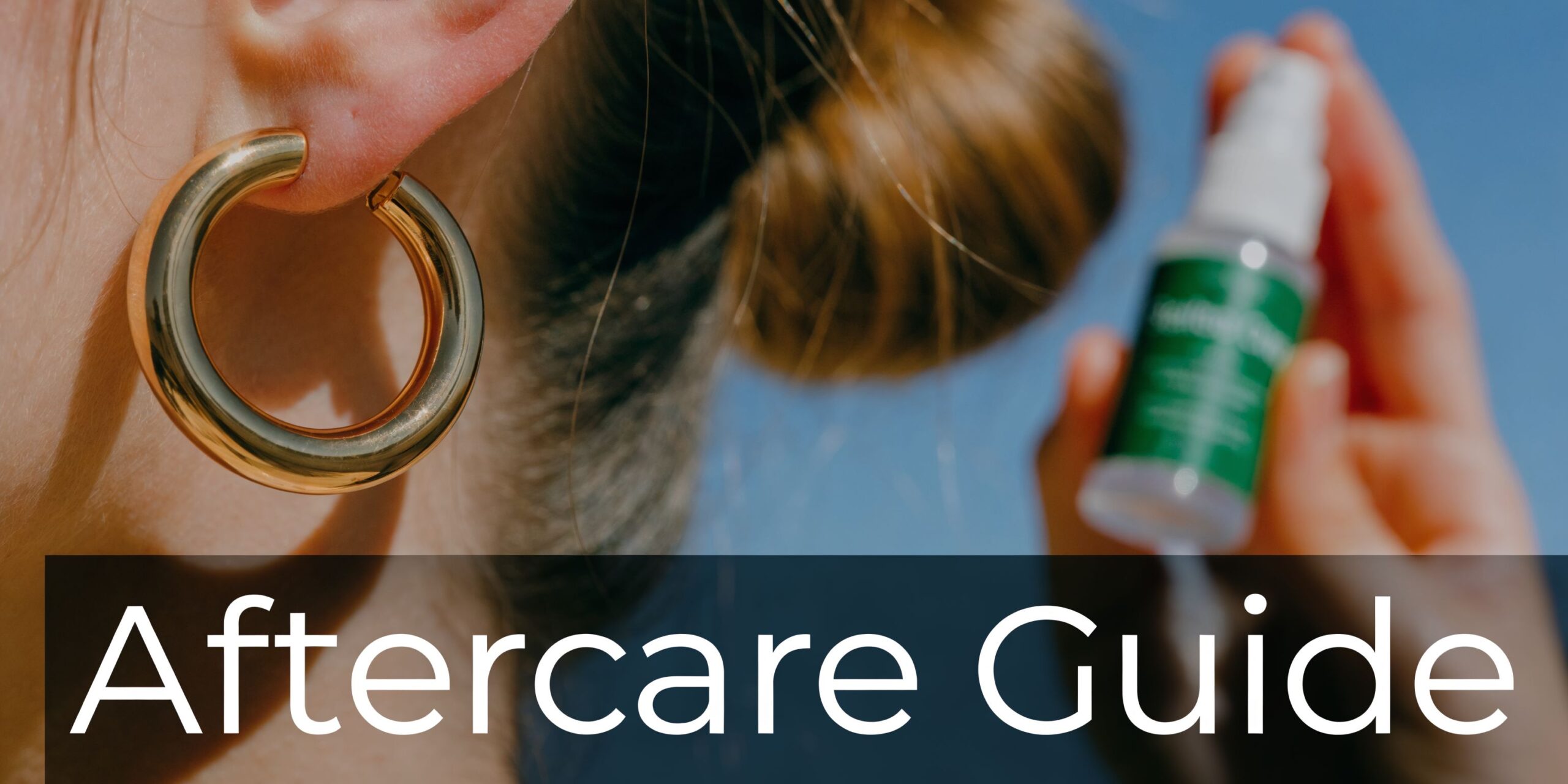
For navel or dermal piercings, good aftercare makes the biggest difference, and most studios send you home with saline aftercare. Pressure and knocks, such as sleeping on the piercing or tight waistbands, cause a lot of problems, and so does over-cleaning. A navel piercing usually settles in the first couple of months but can take 6 to 9 months or longer to heal fully.
That lines up with what experienced piercers see every day. Gentle, consistent care beats over-handling every time.
A simple routine usually means:
- Use sterile saline: Apply it as directed.
- Leave the jewellery alone: Don’t twist it.
- Keep pressure off the area: This is a big one for ears, navels, and surface work.
- Avoid unnecessary products: If it isn’t part of your piercer’s aftercare advice, don’t improvise.
For a straightforward cleaning routine, this aftercare guide for cleaning a new piercing is a useful reference.
What normal healing looks like
Normal healing can include tenderness, mild swelling, light crusting, and occasional flare-ups if the area gets bumped. That doesn’t automatically mean infection.
Common mistakes include:
- Sleeping on fresh cartilage
- Touching the piercing during the day
- Changing jewellery too early
- Using harsh cleaners
- Wearing clothing that rubs against body piercings
Healing gets delayed by friction more often than people realise.
When to contact your piercer
Get in touch if the jewellery feels too tight, the angle seems to be changing, the area keeps getting knocked, or you’re unsure whether what you’re seeing is irritation or something more serious. Don’t self-diagnose from random social posts.
Good healing is rarely dramatic. It’s usually boring, gradual, and much easier when you stop interfering with it.
Frequently Asked Questions About Professional Piercing
How old do you need to be for a piercing in the UK
Policies vary between studios, and that’s one reason clients get caught out. Many studios require parental presence and consent for anyone under 16, plus photo ID for both the parent and teen, as discussed in Metal Fatigue’s age restriction guidance.
Check before booking. Don’t assume one studio’s rule matches another’s.
Does a professional piercing hurt less
A needle piercing done by a skilled professional usually feels quicker, cleaner, and more controlled than people expect. Pain depends on placement, anatomy, stress levels, and how well you’ve prepared that day.
When can you change the jewellery
Only once the piercing is ready, and the timeline depends on placement and healing progress. Cartilage and body piercings often take longer than clients hope. If you’re unsure, let your piercer assess it in person.
Why does jewellery quality matter so much
Because poor material creates avoidable problems. Cheap jewellery can irritate tissue, complicate healing, and make a good piercing behave like a bad one.
What if the piercer says no
That’s often a good sign. A piercer who refuses unsuitable anatomy, the wrong jewellery choice, or bad timing is protecting your result, not losing interest in your booking.
If you’re ready to move from searching to booking, Piercing Near Me helps you find safe, professional piercing services with trusted studios in Bournemouth and Croydon. You can explore placements, compare options, and contact the team directly on 01202 900050 (Bournemouth) / 020 8686 7730 (Croydon) or WhatsApp 07752 913846 (Bournemouth) / 07902 490584 (Croydon) for clear advice before you book.
Trackbacks/Pingbacks