
A lot of advice about silver piercing jewelry skips the most important question. Not whether it looks good, but whether it belongs in your piercing right now.
That matters because “silver” often gets treated as if it's automatically safe for any ear, nose, or body piercing. In practice, the safer answer depends on one thing first: is the piercing fresh, or is it fully healed? UK-safe-piercing guidance puts far more emphasis on implant-grade materials for initial wear, which is exactly where many clients get confused when they see silver sold across multiple piercing styles in retail collections.
If you were sitting in my chair asking whether a silver hoop or stud is okay, I wouldn't start with aesthetics. I'd start with healing stage, placement, sensitivity, and how your body usually reacts to jewellery. That's the difference between fashion advice and piercing advice.
Your Guide to Silver Piercing Jewelry
Silver has a clean, classic look. That's why so many people are drawn to it for lobes, helix, nostril, navel, and more. The problem is that jewellery shops often present silver as a simple style choice, when for piercings it's also a material safety question.
Fresh piercings need a very different standard from healed ones. A new piercing isn't just a hole. It's healing tissue. That's why professional piercers tend to prioritise implant-grade options for initial wear rather than silver, especially when clients ask about new cartilage, nostril, or navel piercings, a gap highlighted by this discussion of silver jewellery merchandising and piercing suitability.
Practical rule: If jewellery is marketed for a piercing, that doesn't automatically mean it's ideal for healing one.
Clients usually get mixed up in three places:
- “Silver” vs sterling silver. Those aren't the same thing in everyday use.
- Fresh vs healed. A material that's tolerated later may still be a poor choice at the start.
- Looks vs wearability. A shiny finish doesn't tell you how the metal behaves against skin and body fluids.
If you want the short version, here it is. Silver piercing jewelry can be a style option for some well-healed piercings, but it isn't my first choice for fresh ones. The rest comes down to understanding why.
What Silver in Piercing Jewelry Actually Means
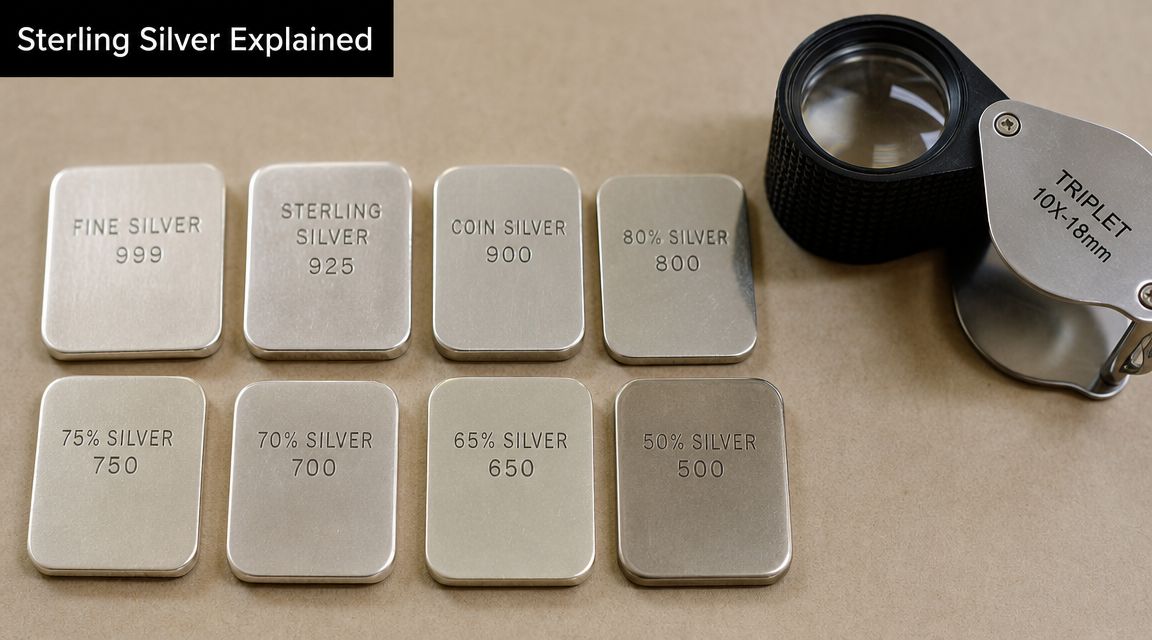
When people say “silver”, they usually mean sterling silver, not pure silver. In Britain, sterling silver is defined as 92.5% silver and 7.5% other metals, which is why 925 is the standard mark seen on many pieces, as explained in this overview of British sterling silver standards and silver history.
Why 925 matters
Think of sterling silver like a recipe. Pure silver on its own is soft, so jewellers mix it with other metals to make it more practical for everyday wear. That's what an alloy is.
The 925 stamp tells you the balance of that recipe. It doesn't tell you that the piece is ideal for a healing piercing. It only tells you the silver content.
That's where many clients get misled. They see a hallmark and assume it means body-safe in all situations. It doesn't.
What the added metals mean in real life
For piercings, the key issue isn't only the silver. It's the fact that sterling silver includes other metals. Those added metals help with strength, but they also affect how the jewellery behaves on the body.
Here's the simple takeaway:
- Pure appearance doesn't mean pure metal
- A recognised hallmark doesn't equal implant-grade
- Body jewellery standards are stricter than fashion jewellery standards
If you like the look of close-fitting silver styles, pieces such as sterling silver huggie earrings make the aesthetic appeal easy to understand. The important distinction is that wearability in a healed lobe is a different question from suitability in a healing cartilage or nostril piercing.
Sterling silver can be high quality jewellery and still be the wrong material for an initial piercing.
The Critical Difference for Fresh vs Healed Piercings
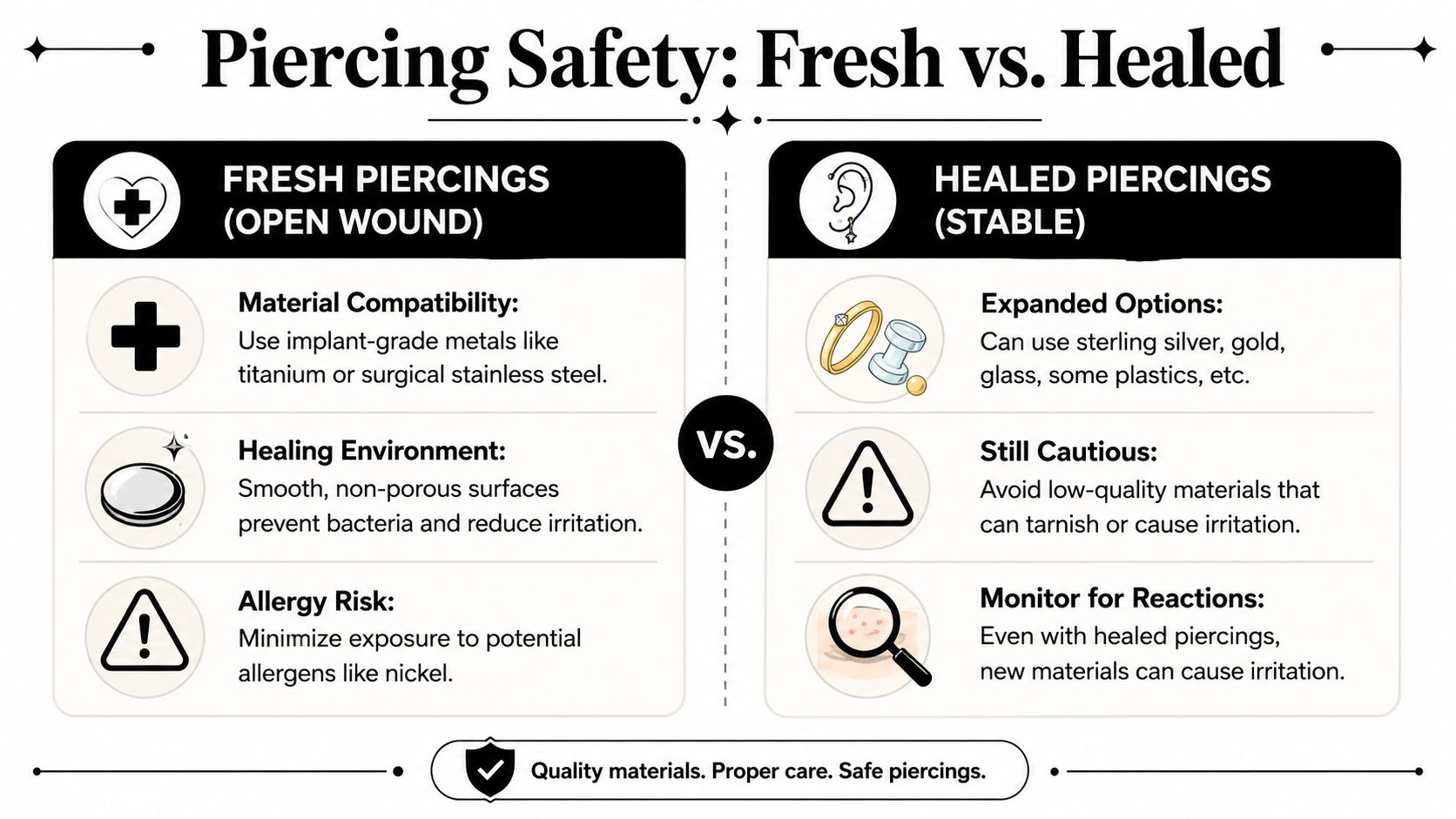
This is the part I want every first-time client to understand. A fresh piercing and a healed piercing are not the same environment.
A fresh piercing is healing tissue. It needs stability, a smooth surface, and a material that won't react easily while your body is trying to repair itself. A healed piercing has already formed a stable channel of skin, so it usually tolerates more materials.
Why silver is a poor choice for fresh piercings
For UK piercers, the practical takeaway is clear. Sterling silver (925) is generally not recommended for initial or fresh piercings because silver oxidizes in contact with body fluids, can tarnish quickly, and may darken skin, as set out in this professional materials guide for body piercing.
In plain English, that means a fresh piercing can react badly to what silver does during wear. Tarnish isn't just a cosmetic issue when tissue is still healing. If the area is already tender, swollen, or producing normal healing fluid, a reactive material adds one more thing your body has to deal with.
That's why I wouldn't use sterling silver for a new:
- Helix piercing
- Nostril piercing
- Tragus piercing
- Navel piercing
- Any other piercing still in the healing phase
When healed piercings are different
A healed piercing is more resilient because the channel has settled. That doesn't make silver risk-free, but it does change the conversation.
In a well-healed placement, silver may be worn more like a fashion material. That works better in lower-risk piercings where the jewellery isn't constantly bumped, twisted, or exposed to ongoing irritation. Earlobes are usually the easiest example. A settled navel can also be less troublesome than a fresh one, provided the wearer keeps an eye on skin response.
If you need jewellery to help a piercing heal, choose implant-grade. If you want jewellery for occasional style in a settled piercing, silver may be reasonable.
The question I ask in the studio
I don't ask, “Do you like silver?” first.
I ask:
- How old is the piercing?
- Has it been calm and settled for a while?
- Is it in a high-movement spot like cartilage?
- Do you have a history of irritation with jewellery?
Those answers decide far more than the colour of the metal.
Safer Implant-Grade Alternatives for Initial Piercings
If you love the silver look, the good news is you don't need to gamble on sterling silver in a fresh piercing. Safer materials exist, and many of them give a similar clean, bright finish.
The main reason piercers steer clients toward implant-grade jewellery is simple. 925 sterling silver is an alloy, and the added base metals make it less suitable in the body than inert options. Guidance also notes that even in healed piercings, silver is better reserved for low-risk, well-healed placements rather than high-movement cartilage or fresh channels, as explained in this jewellery materials guide.
What to ask for instead
The three options I discuss most often are titanium, nickel-free solid gold, and niobium.
Implant-grade titanium
This is usually my first recommendation for initial piercings. It's widely chosen because it's stable, light, and suited to healing-focused wear. If you want bright metal without the risks that come with sterling silver, titanium is often the straightforward answer.Solid 14k or 18k nickel-free gold
Gold can work well for initial piercing jewellery when it's properly specified for body wear. The key is the alloy quality. “Gold” on a product label isn't enough on its own.Niobium
Niobium is another option piercers use for clients who want a body-friendly metal with a different look. It's less commonly discussed by first-time clients, but it has a solid place in professional jewellery conversations.
For a broader look at healing-focused options, titanium piercing jewellery is a useful starting point because it reflects the kind of material choice many studios prioritise for initial wear.
Comparing initial piercing jewellery materials
| Material | Biocompatibility | Best for Fresh Piercings? | Cost |
|---|---|---|---|
| Implant-grade titanium | High | Yes | Usually moderate |
| Solid 14k or 18k nickel-free gold | High when correctly specified | Yes | Usually higher |
| Niobium | High | Yes | Varies |
| Sterling silver (925) | Lower than inert implant-grade options | No, not my choice for fresh piercings | Varies |
How I explain this chair-side
Clients sometimes think choosing titanium means giving up style. It doesn't. Good body jewellery comes in polished finishes, bead ends, claw-set stones, cabochons, threadless tops, and simple minimalist designs.
What changes is the priority. In a fresh piercing, the jewellery's first job isn't to match your outfit. Its first job is to sit undisturbed and let your body heal.
How to Safely Wear and Care for Silver Jewellery
If your piercing is fully healed and settled, silver can be worn more safely with good habits. The main mistake people make is treating silver as a leave-in, low-maintenance material for every piercing. It usually does better when you wear it deliberately and pay attention to how your skin responds.
That matters even more if your skin is easily irritated. Questions about tarnish, oxidation, cleaning, and frequent wear are exactly where shoppers often need clearer guidance, as noted in this discussion of silver jewellery wear and maintenance concerns.
When silver makes more sense
Silver tends to be a more comfortable choice in well-healed, low-drama piercings. Think settled lobes rather than an irritated helix. If a piercing still gets crusty, sore, red, or tight, I'd avoid silver until it has been calm for a good stretch of time.
I'd also be cautious if you:
- Sleep on that side often
- Use lots of skincare around the area
- Have a history of mystery irritation from jewellery
- Plan to wear the same piece continuously
Silver often works better as a style choice than as a permanent everyday solution.
A simple care routine
Use a routine you can stick to.
Start with a healed piercing
If you're not sure it's healed, assume it isn't ready.Inspect the jewellery before putting it in
If the surface looks dull, rough, or discoloured, don't force it through the piercing.Keep wear periods sensible
Occasional wear is usually easier on the body than forgetting it in for long stretches.Remove it before high-moisture or chemical-heavy situations
Swimming, shower products, and skincare can all complicate wear.Store it properly
A dry, enclosed jewellery box or pouch helps limit tarnish.Stop at the first sign of irritation
Don't “wait and see” if your body is already complaining.
Your piercing doesn't care how pretty the jewellery is. If it starts feeling hot, itchy, sore, or leaves dark marks, take it out.
Cleaning without overdoing it
Be gentle. Silver jewellery doesn't need aggressive scrubbing, and your piercing definitely doesn't.
A soft polishing cloth made for silver is usually a sensible choice for the jewellery itself when it's out of the body. Keep cleaning products away from the inside of the piercing channel. If a piece has become heavily tarnished or rough, I'd replace it rather than keep trying to rescue it for body wear.
If you like mixed-metal styling once a piercing is mature, silver and gold mixed jewelry can help with the visual side. Just keep the same rule in place. Style comes after material suitability.
Choosing Your Jewellery with a Professional Piercer
The safest jewellery choice usually comes from a conversation, not a product listing.
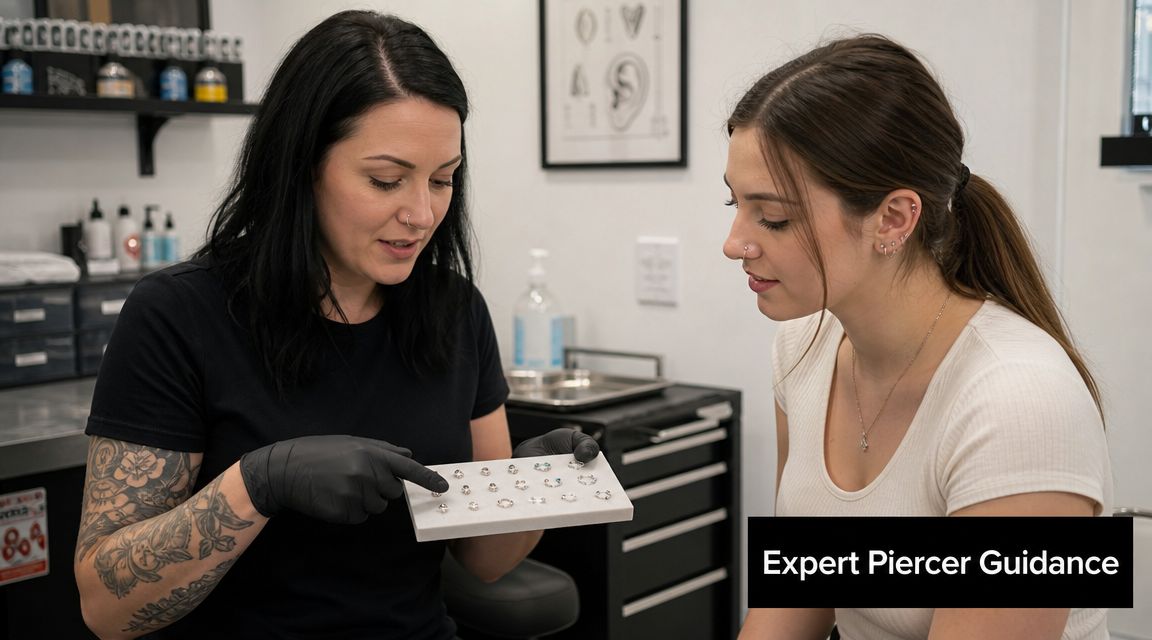
A professional piercer looks at more than the metal name. They check whether the piercing is fresh or healed, whether the placement is stable, whether the size and shape are correct, and whether your skin has a history of reacting to certain materials. That's why two pieces that look similar online can be very different in practice once they're worn in the body.
What a good consultation should cover
If you ask me about silver piercing jewelry in the studio, I'm not just answering “yes” or “no”. I'm checking context.
A proper jewellery consultation should cover:
Healing stage
Fresh piercings need implant-grade materials. Healed ones allow more flexibility.Placement
A settled lobe and a fussy cartilage piercing don't behave the same way.Jewellery design
Smooth, well-finished pieces are kinder to tissue than rough, ornate, or poorly made ones.Your history
If you've reacted to jewellery before, that changes what I'd recommend.
The standard worth looking for
For initial piercings, I'd look for studios using implant-grade jewellery with professional-quality construction, such as internally threaded or threadless pieces from reputable body jewellery manufacturers. That standard reduces guesswork.
If you're researching studios, Piercing Near Me is one booking and information platform that focuses on professional piercing services, studio guidance, and material safety. It's useful if you want to compare options before speaking to a piercer directly.
Good piercing advice protects healing first and style second. That order is what saves people trouble.
If you want direct guidance, contact the studio and ask plainly whether the jewellery offered for your piercing is suitable for initial wear, healed wear, or short-term fashion wear only. Those are different categories, and a professional should be able to explain the difference without any waffle.
For help, you can call 01202 9000 50 or message 07752913846 on WhatsApp.
If you're choosing jewellery and want a safety-first answer instead of a sales pitch, Piercing Near Me can help you find professional guidance, compare suitable options, and book with a studio that treats material choice as part of proper piercing care.