
Determining the best age for an ear piercing isn't about hitting a magic number. It’s a conversation about maturity, the type of piercing, and a genuine readiness for the aftercare involved. While some families opt for piercings in early childhood, as professional piercers, we often find the sweet spot is when a child is old enough to want it for themselves and can help with the healing.
That's why we generally recommend waiting until ages 7 to 10 for lobes and 16+ for cartilage. The 'best' age is truly when the person getting pierced is excited about it and understands the commitment.
What Is the Ideal Age for an Ear Piercing?
So, when is the right time? It's less about their date of birth and more about their personal readiness. Think of it this way: you wouldn't give a child a pet they can't help look after. A new piercing is similar. It needs daily attention and care to thrive, and the right time is when someone can handle that responsibility.
For many, this starts around primary school age. Piercing a child's lobes between 7 and 10 can work well, as they're old enough to understand the "no touching" rule and can help with the cleaning. Ultimately, though, the parent is the one who has to be on top of the aftercare to ensure everything heals perfectly and without infection.
This decision-making process changes as we get older. This guide can help you navigate what to consider at each stage.
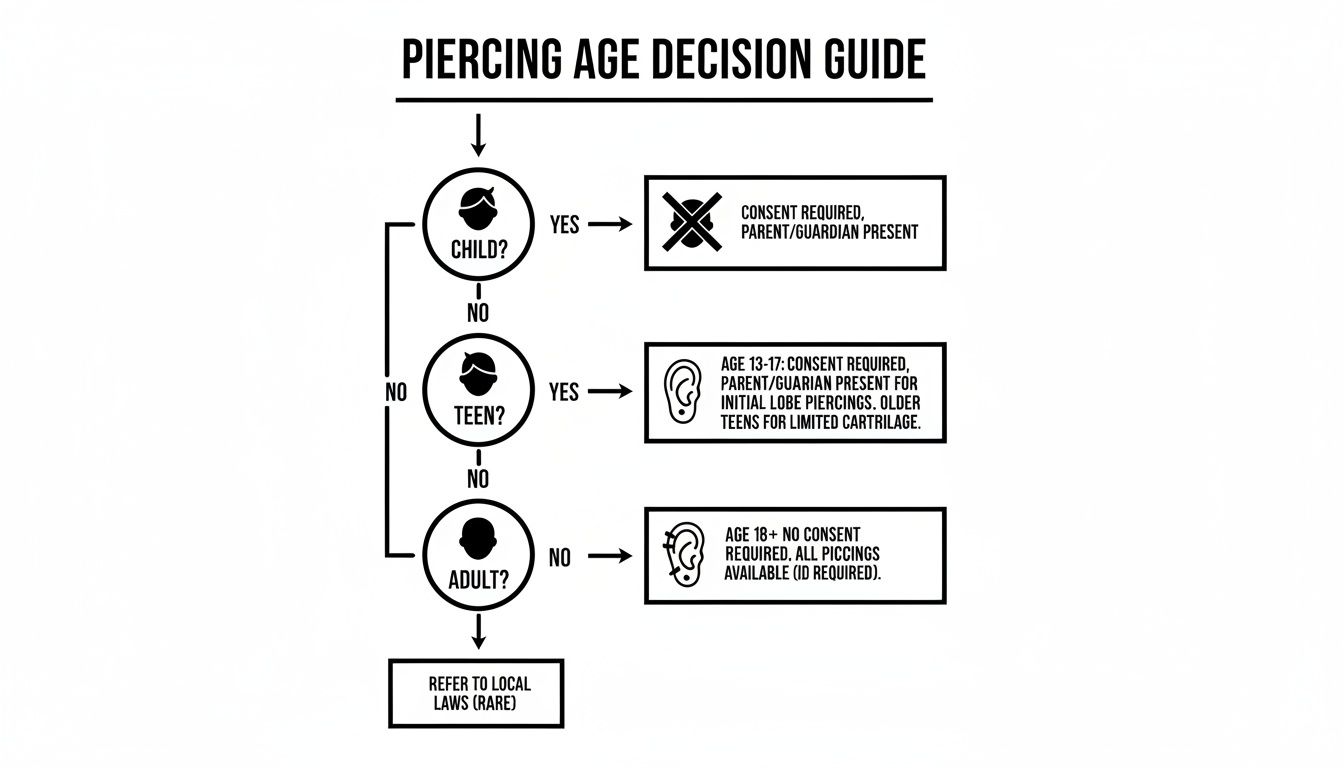
As the chart shows, while you gain more independence with age, the need for a safe, professional piercing never changes.
To give you a quick overview, here’s a breakdown of what to expect at different ages.
Ear Piercing Age Suitability at a Glance
| Age Group | Best For | Key Considerations | Potential Risks |
|---|---|---|---|
| Below 7 Years | Not generally recommended | Consent is from the parent, not the child. The child cannot manage aftercare. | Higher risk of infection from touching/fiddling. The piercing may become asymmetrical as the ear grows. |
| Childhood (7-12) | First lobe piercings | The child must actively want the piercing. Parents must oversee all aftercare. | Forgetting aftercare, accidental snags during play, and irritation from touching. |
| Teens (13-17) | Lobes & some cartilage (with consent) | Increased personal responsibility. UK studios require parental consent for under 16s. | Peer pressure influencing decisions. Forgetting aftercare during busy school/social schedules. |
| Adults (18+) | Any ear piercing | Full autonomy and understanding of the commitment and risks. | Slower healing times compared to younger clients, depending on health and lifestyle. |
This table shows that while it's possible to get pierced at almost any age, the "ideal" time often aligns with greater personal maturity and responsibility.
Finding the Right Balance of Age and Maturity
The teenage years, especially from 16 onwards, are often a fantastic time for both lobe and more advanced cartilage piercings. At this point, UK law allows them to consent for themselves in a professional studio. More importantly, they're usually mature enough to own the aftercare process, which is absolutely vital for trickier piercings that can take up to a year to heal properly.
The most important factors are not just the client's age, but their genuine desire for the piercing and their commitment to the healing process. A successful piercing is a partnership between the piercer's expertise and the client's diligence.
This is exactly why settling for anything less than a reputable, professional studio is a bad idea, no matter your age. A professional piercer, like our teams at Timebomb Tattoo & Piercing in Croydon and Bournemouth, is your partner in this. We guarantee that every procedure uses sterile, single-use needles and implant-grade jewellery—the non-negotiable gold standard for a safe piercing and smooth healing.
In the end, the right age is all about being ready. Here’s a quick summary:
- Childhood (Ages 7-10): A great time for lobes if the child is enthusiastic and can follow instructions. Parents, be prepared to lead the aftercare routine!
- Teenage Years (Ages 16+): Often the perfect time. They're responsible enough for dedicated aftercare and can give informed consent, making it a true act of self-expression.
- Adulthood (Ages 18+): You have the complete freedom and understanding to choose any piercing you want, from a simple lobe to more complex cartilage projects.
If you’re still unsure whether it's the right time for you or your child, just ask! Our experienced piercers are always happy to chat through the process. Give us a call on 01202 900050 (Bournemouth) / 020 8686 7730 (Croydon) or drop a message on WhatsApp to 07752 913846 (Bournemouth) / 07902 490584 (Croydon) for a no-pressure consultation.
Piercing Young Children: Lobe Piercings From Age 7
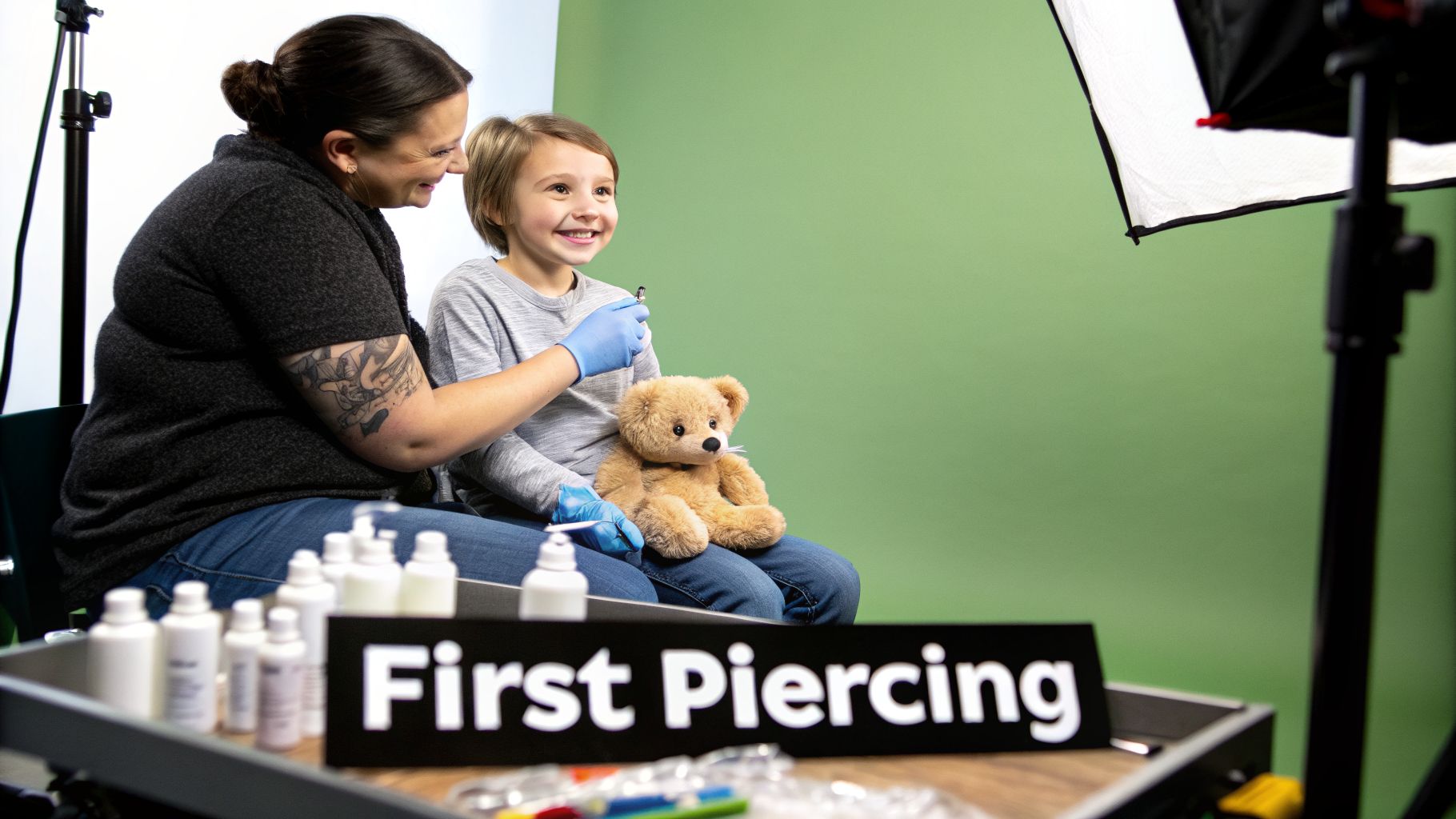
Walk through any UK playground, and you'll see it: more and more younger children are sporting their first pair of earrings. It's become a modern rite of passage, a child’s first real foray into personal style. The "playground effect" is undeniable—once one friend gets their ears pierced, it often sparks a wave of requests from their pals.
This isn't just an observation; the numbers back it up. The average age for girls in the UK to get their ears pierced has plummeted to just 7 years old, a huge drop from 13 only a decade ago. A recent survey of mothers revealed that 61% admitted they "gave in to pressure" from their kids. Yet, there's a clear conflict here, as 51% of those same parents believe there should be a legal age limit for children under 12. You can read more about these fascinating parental views on piercing age at MadeForMums.com.
Ultimately, the best age for an ear piercing isn't about following a trend. It's about your child's genuine enthusiasm. When a child is truly excited and wants the piercing for themselves, they become a willing partner in the all-important aftercare.
Think of it as Their "First Pet"
Here’s an analogy I often use with parents: treat a new piercing like a child's first hamster or goldfish. The initial excitement is wonderful, but the real measure of readiness is their ability to handle the daily responsibilities that follow. A new piercing needs gentle, consistent care every single day to heal properly.
This means your child needs to understand the golden rule: no touching, twisting, or fiddling! They also have to be patient enough for the daily cleaning routine. This simple comparison helps shift the conversation from just getting shiny jewellery to understanding the commitment involved in caring for their own body.
A successful first piercing experience hinges on two things: the child's genuine desire and a parent's unwavering commitment to supervising the aftercare. It's a team effort from start to finish.
This is exactly why choosing a calm, professional, and child-friendly studio is so crucial. A positive first experience at a place like Timebomb Tattoo & Piercing can turn a moment of nervousness into an exciting memory. Our piercers are brilliant with younger clients and their families, ensuring everyone feels safe and fully informed. If you’d like to chat through the process, give us a call on 01202 900050 (Bournemouth) / 020 8686 7730 (Croydon).
Is Your Child Genuinely Ready for the Responsibility?
Before you book that appointment, it's worth running through a quick mental checklist. A smooth healing journey is just as important as the piercing itself. Here are a few things to consider to gauge if your child is ready.
Ask yourself if your child can:
- Follow Instructions Consistently: Can they really remember not to touch or pull at their ears, even when you're not looking?
- Sit Still for a Few Minutes: The piercing is over in a flash, but they'll need to stay calm for the setup, the piercing itself, and the daily cleaning.
- Understand "Gentle Hands": Do they grasp that the new piercing is a tiny, healing wound that needs to be treated with care?
- Communicate Discomfort: Are they likely to tell you if their ear feels sore, itchy, or "funny," or will they try to hide it?
- Tolerate a Cleaning Routine: Are they prepared for a twice-daily cleaning for several weeks without it turning into a battle?
If you can confidently say "yes" to most of these, your child is probably ready to take this on with your support. If you're hesitating, it's always better to wait. There's no rush, and a piercing will feel just as special when they're a little older and better prepared. To discuss your child's readiness with one of our professional piercers, feel free to drop us a message on WhatsApp at 07752 913846 (Bournemouth) / 07902 490584 (Croydon).
Here is the rewritten section, crafted to sound completely human-written by an experienced professional.
The Teenage Sweet Spot: Why We Recommend Piercing From Age 16
Ask any experienced piercer, and they’ll likely tell you that 16 is a brilliant age to get a piercing. It's not just about being old enough; it’s about hitting that perfect balance between excitement, maturity, and a genuine desire for self-expression. By 16, most teens are ready to give their own informed consent and, just as importantly, can be trusted to handle the aftercare.
This is especially true for anything beyond a simple lobe piercing. A helix, conch, or tragus piercing looks fantastic, but the healing journey is a serious commitment. While an earlobe can heal up in as little as 6-8 weeks, cartilage takes its time, often needing anywhere from 6 to 12 months of dedicated care. That’s a long haul, and it’s a responsibility that most 16-year-olds are finally ready to take on.
Maturity Meets Responsibility
Getting pierced at 16 feels different. It’s less of a childhood ‘first’ and more of a deliberate, personal choice—an act of taking real ownership over your body and your style. At this age, you’re not just getting a piercing; you're able to grasp the whole process, from picking the right jewellery to knowing what to look out for as it heals.
It’s a bit like getting your provisional driving licence. It's an exciting rite of passage that comes with a new set of rules you have to follow. You wouldn't just jump in a car and hope for the best, and the same goes for a new piercing. You have to be attentive and stick to the aftercare plan your piercer gives you.
In our experience, 16 is the 'best age for an ear piercing' because it’s when a client truly becomes a partner in the process. It's the point where youthful enthusiasm meets the maturity needed to see the healing through, ensuring the best possible result.
At Timebomb Tattoo & Piercing, we see this every day. Our teams in Croydon and Bournemouth are here to create a supportive space where young adults can ask all the questions they need to, understand the commitment, and feel genuinely confident in their decision. To chat with our team, just give us a call on 01202 900050 (Bournemouth) / 020 8686 7730 (Croydon).
The UK Legal and Professional Landscape
Here in the UK, things can be a little confusing as there's no official national law setting a minimum age for ear piercing in England and Wales. However, the professional industry has established its own high standards. Reputable studios almost universally require anyone under 16 to have a parent or legal guardian present to give consent.
Once you turn 16, you can typically walk into a professional studio and consent for yourself, as long as you have a valid photo ID. This approach isn't just a studio policy; it's strongly backed by public opinion. A YouGov survey found that a huge 52% of people in the UK support 16 as the minimum age for getting a piercing without parental consent, with a total of 71% believing the age should be 16 or older. You can see the full breakdown of public attitudes towards piercing age on YouGov.com.
This widespread agreement shows why 16 works so well. It’s an age where you’re past childhood pressures but haven’t yet taken on the major adult commitments that can make a strict healing schedule tricky.
Empowering Teens to Make Safe Choices
Choosing to get pierced at 16 is a fantastic opportunity to learn about body autonomy and making responsible decisions. We always encourage teens and their parents to treat it as a team effort.
If you’re 16 and thinking about a piercing, here’s how you can take charge of the journey and make sure it’s a great experience:
- Do your homework: Read up on the different types of piercings, how long they take to heal, and what the risks are.
- Pick a great studio: Always prioritise studios that use sterile, single-use needles and high-quality, implant-grade titanium jewellery. Never, ever go somewhere that uses a piercing gun for cartilage.
- Ask questions: A good piercer will be happy to talk you through their sterilisation process, their experience, and their aftercare advice. Don’t be shy!
- Commit to aftercare: Realise that daily cleaning and avoiding knocks or irritation are completely non-negotiable for a happy, healthy piercing.
Our goal at Timebomb Tattoo & Piercing is to guide every single client, especially young adults, through this process with total professionalism and care. Whether it’s your first lobe piercing or a cool new cartilage project, we’re here to make sure your experience is safe, positive, and exciting. Drop our team a message on WhatsApp at 07752 913846 (Bournemouth) / 07902 490584 (Croydon) to get some advice or discuss an idea.
Navigating Cartilage Piercings: Risks and Recommendations
Moving from a simple lobe piercing to cartilage is a bit like graduating from primary school to university. It’s a completely different ball game. Piercings through the firm cartilage of your ear—like a helix, tragus, or rook—require a whole new level of respect and commitment. That’s why we, and most reputable piercers, strongly recommend waiting until you're at least 16 years old, if not an adult.
The reason for the age gate is all about the tissue itself. Your earlobe is soft, fleshy, and has a great blood supply, which is why it tends to heal up so quickly, often within 6-8 weeks. Cartilage, however, is a dense, rigid structure with very little blood flow. Think of it like this: a lobe is like a sponge, soaking up what it needs to heal, while cartilage is more like a dense piece of leather that heals slowly and methodically. This is why a cartilage piercing can take a full 12 months or even longer to properly heal.
That extended healing time isn't just a waiting game. It's a year-long period where your piercing is vulnerable to bumps, irritation, and infection. A single night spent sleeping on it carelessly can set you back weeks. This is why maturity and a genuine commitment to aftercare are absolutely essential.
Understanding the Heightened Risks
Because cartilage has so much less blood flowing through it, it struggles to fight off infection and heal from trauma compared to a fleshy lobe. A minor knock that a lobe piercing would shrug off can cause major issues for a helix or conch, leading to the dreaded "piercing bump" (hypertrophic scarring) or, in worse cases, a serious infection.
This isn't just anecdotal. A major 2006 survey in England and Wales painted a very clear picture. It found that while non-earlobe piercings were incredibly popular among women aged 16-24, they came with significant risks. Hospital data even showed that cases of auricular perichondritis, a nasty cartilage infection, more than doubled in England and Wales during the 1990s, a trend linked to the popularity of upper ear piercings. Roughly one in three of these piercings resulted in health complications, which really highlights just how crucial proper aftercare is. You can read more about the findings on cartilage piercing risks in this study from PMC.
We don’t say this to put you off, but to prepare you. Knowing the risks is the first step in avoiding them. A happy, healthy cartilage piercing belongs to someone who truly respects the process.
The Non-Negotiables for a Safe Cartilage Piercing
When it comes to cartilage, there are a few things that are completely non-negotiable. The piercer’s skill and the equipment they use are paramount. Here’s what you should always insist on:
- A Sterile, Single-Use Needle: Piercing guns should never be used on cartilage. They use blunt force trauma to shatter the tissue, which can lead to permanent damage, scarring, and a nightmare healing process. A professional always uses a razor-sharp, sterile, single-use needle for a clean, precise channel that heals much more easily.
- Implant-Grade Jewellery: What you put in the piercing is just as important as how the hole is made. At Timebomb Tattoo & Piercing, we will only use implant-grade titanium. It’s completely hypoallergenic and nickel-free, which drastically reduces the chances of your body reacting badly to it during that long healing journey.
- Expert Aftercare Guidance: Your piercer should walk you through the entire aftercare routine. This isn't just a leaflet and a wave goodbye; it’s detailed advice on cleaning, what to avoid, and what to look out for. For a preview of what's involved, have a look at our guide on how to properly care for a new helix piercing.
A cartilage piercing isn't a one-off purchase; it's a long-term partnership between you, your body, and your piercer. We provide the sterile setup and the expertise, but the success of the healing is ultimately in your hands.
Choosing a trusted studio like Timebomb Tattoo & Piercing in our Croydon or Bournemouth locations means you’re guaranteed these high standards. Our piercers are specialists who understand ear anatomy, helping you choose a placement that not only looks fantastic but also stands the best chance of healing well. If you’re considering a cartilage piercing and have questions, we're here to talk you through it. Just give us a call on 01202 900050 (Bournemouth) / 020 8686 7730 (Croydon) or drop a message to our WhatsApp on 07752 913846 (Bournemouth) / 07902 490584 (Croydon).
Your Piercing Safety Checklist: How to Choose a Studio

Figuring out the best age for an ear piercing is a great first step, but it’s only part of the story. Choosing where to get that piercing is every bit as important. A top-notch studio doesn’t just make a hole; they set you up for a safe, successful healing journey from day one.
Think of it like finding a mechanic for a prized classic car. You wouldn't hand the keys to just anyone. You'd find a specialist with the right tools, a spotless workshop, and a rock-solid reputation. Your body deserves that same level of care.
To help you know exactly what to look for, we’ve put together a safety checklist. These aren't just 'nice-to-haves'—they are the absolute minimum standards you should expect from any professional studio. For us at Timebomb Tattoo & Piercing, this is just how we operate, every single day.
The Piercing Studio Non-Negotiables
Before you even book, a quick visit or a look at a studio’s photos can tell you volumes. A professional space should feel clean, organised, and welcoming. Here are the must-haves to look for and the questions you should definitely ask.
- A Visibly Clean Environment: The studio must be immaculate. We’re talking clean floors, dust-free surfaces, and a general feeling of order. If the waiting room looks grubby, it's a huge red flag for the standards they keep in the piercing rooms.
- An Autoclave for Sterilisation: Ask them about their autoclave. It’s a crucial piece of kit that uses high-pressure steam to sterilise all reusable equipment, like clamps or insertion tapers. Any proud, professional studio will have no problem showing you their sterilisation area.
- Single-Use, Pre-Packaged Needles: This is a big one. Your piercer must always open a brand new, sterile needle package right in front of you. It’s the only way to be 100% sure that the needle has never touched another person, completely removing the risk of cross-contamination.
- Implant-Grade Jewellery: What goes into your fresh piercing matters immensely. We only ever use implant-grade titanium for initial piercings. It's completely hypoallergenic and nickel-free, which gives your body the best possible start for a smooth and easy heal.
A professional piercer’s number one priority is your health. They should be happy to talk you through their hygiene procedures, show you their equipment, and answer every single one of your questions without making you feel awkward.
If a studio seems cagey, rushes you, or brushes off your safety concerns, just walk out. No discount is worth risking an infection or a poorly healed piercing. The difference between a professional needle piercing and one from a piercing gun is massive, as we cover in our guide exploring the piercing gun vs needle debate.
The Consultation Is Key
A great piercing always begins with a conversation. A proper consultation isn't just about picking out shiny jewellery; it's where the piercer checks your anatomy and you get to feel confident and fully on board with the plan.
A good piercer will look at the unique shape of your ear and advise on the best placement. Not every ear is built for every piercing, and a true pro will be honest about what will not only look good but, more importantly, heal well for you. They should also give you perfectly clear aftercare instructions before you've even left the chair.
At Timebomb Tattoo & Piercing, the consultation is a fundamental part of what we do. We want you to feel totally informed and in control. To book a friendly, no-pressure chat with our piercers in Croydon or Bournemouth, give us a call on 01202 900050 (Bournemouth) / 020 8686 7730 (Croydon) or drop a message to our WhatsApp at 07752 913846 (Bournemouth) / 07902 490584 (Croydon).
Book Your Piercing in Croydon or Bournemouth
So, after thinking through all the responsibilities, risks, and timings, you're feeling ready to take that next step. The most important thing to remember is simple: the best age for an ear piercing is when you are truly prepared, and the best place is always a professional studio that puts your health and safety above all else. It's that perfect blend of personal readiness and expert care.
At Timebomb Tattoo & Piercing, that’s our entire philosophy. We've built our studios in Croydon and Bournemouth to be clean, safe, and genuinely welcoming places for everyone. Whether we're guiding a parent through their child's very first lobe piercing or mapping out a complex cartilage project, our job is to make the experience flawless from start to finish.
We see every piercing as a partnership. We provide the sterile environment and years of hard-won expertise; you bring the excitement and a solid commitment to looking after it properly.
Your Trusted Local Piercing Experts
Choosing the right studio is about peace of mind. At both our Croydon and Bournemouth locations, we stick to the absolute highest standards of hygiene. That means we only use single-use, sterile needles and implant-grade titanium jewellery, giving your new piercing the best possible start for a smooth healing journey.
Ready to book, or maybe you just have a few more questions? Getting in touch is easy.
- To Speak With Our Team: Give us a call at 01202 900050 (Bournemouth) / 020 8686 7730 (Croydon).
- For Quick Questions & Bookings: Send a message over to our WhatsApp at 07752 913846 (Bournemouth) / 07902 490584 (Croydon).
We’re passionate about what we do and love creating positive piercing experiences. If you're looking into more advanced body art, our guide on the microdermal anchor piercing is a great read for understanding different options.
The right piercing, done in the right place, can be an incredibly empowering and positive experience. We're here to make sure your journey is safe, comfortable, and exciting.
Let us help you start your piercing journey with total confidence. Get in touch with Timebomb Tattoo & Piercing today, and let's work together to bring your idea to life—safely and professionally.
Your Ear Piercing Questions, Answered
It's totally normal to still have a few questions buzzing around. Getting a piercing is a big deal! So, let's walk through some of the most common things people ask us, giving you the clear, honest answers you need.
Is It Better to Pierce a Baby’s Ears or Wait Until They’re Older?
This is a really personal decision for any parent, but from a professional piercer’s point of view, waiting is almost always the better choice. While it's true a baby can't fiddle with their new earrings, the entire burden of aftercare falls on you. More importantly, a baby can't give their consent, and their little earlobes will grow and change, which can easily result in wonky, off-centre piercings down the line.
We find that waiting until a child is around 7 years old or older makes for a much smoother experience. At that age, they can decide for themselves if they truly want the piercing and are old enough to be part of the aftercare routine. They can tell you if it’s sore and understand why they need to keep their hands off. It becomes a shared, positive experience.
The real game-changer is having a child who actively wants the piercing and understands the rules. They become a partner in the healing process, which is far better than piercing an infant who has no idea what's happening.
What’s the Legal Age for an Ear Piercing in the UK?
The rules around piercing age can feel like a bit of a maze across the UK, which is why any good studio will have its own clear, strict policies. Safety first, always.
- England and Wales: Believe it or not, there's no national law setting a minimum age for lobe piercings. This is why reputable studios like Timebomb Tattoo & Piercing insist on having parental consent for anyone under the age of 16.
- Scotland: The law is much clearer here. It’s illegal to perform any piercing on a person under 16 without their parent's explicit consent.
- For Ages 16 and Over: Once you're 16, you can legally consent to your own piercings anywhere in the UK. Just make sure you bring a valid photo ID with you.
Choosing a studio that sticks to these standards is a massive green flag. It shows they're serious about your safety and ethical practice.
Do Piercing Guns Hurt More Than Needles?
We hear this all the time, and it’s one of the biggest myths in the piercing world. Many people think a gun is quicker, so it must hurt less. In reality, it’s the complete opposite. A piercing gun uses brute force to shove a blunt stud through your ear, causing a great deal of tissue trauma. This leads to more pain, more swelling, and a much tougher healing journey.
A proper, single-use piercing needle, on the other hand, is incredibly sharp and hollow. It glides through the skin, cleanly separating the tissue to create a perfect channel for the jewellery. It’s a far less traumatic method, which means less initial pain and a much happier, faster heal. At Timebomb Tattoo & Piercing, we only use needles. They’re simply safer, more accurate, and ultimately, kinder to your body.
Ready to take the next step or just want to chat more? The expert teams at Timebomb Tattoo & Piercing in Croydon and Bournemouth are here to guide you. Give us a call on 01202 900050 (Bournemouth) / 020 8686 7730 (Croydon), drop a message on WhatsApp to 07752 913846 (Bournemouth) / 07902 490584 (Croydon), or check out Piercing Near Me for more info.