
Deciding to get a new body piercing is exciting, but let’s be honest, choosing where to get it done can feel a bit daunting. This guide is here to walk you through everything you need for a safe and brilliant body piercing bournemouth experience, giving you the confidence to find the right studio and love your new look.
Why Bournemouth Is A Hub For Body Art
There’s a creative energy in Bournemouth that you just don't find everywhere. Its vibrant, coastal vibe makes it a natural centre for self-expression, and body art is a huge part of that culture. From the busy town centre to the chilled-out beachside, the town draws in people who aren't afraid to stand out.
This isn't just some fleeting trend. Body piercing has been a cornerstone of UK subculture and self-expression for decades. In fact, a landmark study from the late 90s showed that an incredible 46.2% of young women in England aged 16-24 already had a piercing somewhere other than their earlobes. It shows just how long getting pierced has been a rite of passage, a tradition that’s alive and well in places like Bournemouth.
A Culture Of Safety And Professionalism
What really makes Bournemouth's piercing scene stand out isn't just how popular it is, but the solid commitment to high standards. The best local studios know that a piercing is about more than just looking good—it's a procedure that demands expertise and a deep respect for health and safety.
So, what does this mean for you? When you choose a reputable studio here, you should expect:
- Properly Qualified Piercers who have a deep understanding of anatomy and sterile procedures.
- High-Quality Jewellery made from implant-grade titanium as the absolute minimum.
- Immaculate Environments that meet or exceed local health and hygiene regulations.
- Clear, Personalised Aftercare advice to ensure your piercing heals perfectly.
Putting your trust in a professional piercer means your experience, whether it's your first piercing or your fifteenth, will be a positive one from start to finish.
When you start looking for a studio, pay close attention to those who proudly showcase their qualifications and portfolios filled with photos of fully healed work. That level of transparency is the mark of a piercer who is genuinely proud of their craft and dedicated to their clients' well-being.
What To Consider For Your Piercing
Before you even book an appointment, it’s a good idea to think about what you want and what to look for in a studio. Have a think about the placement you're after—are you planning a classic lobe, an intricate cartilage project, or something more unique like a microdermal anchor piercing? Each piercing has its own healing quirks and lifestyle considerations.
Getting to grips with the whole process, from the first chat with your piercer to the long-term aftercare, empowers you to ask the right questions. It ensures you feel comfortable and in control. This guide will cover all you need to know for a successful body piercing in Bournemouth.
Finding a Safe and Reputable Piercing Studio
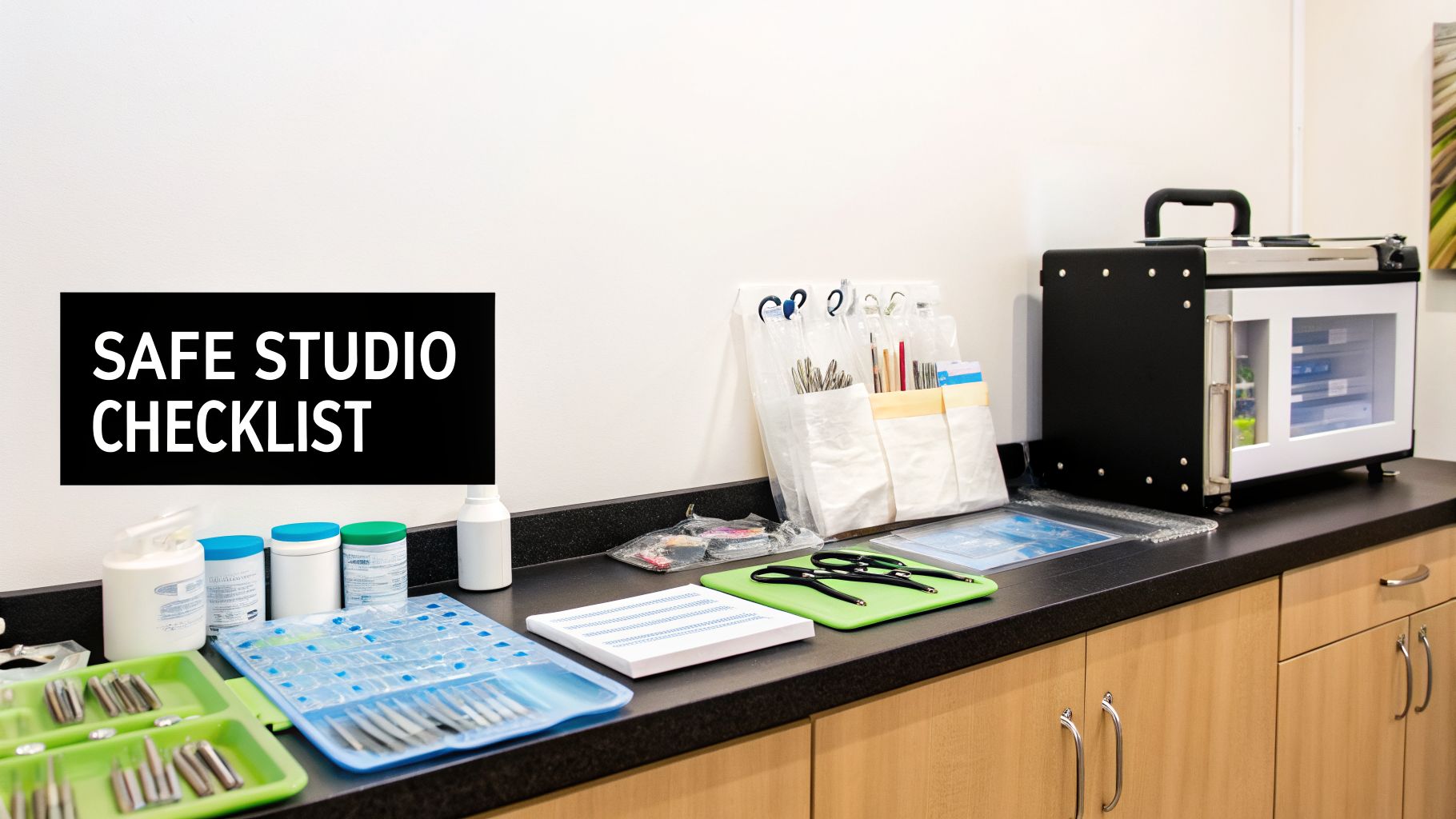
Before you even think about jewellery or placement, the first and most critical step is choosing the right studio. A great piercer does more than just the procedure; they’re your guide, ensuring you feel safe, comfortable, and confident from the moment you walk in. When you’re looking for body piercing in Bournemouth, knowing the signs of a top-tier studio will protect your health and guarantee you leave with a piercing you love.
Your first impression counts for a lot. A professional studio should feel immaculately clean and organised, not just at the front desk but in the piercing rooms themselves. Look for clean, non-porous surfaces and a distinct lack of clutter. It should feel like a clinical environment, but a welcoming one.
Here’s a deal-breaker: a reputable piercer will only ever use a brand-new, single-use, pre-sterilised needle for every single client. If you spot a piercing gun (especially for anything other than earlobes) or reusable piercing tools laid out, it’s a massive red flag. The risks just aren't worth it, and you can learn more about the crucial safety differences between a piercing gun vs a needle.
Your Studio Inspection Checklist
To help you feel confident in your choice, we've put together a checklist of non-negotiables. Use this guide to assess any studio in Bournemouth and ensure they meet the highest standards of safety and professionalism.
Reputable Piercing Studio Checklist
| Safety & Hygiene Standard | What to Look For | Why It Matters |
|---|---|---|
| Council Registration | A certificate from Bournemouth, Christchurch and Poole (BCP) Council, displayed clearly for you to see. | This is a legal requirement in the UK, proving the studio meets mandatory health and safety regulations. |
| Proper Sterilisation | An autoclave (a steam/pressure steriliser). They should be able to show you their sterilisation area. | This is the only way to properly sterilise equipment like forceps and the initial jewellery, killing all bacteria and spores. |
| Sealed Equipment | The piercer opening sterilised jewellery and a new needle from sealed packaging right in front of you. | This guarantees the items touching your body are sterile and have not been contaminated. |
| A Strong Portfolio | A collection of photos showing well-healed piercings, not just fresh ones. Check their social media or ask to see it. | Anyone can take a photo of a fresh piercing. A portfolio of healed work proves the piercer's technique is solid and leads to good long-term results. |
| Professional Demeanour | A piercer who is happy to answer all your questions, discuss your anatomy, and explain the process without rushing you. | This shows they are invested in your well-being and are a true professional, not just trying to make a quick sale. |
This checklist gives you the power to spot a great studio. If a piercer ever makes you feel silly for asking about their sterilisation process or dismisses your concerns, that’s your cue to leave.
Trust your gut. A studio that prioritises your well-being will feel transparent and welcoming. Your safety is always worth more than a cheap or convenient piercing.
Finding Trusted Piercers in Bournemouth
Bournemouth is home to a fantastic piercing community with a strong commitment to high standards. You'll find several highly-regarded studios in town, from established names like Bournemouth Piercing on Old Christchurch Road to the award-winning White Flame in Winton. Other spots like Titanic Tattoo & Piercing and Metal Fatigue also have great local reputations, giving you plenty of professional options to explore.
By choosing a studio like Timebomb Tattoo & Piercing, you’re placing yourself in expert hands. For a guaranteed professional experience where your health and safety come first, give the studio a call on 01202 9000 50 or send a message on WhatsApp to 07752913846 to chat about your next piercing.
What to Expect During Your Consultation and Piercing
Walking into a piercing studio for the first time can be a mix of pure excitement and a few butterflies. Knowing what a truly professional process looks like from start to finish helps calm those nerves and lets you focus on the fun part. A great piercing isn't just about the final result; it's about feeling safe, respected, and confident every step of the way.
It all kicks off with a proper consultation. This isn't just a quick "hello"—it's a crucial conversation where an experienced piercer looks at your unique anatomy. The shape of your ear, for example, dictates whether that industrial bar you've been dreaming of is actually a good fit. The same goes for navel piercings; the fold of your skin determines the best placement to ensure it heals beautifully.
The All-Important Consultation
A good piercer needs to know a bit about your lifestyle. Are you constantly wearing over-ear headphones? Do you play rugby on the weekends? We're not just being nosy! These details help us figure out the perfect placement and jewellery style that won't get irritated by your daily routine.
Think of this as your time to ask anything and everything. No question is too silly. A piercer who takes the time to listen and explain things clearly is one you can trust. They should never rush you; the goal is for you to be 100% certain before any needles come out.
From Paperwork to the Perfect Piercing
Once you've agreed on the placement and you're feeling good to go, we move on to the practical side of things. You'll fill out a standard consent form and show a valid photo ID to confirm your age—this is a non-negotiable legal step for any reputable studio.
Next, the piercer will get everything ready, and you should be able to see it all happen. They’ll carefully clean the area and mark the spot with a sterile pen, giving you the final say in the mirror. This is your last chance to say "a little to the left" or "a bit higher!"
Pay close attention here: you should see them open brand-new, single-use needles and sterilised jewellery from sealed pouches right in front of you. This transparency is the hallmark of a studio that takes your health seriously.
What about the piercing itself? Honestly, it's over in a flash. For most people, it's a quick, sharp pinch that lasts for a split second. The anticipation is almost always worse than the real thing!
To make your experience as smooth as possible, a little prep on your part goes a long way.
- Eat a Decent Meal: Have something to eat an hour or two before you come in. This keeps your blood sugar stable and helps prevent you from feeling light-headed.
- Stay Hydrated: Drink some water beforehand, but maybe skip that extra-large coffee or any alcohol. Caffeine and alcohol can increase sensitivity and bleeding.
- Dress for Success: Wear comfy, loose-fitting clothes that won't rub against or put pressure on your fresh piercing.
Following these simple tips sets you up for a much more comfortable and positive experience. If you’re ready to chat through your ideas or book a consultation, just get in touch. You can give the studio a call on 01202 9000 50 or drop a quick message on WhatsApp to 07752913846 to speak with a piercer.
Choosing Your Jewellery and Understanding Costs
Alright, you’ve picked your piercing and we’ve marked the perfect spot. Now for the really fun part – choosing the jewellery that will live in your new piercing. This is more than just a style decision; the material you choose is probably the single biggest factor in how well your piercing heals.
We exclusively use and recommend implant-grade titanium (ASTM F-136) for initial piercings, and for good reason. This isn't your standard 'titanium' from a high-street accessory shop. It's a specific, medical-grade alloy that's been polished to a mirror finish. Your body sees it as neutral, which is why it's the same material used for things like bone screws and medical implants. It’s designed to live safely inside the body long-term.
Why Quality Materials Aren't Negotiable
You’ll often see 'surgical steel' advertised as safe, but it’s a vague term for a huge family of metal alloys. The problem is, most of them contain nickel, which is one of the most common skin allergens. For anyone, but especially those with sensitive skin, nickel can lead to irritation, bumps, and even cause your body to reject the piercing entirely.
Starting with high-quality, body-safe jewellery from day one is an investment in a happy, healthy piercing.
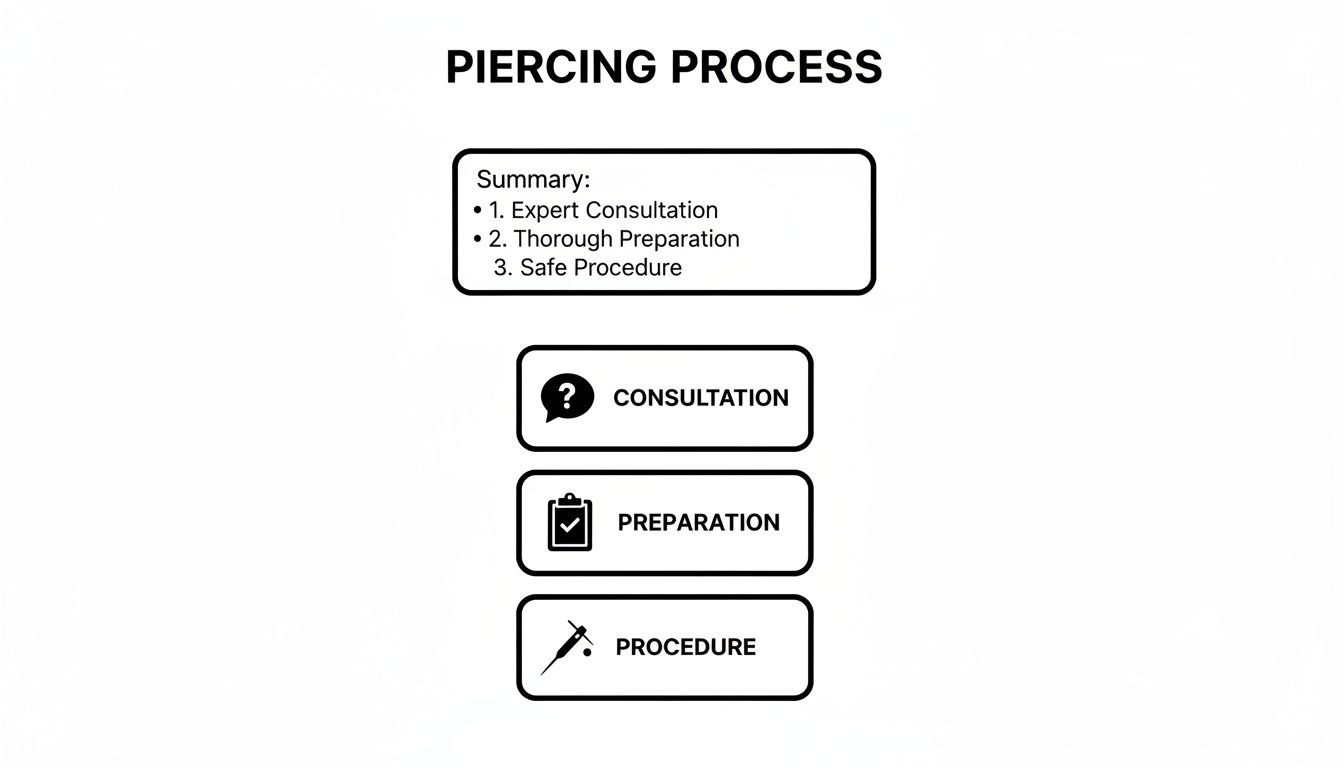
As you can see, the process is a careful, considered journey. Your comfort and safety are sorted long before a needle is ever involved.
Besides titanium, a couple of other excellent choices for a fresh piercing include:
- Solid 14k or 18k Gold: It has to be solid, not plated. Plated or coated jewellery has a thin layer that will inevitably wear off, exposing the mystery metal underneath (which often contains nickel). We only use nickel-free alloys.
- Niobium: A pure element, very similar to titanium. It’s extremely biocompatible and can be anodised to create a whole spectrum of beautiful colours, just like titanium.
To make things clearer, here’s a quick comparison of the most common materials you’ll encounter.
Initial Piercing Jewellery Material Comparison
| Material | Pros | Cons | Best For |
|---|---|---|---|
| Implant-Grade Titanium | Completely biocompatible, nickel-free, lightweight, can be anodised into various colours. | Higher initial cost than steel. | Everyone, especially for fresh piercings and those with metal sensitivities. The industry gold standard. |
| Solid 14k/18k Gold | Luxurious aesthetic, holds value, biocompatible if nickel-free. | Expensive, heavier than titanium, can tarnish if not cared for. | Healed piercings or initial piercings for those who want a premium look and have no gold sensitivities. |
| Surgical Steel | Inexpensive, widely available. | Vague quality, often contains nickel which causes irritation, heavier. | Not recommended for initial piercings. At best, it's for very well-healed piercings on people with no metal allergies. |
| Niobium | Hypoallergenic, pure element, can be anodised. | Less common than titanium, slightly more expensive. | A fantastic alternative to titanium for anyone with extreme sensitivities. |
Choosing implant-grade titanium or solid gold from a professional studio is the safest bet for a smooth healing journey.
How Piercing Prices Work in Bournemouth
Understanding the pricing structure at a professional studio is important so there are no surprises. Your total cost is always broken down into two parts: the piercing service fee and the separate cost of your chosen jewellery.
The service fee covers everything that makes the piercing safe: the piercer’s expertise and time, the single-use sterilised needle, all the sterile disposables, and the running of a fully licensed and hygienic environment. The jewellery is priced separately because the cost can vary dramatically – a simple, polished titanium ball will be a fraction of the price of a solid gold piece set with genuine diamonds.
A "cheap" piercing is almost always a red flag. It usually means corners are being cut somewhere, whether it’s with low-quality mystery-metal jewellery or, worse, on crucial sterilisation and safety protocols.
This transparent pricing model means you know exactly what you’re paying for. You get a professional, safe service plus the freedom to select a piece of high-quality jewellery that suits your personal style and budget. The beautiful jewellery we stock at Timebomb isn't just an accessory; it's a commitment to the health of your piercing.
The best way to get an accurate price is to have a chat with us about what you’re looking for. Give the studio a call on 01202 9000 50 or drop a message to our WhatsApp on 07752913846 and we can give you a personalised quote.
Mastering Aftercare for a Smooth Heal
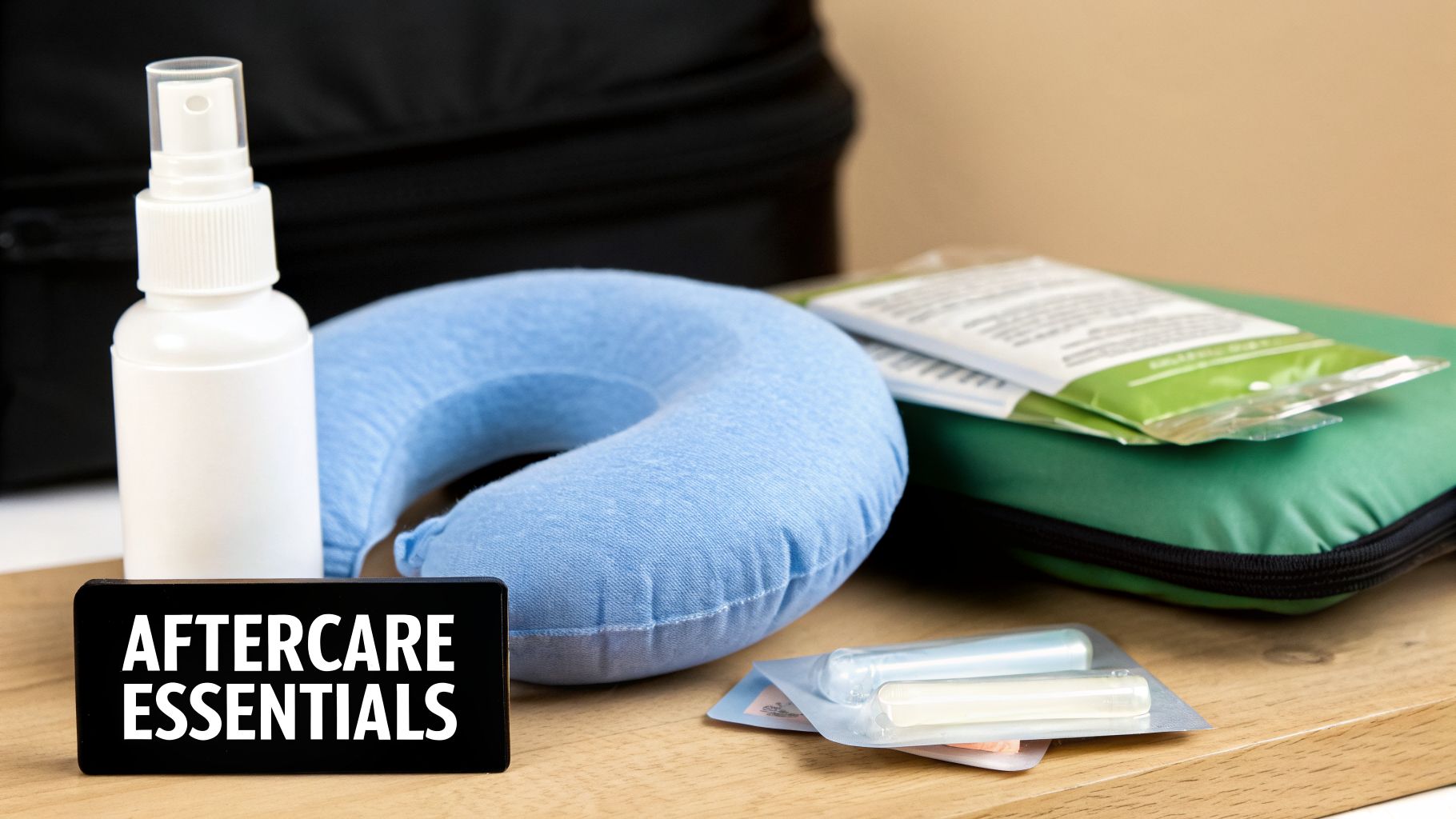
Getting your new body piercing in Bournemouth is the exciting part, but the real magic happens in the weeks that follow. Proper aftercare is what turns a fresh piercing into a beautifully healed piece of body art. Think of your body as the expert healer; your job is simply to give it a clean, calm environment to work in.
The best aftercare routine is also the simplest one. All you need to do is clean your new piercing twice a day using a sterile saline solution. That’s it. No complicated concoctions, no harsh chemicals.
A quick spray helps to gently flush away any debris or the 'crusties' that naturally form, all without irritating the sensitive new tissue. It's a method that supports your body's natural healing process. For a deeper dive into why this works so well, check out our guide on using a saline spray for your piercing.
What to Avoid at All Costs
When it comes to healing piercings, less is always more. A fresh piercing is a delicate wound, and bombarding it with harsh products will only set your healing back.
Make sure you steer clear of these common culprits:
- Alcohol and Hydrogen Peroxide: These are far too aggressive. They don't just kill bacteria; they destroy the new, healthy cells your body is trying to build, which can prolong healing significantly.
- Antibacterial Soaps and Ointments: These are often loaded with fragrances, dyes, and chemicals that cause irritation. Thick ointments are even worse, as they can trap moisture and bacteria, creating the perfect environment for an infection.
- Homemade Salt Solutions: While it sounds natural, getting the salt-to-water ratio right at home is nearly impossible. Too much salt will dry out and irritate the piercing, and too little won't be effective.
A piercing is a puncture wound healing from the outside in. Your goal is to keep it clean and let it breathe. If a product stings or causes redness, that's your body telling you it's too harsh.
Practical Tips for Everyday Life
Beyond the twice-daily cleaning, a few small tweaks to your daily habits can make a world of difference. It all comes down to avoiding friction, pressure, and snagging.
If you’ve had an ear piercing, especially cartilage, a travel pillow is your new best friend. By resting your ear in the hole, you can sleep on your side without putting any pressure on the jewellery. It’s a game-changing hack for a comfortable night's sleep.
For a new navel piercing, think about your wardrobe. For the first few weeks, stick to low-rise trousers or loose-fitting tops that won’t constantly rub against the jewellery. The less it gets knocked about, the happier and faster it will heal.
The All-Important Downsize Appointment
When you first get pierced, we use a slightly longer bar to leave room for the initial swelling. After about 4–8 weeks, that swelling will have gone down, and the bar will now be too long. This is the perfect time to book a 'downsize' appointment.
In this quick visit, we’ll swap the initial bar for a shorter one that sits perfectly flush. This is a crucial step. A bar that's too long is prone to catching and snagging, which can lead to nasty irritation bumps or even cause the piercing to shift.
If you have any questions or worries at all during your healing journey, please don't hesitate to get in touch. We're here to help. You can drop our Timebomb team a message on WhatsApp at 07752913846 for a quick response or call the studio on 01202 9000 50.
Your Body Piercing Questions Answered
It's totally normal to have a few more questions buzzing around your head, even after reading all about the process. Getting a new body piercing in Bournemouth is a big deal, and feeling 100% confident before you walk through the door is what it's all about. We get asked these questions all the time at the studio, so we’ve put together some straight-up answers for you.
How Much Does a Body Piercing Cost in Bournemouth?
Thinking about cost is always a smart move. Your final price is split into two parts: the piercing service fee and the cost of the jewellery you fall in love with.
Our service fees generally start from £20-£30. This isn't just for the piercing itself; it covers our piercer's time and skill, all the single-use sterile equipment, and the spotlessly clean environment we work in.
For jewellery, a simple, implant-grade titanium stud begins at around £15. From there, the price can go up depending on what you're after—think different materials, intricate designs, or sparkling gemstones. The best way to get an exact figure for your idea is to give us a ring on 01202 9000 50 for a quick chat.
Is It Better to Book an Appointment or Walk In?
We get it, sometimes the urge for a new piercing just hits! While we can occasionally fit in a walk-in if there’s a sudden gap in the schedule, we always recommend booking an appointment.
Booking ahead guarantees you dedicated, one-on-one time with your piercer. It means we can have a proper chat about placement and styling without anyone feeling rushed, and you have plenty of time to ask every last question. You can grab a slot by calling us or dropping a message to our WhatsApp on 07752913846.
What Is the Minimum Age for a Piercing?
In the UK, the law is quite clear. You need to be 16 or older with a valid photo ID (like a passport or a provisional/full driver's licence) for most body piercings.
Certain piercings, like nipples or microdermals, are considered more advanced, and for those, we only see clients who are 18 and over.
If you're under 16 and keen on getting your earlobes pierced, that's fine, but a parent or legal guardian must come with you to give their consent in person. Every studio has its own house rules on age, so it never hurts to double-check first.
If you're worried about a potential piercing issue, do not remove your jewellery. Taking it out can trap any bacteria inside the piercing channel as it closes, which can lead to a much bigger problem. Your first call should always be to a professional piercer.
What Should I Do If My Piercing Looks Infected?
First off, take a breath. It's really common for people to mistake normal healing for an infection. A bit of redness, some swelling, and the clear or whitish fluid that dries into 'crusties' are all typical signs your body is doing its job.
A true infection is a different beast. Look out for spreading redness that feels hot to the touch, persistent throbbing pain, and thick, smelly discharge that's yellow or green.
If you have any concerns at all, contact your piercer right away. We're trained to spot the difference and can tell you if you simply need to tweak your aftercare or if it’s time for a trip to your GP. Please don't rely on advice from your mates or a random forum post—always go back to the professional who performed the piercing.
Ready to start your piercing journey with a team you can trust? At Timebomb, we're here to guide you every step of the way, from choosing the perfect jewellery to ensuring your piercing heals beautifully. Explore your options with us at Piercing Near Me.