
A conch piercing is commonly rated around 6 to 7 out of 10 for pain, and the piercing itself usually takes only 3 to 5 seconds. Typically, this translates to a sharp, intense moment rather than pain that drags on through the whole appointment.
If you're reading this with one tab open on jewellery ideas and another searching “conch piercing pain level”, you're in the same place a lot of first-time cartilage clients start. They like the look. They can picture the placement. They just want an honest answer about how much it hurts, and whether it's the kind of pain they can handle.
The most useful way to think about a conch piercing isn't just the number. It's what the sensation feels like, when it peaks, and what the healing period is really like afterward. The sharp bit is quick. The more noticeable part for many clients is the ache, pressure, and tenderness that can come later when sleeping, cleaning, or catching the area by mistake.
That's also why a calm, professional appointment matters so much. Good preparation, steady technique, and clear aftercare won't turn cartilage into a painless piercing, but they do make the whole experience far more manageable and predictable.
Thinking About a Conch Piercing But Worried About Pain
A lot of people hesitate at the exact same point. They're happy with lobe piercings, maybe even a helix or nostril, but the conch feels like a step up. That little voice says, “It's thick cartilage. Is this going to be awful?”
That concern is completely reasonable. The conch sits in the ear's central cartilage, and cartilage piercings tend to feel more intense than soft tissue piercings because the tissue is firmer and less forgiving. But the number alone doesn't answer the common question, which is whether they'll cope in the chair.
The better question is when it hurts
Most online content reduces conch piercing pain level to a simple score. That's only partly helpful. What actually reassures clients is understanding the timeline of the sensation.
According to WebMD's guide to what to know about conch piercing, the sharpest pain is usually only seconds long, while throbbing can last hours to days, and healing discomfort can continue for months. The same source notes that conch piercings through cartilage typically take 4 months to a year to heal fully.
Practical rule: Don't judge a conch piercing only by the needle moment. Judge it by whether you're ready for the healing habits that follow.
That's what I tell nervous clients in the studio. If you can handle a quick, focused burst and you're prepared not to sleep on it, fiddle with it, or knock it about, a conch is often much less intimidating than people expect.
What usually helps most
The clients who cope best usually do three things before they even sit down:
- They arrive calm: Rushing in flustered makes everything feel sharper.
- They ask placement questions: Confidence goes up when you know what's happening.
- They think past the appointment: Headphones, hair, sleep position, and work kit matter with a conch.
A conch isn't the easiest ear piercing, but it's also not a mystery. Once you understand the difference between brief piercing pain and longer healing tenderness, the whole idea becomes much less dramatic.
What Does a 6 out of 10 Pain Level Feel Like
A 6 or 7 out of 10 doesn't usually mean unbearable. In piercing terms, it often means noticeably sharp, very present, and over quickly.
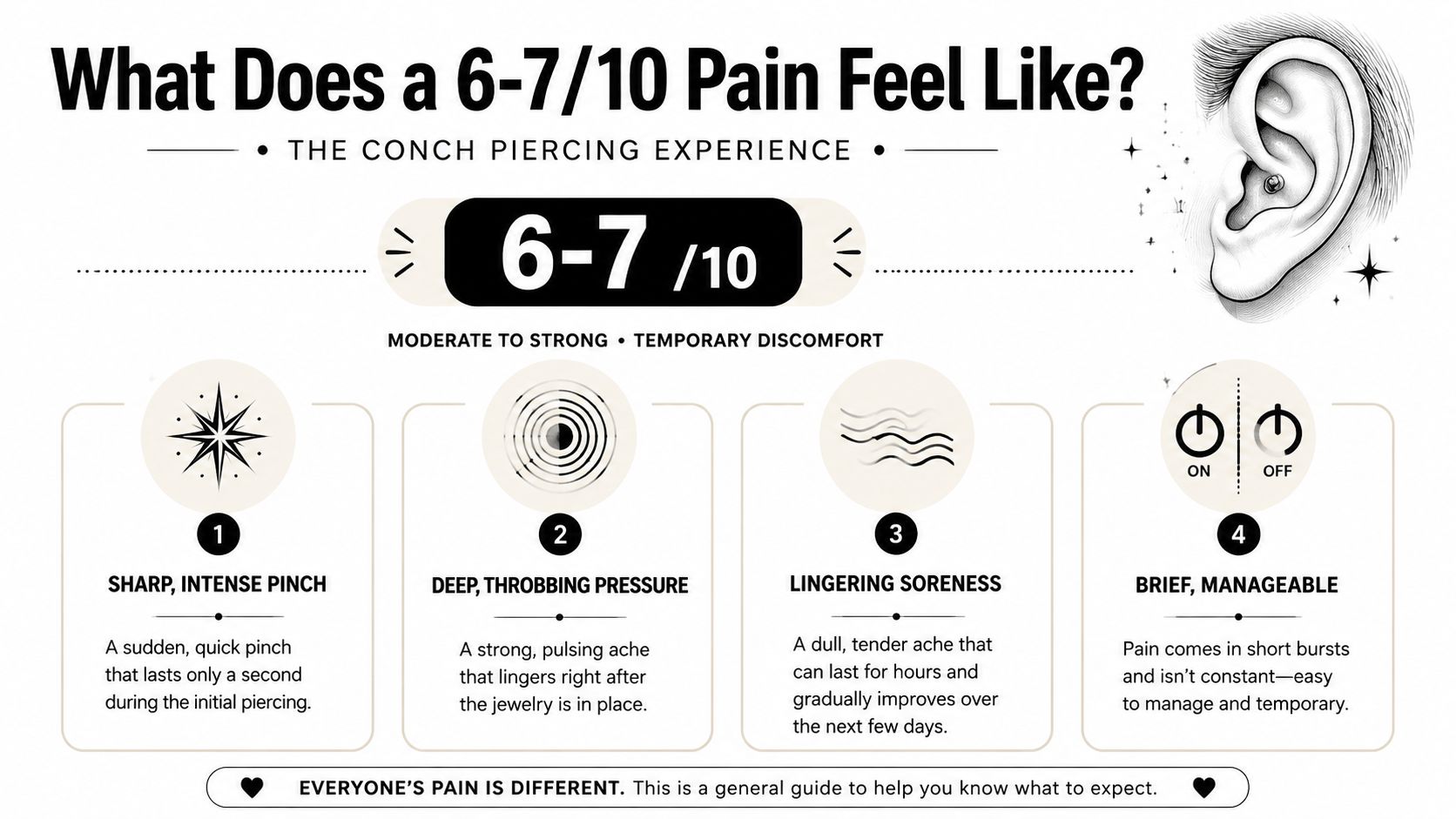
The reason that number can sound worse than the actual experience is simple. People hear “6 to 7” and imagine sustained pain. A conch piercing doesn't usually feel like that. According to Pierced Addiction's conch piercing pain guide, a conch is commonly rated around 6 to 7 out of 10, and the piercing itself usually takes only 3 to 5 seconds.
The sensation in plain English
If you want the honest version, it tends to come in stages.
- First sensation: A sharp pinch as the needle starts through.
- Second sensation: Pressure as it passes through the cartilage.
- Third sensation: A warm, reactive ache once the jewellery is in.
That's why many clients describe it as a “burst” rather than a long painful procedure. The body reacts strongly for a moment, then settles.
Most people don't struggle because the piercing takes too long. They struggle because they expect the wrong kind of pain.
Why it feels different from a lobe
A lobe piercing is soft tissue. A conch goes through a denser part of the ear, so the sensation is less like a quick nip and more like a pinch with pressure behind it. It's not just pain. It's pain plus resistance.
That difference matters because it explains why some clients say, “It hurt, but not in the way I expected.” They were braced for something messy and chaotic. In reality, a properly performed conch tends to feel precise.
Here's a simple way to think about the conch piercing pain level:
| Moment | What it usually feels like |
|---|---|
| Needle entry | Sharp, focused pinch |
| Needle passing through | Tight pressure in the ear |
| Jewellery insertion | Brief awareness and warmth |
| First few hours | Dull ache or throbbing |
| Following days | Tender if touched or slept on |
What people often get wrong
People often assume the number tells the whole story. It doesn't. A piercing that ranks lower but drags on can feel worse overall than a piercing that spikes sharply and ends fast.
That's why the conch sits in an interesting spot. It can feel intense, but it usually feels clean and brief when done well. For many clients, that's much easier to deal with than they expected going in.
How a Conch Compares to Other Ear Piercings
Comparison helps more than hype. If you've already had another ear piercing, you probably want a realistic sense of where the conch sits.
The useful caution here is that only the conch has verified pain and healing figures in the data available for this piece. So rather than inventing numbers for other placements, it's better to compare them by feel and by typical healing commitment.
Ear piercing pain and healing comparison
| Piercing Location | Typical Pain Level (1-10) | Sensation | Average Healing Time |
|---|---|---|---|
| Lobe | Lower than conch | Quick pinch in soft tissue | Shorter than cartilage piercings |
| Helix | Often in a similar general cartilage category | Sharp cartilage pinch with tenderness afterward | Usually a longer cartilage heal |
| Tragus | Commonly perceived as a focused cartilage pinch | Pressure in a small, firm area | Cartilage healing takes time |
| Daith | Often described as intense because of location and pressure | Deep pressure in a curved cartilage fold | Can be a longer cartilage heal |
| Conch | Commonly placed around 6 to 7 out of 10 in piercing guides | Sharp pinch, then pressure and later soreness | Often discussed in the months-long cartilage healing range |
A conch usually feels more substantial than a lobe because it passes through thicker cartilage. That alone changes the experience. You're not dealing with soft tissue movement. You're dealing with a firmer structure in the middle of the ear.
Where the conch usually sits
If I were explaining it to a first-time client in simple terms, I'd put it like this:
- Compared with a lobe: A conch is more intense.
- Compared with many cartilage piercings: It sits in the moderate-to-high part of the range.
- Compared with what people fear: It's often shorter and more manageable than they've built up in their head.
The bigger trade-off isn't usually the appointment. It's the recovery. Cartilage can stay tender when bumped, pressed by headphones, or slept on badly. That's why people comparing options should care just as much about healing behaviour as pain.
If you want a broader look at how cartilage placements differ, this guide on cartilage piercing pain is useful for placing conch in the wider ear-piercing picture.
A conch isn't usually the piercing people regret because of the needle. It's the one they underestimate if they're careless during healing.
Key Factors That Influence Conch Piercing Pain
The conch piercing pain level isn't fixed. Two people can book the same placement on the same day and describe it differently. That's normal.
What changes the experience most is anatomy, technique, and state of mind. Those are the factors that usually separate a straightforward appointment from one that feels harder than it needed to.
Your ear anatomy matters
The conch goes through thick cartilage, and that's one of the main reasons it feels more intense than a lobe. Some ears have a more pronounced, denser conch area. Others offer an easier route for placement and jewellery fit.
That doesn't mean one ear is “good” and another is “bad”. It just means the sensation can vary. Thicker cartilage usually means more pressure during the piercing and more awareness afterward.
Technique changes the whole experience
A clean needle piercing is what you want here. According to Maison Miru's conch piercing jewellery guide, a needle conch piercing is commonly rated around 5/10 to 6/10, though some guides place it at 6 to 8/10 depending on anatomy and placement. The same source notes that a dermal punch is usually more painful because tissue is removed, and that a 16-gauge (1.2 mm) needle is commonly used for cartilage conch piercings.
That last point matters more than many clients realise. The right gauge and a smooth, single-use needle give the tissue a clean channel. Poor technique creates more trauma, and more trauma usually means more swelling, more tenderness, and a rougher start to healing.
What doesn't help:
- Blunt handling: The ear tenses up and the whole moment feels worse.
- Rushed marking: Bad placement leads to avoidable pressure points later.
- Wrong jewellery choice: Oversized or awkward starter jewellery can irritate the area.
Your mindset affects your pain response
Anxious clients often feel everything more intensely. That isn't weakness. It's just how the body works. When your shoulders are up, your jaw is clenched, and you're waiting for disaster, the sensation lands harder.
A few simple things often help:
- Eat beforehand: Turning up shaky or light-headed never improves a cartilage appointment.
- Breathe on cue: A good piercer times the moment clearly.
- Don't watch the needle if that makes you tense: Some clients do better looking away and focusing on breathing.
- Plan your evening: If you know you can go home, clean it, and rest, you'll feel more in control.
Calm clients don't always feel less pain. They usually cope with it better because they know what's coming.
What to Expect at Your Conch Piercing Appointment
Most nerves settle once the process becomes familiar. A professional conch appointment should feel organised, hygienic, and calm from the start.
You'll usually begin with a consultation about placement, anatomy, and jewellery. That's where we check whether the conch suits your ear, whether a stud or another style makes sense for the initial piercing, and whether anything in your daily routine might make healing more awkward.
The appointment step by step
After placement is agreed, the ear is cleaned and marked. You'll be shown the mark in a mirror so you can confirm it looks right. This part matters. Tiny shifts in conch placement can affect comfort, jewellery sit, and the final look.
Then the sterile set-up is prepared. The actual piercing moment is quick, but the calmness around it is what helps many. A good piercer will tell you when to breathe, when to stay still, and what sensation to expect.
According to Healthline's explanation of conch piercing pain, a conch piercing typically causes sharp pain and pressure during insertion, followed by hot, throbbing pain afterward because the needle passes through a thick cartilage plate rather than soft tissue. Healthline also notes that the intense part lasts only seconds, while soreness can persist for hours to days.
What it feels like right after
Once the jewellery is in, many clients notice heat in the ear and a sort of spreading ache. That's normal for cartilage. The ear has just been pierced, and it reacts.
You might also feel:
- A warm flush in the ear
- Pressure around the jewellery
- Tenderness when the area is cleaned
- A strong awareness of the piercing for the rest of the day
That doesn't mean anything has gone wrong. It usually means the body is doing exactly what cartilage does after a fresh piercing.
If you're considering jewellery styles for later, this guide to a conch hoop piercing can help you understand how healed styling differs from an initial appointment.
Before you book
If you want to talk through placement, jewellery, or whether a conch is right for your ear, call 01202 900050 (Bournemouth) / 020 8686 7730 (Croydon) or message 07752 913846 (Bournemouth) / 07902 490584 (Croydon) on WhatsApp. A quick conversation often clears up the worry faster than reading ten conflicting forum threads.
The best conch appointments feel uneventful. Clean set-up, clear marking, one focused moment, then aftercare guidance you can actually follow.
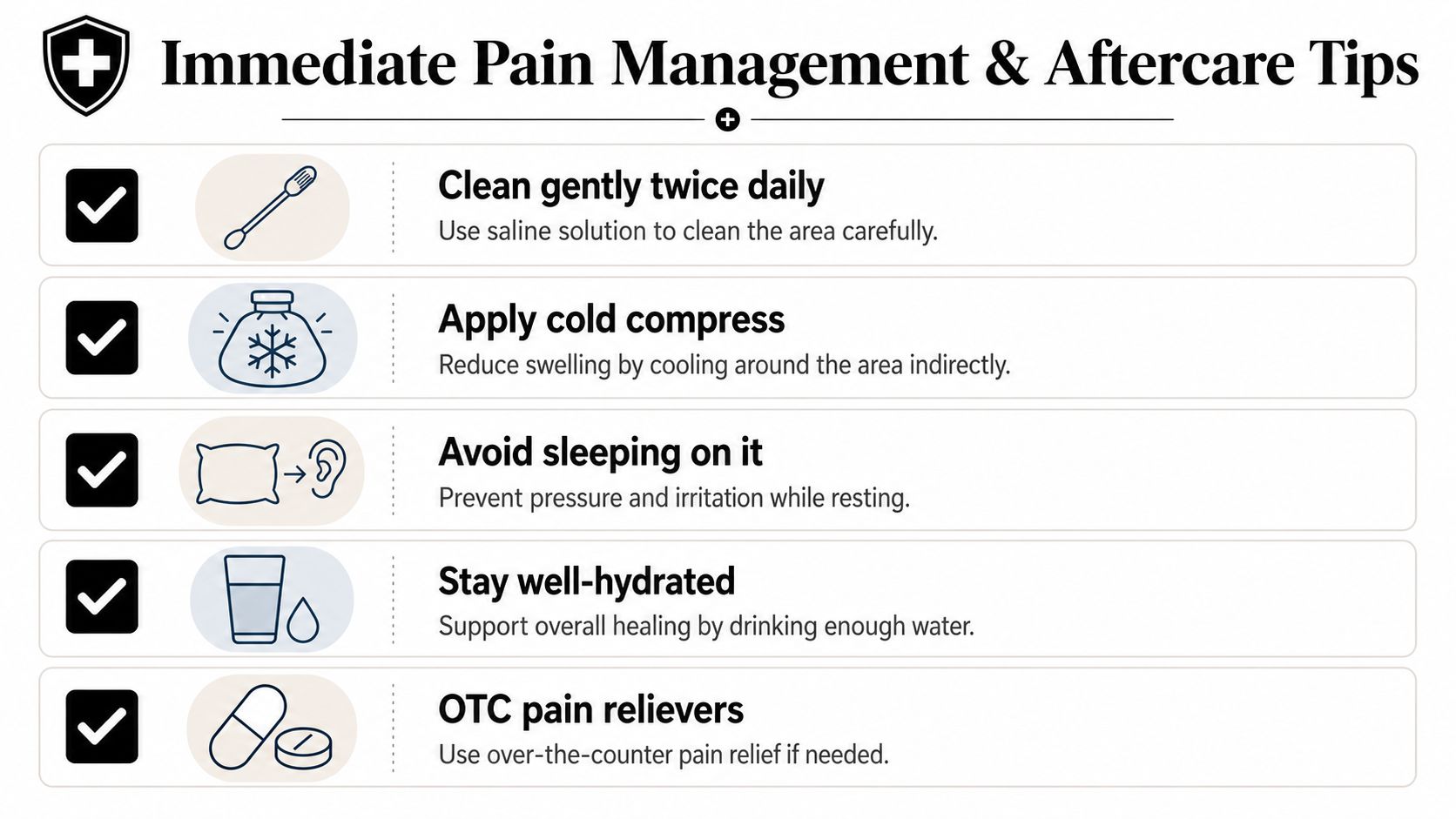
Immediate Pain Management and Aftercare Tips
The first job after a conch piercing is simple. Keep it calm. Most healing problems come from pressure, friction, over-cleaning, or constant touching.
What works in the first days
- Clean gently: Use a sterile saline product and keep the routine simple. If you need one, this guide to saline spray for piercing explains what you're aiming for.
- Avoid sleeping on it: Side pressure is one of the fastest ways to make a fresh conch angry.
- Keep hair, headphones, and clothing off it: Small repeated knocks can create more soreness than the piercing itself.
- Use over-the-counter pain relief if suitable for you: Many clients find that helps with the first evening and the following day.
- Leave the jewellery alone: Twisting and checking it won't help it settle.
What doesn't help
Don't overdo cleaning because you think more is better. Don't press around it to “see how it's doing”. Don't swap jewellery early because the swelling seems to have gone down.
The conch often looks calmer before it's stable. That's where patience pays off.
If you're unsure whether what you're feeling is normal, ask. For aftercare questions, you can message 07752 913846 (Bournemouth) / 07902 490584 (Croydon) on WhatsApp or call 01202 900050 (Bournemouth) / 020 8686 7730 (Croydon).
If you're ready to find a trusted studio, browse Piercing Near Me for professional piercing guidance, location details, and booking support for safe, well-planned appointments in Croydon and Bournemouth.