
You've probably seen a double helix piercing on Instagram, Pinterest, or on someone whose ear stack just looks effortlessly put together. It catches the light, frames the ear nicely, and looks simple enough at first glance. Then the questions start. Does it hurt more than a normal helix? Can you wear hoops straight away? Will your ear suit it? And how do you avoid ending up with two angry cartilage piercings instead of the neat look you wanted?
That hesitation is sensible. A double helix piercing isn't just one piercing with an extra piece of jewellery. It's two separate cartilage piercings placed close enough to affect each other, both during the appointment and throughout healing. That means placement, jewellery choice, aftercare, and lifestyle all matter more than people often expect.
Your Guide to the Double Helix Piercing
A double helix piercing is two piercings placed along the outer rim of the upper ear cartilage. They can sit close together for a compact stacked look, or be spaced a little farther apart for a cleaner, more open style. Both can look great. The right version depends less on trend photos and more on your ear anatomy.
The helix remains one of the most requested cartilage placements. Industry data discussed by InkSane's review of popular piercings places the helix as the second-most common piercing type after the earlobe. That popularity matters for clients because experienced piercers work with helix placements every day, including single, double, and triple variations.
At Timebomb Tattoo & Piercing, the first thing that matters isn't the jewellery you've saved to your phone. It's whether your ear gives us the right space, angle, and tissue to place two piercings that will heal cleanly and sit well long term. A professional assessment should look at the curl of the helix, the available flat area behind it, and whether the proposed positions leave enough room for swelling and future styling.
Good double helix work starts before the needle touches the ear. If the marks aren't right, the healing won't be right either.
We use sterile, single-use needles and high-quality starter jewellery chosen for healing rather than short-term aesthetics. That usually means keeping the first setup practical, stable, and low-profile. It's the approach that gives you the best chance of ending up with the polished, stylish result you wanted in the first place.
Anatomy and Strategic Placement Options
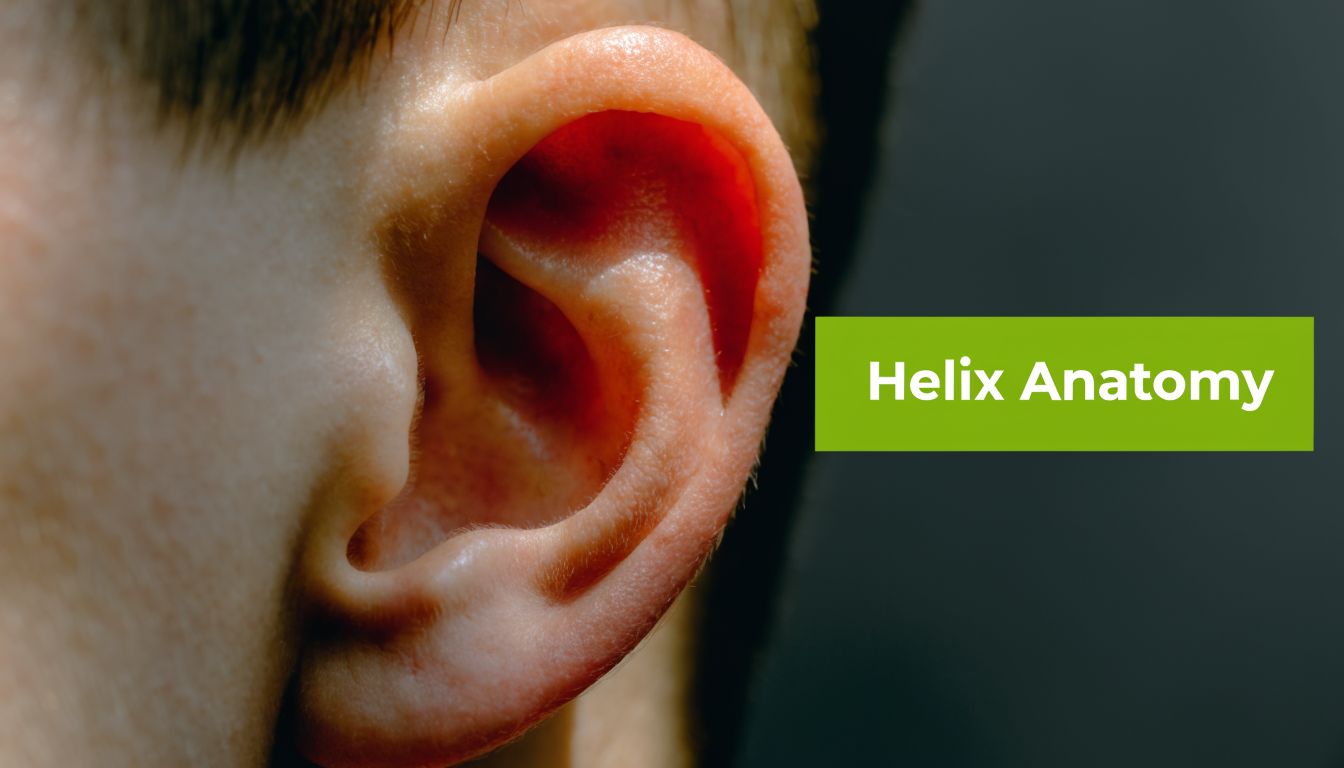
A double helix piercing is often described as “two holes on the upper ear”, but that's too vague to be useful. The outer rim of the ear varies quite a bit from person to person. Some clients have a pronounced curl with plenty of usable space. Others have a tighter rim, uneven curvature, or a shape that makes one style of double helix look far better than another.
What a piercer checks first
Before marking anything, a good piercer checks a few practical details:
Rim shape
A smooth, even helix rim usually gives more placement options. A sharper fold can still work, but it may limit spacing or jewellery size.Depth behind the helix
Fresh jewellery needs room to sit comfortably without digging into the side of the head or catching constantly on hair.Visual balance
The double helix has to suit the whole ear, not just the upper edge. Placement should work with existing lobes, conch, flat, or forward helix jewellery if you already have them.Daily habits
If you always sleep on one side, wear over-ear headphones, or keep your hair tucked behind the ear, that changes what's realistic.
The biggest mistake people make is thinking placement is just about where two dots look nice in the mirror. It isn't. It's about angle, distance, tissue support, and whether both piercings can heal without constantly aggravating one another.
Stacked or spaced
Most double helix piercings fall into one of two looks.
A stacked double helix places the two piercings fairly close together. This gives a tight, intentional look and works well if you like a delicate cluster effect with matching ends. The trade-off is that close spacing can make swelling management more important. If the jewellery is too short, or the angles aren't matched properly, one piercing can put pressure on the other.
A spaced double helix leaves more room between the two placements. That can feel visually lighter and often allows a bit more flexibility later when you want to mix jewellery sizes or shapes. It may also reduce the sense that both piercings are competing for the same small area during early healing.
Anatomy matters more than the reference photo. The best-looking double helix is the one that suits your ear and heals in a stable position.
Why planning matters more with cartilage
Cartilage doesn't forgive rushed decisions. Two nearby piercings in the same area create a shared healing environment. If one sits at an awkward angle, if one swells more, or if one gets knocked repeatedly, the other often gets dragged into the problem as well.
That's why strategic placement is part aesthetics and part risk management. The ideal plan gives you enough spacing for your anatomy, jewellery that won't sit under tension, and a layout that still looks intentional once the area settles.
Understanding the Pain and Healing Timeline
You leave the studio pleased with the placement, then three weeks later one side feels fine and the other is grumpy after you caught it on a towel. That kind of stop-start healing is common with a double helix. Two fresh cartilage piercings in the same area can influence each other, so the timeline often feels less predictable than clients expect.
The Association of Professional Piercers aftercare guidance notes that cartilage piercings can take months to heal, and a double helix often sits at the longer end because both piercings are sharing swelling, pressure, and everyday irritation in one small section of ear. In practice, a full settle of 6 to 12 months is a realistic expectation, sometimes longer if the piercings are knocked, slept on, or started with jewellery that does not suit the anatomy.
What the pain usually feels like
Pain is usually brief and very manageable. Most clients describe the first piercing as a quick sharp pinch, then the second feels more intense because the ear is already warm, alert, and starting to swell.
That second hit is the part people remember.
Lynn Loheide's helix piercing guide explains that cartilage piercings are often more about pressure and soreness during healing than dramatic pain at the appointment itself. That matches what we see in the studio. The piercing is over quickly. The awkward part is the tenderness later that day, the throb after an accidental knock, or the pressure you notice if you try to sleep on it too soon.
What normal healing looks like
A healthy double helix rarely improves in a straight line. The first stage usually brings swelling, redness, tenderness, and light crusting. Then it may calm down for a while and suddenly flare after friction from glasses, masks, over-ear headphones, hair catching round the back, or pressure from sleep.
That does not automatically mean anything has gone wrong.
What matters is the pattern over time. Mild irritation that settles after you remove the cause is common. Ongoing worsening pain, spreading heat, significant swelling, or discharge that looks more like pus than normal crust needs a professional review, and sometimes medical advice. For a broader overview of what to expect during cartilage piercings healing, this guide is a useful reference.
In the UK, aftercare advice should stay simple. Sterile saline, clean hands, no twisting, and no home remedies. Tea tree oil, aspirin paste, harsh antiseptics, and frequent touching usually make cartilage angrier, not calmer.
Practical rule: Judge healing by the month, not by the day.
Why healing can be slower with two piercings
With a single helix, one irritated channel is usually the whole problem. With a double helix, one irritated channel can put extra pressure on the other. Swelling has less room to disperse, sleeping mistakes tend to affect both, and poorly fitted jewellery can make the pair feel constantly unsettled.
This is why the professional experience matters so much. Good placement, matched angles, room for swelling, and jewellery that stays stable give both piercings a fair chance to heal cleanly. Poor technique can leave you chasing irritation for months.
Choosing the Right Implant-Grade Jewellery
Starter jewellery isn't just decoration. It's part of the healing plan. For a double helix piercing, that matters even more because both placements share the same area and can interfere with each other if the fit or angle is off.
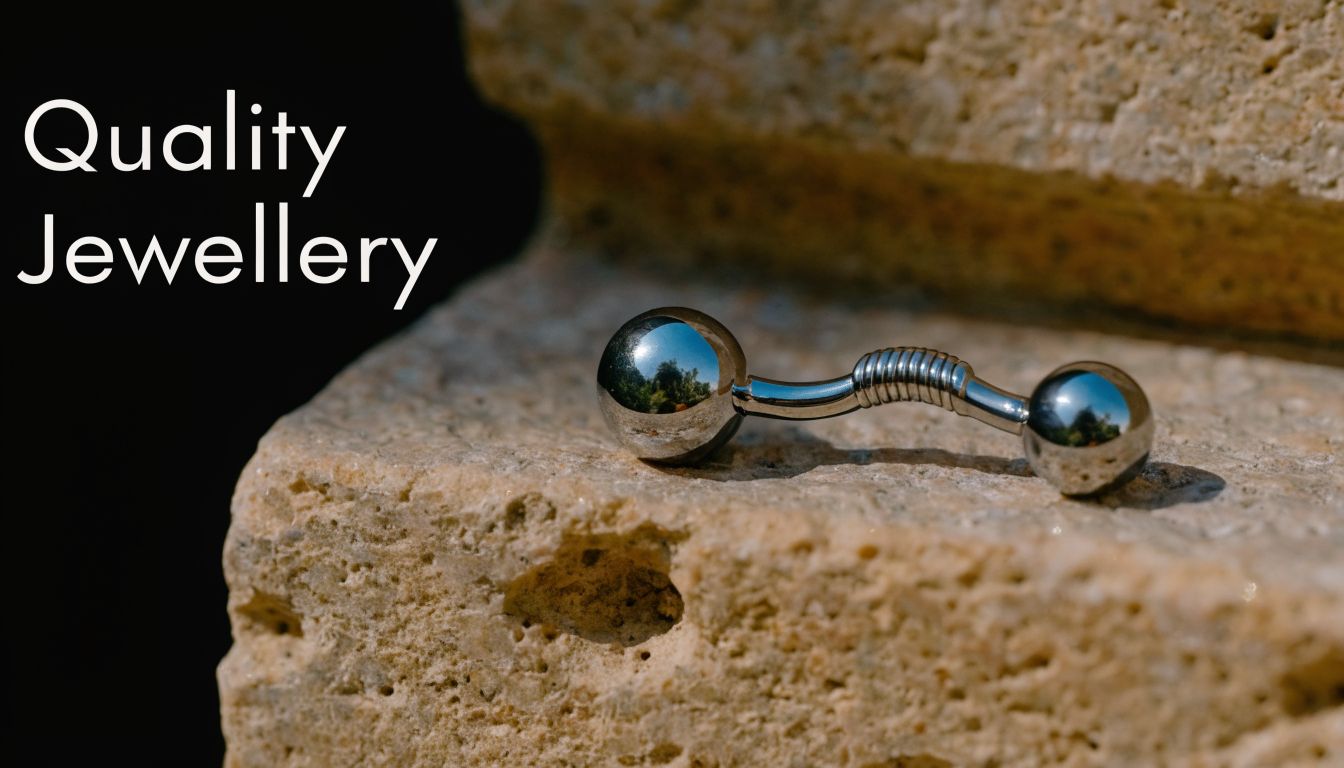
UK safe-piercing guidance prioritises implant-grade materials, and for double helix work the strongest starting point is correctly sized, flat-back titanium labrets. As discussed in Lynn Loheide's helix piercing guidance, jewellery that's too short or angled poorly can cause one piercing to irritate the other, which can lead to migration or healing complications.
Why titanium flat-backs are the smart start
Implant-grade titanium is a strong choice for fresh cartilage because it's biocompatible, lightweight, and dependable for long wear. Combined with a flat back, it gives the piercing a more controlled environment.
That setup helps in a few specific ways:
Less snagging
Flat backs sit more neatly behind the ear than bulky butterfly backs or awkward jewellery shapes.Better swelling allowance
Fresh piercings need extra post length at the start. That space is intentional. It helps the tissue cope without the jewellery digging in.More stable angles
A secure labret is less likely to roll, twist, or apply uneven pressure while the channel is trying to form.
If you're comparing options, this guide to titanium piercing jewellery explains why titanium is so widely recommended for fresh piercings.
Why hoops are usually a later-stage choice
Hoops move. That's the main issue.
In a healed piercing, movement can be fine. In a fresh double helix, it usually isn't. Circular jewellery rotates through the channel, shifts when you sleep, catches in hair more easily, and can pull the angle slightly every time it moves. On a single healed helix, that's one thing. On a fresh double helix, it gives two nearby wounds more chances to become irritated.
A lot of people eventually switch to hoops and love them. The timing matters. Starting with studs and changing later is often the difference between a straightforward healing period and months of avoidable aggravation.
Downsizing is part of the plan
When the initial swelling settles, the jewellery often needs to be shortened. That step is called downsizing, and it's one of the most overlooked parts of cartilage healing.
A post that was perfect on day one can become too long later. Then it starts moving more than it should, catching more often, and sitting at a less stable angle. Downsizing brings the jewellery back into proportion once the ear is ready.
Your Practical Double Helix Aftercare Plan
You get home with two fresh helix piercings, they look great, and by night two the ear feels warm, puffy, and awkward to sleep on. That part is normal. What matters over the next few months is reducing pressure, keeping the area clean, and avoiding the small habits that keep two nearby cartilage piercings irritated.
A double helix needs a bit more discipline than a single helix because the piercings can affect each other. If one swells heavily or gets knocked, the surrounding tissue often makes the second piercing fussier too. Good aftercare is simple, but it has to be consistent.
The daily routine that works
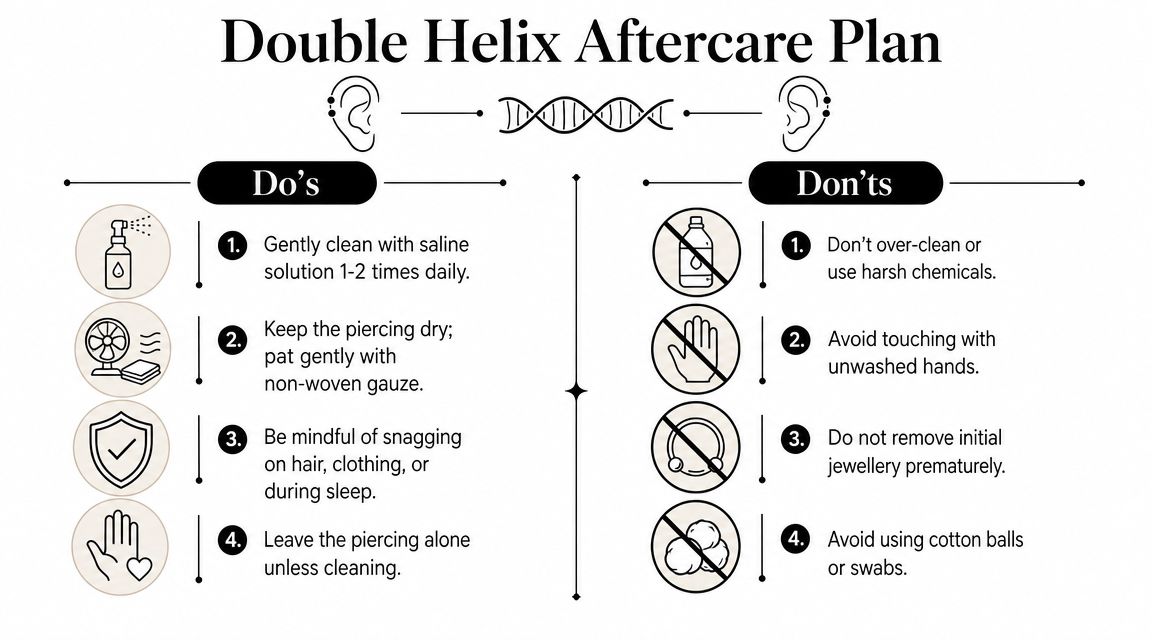
Clean the area gently twice a day with sterile saline. Let warm water run over the ear in the shower to soften any build-up, then dry it carefully with clean gauze or kitchen roll. Leave the jewellery alone between cleans.
For many clients, a sterile saline spray for piercing keeps the routine simple and consistent, especially during the first few weeks.
Avoid soap directly on the piercings unless your piercer has given a specific reason to use it. Avoid tea tree oil, surgical spirit, peroxide, homemade salt mixes, and ointments. Those products often dry the tissue out or trap irritation against the jewellery.
Double helix aftercare do's and don'ts
| Do | Don't |
|---|---|
| Clean gently with saline and let softened debris come away naturally | Twist or rotate the jewellery |
| Keep pressure off the fresh side while sleeping | Sleep directly on it if you can avoid it |
| Tie hair back if it keeps wrapping round the posts | Let hair products build up around the piercings |
| Come back for a check if the angle, swelling, or irritation worries you | Change jewellery early just because the outside looks settled |
Small habits that make a big difference
A healing double helix usually struggles with repeated irritation, not one dramatic mistake.
Side sleeping
This is the biggest one. A travel pillow or donut pillow can take pressure off the ear and make a real difference.Headphones, helmets, and hats
Anything that presses on the top of the ear can keep both piercings swollen longer than they need to be.Wet hair against the jewellery
Dry the area after showers and hair washing. Damp hair wrapped around the posts is a common cause of tenderness.Phones and hands
Pressing a phone to the ear, checking the jewellery, or brushing the area absent-mindedly adds up fast.Cotton fibres
Cotton pads and buds catch easily and leave debris behind.
If a bump appears, stay calm. In the studio, the usual causes are pressure, snagging, moisture, or jewellery that now needs reviewing, not anything dramatic.
What usually goes wrong
The outside can look settled before the channel is stable inside. That is why early jewellery changes, sleeping on the ear, and missed check-ups cause so many setbacks with cartilage work.
The other common problem is waiting too long to ask for help. If the ear stays very swollen, the jewellery starts sinking, the angle changes, or cleaning becomes painful, get it checked by a professional piercer promptly. Sometimes the fix is straightforward. Shorter healing time often comes down to catching pressure issues early, improving drying, or booking the downsize at the right point rather than trying random products at home.
In the UK, the safest aftercare plan is usually the simplest one. Sterile saline, clean hands, low pressure, and patience. That combination gives both piercings the best chance to heal cleanly and sit well together long term.
Book Your Appointment at Timebomb Piercing
A strong double helix piercing comes down to three things. Placement that suits your anatomy, jewellery chosen for healing, and enough patience to let cartilage settle properly. Miss one of those and the piercing becomes harder than it needs to be. Get all three right and the result is clean, stylish, and worth the wait.
At Timebomb Tattoo & Piercing in Croydon and Bournemouth, clients are guided through the process in a calm, practical way. The appointment starts with a proper consultation. We look at the ear, discuss whether a close stack or more open spacing makes sense, mark the placement carefully, and openly discuss what will work for your lifestyle. If something won't heal well on your anatomy, we'll say so.
The piercing itself is quick and hygienic, using sterile, single-use needles and high-quality implant-grade starter jewellery. Before you leave, you'll know how to clean it, what not to do, when to come back for a check, and how to spot the difference between normal healing and irritation caused by pressure or snagging.
A good studio doesn't just give you two piercings. It gives you a setup that has a real chance of healing well and looking right months later, not just on the day you walk out.
If you're ready to book, call 01202 900050 (Bournemouth) / 020 8686 7730 (Croydon) or message WhatsApp 07752 913846 (Bournemouth) / 07902 490584 (Croydon). If you'd like to ask about placement, jewellery, or whether your ear suits a double helix piercing, that conversation is always worth having before you commit.
If you're comparing studios or want more piercing advice before booking, Piercing Near Me is a useful place to explore safe, professional options, aftercare guidance, and booking information for trusted Timebomb Tattoo & Piercing locations.