
You've found a Cardiff studio with a convenient booking slot, but the questions are harder: Is the piercer using a sterile needle? Will a helix work with your headphones and sleeping position? Does the jewellery suit your skin and your budget, or are you paying for a quick salon add-on that creates months of irritation? Choosing ear piercings in Cardiff should start with those answers, not the lowest advertised price.
This guide treats the appointment as a regulated, health-conscious service. You'll find practical advice on placements, local studio types, hygiene checks, consent, pain, healing, swimming and the realities of Cardiff life, from bus journeys to Cardiff Bay.
Why Cardiff Clients Should Treat Ear Piercing as a Regulated Service
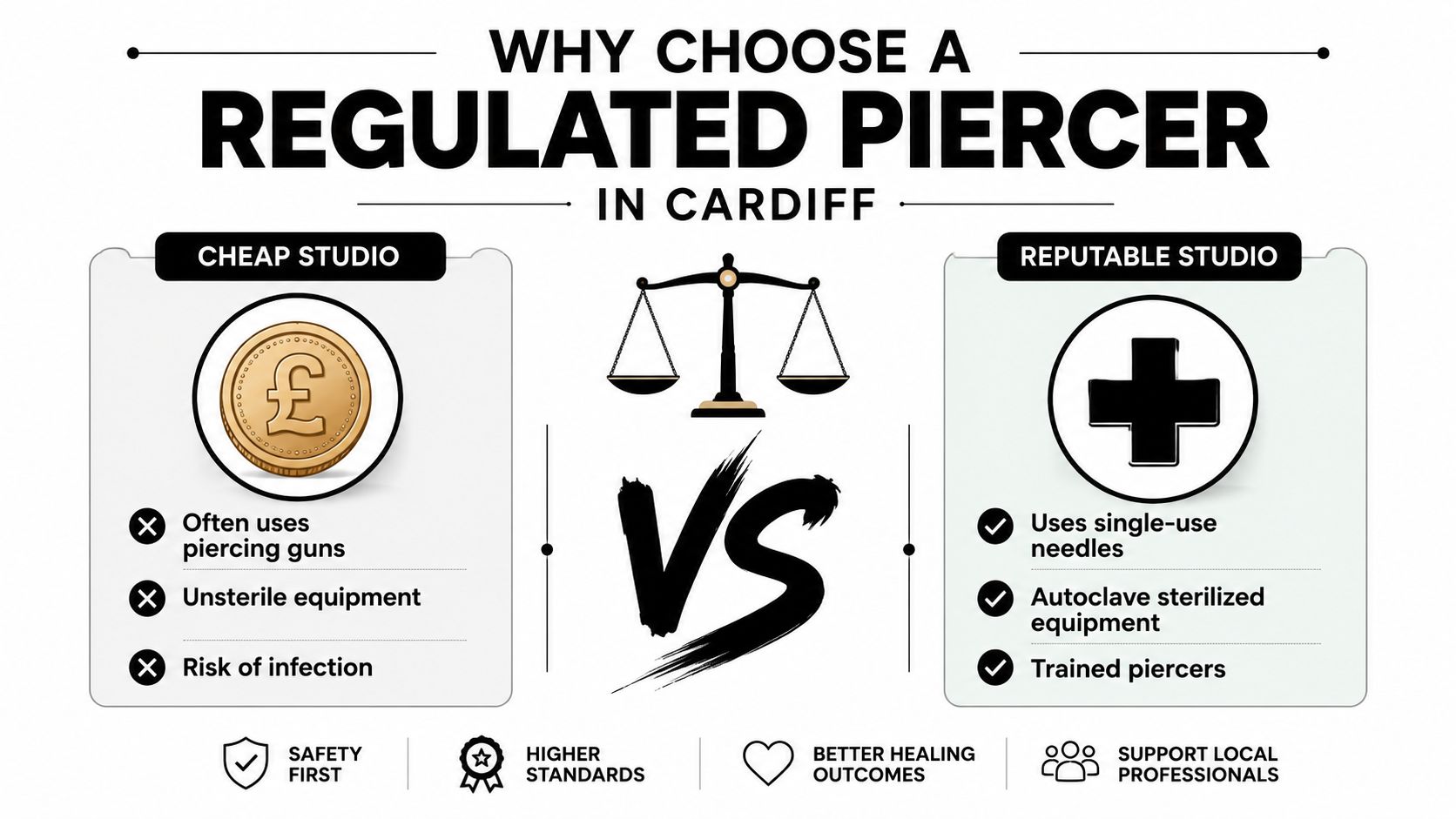
The most common first-timer mistake is choosing a studio by price alone. A cheap lobe piercing may look like a bargain until poorly fitted jewellery, rushed marking or weak aftercare leaves you paying for adjustments and professional advice later.
Cardiff treats cosmetic ear piercing as a regulated personal-treatment activity. The local authority groups it with acupuncture, tattooing and electrolysis, because registration and hygiene controls help reduce infection risk. Cardiff's personal-treatment licensing information confirms that businesses carrying out ear piercing must register with the local authority, while Cardiff's skin-piercing byelaws.pdf) set a concrete local compliance requirement for people and premises offering cosmetic piercing.
Wales tightened the wider special-procedure framework in 2024. Licensed practitioners must wear gloves, use disposable aprons where contamination is possible, and ensure jewellery or instruments contacting skin are single-use and sterilised. For ear and nose piercing, cartridges must be sealed, in date and in good condition before use.
The three guarantees to expect
A reputable Cardiff appointment should give you:
- A clean, controlled setup: Sterile, single-use products should be handled openly, with reusable instruments sterilised properly.
- An informed consultation: The piercer should assess your anatomy, placement, jewellery size and lifestyle before marking your ear.
- Clear aftercare and consent: You should leave knowing how to clean the piercing and what rules apply if the client is under 16.
Practical rule: Treat the studio like a regulated treatment environment. Ask direct questions before you sit in the chair.
For bookings or questions, our phone number is 01202 900050 (Bournemouth) / 020 8686 7730 (Croydon) and our WhatsApp number is 07752 913846 (Bournemouth) / 07902 490584 (Croydon).
Ear piercing at a glance
| Placement | Typical pain (1-10) | Cardiff price band | Healing time |
|---|---|---|---|
| Lobe | 1-3 | Ask the studio for its current quote | Roughly six weeks |
| Upper lobe | 2-4 | Ask the studio for its current quote | Longer than a standard lobe |
| Helix | 3-5 | Ask the studio for its current quote | Substantially longer than a lobe |
| Conch | 4-6 | Ask the studio for its current quote | Cartilage healing period |
| Tragus | 4-6 | Ask the studio for its current quote | Cartilage healing period |
| Rook or daith | 5-7 | Ask the studio for its current quote | Cartilage healing period |
Pain varies with anatomy, nerves and anticipation, so use the table as a planning guide rather than a promise. Cardiff studios should provide the exact jewellery and service price before piercing, especially where the fee changes with metal choice.
Ear Piercing Types Worth Knowing Before You Book
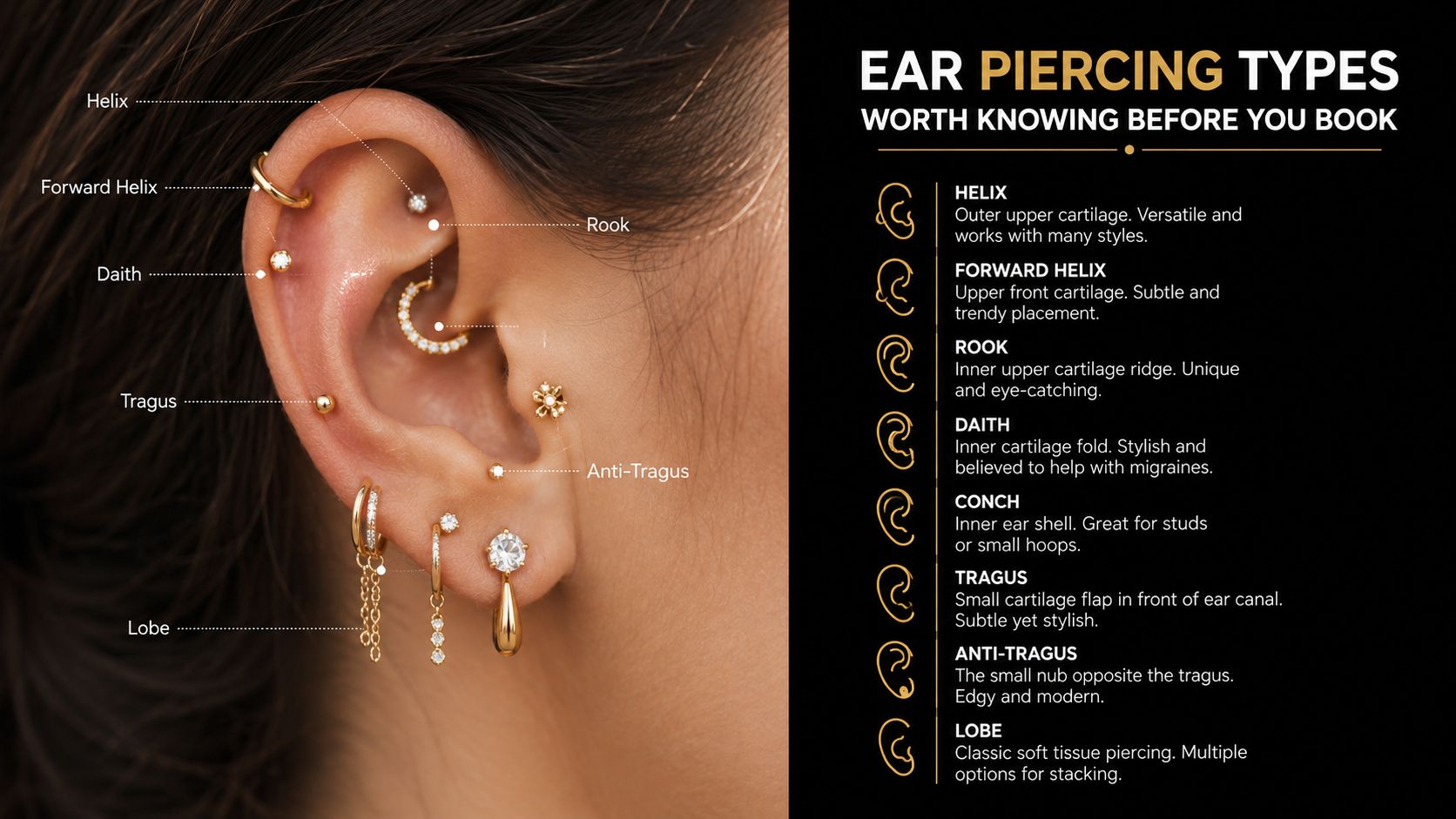
Your ear shape and daily routine matter more than a trend photo. A good piercer will adapt the placement to your anatomy, but arriving with a shortlist makes the consultation sharper and helps you avoid booking a piercing that will fight your headphones, helmet or sleeping position.
Start with the lobe
Lobe piercings pass through the soft lower ear and suit almost everyone. They're the easiest option for a first appointment, work with tiny studs or small hoops, and usually settle more easily around glasses, hair and ordinary sleeping habits.
Upper-lobe piercings sit above the traditional lobe. They create a neat stacked look and suit clients who want a curated ear without committing to cartilage. Ask the piercer to leave enough spacing for future jewellery rather than squeezing several holes into one small area.
Choose cartilage for the look, not just the photograph
A helix sits on the outer upper rim. It looks excellent with a flat-back stud at first and can later take a hoop, but it catches on hair, masks, hats and towels. If you cycle, ride a motorbike or wear over-ear headphones, tell the piercer before marking.
A flat piercing sits on the broad upper-ear cartilage. It gives a clean surface for a decorative cluster or gemstone stud and often suits clients who want visual impact without an outer-rim hoop. Its success depends heavily on avoiding pressure from headphones and sleeping.
The conch is placed through the central cartilage bowl. A stud gives a deliberate, polished look, while a ring creates a stronger statement after healing. It can work well for a Cardiff student who wants a noticeable piercing that sits inside the ear, but earbuds and over-ear headphones may press against it.
Consider the smaller, more specialised placements
A tragus passes through the small flap beside the ear canal. It's subtle with a stud and striking with a small ring, but earbuds can rub the area, so don't choose it just because it looks comfortable in a close-up image.
A rook sits in the inner fold of upper cartilage. It creates depth in a curated arrangement and often suits clients with a pronounced fold, but anatomy varies considerably. A piercer should inspect the ear rather than promise the placement from a social media reference.
Daith piercings sit in an inner cartilage fold and can interfere with in-ear headphones. Forward helix placements can look refined in multiples, but their position makes hair, glasses and masks frequent sources of contact. For parents and commuters, a lobe or upper lobe is usually the sensible starting point. For enthusiasts, build a cartilage plan around the ear you don't sleep on.
Dedicated Piercing Studios vs Salon Add-Ons in Cardiff
Cardiff offers two broad routes. A dedicated piercing studio performs piercings as its main service, while a hair or beauty salon may offer ear piercing alongside treatments such as cuts, colour, nails or brows.
A specialist usually gives you more consultation time, a broader jewellery selection and a setup designed around piercing workflow. That matters for helix, conch, tragus, rook and daith placements, where anatomy, angle, swelling allowance and pressure management affect the result. Specialist studios are also more likely to discuss long-term jewellery changes rather than treating the appointment as a quick retail add-on.
A salon can be perfectly reasonable for straightforward lobe piercings, especially if the client values a familiar setting or a convenient city-centre slot. The trade-off is that you need to verify the piercing standards yourself. Ask whether the person piercing you is registered, what sterile equipment they use, whether needles are single-use, how reusable tools are sterilised and what jewellery materials are available.
A Cardiff decision rule
Choose a dedicated studio when:
- You want cartilage.
- You need anatomy-led placement advice.
- You're planning a curated stack.
- You're sensitive to jewellery materials.
- You want a thorough aftercare consultation.
A salon add-on may suit simple lobes when the service can answer those hygiene questions clearly and provides suitable starter jewellery. Don't accept vague replies such as “everything is cleaned” because cleaning and sterilisation aren't interchangeable.
Cardiff options appear across the city centre, Rhiwbina, Cathays and the St David's or Dewi Sant area. Some venues support online appointments, some offer walk-ins, and others treat piercing as an additional salon service. Use this professional ear-piercing guide to build a shortlist, then contact the venue directly about availability, consent and jewellery.
For cartilage, my recommendation is simple: book the piercer who spends time assessing your ear, not the venue that gets you through the fastest.
How to Spot a Safe and Reputable Piercer in Cardiff
You can filter most studios before booking. Start with the website, then repeat the check when you arrive. A polished interior doesn't prove good technique, but a piercer who avoids basic questions has already given you useful information.
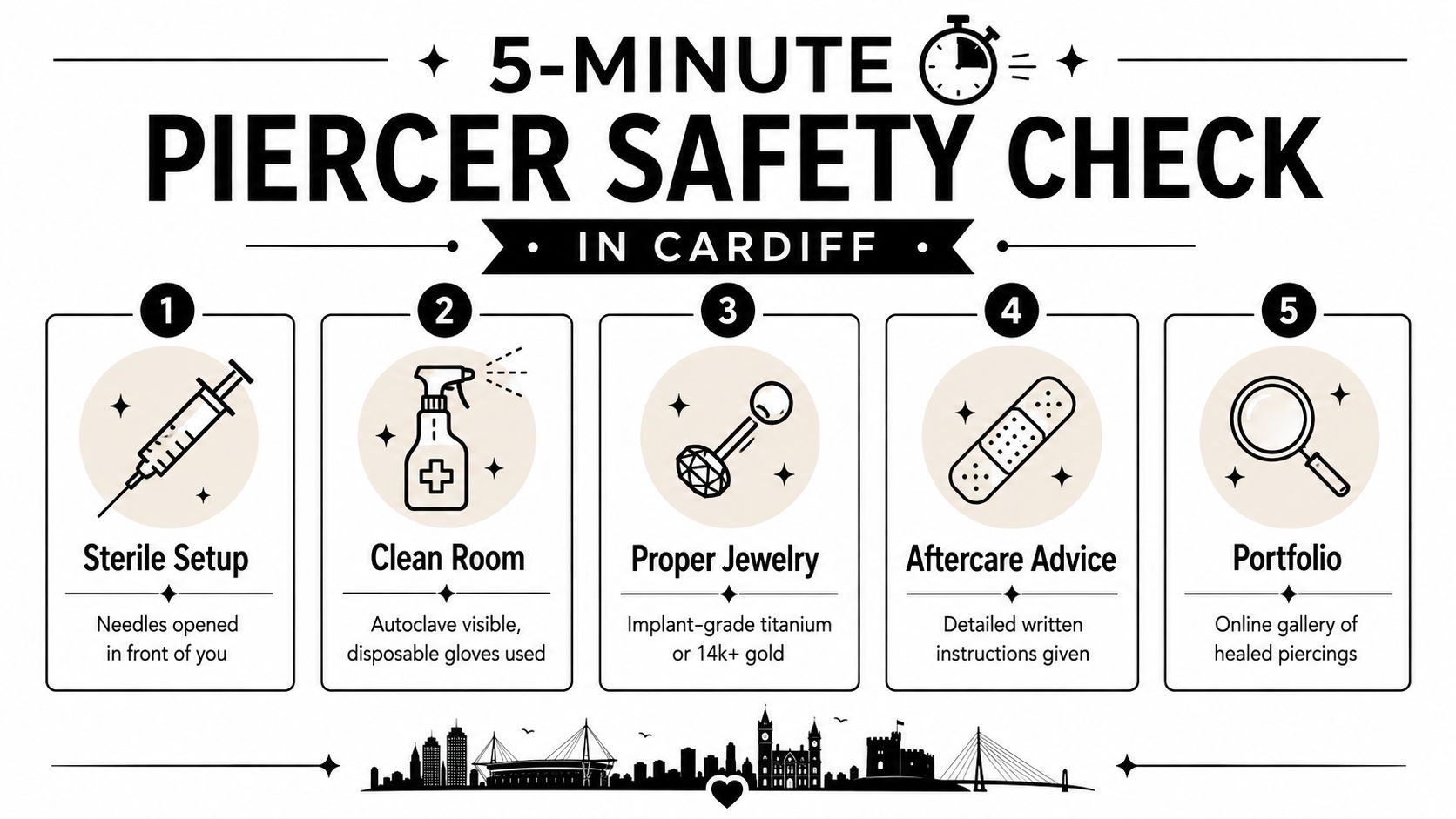
Look for a single-use sterile needle opened in front of you. UK government infection-control guidance recommends single-use sterile products where possible because they're guaranteed sterile and don't need cleaning. The same UKHSA guidance for ear and cosmetic piercing businesses also discusses environmental controls such as flushing taps daily and cleaning taps and sinks with a biocidal cleaner.
Use this five-minute check
- Watch the setup: The piercer should wash or sanitise their hands, put on fresh gloves and prepare a clean working area.
- Check the jewellery: Look for sealed, implant-grade titanium or suitable solid gold. Be cautious with cheap plated jewellery and unknown alloys.
- Ask about sterilisation: Reusable tools need an appropriate sterilisation process, such as an autoclave, not just a surface wipe.
- Inspect the disposal system: A visible sharps container shows that used needles have a defined disposal route.
- Read the aftercare: Written instructions should cover saline, handling, pressure, swimming and what to do if symptoms worsen.
Watch the consent process
For anyone under 16, professional standards require a parent or guardian to be present throughout the service and to provide informed, signed consent. Council policies can vary, and ear piercing rules aren't identical across the UK, so confirm the individual Cardiff studio's age policy before travelling.
Walk away if the piercer refuses to open sterile packaging in front of you, won't explain the jewellery material, skips anatomy assessment or pressures you into a placement. The difference between a piercing gun and needle technique is explained in this piercing gun versus needle guide, which is useful reading before you compare Cardiff studios.
Piercing Near Me can also act as a route for clients comparing professional services, with direct booking support available on 01202 900050 (Bournemouth) / 020 8686 7730 (Croydon) or WhatsApp at 07752 913846 (Bournemouth) / 07902 490584 (Croydon).
What Actually Happens on the Day of Your Ear Piercing
Arrive fed, hydrated and unhurried. Don't turn up after drinking alcohol, and ask a clinician before stopping any prescribed medication that affects bleeding. Wear clean hair with minimal product and choose a top that won't catch on fresh jewellery when you pull it over your head.
Allow time for parking, a bus connection or a walk from Cardiff city centre. If you're fitting the appointment between a lecture and a shift, you're more likely to rush the consultation and forget the aftercare briefing.
The consultation comes first
The piercer checks your ear, discusses the placement and shows you jewellery options. They should consider the fold, thickness and available space, then mark the position while you sit naturally. Look at the mark from the front and side, move your hair and check whether the jewellery will sit where you expect.
This is the moment to mention sleeping on one side, wearing a helmet, using earbuds, swimming or playing contact sport. A technically attractive piercing can become a poor choice if your routine constantly presses or catches it.
The piercing itself is quick
Once you approve the mark, the piercer prepares the needle and jewellery. You'll feel pressure, then a sharp pinch or sting. The warmth arrives before the sensation fades, and the whole moment is usually shorter than the anxiety beforehand.
The piercer fits the jewellery, checks the angle and cleans the area. You should receive written aftercare, an explanation of expected tenderness and advice about follow-up or jewellery downsizing. Don't leave until you know what solution to use, how often to clean and which warning signs need medical attention.
Healing Timelines and Aftercare for Cardiff Lifestyles
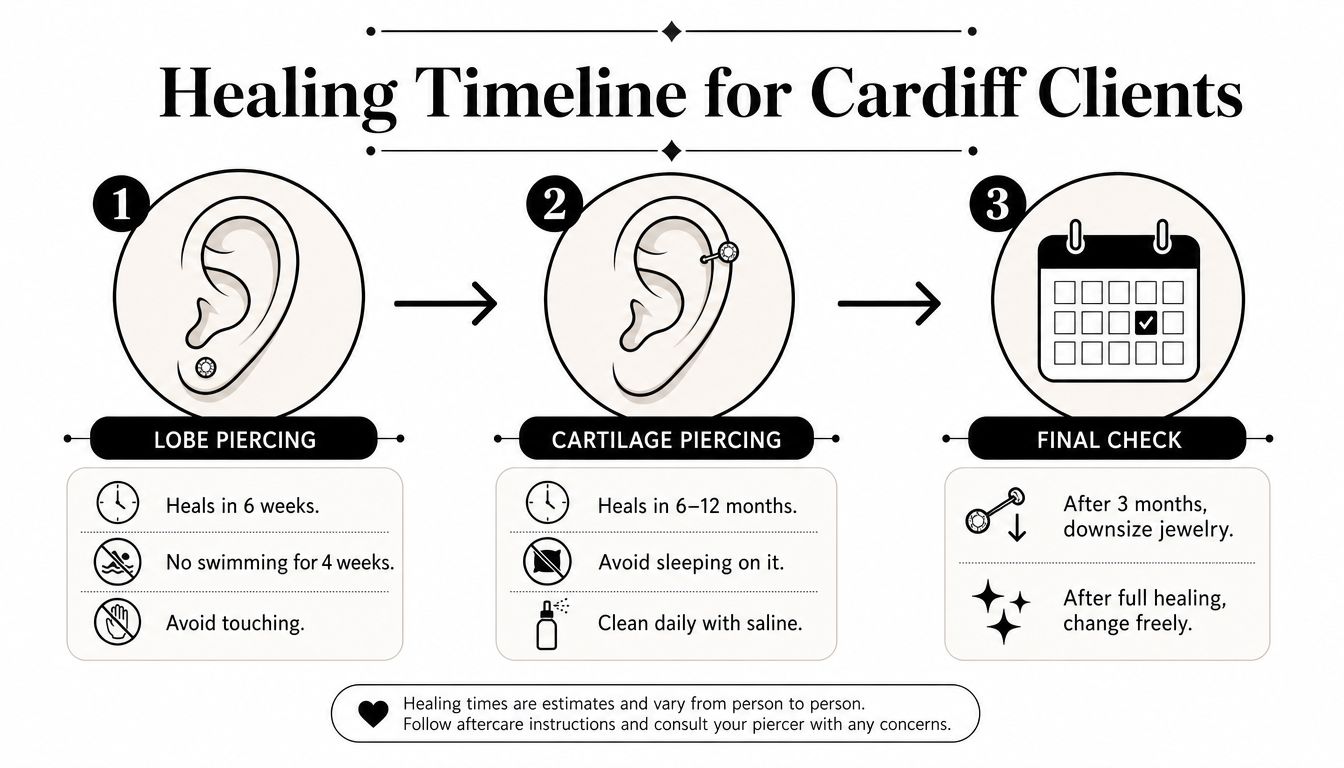
A lobe and a cartilage piercing aren't the same project. Lobes often heal in roughly six weeks, while cartilage takes substantially longer, commonly six months to a year, as reflected in UK aftercare guidance from Piercing Near Me's healing-time resource. A piercing can look calm on the outside while internal tissue is still fragile, so changing jewellery because it “seems fine” is a common mistake.
The safest routine is deliberately boring. Clean the front and back two to three times daily with sterile saline or a piercer-approved aftercare solution, following the approach described in Cardiff ear-piercing aftercare guidance. Don't twist or rotate the jewellery, and avoid alcohol and hydrogen peroxide because harsh products and mechanical movement can irritate the healing channel.
Match care to your routine
For a lobe piercing, keep hands off except during cleaning, leave the starter jewellery in place and protect it from hairbrushes, jumpers and phones. For helix, conch, tragus or rook, plan around pressure for months, not days.
- Sleeping: Use a travel pillow so your ear rests in the opening rather than against the fabric.
- Gym sessions: Keep sweat and shared equipment away from the piercing, then rinse gently with saline if your piercer recommends it.
- Swimming: Avoid pools, open water and hot tubs until the piercing has stabilised. Cardiff Bay and leisure-centre water still create exposure that a fresh cartilage piercing doesn't need.
- Headphones and earbuds: Don't force equipment over swollen jewellery. A conch or tragus can make in-ear devices especially irritating.
- Helmets and wet weather: Rain itself isn't a reason to panic, but wet hair, helmet lining and repeated rubbing can transfer debris and pressure. Dry around the ear carefully without twisting the jewellery.
Aftercare principle: Clean gently, reduce contact and remove the pressure source. More products won't compensate for sleeping on a helix every night.
If swelling, heat, worsening pain, spreading redness or discharge concerns you, contact a healthcare professional rather than diagnosing the problem through social media. Cartilage infections can have more serious consequences than uncomplicated lobe irritation, and UKHSA guidance specifically addresses the risk of Pseudomonas aeruginosa perichondritis associated with ear piercing.
Curated Cardiff Studios Worth Booking
Cardiff's visible options spread across city-centre listings, neighbourhood venues and salon directories. Treat the list as a starting map, not a ranking. Opening hours, walk-in availability, jewellery stock and teen policies change, so confirm each detail before you travel.
City centre and St David's
City-centre studios suit commuters, students and first-timers who want an easy route from central transport links or shopping. They're often the most practical choice for a simple lobe appointment or a same-day enquiry, but don't assume a walk-in is available for cartilage. Ask whether the piercer is working that day and whether the placement requires an appointment.
St David's or Dewi Sant-area services work well for clients already visiting the shopping centre. They may be convenient for straightforward ear piercings, but compare the consultation process and jewellery materials before choosing based on location alone.
Rhiwbina and Cathays
Rhiwbina venues appeal to clients who prefer a neighbourhood appointment and a calmer visit away from the busiest central footfall. They can suit parents arranging a first lobe piercing or clients who want time to discuss a small ear project.
Cathays options are particularly convenient for students and residents near the university area. A conch or helix may fit a student's style, but headphones, backpacks and shared accommodation routines deserve a proper consultation before booking.
A practical shortlist method
Open two or three venue pages. Compare the stated registration, sterile technique, jewellery materials, aftercare information and booking model. Then ask the same questions by phone or message, including whether parental presence is required for a teen appointment.
For clients across Cardiff and South Wales, Piercing Near Me offers a route to compare professional piercing services and start a booking conversation. Use the contact details provided earlier if you need help narrowing the choice, but still expect the chosen studio to explain its own registration, consent and aftercare policies.
Cardiff Ear Piercing FAQs
Can I walk in for ear piercing in Cardiff?
Walk-ins are more realistic for simple lobe piercings in busy city-centre venues, but availability depends on the piercer and the day. Book ahead for cartilage, paired piercings, jewellery upgrades or any appointment where you need anatomy advice.
Can teenagers get lobes or cartilage pierced?
Rules vary by studio and council policy. Professional standards require a parent or guardian to be present throughout the service for anyone under 16, with informed, signed consent. Confirm the Cardiff venue's policy before booking and bring the required identification.
How much do ear piercings cost in Cardiff?
There isn't one reliable city-wide price. Lobe and cartilage fees vary with the studio, placement and jewellery material, so request a complete quote that includes the piercing, starter jewellery and any aftercare or follow-up service.
When can I swim after a helix or conch?
Don't treat cartilage like a healed lobe. Wait until the piercing has stabilised and follow the piercer's specific advice, especially if you swim at Cardiff Bay or a leisure centre. If regular swimming is essential, schedule the piercing around your training rather than forcing the healing process.
Piercing Near Me helps Cardiff clients compare professional piercing options, understand hygiene and aftercare expectations, and begin a booking conversation with more confidence. Visit Piercing Near Me before you book, shortlist the right placement for your routine and ask the studio the safety questions that matter.